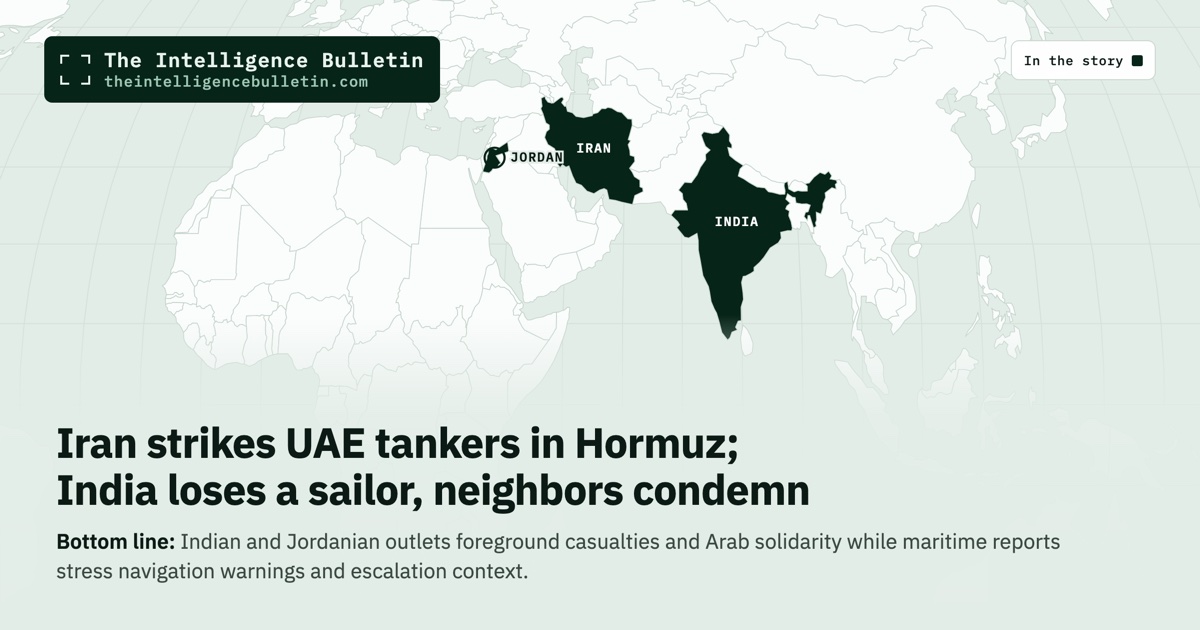
Iran strikes UAE tankers in Hormuz; India loses a sailor, neighbors condemn

Map of the countries in the story: Iran strikes UAE tankers in Hormuz; India loses a sailor, neighbors condemn
On July 13, 2026, Iranian cruise missiles struck two UAE oil tankers, Mombasa and Al Bahiyah, in the Strait of Hormuz. One Indian sailor was killed and eight crew injured. The IRGC cited ignored warnings and illegal routes. UAE condemned the attack and asserted its right to respond amid ongoing US-Iran conflict.

One Story. Many Angles.

🇺🇸
United States
gCaptain
UAE Says Iranian Missiles Struck Oil Tankers in Strait of Hormuz, One Sailor Killed
Read →
🇮🇳
India
Livemint
Indian national killed, eight others injured in Iranian strike on Emirati oil tanker: What we know
Read →
🇮🇱
Israel
The Jerusalem Post
Iran’s attacks on ships in Strait of Hormuz unify region against it
Read →
🇯🇴
Jordan
The Jordan Times
Jordan condemns Iranian attack on UAE oil tankers
Read →
🇶🇦
Qatar
The Peninsula
Tanker struck off Oman coast, says UK maritime agency
Read →
In Brief

Indian and Jordanian outlets foreground casualties and Arab solidarity while maritime reports stress navigation warnings and escalation context.

The attack on the Emirati tankers produced unusually consistent core facts across outlets but split along national fault lines in emphasis. Indian-focused Livemint led with the death of one of its nationals and the nationalities of the injured, reflecting direct human cost to Indian seafarers on Gulf routes. Jordan’s state-aligned paper highlighted its foreign ministry’s condemnation and condolences to India, underscoring Arab diplomatic alignment with the UAE. gCaptain, drawing on Reuters, gave the fullest operational picture including ADNOC confirmation, IRGC justification, and the tankers’ position in Omani waters while embedding the incident in the wider US-Iran naval standoff. Qatar’s Peninsula relied on the UK Maritime Trade Operations report of a missile strike off Oman, stressing navigation alerts over attribution. The Jerusalem Post headline alone framed the strikes as unifying the region against Iran. This pattern shows how importers of Gulf oil and neighbors weigh crew losses or alliance signals more heavily than the missile mechanics themselves.

Perspective Analysis

The July 13 attack on two Emirati oil tankers in the Strait of Hormuz exposes how national interests dictate what counts as the core story in a single maritime incident. Iranian cruise missiles hit the very large crude carriers Mombasa and Al Bahiyah while they transited the southern lane inside Omani territorial waters, killing one Indian crew member and injuring eight others. The strike fits a pattern of direct pressure on Gulf shipping routes during an active US-Iran conflict that began in February 2026, yet reporting splits sharply by outlet audience rather than by shared facts on the missiles themselves.

Indian readers encounter the event first through the human cost to their nationals working Gulf routes. Livemint opened with the UAE Defence Ministry statement naming the dead sailor aboard the Mombasa and detailing the eight wounded—six Indians and two Ukrainians, four of them seriously hurt. The piece quoted the ministry’s account of fires breaking out and later being controlled, then placed the casualties inside the broader US-Iran exchanges that have already produced multiple rounds of strikes. This focus tracks the reality that Indian seafarers staff a large share of the tankers moving crude through Hormuz, so the death registers as a direct national loss rather than abstract escalation.

Maritime industry coverage supplies the clearest operational sequence. The gCaptain report, drawing on Reuters, listed the exact vessels, confirmed significant damage through ADNOC L&S, and recorded the IRGC claim that the tankers had ignored repeated warnings, switched off navigation systems, and attempted passage on an allegedly mined illegal route. It also noted the UK Maritime Trade Operations alert of a missile strike roughly 40 nautical miles northeast of Oman’s Qalhat, while embedding the episode inside weeks of US Central Command facilitation of ship-to-ship transfers and recent American strikes on Iranian targets. These details matter because they show the tankers’ precise location and the immediate physical effects on hull and engines, information that shipowners and insurers need to assess route viability.

Jordan’s official reaction, reported in The Jordan Times, treated the attack as a diplomatic test for Arab states. The Foreign Ministry condemned the strikes as a flagrant violation of international law and a threat to maritime security, expressed full solidarity with the UAE, and offered condolences specifically to India over the sailor’s death. The statement pledged support for any UAE measures to protect its sovereignty. This emphasis on alliance language reflects Jordan’s position as a regional actor that must balance ties with Gulf monarchies while avoiding direct confrontation with Iran.

Qatari coverage stayed narrower, foregrounding the UK Maritime Trade Operations bulletin of a tanker hit by an unknown projectile off Oman and the ongoing Iran-US contest over Hormuz control. The Peninsula piece avoided naming Iran as the perpetrator in the lead and stressed the navigation alert itself. Such restraint aligns with Qatar’s role as a Gulf neighbor that maintains its own channels to Tehran while depending on safe passage for its own energy exports.

The single Israeli headline available framed the strikes as evidence that the attacks are uniting Arab states and the wider region against Iran. That interpretation sits apart from the casualty counts or shipping alerts that dominated other accounts. The remaining sources converge on verified facts—the missile type, vessel names, casualty nationalities, IRGC justification citing ignored warnings, and UAE assertion of its right to respond—while diverging on which element deserves the headline.

What is at stake is the continued flow of roughly one-fifth of global oil and gas traffic through a 21-mile-wide chokepoint now under active dispute. The attack demonstrates Iran’s willingness to target commercial vessels it accuses of using unauthorized routes, a tactic that raises insurance rates and prompts shipowners to consider longer voyages around the Cape of Good Hope. For India, the death of one of its citizens adds domestic pressure to protect its maritime workforce. For the UAE and its neighbors, the incident tests whether coordinated diplomatic condemnation can deter further strikes without triggering wider war. For energy markets, each confirmed hit reinforces the risk premium already visible in the 7.8 percent Brent crude jump reported after the news broke.

The pattern of coverage therefore reveals less about media bias than about whose interests are directly touched. Indian and Jordanian outlets foreground crew losses and official solidarity because those elements affect their readers and foreign policy posture. Maritime reporting supplies the ship movements and damage assessments that determine whether the route remains commercially viable. No single account captures every dimension, yet the Reuters-sourced operational record in gCaptain comes closest to providing the baseline data others can build upon.

What to Watch

Further incidents of this type are likely to accelerate rerouting of crude cargoes and intensify US naval presence in the strait, raising the chance that a miscalculation on either side produces a larger clash. The human and commercial costs already recorded on July 13 make clear that the waterway’s security is no longer an abstract geopolitical issue but an immediate constraint on global energy supply and the safety of crews from multiple nations.
Share this story

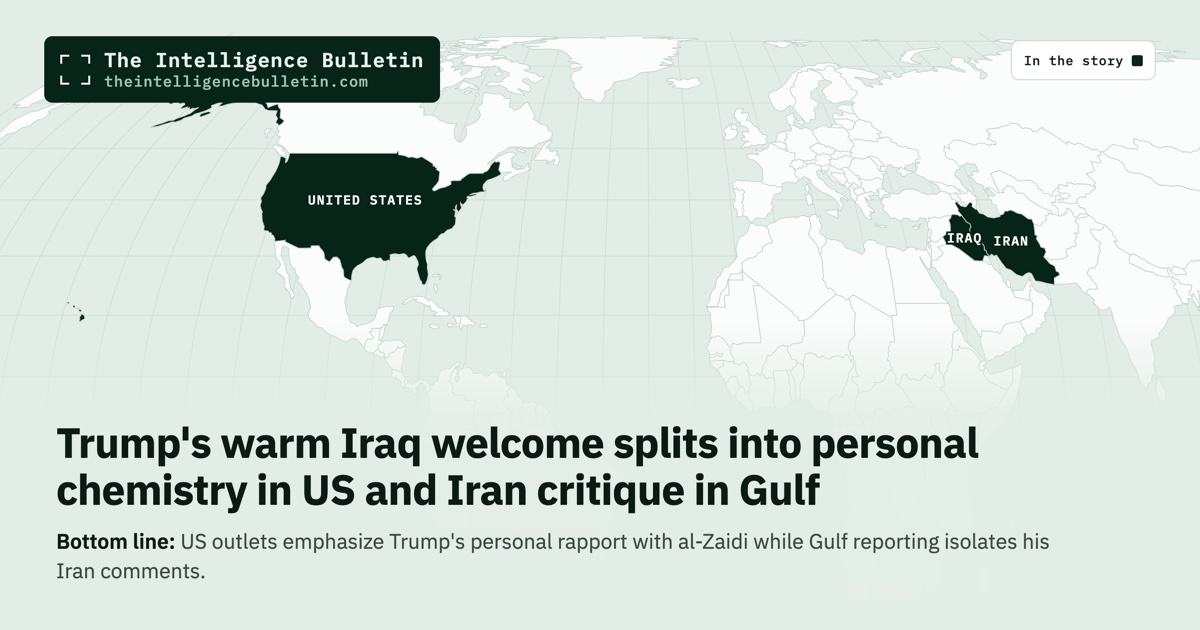
Trump’s warm Iraq welcome splits into personal chemistry in US and Iran critique in Gulf

Map of the countries in the story: Trump's warm Iraq welcome splits into personal chemistry in US and Iran critique in Gulf
On July 14, 2026, President Donald Trump hosted Iraqi Prime Minister Ali al-Zaidi at the White House. Trump expressed strong personal rapport and stated that the US loves Iraq while noting Iran as a burden and positive progress on disarming factions. The meeting occurred as the US advanced separate diplomatic efforts involving Lebanon and Jordan. Coverage across outlets emphasized different elements of the encounter.

One Story. Many Angles.

🇺🇸
United States
San Mateo Daily Journal
Trump touts ‘tremendous chemistry’ with new Iraqi Prime Minister al-Zaidi during White House visit
Read →
🇹🇷
Turkey
Anadolu Agency
ARABIC
Trump during reception of al-Zaidi: We love Iraq
“Trump during his reception of al-Zaidi: We love Iraq”
Read →
🇸🇦
Saudi Arabia
Ajel
ARABIC
Trump: Iran is a burden on Iraq and disarming factions is proceeding positively
Read →
🇺🇸
United States
The Media Line
President Trump To Meet Iraqi PM as US Advances Lebanon, Jordan Talks
Read →
In Brief

US outlets emphasize Trump’s personal rapport with al-Zaidi while Gulf reporting isolates his Iran comments.

US reporting splits sharply on the same White House meeting. The San Mateo Daily Journal, carrying AP copy, centers Trump’s effusive praise of al-Zaidi’s business background and their personal chemistry, recalling Trump’s earlier threat to withhold aid over the choice of prime minister. The Media Line places the session inside a wider US push that includes a Lebanon security framework and a Rubio meeting with Jordan’s foreign minister. Turkish state agency Anadolu leads with Trump’s direct quote of affection for Iraq, drawn from Iraqi state media and stripped of policy detail. Saudi outlet Ajel instead foregrounds Trump’s explicit line that Iran burdens Iraq and faction disarmament is moving forward. The pattern shows American outlets dividing between personality and regional strategy while Gulf coverage isolates the anti-Iran signal, revealing how each capital’s immediate priorities filter the same bilateral encounter.

Perspective Analysis

President Donald Trump’s July 14 White House meeting with Iraqi Prime Minister Ali al-Zaidi exposed a clear divide in how media interpret the same bilateral encounter. American coverage split between emphasis on the president’s personal rapport with the new leader and the session’s place in wider regional diplomacy, while Gulf reporting isolated Trump’s remarks on Iran as the central takeaway. This pattern shows how each outlet’s home priorities determine which elements of the encounter receive attention, affecting what readers learn about shifting U.S. policy toward Baghdad.

Al-Zaidi reached the premiership after Iraq’s post-election deadlock last year. A wealthy businessman with no prior political experience, he emerged as a consensus choice among factions. Trump had previously threatened to withhold U.S. aid if the Iran-aligned Coordination Framework pushed former Prime Minister Nouri al-Maliki back into the role, viewing al-Maliki as too close to Tehran. The White House session therefore carried both personal and strategic weight from the outset.

The San Mateo Daily Journal, carrying Associated Press copy, led with Trump’s description of “tremendous chemistry” between the two men. The account highlighted their shared background as businessmen and noted al-Zaidi’s unusual path to power. It recalled Trump’s earlier ultimatum on aid but stayed tightly focused on the warm personal exchange rather than policy deliverables or Iran’s role. This framing suited a domestic U.S. audience accustomed to Trump’s style of diplomacy, where individual rapport often receives more play than institutional outcomes.

Turkish state agency Anadolu Agency drew directly from Iraqi official sources and opened with Trump’s quoted statement that “We love Iraq, and this man will represent Iraq well.” The piece described a warm reception on the White House lawn but offered little additional context on security cooperation or regional tensions. Its straightforward diplomatic tone reflected Turkish media’s practice of relaying bilateral statements without layering in broader policy analysis, producing a narrow but factually anchored account centered on the Iraqi government’s own narrative of the event.

Saudi outlet Ajel took a different route. Its headline and lead foregrounded Trump’s explicit assessment that Iran represents a burden on Iraq and that efforts to disarm factions are advancing positively. This angle, drawn from the same meeting, received no comparable prominence in the U.S. or Turkish reports. By elevating the anti-Iran signal, Ajel aligned the coverage with longstanding Gulf concerns about Iranian influence inside Iraq, particularly through Shiite militias that have long complicated Baghdad’s relations with both Washington and Riyadh.

The Media Line, a U.S.-based outlet focused on the Middle East, embedded the Iraq meeting inside a larger diplomatic push. Its report noted parallel U.S. efforts on a security framework with Lebanon and an upcoming meeting between Secretary of State Marco Rubio and Jordan’s foreign minister. It linked the al-Zaidi talks to efforts to reshape U.S.-Iraq security ties, reduce regional tensions, and address Iran-backed militias. This broader lens supplied context missing from purely bilateral accounts and illustrated how one American outlet connected the session to ongoing work on militia disarmament and neighboring capitals.

These choices matter because the meeting occurred against a backdrop of U.S. attempts to recalibrate ties with Baghdad while managing Iranian influence across the region. Al-Zaidi’s selection itself resulted from Trump’s direct intervention on aid. When different outlets highlight either the personal chemistry, the quoted affection for Iraq, the Iran critique, or the Lebanon-Jordan track, they steer readers toward distinct conclusions about what the United States seeks from the relationship.

The resulting picture is incomplete in each case. Readers of the San Mateo Daily Journal or Anadolu see little of the militia or Iran dimensions that Gulf outlets treat as central. Readers of Ajel encounter almost none of the personal or Lebanon context that American accounts supply. The Media Line comes closest to capturing the administration’s multi-front approach, yet it still compresses the bilateral warmth into a supporting detail.

What to Watch

Such filtering is likely to continue. As the Trump administration advances separate tracks on Lebanon security and Jordan stability while pressing Iraq on faction disarmament, outlets will keep selecting the slice of each encounter that matches their audience’s immediate stakes. For Gulf governments, that means sustained attention to any anti-Iran messaging. For U.S. domestic outlets, it often means greater focus on presidential style. The practical effect is that accurate assessment of U.S.-Iraq progress requires cross-referencing multiple accounts rather than relying on any single one.


Share this story

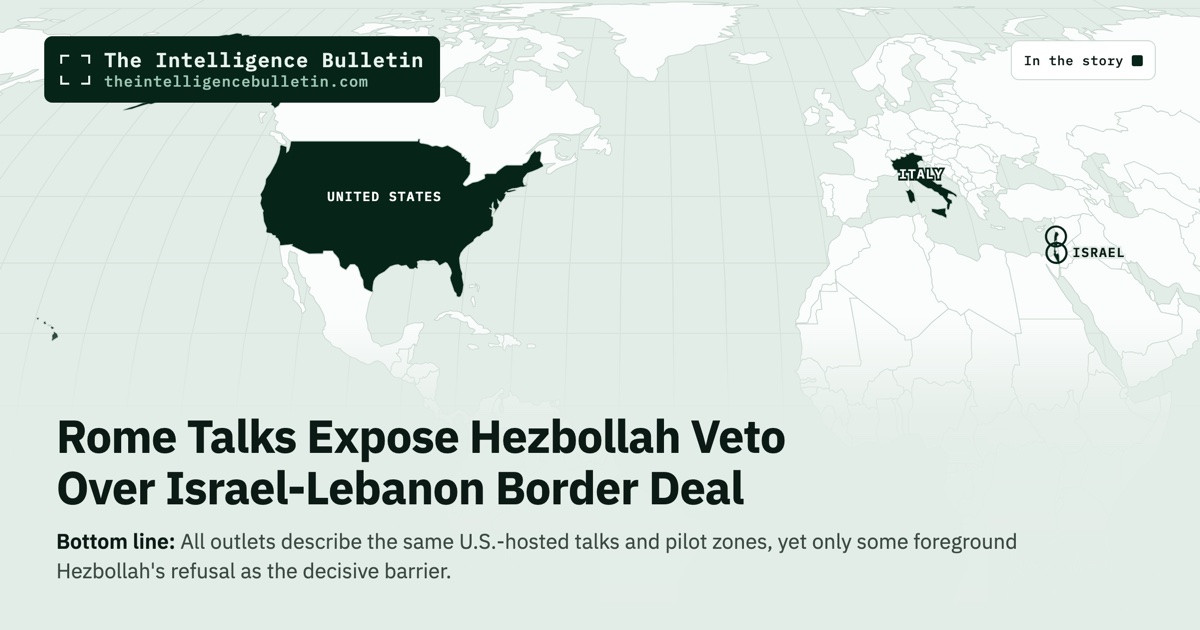
Rome Talks Expose Hezbollah Veto Over Israel-Lebanon Border Deal

Map of the countries in the story: Rome Talks Expose Hezbollah Veto Over Israel-Lebanon Border Deal
Israel and Lebanon opened a new round of direct talks in Rome on July 14 hosted at the U.S. Embassy. The two-day meetings follow a U.S.-brokered framework agreement reached in late June aimed at implementing a ceasefire and addressing border security. Central issues include gradual Israeli withdrawal from pilot zones in southern Lebanon to be handed to the Lebanese army, with Israel conditioning full withdrawal on Hezbollah disarmament while Hezbollah demands complete Israeli exit first. Hezbollah is not participating in the talks.

One Story. Many Angles.

🇨🇳
China
China Daily
Israel, Lebanon hold new round of talks in Rome
Read →
🇹🇷
Turkey
Anadolu Agency
ARABIC
7-hour meeting concludes first day of Lebanon-Israel negotiations in Rome
“اجتماع 7 ساعات.. اختتام اليوم الأول من مفاوضات لبنان وإسرائيل بروما”
Read →
🇦🇱
Albania
24 Ore
ALBANIAN
ROME – Israel and Lebanon begin talks to reduce tensions
“ROMË – Izraeli dhe Libani nisin bisedimet për uljen e tensioneve”
Read →
🇷🇺
Russia
RT Arabic
ARABIC
Round of negotiations between Beirut and Tel Aviv in Rome
“جولة مفاوضات بين بيروت وتل أبيب في روما”
Read →
In Brief

All outlets describe the same U.S.-hosted talks and pilot zones, yet only some foreground Hezbollah’s refusal as the decisive barrier.

The Rome talks mark a rare direct diplomatic channel between Israel and Lebanon, yet coverage reveals how tightly each outlet ties the event to its own regional priorities. China Daily, drawing on Xinhua, details the pilot zones and mutual conditions on withdrawal and disarmament, treating the U.S.-hosted process as the central mechanism. Anadolu Agency narrows to the seven-hour duration of day one and its procedural close, reflecting Turkish state media’s emphasis on timeline precision over substance. The Albanian 24 Ore frames the entire effort around tension reduction and explicitly notes Hezbollah’s absence plus Lebanon’s claim it is not a party to the Hezbollah conflict, underscoring a European preference for de-escalation language. RT Arabic deliberately uses Beirut-Tel Aviv phrasing and highlights Lebanese demands alongside Hezbollah’s rejection, avoiding direct state naming. The shared factual core—U.S. venue, two days, post-June framework, pilot zones—shows convergence on the diplomatic mechanics, but the real divergence lies in which constraint each outlet chooses to foreground: Chinese reporting on implementation details, Turkish on schedule, Albanian on European-style de-escalation, and Russian on Hezbollah’s veto power. That pattern suggests the story’s global signal is less about breakthrough prospects and more about how far each capital sees Hezbollah as the immovable obstacle.

Perspective Analysis

The Rome talks between Israel and Lebanon, held July 14 and 15 at the U.S. Embassy in the Italian capital, expose Hezbollah as the decisive barrier to any workable border agreement. Direct diplomatic contact remains rare between the two states, yet the meetings rest on a U.S.-brokered framework from late June that already encodes an impasse: Israel insists on Hezbollah disarmament before completing any withdrawal from southern Lebanon, while Hezbollah demands full Israeli exit first. Pilot zones in the south, now under Israeli control, are meant to shift gradually to the Lebanese army under conditions that bar Hezbollah presence, but this sequencing leaves no room for compromise. Coverage across outlets underscores how capitals view that veto power differently, yet the underlying mechanics point to stalled implementation rather than progress.

The framework agreement itself sets narrow parameters. Israeli forces are to hand over limited areas in southern Lebanon to Lebanese troops, with the process tied to security guarantees. Israel conditions further steps on the removal of Hezbollah weapons and fighters from those zones and beyond. Hezbollah, absent from the Rome table, has rejected this order of events in prior statements and continues to press for complete Israeli departure from Lebanese territory as a precondition. Lebanese officials maintain their government is not a direct party to the Hezbollah conflict, a position that further distances official Beirut from enforcement leverage. Clashes persist along the border despite an active ceasefire, with Israeli airstrikes reported and Hezbollah responding in kind.

Chinese reporting, drawing on Xinhua, supplies the clearest account of these implementation details. It describes the two-day closed-door sessions as a direct continuation of the June framework, centered on the pilot zones and the explicit trade-off between withdrawal and disarmament. Italian Deputy Prime Minister Antonio Tajani is quoted noting Rome’s hosting role and Italy’s readiness to support regional stability efforts. This focus on process mechanics aligns with a preference for tracking diplomatic machinery and U.S. involvement without dwelling on non-state actors’ leverage.

Turkish state media instead records the first day’s length at seven hours and its formal conclusion, offering a timeline of proceedings without expanding on the substantive deadlock. The emphasis stays on the schedule itself, treating the event as one more sequenced diplomatic step rather than a test of political constraints. Albanian coverage, relying on wire material from ATSH-DPA, places tension reduction at the forefront and records Hezbollah’s non-participation alongside Lebanon’s insistence that it stands apart from the militia’s fight with Israel. It adds context on ongoing clashes, unilateral Israeli security zones, and the continued absence of formal diplomatic ties between Beirut and Tel Aviv. Russian Arabic-language reporting adopts Beirut-Tel Aviv phrasing and foregrounds Lebanese demands for framework implementation against the backdrop of Hezbollah’s explicit rejection, avoiding direct state-to-state framing while elevating the militia’s blocking role.

These variations do not alter the shared factual core: the U.S. venue, the two-day format, the post-June framework, and the pilot-zone mechanism. The divergence appears in what each outlet chooses to elevate. The account that centers Hezbollah’s rejection comes closest to the operational reality, because the militia’s absence from the table and its stated conditions determine whether any pilot-zone transfer can occur. Procedural accounts that stop at duration or de-escalation language understate this constraint. Implementation details alone do not resolve it when one side holds the decisive veto.

The pattern of coverage therefore signals less about near-term breakthrough prospects and more about how distant capitals calibrate their view of Hezbollah’s position. Beijing’s process-oriented lens tracks U.S. mediation mechanics. Ankara’s timeline precision reflects routine diplomatic sequencing. European-leaning outlets favor stability language that separates state actors from the militia. Russian phrasing keeps distance from formal recognition while spotlighting non-state leverage. None of these choices changes the bilateral standoff.

What to Watch

The next phase is likely to remain frozen. Without Hezbollah agreement to disarmament ahead of full withdrawal, Israeli forces will not complete the handovers of the pilot zones. Lebanon lacks independent capacity to impose that disarmament, and the framework offers no alternative enforcement path. Border incidents will continue to test the ceasefire, sustaining low-level pressure without forcing a new round of concessions. For outside powers, the talks serve mainly as a holding pattern that registers diplomatic activity while the core obstacle stays untouched. Readers following the region should treat any announcement of further meetings as evidence of continued deadlock rather than movement toward resolution.


Share this story

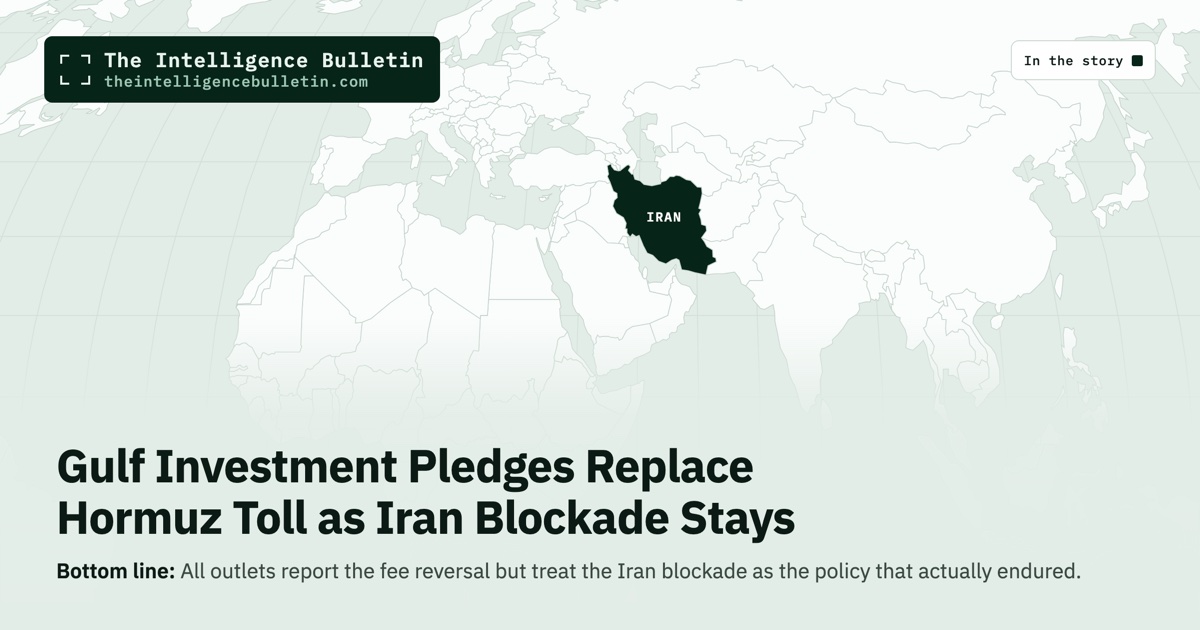
Gulf Investment Pledges Replace Hormuz Toll as Iran Blockade Stays

Map of the countries in the story: Gulf Investment Pledges Replace Hormuz Toll as Iran Blockade Stays
On July 14, 2026, President Donald Trump announced the United States would drop a proposed 20% fee on ships transiting the Strait of Hormuz. He said the move followed conversations with Gulf leaders who offered new trade and investment deals instead. The United States will still enforce a full blockade on Iranian shipping and ports. All five outlets reported the reversal and the continued blockade.

One Story. Many Angles.

🇺🇸
United States
CNN Arabic
ARABIC
Sources reveal to CNN international efforts to convince Trump to back down from imposing fees on Strait of Hormuz
Read →
🇨🇳
China
People’s Daily
Trump says will withdraw plans to charge fees in Strait of Hormuz
Read →
🇵🇰
Pakistan
The Express Tribune
Trump backs down from Hormuz transit fee
Read →
🇮🇱
Israel
Israel Herald
Trump replaces 20% Hormuz toll with trade and investment deals Gulf States will be making in US, says Strait open to all traffic except Iran
Read →
🇷🇺
Russia
URA News
RUSSIAN
Trump refused the idea of charging a 20% duty on cargo
Read →
In Brief

All outlets report the fee reversal but treat the Iran blockade as the policy that actually endured.

Every outlet that covered the reversal described the same sequence: Trump floated the 20% fee on Monday, faced immediate pushback, then replaced it on Tuesday with unspecified Gulf investment pledges while locking in the Iran blockade. CNN Arabic alone detailed the 24-hour scramble inside the administration and among Gulf rulers who phoned Trump directly. The Express Tribune added that shipping groups and the UN shipping agency had already called the fee illegal. Israel Herald quoted Trump’s language that the strait stays open to everyone except Iran and praised US military enforcement of the blockade. People’s Daily and URA News carried the shortest accounts, both noting the pivot to investments and the explicit continuation of Iranian port restrictions. The shared silence is telling: no outlet portrayed the change as a full retreat. All treated the blockade as the durable element and the fee as the disposable one.

Perspective Analysis

The pattern in this coverage shows that the 20 percent Hormuz transit fee was always the disposable element in President Donald Trump’s approach, while the naval blockade on Iran functions as the fixed point that every outlet treats as settled policy. Gulf states secured a quick swap through investment pledges, but the restriction on Iranian shipping and ports stayed intact. What is at stake is whether Washington can extract economic concessions from allies while maintaining military pressure on Tehran amid renewed fighting.

Trump floated the fee on Monday, July 13, 2026, through a Truth Social post that declared the United States the “Guardian of the Hormuz Strait” and promised a 20 percent reimbursement on all cargo to cover protection costs. By Tuesday he had reversed course after direct calls from Gulf leaders. He announced on the same platform that the fee would be replaced by unspecified trade and investment deals from Saudi Arabia, the United Arab Emirates, Qatar, Bahrain, and Kuwait. The strait, he said, would remain open to every country except Iran, with a “full blockade” applied only to vessels linked to Iranian ports or cargo.

CNN Arabic’s reporting alone captured the internal scramble that produced the change. Administration aides rushed to map out logistics for the toll on Monday even as Gulf rulers phoned Trump directly. Saudi, Emirati, Bahraini, and Qatari leaders pressed for an alternative, and by Tuesday morning the investment pledge had taken the fee’s place. The account stresses how quickly the idea moved from announcement to abandonment and how little advance coordination had occurred with either U.S. officials or regional partners.

Chinese and Russian coverage stayed to the narrow facts of the swap. People’s Daily carried Trump’s exact language that the fee would be replaced by Gulf investments while the blockade on Iran continued unchanged. URA News likewise noted the abandonment of the 20 percent duty in favor of investment agreements, with the earlier blockade plans left in place. Both pieces treated the reversal as a straightforward policy adjustment without dwelling on the diplomatic friction that produced it.

The Express Tribune placed the announcement inside the day’s military developments. U.S. strikes hit Iranian targets for a third straight night, Iran responded with missiles and drones against U.S. facilities in Kuwait, Jordan, and Bahrain, and two Emirati tankers were hit in the strait itself. The paper also recorded that shipping companies and the United Nations shipping agency had already labeled the proposed fee illegal under international rules governing straits. Oil prices rose on the renewed fighting, underscoring the market stakes for energy importers.

Israel Herald foregrounded the security outcome. Its account quoted Trump praising U.S. military leaders by name—Secretary of War Pete Hegseth, Chairman of the Joint Chiefs Dan Caine, and Central Command’s Admiral Brad Cooper—for keeping the waterway open to non-Iranian traffic. The piece stressed that the blockade remained the operative tool against Tehran and presented the investment deals as an added benefit rather than a substitute for pressure.

No outlet framed the Tuesday statement as a retreat from the core confrontation with Iran. The blockade on Iranian shipping and ports appears in every account as the element that survived the 24-hour revision. The fee, by contrast, is presented as an improvised proposal that Gulf capitals could neutralize through promises of future capital flows. Those pledges remain unspecified in amount and timing; Trump noted only that prior Gulf investments in the United States had already been large and that new ones would be “massive.”

What to Watch

The reporting therefore points to a durable hierarchy in the policy. Military restrictions on Iran can be sustained even when economic measures aimed at allies are quickly discarded. Gulf governments demonstrated they could influence the economic side of U.S. demands through direct contact, yet the naval enforcement against Tehran drew no comparable pushback in these accounts. Continued strikes and Iranian retaliation suggest the blockade will face ongoing tests at sea, while the investment route offers Washington a parallel channel for extracting value without altering the military posture. Readers should expect the blockade to remain the baseline and further Gulf investment announcements to serve as the adjustable offset.


Share this story

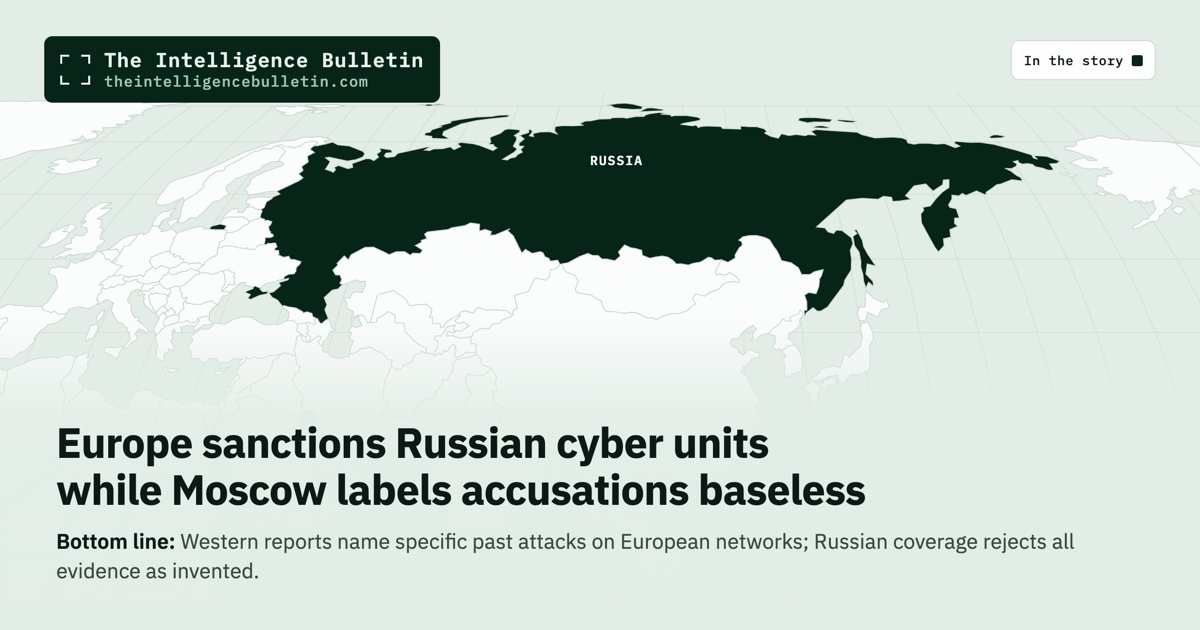
Europe sanctions Russian cyber units while Moscow labels accusations baseless

Map of the countries in the story: Europe sanctions Russian cyber units while Moscow labels accusations baseless
On July 13, 2026, the EU sanctioned nine individuals and four organizations tied to Russian intelligence services for cyber espionage and sabotage. The UK added 24 targets. Germany and France summoned Russia’s ambassadors in protest. Moscow rejected the claims as unproven and politically motivated.

One Story. Many Angles.

🇷🇺
Russia
RIA Novosti
RUSSIAN
Klimov commented on EU claims of Russia’s involvement in cyber attacks
Read →
🇩🇪
Germany
Bild
GERMAN
Germany summons Russian ambassador: EU imposes sanctions against intelligence services
Read →
🇱🇹
Lithuania
LRT
LITHUANIAN
EU and UK impose joint sanctions on Russia over cyber attacks
Read →
🇦🇹
Austria
Heute
GERMAN
Europe takes action – Russian cyber attacks – EU imposes new sanctions
Read →
🇵🇰
Pakistan
The Express Tribune
UK targets Russian cyber networks with new sanctions
Read →
In Brief

Western reports name specific past attacks on European networks; Russian coverage rejects all evidence as invented.

Western European outlets treat the sanctions as a direct response to years of documented intrusions. Bild and Heute name specific past operations against German government networks by the FSB-linked TURLA group and detail the ambassador summonses in Berlin and Paris. LRT stresses Baltic vulnerability and the joint EU-UK listing of FSB operatives. The Express Tribune, from outside the bloc, centers Britain’s independent targeting of GRU figures and cyber-criminal proxies. RIA Novosti alone reports the Russian rebuttal: official Andrei Klimov called the accusations groundless and aimed at sustaining support for Ukraine. No outlet disputes the mechanics of the sanctions themselves; the split is over whether the underlying operations occurred.

Perspective Analysis

The coordinated sanctions imposed by the European Union and the United Kingdom on July 13, 2026, expose a deepening rift in how the same set of Russian intelligence-linked cyber operations is interpreted. Western European reporting treats the measures as a measured reply to repeated, documented intrusions into government networks and critical infrastructure, while Russian state media casts them as unsubstantiated pretexts for sustaining aid to Ukraine. This divergence matters because it shapes whether European publics view the sanctions as defensive necessity or recycled political theater, with direct consequences for the willingness to fund further countermeasures against hybrid threats.

The EU action targeted nine individuals and four organizations tied to Russian intelligence services, primarily the FSB’s 16th Center and elements of the GRU. The United Kingdom supplemented the list with 24 additional designations focused on senior GRU figures and criminal proxies. Germany summoned the Russian ambassador in Berlin the same day, as did France, to register formal protests. These steps followed years of attributed activity, including efforts to exfiltrate data from ministries and to probe or disrupt energy and transport systems across multiple member states.

German coverage, particularly in Bild, anchors the sanctions in concrete national experience. It identifies the FSB-linked TURLA group—also known as Snake or Uroburos—as responsible for intrusions into the federal administration network in 2015 and again in 2017, when the Foreign Ministry’s systems were specifically targeted. The same reporting notes that affected countries extended beyond Germany to include France, Poland, Cyprus, the Netherlands, Austria, Slovakia, Romania, and Finland. It further details an alleged FSB attempt against Poland’s power grid that British officials said could have left up to 500,000 people without electricity in winter. These specifics give the sanctions a tangible history rather than an abstract accusation.

Austrian tabloid reporting in Heute adopts a similar emphasis on ongoing operational reach. It highlights Russian collaboration with criminal groups and private firms, listing Austria among the targets of long-running campaigns against government and infrastructure sites. The piece frames the EU-UK move as Europe finally pushing back after repeated sabotage attempts, underscoring that the threats are not confined to frontline states but extend to the bloc’s core. This approach aligns with the sanctions’ inclusion of entities accused of destabilization across the continent.

Lithuanian outlet LRT places the joint sanctions in the context of Baltic exposure. It stresses that the FSB operations have repeatedly aimed at critical infrastructure in neighboring states and presents the coordinated EU-UK listings as a necessary collective shield. The reporting notes the involvement of high-level FSB operatives and underscores the vulnerability of smaller members whose grids and transport networks could be disrupted with relatively modest resources. For readers in the region, the sanctions appear less as diplomatic ritual and more as overdue reinforcement of shared defenses.

From outside the sanctions bloc, The Express Tribune focuses on Britain’s independent list of 24 targets. It names specific GRU leadership figures—Vyacheslav Stafeyev, Ivan Senin, and Ivan Kasyanenko—accused of directing cyber and hybrid operations, including election interference and the spread of anti-Ukraine narratives. British officials are quoted describing the Russian state and its criminal networks as orchestrators of chaos and division. The account also records Moscow’s pledge of an “appropriate response,” giving the story an external vantage that registers both the Western action and the Russian counter-statement without adopting either side’s full framing.

Russian state media provides the sole prominent counter-narrative. RIA Novosti reports the sanctions as groundless Western accusations lacking evidence. It quotes Andrei Klimov, a member of the Council on Foreign and Defense Policy, stating that the West routinely blames Russia for actions its own services have pursued for decades. Klimov adds that the latest claims serve to justify continued multibillion-euro support for Ukraine and to shore up domestic political support for European leaders. The piece recalls earlier presidential statements that no proven facts underpin the allegations and frames the entire episode as a familiar pattern of interference dressed up as attribution. No other outlet in the set foregrounds this rebuttal or treats the sanctions as primarily political theater.

The split is therefore not over the technical mechanics of the sanctions—asset freezes, travel bans, and entity listings—but over whether the underlying operations occurred and whether they justify the response. Western reporting supplies dates, targets, and attributed groups drawn from national security services; Russian coverage supplies only the denial and the political motive. This asymmetry leaves readers in Europe with a record of past intrusions while Moscow’s audience receives confirmation that the accusations remain unproven.

What to Watch

The pattern suggests sanctions will continue to expand along existing lines rather than produce a negotiated pause. European governments have already linked the measures to concrete historical cases and infrastructure risks; reversing course would require either new evidence disproving those cases or a broader political decision to de-escalate hybrid competition. Moscow’s stated intent to respond appropriately points instead to reciprocal designations or intensified operations that could trigger further rounds. For European readers, the coverage indicates that hybrid attribution disputes are unlikely to be settled by evidence alone and will remain tied to the larger contest over Ukraine support and regional security architecture.


Share this story

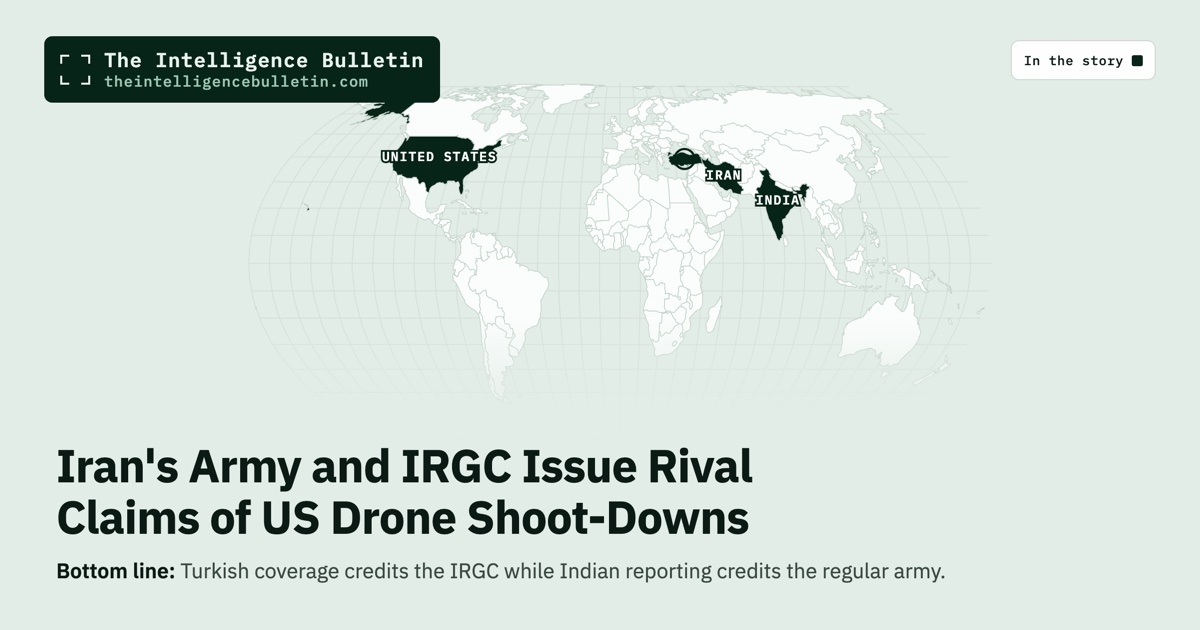
Iran’s Army and IRGC Issue Rival Claims of US Drone Shoot-Downs

Map of the countries in the story: Iran's Army and IRGC Issue Rival Claims of US Drone Shoot-Downs
On July 13, 2026, Iran’s army announced its air defenses shot down a US Lucas-type drone near Bandar Abbas in southern Iran. Iranian state media separately reported the IRGC downed a US MQ-1 drone. No casualties were reported in either claim. The incidents occurred amid US strikes on Iranian positions and Iranian counter-strikes in the region.

One Story. Many Angles.

🇹🇷
Turkey
Anadolu Agency
Iran’s IRGC shoots down US MQ-1 drone: Iranian state media
Read →
🇮🇳
India
ANI
Iran’s army claims it shot down US drone over southern city of Bandar Abbas
Read →
In Brief

Turkish coverage credits the IRGC while Indian reporting credits the regular army.

Turkish and Indian outlets both carried Iranian claims of downing a US drone but split on which force was responsible. Anadolu Agency led with the IRGC and an MQ-1 model, directly citing state media. ANI instead highlighted the regular army’s Bandar Abbas operation and embedded it in a wider account of US strikes on Iranian air defenses and Iranian missile responses across the Gulf. The divergence tracks the distinct institutional roles each force plays inside Iran: the IRGC as ideological vanguard versus the conventional army as territorial defender. Both reports treat the shoot-down as factual Iranian assertion rather than verified event, reflecting limited independent access to the incident site.

Perspective Analysis

Iran’s regular army and its Islamic Revolutionary Guard Corps each asserted responsibility for downing a separate American drone on July 13, 2026, with the claims emerging against the backdrop of fresh U.S. strikes on Iranian air defenses and Iranian missile responses across the Gulf. The split announcements expose the distinct operational domains these two forces occupy inside Iran and the way external reporting amplifies one side or the other according to the interests of the publishing country.

The army’s statement, carried by Iran’s semi-official Mehr News Agency, described anti-aircraft units detecting, tracking, and destroying a Lucas-type drone in Bandar Abbas County near Hajiabad in southern Iran. The briefing placed the incident within routine air-defense activity aimed at countering enemy attacks and securing national airspace, with no casualties reported. Indian wire service ANI reproduced this account in full and situated it inside a larger sequence of events that included U.S. Central Command strikes on July 12 targeting Iranian air-defense sites, coastal radars, missile infrastructure, and fast-attack craft in the Strait of Hormuz.

Anadolu Agency, Turkey’s state-run outlet, instead led with an Iranian state-media report crediting the IRGC with downing an MQ-1 drone. The Turkish dispatch stayed tightly focused on the Revolutionary Guards’ role and did not reference the army’s Bandar Abbas claim or the surrounding U.S. operations. This narrower framing aligns with Ankara’s direct stake in keeping the Strait of Hormuz open for energy shipments that pass near its southern coast.

The divergence is not accidental. The regular army’s mandate centers on territorial defense of Iran’s borders and major population centers, which makes a shoot-down near a key southern port a natural fit for its public messaging. The IRGC, by contrast, functions as an ideological and expeditionary force with a history of operating beyond Iran’s frontiers, including in the Gulf and against maritime targets. When each service claims its own drone intercept on the same day, the statements function less as competing intelligence assessments and more as assertions of institutional relevance at a moment of heightened tension.

Foreign coverage tracks these institutional lines. ANI’s broader account, which includes CENTCOM’s stated rationale for protecting commercial shipping after an Iranian attack on a container vessel, reflects India’s posture as a non-aligned importer of Gulf energy that prefers to register escalation without endorsing either combatant. Anadolu’s emphasis on the IRGC alone mirrors Turkey’s practical concern with any disruption to the chokepoint that carries a significant share of its imported oil and gas.

Neither report treats the Iranian assertions as independently verified events. Access to the actual sites remains restricted, and U.S. statements released on the same day made no reference to lost drones. The pattern therefore illustrates how unconfirmed Iranian military claims propagate through sympathetic foreign channels, each outlet selecting the version that best matches its government’s strategic priorities in the region.

What to Watch

The immediate consequence is a further muddling of the operational picture at a time when both sides are exchanging strikes. Continued rival announcements from Iran’s parallel military structures are likely to persist as long as the confrontation lasts, because each force has an interest in demonstrating effectiveness to domestic audiences and to the other. For shipping companies and energy markets, the practical effect will be sustained uncertainty over which Iranian actor is operating where and with what rules of engagement, raising the risk that an unintended escalation in the Strait of Hormuz could close the waterway faster than either side intends.


Share this story