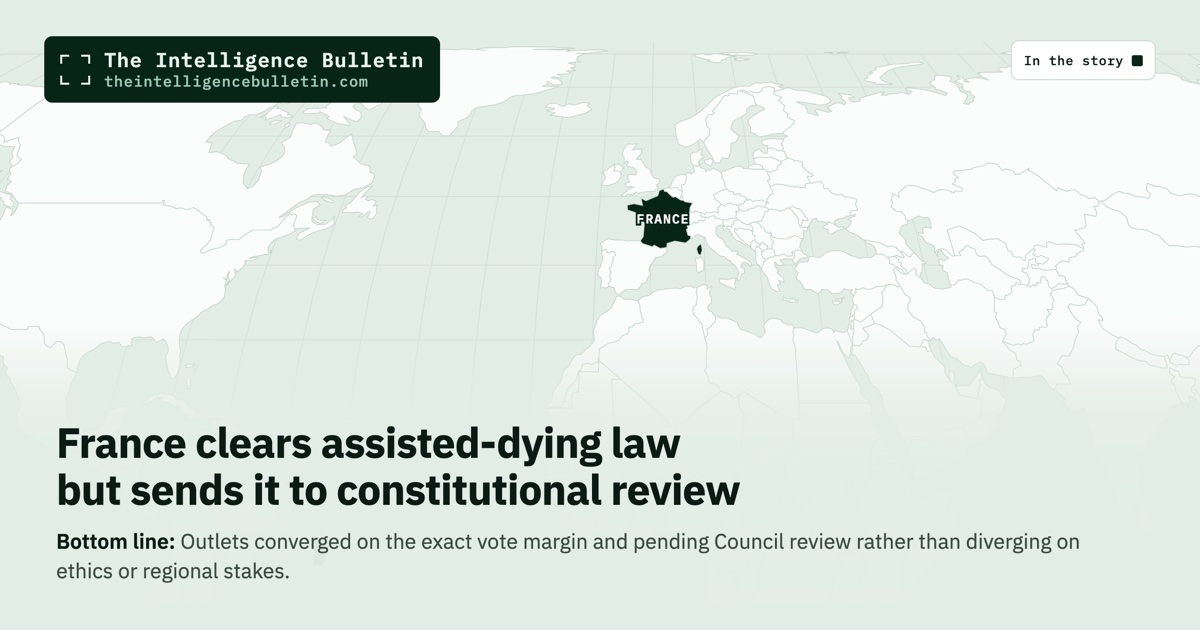
France clears assisted-dying law but sends it to constitutional review

Map of the countries in the story: France clears assisted-dying law but sends it to constitutional review
On July 15, 2026, France’s National Assembly gave final approval to legislation permitting assisted dying for adults with incurable, life-threatening illnesses. The bill passed 291-241 after Senate rejections and years of debate. It now faces review by the Constitutional Council before taking effect. The law allows self-administered lethal medication under strict conditions and excludes psychological suffering alone.

One Story. Many Angles.

🇮🇳
India
The Hindu
France’s National Assembly will give final approval to assisted-dying bill after years of debate
Read →
🇨🇦
Canada
CP24
Assisted-dying bill: France National Assembly final approval
Read →
🇦🇲
Armenia
News.am
France’s National Assembly passes euthanasia bill
Read →
🇸🇳
Senegal
Pressafrik
FRA
France: National Assembly definitively adopts the law on aid to dying
“France : l’Assemblée nationale adopte définitivement la loi sur l’aide à mourir”
Read →
🇲🇽
Mexico
Diario1
SPA
France definitively approves the law legalizing euthanasia and assisted suicide
“Francia aprueba definitivamente la ley que legaliza la eutanasia y el suicidio asistido”
Read →
In Brief

Outlets converged on the exact vote margin and pending Council review rather than diverging on ethics or regional stakes.

France’s National Assembly vote on assisted dying produced unusually uniform reporting across distant outlets. The Hindu, CP24, News.am, Pressafrik and Diario1 all relayed the same 291-241 tally, the Senate’s repeated blocks, the two-day reflection period, and the immediate referral to the Constitutional Council. Minor variations appear only in emphasis: Mexican coverage highlighted the Church’s warning of a “ruptura grave,” Senegalese reporting placed France alongside Belgium and the Netherlands, while Indian and Canadian wires added brief global context on aging populations. The shared restraint—omitting speculation on implementation or Macron’s legacy—reveals how the event’s narrow parliamentary outcome and pending judicial gatekeeping left little room for national spin. Readers see a policy crossing a threshold that still requires one more institutional check.

Perspective Analysis

France’s National Assembly approved a bill on assisted dying by the narrow margin of 291 to 241 on July 15, yet the measure still faces mandatory review by the Constitutional Council before it can take effect. This pattern of unusually uniform coverage across outlets from India, Canada, Armenia, Senegal and Mexico shows how the bill’s procedural path and institutional guardrails have limited opportunities for national or ideological coloring. The reports converge on the same core sequence: years of debate, repeated Senate rejections, final Assembly passage under France’s legislative rules, strict eligibility limits that exclude psychological suffering alone, and an immediate referral for constitutional scrutiny. What stands out is the absence of speculation about immediate implementation or political legacy, leaving readers with a clear picture of a policy threshold crossed but not secured.

The legislation permits adults who are French citizens or long-term legal residents and suffer from a serious, incurable, life-threatening illness in an advanced or terminal stage to request lethal medication they must administer themselves. A doctor must consult a team of health professionals, confirm unbearable and unrelievable physical pain, and verify the request is made freely. Patients undergo review within 15 days and must reaffirm their choice after at least two days of reflection. Only those physically unable to self-administer may receive help from a doctor or nurse. Severe psychiatric disorders and neurodegenerative conditions such as Alzheimer’s disqualify applicants. France’s national health insurance will cover the costs, and a conscience clause protects objecting medical staff.

This framework emerged after President Emmanuel Macron’s 2022 pledge to open a national debate on end-of-life care. A citizens’ convention recommended an active form of assistance, and the bill advanced through multiple readings in the National Assembly despite shrinking majorities. The conservative-led Senate blocked it three times. Under French procedure the lower house holds the final word in such disagreements. Prime Minister Sébastien Lecornu and Senate President Gérard Larcher both announced they would send the text to the Constitutional Council, which has up to a month to rule. The law enters into force only after that review.

Reporting from The Hindu and CP24, both drawing on the same Associated Press account, laid out these eligibility rules in detail and placed France among countries where assisted dying is already available to roughly 300 million people worldwide. They noted rising public support in French polls and the fact that many citizens had previously traveled abroad for the procedure. News.am summarized the lengthy parliamentary route and Macron’s framing of a distinct “French model,” while emphasizing the strict boundaries that removed earlier references to expected life expectancy because doctors and the health authority found such predictions unreliable. Pressafrik, writing in French for a Francophone audience, recorded the exact 291-241 tally and listed Belgium, the Netherlands, Switzerland, Canada and Uruguay as precedents France now joins. Diario1, using EFE copy, added the Catholic Church’s description of the vote as a “grave rupture” that risks altering society’s relationship with vulnerability, old age and illness.

These variations remain minor because the underlying facts left little latitude for reinterpretation. The narrow vote and the pending constitutional step function as built-in restraints. Outlets could record the parliamentary outcome and the next required check without venturing into predictions about how the Council might rule or how quickly clinics might open. Mexican coverage foregrounded religious opposition in a country where the Church retains cultural influence. Senegalese reporting highlighted regional comparisons among former French territories or neighbors that have already acted. Indian and Canadian accounts supplied broader global context on aging populations and parallel debates, such as the United Kingdom’s ongoing discussions. None of the pieces speculated on Macron’s political capital or imagined immediate effects on palliative care systems.

The real stakes lie in whether France’s strict medical and procedural filters will hold once the law clears review. Supporters, including the Association for the Right to Die With Dignity, argue the measure simply gives patients control over unbearable suffering without compelling anyone else to participate. Opponents, such as the group Alliance Vita, contend that framing death as a solution undermines efforts to expand palliative support and could create subtle pressure on the elderly or disabled. The Constitutional Council’s examination, requested on points including the two-day reflection period, consent rules for adults under guardianship, and the interaction between conscience clauses and health-care institutions, will determine whether those safeguards satisfy constitutional standards of human dignity and personal freedom.

What to Watch

Because the vote margin was modest and the upper house remains opposed, any softening of the criteria or delays in the review process could reopen divisions. The law’s design, with its emphasis on self-administration and repeated confirmation, aims to keep the practice limited to a narrow set of physical conditions. Yet the very existence of the constitutional gatekeeping step signals that lawmakers themselves recognized the need for an external check on such a fundamental change in medical practice. Readers following these reports see a country that has moved closer to legalizing assisted dying than at any prior point, while still operating inside a system that subjects even narrow majorities to further institutional tests.
Share this story

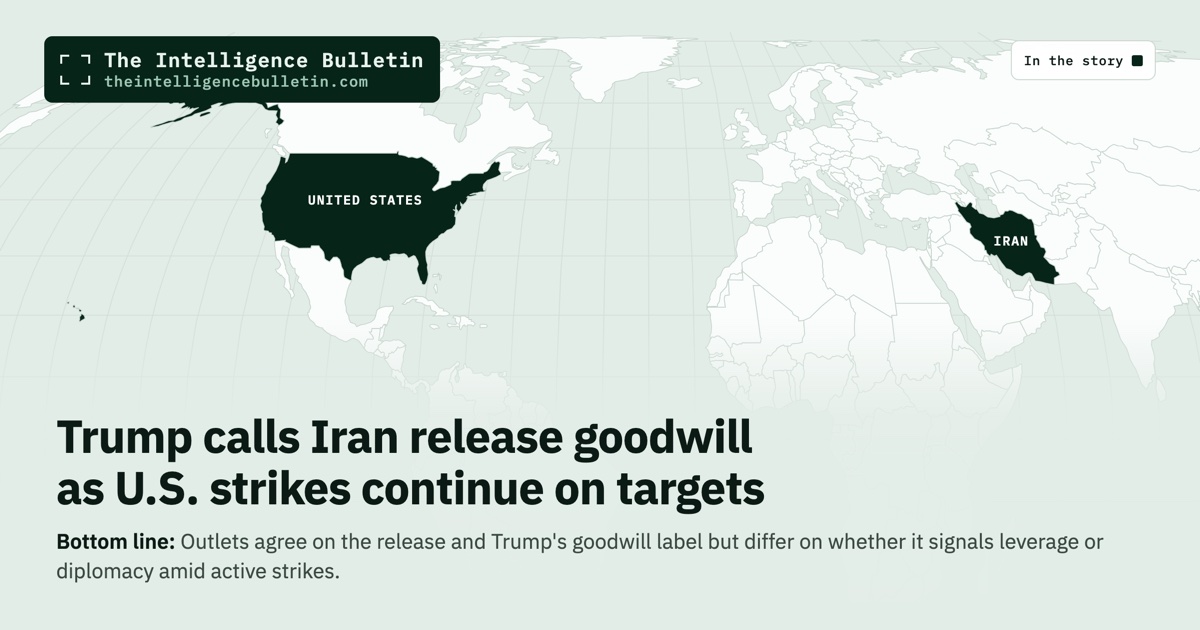
Trump calls Iran release goodwill as U.S. strikes continue on targets

Map of the countries in the story: Trump calls Iran release goodwill as U.S. strikes continue on targets
Iranian authorities released U.S. citizen Dena Karari on July 16, 2026, ending an exit ban imposed since December 2024. President Trump posted on Truth Social that Iran had allowed her to leave and called it a gesture of goodwill. Her lawyer Jared Genser confirmed she was traveling back to the United States and credited Trump’s efforts. The release occurred amid ongoing U.S. military strikes on Iran and renewed hostilities.

One Story. Many Angles.

🇮🇷
Iran
Iran Herald
Trump appreciates Iran’s gesture after release of detained American
Read →
🇺🇸
United States
CNN
Dena Karari: Trump says Iran has released American woman detained since 2024
Read →
🇦🇺
Australia
ABC News
Tehran frees US-Iranian woman Dena Karari after almost two years’ detention
Read →
🇮🇱
Israel
i24NEWS
A Gesture Of Goodwill, Trump Says Iran Released American detained in 2024
Read →
🇮🇳
India
The Economic Times
Trump says Iran has freed a detained US citizen
Read →
In Brief

Outlets agree on the release and Trump’s goodwill label but differ on whether it signals leverage or diplomacy amid active strikes.

The release of Dena Karari stands out as a small positive amid U.S. strikes on Iranian targets and threats against power plants. Trump framed it explicitly as Iranian goodwill on Truth Social, and her lawyer Jared Genser reinforced that narrative by thanking the administration’s pressure. Iranian coverage via Iran Herald reported the same Trump statement but embedded it in accounts of ongoing conflict and Biden-era detention. Australian ABC reporting stayed on the personal details of repeated interrogations and bogus charges without assigning diplomatic credit. i24NEWS placed the news inside a live blog of fresh strikes and Hormuz tensions, treating it as a possible signal amid escalation. The Economic Times noted the release alongside Iran’s pattern of holding Westerners as leverage. Across these accounts the factual core holds steady, yet the shared emphasis on the conflict backdrop shows outlets treating the goodwill claim as one data point in a larger military standoff rather than a breakthrough.

Perspective Analysis

The release of Dena Karari by Iranian authorities on July 16, 2026, functions less as a diplomatic opening than as a minor data point absorbed into the larger pattern of U.S. military pressure and Iranian defiance. President Donald Trump presented the departure of the U.S. citizen, held under an exit ban since December 2024, as evidence of Iranian goodwill in a Truth Social post. Yet the surrounding coverage from multiple outlets makes clear that the event occurs against a backdrop of renewed U.S. strikes on Iranian targets, naval blockades, and explicit threats against power plants and bridges. This framing across sources reveals that neither Washington nor Tehran views the release as a pivot away from confrontation.

Karari, identified by her lawyer Jared Genser, had traveled to Iran to visit family before authorities seized her passports at the airport and later subjected her to repeated interrogations by the Ministry of Intelligence and Security. She faced what Genser described as bogus charges tied to her operation of the Children of Mehr Foundation, a nonprofit aiding impoverished Iranian children under an OFAC license. An exit ban prevented her departure even after she was released on bail, though it reportedly expired in April 2026 without immediate effect. Genser noted she suffered a massive heart attack the week before her exit and credited sustained U.S. pressure under Trump for enabling her departure across the border. She is now traveling back to the United States.

Trump’s statement explicitly tied the release to the prior Biden administration, stating that Iran had allowed an American citizen “wrongfully detained in December of 2024 under the ‘presidency’ of Sleepy Joe Biden” to leave and declaring that “the United States of America appreciates this gesture of Goodwill by Iran.” Genser reinforced that attribution, telling CNN that the outcome would not have happened without the administration’s “extraordinary and relentless efforts.” At least six other Americans remained tracked by the U.S. government in Iran as of the prior month, including two officially designated as wrongfully detained.

The release unfolded amid active U.S. operations. Central Command conducted repeated strikes on Iranian command centers, air defenses, missile and drone sites, and coastal facilities, including Greater Tunb Island. Trump had warned in a Fox News interview days earlier that strikes would intensify the following week to include power plants and bridges unless Iran returned to negotiations. Iranian forces responded with claims of attacks on U.S. facilities in Jordan and Kuwait, while parliament speaker Ghalibaf asserted continued freedom of action for Iranian armed forces. Reports also referenced renewed naval blockades and tensions around the Strait of Hormuz.

Outlets positioned the event within this military context rather than treating it as an independent breakthrough. The Iran Herald account, drawing on wire reporting, led with Trump’s appreciation for the gesture but immediately situated it alongside his remarks on strikes and deadlines, noting that he declined to set formal timelines while warning Iran to “behave.” CNN provided the fullest account of Karari’s personal circumstances, including her health crisis and the foundation work that drew scrutiny, while quoting Genser’s praise for the Trump team and noting the existence of other detainees. This emphasis on administration leverage and individual hardship aligned the release more closely with diplomatic signaling than most other coverage.

Australian ABC reporting stayed tightly on the duration of Karari’s ordeal, the coercive exit ban, dozens of interrogations, and Genser’s broader call for releases of remaining Americans and Iranian political prisoners. It described the charges as bogus collaboration and espionage without assigning credit to U.S. pressure or Iranian motives, instead noting Iran’s general pattern of holding Western nationals as leverage. The piece referenced the collapsed U.S.-Iran memorandum of understanding and resumed hostilities as the relevant frame, treating the release as one element in a sequence of detentions rather than a sign of shifting relations.

Israeli outlet i24NEWS embedded the announcement inside a live blog tracking fresh U.S. strikes and Hormuz-related developments, describing it as a possible signal amid escalation but subordinating it to accounts of command-center strikes and Iranian parliamentary defiance. Indian coverage in The Economic Times reported Trump’s statement in neutral terms, noting Iran’s record of detaining Westerners as bargaining chips alongside details of the naval blockade and resumed fighting. It avoided both strong endorsement of the goodwill claim and extensive personal backstory, maintaining distance from U.S. or Iranian narratives.

These choices reflect institutional priorities. U.S. reporting had direct access to Genser and White House context, allowing space for the administration’s framing. Regional outlets such as i24NEWS and the Economic Times kept the focus on security stakes and leverage dynamics. The Iranian-sourced wire emphasized legal processes and surrounding conflict without conceding unilateral credit. No account presented the release as likely to halt strikes or reopen sustained talks.

The factual core remains consistent: Karari left Iran after nearly two years under restrictions, Trump called it goodwill, and her lawyer credited U.S. efforts. Yet the shared emphasis on ongoing military activity indicates that all sides treat the development as tactical rather than transformative. Iran has released individuals before amid pressure without broader concessions, while U.S. operations continue targeting capabilities that threaten regional shipping lanes. Other detainees remain in place, and Iranian statements show no sign of altering course on military responses.

What to Watch

Further releases could follow if the pattern of targeted pressure persists without crossing into wider war, but the current trajectory points to continued strikes and Iranian countermeasures. For readers tracking U.S. foreign policy, the episode illustrates how individual cases serve as pressure valves without altering the underlying contest over regional power and nuclear-related infrastructure. The next weeks will test whether additional exits materialize before escalation compounds.


Share this story

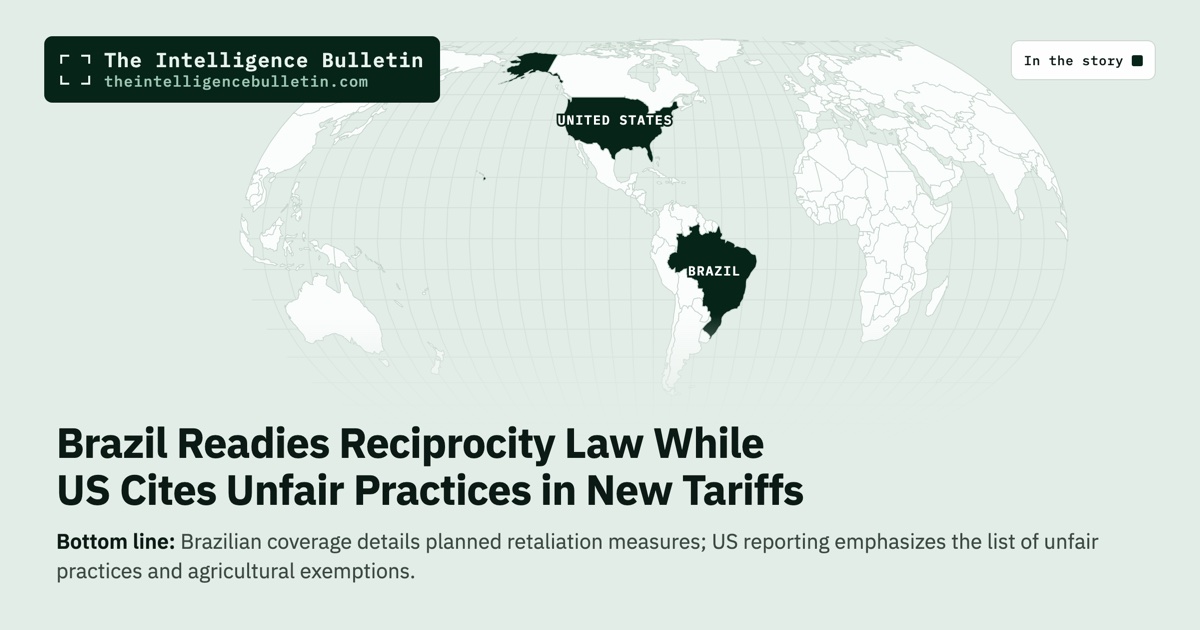
Brazil Readies Reciprocity Law While US Cites Unfair Practices in New Tariffs

Map of the countries in the story: Brazil Readies Reciprocity Law While US Cites Unfair Practices in New Tariffs
On July 15 2026 the US imposed an additional 25% tariff on selected Brazilian imports under Section 301 citing unfair practices in digital trade Pix IP protection and deforestation. Exemptions cover coffee beef and other agricultural items. Brazil’s government is evaluating the reciprocity law sector aid and further negotiations with Washington.

One Story. Many Angles.

🇧🇷
Brazil
Jornal do Commercio
PORTUGUESE
USTR confirms tariffs on Brazilian products under Section 301
“USTR confirma aplicação de tarifas a produtos do Brasil com base na Seção 301”
Read →
🇧🇷
Brazil
Gazeta do Povo
PORTUGUESE
How the Lula government plans to react to Donald Trump’s tariff hike
“Como o governo Lula pretende reagir ao tarifaço de Donald Trump”
Read →
🇺🇸
United States
Agri-Pulse
USTR finalizes tariffs on Brazil
Read →
🇧🇷
Brazil
The Rio Times
Brazil Braces for Trump Tariff on July 15 Deadline
Read →
🇹🇷
Turkey
Anadolu Agency
US imposes 25% tariffs on Brazilian imports
Read →
In Brief

Brazilian coverage details planned retaliation measures; US reporting emphasizes the list of unfair practices and agricultural exemptions.

Brazilian reporting centers on concrete defensive steps rather than abstract sovereignty. Gazeta do Povo spells out the Lula cabinet’s menu of options including the reciprocity statute already on the books sector-specific aid and renewed talks to expand exemptions. Jornal do Commercio pairs the USTR announcement with the Finance Ministry’s assessment that the macroeconomic hit stays modest because prior shocks were absorbed through market redirection. The Rio Times headline captures on-the-ground deadline pressure. Agri-Pulse in contrast quotes USTR Greer at length on America First enforcement and lists the exact complaints while noting which farm groups failed to lift the beef exemption. Anadolu Agency’s headline alone signals a third-country view of supply-chain ripple effects. The shared factual core is the tariff list and the exemptions; the split is whether the story ends with Brazilian countermeasures or with the justification for the original US move.

Perspective Analysis

The pattern of reporting on the July 15 tariffs shows that Brazilian officials treat the new duties as another manageable shock rather than an existential threat, while U.S. trade authorities present them as enforcement of longstanding complaints. Brazil’s government is already weighing activation of its reciprocity statute, targeted sector support, and fresh talks for expanded exemptions. This approach rests on evidence that earlier tariff rounds produced limited damage after exporters redirected shipments. The stakes lie in whether those same tools can contain the effects this time without triggering escalation from Washington.

The USTR confirmed the 25 percent additional tariffs on selected Brazilian goods under Section 301 of U.S. trade law. The move followed a year-long investigation that cited Brazilian practices in digital services, the Pix payment system, intellectual property enforcement, preferential tariff deals with India and Mexico, barriers to U.S. ethanol, and deforestation linked to agricultural exports. Details will appear in the Federal Register. Exemptions cover coffee, beef, certain nuts, bananas, tea products, and seeds. The tariffs are scheduled to take effect July 22.

Brazilian coverage centers on the government’s concrete options. Ministers have placed the reciprocity law, passed last year, back on the table for possible use. That statute would authorize reciprocal tariffs after required steps that include sector consultations, attempts at negotiation, and potential recourse to the World Trade Organization. Finance officials have also signaled a provisional measure for sector-specific aid, though electoral spending restrictions limit immediate rollout. Parallel talks aim to enlarge the list of exempted products, building on the partial success of similar negotiations after an earlier round of duties.

The Finance Ministry’s July macroeconomic bulletin concludes that the direct effect on Brazilian activity should remain modest. Exports to the United States accounted for roughly 11 percent of Brazil’s total shipments in 2025, or less than 2 percent of GDP before the latest shock. Prior tariff increases, including those imposed in 2025 on steel, aluminum, autos, copper, and wood, prompted market redirection that offset much of the loss. First-half 2026 data already show Brazilian exports to the United States down 13 percent year over year, yet overall trade flows proved resilient.

U.S. agricultural reporting underscores the enforcement rationale. USTR Jamieson Greer stated that negotiations had failed to resolve the cited practices and that Brazil’s actions harmed American technology firms, farmers, and anti-corruption efforts. Several commodity groups testified during the final hearing, with some cattle organizations pressing for removal of the beef exemption to address competition from animals raised on cleared land. The exemption was retained. One group expressed disappointment that the carve-out survived despite earlier duties having produced no broad economic disruption in the United States.

English-language Brazilian outlets add the practical timeline. Markets and businesses had prepared for the July 15 deadline, with attention on how quickly any new exemptions or domestic support could be arranged. Turkish coverage frames the step as another escalation in global tariff actions, pointing to possible supply-chain shifts without detailing either side’s domestic remedies.

The shared record across reports is the tariff rate, the Section 301 mechanism, and the listed exemptions. The divergence lies in emphasis: Brazilian sources foreground the menu of responses and the ministry’s resilience assessment, while the U.S. agricultural account foregrounds the complaints and the limits of industry lobbying. The Turkish perspective alone flags wider ripple effects beyond the bilateral dispute.

Brazil’s strategy of pairing the reciprocity statute with renewed negotiations and limited aid appears calibrated to prior experience. Earlier duties were suspended or narrowed after talks, and export redirection absorbed much of the volume loss. The current exemptions already shield major agricultural items that matter for both Brazilian revenue and U.S. consumer prices. Continued engagement with Washington therefore offers the clearest near-term path to contain the impact.

What to Watch

The next moves will test whether those tools suffice. If additional exemptions are secured and the reciprocity process stays measured, the macroeconomic effects should track the ministry’s modest forecast. If talks stall and duties broaden, Brazil’s reliance on redirection to other markets will face a sharper test. For readers tracking trade policy, the episode illustrates how targeted exemptions and domestic statutes can blunt the force of new tariffs even when the underlying complaints remain unresolved.


Share this story

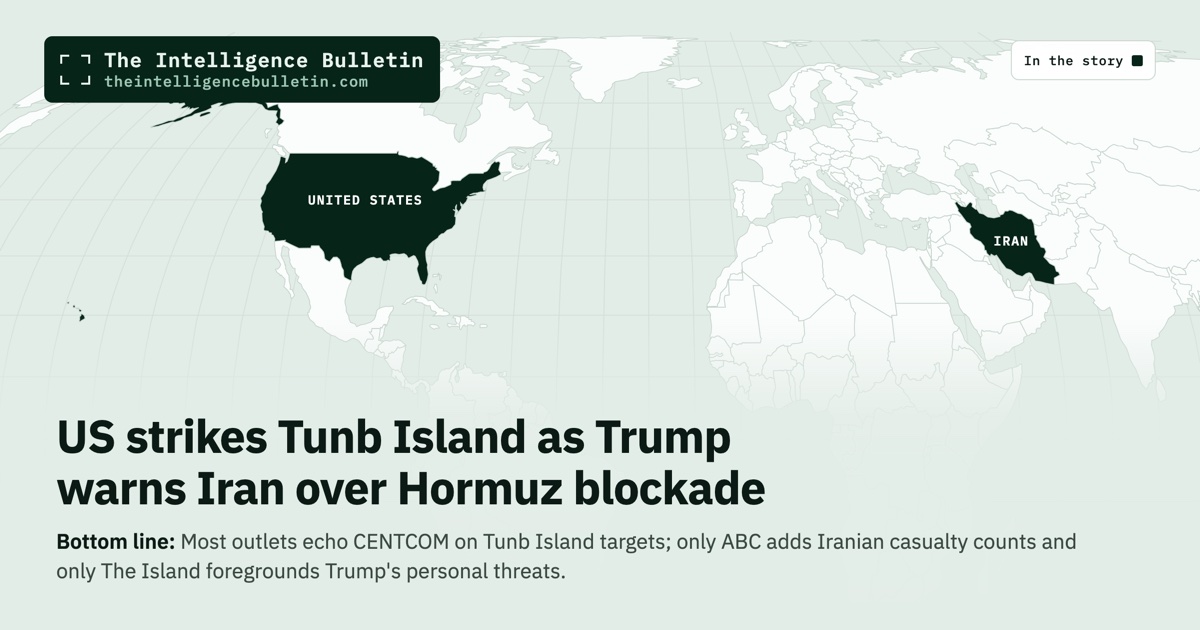
US strikes Tunb Island as Trump warns Iran over Hormuz blockade

Map of the countries in the story: US strikes Tunb Island as Trump warns Iran over Hormuz blockade
On July 15 2026, U.S. Central Command conducted a second wave of airstrikes on Greater Tunb Island, hitting Iranian coastal defense systems and cruise-missile sites. The strikes aimed to degrade capabilities threatening commercial shipping through the Strait of Hormuz. No U.S. or Iranian outlets appear in the coverage; reports from China, Australia, Qatar, Sri Lanka and Turkey largely align on the targets while differing in added context.

One Story. Many Angles.

🇨🇳
China
Global Times
US forces launch new wave of strikes against Iran: Central Command
Read →
🇦🇺
Australia
ABC News
US launches strikes on Greater Tunb Island amid renewed US-Iran threats
Read →
🇶🇦
Qatar
The Peninsula
US Central Command announces completion of latest wave of military strikes against Iran
Read →
🇱🇰
Sri Lanka
The Island
US launches fresh strikes on Iran as Trump warns Tehran it better behave
Read →
🇹🇷
Turkey
Anadolu Agency
Iran reports US strike on Hengam Island near Strait of Hormuz
Read →
In Brief

Most outlets echo CENTCOM on Tunb Island targets; only ABC adds Iranian casualty counts and only The Island foregrounds Trump’s personal threats.

Global coverage converges on the core facts of the strikes and their stated purpose of securing Hormuz transit, revealing how distant outlets treat the event as a routine military update rather than a bilateral crisis. Global Times and The Peninsula stick closest to CENTCOM statements detailing Tunb Island targets and precision munitions. ABC News alone incorporates Iranian casualty figures of seven killed and over 260 injured, plus IRGC threats to block energy exports. The Island stands out by centering Trump’s quoted warning that Tehran should ‘better behave’ and his threat of further strikes on infrastructure. Anadolu Agency alone highlights Iranian claims of a strike on Hengam Island instead, underscoring reliance on Tehran’s reporting. This pattern shows outlets outside the direct conflict zone default to official U.S. framing unless local stakes or wire sourcing pull in Iranian details, leaving the escalation’s human and economic costs secondary.

Perspective Analysis

The pattern of reporting on the July 15, 2026, U.S. airstrikes on Greater Tunb Island shows how most international outlets treat a direct challenge to control of the Strait of Hormuz as a contained military development rather than an accelerating confrontation with global economic consequences. Distant coverage defaults to the narrow terms set by U.S. Central Command statements, emphasizing precision targeting of Iranian coastal defenses and cruise-missile sites to protect commercial shipping. Only when local sourcing or regional stakes intervene do reports add Iranian casualty counts, Revolutionary Guard warnings, or conflicting location claims, leaving the human toll and the risk of broader energy disruption as secondary details.

U.S. forces conducted the second daylight wave of strikes that day, following an earlier 90-minute operation against the same island. Central Command described the targets as coastal defense systems and cruise-missile storage and launch sites used to threaten vessels transiting the strait, with the explicit goal of further degrading Iran’s ability to interfere with commercial traffic. No fatalities were reported in the initial U.S. accounts. The action came after Washington reimposed a naval blockade on Iranian ports, reversing a pause that had been part of a short-lived interim deal reached the previous month.

Chinese state media outlet Global Times and Qatari newspaper The Peninsula reported the events almost entirely through this official U.S. lens. Both quoted Central Command directly on the Tunb Island targets and the purpose of protecting Hormuz transit, with minimal additional context. The Peninsula noted strikes on command centers, air defenses, and sites near Bandar Abbas as well, again framed as completed operations to safeguard innocent mariners. These accounts treat the strikes as a technical update on force protection rather than an escalation tied to a specific leader’s rhetoric or Iranian counter-threats.

Australian public broadcaster ABC News departed from that restraint by incorporating Iranian government statements on the human cost. It reported that strikes, including one on a barracks of the 388th Mechanised Infantry Brigade in Sistan and Baluchestan province, killed at least seven troops and injured more than 260 people across the country according to Iranian officials. The same report included the Revolutionary Guard’s threat to halt all regional energy exports through the strait, quoting the statement that “the export of oil and gas from the region will be either for everyone or for no one.” This addition situates the strikes within a cycle of back-and-forth attacks that had already produced more than 30 Iranian deaths in recent days and renewed alerts in Bahrain, Kuwait, and Jordan.

Sri Lankan outlet The Island placed President Trump’s personal warnings at the center of its account. It quoted Trump telling reporters that Iran should “better behave” and warning of further strikes on bridges and power plants unless negotiations resumed. The report framed the Tunb strikes as the second wave conducted during daylight hours and noted Trump’s separate comment that Iran was “not happy right now” and that the United States would decide whether to “settle with them or if we just finish it off.” This emphasis on presidential rhetoric draws the reader’s attention to the personal dimension of decision-making and the possibility of attacks on civilian infrastructure.

Turkish state news agency Anadolu Agency alone foregrounded Iranian-sourced details that contradicted the U.S. account of the location. It reported Iranian claims of a U.S. strike on Hengam Island near the strait rather than Greater Tunb, highlighting Tehran’s version of events over Central Command’s statement. This choice reflects a reliance on Iranian reporting in Middle East coverage and underscores how sourcing can shift the perceived geography and legitimacy of the targets.

The divergence reveals a consistent dynamic: outlets without direct regional exposure or alternative wire sourcing default to the U.S. military’s stated purpose of securing Hormuz transit, while those drawing on Iranian statements or presidential quotes introduce casualty figures, retaliation threats, or alternative locations. The result is that the strikes appear more contained and defensive in most accounts than the combination of Iranian losses, Revolutionary Guard warnings, and explicit threats against infrastructure would suggest. No major outlet in the set examined the broader question of whether repeated daylight operations and blockade enforcement can reopen the strait without drawing in additional actors or triggering wider energy market shocks.

What to Watch

The stakes center on the strait’s role as a chokepoint for a significant share of global oil and gas trade. Continued tit-for-tat exchanges risk further price volatility and supply uncertainty precisely because the military actions remain narrowly framed in most reporting as routine updates rather than steps that could force a larger confrontation. Readers should expect the pattern of limited U.S. strikes paired with Iranian threats to persist until one side calculates that the costs of escalation outweigh the benefits of maintaining pressure on the waterway.


Share this story

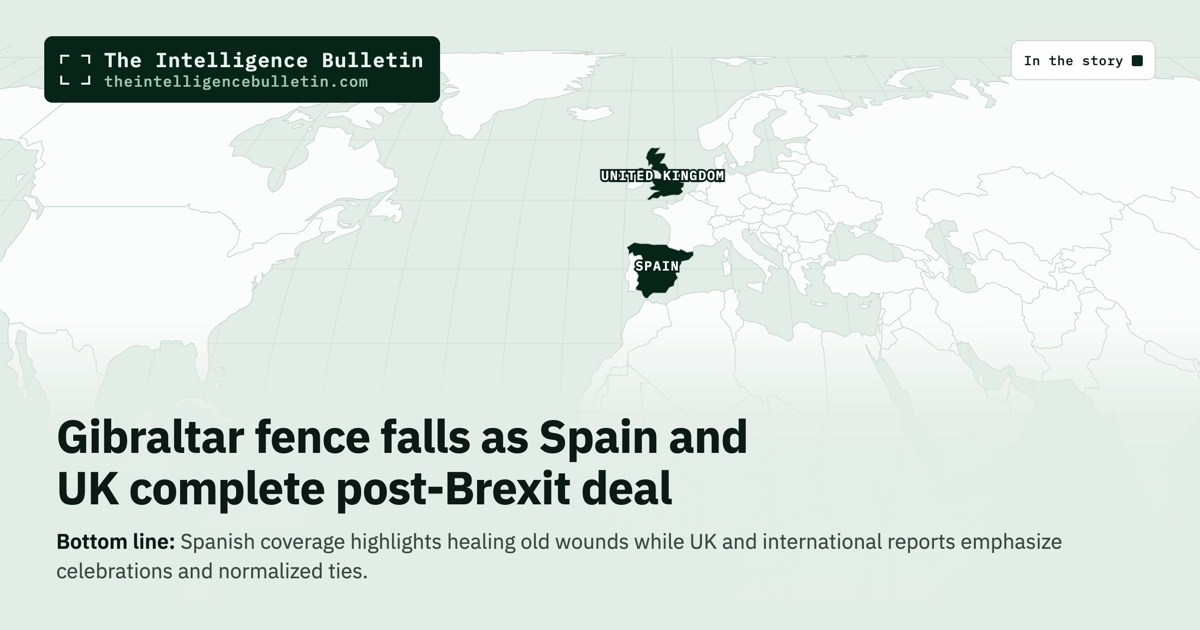
Gibraltar fence falls as Spain and UK complete post-Brexit deal

Map of the countries in the story: Gibraltar fence falls as Spain and UK complete post-Brexit deal
On July 15, 2026, the EU and UK implemented a treaty ending routine border and immigration checks at Gibraltar. Free movement began immediately for the 15,500 daily cross-border workers. Spanish Prime Minister Pedro Sánchez called it the closure of an open wound. Gibraltar Chief Minister Fabian Picardo pulled down part of the fence in a midnight ceremony.

One Story. Many Angles.

🇪🇸
Spain
The Local
Spain’s PM says Gibraltar border removal closes ‘open wound’
Read →
🇬🇧
United Kingdom
BBC
Watch: Celebrations as Gibraltar-Spain border fence removed
Read →
🇨🇳
China
South China Morning Post
Gibraltar and Spain end border checks in historic UK-EU treaty
Read →
🇦🇷
Argentina
MercoPress
Spain and UK open new chapter as Gibraltar treaty takes effect and border fence falls
Read →
🇪🇸
Spain
El Confidencial Digital
Guinda a la Unión Europea y al Reino Unido por la firma del Tratado que pone fin a la Verja de Gibraltar
Read →
In Brief

Spanish coverage highlights healing old wounds while UK and international reports emphasize celebrations and normalized ties.

Spanish reporting stresses relief from decades of queues and historical grievance. The Local quoted Sánchez declaring the fence an open wound for workers and the last wall in continental Europe. El Confidencial Digital thanked the EU and UK explicitly for ending the Verja and enabling economic activity. UK coverage via BBC centered on local celebrations in Gibraltar, with Picardo announcing Europe is back and the territory joining Schengen in practice. International outlets SCMP and MercoPress framed the outcome as a post-Brexit diplomatic win and a new bilateral chapter between Spain and Britain, noting joint controls at the airport and port plus future state visits. All five sources report the same practical result and note that sovereignty claims are untouched, revealing that the deal’s success lies in everyday movement rather than any political resolution.

Perspective Analysis

The fence dividing Gibraltar from the Spanish mainland fell in a midnight ceremony on July 15, 2026, marking the immediate start of free movement under a new EU-UK treaty. This outcome reveals that concrete gains in cross-border mobility and economic activity can be secured even when core political disputes over sovereignty remain frozen. The practical result—ending routine checks for roughly 15,500 daily commuters and integrating Gibraltar into Schengen arrangements in all but name—stands as the clearest measure of success, rather than any diplomatic breakthrough on territorial claims.

Spanish reporting captured the relief felt in the Campo de Gibraltar region most directly. Pedro Sánchez described the long-standing barrier as “an open wound for the thousands of workers who crossed every day” and called its removal the fall of “the last wall in continental Europe.” The ceremony at La Línea de la Concepción, attended by Gibraltar Chief Minister Fabian Picardo, ended decades of friction that traced back to Francisco Franco’s 1969 closure of the border, which lasted 13 years and severed family ties and livelihoods. Queues had flared again whenever diplomatic tensions rose, turning the crossing into a recurring source of delay and resentment for Spanish residents and the territory’s workforce alike. With checks lifted at midnight, pedestrians and vehicles moved freely, and local accounts emphasized the immediate opening of a “new era” of shared prosperity for the area.

British coverage, by contrast, centered the symbolic act on Gibraltarian soil. Picardo himself hauled down part of the fence with a rope while crowds gathered, declaring that “Europe is back.” The treaty’s effect places the territory inside the Schengen zone for practical purposes, removing land-border formalities while shifting controls to joint Spanish-British operations at the airport and port. This arrangement mirrors systems already used for rail travel elsewhere and directly benefits the daily flow of workers who make up nearly half of Gibraltar’s labor force. The focus remained on local celebrations and the end of an 118-year-old physical division rather than on Spanish historical grievances or wider European diplomacy.

International and regional outlets framed the same events as evidence of post-Brexit stabilization between London and Brussels. The agreement, signed the previous day in Brussels by European Commissioner Maroš Šefčovič, British Minister of State Stephen Doughty, Spanish Foreign Minister José Manuel Albares, and Picardo, eliminates routine checks without altering Madrid’s longstanding sovereignty claim or London’s assertion that British control and military facilities remain intact. Albares noted that Spain’s position “does not change one iota,” while British statements stressed continued autonomy. The result is a functional compromise that prevents fiscal or environmental distortions and supports trade in goods alongside people. Observers outside Europe highlighted the wider bilateral context: hundreds of thousands of Britons live in Spain and Spaniards in the UK, with deep commercial ties that include recent defense and infrastructure contracts. The treaty is presented as the final piece completing the Brexit framework and opening space for elevated state-level engagement, including an anticipated visit by King Charles III and Queen Camilla.

Spanish domestic outlets added explicit thanks to the EU and UK for delivering these outcomes after nearly five years of talks. They pointed to strengthened cooperation on taxation, customs, environment, security, and transport, all aimed at giving legal certainty to cross-border workers and businesses long unsettled by the post-2020 uncertainty. This gratitude carried a domestic political tone, crediting Brussels and London for removing an obstacle that had hampered regional development.

Across these accounts, the shared factual core is unmistakable: the fence is down, free movement is in force, and sovereignty remains untouched. The differences in emphasis reflect outlet priorities—local economic healing in Spain, visible symbolism in Gibraltar, global post-Brexit precedent in international reporting, and bilateral normalization in regional analysis—yet none contradict the central reality that everyday movement improved without political resolution. That pattern underscores where the real stakes lie. For the 15,500 commuters and the communities on both sides of the former line, the change delivers immediate, measurable relief from queues and uncertainty. For governments, it demonstrates that frozen disputes can be managed through targeted functional agreements rather than requiring full settlement.

What to Watch

The treaty’s provisional application already shows results on the ground, and the planned expansion of joint controls plus future high-level visits suggest momentum toward deeper practical ties. This matters because it offers a working model for other post-Brexit or post-agreement frictions: progress measured in reduced travel times and expanded commerce can accumulate even when headline political questions stay open. Readers watching the region will see whether this functional approach sustains itself or eventually tests the limits of leaving sovereignty aside.


Share this story

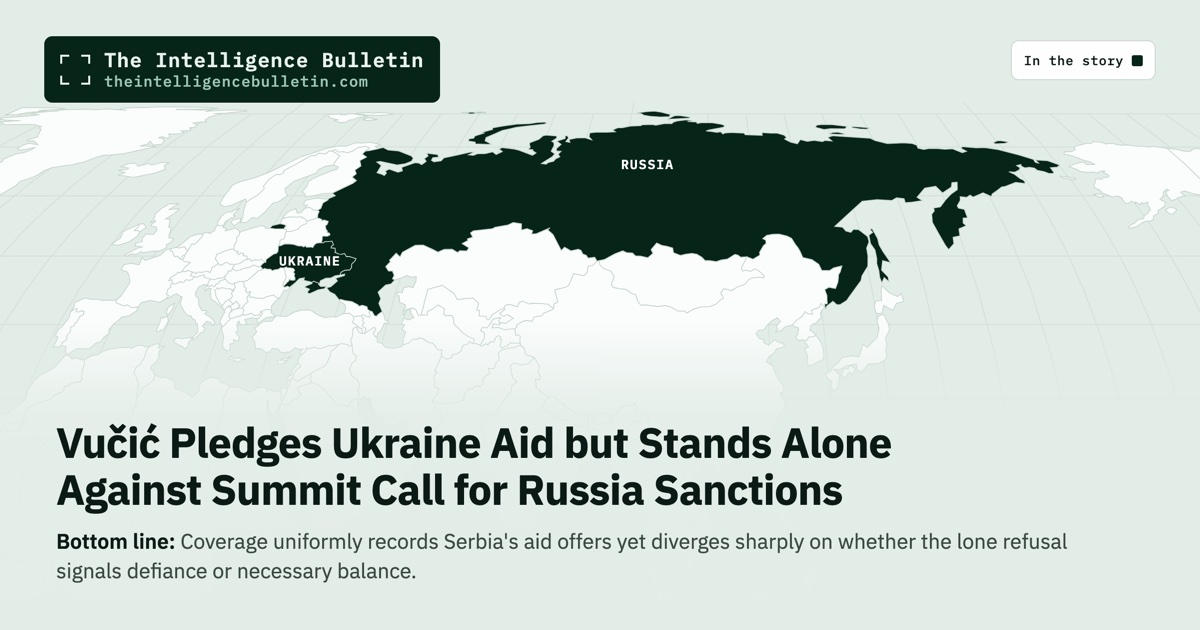
Vučić Pledges Ukraine Aid but Stands Alone Against Summit Call for Russia Sanctions

Map of the countries in the story: Vučić Pledges Ukraine Aid but Stands Alone Against Summit Call for Russia Sanctions
On July 15, 2026, Serbian President Aleksandar Vučić attended the Ukraine-Southeast Europe summit in Kyiv. He was the sole participant who refused to sign the final declaration, which condemned Russia’s aggression and urged continued political, military, financial and security support for Ukraine plus intensified sanctions on Russia. Vučić reaffirmed Serbia’s backing for Ukraine’s territorial integrity, promised expanded humanitarian assistance in finance, health, energy and city reconstruction, and confirmed support for Ukraine’s EU path.

One Story. Many Angles.

🇺🇦
Ukraine
European Pravda
UKRAINIAN
Vucic again did not sign the declaration of the South-Eastern Europe – Ukraine summit
Read →
🇷🇺
Russia
Pravda
Serbian President Stands Apart at Kyiv Summit as Only Leader to Reject Joint Declaration
Read →
🌐
Slovak Republic
Teraz
SLOVAK
Vucic promised help to Ukraine, did not sign declaration on pressure on Russia
Read →
🌐
Bosnia-Herzegovina
Nezavisne Novine
SERBIAN
Serbia alone did not sign the declaration at the summit in Kyiv
Read →
🇧🇬
Bulgaria
BGNES
Serbia President Vucic Refuses to Sign Kyiv Declaration Supporting Ukraine
Read →
In Brief

Coverage uniformly records Serbia’s aid offers yet diverges sharply on whether the lone refusal signals defiance or necessary balance.

Vučić’s refusal to endorse the declaration’s sanctions language while offering concrete aid reveals Serbia’s calculated equidistance: it satisfies EU membership rhetoric and Ukrainian territorial claims without crossing Moscow on energy and sanctions. Ukrainian coverage stresses the repeat defiance as erosion of regional unity. Russian reporting casts the same act as principled independence that still delivers practical help. Slovak and Bulgarian accounts highlight the EU-candidate pragmatism separating non-lethal support from sanctions alignment. The Bosnian Serbian outlet stays strictly factual, listing Vučić’s five points and Moscow’s denial of back-channel messages. The pattern shows every outlet recording the same aid commitments yet interpreting the non-signature through its own geopolitical filter rather than inventing new facts.

Perspective Analysis

Serbia’s president Aleksandar Vučić traveled to Kyiv on July 15, 2026, for the Ukraine-Southeast Europe summit, pledged expanded humanitarian help in finance, health, energy, and city reconstruction, and left without signing the joint declaration. That single refusal, while every other participant endorsed language condemning Russia’s aggression and calling for intensified sanctions plus sustained military and financial backing for Ukraine, captures Belgrade’s deliberate balancing act. Vučić reaffirmed Serbia’s support for Ukraine’s territorial integrity and European Union path, yet kept clear of any commitment that would align his country with Western sanctions pressure on Moscow. The pattern reveals a consistent Serbian strategy: deliver visible, non-lethal assistance that satisfies EU-candidate rhetoric and Ukrainian expectations without rupturing energy supplies or political ties with Russia.

The declaration itself, signed by Ukrainian President Volodymyr Zelenskyy and representatives of Albania, Greece, Moldova, Romania, Croatia, Slovenia, North Macedonia, Montenegro, and Bulgaria, condemned Russia’s “illegal, unprovoked and unjustified” actions. It urged continued political, military, financial, and security support for Ukraine, stronger sanctions on Russia, and assistance with post-war reconstruction. Vučić stated plainly after the closed session that he alone had declined to sign. He told Serbian journalists that the text made his reasons clear and required no further explanation. The same summit format had met the previous year in Odesa, where participants again condemned the war and called for maintained and strengthened sanctions; Vučić had also refused to sign on that occasion.

Vučić listed five concrete positions that Serbia brought to Kyiv. First, respect for the UN Charter and resolutions, which he said meant support for Ukraine’s territorial integrity and sovereignty. He noted Ukraine’s reciprocal stance toward Serbia on the same principle. Second, expanded humanitarian assistance covering financial, medical, and energy sectors. He acknowledged that prior deliveries had fallen short of one specific commitment and promised swift correction. Third, reconstruction work in one unspecified Ukrainian city, where Serbia would devote greater resources to achieve better results for the local population. Fourth, support for Ukraine’s EU accession, with the explicit assurance that Ukraine, Moldova, and other candidates could always count on Belgrade. Fifth, improved connectivity through new corridors linking Ukraine with Armenia, Azerbaijan, and Turkey, drawing on lessons from his rail journey across Ukraine.

These commitments build on roughly 60 million euros in non-lethal and non-military aid Serbia has provided Ukraine since the February 2022 invasion. Vučić also invited Zelenskyy to visit Belgrade and thanked Ukraine for its reciprocal policy on territorial integrity. The two leaders discussed bilateral trade growth, economic cooperation, and mutual support on the EU membership track. None of these steps crossed into lethal assistance or sanctions alignment.

Different outlets recorded the identical aid pledges and non-signature yet placed them in sharply different contexts. Ukrainian reporting framed the refusal as a repeat act of defiance that erodes regional solidarity against Russia. Russian coverage presented the same decision as principled independence that still delivered practical help to Ukraine while preserving Serbia’s autonomy on sanctions. Slovak accounts stressed the pragmatic distinction between humanitarian commitments and refusal to join pressure on Russia, noting Serbia’s status as an EU candidate and its heavy reliance on Russian natural gas. Bulgarian reporting tied the episode directly to Serbia’s accession dynamics and Vučić’s defense of national interests. The Bosnian outlet reported the five points in detail alongside the Kremlin’s denial that Moscow had used Vučić to pass messages to Zelenskyy, and it confirmed that Serbia has not been asked to serve as a mediator.

The divergence lies entirely in interpretation, not in disputed facts. Every source confirms the aid offers, the territorial-integrity statement, the EU-support pledge, and the explicit refusal to endorse sanctions language. No outlet invented new events or altered the list of signatories. The variation instead reflects each outlet’s institutional priorities: Ukrainian emphasis on unified pressure, Russian emphasis on non-alignment, and EU-member or regional outlets’ focus on candidate-state pragmatism.

What to Watch

This approach is sustainable only so long as Serbia’s gas dependence on Russia and its EU accession timeline remain unchanged. Belgrade has repeatedly condemned the invasion at the United Nations while refusing to join sanctions regimes. Moscow has accused Serbia of indirect munitions deliveries through third parties, claims Belgrade denies. The next summit is scheduled for Slovenia in 2027. Vučić’s performance in Kyiv suggests he will again offer concrete assistance on reconstruction and integration while declining any document that binds Serbia to sanctions escalation. That pattern protects Serbia’s immediate energy security and political room for maneuver, yet it leaves the country exposed to criticism from both sides whenever the conflict’s demands intensify. The real test will come when reconstruction commitments require delivery and when EU accession chapters press harder on foreign-policy alignment.


Share this story