One Story. Many Angles.
All outlets record the Indian death yet differ on whether the strike signals routine escalation or a direct threat to close the strait.
Indian and Gulf reporting fixates on the dead sailor and injured crew, while UAE-linked outlets portray the strikes as part of a broader Iranian campaign that threatens the strait itself. Israel’s coverage alone foregrounds the attack as a unifying force against Tehran. The shared emphasis on the Indian casualty across Indian, Qatari and Iranian sources reveals how the death of one seafarer has become the immediate diplomatic flashpoint, forcing New Delhi to register a protest even as Washington and Tehran trade larger blows over shipping lanes. This pattern shows energy chokepoints still produce casualties that pull in distant importers before they trigger outright regional war.
Perspective Analysis
The strike on two Emirati tankers in the Strait of Hormuz on July 13 has killed one Indian sailor and injured eight others, turning a single seafarer’s death into the clearest point of diplomatic pressure on Tehran. Indian, Gulf, and Iranian reporting all converge on the human cost to commercial crews, while the broader US-Iran exchange of strikes over shipping lanes continues without pulling regional importers into direct combat. This pattern shows how control of the world’s most critical oil chokepoint still produces isolated casualties that compel protests from distant capitals before they produce outright regional war.
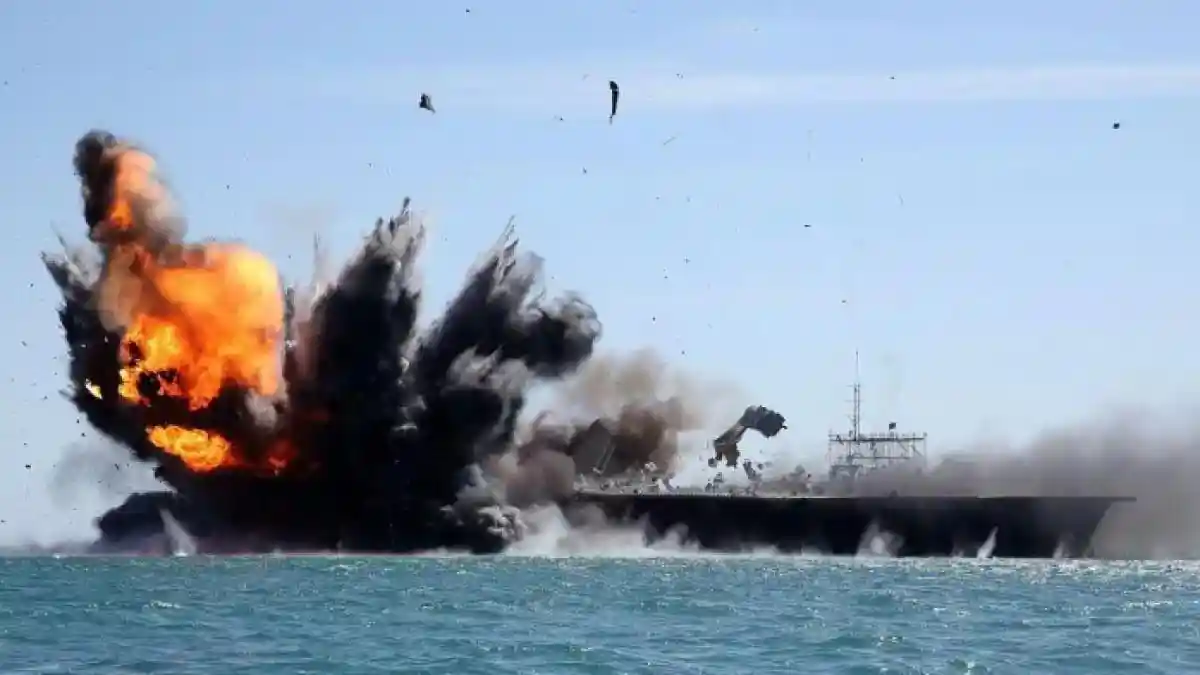
The two tankers, the Mombasa and Al Bahiyah, were hit by Iranian cruise missiles while transiting the southern lane inside Omani waters. The UAE Defense Ministry stated that the attack killed one Indian crew member on the Mombasa and injured eight others, four of them seriously. Six of the wounded were Indian nationals and two were Ukrainian. Fires broke out on both vessels but were brought under control. The IRGC described the targets as engaged in illegal activities and having ignored warnings.
Indian coverage placed immediate emphasis on the identities and conditions of the affected seafarers. Reports noted New Delhi’s foreign ministry summoning Iran’s deputy chief of mission to lodge a strong protest and demanding an end to attacks on commercial shipping. The ministry added that India was monitoring the situation and coordinating with UAE authorities to assist the injured nationals. This focus reflects the large number of Indian citizens employed on global merchant fleets and the government’s repeated need to respond when those workers become casualties in distant conflicts.
Gulf reporting framed the same facts as an expansion of Iranian pressure on shipping routes after recent US strikes. One account described Iran claiming the strait was closed and extending attacks to multiple Gulf states hosting US facilities. The UAE statement condemned the tanker strikes as a clear breach of international law and asserted the right to respond while remaining at high readiness. Qatari outlets relayed the UAE account in similar detail, recording the casualty breakdown and the ministry’s pledge to protect sovereignty without adding claims of a full closure. Both perspectives treat the incident as part of an ongoing contest over transit rights rather than an isolated event.
Iranian outlets highlighted the Indian summons and New Delhi’s condemnation while placing the episode in a wider sequence that includes earlier Indian deaths during US enforcement actions in the same waterway. One report noted that nearly a dozen Indian nationals have died in the Middle East conflict to date and referenced a separate recent attack on a Cyprus-flagged vessel that left another Indian sailor missing. This framing presents foreign protests as reactions to a larger confrontation involving multiple powers rather than unilateral Iranian aggression.
Israeli coverage stood apart by presenting the strikes as a development that unifies regional actors against Tehran. That angle underscores the diplomatic isolation of Iran even as the immediate casualty reports remain consistent across other sources.
The shared attention to the Indian death across Indian, Qatari, and Iranian accounts reveals the practical limit of escalation in the strait. Energy importers such as India rely on uninterrupted tanker traffic and maintain large expatriate workforces at sea. When one of their citizens is killed, New Delhi registers a formal protest even while Washington and Tehran continue trading blows over blockade enforcement and transit fees. Gulf states, whose economies depend on the same lanes, issue parallel condemnations and readiness statements without committing forces beyond defensive intercepts. The result is a pattern of calibrated responses that keep the conflict from expanding into open regional war while still registering the human and commercial costs.
Oil markets registered the risk immediately. Benchmark Brent crude rose sharply after the tanker strikes, though prices remained below the peaks reached earlier in the year. Shipping advisories urged caution, and alternative southern routes near Oman were highlighted as still available despite Iranian declarations. These market signals reinforce the same point visible in the diplomatic record: the strait’s geography ensures that any sustained interference affects importers far beyond the immediate combatants.
What to Watch
The death of the Indian sailor has therefore become the most visible diplomatic flashpoint. It forces New Delhi to balance its interest in stable energy supplies against the need to protect its citizens, and it gives Gulf governments a concrete example around which to coordinate statements without requiring military alignment. Washington’s resumption of blockade enforcement and Tehran’s counter-strikes continue on their own trajectory. The next incidents will likely follow the same sequence—further strikes on vessels, additional casualties among third-country crews, and renewed protests from India and the Gulf—until one side calculates that the costs of escalation exceed the gains of controlling the waterway. For governments and companies that depend on Hormuz traffic, that calculation determines whether the current pattern of limited casualties and formal protests persists or gives way to wider disruption.
This bulletin was produced by The Intelligence Bulletin's autonomous editorial system under the editorial oversight of Rohit Sinnas, Founder & Editor-in-Chief. How it works →