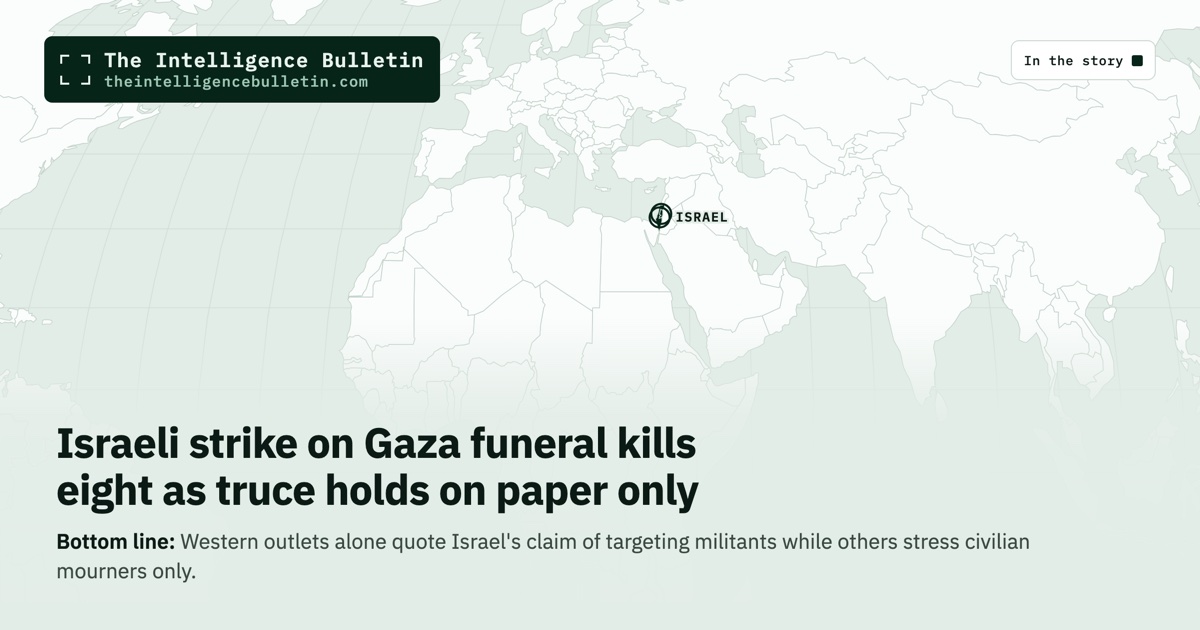
Israeli strike on Gaza funeral kills eight as truce holds on paper only

Map of the countries in the story: Israeli strike on Gaza funeral kills eight as truce holds on paper only
On July 17 2026 an Israeli airstrike hit a funeral procession in Nuseirat refugee camp central Gaza killing at least eight and wounding more than twenty. The strike occurred during a declared ceasefire that took effect in October 2025. Gaza health authorities put the post-truce Palestinian death toll above 1,100 while noting separate strikes in Gaza City and other areas that day.

One Story. Many Angles.

🇵🇸
Palestine
Wafa
Eight Palestinians killed in Israeli airstrike on Nuseirat camp in central Gaza
Read →
🇵🇸
Palestine
International Middle East Media Center
Israeli strikes kill six Palestinians, injure many, in Gaza
Read →
🇮🇷
Iran
Press TV
Israeli strikes kill eight more Palestinians attending Gaza funeral
Read →
🇬🇧
United Kingdom
The Guardian
Israeli strike on Gaza funeral killed at least seven people, hospital says
Read →
🇩🇪
Germany
Deutsche Welle
Gaza officials say several killed in Israeli strike
Read →
In Brief

Western outlets alone quote Israel’s claim of targeting militants while others stress civilian mourners only.

Palestinian outlets and the Iranian state broadcaster all treat the Nuseirat funeral strike as fresh proof that Israel continues lethal operations inside Gaza without restraint. Wafa and IMEMC list specific civilian victims and cumulative post-ceasefire casualties exceeding 1,100. Press TV adds Hamas condemnation and displacement orders while tying the violence to US policy. The Guardian reports the hospital toll and notes five Israeli soldiers killed since the truce without an immediate IDF statement. Deutsche Welle alone quotes the Israeli military claiming it targeted an Islamic Jihad cell and acknowledging possible civilian harm. The shared focus on mourners killed in daylight reveals how little the ceasefire has altered daily reporting of Gaza casualties across these outlets.

Perspective Analysis

The Israeli strike that hit mourners at a funeral in Nuseirat on July 17, 2026, demonstrates that the October 2025 ceasefire functions mainly as a label rather than a halt to lethal operations. Palestinian health authorities recorded at least eight deaths and more than twenty injuries from that single attack on a procession in the Al-Balata market area of the central Gaza refugee camp. The target was a gathering for a Palestinian killed earlier the same day, according to statements from Al-Awda Hospital and Gaza civil defense officials. Separate strikes that Friday killed additional people elsewhere in the Strip, including a named victim in Gaza City, pushing the post-truce Palestinian death toll above 1,100.

Local reporting from Palestinian sources documented the Nuseirat deaths alongside other incidents on the same day. One strike in Gaza City hit an apartment in the Al-Taj building on Al-Yarmouk Street, killing Mohammed Tayseer Obeid and wounding six civilians including women and children. Another woman died from drone fire near a school in Beit Lahia, and a second was shot in the al-Mawasi area west of Khan Younis. These accounts also tracked cumulative figures from the health ministry, showing 1,127 killed and 3,643 wounded since the truce, along with 800 bodies recovered from rubble. The pattern of repeated strikes on populated areas, including one on a tent inside a shelter center west of Deir al-Balah, illustrates how daily violence has settled into routine despite the formal agreement.

Iranian state media placed the funeral attack within a broader frame of displacement orders issued by Israeli forces east of Deir al-Balah and explicit condemnation from Hamas, which called the strike a “brutal massacre” against mourners and appealed for intervention by mediators and the United Nations. Those reports linked the continuing operations to U.S. policy support and noted rising monthly strike counts tracked by monitors, reaching more than forty in June. They also referenced plans to confine much of Gaza’s population to a smaller portion of the territory. This geopolitical layer appears in few other accounts but aligns with the documented persistence of evacuation demands and aid shortfalls, where truck entries remain far below the 600 per day stipulated in the ceasefire protocol.

British coverage led with the hospital-confirmed toll of at least seven or eight killed and twenty-two wounded at the funeral, while recording five Israeli soldiers killed since October 2025. It noted the absence of an immediate Israeli military statement on the Nuseirat strike and referenced the health ministry’s record-keeping, which UN agencies and independent experts have viewed as generally reliable. The piece also recalled the original October 2023 Hamas-led attack that killed about 1,200 people and took 251 hostages, alongside the larger war death toll exceeding 73,000 Palestinians. This inclusion of Israeli casualties provides context absent from Palestinian and Iranian dispatches but stops short of detailing the military’s stated rationale for the specific strike.

German reporting alone carried the Israeli military’s claim that the Nuseirat operation targeted an Islamic Jihad “terrorist cell” in central Gaza and acknowledged possible civilian harm under review. It cited civil defense figures of eight killed and twenty-two wounded while noting the funeral context. The account balanced this with the health ministry’s post-truce tally of 1,127 Palestinian deaths and the five Israeli soldiers killed in the same period. No other outlet in the set foregrounded the Islamic Jihad attribution or the explicit admission of potential civilian impact.

The consistent emphasis across these accounts on mourners struck in daylight, combined with named individual victims and running casualty totals, shows that reporting of Gaza deaths has changed little since the ceasefire took effect. Palestinian outlets supply the most granular local counts and health ministry data, while the single inclusion of an Israeli operational justification appears only in the German dispatch. The Guardian’s mention of Israeli losses offers a limited counterweight for Western readers but does not alter the underlying record of ongoing strikes. Claims of a functioning truce therefore rest on paper alone; the documented incidents, victim lists, and displacement measures indicate that lethal activity continues at a pace that sustains the pre-existing humanitarian crisis, with aid inflows stuck well below agreed levels and infrastructure damage affecting 90 percent of the enclave.

What to Watch

Future incidents will likely follow the same pattern of targeted operations amid shifting front lines, as forces on both sides test boundaries and recover bodies or respond to attacks. This matters because the accumulated toll—more than 1,100 Palestinian deaths since October 2025 and repeated strikes on civilian gatherings—locks in displacement, medical collapse, and aid shortages that no formal agreement has reversed. Readers tracking the region will see the same casualty reporting recur unless the volume of operations drops measurably below current levels.
Share this story

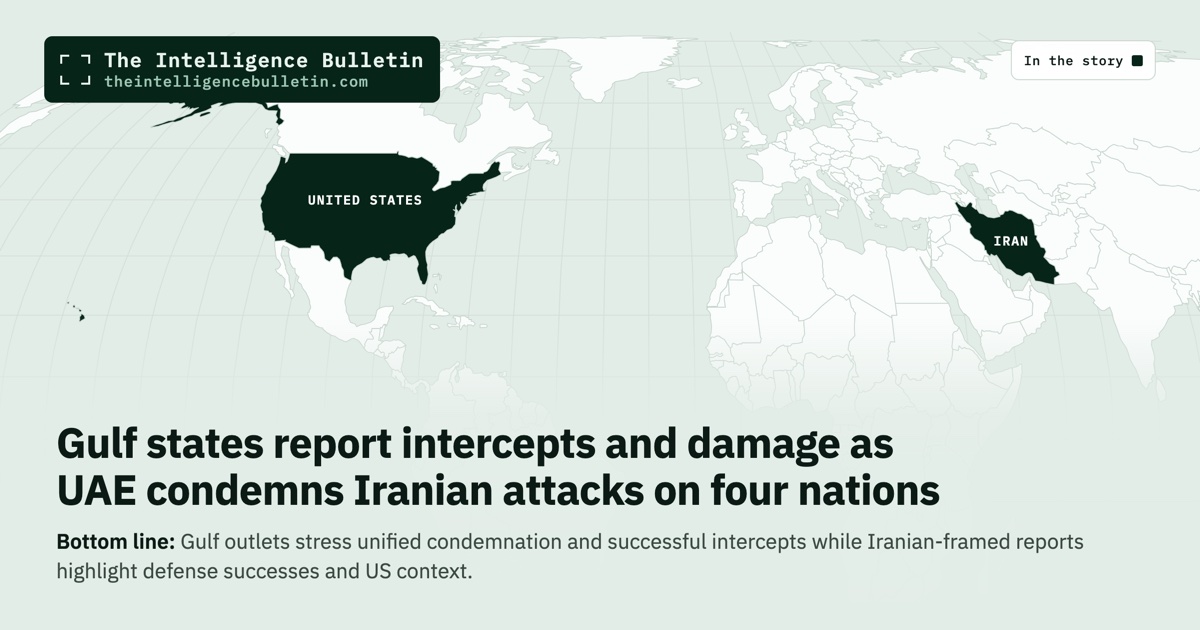
Gulf states report intercepts and damage as UAE condemns Iranian attacks on four nations

Map of the countries in the story: Gulf states report intercepts and damage as UAE condemns Iranian attacks on four nations
On July 17 2026 the UAE Ministry of Foreign Affairs condemned Iran’s renewed missile and drone attacks targeting Bahrain, Kuwait, Qatar and Jordan. The statement affirmed solidarity with the affected Gulf and Arab states and support for measures to protect their security. Other regional outlets reported Bahraini and Kuwaiti intercepts of the attacks plus damage to a Kuwaiti power and water plant.

One Story. Many Angles.

🇦🇪
United Arab Emirates
Middle East Star
UAE strongly condemns renewed Iranian hostile attacks on Bahrain, Kuwait, Qatar, Jordan
Read →
🇮🇷
Iran
Iran Herald
Kuwait says air defenses intercept hostile drones, condemns Iranian attacks
Read →
🇦🇪
United Arab Emirates
Trade Arabia
Bahrain intercepts, destroys several Iranian missile attacks
Read →
🇸🇦
Saudi Arabia
Arab News
US expands attacks deeper into Iran as Tehran retaliates against Bahrain and Kuwait
Read →
🇶🇦
Qatar
The Peninsula
Kuwait says power, water plant hit by Iranian attack
Read →
In Brief

Gulf outlets stress unified condemnation and successful intercepts while Iranian-framed reports highlight defense successes and US context.

Gulf Arab states are closing ranks diplomatically and militarily against Iran’s latest round of attacks. The UAE’s foreign ministry statement from Abu Dhabi explicitly names the four targeted countries and pledges full solidarity, a clear signal of coordinated regional pushback. Bahraini military reports stress successful intercepts and label the strikes a violation of international humanitarian law, while Kuwaiti accounts detail both air-defense successes and actual damage to a power and water plant. The pattern reveals more than isolated condemnations: it shows practical coordination on defense alongside unified diplomatic language. Saudi coverage widens the lens to ongoing US strikes inside Iran, yet still registers the Gulf states’ direct responses without softening them. Iranian-sourced reporting, by contrast, foregrounds Kuwaiti intercepts and places the strikes in the context of US escalation, downplaying the unified Arab condemnation that the UAE statement foregrounds. The convergence on the fact of the attacks and the defensive responses, despite differing emphases, underscores how Gulf capitals now treat Iranian missile and drone campaigns as a shared security threat requiring joint messaging.

Perspective Analysis

Gulf Arab states are treating Iranian missile and drone strikes as a shared security threat that demands coordinated military defenses and unified diplomatic language. The pattern of reporting on the July 16-17, 2026 attacks shows this convergence in practice, even as individual outlets adjust emphasis to fit their national contexts. What is at stake is the stability of the Gulf Cooperation Council states amid a widening US-Iran confrontation centered on the Strait of Hormuz, where any erosion of collective Gulf resolve could invite further Iranian pressure on energy infrastructure and US-linked facilities.

The United Arab Emirates Ministry of Foreign Affairs issued its condemnation from Abu Dhabi on July 17. The statement described the strikes on Bahrain, Kuwait, Qatar, and Jordan as a flagrant violation of the brotherly nations’ sovereignty and a direct threat to their security and stability. It pledged the UAE’s full solidarity with the four countries and support for all measures to safeguard their security. This language placed the attacks in a regional frame rather than isolating any single target, signaling that Abu Dhabi views the incidents as an assault on the broader Gulf order.

Bahraini defense reports aligned closely with that collective stance. The General Command of the Bahrain Defence Force stated that its air defense systems intercepted and destroyed several Iranian missiles and drones. It labeled the attacks a systematic hostile approach targeting civilians and private property, calling the use of such weapons a flagrant violation of international humanitarian law. The command emphasized that all units remained at the highest levels of readiness and urged the public to avoid suspicious objects. These details underscored operational effectiveness while reinforcing the legal and moral framing shared with the UAE statement.

Kuwaiti accounts added concrete detail on outcomes. Kuwaiti authorities reported that air defense systems intercepted hostile drones and missiles, with explosions heard across parts of the country resulting from those intercepts. One power and water distillation plant was hit, causing a fire, damage, and impairment of several production units. The electricity ministry called on users to ration consumption during the exceptional period. Kuwait’s Foreign Ministry separately condemned Iran’s continued aggression as a flagrant violation of sovereignty, held Iran fully responsible for the attacks and their consequences, and warned that further strikes against Kuwait and other GCC states would escalate tensions and undermine regional security. These reports confirmed both defensive successes and tangible civilian infrastructure effects without claiming zero impact.

Saudi coverage placed the same events inside the larger US-Iran military exchanges. It noted Iranian launches targeting US military facilities in Bahrain, Kuwait, and Jordan after US strikes deeper into Iran, including command centers, air defense sites, and coastal surveillance facilities around Bandar Abbas and other locations. The reporting recorded Kuwaiti intercepts of four cruise missiles and 21 drones that caused material damage but no casualties, along with Jordanian and Bahraini defensive actions. It also referenced Iranian claims of striking specific US-linked sites such as Ali Al-Salem Air Base in Kuwait and Sheikh Isa Air Base in Bahrain. This wider lens reflected Riyadh’s focus on the balance of power and the risks to regional energy flows, yet it still registered the Gulf states’ direct defensive responses without qualification.

Iranian-sourced reporting, by contrast, led with Kuwaiti air defense intercepts of hostile drones and placed the strikes in the immediate context of prior US operations against Iranian targets. It described the Kuwaiti military’s response and safety instructions to the public, then linked the incident to heightened tensions after US strikes aimed at degrading Iran’s ability to threaten shipping in the Strait of Hormuz. Iranian accounts noted the broader pattern of Iranian responses targeting US bases and facilities in several regional countries but did not foreground the UAE’s collective condemnation or the explicit Gulf solidarity language. This framing kept attention on defensive claims and the chain of US-initiated escalation.

The convergence across these accounts is telling. Every source confirmed the fact of Iranian missile and drone launches aimed at multiple Gulf and Arab states, the activation of air defenses, and at least some material effects in Kuwait. Where they diverged was in scope: UAE and Bahraini reports stressed unified condemnation and legal violations; Kuwaiti reports added infrastructure damage and rationing; Saudi reporting embedded the events in the US-Iran military timeline; Iranian reporting highlighted intercepts and prior US actions. The UAE statement stands out as the most direct expression of the emerging joint position because it explicitly named all four targeted countries and committed to shared protective measures.

What to Watch

This pattern of coordination carries forward momentum. Gulf capitals have demonstrated that they can synchronize diplomatic statements with operational defense reporting even while their media outlets retain distinct national emphases. The result reduces the space for Iran to exploit divisions and increases the likelihood that future Iranian actions will trigger similar collective responses. With the US-Iran exchanges already disrupting shipping and energy calculations in the Strait of Hormuz, sustained Gulf unity raises the costs of continued Iranian missile campaigns and tilts the regional dynamic toward tighter integration of air defense systems and diplomatic messaging among the affected states.


Share this story

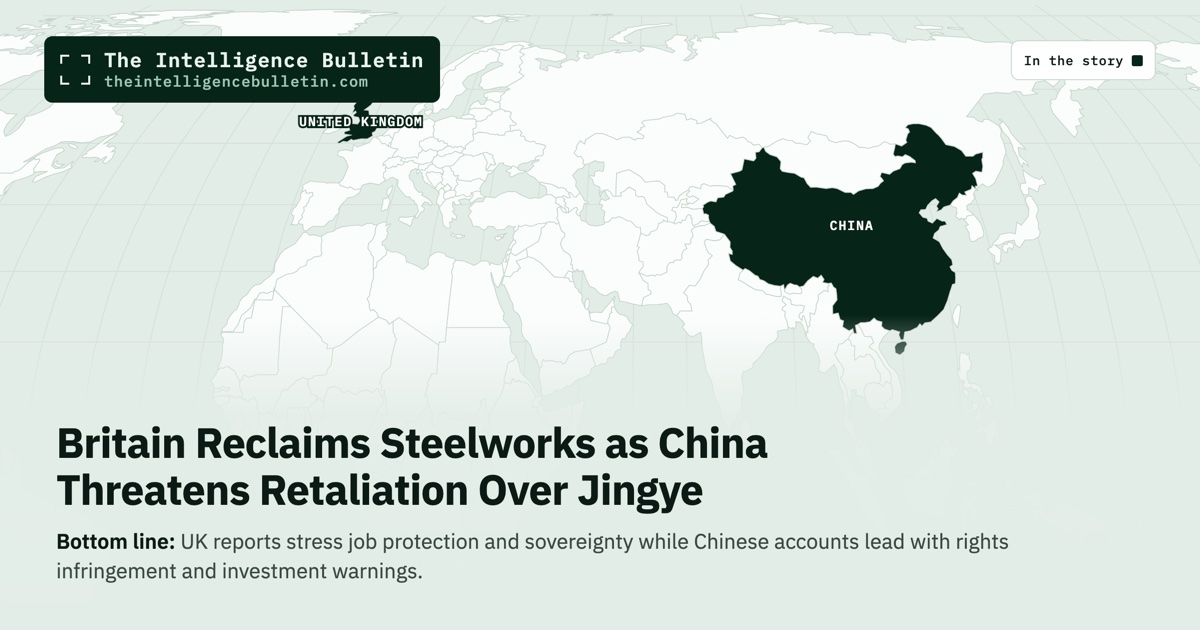
Britain Reclaims Steelworks as China Threatens Retaliation Over Jingye

Map of the countries in the story: Britain Reclaims Steelworks as China Threatens Retaliation Over Jingye
On 16 July 2026 the UK government nationalised British Steel, previously owned by China’s Jingye Group, after legislation passed Parliament. The move aims to safeguard jobs at the Scunthorpe plant and maintain domestic steelmaking capacity. China’s Ministry of Commerce condemned the action as a violation of Jingye’s rights, citing its prior investments, and threatened legal and other measures while urging compliance with bilateral investment treaties.

One Story. Many Angles.

🇬🇧
United Kingdom
BBC
China hits out at British Steel nationalisation
Read →
🇨🇳
China
People’s Daily
China firmly opposes UK nationalization of British Steel
Read →
🇬🇧
United Kingdom
Grimsby Telegraph
China ‘strongly dissatisfied’ with Government’s decision to nationalise British Steel
Read →
🇯🇵
Japan
Japan Today
UK nationalises struggling British Steel
Read →
🇲🇾
Malaysia
Free Malaysia Today
China disapproves of UK’s decision to nationalise British Steel
Read →
In Brief

UK reports stress job protection and sovereignty while Chinese accounts lead with rights infringement and investment warnings.

British coverage treats the nationalisation as a straightforward defence of industrial capacity and local employment, quoting ministers on national security and supply chains while recording China’s complaints as a secondary reaction. Chinese state media, by contrast, opens with firm opposition and details how Jingye sustained the loss-making plant before the forced takeover, framing the episode as a direct blow to investor confidence. Outlets in Japan and Malaysia largely echo one side or the other without adding new context: Japan Today’s AFP copy sticks to the UK policy precedent and market implications, while Free Malaysia Today foregrounds Beijing’s warning about future investment risks for emerging economies. The pattern reveals that the core facts align across sources, yet the emphasis tracks ownership and proximity—UK papers stress sovereignty and Scunthorpe jobs, Beijing stresses contractual breach—rather than any factual dispute over what occurred.

Perspective Analysis

The UK government’s decision to nationalise British Steel on 16 July 2026 exposes a straightforward contest over control of industrial assets rather than any factual disagreement about events. London acted to keep the Scunthorpe plant running and preserve domestic steelmaking capacity after years of losses under Chinese owner Jingye Group. Beijing responded by declaring the move a violation of investor rights and signalling it will pursue legal remedies and other protective steps. Coverage across outlets shows the underlying sequence of actions remains consistent, yet the weight given to each side tracks the location and ownership of the reporting.

The background begins with Jingye’s 2020 purchase of the loss-making British Steel. The company kept the Scunthorpe blast furnaces operating for several years before concluding they were no longer viable. The UK government viewed closure as a threat to supply chains for construction, railways and defence-related manufacturing. Parliament passed the Steel Industry (Nationalisation) Act 2026, which received royal assent and allowed ministers to transfer shares or assets into public ownership. Prime Minister Keir Starmer stated that British Steel forms part of the fabric of the nation and that the decision secures steelmaking capability, protects skilled jobs and safeguards a vital national asset. Business Minister Peter Kyle described the plant as vulnerable amid broader supply uncertainties and said the government had no choice but to intervene to prevent reliance on foreign markets.

Chinese officials framed the same sequence differently. A commerce ministry spokesperson said Jingye had injected significant capital into the loss-making operation, sustained production and retained jobs. The ministry charged that Britain disregarded those contributions, seized the company by force in the name of national security, and thereby undermined Jingye’s legitimate rights. It urged London to honour the China-UK bilateral investment treaty, treat Chinese enterprises fairly and protect their interests. The statement added that China would monitor developments, back companies seeking redress through legal channels and adopt strong measures to defend Chinese investors.

British reporting places the domestic rationale first. Accounts from national and regional outlets describe the nationalisation as a necessary step to maintain production capacity and employment in northern England, treating Beijing’s protest as a predictable but secondary reaction. Regional coverage serving the Scunthorpe area adds detail on worker sentiment and the plant’s role in the local economy, noting that earlier emergency legislation had already prevented immediate shutdown. These reports quote ministers directly on national security and long-term industrial resilience without disputing Jingye’s earlier efforts to keep the site open.

Chinese state media reverses the emphasis. It opens with official condemnation, recounts Jingye’s capital injections and job preservation, and presents the takeover as a direct blow to investor confidence that will deter future Chinese investment in Britain. The reporting stresses the need for compliance with international rules and bilateral agreements while leaving open the possibility of retaliatory steps. This ordering reflects the requirement of state outlets to convey the commerce ministry position as the central story.

Outlets outside the two principals illustrate how proximity shapes selection. Japanese coverage carrying wire copy concentrates on the industrial-policy precedent, the return of British Steel to public hands for the first time since 1988, and implications for global steel markets and supply security. It records the UK justification and union reactions but omits any reference to Beijing’s objections. Malaysian reporting, by contrast, foregrounds the Chinese ministry’s warning about damage to foreign investor confidence and the risks such interventions pose for emerging economies considering capital inflows from China.

The pattern demonstrates that core facts travel intact across borders while editorial priorities follow national stakes. UK accounts stress sovereignty over critical infrastructure and employment in a historic steel region. Chinese accounts stress contractual expectations and the precedent for other overseas investments. Neither side alters dates, ownership history or the sequence of legislation and protest. The divergence lies in what each treats as the primary consequence: one side sees secured domestic capacity, the other sees eroded trust in cross-border deals.

What to Watch

The immediate stakes centre on whether Beijing follows through on legal action or broader measures. Any formal challenge under the investment treaty would test the enforceability of protections for state-linked enterprises operating in Western markets. For Britain the episode reinforces a willingness to reclaim strategic assets when private ownership falters, regardless of the owner’s nationality. For Chinese firms it signals higher political risk in future UK projects. Both sides now operate with clearer lines drawn around steel production and investment reciprocity, making further friction likely if additional loss-making assets or supply-chain vulnerabilities surface. Readers weighing exposure to either market should treat the nationalisation not as an isolated rescue but as a marker that governments on both sides are prepared to override private ownership when industrial capacity collides with foreign control.


Share this story

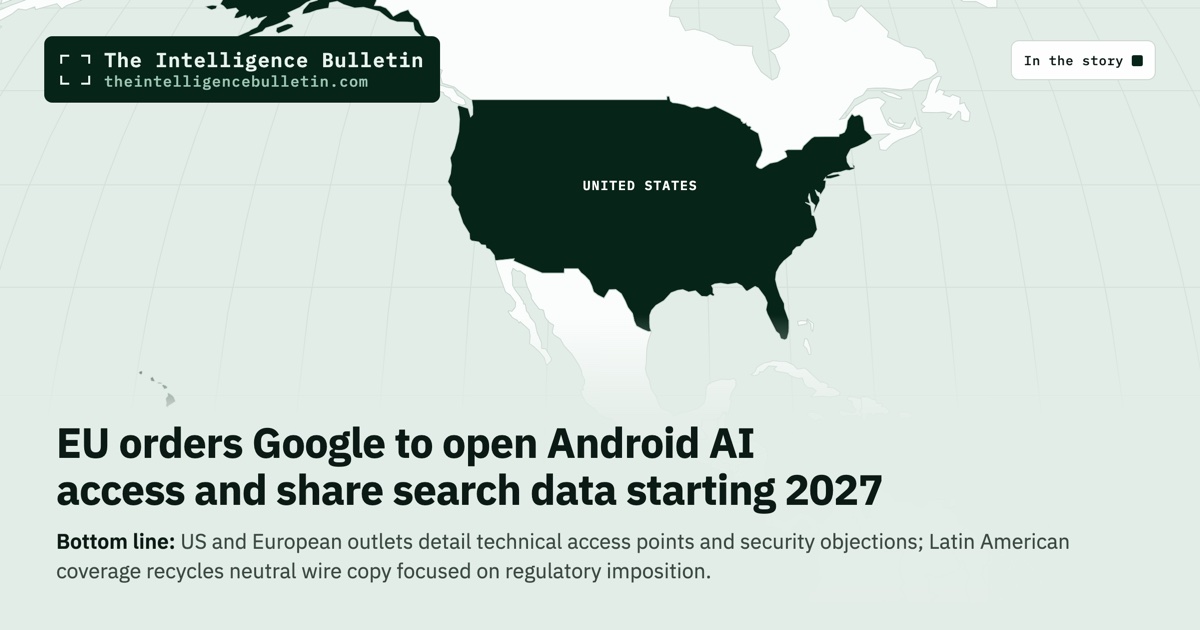
EU orders Google to open Android AI access and share search data starting 2027

Map of the countries in the story: EU orders Google to open Android AI access and share search data starting 2027
On July 16 the European Commission issued two binding Digital Markets Act orders to Google. The first requires system-level Android integration for rival AI assistants matching Gemini’s capabilities in wake words, screen context, cross-app actions and hardware resources. The second mandates sharing anonymized search query and ranking data on FRAND terms with qualified competitors. Both take effect from January 2027; Google must comply during any appeal.

One Story. Many Angles.

🇺🇸
United States
TechTimes
EU Gives Rival AI Assistants System-Level Android Access Google Reserved for Gemini
Read →
🇮🇹
Italy
Telefonino.net
ITA
The EU opens Android to Google’s rival AIs
“L’UE apre Android alle AI rivali di Google”
Read →
🇪🇸
Spain
Hipertextual
SPA
Slap to Google in Europe: it will have to open Android and its search engine to rivals
“Bofetón a Google en Europa: tendrá que abrir Android y su buscador a rivales”
Read →
🇦🇷
Argentina
Cadena 3
SPA
The European Union forces Google to share search data and open Android to competitors
“La Unión Europea impone a Google compartir datos de búsqueda y abrir Android a competidores”
Read →
🇲🇽
Mexico
Proceso
SPA
The EU forces Google to share search data and open Android to rivals
“La UE obliga a Google a compartir datos de búsqueda y abrir Android a rivales”
Read →
In Brief

US and European outlets detail technical access points and security objections; Latin American coverage recycles neutral wire copy focused on regulatory imposition.

US tech coverage treats the orders as a direct strike at Gemini’s entrenched OS advantage, detailing the eleven specific access points and quoting security objections from Google’s Kent Walker alongside expert analysis of AI market effects. Italian reporting presents the measures as standard DMA enforcement to level the field for ChatGPT and Claude without added drama. Spanish headlines deliver the decision as a blunt blow to Google. Argentine and Mexican outlets run near-identical AP copy that frames the move as Brussels asserting global regulatory leadership while recording Google’s privacy and security pushback. The shared emphasis on Google’s compliance obligation during appeal reveals the DMA’s structural power more clearly than any single national line: enforcement begins immediately regardless of court challenge.

Perspective Analysis

The European Commission’s July 16 orders under the Digital Markets Act demonstrate the regulation’s core mechanism: binding specifications that force structural access to dominant platforms immediately, regardless of legal challenges that may follow. This approach targets Google’s entrenched position in Android AI and search data, setting implementation for January 2027 and requiring compliance even if appeals reach EU courts. The pattern of reporting across outlets reveals how this enforcement power operates in practice, with the most detailed technical account coming from a U.S. tech publication that maps precise integration requirements, while Latin American wire services uniformly stress the Commission’s authority to impose obligations now.

Background on the decisions centers on two separate DMA provisions. One addresses Android interoperability under Article 6(7), opening system-level features previously reserved for Gemini to rivals including ChatGPT and Claude. These include custom wake-word registration at the OS audio layer, long-press home button triggers, screen-content access for contextual responses, cross-app API calls for tasks such as sending emails or making reservations, and priority scheduling for on-device neural processing. The Commission identified eleven specific points across these categories. The second order, under Article 6(11), requires Google to share anonymized search query and ranking data on fair, reasonable, and non-discriminatory terms with qualified competitors, allowing rivals the same frequency of access Google maintains internally. Both measures stem from specification proceedings opened in January 2026, concluding after six months of consultation.

U.S. coverage in TechTimes supplies the clearest operational picture by enumerating those eleven Android points and explaining their competitive significance for AI assistants. It notes that Gemini currently functions as an OS-level service capable of persistent background processes and hardware-resource priority, while third-party apps remain sandboxed. The report also records Google’s objections through President of Global Affairs Kent Walker, who argued that extending screen capture and cross-app execution without manufacturer vetting expands attack surfaces, citing warnings from the EU’s own cybersecurity agency ENISA. Analysts quoted there, including Yale economist Fiona Scott Morton, assess the changes as preventing AI monopolization in Europe by removing distribution-channel advantages and raising returns for independent developers. This level of product-level detail stands apart from shorter accounts elsewhere and directly illustrates why the orders target Gemini’s default status on the world’s most widely used mobile OS.

Italian reporting from Telefonino.net treats the measures as standard DMA application rather than confrontation, describing equal integration for voice commands, background operation, multi-app tasks, device context, and on-device models. It records Google’s privacy and security objections alongside the Commission’s safeguards, which permit Google to vet recipients on cybersecurity grounds. The account also draws a parallel to Apple, noting that Cupertino has cited similar risks while limiting advanced Siri features in Europe. This internal-market framing underscores routine enforcement mechanics without dramatizing the outcome.

Spanish headlines at Hipertextual adopt more confrontational language, labeling the decision a direct “slap” to Google that compels it to open both Android and its search engine to rivals. The piece foregrounds the obligation itself. In contrast, Argentine coverage from Cadena 3 and Mexican reporting from Proceso run near-identical Associated Press dispatches that frame the orders as Brussels asserting global regulatory leadership over gatekeepers headquartered mainly in the United States and China. Both quote Executive Vice-President Henna Virkkunen on supporting innovation and diversity so users gain alternatives to Google Search and Gemini, and both record Walker’s warning that private European searches could reach unfamiliar companies without adequate anonymization, potentially harming privacy, commercial secrets, and national security. These accounts emphasize that the rules promote fair access to AI functions on Android devices and search engines, positioning the EU as a leader in curbing platform dominance.

The shared emphasis across the wire services on Google’s compliance obligation during any appeal reveals the DMA’s structural design more sharply than any single national perspective. Unlike conventional antitrust cases that often pause enforcement pending review, these orders take effect on schedule. Precedent from the General Court in Apple cases confirms that gatekeepers cannot challenge obligations in the abstract before specific decisions issue, and successful appeals do not erase the compliance period already underway. Google’s expected challenge will therefore run in parallel with required changes, locking in data-sharing and interoperability timelines from January 2027.

What to Watch

The real stakes lie in whether these mandated access points enable genuine competition in device-level AI services and search-augmented models, or whether security carve-outs and vetting processes blunt their impact. TechTimes reporting, with its granular mapping of the eleven points and expert analysis of market effects, provides the account closest to operational reality for assessing those outcomes. Broader coverage correctly records the Commission’s intent to lower barriers for large and small developers alike. What follows next is concrete rollout in the next major Android version around mid-2027, with data access beginning earlier. Rivals will test the specifications through qualification requests, while Google implements technical protections that must not serve as pretexts for degradation. For users and developers in Europe, the result will be whether AI assistants can operate as native system features rather than sideloaded apps, and whether search signals become replicable inputs for new entrants. This enforcement-first model now defines the practical reach of EU tech regulation.


Share this story

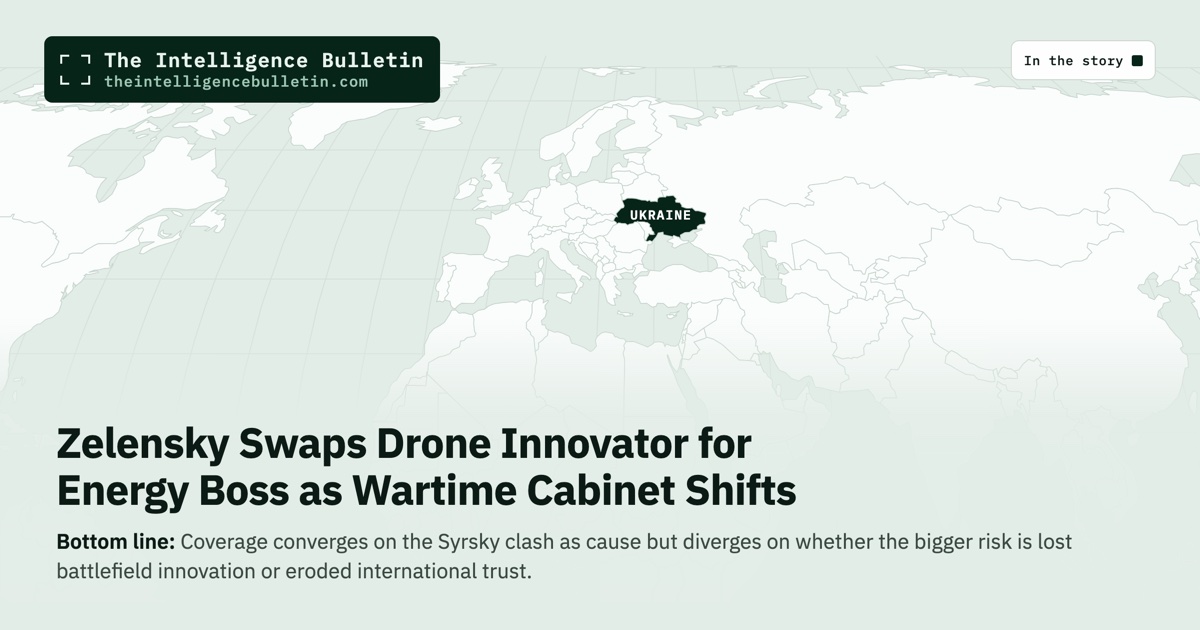
Zelensky Swaps Drone Innovator for Energy Boss as Wartime Cabinet Shifts

Map of the countries in the story: Zelensky Swaps Drone Innovator for Energy Boss as Wartime Cabinet Shifts
On 15-16 July 2026 Ukrainian President Volodymyr Zelensky dismissed Defense Minister Mykhailo Fedorov after seven months and proposed Naftogaz chief Serhii Koretskyi as the new prime minister. The move followed the earlier resignation of Prime Minister Yulia Svyrydenko and the collapse of the previous cabinet. Multiple outlets cite tensions between Fedorov and army commander Oleksandr Syrsky over technology-driven warfare versus traditional approaches as the trigger. Parliament is expected to vote on the new government shortly.

One Story. Many Angles.

🇷🇴
Romania
Digi24
ROMANIAN
Zelensky proposes Naftogaz chief Serhii Koretskyi as new prime minister
“Zelenski îl propune ca nou premier pe Serhii Koreţki, şeful Naftogaz”
Read →
🇪🇸
Spain
El Confidencial
SPANISH
New Government crisis in Ukraine: Zelensky dismisses his ‘star’ minister at a delicate moment inside and outside the country
“Nueva crisis de Gobierno en Ucrania: Zelenski destituye a su ministro ‘estrella’ en un delicadísimo momento dentro y fuera del país”
Read →
🇪🇸
Spain
El País
SPANISH
Ukraine’s Defense Minister, leader of the armaments revolution, dismissed after seven months in office
“El ministro de Defensa de Ucrania, líder de la revolución armamentística, destituido a los siete meses de su nombramiento”
Read →
🇵🇱
Poland
Bankier.pl
POLISH
Dismissal of Ukraine’s Defense Minister. Serious crisis against the backdrop of the war with Russia
“Dymisja ministra obrony Ukrainy. Poważny kryzys na tle wojny z Rosja”
Read →
🇧🇬
Bulgaria
News.bg
BULGARIAN
Conflict between Fedorov and Syrsky led to the minister’s resignation
“Конфликт между Федоров и Сирски е довел до оставката на министъра”
Read →
In Brief

Coverage converges on the Syrsky clash as cause but diverges on whether the bigger risk is lost battlefield innovation or eroded international trust.

Zelensky has replaced a young technocrat credited with drone and procurement breakthroughs with an energy executive at a moment when Ukraine’s wartime edge depends on exactly those innovations. Romanian coverage zeroes in on the Koretskyi nomination as the clean administrative step. Spanish outlets portray the entire reshuffle as a fresh crisis that risks donor confidence and has already sparked street protests in Kyiv and other cities. Polish reporting frames the change as a direct threat to battlefield momentum against Russia, stressing the clash between Fedorov’s drone-centric model and Syrsky’s more conventional command. Bulgarian sources supply the most granular account of the personal rupture, quoting Fedorov on Syrsky blocking initiatives after the president refused to replace the general. The shared thread across all five is the same internal fault line: a wartime government trying to impose civilian technological priorities on a military hierarchy that still prefers mass and artillery. That tension, not any single headline, explains why the move drew immediate public pushback.

Perspective Analysis

Zelensky’s dismissal of Defense Minister Mykhailo Fedorov and the elevation of Naftogaz executive Serhii Koretskyi as the proposed new prime minister expose a deliberate choice to subordinate Ukraine’s technological military edge to the preferences of the army’s senior command. The move, executed on 15 July 2026 after Fedorov’s roughly seven-month tenure, arrives precisely when Ukrainian forces have relied on drones and asymmetric tactics to inflict disproportionate losses on Russian troops. By installing an energy-sector figure at the head of government while removing the minister most identified with procurement reform and unmanned systems, Zelensky signals that restoring harmony between the Defense Ministry and army commander Oleksandr Syrsky outweighs preserving the innovations that drove recent battlefield gains.

The broader cabinet upheaval began days earlier with the resignation of Prime Minister Yulia Svyrydenko, which triggered the automatic departure of the entire government. Parliament is scheduled to vote on the new lineup, including Koretskyi’s nomination, in the days immediately following the announcement. Ukrainian media and official statements frame these steps as routine personnel adjustments needed after the previous cabinet’s collapse. Yet the timing and the specific replacement of Fedorov with an official drawn from state energy companies underscore a shift away from the digital and procurement specialists who had occupied key defense posts.

Fedorov, aged 35 and previously minister of digital transformation, had overseen measurable advances in drone production, public tenders that cut ammunition costs by 16 percent, and measures that severed Russian access to Starlink terminals on the front line. Romanian reporting from Digi24 limits itself to the procedural sequence: Zelensky’s formal proposal of Koretskyi to the Rada speaker and the expectation of a parliamentary vote within hours. That narrow focus treats the change as an administrative formality rather than a strategic pivot.

Spanish outlets place greater weight on domestic and international fallout. El Confidencial describes the reshuffle as a fresh government crisis that risks eroding donor confidence and has already prompted calls for street protests in Kyiv, Lviv, and other cities beginning after the daily minute of silence on 16 July. The paper notes that similar demonstrations last summer forced Zelensky to reverse an earlier decision to weaken anti-corruption bodies. El País centers Fedorov’s record, listing achievements such as raising drone interception rates, enabling attacks on more than 800,000 Russian targets in the first half of 2026, and advancing cheap missile production. Both Spanish accounts record the personal and institutional clash between the young technocrat and the conventional military hierarchy without exploring the precise sequence of blocked initiatives.

Polish coverage from Bankier.pl links the dismissal directly to battlefield consequences. It records that monthly Russian casualties rose from roughly 30,000 late in 2025 to around 40,000 by June 2026, attributing much of the increase to expanded Ukrainian use of drones for reconnaissance, strikes, logistics, and air defense. The report emphasizes that Fedorov’s emphasis on unmanned systems clashed with Syrsky’s preference for more traditional mass and artillery approaches, and warns that the personnel change could blunt the momentum of recent Ukrainian operations.

Bulgarian reporting supplies the clearest account of the rupture itself. News.bg quotes Fedorov stating that he had urged Zelensky to replace Syrsky, accepted the president’s refusal, and then found his own initiatives blocked by the army commander. Fedorov described Syrsky as unwilling to discuss operational problems directly and instead engaging in intrigue and media campaigns. The same source notes that Zelensky offered Fedorov an advisory role after the dismissal, which the former minister declined. Spontaneous protests in support of Fedorov occurred in several Ukrainian cities, echoing the pattern of public pressure that previously compelled policy reversals.

These accounts converge on the same underlying tension: a civilian-led push for rapid technological adaptation against an entrenched military preference for familiar command structures and mass-based operations. The Romanian emphasis on appointment mechanics understates the stakes. The Spanish focus on protests and credibility highlights the domestic cost but does not isolate the military-civilian fault line. Polish reporting correctly flags the risk to battlefield effectiveness, while the Bulgarian account most precisely identifies the personal trigger—Fedorov’s proposal to sideline Syrsky and the subsequent obstruction of drone-centric programs.

The Bulgarian and Polish accounts together come closest to the operational reality. They show that the decision was not merely administrative but flowed from an unresolved dispute over how Ukraine should fight a war in which drones already account for the large majority of Russian losses. Placing an energy executive at the apex of government while removing the minister most associated with scaling those systems suggests Zelensky has concluded that internal military cohesion must take precedence over further innovation.

What to Watch

That calculation carries immediate consequences. Ukraine’s ability to sustain pressure on Russian rear areas and logistics without committing large additional infantry formations depends on continued advances in unmanned systems and transparent procurement. Any slowdown in those areas will increase the manpower burden on an already strained force and complicate relations with Western suppliers who have tied aid to demonstrated Ukrainian progress in governance and military effectiveness. The protests already visible in major cities indicate that segments of Ukrainian society view the removal of Fedorov as a step backward at the very moment when technological asymmetry remains one of Kyiv’s few reliable advantages. Zelensky’s next moves on defense appointments and the content of the new government program will determine whether this tension is managed or allowed to erode the very capabilities that have kept Ukraine in the fight.


Share this story

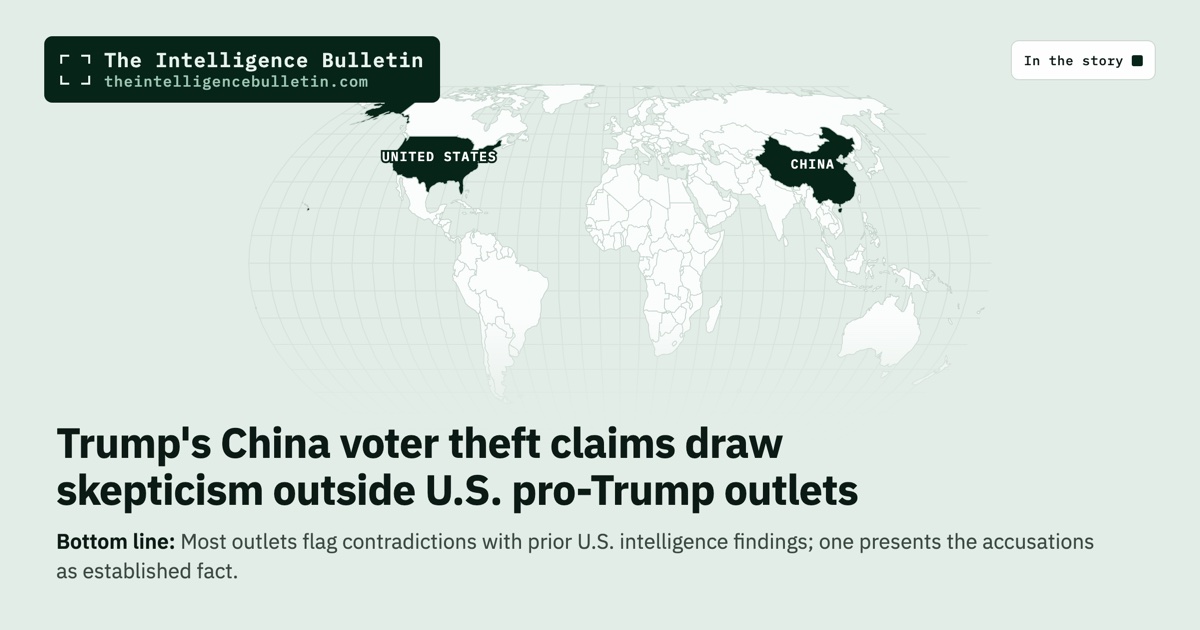
Trump’s China voter theft claims draw skepticism outside U.S. pro-Trump outlets

Map of the countries in the story: Trump's China voter theft claims draw skepticism outside U.S. pro-Trump outlets
On July 16, 2026, President Donald Trump delivered a primetime White House address announcing the declassification of intelligence documents. He accused China of illicitly acquiring 220 million U.S. voter files since the 2020 election cycle, including names, addresses and party data across 18 states. Trump ordered investigations and pushed legislation on voter ID and citizenship verification. Outlets diverged on whether the documents contradicted earlier U.S. intelligence conclusions that no foreign actor altered the 2020 vote.

One Story. Many Angles.

🇺🇸
United States
The Epoch Times
Trump Says China Stole 220 Million US Voter Files Since 2020 Election
Read →
🇨🇳
China
South China Morning Post
Trump to address nation as Iran crisis, China tensions and election fight intensify
Read →
🇸🇬
Singapore
The Business Times
Trump accuses China of 2020 voting interference, contradicting US intelligence findings
Read →
🇨🇦
Canada
CBC News
Trump accuses China of interfering in 2020 U.S. election during televised address
Read →
🇮🇳
India
Livemint
Trump Speech LIVE: US President accuses China of 2020 election interference, alleges ‘largest compromise of…’
Read →
In Brief

Most outlets flag contradictions with prior U.S. intelligence findings; one presents the accusations as established fact.

Trump’s July 16 address presented the China voter-data claims as a national security revelation backed by newly released documents, but the reporting split sharply on credibility. The Epoch Times led with the 220 million figure and declassification order as straightforward fact. Singapore’s Business Times and Canada’s CBC detailed how several documents contradicted the interference narrative or addressed unrelated topics like Venezuela, explicitly citing the 2021 intelligence assessment that found no successful alteration of votes. Hong Kong’s SCMP placed the speech inside wider U.S.-China tensions and the Iran conflict, noting risks to an upcoming Xi summit. India’s Livemint relayed the allegations and calls for new voting rules with minimal pushback. The pattern shows outlets outside the pro-Trump U.S. press treating the declassification as politically timed rather than dispositive evidence, especially with midterms looming and the Iran war dragging on approval ratings.

Perspective Analysis

President Donald Trump’s July 16, 2026, White House address sought to present declassified intelligence as proof of large-scale Chinese theft of U.S. voter data. Instead, the documents released alongside the speech largely failed to support claims of successful interference in the 2020 election. This gap explains why most foreign outlets treated the announcement as politically motivated theater rather than a decisive national-security disclosure.

Trump stated that China had illicitly acquired 220 million voter files containing names, addresses, phone numbers, and party preferences across 18 states since the 2020 cycle. He described the operation as the largest compromise of election data in history, ordered investigations, and renewed calls for the SAVE America Act to require photo identification and proof of citizenship for voting. The address came as his approval ratings faced pressure from the ongoing Iran conflict and rising energy costs, with midterm elections five months away.

The Epoch Times reported the 220 million figure and the declassification order as established facts confirming a major breach. Its account aligned closely with the White House presentation and treated the allegations as a straightforward revelation of Chinese activity.

Other outlets examined the actual documents more closely. Singapore’s Business Times noted that several released files contradicted the interference narrative. One CIA assessment focused on Venezuela’s elections rather than America’s. Another stated that vote tabulation systems would be difficult to manipulate on a scale sufficient to alter results. A third document recorded Chinese efforts to target the Biden campaign but concluded that Beijing did not currently intend to sway the outcome covertly. The paper also referenced the 2021 U.S. intelligence community assessment, conducted under Trump’s own director of national intelligence John Ratcliffe, which found no evidence that any foreign actor had altered voter registrations, ballots, tabulations, or results in 2020. Voter data obtained by China appeared to consist of publicly available files routinely purchased by political consultants and therefore could not be manipulated to change votes.

Canada’s CBC News covered the same contradictions. It reported Democratic Senator Mark Warner’s statement that intelligence agencies had unanimously agreed China did not attempt to change a single vote. The network noted that three major U.S. television networks and CNN declined to carry the address live on primary channels, a departure from standard practice for major presidential speeches. It placed the claims against the backdrop of repeated court findings and recounts that uncovered no large-scale fraud in 2020.

Hong Kong’s South China Morning Post situated the address inside broader U.S.-China tensions and the Iran war. It observed that Trump mentioned the Iran conflict only briefly at the outset before devoting the remainder of the nearly 30-minute speech to election data. The paper highlighted potential damage to a planned September summit with Chinese President Xi Jinping, noting the contrast between Trump’s recent friendly visit to Beijing and the new accusations.

India’s Livemint relayed the core allegations in real time, including the 220 million files and the figure of 278,000 non-citizens identified on voter rolls by a Department of Homeland Security review. It reported Trump’s directive to the FBI to investigate alleged voter-registration fraud in Michigan and his push for the SAVE America Act, with limited discussion of inconsistencies in the released documents.

The pattern shows that outlets with direct access to the documents or institutional distance from the White House focused on evidentiary weaknesses and timing. The 2021 assessment, produced under a Trump appointee, remains the clearest benchmark, and the newly released files did not overturn its central conclusion that no votes were altered. Business Times and CBC reporting aligns most closely with the record because it directly compares the declassified material to prior assessments rather than presenting the claims at face value.

What to Watch

The episode is likely to complicate U.S.-China diplomacy ahead of the Xi meeting while offering limited political payoff at home. Republicans defending slim congressional majorities face an electorate more concerned with living costs and the Iran war than with revisiting 2020. Continued emphasis on unproven data compromises risks reinforcing perceptions that election-integrity arguments serve partisan mobilization more than verifiable threats, narrowing the space for substantive reforms even if the legislation advances.


Share this story