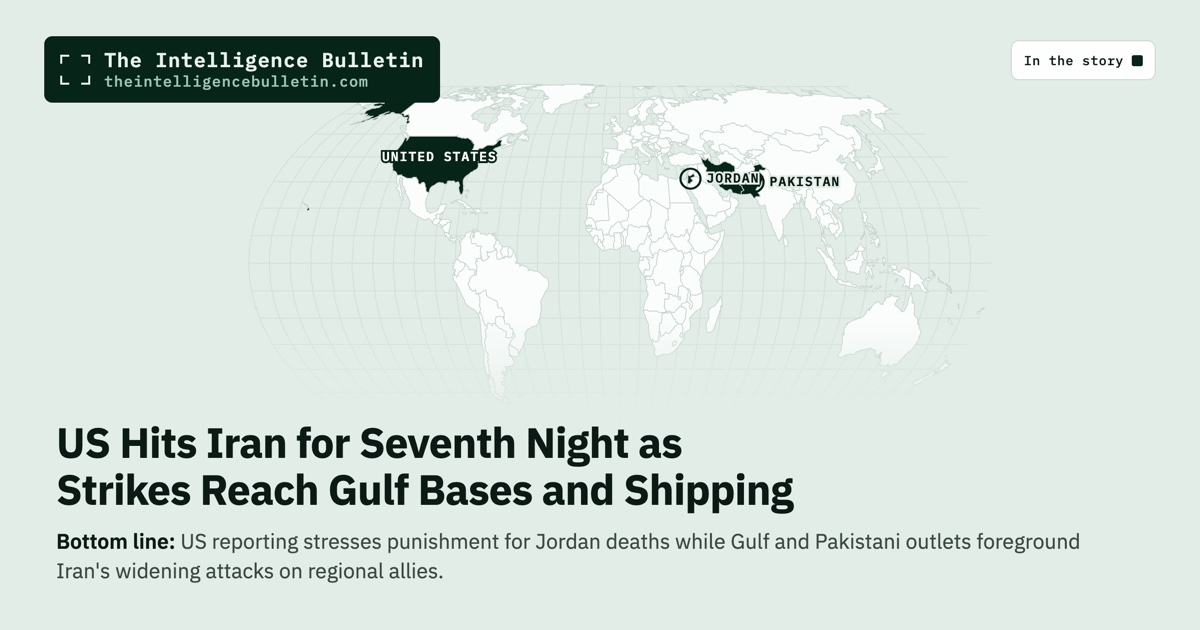
US Hits Iran for Seventh Night as Strikes Reach Gulf Bases and Shipping

Map of the countries in the story: US Hits Iran for Seventh Night as Strikes Reach Gulf Bases and Shipping
US forces launched a seventh consecutive night of airstrikes on Iranian surveillance, logistics, weapons storage and maritime targets on July 17-18. CENTCOM said the strikes responded to Iranian attacks on a Jordan base that killed two US service members. Iran reported hits on bridges and tunnels plus casualties while Gulf states intercepted Iranian missiles and drones aimed at their bases.

One Story. Many Angles.

🇮🇷
Iran
Iran Herald
CENTCOM Says Seventh Night Of Attacks Concluded At 5 A.M. Iran Time
Read →
🇺🇸
United States
CBS2 Iowa
U.S. launches new airstrikes against Iran following Jordan strike
Read →
🇮🇱
Israel
Haaretz
Live Updates | For Seventh Night in a Row, U.S. Launches Strikes on Iranian Infrastructure
Read →
🇸🇦
Saudi Arabia
Arab News
US, Iran trade attacks for seventh straight night as strikes spread across Middle East
Read →
🇵🇰
Pakistan
Dawn
Iran renews attacks on Gulf states after seventh consecutive night of US strikes
Read →
In Brief

US reporting stresses punishment for Jordan deaths while Gulf and Pakistani outlets foreground Iran’s widening attacks on regional allies.

US outlets anchor the strikes in the Jordan deaths to justify retaliation, while Iranian reporting records precise local timing and unverified civilian damage. Gulf and Pakistani coverage instead tracks Iran’s counterstrikes hitting Kuwait, Jordan and shipping lanes, showing how the conflict has already spilled beyond the original US-Iran exchange. Israeli live updates fix on infrastructure targets and escalation tempo. The shared silence on any near-term diplomatic off-ramp stands out across all five pieces.

Perspective Analysis

The pattern of reporting across these outlets makes clear that the US-Iran confrontation has already moved beyond a contained bilateral exchange into a widening regional conflict centered on the Strait of Hormuz and Gulf infrastructure. American domestic coverage still presents the strikes as measured retaliation for specific US casualties, while outlets closer to the affected states document Iranian counterstrikes reaching Kuwait, Jordan, and commercial shipping lanes. This divergence shows how each audience’s proximity to the fighting shapes what is treated as the core story, with the shared absence of any diplomatic pathway underscoring that both sides now treat escalation as the default response.

US Central Command announced that its seventh consecutive night of strikes concluded early on July 18 at 5 a.m. Iran time, targeting surveillance sites, military logistics infrastructure, underground weapons storage, and maritime capabilities with fighter aircraft, drones, and warships. The command tied the campaign to Iranian attacks on a Jordan base that killed two US service members, with additional US personnel reported missing or hospitalized. CBS2 Iowa’s account anchors the entire operation in that Jordan incident, describing the strikes as intended to “swiftly punish” Iran and further degrade its ability to interfere with Hormuz traffic. This framing supplies a clear domestic justification but treats the Jordan deaths as the originating event rather than one episode in a longer sequence that began with the collapse of an interim ceasefire the previous week.

Iranian reporting, by contrast, records the same CENTCOM statement while immediately layering in local impacts drawn from state media. The Iran Herald notes Iranian claims that at least two bridges and a tunnel were struck, with three deaths reported though unverified, and highlights the near-halt in Strait of Hormuz traffic—only eight ships transited on July 16, the lowest in three weeks. It also records separate Iranian strikes on a Kurdish opposition camp in Iraq that killed nine. These details foreground the physical disruption inside Iran and the secondary effects on energy routes, elements absent from the US domestic copy that instead emphasize force protection.

Israeli live updates from Haaretz track the tempo of infrastructure and command-target strikes night after night, listing successive waves against sites in Sirik and elsewhere while noting the Jordan casualties as the immediate trigger. The outlet’s focus stays on military developments and escalation pace rather than civilian consequences or Gulf spillover. This security-centric lens aligns with an ally’s interest in monitoring Iranian capabilities but does not foreground the widening geographic reach that Gulf and Pakistani accounts place at the center.

Arab News reports the mutual exchange explicitly as spreading across the Middle East, with Iran striking an ammunition depot at Kuwait’s Al-Adiri camp, headquarters and depots at Ali Al-Salem air base, and fuel tanks at Jordan’s Al-Azraq base. Kuwaiti air defenses intercepted missiles and drones, several facilities sustained damage, and a power generation and desalination plant was hit, prompting conservation appeals. The account also records Iranian claims against US-linked assets in Qatar, Bahrain, and Oman, plus damage to a Chabahar port tower described by CENTCOM as part of Iran’s maritime surveillance network. Shipping data cited in the piece shows Brent crude above $86 a barrel as transits fell, illustrating the direct economic stakes for Gulf states that rely on desalination and stable energy exports.

Dawn leads with Iran’s renewed attacks on Gulf states following the seventh US night, detailing Revolutionary Guard strikes on the same Kuwaiti and Jordanian facilities plus warnings that no oil or gas would flow until US operations cease. It notes US enforcement actions—redirecting, disabling, and boarding vessels—alongside Iranian claims of stopping four ships and disputed reports of tankers hitting mines. The Pakistani perspective registers South Asian concern over how Muslim-majority Gulf states are being pulled into direct exchanges, a dimension US and Israeli accounts treat as secondary.

The Gulf and Pakistani pieces come closest to capturing the actual trajectory because they document verifiable spillover: Kuwaiti and Jordanian bases hit, air defenses activated, desalination infrastructure damaged, and Hormuz traffic curtailed to levels that have already lifted global energy prices. These outcomes flow directly from the seventh-night strikes and Iran’s response, not from any single prior incident. American framing correctly notes the Jordan deaths but understates how quickly the fighting has expanded to threaten the very shipping lanes and host-nation facilities the US seeks to protect. Israeli updates accurately record target types and tempo yet remain largely silent on the regional infrastructure hits that Arab News and Dawn place in the foreground.

What to Watch

No outlet identifies a near-term off-ramp. Iranian advisers have warned of moving to “full-scale offensive operations” if strikes continue another two or three days, while US statements emphasize continued degradation of Iranian capabilities. With both sides calibrating responses to the other’s latest move and mediators issuing only general calls for restraint, the pattern points to sustained tit-for-tat exchanges that will further constrict Hormuz traffic and test Gulf air defenses. The reader should therefore expect higher energy prices and growing pressure on Washington to decide whether protecting its regional partners justifies deeper entanglement rather than any sudden return to the collapsed ceasefire.

Share this story

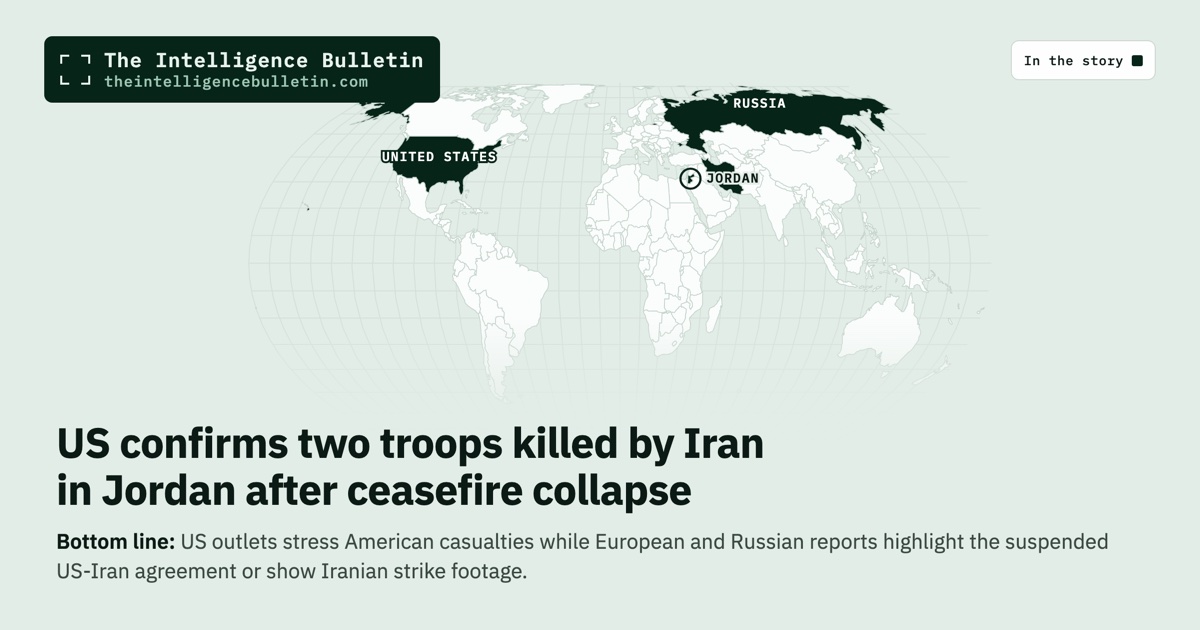
US confirms two troops killed by Iran in Jordan after ceasefire collapse

Map of the countries in the story: US confirms two troops killed by Iran in Jordan after ceasefire collapse
On July 17, 2026, Iran launched ballistic missile and drone attacks on a US base in Jordan. US Central Command reported two American service members killed in action during the defense, one missing, and four others injured but later released. The strikes occurred amid ongoing US-Iran hostilities that followed the collapse of a June ceasefire framework.

One Story. Many Angles.

🇺🇸
United States
Fox News
CENTCOM confirms 2 US service members killed in Jordan during Iranian attack
Read →
🇷🇺
Russia
RT Arabic
ARABIC
After confirming two American soldiers killed.. video shows Iranian missiles falling on Al-Salti base in Jordan
“After confirming two American soldiers killed.. video shows “Iranian missiles falling on Al-Salti base” in Jordan (video)”
Read →
🇺🇸
United States
Newsweek
Two US Troops Killed, Another Missing After Iran Ceasefire Deal Breaks Down
Read →
🇩🇪
Germany
Die Welt
GERMAN
Iran War: Tehran suspends framework agreement with the US – two US soldiers die in attacks on Jordan
“Iran-Krieg: Teheran setzt Rahmenabkommen mit den USA aus – zwei US-Soldaten sterben bei Angriffen auf Jordanien”
Read →
🇮🇳
India
The New Indian Express
Two US troops killed, one missing after Iran attacks military base in Jordan
Read →
In Brief

US outlets stress American casualties while European and Russian reports highlight the suspended US-Iran agreement or show Iranian strike footage.

All five outlets report the same CENTCOM facts without contradiction: two US troops killed and one missing after Iranian strikes on a Jordan base. The convergence on casualties is the story. Fox News sticks to the military confirmation and notes wider Iranian attacks on Gulf allies. RT Arabic pairs the deaths with video of missiles striking the base, underscoring Iranian operational reach. Newsweek and Die Welt both connect the deaths to Iran’s suspension of the June US-Iran framework agreement, quoting Iranian officials who called the US signature worthless after alleged breaches. The New Indian Express stays strictly to the CENTCOM statement and notes these as the first confirmed US deaths from direct Iranian fire. The shared factual core reveals that the immediate human cost to US forces is now undisputed across ideological lines, even as outlets differ on whether to foreground the diplomatic breakdown that preceded the latest round.

Perspective Analysis

The shared confirmation of two American deaths from Iranian fire on a Jordan base on July 17 marks a clear threshold in the US-Iran conflict. What began as contested exchanges has hardened into verified US casualties, a fact no major outlet disputes. This convergence strips away room for denial and forces attention onto the human price paid after the June framework agreement fell apart.

US Central Command stated that two service members were killed in action and one remains missing while US and partner forces defended against Iranian ballistic missile and drone strikes on the base. Four others were evacuated to Jordanian hospitals and later released, with additional personnel treated for minor injuries and returned to duty. Identities remain withheld pending next-of-kin notification. These details appear without contradiction across reports from Fox News, Newsweek, Die Welt, RT Arabic, and The New Indian Express.

The strikes targeted a US-used air base in Jordan amid a wider Iranian wave that also hit Kuwait and Bahrain. Fox News reported the CENTCOM facts alongside Iranian actions against Gulf allies and placed the episode in the context of renewed US strikes on Iranian infrastructure following attacks on shipping in the Strait of Hormuz. Its account stays tightly focused on the military confirmation and the immediate regional ripple.

RT Arabic paired the casualty announcement with video footage described as showing Iranian ballistic missiles striking the Al-Salti base at night. The clip depicts direct impacts and personnel taking cover. The report frames the event as evidence of Iranian operational reach without adding diplomatic backstory.

Newsweek connected the Jordan deaths directly to the collapse of the June US-Iran Memorandum of Understanding. That short-lived deal aimed to halt fighting, reopen Hormuz shipping, and open 60 days of talks on nuclear and regional issues. The outlet quoted Iranian statements blaming US breaches for rendering the US signature worthless and threatening further retribution. It noted the episode as one of the deadliest days for US troops since active combat resumed.

Die Welt reported the same suspension of the framework agreement, citing Iranian Vice Foreign Minister Kasem Gharibabadi on US violations of the Islamabad declaration and the new supreme leader Modschtaba Khamenei calling the US president’s signature invalid. The German outlet added details on Iranian strikes against Kuwaiti desalination and oil facilities, as well as alarms in Bahrain and drone interceptions over Iraq. It described the Jordan base attack as part of Iran’s response to ongoing US strikes on Iranian bridges and other targets.

The New Indian Express limited itself to the CENTCOM statement and highlighted that these were the first confirmed US deaths from direct Iranian fire since the conflict’s early phase. Its account notes the injured personnel’s discharge and minor-injury evaluations but avoids broader context on the June agreement or additional regional strikes.

The pattern reveals more than routine variance in emphasis. Outlets aligned with Western governments foreground American losses and the immediate defense operation. Russian-state media supplies visual proof of Iranian strike success. European and some US coverage stresses the diplomatic rupture, quoting Iranian officials who frame the attacks as retaliation for alleged US non-compliance. The Indian report functions as a concise wire summary without interpretive layering. Yet every account rests on the identical casualty numbers and timeline.

This factual core carries weight because it ends ambiguity about whether Iranian missiles and drones have now killed US personnel. Earlier phases featured disputed claims of proxy involvement or indirect effects. The Jordan incident removes that buffer. Iranian officials have publicly tied the suspension of the June framework to US actions, while US reporting documents continued Iranian pressure on Gulf allies and shipping lanes. The result is a closed loop: each side’s military moves justify the other’s response, with no active diplomatic off-ramp in view.

The human cost now sits in public view. Two families await formal notification. Four service members required hospital care before returning to duty. One remains missing. These specifics, repeated across ideological lines, make the escalation concrete rather than abstract. They also raise the stakes for any further US decision on targets or Iranian calculations about additional strikes on bases housing American forces.

What to Watch

Further rounds of retaliation appear probable. Iranian statements have promised “unforgettable lessons” for continued US pressure, and US operations have already expanded to include previously unused drone systems and infrastructure targets. With the June agreement set aside and both sides citing violations, the immediate future hinges on whether either leadership calculates that additional losses or damage can be absorbed without crossing into wider regional involvement. The verified deaths in Jordan supply the clearest signal yet that the cost of miscalculation has risen for both.


Share this story

India’s Private Vikram-1 Launch Signals Commercial Space Rivalry Beyond National Pride

Map of the countries in the story: India's Private Vikram-1 Launch Signals Commercial Space Rivalry Beyond National Pride
On July 18, 2026, Skyroot Aerospace launched Vikram-1 from Satish Dhawan Space Centre in Sriharikota, India. The four-stage rocket placed multiple payloads into 450 km low-Earth orbit. It was India’s first successful private orbital mission. Prime Minister Modi called it a defining moment for the private sector.

One Story. Many Angles.

🇮🇳
India
OneIndia
India’s Private Space Dream Takes Flight as Skyroot’s Vikram-1 Enters Orbit
Read →
🇨🇳
China
South China Morning Post
India launches first private orbital rocket as space start-ups expand
Read →
🇷🇺
Russia
RT
SPANISH
Historic: India’s first private orbital rocket is launched (VIDEO)
Read →
🇸🇦
Saudi Arabia
Arab News
India’s space unicorn aces first private orbital rocket launch
Read →
🇩🇪
Germany
Deutsche Welle
India launches first private rocket into space
Read →
In Brief

Indian coverage celebrates self-reliance while others stress market competition and geopolitical challenge to Western dominance.

Skyroot Aerospace’s Vikram-1 reached orbit on its maiden flight, the first time an Indian private firm has done so. OneIndia framed the success as a domestic milestone of self-reliance, complete with stage names honoring Kalam and a Modi postcard in space. Arab News highlighted the company’s unicorn valuation and the jump from one startup in 2014 to over 400 today, stressing bankable investment potential. Deutsche Welle noted India’s push for a larger slice of the global launch market while flagging ISRO scientist departures to private firms. SCMP kept the focus on expanding Asian start-up competition. RT alone called India the third nation after the US and China to field private orbital rockets, positioning the launch as a direct challenge to Western dominance. The shared facts reveal a commercial turning point; the split lies in whether the story ends at national pride or opens a new front in global market rivalry.

Perspective Analysis

India’s private sector has crossed into the global commercial launch business with Skyroot Aerospace’s successful Vikram-1 flight, turning a national milestone into a concrete challenge for market share in small-satellite deployments. The July 18, 2026, launch from Sriharikota placed multiple payloads into low-Earth orbit on the company’s first orbital attempt, confirming that Indian private firms can now handle end-to-end missions previously reserved for government agencies. This development carries weight because it expands the pool of launch providers at a time when demand for dedicated small-satellite rides continues to rise.

The four-stage Vikram-1 rocket lifted off at 12:05 p.m. local time from the Satish Dhawan Space Centre. It completed all planned stage separations and delivered its payloads roughly 16 minutes after liftoff. The vehicle stands about as tall as a seven-story building and targets payloads up to 350 kilograms. Skyroot named the mission “Aagaman,” meaning arrival, and carried experimental items including a lab-grown diamond and hardware for space-debris removal tests. Prime Minister Narendra Modi described the flight as a defining moment that would encourage young innovators, while the company stated it had arrived in space and would apply the data to future commercial operations.

Indian coverage leaned heavily on domestic symbolism. OneIndia highlighted the rocket’s solid stages named after former president A.P.J. Abdul Kalam, the handwritten “Vande Mataram” postcard from Modi now in orbit, and the broader theme of self-reliance achieved through private enterprise alongside the Indian Space Research Organisation. The report framed the event as proof that reforms opening the sector have delivered results, with emphasis on national pride and the historic nature of the achievement rather than immediate revenue prospects.

International outlets shifted the emphasis toward economics and competition. Arab News noted Skyroot’s recent $1.1 billion valuation as India’s first space unicorn and tracked the surge in domestic startups from one in 2014 to more than 400 by mid-2026. It quoted Indian Space Association officials calling the sector a “bankable, globally competitive asset class” capable of addressing the small-satellite launch bottleneck. The piece linked the flight to India’s stated goal of raising its share of the global space economy from 2 percent toward 8 percent by 2033, presenting the milestone as evidence of investable growth in an emerging market.

Deutsche Welle placed the launch in the context of India’s effort to capture a larger portion of commercial launch revenue while recording concerns inside ISRO about scientists moving to private firms. The report noted that New Delhi opened the sector to private investment in 2020 and now seeks to grow its space economy to $44 billion by 2033. It also observed that the private race involves multiple governments seeking alternatives to dominant players, underscoring policy effects on established agencies and the diffusion of launch technology.

South China Morning Post, drawing on wire reporting, kept the account concise and regional, describing the flight as part of expanding Asian startup activity and India’s broader push into the global space economy. It avoided both celebratory domestic framing and explicit geopolitical positioning, instead treating the event as another data point in commercial sector growth across the continent.

RT alone positioned the achievement geopolitically, stating that India had become the third nation after the United States and China to field private orbital rockets and presenting the launch as a direct challenge to Western dominance in space access. This framing stands apart from the commercial or national-pride angles in the other coverage.

The commercial accounts come closest to capturing what is at stake. Valuation figures, startup counts, and explicit references to market share goals reflect measurable shifts in capital allocation and competitive supply, whereas symbolic details or broad multipolar rhetoric do not alter launch pricing or availability. The flight demonstrates that Indian private capacity now exists for dedicated small-satellite missions, which lowers barriers for operators previously dependent on a narrower set of providers.

What to Watch

Next steps will likely involve Skyroot moving from test flights to paid commercial services and scaling the Vikram series, with Vikram-2 already planned for up to 1,000 kilograms. Additional Indian startups will seek similar clearances, increasing launch cadence from Indian soil. Established agencies such as ISRO will face continued talent competition and pressure to focus on larger or specialized missions. For satellite operators worldwide, the addition of another reliable, lower-cost option from a new geography should gradually ease scheduling constraints and influence contract negotiations. The outcome that matters most is not further national firsts but whether repeated private flights translate into sustained reductions in launch costs and wider access to orbit.


Share this story

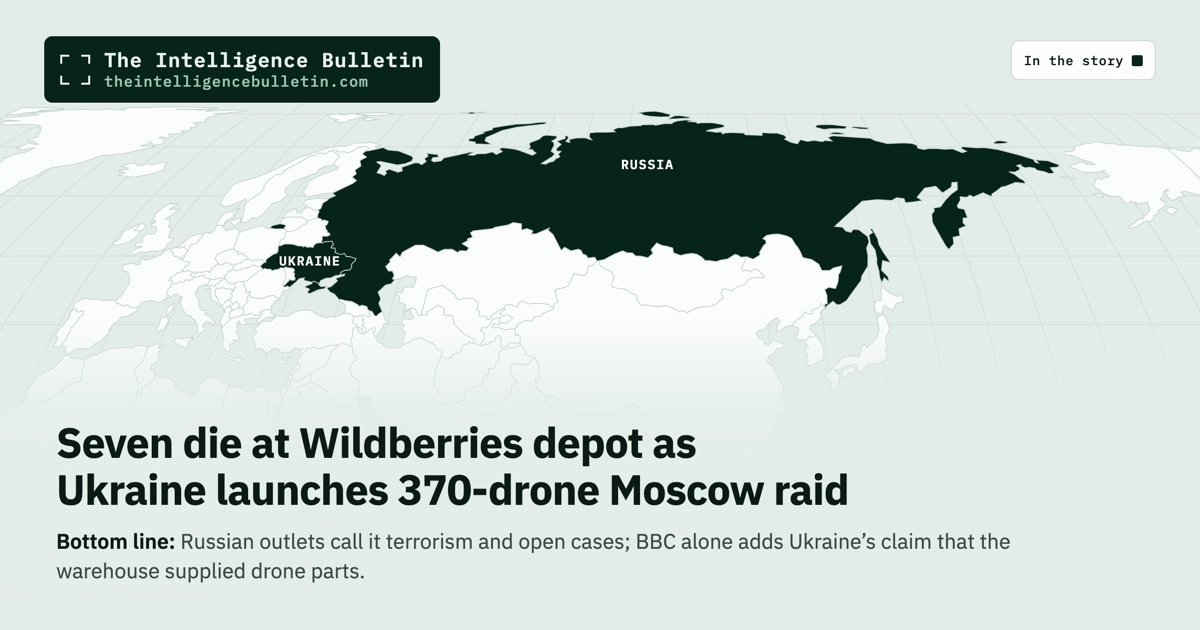
Seven die at Wildberries depot as Ukraine launches 370-drone Moscow raid

Map of the countries in the story: Seven die at Wildberries depot as Ukraine launches 370-drone Moscow raid
On 18 July 2026 Ukrainian drones struck a Wildberries logistics centre in Kotovsk, Tambov Oblast, killing seven night-shift employees and wounding 24. Russian authorities opened terrorism investigations and reported a simultaneous swarm of more than 370 drones aimed at the Moscow region. Ukraine said the facilities supplied components for drone production and navigation equipment.

One Story. Many Angles.

🇷🇺
Russia
Sputnik
Russia Opens Terrorism Cases Over Ukrainian Attacks on Kotovsk, Elektrostal
Read →
🇷🇺
Russia
Russia Herald
Ukrainian drone strike kills 7 Russian warehouse workers
Read →
🇬🇧
United Kingdom
BBC
Russian online retail warehouses hit by deadly Ukrainian strikes
Read →
🇪🇸
Spain
La Razón
SPA
At least seven dead after Ukrainian attack on logistics center in Russian region of Tambov
“Al menos siete muertos tras un ataque ucraniano contra un centro logistico en la region rusa de Tambov”
Read →
🇲🇩
Moldova
Ziarul Național
RON
Massive drone attack on Russia: Seven dead at logistics center in Kotovsk, over 370 aircraft targeting Moscow region
“Atac masiv cu drone asupra Rusiei: Sapte morti la un centru logistic din Kotovsk, peste 370 de aparate vizand regiunea Moscovei”
Read →
In Brief

Russian outlets call it terrorism and open cases; BBC alone adds Ukraine’s claim that the warehouse supplied drone parts.

Russian state and local outlets treat the Kotovsk strike as the latest proof of deliberate Ukrainian terrorism against civilian workers and retail infrastructure, complete with opened criminal cases and governor quotes branding Kyiv the “neo-fascist regime.” BBC alone quotes Zelensky directly justifying the target as part of Ukraine’s campaign against drone-component supply lines, while placing the deaths alongside Russian strikes that killed 14 civilians inside Ukraine the same night. Spanish and Moldovan papers stay closer to the raw numbers—seven dead in Tambov, over 370 drones intercepted short of Moscow—without legal framing or Ukrainian rebuttal, reflecting proximity to the flight paths rather than ideological distance. The shared factual core is therefore the casualty count supplied by Governor Pervyshov; the real divergence is whether that toll is presented as proof of Russian victimhood, Ukrainian military necessity, or simply another night of cross-border drone exchanges.

Perspective Analysis

The Ukrainian drone strike on a Wildberries logistics center in Kotovsk that killed seven night-shift workers on July 18, 2026, exposes how outlets interpret the same Russian-supplied casualty figures through the lens of their own capitals’ strategic stakes rather than shared facts on the ground. Russian state and regional media cast the deaths as deliberate terrorism against civilians at a retail warehouse, complete with formal investigations. Western and neighboring reports either pair those deaths with Ukrainian claims of targeting drone-component supply lines or simply tally the toll alongside the interception of more than 370 drones aimed at Moscow. The divergence is not over numbers but over whether the facility counted as legitimate military infrastructure or protected civilian property.

Governor Evgeny Pervyshov’s Telegram post supplied the uncontested core details: seven employees died and 24 others were injured when drones hit the Wildberries site in Kotovsk, Tambov Oblast. Emergency crews extinguished the resulting fire while ambulances and law-enforcement personnel responded. Russian outlets immediately folded those figures into a narrative of repeated Ukrainian attacks on populated areas and retail infrastructure. Sputnik reported that Russia’s Investigative Committee opened terrorism cases over strikes on logistics centers in both Kotovsk and Elektrostal, quoting spokeswoman Svetlana Petrenko on the deployment of investigators and forensic specialists to examine drone fragments. The same dispatch placed the Kotovsk deaths inside a longer series of Ukrainian strikes on civilian sites, including a May dormitory attack in Starobelsk and a June drone strike on a bus carrying a Belarusian children’s football team.

Russia Herald echoed the governor’s account almost verbatim while adding context on the broader Moscow-region barrage. It noted that more than 370 Ukrainian drones had flown toward the capital since 8:30 p.m. the previous evening, with Mayor Sergey Sobyanin stating that most were neutralized at long range and 64 destroyed closer in. The outlet also recorded a separate drone impact on a residential building in Vladimir and framed the entire night as part of Russia’s response through long-range strikes on Ukrainian dual-use sites. Both Russian publications treated the Wildberries facility strictly as commercial infrastructure whose workers had been murdered in their workplace.

The BBC report alone embedded Zelensky’s direct justification inside its account of the same deaths. The Ukrainian president described the targeted logistics facilities as suppliers of sanctioned components for drone production and navigation equipment. The BBC placed the seven fatalities at Kotovsk and injuries at the second Wildberries site in Elektrostal alongside overnight Russian strikes that killed 14 civilians inside Ukraine. It further noted Wildberries CEO Tatyana Kim’s description of the night as “terrible” for the company and for Russia, while recording Moscow-region governor Andrei Vorobyov’s statement that 48 drones had been shot down locally and that a falling drone had struck an oil depot.

Spanish daily La Razón and Moldovan outlet Ziarul Național stayed closer to official Russian regional statements without legal or Ukrainian rebuttal. La Razón led with the governor’s casualty figures and the scale of the Moscow drone swarm intercepted by air defenses, noting Sobyanin’s precise count of 64 drones destroyed on approach. Ziarul Național similarly emphasized the mass drone raid and the Kotovsk strike’s link to wider Ukrainian operations against Russian logistics and energy targets, drawing on the same governor and mayor statements. Neither outlet referenced terrorism investigations or Zelensky’s component-supply claim.

The single verified element across every dispatch remains Pervyshov’s casualty count. Everything else—whether the warehouse supplied drone parts, whether the deaths constitute terrorism, or whether the strike formed part of reciprocal civilian targeting—depends on the outlet’s alignment with one side’s operational rationale or the other’s legal framing. Russian media follow Investigative Committee announcements and gubernatorial statements that classify the attack as the latest in a pattern of civilian targeting. The BBC incorporates the Ukrainian military justification and simultaneous Russian strikes inside Ukraine. The Spanish and Moldovan reports, reflecting geography along flight corridors rather than ideological proximity, limit themselves to the raw scale of the drone barrage and the immediate human cost supplied by Russian authorities.

What to Watch

This pattern is unlikely to shift. Both sides have already signaled they regard logistics hubs and energy facilities as legitimate targets when they support military production or sustain war economies. The next nights will probably bring fresh Ukrainian claims of disrupting drone-component flows and fresh Russian announcements of terrorism cases or retaliatory strikes, each side citing the other’s civilian casualties while insisting its own targets are dual-use. Readers in Moscow, Kyiv, or Chisinau will continue to receive the same seven deaths refracted through whichever national interest their preferred outlet serves.


Share this story

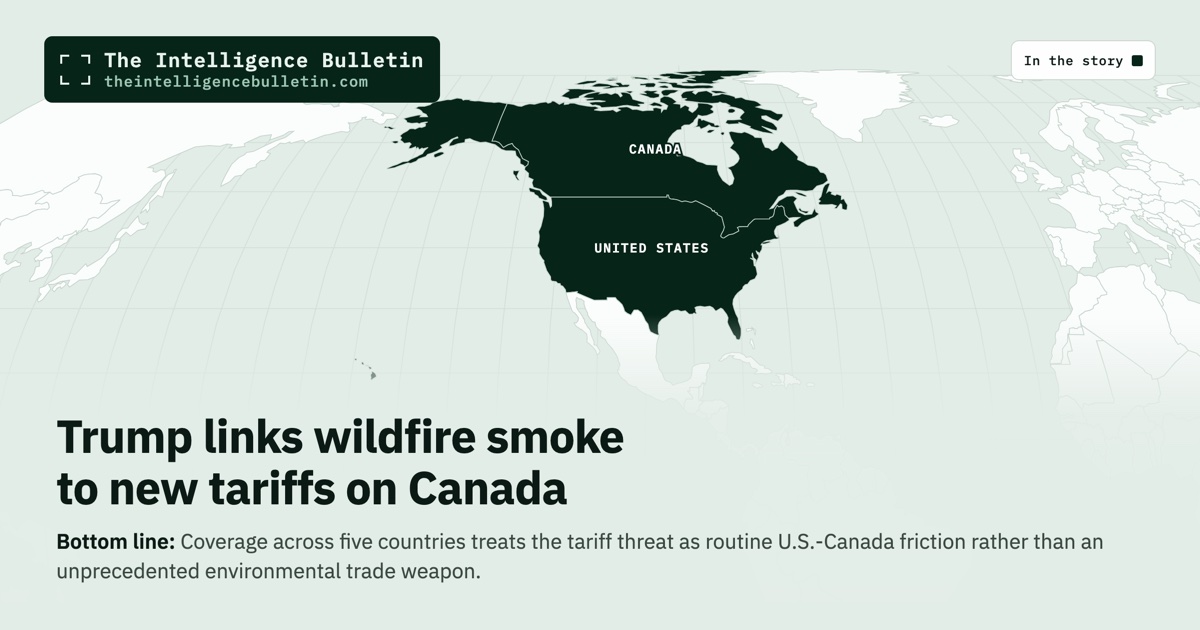
Trump links wildfire smoke to new tariffs on Canada

Map of the countries in the story: Trump links wildfire smoke to new tariffs on Canada
On July 17, 2026, President Donald Trump posted on Truth Social that Canada’s poor forest management caused unhealthy smoke to invade the United States. He said the billions in pollution costs must be added to tariffs already imposed on Canadian goods and vowed to call Prime Minister Mark Carney. Air-quality alerts affected more than 100 million people across 18 U.S. states.

One Story. Many Angles.

🇨🇦
Canada
CP24
Donald Trump threatens tariffs over Canada’s wildfire smoke
Read →
🇺🇸
United States
New York Daily News
Trump threatens Canada with more tariffs for wildfire smoke in U.S.
Read →
🇺🇸
United States
KETV
Trump says he’s holding Canada responsible for wildfire smoke and threatens higher tariffs
Read →
🇦🇺
Australia
The Canberra Times
Tariff threat as Trump blames Canada for wildfire smoke
Read →
🇵🇰
Pakistan
Dawn
US blames Canada for wildfire smoke
Read →
In Brief

Coverage across five countries treats the tariff threat as routine U.S.-Canada friction rather than an unprecedented environmental trade weapon.

Trump’s move to weaponize smoke with tariffs stands out because every outlet, from Ottawa to Islamabad, treated the threat as a straightforward extension of existing trade friction rather than an environmental dispute. Canadian coverage records Ottawa’s reminders of past mutual firefighting aid and recent prevention spending, while U.S. reports stress the immediate domestic health alerts and repeat Trump’s language about “willful negligence.” Australian and Pakistani accounts add only the background of Trump’s earlier tariffs and his combative tone toward Carney, without exploring whether forest fires constitute a tariff-eligible grievance. The shared silence on any legal or diplomatic precedent for charging neighbors for transboundary smoke reveals how routine the linkage of environment and trade has become under this administration.

Perspective Analysis

President Donald Trump’s decision to tie the cost of Canadian wildfire smoke directly to higher tariffs on Canadian goods reveals how completely environmental disputes have been absorbed into routine trade warfare under his administration. Rather than sparking debate over transboundary pollution rules or joint firefighting protocols, the July 17, 2026, threat was reported everywhere as one more salvo in an already heated tariff standoff with Ottawa.

Trump posted on Truth Social that Canada’s failure to maintain its forests and brush had sent “filthy, polluted, and unhealthy air” into the United States. He labeled the situation “Willful Negligence” that was “becoming a yearly occurrence, costing the United States Billions of Dollars,” and said that cost “must of necessity be added to the TARIFFS Canada is currently paying.” He added that he would call Prime Minister Mark Carney to discuss the matter.[[1]](https://www.cp24.com/news/canada/2026/07/17/trump-threatens-to-raise-tariffs-over-canadian-wildfire-smoke/)

Air-quality alerts that day covered more than 100 million people across 18 states and the District of Columbia, with “very unhealthy” and “hazardous” conditions stretching from northeast Minnesota to southeast Virginia. Haze was visible over New York City and other East Coast locations.[[2]](https://www.ketv.com/article/trump-canada-tariffs-wildfire-smoke/73173441)

Every major outlet treated the tariff linkage as a predictable extension of existing friction rather than a novel environmental claim. Canadian reporting from CP24 recorded the immediate domestic effects—more than 900 active wildfires nationwide, 122 out of control, and fresh evacuations in northern Ontario—while noting Premier Doug Ford’s reminder that Canadian crews had helped fight U.S. fires in California the previous year and during the 2024 Georgia hurricane response. Ford suggested critics should “send support, send help” instead of complaining.[[1]](https://www.cp24.com/news/canada/2026/07/17/trump-threatens-to-raise-tariffs-over-canadian-wildfire-smoke/)

U.S. coverage, by contrast, foregrounded the visible domestic impact and Trump’s personal rhetoric. The New York Daily News opened with the haze over New York and Trump’s plan to bill Canada for “incalculable” costs, while recalling his earlier tariffs on Canadian goods and his broader antagonism toward the country since returning to office.[[3]](https://www.nydailynews.com/2026/07/17/trump-blames-canada-wildfires-tariffs/) KETV, serving the Midwest and Northeast under active alerts, emphasized the scale of the air-quality warnings and Trump’s explicit vow to speak with Carney about adding pollution expenses to existing tariffs.[[2]](https://www.ketv.com/article/trump-canada-tariffs-wildfire-smoke/73173441)

International accounts added only background on the pre-existing tariff regime and the personal tone of the exchange. The Canberra Times noted Ottawa’s C$12 billion investment in forest sustainability and fire prevention since 2020, mentioned shared climate drivers, and described the episode as part of Trump’s combative relationship with Carney.[[4]](https://www.canberratimes.com.au/story/9313043/tariff-threat-as-trump-blames-canada-for-wildfire-smoke/) Dawn, drawing on Reuters copy, framed the move through a wider lens of U.S. unilateralism on shared problems while recording the same tariff history and Trump’s planned call.[[5]](https://www.dawn.com/news/2016356/us-blames-canada-for-wildfire-smoke)

None of the reports examined whether charging a neighbor for drifting smoke has any established legal or diplomatic precedent under trade agreements or international environmental law. The omission was uniform. Canadian outlets focused on mutual aid history and provincial impacts; American ones on immediate health alerts and Trump’s existing trade pressure; foreign ones on the bilateral spat and climate context. All accepted the tariff connection as the story’s natural frame.

This pattern shows that the administration has succeeded in making environmental grievances another line item in tariff negotiations. Once smoke can be tallied as a cost to be offset by duties, any cross-border externality—water quality, species migration, or industrial emissions—becomes available for the same treatment. The lack of pushback in coverage from Ottawa to Islamabad indicates how normalized the practice has already become.

What to Watch

The next step is almost certain to be a call between Trump and Carney that produces no immediate policy change on forest management but keeps the tariff threat alive as leverage in broader trade talks. Ottawa will continue citing its prevention spending and past firefighting assistance; Washington will continue citing domestic air-quality costs. The real development to watch is whether similar charges are leveled at other neighbors or trading partners when smoke or other pollution crosses borders again. That will determine whether this episode remains an isolated rhetorical flourish or becomes a standing tool of U.S. trade policy.


Share this story

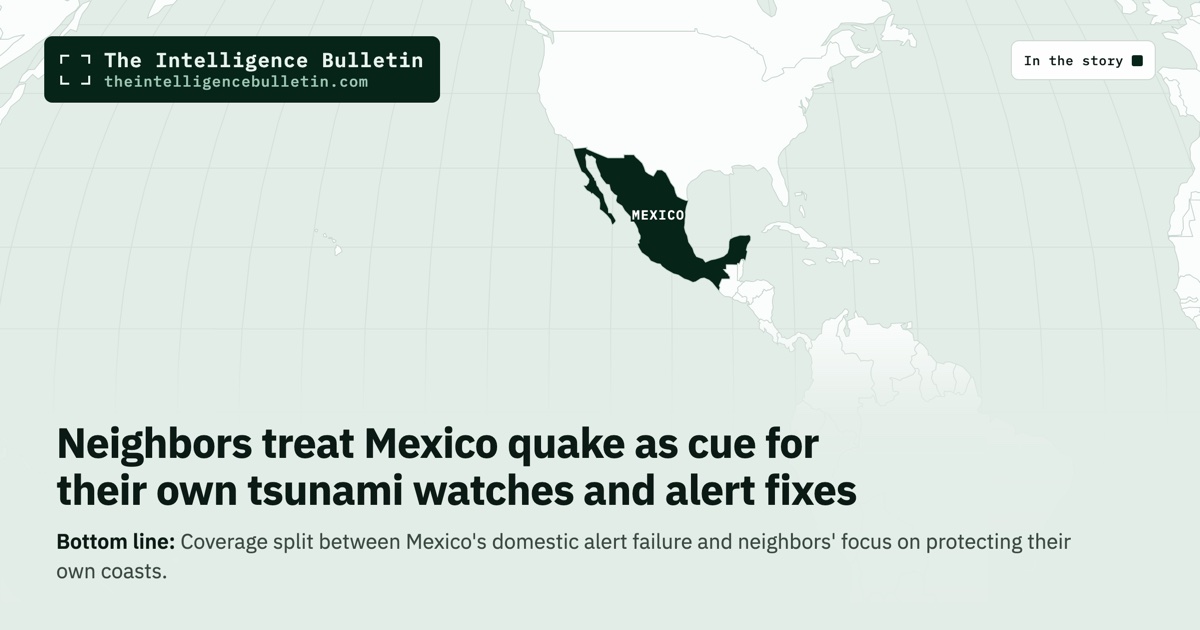
Neighbors treat Mexico quake as cue for their own tsunami watches and alert fixes

Map of the countries in the story: Neighbors treat Mexico quake as cue for their own tsunami watches and alert fixes
A magnitude 7.4 earthquake struck offshore near Tapachula, Chiapas, on July 17, 2026. It was felt in Guatemala and El Salvador. Mexican authorities activated emergency protocols and issued then canceled a tsunami alert for local coasts. Chile ruled out any threat while Peru began monitoring; no fatalities were confirmed.

One Story. Many Angles.

🇲🇽
Mexico
Eje Central
SPA
Why didn’t the seismic alert sound on cell phones? SASMEX explains what happened after the Chiapas quake on July 17
“¿Por qué no sonó la alerta sísmica en los celulares? SASMEX explica qué pasó tras el sismo en Chiapas hoy 17 de julio”
Read →
🇬🇹
Guatemala
Prensa Libre
SPA
Mexico reports 137 aftershocks after 7.4 magnitude earthquake in Chiapas
“México reporta 137 réplicas tras el terremoto de magnitud 7.4 en Chiapas”
Read →
🇨🇱
Chile
Diario El Centro
SPA
7.4 earthquake in Mexico: SHOA rules out tsunami in Chile
“Terremoto 7,4 en México: SHOA descarta tsunami en Chile”
Read →
🇵🇪
Peru
Wapa
SPA
Strong 7.4 earthquake shakes Mexico: Peru activates monitoring for possible tsunami risk on Peruvian coast
“FUERTE terremoto de 7,4 SACUDE México: Perú activa monitoreo por posible riesgo de TSUNAMI en el litoral peruano”
Read →
🇦🇷
Argentina
Infobae
SPA
Earthquake in Mexico, El Salvador and Guatemala: how to activate Google tsunami and quake alerts
“Terremoto en México, El Salvador y Guatemala: cómo activar alertas de Google de tsunami y sismo”
Read →
In Brief

Coverage split between Mexico’s domestic alert failure and neighbors’ focus on protecting their own coasts.

Mexican coverage zeroed in on why SASMEX phone alerts never sounded, citing sensor gaps at the offshore epicenter and the system’s effect-based triggers rather than raw magnitude. Guatemalan reporting tallied Mexico’s 137 aftershocks and noted the shake across the border while confirming the tsunami alert cancellation. Chilean outlets led with official reassurance that no wave would reach their shores. Peruvian coverage detailed the navy activating vigilance protocols for its own coast despite the distance. Argentine pieces skipped local damage details to walk readers through enabling Google’s Android earthquake alerts and government tsunami notifications. The pattern shows each country treating the shared seismic event as a prompt to stress its own preparedness gaps or safeguards rather than a unified regional story.

Perspective Analysis

A magnitude 7.4 earthquake struck offshore southern Mexico near Tapachula on July 17, 2026, at a depth of about 10 kilometers. The tremor prompted emergency protocols in Mexico, including a tsunami alert that authorities later canceled, and it registered across borders in Guatemala and El Salvador. No fatalities or major injuries surfaced in initial reports. Yet coverage across the region treated the event less as a unified seismic episode and more as an immediate prompt for each country to scrutinize its own alert systems and coastal safeguards.

Mexican reporting zeroed in on a practical failure that directly affected residents. The Sistema de Alerta Sísmica Mexicano, or SASMEX, failed to trigger phone alerts or loudspeakers in parts of Chiapas despite the quake’s size. Officials explained that the epicenter’s offshore location sat outside dense sensor coverage, and the system triggers on estimated effects rather than raw magnitude alone. Some phones received warnings while others did not, depending on network reach, device compatibility, and whether emergency notifications were enabled. This emphasis on technical gaps surfaced because readers in the affected zone needed to understand why the expected early warning did not arrive.

Guatemalan accounts instead tallied the aftershock sequence and confirmed the shake reached local territory without producing significant damage. Reports noted 137 aftershocks by late on the 17th, with the strongest registering 6.5. Mexican authorities canceled the tsunami alert but urged caution near ports due to currents. The focus stayed on prolonged seismic activity across the border rather than explanations for missed domestic alerts. This approach aligned with the experience of readers who felt the ground move but faced no immediate local crisis.

Chilean outlets opened with direct reassurance from the Servicio Hidrográfico y Oceanográfico de la Armada. The agency stated the quake did not meet conditions for a tsunami along Chilean coasts. Coverage described the Mexican event, noted its reach into Central America, and quickly pivoted to the official ruling that no wave threat existed for the long Pacific shoreline. This defensive clarity served readers in a country whose own history of distant quakes has produced damaging waves.

Peruvian coverage detailed the immediate activation of navy monitoring protocols. The Dirección de Hidrografía y Navegación intensified vigilance under its tsunami warning system after consulting data from the Pacific Tsunami Warning Center. Officials issued a bulletin calling for continued observation without declaring an alert or alarm. The distance from the epicenter made a direct impact unlikely, yet the routine response underscored standing procedures for any Pacific basin event. This step received foreground attention because coastal populations there expect such monitoring as standard practice.

Argentine reporting bypassed damage tallies or official bulletins altogether and supplied practical instructions for Android users. Readers learned how to enable Google’s earthquake alert system, which relies on phone accelerometers rather than fixed sensors, along with settings for official tsunami and emergency notifications on both Android and iPhone devices. The piece framed the Mexican quake as a reminder that personal device setup can deliver seconds of warning in future events.

These distinct angles reveal a consistent pattern. Each outlet converted the shared rupture into material for national preparedness audits. Mexico examined why its sensor network left coastal gaps. Guatemala tracked aftershock persistence that could affect its own territory. Chile and Peru rehearsed tsunami evaluation routines tied to their exposed shorelines. Argentina highlighted consumer-level tools that operate independently of government infrastructure. The result is fragmented visibility: technical shortcomings in one place, aftershock counts in another, reassurance or vigilance elsewhere, and gadget fixes farther afield.

The Mexican account comes closest to addressing an immediate operational shortfall that the quake itself exposed. Its focus on sensor placement and trigger logic points to a concrete fixable issue rather than downstream effects or distant monitoring. Other reports serve narrower audiences—border neighbors concerned with ongoing shaking, Pacific-rim states verifying wave models, or distant readers seeking personal options. No single piece attempted a cross-border synthesis of alert interoperability or joint coastal planning.

The stakes involve real differences in exposure and capacity. Countries along the Pacific face repeated offshore quakes capable of generating regional waves, yet warning networks remain nationally bounded. When an event like this one prompts each capital to run its own checklist, coordination gaps persist. Public confidence in alerts rests on repeated demonstrations that systems work where people live, which these accounts separately reinforce.

What to Watch

Future quakes will likely repeat the cycle. Mexico may accelerate sensor expansion offshore. Peru and Chile will continue issuing routine bulletins. Guatemala will count aftershocks. Argentina will republish device instructions. Readers gain incremental local awareness but little evidence of integrated regional response. In a zone where seconds matter and waves travel far, that national compartmentalization determines who receives timely information when the next rupture occurs.


Share this story