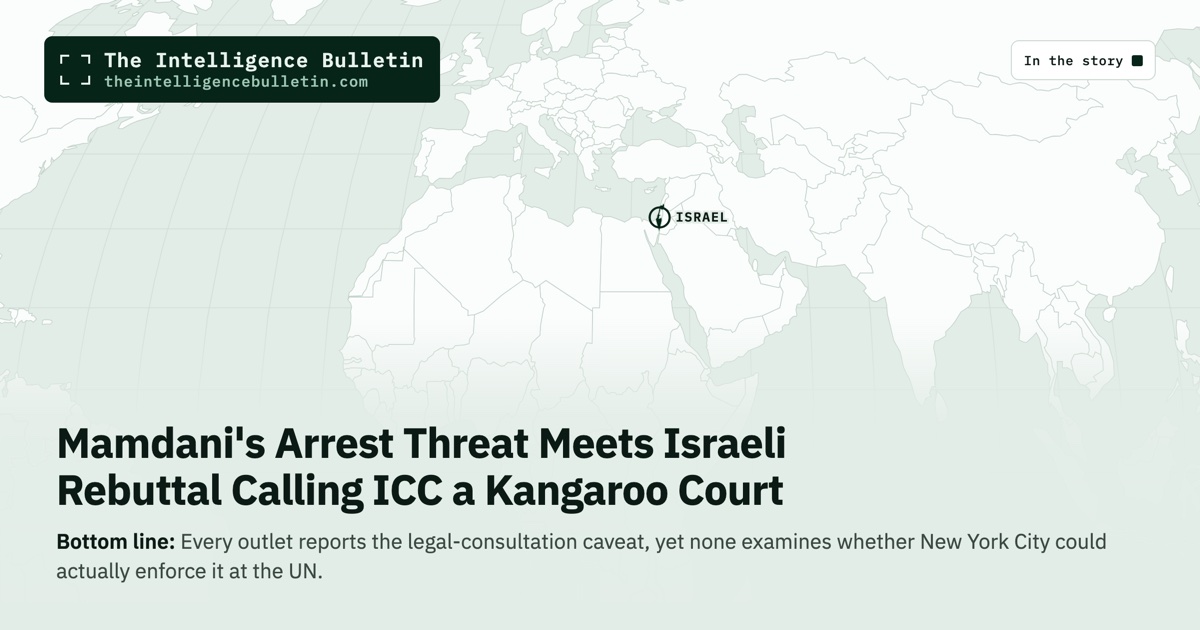
Mamdani’s Arrest Threat Meets Israeli Rebuttal Calling ICC a Kangaroo Court

Map of the countries in the story: Mamdani's Arrest Threat Meets Israeli Rebuttal Calling ICC a Kangaroo Court
On July 18, 2026, New York City Mayor Zohran Mamdani said his administration was consulting city lawyers on whether municipal authority allows ordering Netanyahu’s arrest if the Israeli prime minister attends the UN General Assembly in September. Mamdani called Netanyahu a war criminal under the ICC warrant and said any action would stay within existing law. Israel’s government responded that the ICC lacks jurisdiction and accused Mamdani of diverting attention from his own record.

One Story. Many Angles.

đŸ‡źđŸ‡±
Israel
Haaretz
NYC’s Mamdani says he still eyes arrest of Israel’s PM during September visit
Read →
đŸ‡ș🇾
United States
One America News Network
Mamdani wants to arrest Netanyahu if he visits NYC for UN assembly: ‘He’s a war criminal’
Read →
🇬🇧
United Kingdom
The Independent
Mayor Zohran Mamdani says he still may order arrest of Israel’s Netanyahu: ‘He’s a war criminal’
Read →
đŸ‡Ș🇬
Egypt
Egypt Independent
New York mayor seeks legal authority to arrest Netanyahu
Read →
đŸ‡ČđŸ‡Ÿ
Malaysia
Free Malaysia Today
Israeli PM’s office slams NY mayor over Netanyahu arrest remarks
Read →
In Brief

Every outlet reports the legal-consultation caveat, yet none examines whether New York City could actually enforce it at the UN.

The clearest pattern across these reports is how little any outlet questions the legal feasibility of a municipal arrest at the UN. Every source repeats Mamdani’s caveat that he will act only within New York law, yet none explores the practical barriers of diplomatic immunity or federal preemption. Instead, the divergence is in what each treats as the real story. Haaretz pairs the threat with Mamdani’s condemnation of U.S. Gaza policy. OANN and the Independent foreground Netanyahu’s counter-accusations of Hamas sympathy and antisemitism. Egypt Independent anchors the episode in the ICC’s genocide findings. Free Malaysia Today leads with Jerusalem’s official slap-down, calling the ICC a kangaroo court. The shared restraint on whether Mamdani can actually do anything reveals that the coverage is less about enforcement than about signaling whose side each capital or editor takes in the ICC’s legitimacy fight.

Perspective Analysis

The pattern in coverage of New York City Mayor Zohran Mamdani’s comments on a possible arrest of Israeli Prime Minister Benjamin Netanyahu reveals outlets treating the episode mainly as ammunition in the wider dispute over the International Criminal Court’s authority. Practical questions about whether a city mayor could enforce an ICC warrant against a visiting head of state receive almost no scrutiny. Every report notes Mamdani’s repeated insistence that any step would stay inside existing New York law, yet none examines the federal rules on diplomatic immunity, the host-country agreement that shields UN visitors, or the preemption of local police by national security interests. The real divergence lies in which side of the ICC fight each outlet chooses to amplify.

Mamdani made his latest remarks in a July 18 interview with The New York Times. He said his administration was in active talks with city lawyers about the scope of his authority should Netanyahu attend the UN General Assembly in September. The mayor called Netanyahu a war criminal under the ICC warrant and said he belongs in The Hague. He added that he would act only on what municipal law permits and would not invent new rules. Netanyahu’s office responded by labeling the ICC a kangaroo court without jurisdiction over Israelis, accusing Mamdani of trying to distract from his own record, and urging him to focus on problems in New York instead.

Israeli reporting placed the mayor’s comments inside the larger picture of American criticism of Israel’s Gaza operations. It connected the remarks to domestic U.S. pressure on Netanyahu and to arguments that he should answer charges at the ICC. The account gave more space to Mamdani’s description of U.S. policy toward Palestinians as bankrupt than to the prime minister’s counterattack. That choice fits an Israeli broadsheet’s interest in tracking how international legal moves against its leadership play out inside the United States.

Conservative American outlets and some British reporting instead led with the personal exchange. They quoted Mamdani’s “war criminal” language directly and gave prominent play to Netanyahu’s radio rebuttal, in which he accused the mayor of championing Hamas, apologizing for Iran, and secretly hating America. One account also carried the Israeli UN ambassador’s statement that Netanyahu would speak at the General Assembly with pride. These versions treated the story as evidence of domestic political fractures over Israel rather than a test of the ICC’s reach.

Egyptian coverage anchored the episode in the ICC warrant itself and described Israel’s actions in Gaza as genocide. It presented Mamdani’s legal consultations as part of an ongoing international debate about enforcement of the court’s orders. The account omitted the sharper personal accusations from Netanyahu’s side and instead emphasized the regional legal argument over accountability. That emphasis matches the perspective common in Arab-world reporting, where the ICC’s findings against Israeli leaders carry greater weight.

Malaysian reporting opened with the official Israeli response. It quoted Netanyahu’s office calling the ICC a kangaroo court and linking Mamdani’s interest in the warrant to the disgraced former prosecutor Karim Khan. The piece foregrounded the diplomatic slap-down and the claim that the warrant was timed to deflect scrutiny from the prosecutor. It gave less space to Mamdani’s own words than to Jerusalem’s framing of the court as illegitimate.

The shared decision across all these accounts to skip any serious look at enforcement barriers shows the episode functions as a signaling device. Outlets aligned with different capitals or editorial lines use the mayor’s threat to affirm or contest the ICC’s legitimacy without having to resolve whether a city police department could actually detain a protected foreign official. Mamdani’s pledge to stay within the law provides convenient cover for that restraint.

The account closest to the underlying dynamics is the one that led with the Israeli government’s direct rebuttal. It correctly identifies the core contest as the court’s standing rather than any realistic municipal arrest. The other versions either soften that clash by embedding it in U.S. policy debates or elevate the personal rhetoric at the expense of the jurisdictional point.

What to Watch

No arrest is expected. Federal authorities control access to the UN site and extend standard protections to heads of state. Even if city lawyers found a narrow procedural opening, national preemption and diplomatic conventions would block it. The episode will therefore remain a talking point that sharpens divisions inside the United States over Israel policy and keeps the ICC’s contested status in public view. For readers outside the immediate political camps, the lasting effect is to illustrate how little actual power local officials hold when they try to insert themselves into high-stakes foreign policy disputes.
Share this story

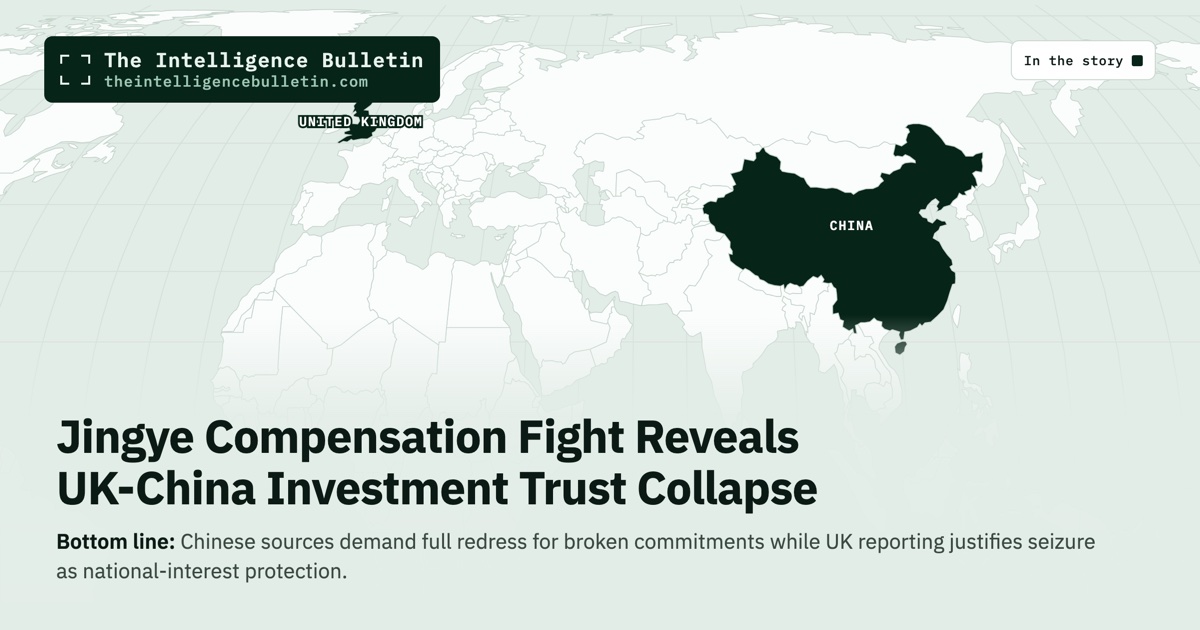
Jingye Compensation Fight Reveals UK-China Investment Trust Collapse

Map of the countries in the story: Jingye Compensation Fight Reveals UK-China Investment Trust Collapse
The UK nationalized British Steel, the last primary steelmaker, on July 16, 2026, stripping Chinese owner Jingye Group of control it acquired in 2020. Jingye and China’s Foreign Ministry demanded full compensation, launched treaty consultations, and reserved arbitration rights, accusing London of violating investment rules and offering near-zero redress. The UK justified the move as essential to protect jobs, supply chains, and national capability. Chinese statements framed it as a blow to investor confidence; UK reporting emphasized sovereign protection of industry.

One Story. Many Angles.

🇹🇳
China
Global Times
China’s Jingye Group demands full compensation from UK over British Steel nationalization, says it will never compromise
Read →
🇬🇧
United Kingdom
The Independent
China ‘strongly dissatisfied’ with UK government nationalising British Steel
Read →
đŸ‡©đŸ‡Ș
Germany
inFranken.de
DEU
Threats from China after nationalization of British Steel
“Drohungen aus China nach Verstaatlichung von British Steel”
Read →
đŸ‡čđŸ‡·
Turkey
HĂŒrriyet Daily News
China ‘firmly opposes’ UK nationalizing British Steel
Read →
đŸ‡čđŸ‡Œ
Taiwan
Taipei Times
Jingye demands UK compensation over steel nationalization
Read →
In Brief

Chinese sources demand full redress for broken commitments while UK reporting justifies seizure as national-interest protection.

Chinese coverage centers Jingye’s documented contributions and zero-compensation grievance, portraying the seizure as rule-of-law betrayal that will chill global investment. UK reporting instead presents the nationalization as a necessary safeguard for steel production and jobs, treating Chinese objections as secondary. German outlets label Beijing’s response as outright threats, reflecting European wariness of assertive Chinese investor pushback. Turkish and Taiwanese accounts track the compensation claim and legal steps with less emotion, the latter adding implicit caution toward mainland firms. The pattern shows a clear split: actor countries defend their core interest—rights versus sovereignty—while third parties register the diplomatic friction without picking sides. This reveals how an investment dispute quickly tests whether bilateral treaties constrain national security moves or merely document the fallout.

Perspective Analysis

The UK’s nationalization of British Steel on July 16, 2026, and the compensation battle that followed show how quickly an investment dispute can test whether bilateral treaties actually limit sovereign national-security moves or simply document the resulting diplomatic fallout. Jingye Group, the Chinese owner that bought the Scunthorpe plant in 2020 when it faced collapse, now demands full compensation for documented investments, has launched consultations under the China-UK investment protection agreement, and reserves the right to international arbitration. The UK government counters that the seizure safeguards the country’s last primary steelmaking capacity, thousands of jobs, and supply chains for rail, construction, and defense. China’s Foreign Ministry has stated it will “do what is necessary to protect its rights” and supports its companies pursuing legal remedies. This standoff reveals the limits of treaty language when one side prioritizes industrial sovereignty and the other insists on prompt, adequate, and effective redress.

Jingye’s public statement, issued via its WeChat account, lays out the company’s record in detail. After acquiring the century-old firm from insolvency, Jingye claims it restored profitability within a year, injected further capital to modernize equipment and introduce new technologies, paid taxes in full, and supported tens of thousands of jobs plus local communities. The firm accuses the UK of shifting from joint-investment pledges to outright seizure and of offering compensation that is “virtually zero.” It cites UK National Audit Office figures showing the government had already spent £377 million by January 2026, with projections exceeding £600 million by June and potentially £1.5 billion by 2028. Jingye vows to pursue every documented investment through legal channels and even to hold officials and executives accountable for losses to British taxpayers. These claims form the core of Beijing-aligned reporting, which frames the episode as a direct blow to investor confidence worldwide and a violation of international rules that will chill future Chinese capital flows into the UK.

UK coverage, by contrast, centers the government’s rationale. The Department for Business and Trade and Prime Minister Keir Starmer described the move—formalized after the Steel Industry (Nationalisation) Act received royal assent—as essential to secure the future of steel production at Scunthorpe, protect skilled employment, and maintain a vital national capability. An independent valuer will assess whether any compensation is due. Chinese objections appear as a secondary diplomatic reaction rather than the central story. This domestic lens treats the nationalization as a necessary industrial safeguard rather than an expropriation requiring immediate treaty-level redress, consistent with the government’s stated priority of shielding supply chains from closure risks that Jingye had flagged in 2025.

German regional reporting adopts sharper language toward Beijing’s response. Outlets describe Chinese statements as threats and highlight European concerns about the broader investment climate and adherence to rule-of-law norms. The emphasis falls on how assertive commercial diplomacy from Chinese investors could affect European perceptions of UK reliability, reflecting a third-party vantage point wary of precedent-setting pushback. Turkish coverage stays closer to neutral diplomatic tracking, noting China’s firm opposition and calls to respect international rules without endorsing either side’s framing. It registers the friction and its potential economic ripple effects for readers outside the direct dispute. Taiwanese accounts detail Jingye’s compensation demands and legal steps while also noting the UK’s stated aim of preventing plant closure, adding an implicit layer of caution toward mainland-linked ownership that mainland sources omit.

The resulting pattern is consistent across these outlets. Actor-country reporting defends core interests: Chinese sources foreground corporate contributions, zero-compensation grievances, and treaty violations that deter global capital; UK sources foreground sovereign protection of industry and jobs while treating objections as external noise. Third-party accounts register the diplomatic tension and compensation mechanics with less emotional loading. This split demonstrates how an ostensibly commercial dispute rapidly becomes a test of whether investment treaties function as binding constraints or merely as records of fallout once national-security claims are invoked. The UK has signaled willingness to appoint a valuer but has not committed to full or prompt payment; China has initiated consultations and reserved arbitration. Both sides have interests in shaping how the episode is read by other investors and governments.

What to Watch

What follows will likely hinge on the speed and substance of any compensation assessment and the outcome of treaty consultations. If the UK process yields only nominal or delayed redress, Beijing will have a stronger case in arbitration and a clearer narrative for warning other Chinese firms about UK exposure. If the UK can demonstrate a transparent valuation that accounts for Jingye’s documented outlays while justifying the national-security step, it may limit the chilling effect on other investors. Either path will influence how future bilateral investment agreements are drafted or invoked when industrial assets change hands under duress. The immediate lesson for readers is that treaty text alone does not determine outcomes; enforcement power, domestic political priorities, and the willingness to absorb diplomatic costs do.


Share this story

US Marshals Arrest Tate Brothers in Miami to Hand Them to UK on Rape Charges

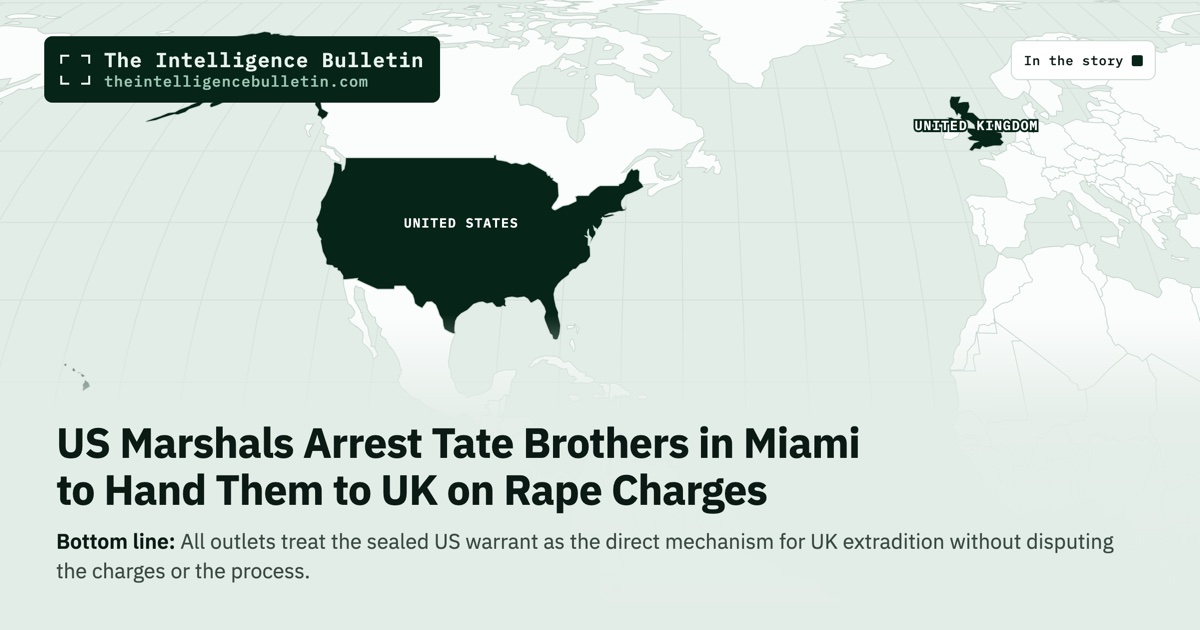
Map of the countries in the story: US Marshals Arrest Tate Brothers in Miami to Hand Them to UK on Rape Charges
On July 18 2026, US Marshals arrested Andrew and Tristan Tate in Miami under a sealed warrant. British authorities seek extradition on new UK charges of rape, sex trafficking, assault and indecent images of children. The brothers, dual US-British citizens, face 59 charges total across seven alleged victims and have denied all allegations. They are expected in federal court the following week.

One Story. Many Angles.

đŸ‡ș🇾
United States
Breitbart
Andrew and Tristan Tate Arrested in Miami as UK Seeks Extradition
Read →
đŸ‡ș🇾
United States
NBC News
Tate brothers arrested by U.S. authorities, face additional rape charges in the U.K.
Read →
đŸ‡ș🇾
United States
Los Angeles Times
Tristan and Andrew Tate arrested by federal authorities in Miami
Read →
🇼đŸ‡Ș
Ireland
Irish Examiner
Andrew and Tristan Tate arrested in Miami on UK charges of rape and sex trafficking
Read →
đŸ‡©đŸ‡°
Denmark
BT
DANISH
Andrew Tate and his brother have been arrested in Miami
“Andrew Tate og hans bror er blevet anholdt i Miami”
Read →
In Brief

All outlets treat the sealed US warrant as the direct mechanism for UK extradition without disputing the charges or the process.

Every outlet in this cluster reported the same core sequence without contradiction: a sealed US Marshals arrest in Miami to enable UK extradition on expanded rape and trafficking counts. The uniformity is the signal. Breitbart highlighted the attorney’s claim of US overreach and quoted UK prosecutors seeking handover. NBC and the Los Angeles Times both detailed the sealed warrant and Miami procedural steps while listing the new counts. The Irish Examiner and Danish BT led with the UK Crown Prosecution Service announcement and the jump to seven victims. No source downplayed the charges or invented procedural drama. The shared emphasis on dual-citizen status, the 2010-2017 timeframe and the attorney’s political-hit language shows the story is being handled as routine international law-enforcement cooperation rather than a culture-war flashpoint. That consensus suggests the legal machinery is viewed as credible across ideological and national lines, even for these polarizing figures.

Perspective Analysis

The uniform reporting across these outlets on the July 18 arrest of Andrew and Tristan Tate in Miami demonstrates that extradition proceedings driven by British prosecutors are viewed as standard, credible law enforcement rather than contested political theater. This pattern matters because the brothers’ high profile and vocal defenses have long invited culture-war framing, yet the coverage treats the sealed U.S. Marshals warrant and pending handover as routine interstate cooperation.

The Tates, dual U.S.-British citizens, were taken into custody Saturday in Miami under a sealed federal warrant. British authorities confirmed they seek extradition on expanded charges of rape, arranging or facilitating trafficking for sexual exploitation, assault occasioning actual bodily harm, and offenses related to indecent images of a child. The Crown Prosecution Service stated the new counts followed fresh evidence from Bedfordshire Police and bring the total alleged victims to seven. Overall, the brothers now face 59 charges—42 against Andrew and 17 against Tristan—covering alleged conduct from July 2010 to August 2017. They have denied all allegations throughout prior Romanian and British investigations.

U.S. Marshals confirmed the Miami operation but noted the sealed warrant prevented disclosure of charges at the time of arrest. Video from the scene showed officers escorting the handcuffed brothers to vehicles, with Tristan offering no comment when approached by an onlooker. The brothers are expected to appear in Miami federal court the following week. Their attorney, Joseph McBride, issued statements calling the arrests an “egregious abuse” of U.S. authority and a “political hit,” claiming America does not perform Britain’s “dirty work” and predicting the pair would “walk free” once a judge reviews the facts.

Breitbart’s account foregrounds McBride’s overreach language and the UK prosecutors’ extradition request while noting the brothers’ Trump support and manosphere influence. This emphasis aligns with the outlet’s skepticism toward foreign claims shaping U.S. enforcement actions. In contrast, NBC News centers the Marshals’ procedural steps—the sealed warrant, the Miami location, and the upcoming court appearance—while listing the specific additional counts announced by the Crown Prosecution Service. The Los Angeles Times similarly stresses the federal operation inside the United States and the chain linking prior Romanian detention to the current British request, treating geography and logistics as the core story.

The Irish Examiner leads with the CPS announcement and the jump to 59 charges across seven victims, quoting Malcolm McHaffie of the CPS Special Crime Division on the new evidence file and the decision to prosecute further offenses. Bedfordshire Police Assistant Chief Constable Karena Thomas is cited emphasizing cross-border cooperation and the principle that there is “no place for male violence against women and girls.” The Danish BT outlet frames the event around the brothers’ status as hypermasculinity influencers with millions of followers, noting the Miami arrest alongside the extradition request and prior Romanian case that stalled on procedural grounds. These differences reflect national and outlet priorities—prosecutorial detail for the Irish paper, influencer spectacle for the Danish tabloid—yet none dispute the basic sequence or invent procedural irregularities.

The shared reliance on the same core facts from the Marshals Service and CPS statements shows the story is handled as ordinary international legal machinery. No outlet downplayed the charges or amplified unverified claims of victimhood or conspiracy beyond quoting the attorney. The dual-citizen status, the 2010–2017 timeframe, and the attorney’s political language appear consistently because they are central to the public record. This convergence indicates that, for these polarizing figures, the legal process retains credibility across ideological lines.

What to Watch

Extradition fights typically involve hearings on whether the requesting country’s charges meet treaty standards and whether the defendants face fair trials. Given the sealed U.S. warrant and the brothers’ stated intent to contest the matter, the next phase will test whether federal courts treat the British request as routine or entertain broader arguments about foreign influence. The outcome will signal how readily dual nationals can be transferred when one country’s prosecutors expand cases with new victim statements, regardless of the defendants’ online reach or political ties. Readers should watch the Miami court filing for the first public indication of how U.S. authorities weigh those claims.


Share this story

Aoun Turns to Trump Alone to Extract Israeli Withdrawal from Lebanon

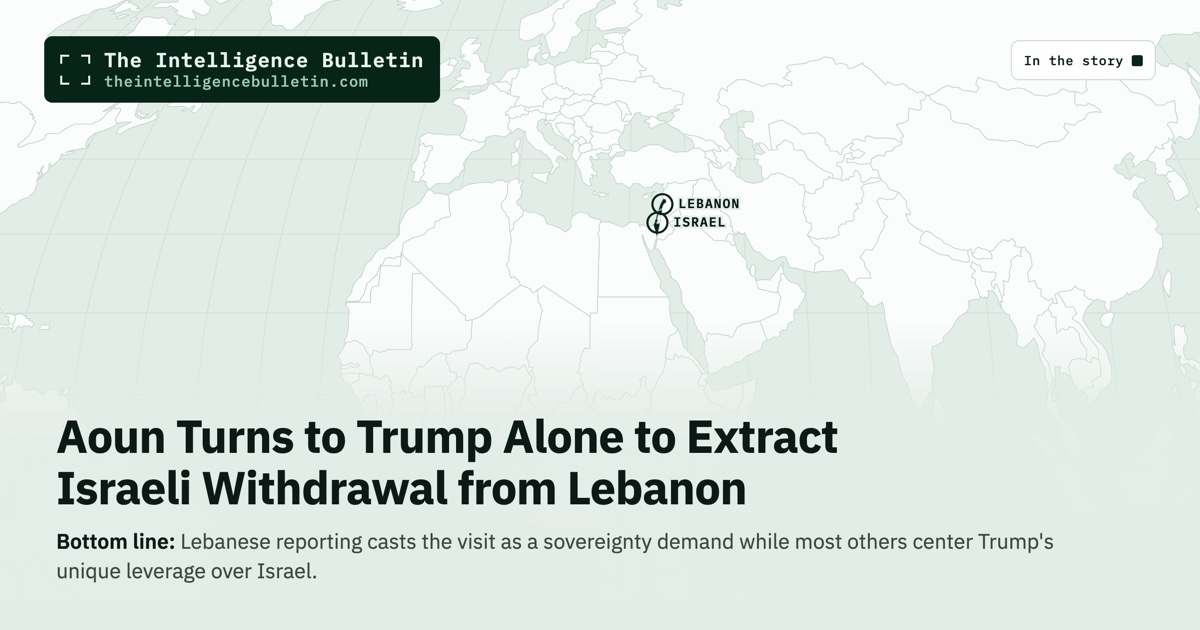
Map of the countries in the story: Aoun Turns to Trump Alone to Extract Israeli Withdrawal from Lebanon
On July 18-19 2026 Lebanese President Joseph Aoun left for Washington to meet Donald Trump. Aoun will ask the US president to pressure Israel to implement a June 26 framework agreement that requires Hezbollah disarmament and progressive Israeli troop withdrawal from southern Lebanon. He also seeks reconstruction funds and stronger US backing for the Lebanese Armed Forces. Hezbollah has rejected the deal outright.

One Story. Many Angles.

đŸ‡±đŸ‡§
Lebanon
Libnanews
FRA
Joseph Aoun in Washington to try to obtain the Israeli withdrawal
“Joseph Aoun Ă  Washington pour tenter d’obtenir le retrait israĂ©lien”
Read →
đŸ‡ș🇾
United States
Al-Monitor
Lebanon’s Aoun to meet Trump at White House, hoping to generate pressure on Israel
Read →
🇩đŸ‡Ș
United Arab Emirates
The National
Lebanon’s Aoun heads to White House seeking Trump’s backing on Israeli withdrawal
Read →
🇹🇳
China
South China Morning Post
Lebanon’s president to meet Trump, push for Israeli withdrawal
Read →
đŸ‡”đŸ‡°
Pakistan
The News International
Can Trump help Lebanon? Joseph Aoun to visit White House to increase pressure on Israel
Read →
In Brief

Lebanese reporting casts the visit as a sovereignty demand while most others center Trump’s unique leverage over Israel.

Lebanese outlets like Libnanews treat the trip as a straightforward sovereignty mission to extract an Israeli pullout. American and wire reporting from Al-Monitor and SCMP stress Aoun’s written proposal to disarm Hezbollah and his belief that only Trump holds the necessary leverage. The National adds concrete Lebanese demands for reconstruction money and army aid while noting domestic criticism that the framework uses the softer term ‘redeployment’ and limits legal accountability for Israeli actions. Pakistani coverage alone asks outright whether Trump can deliver. The near-uniform focus on Trump’s personal role across these outlets reveals how little room remains for multilateral diplomacy once Washington is cast as the sole arbiter.

Perspective Analysis

Lebanese President Joseph Aoun’s journey to Washington this week exposes a stark reality: Lebanon’s leadership sees no viable path to recovering its southern territory or curbing Hezbollah except through direct personal appeal to Donald Trump. The June 26 framework agreement with Israel requires Hezbollah’s disarmament in stages and a progressive Israeli pullback from occupied zones, yet Hezbollah has rejected it outright and Israeli forces remain in place after months of fighting that killed more than 4,300 people and displaced roughly one million. Aoun, a former army commander elected last year, left Beirut on July 18 carrying a written proposal to decommission the group’s arsenal. He will ask Trump to supply the pressure Israel has so far resisted and to unlock reconstruction funds plus extra backing for the Lebanese Armed Forces.

This approach reflects the narrow options left after the latest war. Israeli troops control pilot zones outside the old security strip, and talks in Rome last week produced no timetable for withdrawal. Aoun has already faced domestic pushback for engaging Israel directly, a step previous Lebanese governments avoided. He has criticized Hezbollah for dragging the country into conflict on Iran’s behalf while stopping short of meeting Israeli Prime Minister Benjamin Netanyahu himself. The framework’s language of “redeployment” rather than outright withdrawal, plus clauses that restrict Lebanon’s legal recourse against Israeli actions, has drawn sharp criticism from Lebanese civil-society groups that say it weakens sovereignty and accountability.

Coverage of the trip reveals how completely the story has narrowed to one man’s leverage. Lebanese outlet Libnanews presents the mission in straightforward terms as an effort to secure Israeli withdrawal and restore national control. American and regional reporting, including Al-Monitor and the South China Morning Post, adds that Aoun will hand Trump a concrete disarmament plan and argues that only the U.S. president possesses the influence needed to move Israel. The National, based in the UAE, supplies the fullest list of Lebanese requests—U.S. guarantees on implementation, money for rebuilding devastated southern towns, and strengthened support for the army—while noting both Hezbollah’s rejection and local complaints that the deal burdens Lebanon far more than it constrains Israel.

Pakistani daily The News International stands apart by asking outright whether Trump can deliver. That single note of doubt highlights a broader pattern: nearly every account treats Washington as the only actor that matters. Multilateral channels such as the United Nations or European mediators receive no serious attention in these pieces. The focus instead stays on Trump’s willingness to twist arms in Jerusalem and on Aoun’s belief that his army background and anti-Hezbollah stance give him credibility in the White House.

The National’s account comes closest to capturing the actual stakes. It records both the reconstruction needs created by Israeli strikes and the explicit domestic criticism of the framework’s wording and legal protections. Those details matter because they show the political risks Aoun faces at home if the deal produces only partial Israeli movement or renewed fighting. Al-Monitor supplies useful background on Aoun’s military record and the 2024 weakening of Hezbollah, yet it still centers the narrative on Trump’s singular role. The Pakistani piece’s skepticism, while brief, correctly flags the credibility problem: past U.S. pressure on Israel has produced mixed results, and Trump has already used softer language about “redeployment” while focusing his energy on Iran.

What to Watch

What happens next depends on whether Trump chooses to spend political capital on a full Israeli exit tied to verifiable Hezbollah disarmament. Aoun’s written proposal gives the White House a concrete starting point, but Israeli insistence on additional security conditions at each stage could stretch the process indefinitely. If Washington withholds strong guarantees or reconstruction support, Aoun returns empty-handed to a fractured domestic scene where Hezbollah retains the ability to block state policy. The trip therefore tests not just one leader’s diplomacy but whether any Lebanese government can reassert a monopoly on arms and territory without sustained external enforcement. Failure here would leave southern Lebanon under de facto Israeli control and the central state further hollowed out.


Share this story

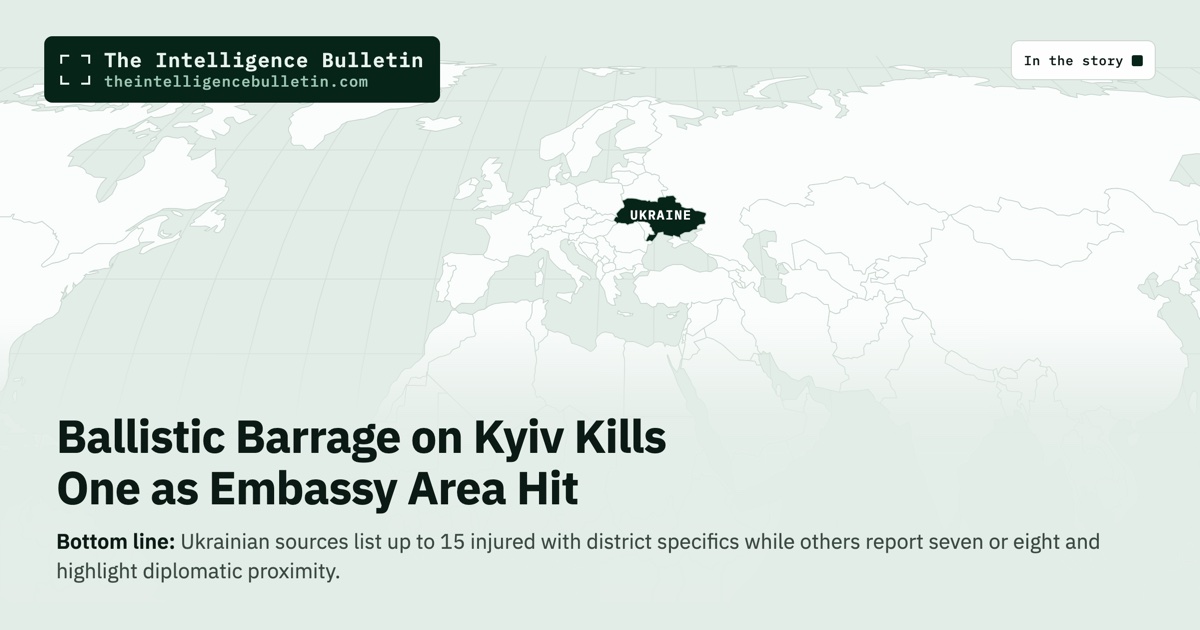
Ballistic Barrage on Kyiv Kills One as Embassy Area Hit

Map of the countries in the story: Ballistic Barrage on Kyiv Kills One as Embassy Area Hit
On the night of July 18-19, 2026, Russian forces launched dozens of ballistic missiles at Kyiv. Ukrainian authorities reported one death and between seven and 15 injuries, with fires and structural damage in at least five districts including impacts near the Lukianivska metro station. Local outlets documented precise hits on warehouses and debris patterns while regional sources noted proximity to diplomatic sites.

One Story. Many Angles.

đŸ‡ș🇩
Ukraine
Kyiv Post
Russia Launches Ballistic Missile Attack on Kyiv – 1 Dead, 15 Injured
Read →
đŸ‡ș🇩
Ukraine
Interfax-Ukraine
Russian attack hits warehouse in Sviatoshynsky district and drops missile debris in Darnytsky district of Kyiv
Read →
đŸ‡čđŸ‡·
Turkey
Anadolu Agency
Ukraine says one of Russia’s ‘largest’ missile attacks on Kyiv killed 1, injured 15
Read →
🇩🇿
Azerbaijan
Azernews
Russian ballistic missile strike hits area near Azerbaijan’s Embassy in Kyiv
Read →
🇾🇩
Saudi Arabia
Arab News
1 killed, 8 injured in an overnight Russian attack on Kyiv
Read →
In Brief

Ukrainian sources list up to 15 injured with district specifics while others report seven or eight and highlight diplomatic proximity.

Ukrainian outlets delivered the most detailed casualty and district-level damage counts from the ground, while Turkey’s Anadolu framed the barrage as one of Russia’s largest and Azerbaijan’s Azernews zeroed in on debris falling 200-250 meters from its embassy. Saudi Arabia’s Arab News reported the lowest injury tally and tied the strike to Kyiv’s Patriot missile shortage. The pattern shows local Ukrainian reporting supplying the raw numbers that foreign desks selectively amplify or contextualize, with no outlet disputing the core facts of ballistic strikes and limited civilian toll. This convergence on the attack’s scale and the slight variance in injury figures reveal how proximity to the event still dictates which details receive priority.

Perspective Analysis

The July 18-19 ballistic missile barrage on Kyiv shows that reporting priorities track closely with physical proximity and institutional vantage points, even when every outlet accepts the same core sequence of Russian launches, limited intercepts, fires, and a single confirmed death. Ukrainian newsrooms operating inside the capital supplied the most precise counts of districts hit, specific infrastructure struck, and casualty figures drawn directly from emergency services. Foreign agencies, by contrast, selected those same numbers to highlight scale, diplomatic exposure, or air-defense shortfalls, producing modest but consistent differences in emphasis rather than disputes over what happened.

The attack unfolded in the early hours of July 19 after launches the previous night. Russian forces fired roughly forty ballistic missiles, among them Iskander-M, Zircon, and S-400 variants, over a forty-minute window—the largest such salvo against the capital since the full-scale invasion began. Ukrainian air defenses intercepted some of the projectiles, yet debris and impacts still ignited fires and damaged buildings in the Desnianskyi, Dniprovskyi, Shevchenkivskyi, Sviatoshynskyi, and Solomianskyi districts. The surface vestibule of the Lukianivska metro station sustained visible damage and was temporarily closed, with trains on the green line bypassing the stop. One person died in the Shevchenkivskyi district; rescue teams recovered the body amid burning vehicles and a three-story building. Fifteen people were reported injured across the city proper, with two additional injuries recorded in the surrounding Bucha district where logistics warehouses burned.

Kyiv Post placed those details in immediate context by citing the State Emergency Service and Mayor Vitali Klitschko. Its account listed the exact missile types, the forty-minute duration, the five affected districts, and the metro station closure, while noting separate fires at warehouses in the Kyiv region. Interfax-Ukraine narrowed its focus even tighter, recording a direct hit on warehouse facilities in the Sviatoshynskyi district and missile debris landing on non-residential ground in the Darnytskyi district, again quoting Klitschko. Both Ukrainian outlets drew on the same official channels yet chose different levels of geographic granularity, reflecting their shared access to local authorities rather than any divergence in the underlying events.

Anadolu Agency framed the same numbers as evidence of one of Russia’s largest missile attacks on Kyiv, repeating the one-death, fifteen-injury tally without adding new local damage descriptions. The Turkish state-affiliated wire thereby amplified the scale already documented by Ukrainian sources while keeping the casualty line identical. Azernews shifted attention to diplomatic proximity, stating that explosions, structural damage, and fire occurred 200 to 250 meters from Azerbaijan’s embassy administrative building, with no harm to the mission itself. It aligned with the metro-station focus and cited one killed and seven injured, a slightly lower injury count that may reflect the moment the report was filed.

Arab News, drawing on AP material, reported one killed and eight injured while listing fires in five districts and damage to residential buildings, offices, an industrial site, a dormitory, and vehicles. It added the observation that Ukraine faces a shortage of Patriot interceptors and noted U.S. President Donald Trump’s stated readiness to grant production licenses for those missiles. This defense-policy angle appears nowhere in the Ukrainian or Azerbaijani pieces but fits the Saudi outlet’s broader editorial interest in arms supply questions.

No outlet contradicted the central facts: ballistic missiles were launched, some were intercepted, fires broke out in multiple districts, the Lukianivska area was affected, and casualties remained low single digits for fatalities with injuries in the single-digit to low-teen range. The variance in injury totals—seven, eight, or fifteen—tracks with the timing and sourcing of each report rather than any factual disagreement. Ukrainian outlets, closest to emergency services and municipal statements, supplied the highest and most detailed figures; regional agencies selected subsets that served their diplomatic or strategic framing.

What to Watch

This pattern indicates that future Russian ballistic strikes on Ukrainian cities will continue to generate a stable factual core from local reporting, with international desks layering on context that reflects their own geographic or policy concerns. Readers seeking the fullest accounting of immediate human and infrastructure effects will still need to consult Ukrainian sources first, while those tracking diplomatic exposure or weapons-supply implications will find the selective additions from foreign agencies useful but incomplete without the baseline detail. The convergence on the attack’s basic parameters amid these differing priorities underscores how proximity continues to shape which verifiable elements rise to the top of any given dispatch.


Share this story

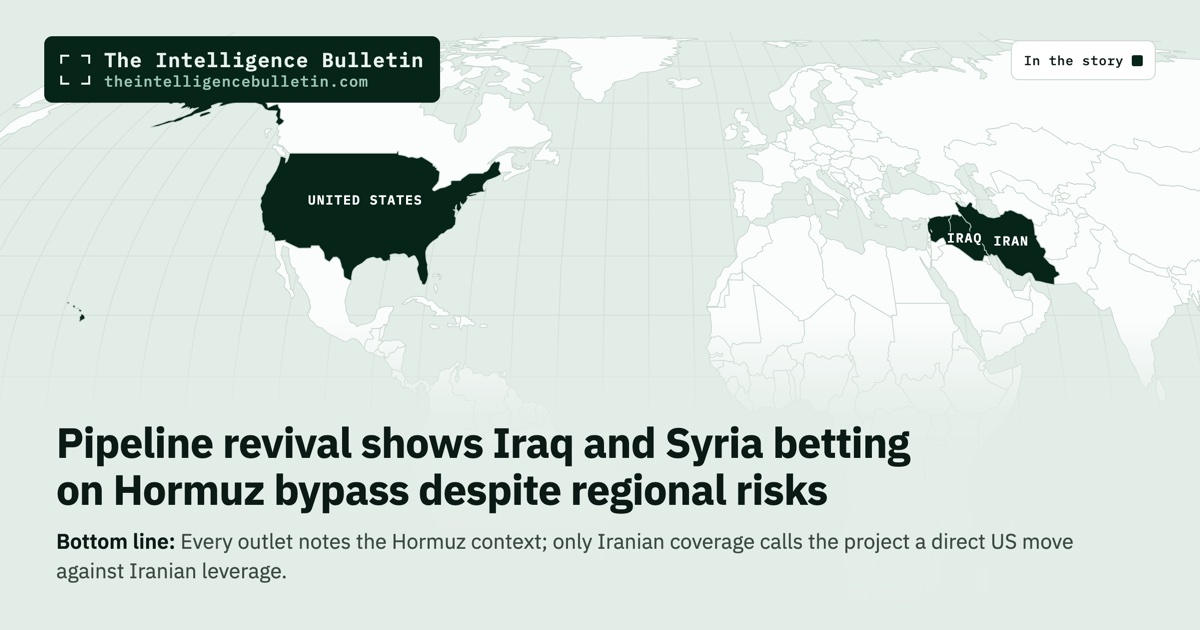
Pipeline revival shows Iraq and Syria betting on Hormuz bypass despite regional risks

Map of the countries in the story: Pipeline revival shows Iraq and Syria betting on Hormuz bypass despite regional risks
On July 17-18 2026, Iraq and Syria signed memoranda in Washington to rehabilitate the Kirkuk-Baniyas crude oil pipeline. A US-led consortium including Chevron will handle technical work on the route from northern Iraq to Syria’s Mediterranean coast. The project seeks to create an export corridor avoiding the Strait of Hormuz, where recent conflicts have disrupted Iraqi shipments and cut production sharply.

One Story. Many Angles.

đŸ‡źđŸ‡¶
Iraq
Iraq Sun
Iraq, Syria sign MoU to build oil pipeline extending to Mediterranean
Read →
đŸ‡ș🇾
United States
International Business Times
Iraq And Syria Have Signed A Deal To Restore A Major Oil Pipeline. It Would Create An Alternative To The Strait Of Hormuz.
Read →
đŸ‡žđŸ‡Ÿ
Syria
SANA
Syria signs two MoUs with Iraq to revive Kirkuk-Baniyas oil pipeline
Read →
đŸ‡¶đŸ‡Š
Qatar
Al Jazeera
Iraq signs deals with Western oil firms, including to revive Syria pipeline
Read →
đŸ‡źđŸ‡·
Iran
Iran Oil Gas
U.S. backs Iraq–Syria oil pipeline to bypass Hormuz
Read →
In Brief

Every outlet notes the Hormuz context; only Iranian coverage calls the project a direct US move against Iranian leverage.

The pipeline deal reveals a rare convergence on energy pragmatism across rival capitals. Iraqi reporting treats it as straightforward national infrastructure renewal to protect revenues, while US coverage foregrounds the Hormuz bypass and American commercial role. Syrian state media claims the route will restore Damascus as a key transit hub. Iranian outlets alone flag it explicitly as a US effort to strip Tehran of leverage over Gulf exports. Al Jazeera notes the wider package of Western contracts worth tens of billions but avoids the Hormuz emphasis. The shared silence on security risks and construction timelines across all five outlets suggests the signatories are rushing to lock in partners before any Hormuz reopening alters the calculus.

Perspective Analysis

The signing of memoranda in Washington on July 17 and 18, 2026, to rehabilitate the Kirkuk-Baniyas crude oil pipeline marks a calculated bet by Iraq and Syria that energy infrastructure can be revived faster than regional conflicts can be resolved. The project aims to route Iraqi crude from northern fields directly to Syria’s Mediterranean coast at Baniyas, creating an export path that skirts the Strait of Hormuz entirely. This convergence occurs precisely because recent U.S.-Iran clashes have already slashed Iraqi output from roughly 4.2 million barrels per day in February to 1.9 million in June, according to OPEC figures, exposing Baghdad’s near-total reliance on Gulf terminals vulnerable to shipping disruptions.

Iraqi reporting from Iraq Sun frames the memorandum as a domestic success in route diversification after Hormuz disruptions cut revenues that account for about 90 percent of national fiscal income. The outlet notes the involvement of a Chevron-led consortium with Transocean and Urbacon but keeps the focus on bolstering bilateral ties and unlocking investment without dwelling on the waterway the pipeline would avoid. This emphasis aligns with Baghdad’s immediate priority: stabilizing oil-dependent budgets amid production cuts that followed attacks on commercial shipping and regional infrastructure.

U.S. coverage in the International Business Times places the deal in the context of American commercial facilitation during Iraqi Prime Minister Ali al-Zaidi’s visit, with Energy Secretary Chris Wright presiding over the signing between Basra Oil Company CEO Bassem Abdul Karim Nasr and Syrian Petroleum Company CEO Youssef Qablawi. It highlights the route’s historical nameplate capacity near 700,000 barrels per day and positions the project as one among several regional efforts—including UAE and Saudi bypass pipelines—to reduce Hormuz exposure. The reporting underscores that the line has been idle since damage during the 2003 invasion and notes the absence of any announced construction timeline or cost, a gap that reflects the technical and security hurdles still ahead.

Syrian state media through SANA presents the two memoranda—one with Iraq and another directly with the international consortium including Chevron, UCC Holding, and TI Capital—as a strategic restoration of Damascus’s role as a transit hub. Energy Minister Mohammad al-Bashir described the effort as reinforcing Syria’s position linking regional resources to the Mediterranean, with technical and financial studies to follow under the highest standards. The coverage stresses infrastructure development and investment openings over any explicit reference to bypassing Hormuz, consistent with Damascus’s interest in positioning itself as an indispensable corridor regardless of the waterway’s status.

Al Jazeera situates the pipeline within a broader package of Iraqi agreements with Western firms worth more than $60 billion across energy, healthcare, and technology, including separate Chevron deals to boost production and a Starlink operating accord. It records the U.S. State Department’s description of an initial 2 million barrels per day transport capacity once rehabilitated and notes U.S. ambassador Tom Barrack’s comment that the agreements would make the Strait of Hormuz “an afterthought.” The report foregrounds Iraq’s open-door policy toward foreign partners while avoiding heavy emphasis on the Hormuz angle that dominates U.S. and Iranian accounts.

Iranian energy outlet Iran Oil Gas alone foregrounds the project as U.S.-backed precisely to limit Tehran’s leverage over Hormuz traffic, citing Washington’s expectation that American companies will lead reconstruction. It links the initiative to earlier Iraqi authorizations for new pipeline studies and frames the timing as a direct response to the Hormuz crisis that forced production cuts and revenue losses. This angle stands apart because it alone treats the Mediterranean route as a geopolitical instrument rather than a commercial or reconstruction project.

Across these accounts, the shared omission of detailed security assessments or firm construction schedules is striking. No outlet explores how the line—dormant for more than two decades and crossing territory that has seen repeated conflict—would be protected during rehabilitation or operation. Analysts quoted in the International Business Times note that pipelines still face risks from attacks on pumping stations and terminals, yet this caution receives little elaboration. The silence suggests the signatories view the memorandum as a window to lock in partners and studies before any potential reopening of Hormuz shipping alters the immediate economic pressure on Baghdad.

The pattern reveals a pragmatic alignment among Baghdad, Damascus, and Washington on infrastructure that serves distinct interests simultaneously: revenue stabilization for Iraq, transit-hub revival for Syria, and reduced regional leverage for Iran. Iranian coverage correctly identifies the bypass intent that others treat as secondary or unstated. Iraqi and Syrian reporting, by contrast, correctly prioritizes the commercial and integrative benefits that matter most to their governments’ fiscal and positioning goals.

What to Watch

What happens next hinges on whether Hormuz tensions ease or persist. If shipping through the strait normalizes quickly, the economic imperative for rapid pipeline work diminishes and security risks in Syria and northern Iraq may stall progress beyond the study phase. If disruptions continue, the consortium led by Chevron gains stronger incentive to accelerate technical work, though actual throughput will remain limited to a fraction of Iraq’s normal output even at full historical capacity. The memoranda themselves change little on the ground; the real test lies in whether the parties convert studies into protected construction amid ongoing regional volatility. For energy markets and Gulf exporters, the outcome will determine how durable any Hormuz bypass truly becomes.


Share this story