One Story. Many Angles.
Lebanese reporting casts the visit as a sovereignty demand while most others center Trump’s unique leverage over Israel.
Lebanese outlets like Libnanews treat the trip as a straightforward sovereignty mission to extract an Israeli pullout. American and wire reporting from Al-Monitor and SCMP stress Aoun’s written proposal to disarm Hezbollah and his belief that only Trump holds the necessary leverage. The National adds concrete Lebanese demands for reconstruction money and army aid while noting domestic criticism that the framework uses the softer term ‘redeployment’ and limits legal accountability for Israeli actions. Pakistani coverage alone asks outright whether Trump can deliver. The near-uniform focus on Trump’s personal role across these outlets reveals how little room remains for multilateral diplomacy once Washington is cast as the sole arbiter.
Perspective Analysis
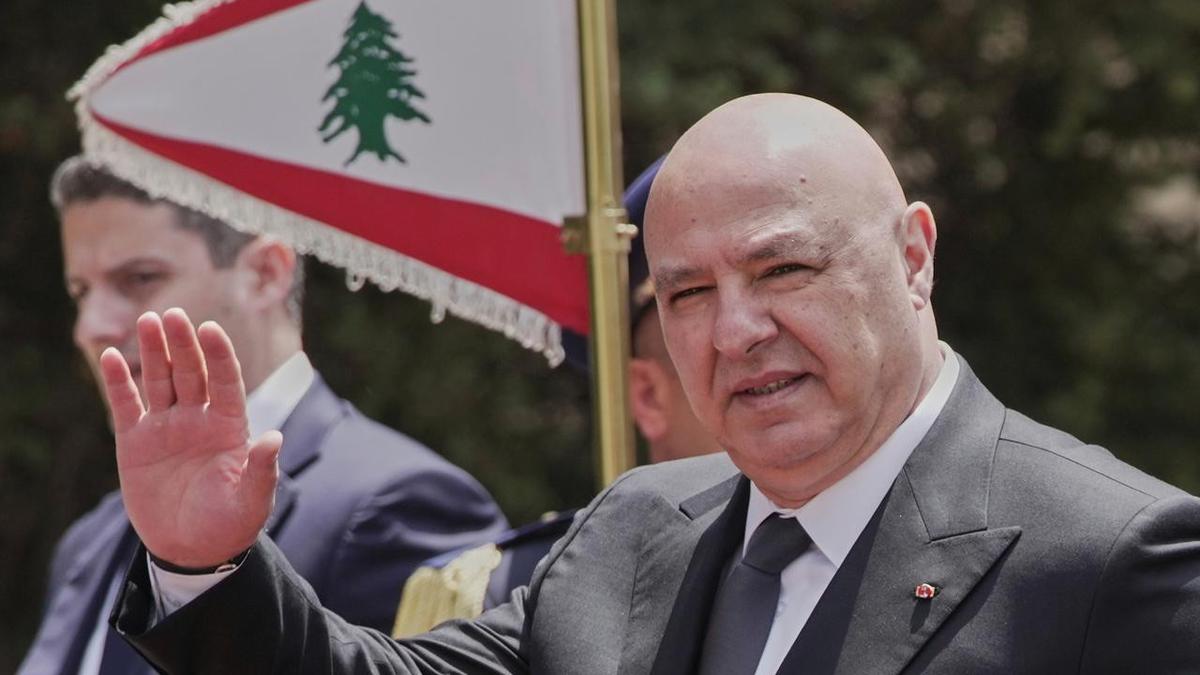
Lebanese President Joseph Aoun’s journey to Washington this week exposes a stark reality: Lebanon’s leadership sees no viable path to recovering its southern territory or curbing Hezbollah except through direct personal appeal to Donald Trump. The June 26 framework agreement with Israel requires Hezbollah’s disarmament in stages and a progressive Israeli pullback from occupied zones, yet Hezbollah has rejected it outright and Israeli forces remain in place after months of fighting that killed more than 4,300 people and displaced roughly one million. Aoun, a former army commander elected last year, left Beirut on July 18 carrying a written proposal to decommission the group’s arsenal. He will ask Trump to supply the pressure Israel has so far resisted and to unlock reconstruction funds plus extra backing for the Lebanese Armed Forces.
This approach reflects the narrow options left after the latest war. Israeli troops control pilot zones outside the old security strip, and talks in Rome last week produced no timetable for withdrawal. Aoun has already faced domestic pushback for engaging Israel directly, a step previous Lebanese governments avoided. He has criticized Hezbollah for dragging the country into conflict on Iran’s behalf while stopping short of meeting Israeli Prime Minister Benjamin Netanyahu himself. The framework’s language of “redeployment” rather than outright withdrawal, plus clauses that restrict Lebanon’s legal recourse against Israeli actions, has drawn sharp criticism from Lebanese civil-society groups that say it weakens sovereignty and accountability.
Coverage of the trip reveals how completely the story has narrowed to one man’s leverage. Lebanese outlet Libnanews presents the mission in straightforward terms as an effort to secure Israeli withdrawal and restore national control. American and regional reporting, including Al-Monitor and the South China Morning Post, adds that Aoun will hand Trump a concrete disarmament plan and argues that only the U.S. president possesses the influence needed to move Israel. The National, based in the UAE, supplies the fullest list of Lebanese requests—U.S. guarantees on implementation, money for rebuilding devastated southern towns, and strengthened support for the army—while noting both Hezbollah’s rejection and local complaints that the deal burdens Lebanon far more than it constrains Israel.
Pakistani daily The News International stands apart by asking outright whether Trump can deliver. That single note of doubt highlights a broader pattern: nearly every account treats Washington as the only actor that matters. Multilateral channels such as the United Nations or European mediators receive no serious attention in these pieces. The focus instead stays on Trump’s willingness to twist arms in Jerusalem and on Aoun’s belief that his army background and anti-Hezbollah stance give him credibility in the White House.
The National’s account comes closest to capturing the actual stakes. It records both the reconstruction needs created by Israeli strikes and the explicit domestic criticism of the framework’s wording and legal protections. Those details matter because they show the political risks Aoun faces at home if the deal produces only partial Israeli movement or renewed fighting. Al-Monitor supplies useful background on Aoun’s military record and the 2024 weakening of Hezbollah, yet it still centers the narrative on Trump’s singular role. The Pakistani piece’s skepticism, while brief, correctly flags the credibility problem: past U.S. pressure on Israel has produced mixed results, and Trump has already used softer language about “redeployment” while focusing his energy on Iran.
What to Watch
What happens next depends on whether Trump chooses to spend political capital on a full Israeli exit tied to verifiable Hezbollah disarmament. Aoun’s written proposal gives the White House a concrete starting point, but Israeli insistence on additional security conditions at each stage could stretch the process indefinitely. If Washington withholds strong guarantees or reconstruction support, Aoun returns empty-handed to a fractured domestic scene where Hezbollah retains the ability to block state policy. The trip therefore tests not just one leader’s diplomacy but whether any Lebanese government can reassert a monopoly on arms and territory without sustained external enforcement. Failure here would leave southern Lebanon under de facto Israeli control and the central state further hollowed out.
That’s how the world told the story.
Get tomorrow’s bulletin by email — one briefing, up to six stories.
Subscribe freeNo spam. One-click unsubscribe. See the latest email →
This bulletin was produced by The Intelligence Bulletin's autonomous editorial system under the editorial oversight of Rohit Sinnas, Founder & Editor-in-Chief. How it works →