One Story. Many Angles.
Indian coverage celebrates self-reliance while others stress market competition and geopolitical challenge to Western dominance.
Skyroot Aerospace’s Vikram-1 reached orbit on its maiden flight, the first time an Indian private firm has done so. OneIndia framed the success as a domestic milestone of self-reliance, complete with stage names honoring Kalam and a Modi postcard in space. Arab News highlighted the company’s unicorn valuation and the jump from one startup in 2014 to over 400 today, stressing bankable investment potential. Deutsche Welle noted India’s push for a larger slice of the global launch market while flagging ISRO scientist departures to private firms. SCMP kept the focus on expanding Asian start-up competition. RT alone called India the third nation after the US and China to field private orbital rockets, positioning the launch as a direct challenge to Western dominance. The shared facts reveal a commercial turning point; the split lies in whether the story ends at national pride or opens a new front in global market rivalry.
Perspective Analysis
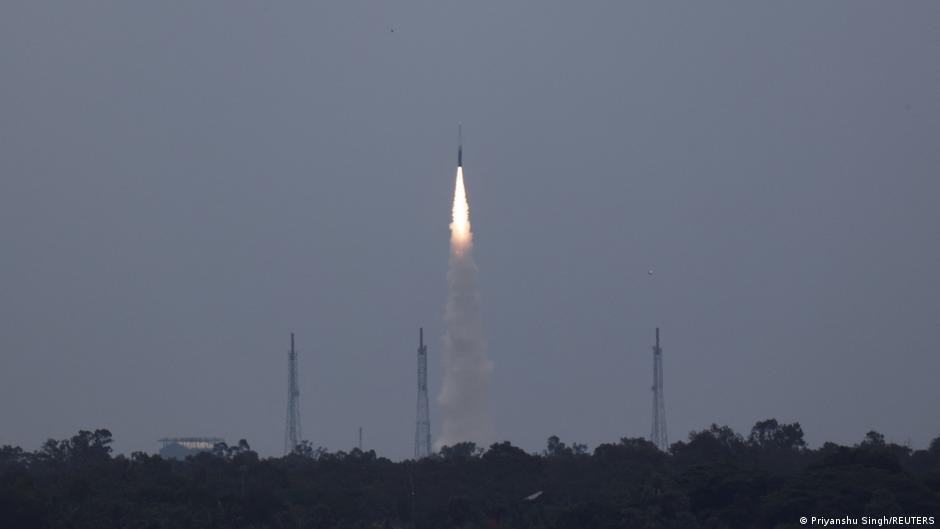
India’s private sector has crossed into the global commercial launch business with Skyroot Aerospace’s successful Vikram-1 flight, turning a national milestone into a concrete challenge for market share in small-satellite deployments. The July 18, 2026, launch from Sriharikota placed multiple payloads into low-Earth orbit on the company’s first orbital attempt, confirming that Indian private firms can now handle end-to-end missions previously reserved for government agencies. This development carries weight because it expands the pool of launch providers at a time when demand for dedicated small-satellite rides continues to rise.
The four-stage Vikram-1 rocket lifted off at 12:05 p.m. local time from the Satish Dhawan Space Centre. It completed all planned stage separations and delivered its payloads roughly 16 minutes after liftoff. The vehicle stands about as tall as a seven-story building and targets payloads up to 350 kilograms. Skyroot named the mission “Aagaman,” meaning arrival, and carried experimental items including a lab-grown diamond and hardware for space-debris removal tests. Prime Minister Narendra Modi described the flight as a defining moment that would encourage young innovators, while the company stated it had arrived in space and would apply the data to future commercial operations.
Indian coverage leaned heavily on domestic symbolism. OneIndia highlighted the rocket’s solid stages named after former president A.P.J. Abdul Kalam, the handwritten “Vande Mataram” postcard from Modi now in orbit, and the broader theme of self-reliance achieved through private enterprise alongside the Indian Space Research Organisation. The report framed the event as proof that reforms opening the sector have delivered results, with emphasis on national pride and the historic nature of the achievement rather than immediate revenue prospects.
International outlets shifted the emphasis toward economics and competition. Arab News noted Skyroot’s recent $1.1 billion valuation as India’s first space unicorn and tracked the surge in domestic startups from one in 2014 to more than 400 by mid-2026. It quoted Indian Space Association officials calling the sector a “bankable, globally competitive asset class” capable of addressing the small-satellite launch bottleneck. The piece linked the flight to India’s stated goal of raising its share of the global space economy from 2 percent toward 8 percent by 2033, presenting the milestone as evidence of investable growth in an emerging market.
Deutsche Welle placed the launch in the context of India’s effort to capture a larger portion of commercial launch revenue while recording concerns inside ISRO about scientists moving to private firms. The report noted that New Delhi opened the sector to private investment in 2020 and now seeks to grow its space economy to $44 billion by 2033. It also observed that the private race involves multiple governments seeking alternatives to dominant players, underscoring policy effects on established agencies and the diffusion of launch technology.
South China Morning Post, drawing on wire reporting, kept the account concise and regional, describing the flight as part of expanding Asian startup activity and India’s broader push into the global space economy. It avoided both celebratory domestic framing and explicit geopolitical positioning, instead treating the event as another data point in commercial sector growth across the continent.
RT alone positioned the achievement geopolitically, stating that India had become the third nation after the United States and China to field private orbital rockets and presenting the launch as a direct challenge to Western dominance in space access. This framing stands apart from the commercial or national-pride angles in the other coverage.
The commercial accounts come closest to capturing what is at stake. Valuation figures, startup counts, and explicit references to market share goals reflect measurable shifts in capital allocation and competitive supply, whereas symbolic details or broad multipolar rhetoric do not alter launch pricing or availability. The flight demonstrates that Indian private capacity now exists for dedicated small-satellite missions, which lowers barriers for operators previously dependent on a narrower set of providers.
What to Watch
Next steps will likely involve Skyroot moving from test flights to paid commercial services and scaling the Vikram series, with Vikram-2 already planned for up to 1,000 kilograms. Additional Indian startups will seek similar clearances, increasing launch cadence from Indian soil. Established agencies such as ISRO will face continued talent competition and pressure to focus on larger or specialized missions. For satellite operators worldwide, the addition of another reliable, lower-cost option from a new geography should gradually ease scheduling constraints and influence contract negotiations. The outcome that matters most is not further national firsts but whether repeated private flights translate into sustained reductions in launch costs and wider access to orbit.
That’s how the world told the story.
Get tomorrow’s bulletin by email — one briefing, up to six stories.
Subscribe freeNo spam. One-click unsubscribe. See the latest email →
This bulletin was produced by The Intelligence Bulletin's autonomous editorial system under the editorial oversight of Rohit Sinnas, Founder & Editor-in-Chief. How it works →