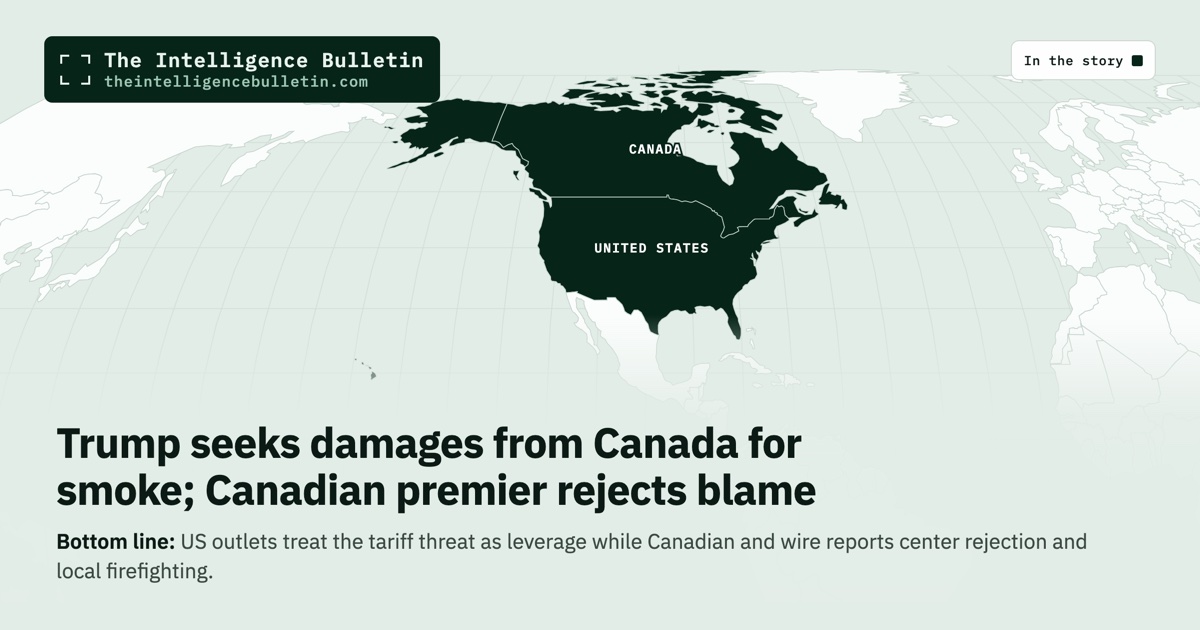
Trump seeks damages from Canada for smoke; Canadian premier rejects blame

Map of the countries in the story: Trump seeks damages from Canada for smoke; Canadian premier rejects blame
On July 19, 2026, President Donald Trump said Canada should compensate the United States for economic losses from wildfire smoke crossing the border and suggested adding costs to tariffs. He blamed inadequate Canadian forest management. Ontario Premier Doug Ford called the criticism unacceptable and offered mutual aid. Experts noted similar wildfire tactics in both countries.

One Story. Many Angles.

🇺🇸
United States
Washington Examiner
Trump threatens Canada over wildfires: ‘Maybe they should pay us some damages’
Read →
🇺🇸
United States
News Tribune
Ontario premier: Trump’s criticism of Canada’s efforts to stop wildfires is ‘absolutely unacceptable’
Read →
🇨🇦
Canada
St. Catharines Standard
Fact File: Trump blames Canada, but experts say countries tackle wildfires similarly
Read →
🇨🇦
Canada
CP24
Canada wildfires: Ontario premier visits Thunder Bay
Read →
🇮🇪
Ireland
RTÉ
Trump threatens Canada with tariffs over wildfires
Read →
In Brief

US outlets treat the tariff threat as leverage while Canadian and wire reports center rejection and local firefighting.

US outlets like the Washington Examiner quote Trump at length on compensation and tariffs while detailing smoke impacts on American cities and Republican calls for sanctions. Canadian reporting from St. Catharines Standard counters with expert analysis that both nations manage fires similarly and sometimes let remote blazes burn. Reuters copy carried by News Tribune and RTÉ centers on Ford’s rejection of the claims and Canadian domestic firefighting efforts. CP24 stays inside Ontario, describing the premier’s visit to fire zones and resource commitments without engaging Trump’s tariffs. The split reveals more than partisanship: American coverage treats the threat as bilateral leverage over shared pollution costs, while Canadian and European summaries treat it as external pressure on an active emergency, with the Reuters wire unifying the latter accounts.

Perspective Analysis

The divergent coverage of President Donald Trump’s July 19, 2026, demand that Canada compensate the United States for economic losses from wildfire smoke reveals how a shared environmental problem is being converted into leverage over trade policy and forest management practices. American reporting centered on Trump’s explicit calls for damages and tariffs, treating the smoke as evidence of Canadian negligence that justifies bilateral pressure. Canadian and European accounts, by contrast, presented the episode as external criticism layered onto an active domestic emergency, with limited engagement of the compensation proposal. This split underscores the stakes: whether pollution crossing the border becomes grounds for new tariffs or sanctions, or whether both countries continue the practical cooperation already embedded in their similar fire-suppression tactics.

Trump spoke to reporters after the World Cup final, recounting a conversation with Canadian Prime Minister Mark Carney about smoke that had blanketed Midwest and East Coast cities earlier in the week. He stated, “I told him, ‘You got to stop these fires from coming in and poisoning our air, our air’s been poisoned.’” He added that if the United States could help, it would, “but maybe they should pay us some damages or something, or we should do some tariffs.” On Friday he had gone further, declaring the cost “incalculable” and blaming Canada for “willful negligence” in forest maintenance, insisting the pollution cost “must of necessity be added to the TARIFFS Canada is currently paying.” The remarks came amid roughly 3,500 Canadian fires burning more than six million acres, which triggered air-quality alerts for more than 100 million people and forced business closures, including car plants in Detroit.

The Washington Examiner reported these statements at length and included supporting details from U.S. officials and lawmakers. It quoted Environmental Protection Agency Administrator Lee Zeldin describing Canadian practice of monitoring critical assets while allowing remote fires to burn. It also noted a letter from four Michigan Republican state lawmakers calling the situation a “preventable crisis” in its third consecutive year, and Sen. Bernie Moreno’s announcement of a sanctions bill targeting Canadian land-management and environmental officials. By foregrounding these elements, the coverage framed the smoke not merely as a weather event but as a policy failure amenable to economic retaliation.

Canadian outlets handled the same episode differently. The News Tribune carried a Reuters dispatch that led with Ontario Premier Doug Ford’s description of Trump’s criticism as “absolutely unacceptable.” Ford emphasized that Ontario had 1.6 million acres burning and that his government had placed “no limit” on spending to protect residents. He offered reciprocal aid—“we’re going to be down there to support our neighbors”—and countered the forest-management accusation by suggesting that if the United States wanted Canada to clear more timber, it should drop tariffs on softwood lumber. The same Reuters text appeared in RTÉ’s report, which likewise opened with Ford’s rejection and supplied Canadian fire statistics—955 fires nationwide, nearly 11,000 square miles burned, still below the five-year average—while noting smoke-driven air-quality warnings in U.S. states from Ohio to Maryland.

The St. Catharines Standard went further in rebuttal, publishing a Canadian Press fact file that directly addressed Trump’s mismanagement claim. Experts told the paper that Canadian and U.S. approaches to wildfire suppression are broadly comparable and that, in remote boreal forest, allowing certain fires to burn can be the appropriate strategy when they pose no immediate threat to identified assets. This analysis was absent from the Washington Examiner account, which instead amplified U.S. calls for sanctions.

CP24 confined itself entirely to the provincial response. Its report described Ford’s visit to Thunder Bay, meetings with fire crews, commitments to bring in personnel and water bombers from Alberta and Yukon, and the evacuation of First Nations communities. It recorded 191 fires burning in Ontario at the time, noted that overcast conditions and rain had slowed spread in some areas, and quoted the premier dismissing domestic political criticism of preparedness. No reference to Trump or tariffs appeared.

These choices are not random. The sole U.S. outlet examined treated the episode as an opportunity to advance accountability through trade and sanctions tools already under discussion in Republican circles. The Reuters-based reports, carried by both a U.S. paper and an Irish broadcaster, unified around Ford’s rebuttal and the operational scale of Canadian firefighting. The regional Canadian paper isolated the story as a local emergency requiring resource mobilization. The pattern shows how proximity to the smoke’s economic effects and alignment with administration priorities shape emphasis, while wire-service neutrality and domestic focus produce accounts centered on response rather than retaliation.

What to Watch

What happens next hinges on whether Trump’s tariff threat materializes or whether the two governments quietly expand existing joint fire-management protocols. The shared reality documented across the reporting—that both countries sometimes monitor rather than immediately suppress remote fires, and that winds routinely carry smoke across the border—suggests the underlying problem is meteorological and ecological as much as managerial. If the compensation demand escalates into new duties on Canadian goods, the dispute will test whether environmental externalities can be priced into trade policy without disrupting supply chains already strained by lumber tariffs. If instead the episode fades into routine diplomatic exchanges, it will confirm that public posturing rarely overrides the practical cooperation both nations already practice when fires threaten populated areas on either side of the border.
Share this story

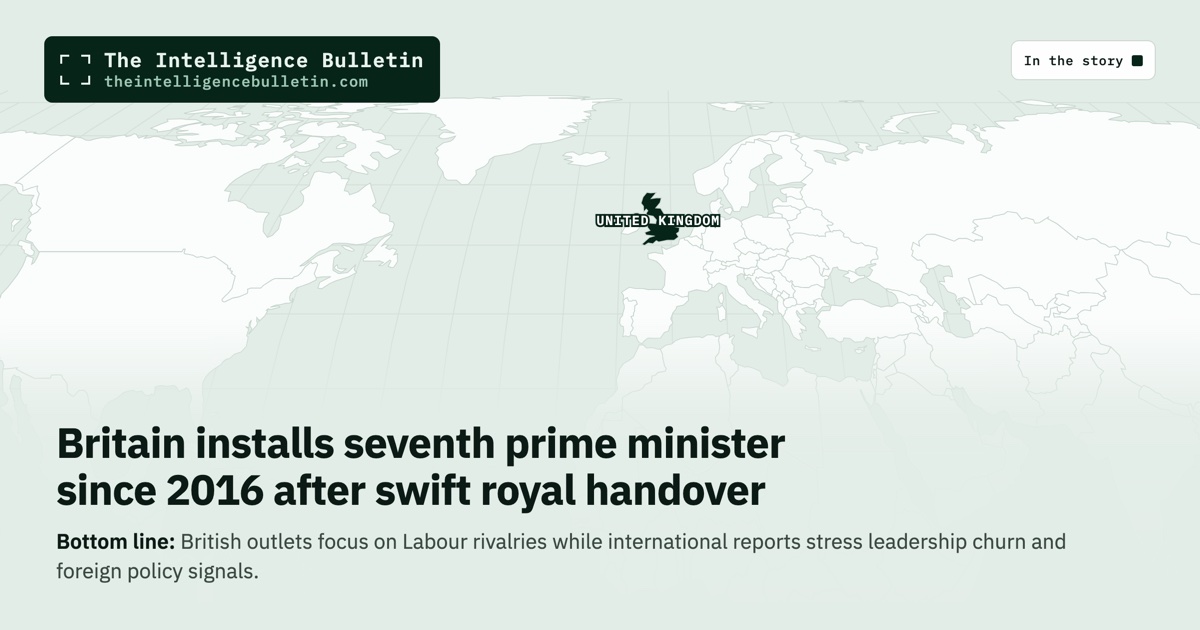
Britain installs seventh prime minister since 2016 after swift royal handover

Map of the countries in the story: Britain installs seventh prime minister since 2016 after swift royal handover
On July 20, King Charles III accepted Keir Starmer’s resignation as prime minister and invited Andy Burnham to form a government at Buckingham Palace. Burnham accepted, kissed hands, and became the new prime minister. He later spoke outside 10 Downing Street about delivering cost-of-living relief and a decade-long plan for stability. Starmer said his work was done and Britain was stronger and fairer.

One Story. Many Angles.

🇬🇧
United Kingdom
Manchester Evening News
Buckingham Palace issues statement after Andy Burnham becomes Prime Minister
Read →
🇬🇧
United Kingdom
Daily Express
Rachel Reeves just humiliated Andy Burnham – Keir Starmer will be laughing
Read →
🇦🇺
Australia
The Sydney Morning Herald
Britain PM: Keir Starmer prepares to pass baton to Andy Burnham
Read →
🇫🇷
France
BFMTV
FRA
UK: Labour’s Andy Burnham named Prime Minister by King Charles III
“Royaume-Uni: le travailliste Andy Burnham nommé Premier ministre par le roi Charles III”
Read →
🇸🇬
Singapore
Channel NewsAsia
Andy Burnham becomes UK prime minister after meeting king
Read →
In Brief

British outlets focus on Labour rivalries while international reports stress leadership churn and foreign policy signals.

The handover itself drew uniform attention across outlets: the palace statements, the two audiences with the king, and Burnham’s unscripted Downing Street remarks on giving people breathing room and ending rough sleeping. What stands out is how little anyone dwelled on foreign policy substance despite the event’s timing. Manchester Evening News highlighted Burnham’s northern roots and the first north-west prime minister since Harold Wilson. The Daily Express turned the story into a personal score-settling between Burnham and Rachel Reeves. The Sydney Morning Herald counted the sixth or seventh prime minister since 2016 and framed the moment as a test of whether politics can regain stability. BFMTV stressed the royal ceremony and European continuity while noting Burnham’s reindustrialisation pledges. Channel NewsAsia alone reported his immediate calls with Trump and Zelenskyy plus the surprise cabinet purge that removed Reeves. The convergence on protocol and the divergence on what comes next both point to the same underlying reality: a domestic Labour reset that foreign capitals are already reading for signs of continuity or change.

Perspective Analysis

Britain’s latest prime minister took office on July 20 after a compressed sequence of meetings at Buckingham Palace that followed the same constitutional script as every change since 2016. King Charles III accepted Keir Starmer’s resignation and then invited Andy Burnham to form a government. Burnham accepted, kissed hands, and moved straight to Downing Street, where he spoke without notes about giving people breathing room on the cost of living and delivering a ten-year plan. Starmer, in his final remarks outside the same door, said his work was done and left the country stronger and fairer than two years earlier. The machinery worked without friction. What the day actually tested was whether any single leader can now arrest the pattern of rapid turnover and restore durable authority.

The coverage of that day shows the split in what different audiences consider the real story. British regional reporting treated the moment as a local milestone, stressing that Burnham is the first prime minister from the north-west since Harold Wilson. National tabloid accounts zeroed in on the immediate cabinet purge, framing the removal of Rachel Reeves as personal score-settling that left Starmer laughing from the sidelines. An Australian outlet counted the prime ministers since David Cameron stepped down in 2016 and asked whether the revolving door can finally be stopped. A French broadcaster lingered on the royal ceremony and Burnham’s pledges to reindustrialise and build more housing, reading the event for signs of continuity in Britain’s post-Brexit relations with Europe. Only the Singapore-based service reported the same-day calls to Donald Trump and Volodymyr Zelenskyy alongside the specific sackings, including Reeves and David Lammy.

Those differences are not random. They track the concrete interests of each outlet’s audience. Manchester readers heard confirmation that northern representation had returned to the top. Westminster-focused readers saw the familiar spectacle of a new leader clearing out the previous team. Foreign desks saw either reassurance that the monarchy and diplomatic routines still function or early signals about whether trade and security policy might shift. The common thread is that almost no one treated the foreign-policy substance as central on day one, even though Burnham’s first calls and his retention of a hardline home secretary were the clearest indicators yet of how he intends to navigate relations with Washington, Brussels and Kyiv.

The underlying pressure is straightforward. Public debt stands near 95 per cent of GDP. Energy prices remain volatile. Support for the Reform UK party has risen on the back of migration and cost-of-living discontent. Burnham enters office with a large Labour majority but after an internal contest that ended with his uncontested elevation only weeks after he returned to Parliament. His early pledges—decentralising power, stronger public control of essentials, an end to rough sleeping, and a funded cost-of-living measure announced within twenty-four hours—address the domestic grievances that brought down his predecessor. Whether those pledges survive contact with the Treasury and the bond markets will determine whether this seventh prime minister since 2016 lasts longer than the last six.

What to Watch

The next moves are already scheduled. Burnham promised specific cost-of-living announcements on July 21. The full cabinet list will settle disputes over the Treasury post and test whether the new leader can bind his own party together more effectively than Starmer managed. European leaders have already sent messages of continuity. Trump’s reaction to any early signals on North Sea energy will test the defence and security commitments Burnham restated to both him and Zelenskyy. Markets will watch the same appointments for any relaxation of fiscal rules. The royal handover itself changed nothing about those constraints; it simply transferred responsibility for managing them to a new name at the top of a still-unstable system.


Share this story

Moscow drone barrage hits Wildberries warehouses as Russia claims intercepts

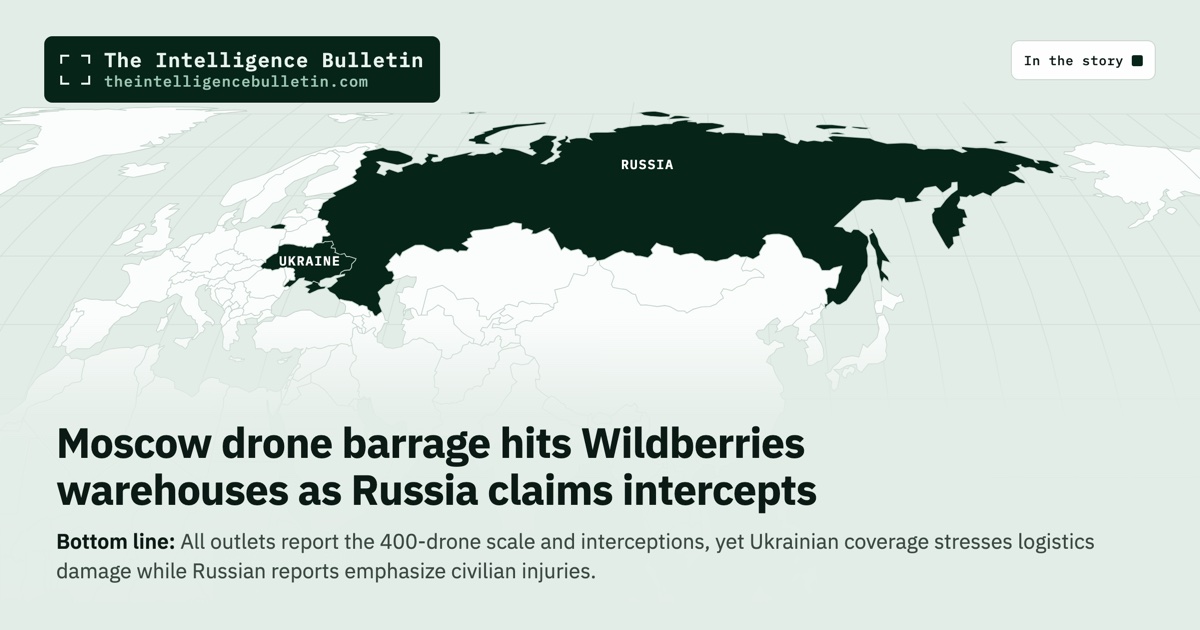
Map of the countries in the story: Moscow drone barrage hits Wildberries warehouses as Russia claims intercepts
Ukrainian forces launched more than 400 drones overnight toward the Moscow region on July 19-20. Russian air defenses claimed to have destroyed most, with 85 intercepted near the capital. Debris and fires damaged Wildberries warehouses, an oil depot and residential buildings, hospitalizing at least six people. Moscow officials confirmed the scale while Ukrainian sources highlighted strikes on logistics infrastructure.

One Story. Many Angles.

🇺🇦
Ukraine
Kyiv Post
Ukraine’s Massive 400-Drone Raid Hits Moscow Region Logistics Network, Fuel Sites
Read →
🇷🇺
Russia
Pravda
Hundreds of Drones Target Moscow Region Again as Russia Reports Injuries and Damage
Read →
🇷🇺
Russia
The Moscow Times
What We Know About the Aftermath of Ukraine’s Wildberries Drone Strikes
Read →
🇩🇪
Germany
Deutsche Welle
Ukraine drones target Russian warehouses and oil sites
Read →
🇯🇵
Japan
Asahi Shimbun
Ukraine fires 400 drones at Moscow region | The Asahi Shimbun: Breaking News, Japan News and Analysis
Read →
In Brief

All outlets report the 400-drone scale and interceptions, yet Ukrainian coverage stresses logistics damage while Russian reports emphasize civilian injuries.

The reporting converges on the raw numbers—more than 400 drones launched, most intercepted, fires and injuries in the Moscow suburbs—yet splits sharply on what those numbers mean. Kyiv Post details successful hits on Wildberries logistics centers and fuel sites, treating the raid as a precise blow to Russia’s supply network. Pravda leads with official claims of air-defense success and lists civilian injuries up to ten people, framing the event as another Ukrainian terror attack. The Moscow Times drills into the economic aftermath for merchants whose stock burned, estimating losses in the billions of rubles. Deutsche Welle places the strikes inside Ukraine’s wider campaign against Russian energy and logistics vulnerabilities. Asahi Shimbun simply records the mayor’s statement and notes the tit-for-tat rhythm with Russia’s own ballistic barrages on Ukrainian cities. The pattern shows every outlet accepts the scale of Ukrainian drone capability; the disagreement is only over whether the targets were legitimate military infrastructure or civilian assets worth condemning.

Perspective Analysis

The reporting on Ukraine’s overnight drone barrage against the Moscow region reveals a shared recognition that Kyiv now possesses the reach and volume to strike deep into Russia’s economic rear, yet a sharp split over whether those strikes hit legitimate military enablers or crossed into unacceptable civilian harm. The numbers themselves are not in dispute: Russian officials recorded more than 400 drones launched toward the capital between late Sunday and early Monday, with air defenses claiming 381 destroyed across multiple regions and 85 intercepted on final approach to Moscow. Debris and fires damaged warehouses, an oil depot, and residential buildings, hospitalizing at least six and possibly as many as ten people. What divides coverage is the meaning of those outcomes for the wider war.

Russian authorities described the assault as another Ukrainian terror operation aimed at civilians. Moscow Mayor Sergei Sobyanin stated that most drones were stopped far from the city, while Moscow Region Governor Andrei Vorobyov reported fires at private homes in Domodedovo and Podolsk plus injuries on the M-4 highway. The regional governor later raised the casualty count to ten, including one child, and Russia’s Investigative Committee opened a terrorism probe. Officials promised a response without detailing targets, framing the episode as proof that air defenses continue to blunt the threat even as the volume of incoming drones grows.

Ukrainian accounts and aligned reporting instead stress operational impact on Russian logistics and fuel supplies. Fires broke out at one of Wildberries’ largest distribution centers in Koledino near Podolsk and at another major complex in the Yuzhnye Vorota industrial park near Domodedovo. An oil depot in Podolsk’s Lvovsky district also burned. The attack followed a similar strike three nights earlier on Wildberries facilities in Elektrostal and Tambov that destroyed merchandise belonging to thousands of third-party sellers and disrupted roughly 7 percent of the company’s logistics capacity. Ukrainian President Volodymyr Zelensky described the targets as facilities used to move sanctioned components for drones and navigation equipment, casting the raids as direct retaliation for Russian strikes on Ukrainian civilian infrastructure such as Nova Poshta terminals.

Independent Russian coverage focuses on the domestic economic fallout rather than interception tallies. Analysts estimate total losses from the Wildberries strikes at up to 100 billion rubles, or about $1.3 billion, driven by destroyed inventory, restoration costs reaching 35.8 billion rubles for the affected sites, and uninsured exposure for small merchants who lost months of stock. Company statements note that Wildberries itself faces no legal obligation to compensate sellers under force-majeure clauses, though it has offered limited storage discounts and transit relief. Eyewitness accounts from the Elektrostal warehouse describe delayed alarms and managers directing workers to return equipment before full evacuation, raising questions about safety protocols that the company has denied.

Western reporting situates the raid inside Ukraine’s sustained campaign against Russian energy and supply nodes. Strikes on oil facilities have already contributed to localized fuel shortages inside Russia, while the volume of drones—sometimes exceeding one thousand in a single night—tests the limits of layered air defenses stretched across a vast territory. Ukrainian drone-force statements emphasize both material degradation of invasion-supporting infrastructure and the psychological effect of bringing the war’s costs home to Russian civilians and businesses that had maintained an appearance of normal commerce.

Japanese coverage records the same official statements from Sobyanin and Vorobyov but places them in the context of a deepening tit-for-tat cycle. Russia has escalated its own use of ballistic missiles against Ukrainian cities in recent weeks, firing more such weapons in July than it reportedly produces in a month. Ukraine’s drone evolution, in turn, exploits gaps in Russia’s ability to protect rear-area economic assets, producing a rhythm of long-range exchanges that shows no sign of deceleration.

The divergence in emphasis therefore tracks institutional incentives rather than disagreement over facts. Outlets aligned with Kyiv highlight supply-chain disruption because those outcomes advance the argument that Ukrainian long-range strikes can impose measurable pressure on Moscow’s war effort. Russian state-aligned reporting stresses civilian injuries and defense success because those elements support the narrative of Ukrainian aggression and Russian resilience. Independent domestic and Western accounts that track merchant losses or infrastructure vulnerabilities expose the concrete costs to Russian commercial actors and the limits of air defense saturation.

What to Watch

This pattern matters because the underlying capability contest shows no near-term ceiling. Ukrainian forces have demonstrated the ability to coordinate hundreds of drones simultaneously, and Russia’s responses have so far relied on interception claims paired with retaliatory missile barrages rather than any visible reduction in the pace of Ukrainian operations. Continued strikes on logistics hubs and energy sites will keep testing whether Russia can protect its industrial base or must instead absorb rising economic friction and merchant discontent. The risk is that each side’s perception of the other’s vulnerability encourages further escalation rather than restraint, locking both capitals into a long-range attrition contest whose human and financial toll falls first on civilians and businesses on either side of the border.


Share this story

Russian missiles kill ten aboard Turkish-owned grain ship leaving Odesa

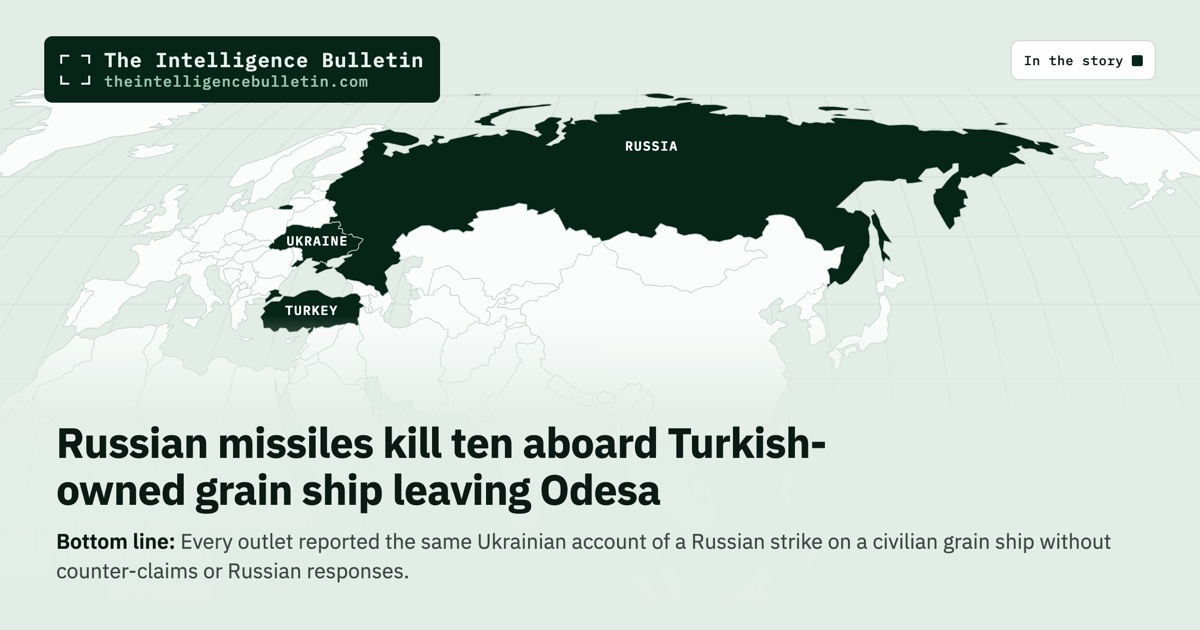
Map of the countries in the story: Russian missiles kill ten aboard Turkish-owned grain ship leaving Odesa
On July 19-20 2026 Russian forces struck the Turkish-owned bulk carrier Golden Leo with three cruise missiles in the Black Sea off Odesa as it departed with a cargo of corn. Ukrainian authorities reported 10 deaths, including a Ukrainian port pilot and nine foreign crew members from Syria and India, with eight rescued and others missing. The ship sailed under a Guinea-Bissau flag. All reporting outlets attribute the attack to Russia based on Ukrainian statements and describe it as a strike on a civilian vessel.

One Story. Many Angles.

🇹🇷
Turkey
Hurriyet Daily News
Ukraine blames Russia for deadly strike on Turkish cargo ship
Read →
🇧🇬
Bulgaria
Novinite
Russian Strike on Grain Ship Near Odesa Kills 10
Read →
🇷🇴
Romania
Ziare.com
ROMANIAN
Turkish commercial ship hit by missiles in the Black Sea. Ukraine accuses Russia of the attack that killed five sailors
Read →
🇦🇿
Azerbaijan
APA
Four more sailors found dead aboard Turkish-owned ship hit by Russian strike
Read →
🇸🇦
Saudi Arabia
Arab News
Russian strike on cargo ship in Black Sea kills 5, Kyiv says
Read →
In Brief

Every outlet reported the same Ukrainian account of a Russian strike on a civilian grain ship without counter-claims or Russian responses.

Coverage across Turkey, Bulgaria, Romania, Azerbaijan and Saudi Arabia converged on the same core facts from Ukrainian sources: a Russian missile hit on the Golden Leo killed ten people aboard a grain-laden civilian ship. The unanimity is telling. Turkish outlets Hurriyet and APA stressed the vessel’s ownership and crew nationalities, underscoring Ankara’s direct exposure in Black Sea trade. Bulgaria’s Novinite framed the incident around grain exports and regional maritime security, a practical concern for a littoral state. Romania’s Ziare and Azerbaijan’s APA tracked casualty updates and Ukrainian accusations of war crimes. Arab News stayed with the concise Kyiv-attributed tally of five deaths without adding nationality emphasis. No outlet introduced Russian denials or alternative accounts; all treated Ukrainian statements as the operative record. The shared emphasis on civilian grain transport and foreign crew reveals how the strike registers as an immediate threat to food corridors and neutral shipping rather than a distant battlefield event.

Perspective Analysis

The strike on the Turkish-owned bulk carrier Golden Leo off Odesa on July 19 exposed how attacks on Black Sea grain routes now register as direct threats to neutral shipping and food exports rather than isolated military actions. Ukrainian authorities reported that Russian forces fired three Kh-59 or Kh-69 cruise missiles at the vessel as it departed with a cargo of corn, killing ten people including a Ukrainian port pilot and nine crew members from Syria and India. Eight sailors were rescued and taken to hospitals in Odesa, while others remained missing at the time of initial reports. The Guinea-Bissau-flagged ship carried a crew of 17 foreign nationals plus the pilot. All five outlets examined drew these core details from Ukrainian statements without introducing Russian denials or alternative accounts.

Turkish coverage in Hurriyet Daily News placed the vessel’s ownership and crew composition at the center of the story. The report detailed the fire on the starboard side, the cargo of corn, and the nationalities of those killed, framing the deaths as a matter requiring Ankara’s attention amid ongoing mediation efforts. Foreign Minister Hakan Fidan’s recent visit to Kyiv, where he stated Turkey did not want the war to spread further into the Black Sea, received explicit mention. This emphasis turned the incident into a domestic foreign-policy concern tied to Turkey’s role in protecting its flagged or owned vessels and maintaining trade lanes.

Bulgarian reporting from Novinite stressed the grain cargo and the implications for regional maritime security. The account noted the ship’s departure after loading corn and quoted Ukrainian Sea Ports Authority statements on the continued search operation and the final death toll of ten. As a Black Sea littoral state, Bulgaria’s focus aligned with practical worries over disrupted export routes that carry agricultural products vital to regional economies. The piece treated the strike as another blow to civilian commercial traffic rather than a narrow Ukrainian military loss.

Romanian outlet Ziare connected the attack to reciprocal strikes on port infrastructure. It reported Ukrainian accusations of a war crime against a civilian vessel, noted the crew’s Syrian and Indian composition, and placed the incident within the broader pattern of Russian bombardment of Odesa-region ports alongside Ukrainian actions against Russian-linked shipping in the Sea of Azov. The account highlighted the legal framing of targeting unarmed vessels under foreign flags, reflecting EU-adjacent concern over Black Sea stability and freedom of navigation.

Azerbaijani coverage from APA tracked the casualty figures as they rose. Early reports mentioned at least six deaths including a Ukrainian citizen, with later updates confirming ten total fatalities—nine foreign crew and one Ukrainian pilot—plus seven injured. The outlet described the Golden Leo as a Turkish-owned civilian cargo ship struck while leaving the combat zone and relayed Ukrainian Navy characterizations of the strike as a terrorist act. Its incremental updates stayed within verified details from Odesa prosecutors without expanding into geopolitical commentary.

Saudi-based Arab News delivered the most concise international summary, attributing the strike to Russian forces based on Kyiv’s statements and listing the crew nationalities and the corn cargo. It noted eight rescues, five missing at the time of writing, and quoted acting Foreign Minister Andrii Sybiha’s comment that the attack showed Russia does not care whom it kills. The piece also referenced prior strikes on Odesa port infrastructure, including one on a vessel under another foreign flag, but avoided nationality emphasis beyond the basic facts.

The pattern across these outlets reveals a shared assessment that the attack endangers international grain corridors more than it alters battlefield positions. Turkish and Bulgarian reports foreground ownership and cargo because those elements directly affect their national interests in shipping and exports. Romanian and Azerbaijani accounts add legal or casualty-tracking angles suited to their positions as neighbors or CIS-linked observers. Arab News keeps the focus on verified claims from the conflict zone, consistent with a Gulf perspective less tied to immediate Black Sea trade. None of the pieces introduced counter-narratives from Moscow, treating Ukrainian statements as the operative record on this specific incident.

What to Watch

This convergence matters because sustained pressure on these routes raises global food prices and tests the durability of any remaining safe-passage arrangements. Turkey’s mediation role gains added weight when its own commercial interests are hit, while littoral states like Bulgaria and Romania face direct economic spillovers. The absence of alternative accounts in the coverage examined here indicates that the civilian character of the vessel and its cargo now dominates how the strike is recorded outside the immediate warring parties. Further escalation against port facilities and merchant traffic appears likely to follow, tightening constraints on Ukrainian grain exports and forcing repeated diplomatic interventions to keep the lanes open.


Share this story

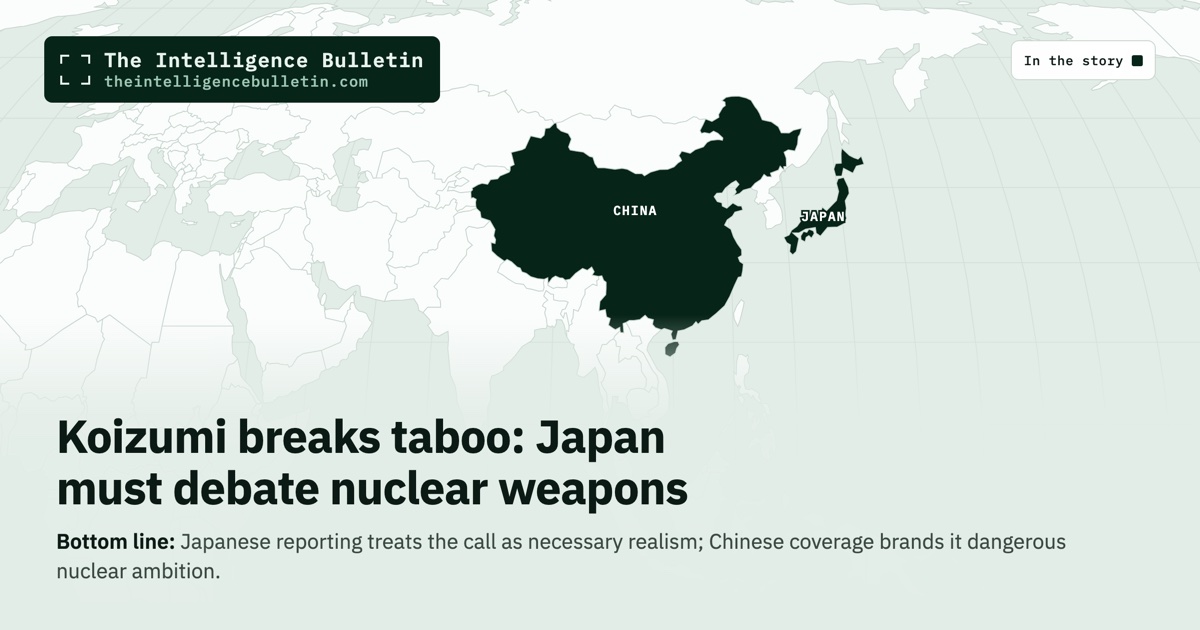
Koizumi breaks taboo: Japan must debate nuclear weapons

Map of the countries in the story: Koizumi breaks taboo: Japan must debate nuclear weapons
On July 17, 2026, Japanese Defense Minister Shinjiro Koizumi called for a national debate on nuclear weapons, citing Europe’s evolving nuclear policies after Russia’s Ukraine invasion. He argued Japan must address the issue without taboo as security documents face revision. Japan maintains its Three Non-Nuclear Principles but relies on the US nuclear umbrella while facing a harsher regional environment.

One Story. Many Angles.

🇯🇵
Japan
The Asahi Shimbun
Koizumi calls on Japan to break taboo, debate nuclear weapons
Read →
🇨🇳
China
China Daily
Japan’s nuclear ambitions must be nipped in the bud
Read →
🇨🇱
Chile
La Tercera
SPA
Japan’s defense minister says his country needs to have a debate on nuclear weapons
“Ministro de Defensa de Japón dice que su país necesita tener un debate sobre las armas nucleares”
Read →
🇮🇹
Italy
Zazoom
ITA
Japan: for the defense minister the debate on nuclear weapons is inevitable
“Giappone per il ministro della Difesa il dibattito sulle armi nucleari è inevitabile”
Read →
🇦🇿
Azerbaijan
News.az
Why Japan’s defense minister wants a national debate on nuclear deterrence
Read →
In Brief

Japanese reporting treats the call as necessary realism; Chinese coverage brands it dangerous nuclear ambition.

Koizumi’s call to discuss nuclear weapons marks a rare public breach of Japan’s postwar taboo, framed domestically as unavoidable realism. The Asahi Shimbun reports it as a direct challenge to the Three Non-Nuclear Principles ahead of security document revisions, quoting the minister on Europe’s France and Finland examples. Chinese state media rejects any such opening outright, labeling the remarks neo-militarist ambitions that require immediate international opposition and tying them to alleged historical revisionism. Outlets in Chile, Italy and Azerbaijan stick to straight facts or explanatory context on why Europe serves as Koizumi’s benchmark, showing the story travels as neutral security news outside Asia. The pattern shows consensus on what Koizumi said but divergence on whether the taboo should exist at all, with Japan’s own press treating debate as prudent while Beijing sees only danger.

Perspective Analysis

Koizumi’s call for open debate on nuclear weapons forces Japan to confront whether its postwar restraints can survive a harsher security environment, one in which European states are already adjusting nuclear postures after Russia’s invasion of Ukraine. The remarks by Defense Minister Shinjiro Koizumi on July 17 mark a direct breach of long-standing convention, yet the reaction across outlets shows the real divide lies not in what he said but in whether any such discussion should be permitted at all.

Japan has maintained the Three Non-Nuclear Principles since 1967: not producing, not possessing, and not permitting the introduction of nuclear weapons on its territory. These rules survived multiple governments and shaped Tokyo’s reliance on the United States nuclear umbrella while Japan remained the only country attacked with atomic bombs. Koizumi spoke on the online program Genron TV and stated that Japan “cannot avoid touching” the nuclear issue. He pointed to France strengthening its nuclear forces and Finland’s parliament approving legislation in June that would allow nuclear weapons on its soil. He argued that Japan “must debate and advance all policies without taboo.”

The timing ties directly to the government’s scheduled revision of three key security documents by the end of the year. Prime Minister Sanae Takaichi has already signaled openness to reviewing the “no entry” clause. Koizumi himself raised nuclear-powered submarines last November. Opposition parties have criticized any movement away from the principles, and the minister pushed back by questioning whether protecting the status quo now takes priority over protecting the country.

Domestic reporting treats the statement as a significant internal challenge. Asahi Shimbun presented Koizumi’s words as a break with convention that directly tests the non-nuclear principles ahead of the policy updates. It focused on his European examples and his criticism of rigid adherence by opposition parties rather than external condemnation. This approach reflects a Japanese outlet covering its own government’s move to lift a domestic taboo.

Chinese state media offered the sharpest contrast. China Daily labeled the remarks neo-militarism and a trial balloon floated before a European visit. It tied the statement to historical revisionism, plutonium stockpiles, and an alleged desire to become a “normal country” armed with nuclear weapons. The piece warned that a nuclear-armed Japan would threaten the global nonproliferation regime and spark an unwinnable arms race, urging the international community to oppose the desire firmly. It framed Japanese concerns about regional security as projection and linked the comments to rhetoric on Taiwan and defense spending increases.

Outlets outside Asia reported the statement with straightforward context. La Tercera in Chile laid out the background on the Three Non-Nuclear Principles, noted Japan’s dependence on the American umbrella, and cited the same European shifts: Finland’s June legislation and France’s March announcement by President Emmanuel Macron. It also referenced earlier Japanese statements, including a December 2025 suggestion by a policy source that Japan should possess nuclear weapons. The tone remained neutral, presenting the event as global security news without alarm or domestic political emphasis.

Italian coverage through Zazoom stressed that the debate, while delicate, has become inevitable. It highlighted the European comparison and the ongoing government review of security policy. News.az in Azerbaijan explained the strategic rationale in detached terms, citing the harsher security environment and the same European benchmarks, while noting Japan’s long adherence to the principles and its unique history with atomic weapons. Both pieces drew on wire reporting and avoided the domestic taboo framing or the outright condemnation seen elsewhere.

The pattern of coverage reveals a clear split. Japanese reporting accepts that security realities may require lifting old restrictions. Beijing rejects any opening as inherently dangerous and revisionist. Third-country accounts treat the episode as part of wider deterrence adjustments without assigning moral weight to the taboo itself. Koizumi’s European examples carry weight because they describe actual policy shifts after Ukraine, yet they also serve as a benchmark that sidesteps Japan’s own geography and history with nuclear weapons.

The stakes center on whether Japan can strengthen its position through alliance adjustments and limited policy evolution or whether any nuclear discussion triggers broader escalation. China Daily’s response shows how quickly Beijing will frame such moves as offensive. Neutral reporting elsewhere indicates the story travels mainly as evidence of changing global norms on deterrence rather than a uniquely Japanese crisis.

What to Watch

Ahead of the security document revisions, the debate Koizumi seeks will likely intensify inside Japan while drawing sustained external pressure, particularly from Beijing. The outcome will test whether Tokyo can adapt its framework without accelerating the very regional militarization its critics fear.


Share this story

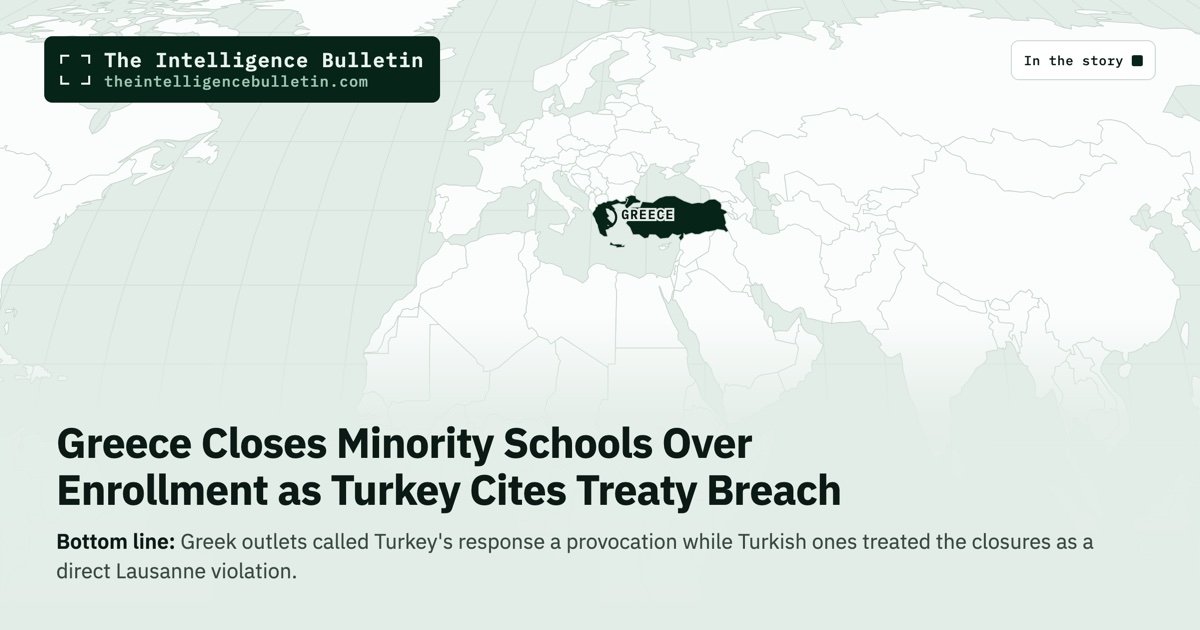
Greece Closes Minority Schools Over Enrollment as Turkey Cites Treaty Breach

Map of the countries in the story: Greece Closes Minority Schools Over Enrollment as Turkey Cites Treaty Breach
On July 19, 2026, Turkey’s Foreign Ministry spokesperson Öncü Keçeli condemned Greece’s decision to close eight primary schools serving the Turkish minority in Western Thrace, citing insufficient enrollment and new registration barriers. The move reduces the number of such schools to 76. Ankara called the actions a violation of the 1923 Lausanne Treaty and urged Greece to implement international rulings on minority rights. Greek authorities attribute the closures to declining pupil numbers.

One Story. Many Angles.

🇹🇷
Turkey
Turkish Ministry of Foreign Affairs
MFA Spokesperson Öncü Keçeli statement on Greece closing Turkish minority schools
Read →
🇹🇷
Turkey
Hürriyet
TURKISH
Foreign Ministry’s strong reaction to Greece’s Turkish schools decision
Read →
🇬🇷
Greece
Neos Kosmos
Turkey condemns closing of 8 Turkish schools in Greece
Read →
🇬🇷
Greece
iNewsGR
New Ankara Provocation: Turkey raises Turkish minority issue in Western Thrace amid school closures
Read →
🇬🇷
Greece
Athens Times
Turkey Condemns Greece Over Thrace School Closures
Read →
In Brief

Greek outlets called Turkey’s response a provocation while Turkish ones treated the closures as a direct Lausanne violation.

Turkish outlets presented the closures as a clear treaty breach and systematic erosion of minority rights, with the official MFA statement and Hürriyet echoing each other almost verbatim in condemning enrollment obstacles and demanding compliance with court rulings. Greek coverage split sharply: Neos Kosmos reported the Turkish reaction neutrally while noting declining pupil numbers across regions and citing the 120,000-strong Muslim population’s Lausanne protections. In contrast, iNewsGR and Athens Times framed Ankara’s response as fresh provocation, stressing that Greek law does not recognize a “Turkish minority” and that closures stem from demographics rather than discrimination. This split reveals how Greek domestic outlets treat the minority label itself as contested terrain, while Turkish reporting treats the treaty obligation as settled fact and the closures as the core issue. The result is two parallel stories: one about rights erosion, the other about external meddling in settled policy.

Perspective Analysis

The pattern of reporting on Greece’s closure of eight minority primary schools in Western Thrace on July 19, 2026, exposes an entrenched bilateral standoff in which Turkey treats the 1923 Lausanne Treaty as an active and enforceable guarantee of educational rights, while Greek domestic outlets reject the very premise of a distinct “Turkish minority” and attribute the closures solely to falling enrollment. This divergence leaves little room for common ground and sustains a cycle of accusation that both capitals have incentives to maintain.

Turkish Foreign Ministry spokesperson Öncü Keçeli issued the official condemnation that day, stating that Greece had closed the schools “under the pretext of insufficient student numbers,” bringing the total of such institutions down to 76. He singled out new registration barriers at the First Turkish Minority Elementary School in Xanthi as further evidence of “systematic practices aimed at eroding the educational rights of the Turkish Minority in Western Thrace.” The statement explicitly labeled the measures a violation of the Lausanne Peace Treaty and demanded that Athens implement international court rulings and recommendations from European institutions on minority rights. Ankara pledged continued support for the minority’s “struggle for rights and justice.”

Hürriyet carried the same language almost verbatim, describing the closures as a “strong reaction” from the ministry and emphasizing the drop to 76 schools along with the enrollment obstacles in Xanthi. The Turkish daily framed the episode as part of a broader pattern of rights erosion rather than isolated administrative decisions, aligning its coverage directly with the government position without additional context on pupil numbers.

Greek reporting diverged sharply in tone and terminology. Neos Kosmos relayed Turkey’s condemnation in neutral terms, noting that Greek authorities had closed schools across regions because of declining pupil numbers and citing the roughly 120,000 Muslims of Turkish origin in Thrace who enjoy specific religious and educational protections under the Treaty of Lausanne. The outlet avoided provocative phrasing and presented the demographic explanation alongside Ankara’s objections.

In contrast, iNewsGR headlined the Turkish response as a “New Ankara Provocation” and described Ankara as raising the “Turkish Minority” issue in Western Thrace again amid the closures. Athens Times similarly opened by calling the Turkish statement “provocative” and stressed that Greece does not recognize a “Turkish minority” under its law, instead referring only to a Muslim minority whose schools were suspended for low enrollment. Both outlets foregrounded the demographic rationale and treated the use of “Turkish” as itself an external claim rather than a settled description.

The split matters because it reveals incompatible starting points. Turkish accounts rest on the premise that Lausanne imposes ongoing, specific obligations on Greece regarding a recognized Turkish minority; Greek accounts rest on the premise that Greek law governs the matter and that enrollment trends, not discrimination, drive the closures. Neither side’s reporting engages the factual question of how many children actually remain in the affected villages or whether court rulings have addressed enrollment barriers directly. The result is parallel narratives—one centered on treaty breach and rights erosion, the other on external meddling and settled domestic policy—that reinforce domestic audiences without advancing bilateral dialogue.

Neos Kosmos comes closest to an accurate middle ground because it alone includes both the Turkish condemnation and the Greek demographic explanation without adopting adversarial framing or rejecting terminology outright. The other Greek outlets, by labeling the Turkish reaction a provocation from the first sentence, signal that the minority label itself remains contested terrain in Athens, while Turkish sources treat the treaty obligation as settled fact and the closures as the core violation.

What to Watch

Absent a shift in either capital’s legal position or a verifiable drop in enrollment that satisfies both sides’ standards, the dispute is likely to recur with each new round of school-year registrations. The pattern of coverage suggests that readers in each country will continue to encounter the story through one lens or the other, sustaining mutual suspicion rather than clarifying whether the closures reflect neutral demographics or targeted restrictions. That sustained friction, more than any single school closure, is what keeps the issue alive.


Share this story