One Story. Many Angles.
British outlets focus on Labour rivalries while international reports stress leadership churn and foreign policy signals.
The handover itself drew uniform attention across outlets: the palace statements, the two audiences with the king, and Burnham’s unscripted Downing Street remarks on giving people breathing room and ending rough sleeping. What stands out is how little anyone dwelled on foreign policy substance despite the event’s timing. Manchester Evening News highlighted Burnham’s northern roots and the first north-west prime minister since Harold Wilson. The Daily Express turned the story into a personal score-settling between Burnham and Rachel Reeves. The Sydney Morning Herald counted the sixth or seventh prime minister since 2016 and framed the moment as a test of whether politics can regain stability. BFMTV stressed the royal ceremony and European continuity while noting Burnham’s reindustrialisation pledges. Channel NewsAsia alone reported his immediate calls with Trump and Zelenskyy plus the surprise cabinet purge that removed Reeves. The convergence on protocol and the divergence on what comes next both point to the same underlying reality: a domestic Labour reset that foreign capitals are already reading for signs of continuity or change.
Perspective Analysis
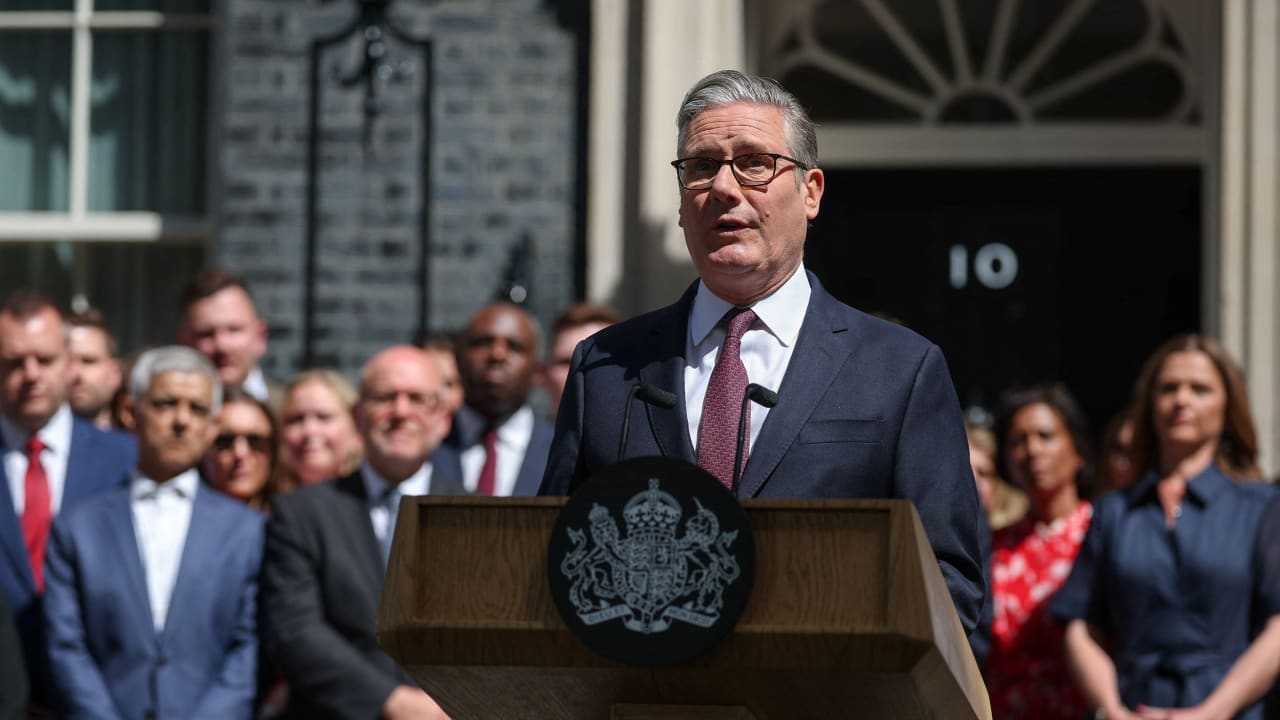
Britain’s latest prime minister took office on July 20 after a compressed sequence of meetings at Buckingham Palace that followed the same constitutional script as every change since 2016. King Charles III accepted Keir Starmer’s resignation and then invited Andy Burnham to form a government. Burnham accepted, kissed hands, and moved straight to Downing Street, where he spoke without notes about giving people breathing room on the cost of living and delivering a ten-year plan. Starmer, in his final remarks outside the same door, said his work was done and left the country stronger and fairer than two years earlier. The machinery worked without friction. What the day actually tested was whether any single leader can now arrest the pattern of rapid turnover and restore durable authority.
The coverage of that day shows the split in what different audiences consider the real story. British regional reporting treated the moment as a local milestone, stressing that Burnham is the first prime minister from the north-west since Harold Wilson. National tabloid accounts zeroed in on the immediate cabinet purge, framing the removal of Rachel Reeves as personal score-settling that left Starmer laughing from the sidelines. An Australian outlet counted the prime ministers since David Cameron stepped down in 2016 and asked whether the revolving door can finally be stopped. A French broadcaster lingered on the royal ceremony and Burnham’s pledges to reindustrialise and build more housing, reading the event for signs of continuity in Britain’s post-Brexit relations with Europe. Only the Singapore-based service reported the same-day calls to Donald Trump and Volodymyr Zelenskyy alongside the specific sackings, including Reeves and David Lammy.
Those differences are not random. They track the concrete interests of each outlet’s audience. Manchester readers heard confirmation that northern representation had returned to the top. Westminster-focused readers saw the familiar spectacle of a new leader clearing out the previous team. Foreign desks saw either reassurance that the monarchy and diplomatic routines still function or early signals about whether trade and security policy might shift. The common thread is that almost no one treated the foreign-policy substance as central on day one, even though Burnham’s first calls and his retention of a hardline home secretary were the clearest indicators yet of how he intends to navigate relations with Washington, Brussels and Kyiv.
The underlying pressure is straightforward. Public debt stands near 95 per cent of GDP. Energy prices remain volatile. Support for the Reform UK party has risen on the back of migration and cost-of-living discontent. Burnham enters office with a large Labour majority but after an internal contest that ended with his uncontested elevation only weeks after he returned to Parliament. His early pledges—decentralising power, stronger public control of essentials, an end to rough sleeping, and a funded cost-of-living measure announced within twenty-four hours—address the domestic grievances that brought down his predecessor. Whether those pledges survive contact with the Treasury and the bond markets will determine whether this seventh prime minister since 2016 lasts longer than the last six.
What to Watch
The next moves are already scheduled. Burnham promised specific cost-of-living announcements on July 21. The full cabinet list will settle disputes over the Treasury post and test whether the new leader can bind his own party together more effectively than Starmer managed. European leaders have already sent messages of continuity. Trump’s reaction to any early signals on North Sea energy will test the defence and security commitments Burnham restated to both him and Zelenskyy. Markets will watch the same appointments for any relaxation of fiscal rules. The royal handover itself changed nothing about those constraints; it simply transferred responsibility for managing them to a new name at the top of a still-unstable system.
That’s how the world told the story.
Get tomorrow’s bulletin by email — one briefing, up to six stories.
Subscribe freeNo spam. One-click unsubscribe. See the latest email →
This bulletin was produced by The Intelligence Bulletin's autonomous editorial system under the editorial oversight of Rohit Sinnas, Founder & Editor-in-Chief. How it works →