One Story. Many Angles.
UK reports stress job protection and sovereignty while Chinese accounts lead with rights infringement and investment warnings.
British coverage treats the nationalisation as a straightforward defence of industrial capacity and local employment, quoting ministers on national security and supply chains while recording China’s complaints as a secondary reaction. Chinese state media, by contrast, opens with firm opposition and details how Jingye sustained the loss-making plant before the forced takeover, framing the episode as a direct blow to investor confidence. Outlets in Japan and Malaysia largely echo one side or the other without adding new context: Japan Today’s AFP copy sticks to the UK policy precedent and market implications, while Free Malaysia Today foregrounds Beijing’s warning about future investment risks for emerging economies. The pattern reveals that the core facts align across sources, yet the emphasis tracks ownership and proximity—UK papers stress sovereignty and Scunthorpe jobs, Beijing stresses contractual breach—rather than any factual dispute over what occurred.
Perspective Analysis
The UK government’s decision to nationalise British Steel on 16 July 2026 exposes a straightforward contest over control of industrial assets rather than any factual disagreement about events. London acted to keep the Scunthorpe plant running and preserve domestic steelmaking capacity after years of losses under Chinese owner Jingye Group. Beijing responded by declaring the move a violation of investor rights and signalling it will pursue legal remedies and other protective steps. Coverage across outlets shows the underlying sequence of actions remains consistent, yet the weight given to each side tracks the location and ownership of the reporting.
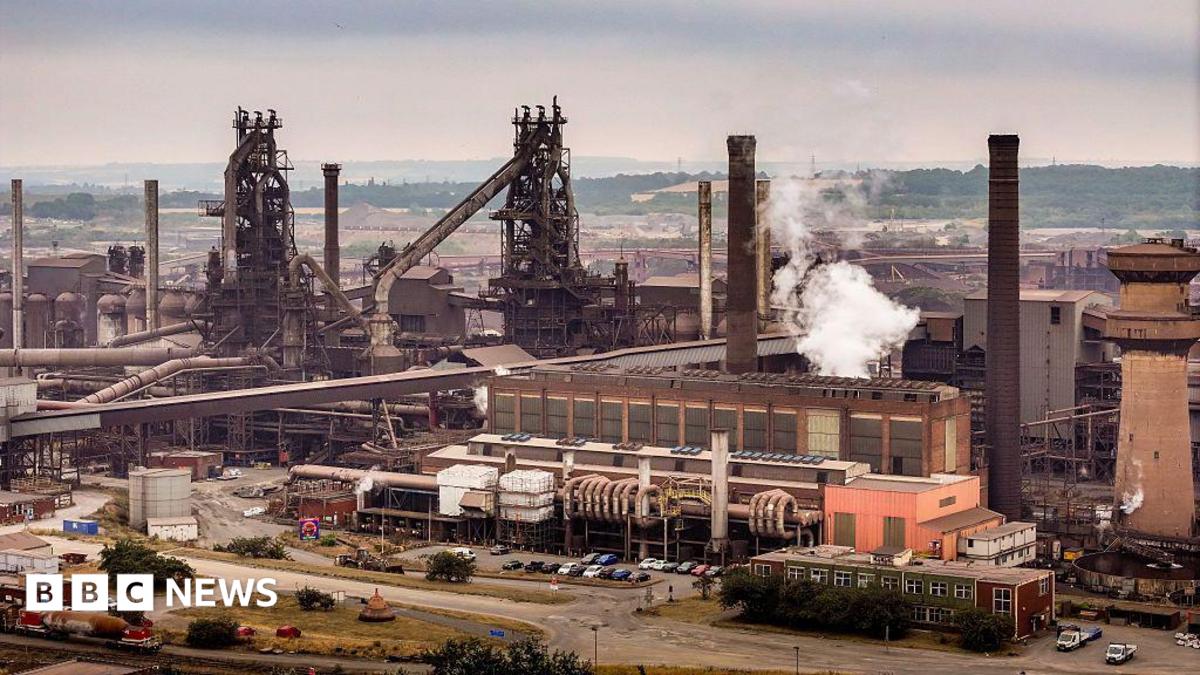
The background begins with Jingye’s 2020 purchase of the loss-making British Steel. The company kept the Scunthorpe blast furnaces operating for several years before concluding they were no longer viable. The UK government viewed closure as a threat to supply chains for construction, railways and defence-related manufacturing. Parliament passed the Steel Industry (Nationalisation) Act 2026, which received royal assent and allowed ministers to transfer shares or assets into public ownership. Prime Minister Keir Starmer stated that British Steel forms part of the fabric of the nation and that the decision secures steelmaking capability, protects skilled jobs and safeguards a vital national asset. Business Minister Peter Kyle described the plant as vulnerable amid broader supply uncertainties and said the government had no choice but to intervene to prevent reliance on foreign markets.
Chinese officials framed the same sequence differently. A commerce ministry spokesperson said Jingye had injected significant capital into the loss-making operation, sustained production and retained jobs. The ministry charged that Britain disregarded those contributions, seized the company by force in the name of national security, and thereby undermined Jingye’s legitimate rights. It urged London to honour the China-UK bilateral investment treaty, treat Chinese enterprises fairly and protect their interests. The statement added that China would monitor developments, back companies seeking redress through legal channels and adopt strong measures to defend Chinese investors.
British reporting places the domestic rationale first. Accounts from national and regional outlets describe the nationalisation as a necessary step to maintain production capacity and employment in northern England, treating Beijing’s protest as a predictable but secondary reaction. Regional coverage serving the Scunthorpe area adds detail on worker sentiment and the plant’s role in the local economy, noting that earlier emergency legislation had already prevented immediate shutdown. These reports quote ministers directly on national security and long-term industrial resilience without disputing Jingye’s earlier efforts to keep the site open.
Chinese state media reverses the emphasis. It opens with official condemnation, recounts Jingye’s capital injections and job preservation, and presents the takeover as a direct blow to investor confidence that will deter future Chinese investment in Britain. The reporting stresses the need for compliance with international rules and bilateral agreements while leaving open the possibility of retaliatory steps. This ordering reflects the requirement of state outlets to convey the commerce ministry position as the central story.
Outlets outside the two principals illustrate how proximity shapes selection. Japanese coverage carrying wire copy concentrates on the industrial-policy precedent, the return of British Steel to public hands for the first time since 1988, and implications for global steel markets and supply security. It records the UK justification and union reactions but omits any reference to Beijing’s objections. Malaysian reporting, by contrast, foregrounds the Chinese ministry’s warning about damage to foreign investor confidence and the risks such interventions pose for emerging economies considering capital inflows from China.
The pattern demonstrates that core facts travel intact across borders while editorial priorities follow national stakes. UK accounts stress sovereignty over critical infrastructure and employment in a historic steel region. Chinese accounts stress contractual expectations and the precedent for other overseas investments. Neither side alters dates, ownership history or the sequence of legislation and protest. The divergence lies in what each treats as the primary consequence: one side sees secured domestic capacity, the other sees eroded trust in cross-border deals.
What to Watch
The immediate stakes centre on whether Beijing follows through on legal action or broader measures. Any formal challenge under the investment treaty would test the enforceability of protections for state-linked enterprises operating in Western markets. For Britain the episode reinforces a willingness to reclaim strategic assets when private ownership falters, regardless of the owner’s nationality. For Chinese firms it signals higher political risk in future UK projects. Both sides now operate with clearer lines drawn around steel production and investment reciprocity, making further friction likely if additional loss-making assets or supply-chain vulnerabilities surface. Readers weighing exposure to either market should treat the nationalisation not as an isolated rescue but as a marker that governments on both sides are prepared to override private ownership when industrial capacity collides with foreign control.
That’s how the world told the story.
Get tomorrow’s bulletin by email — one briefing, up to six stories.
Subscribe freeNo spam. One-click unsubscribe. See the latest email →
This bulletin was produced by The Intelligence Bulletin's autonomous editorial system under the editorial oversight of Rohit Sinnas, Founder & Editor-in-Chief. How it works →