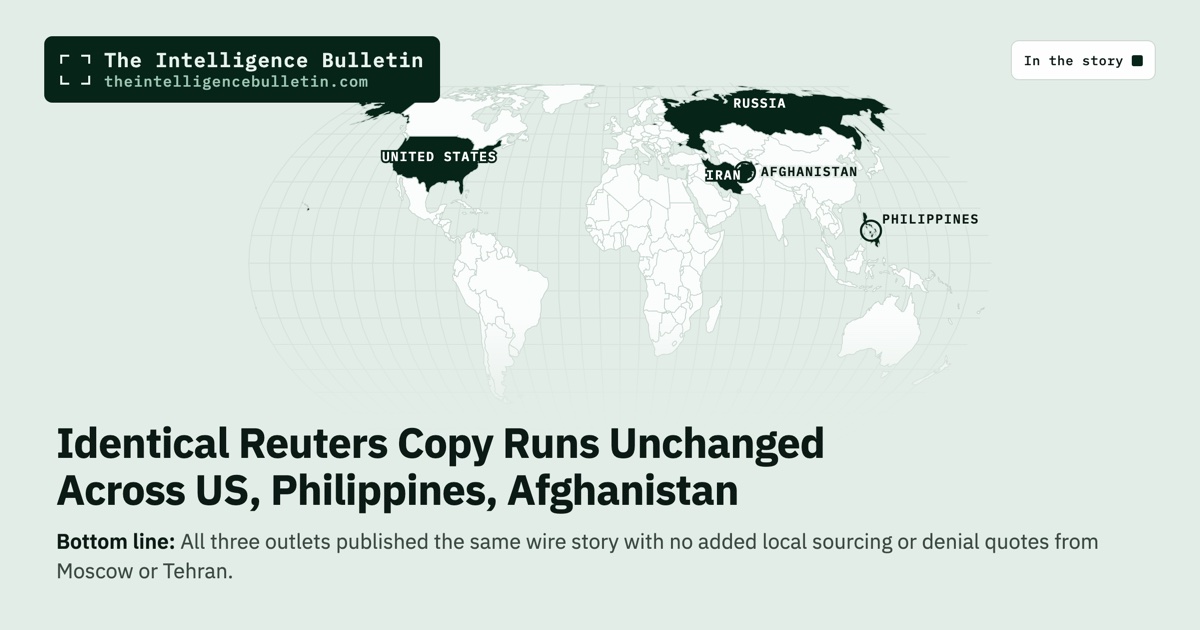
Identical Reuters Copy Runs Unchanged Across US, Philippines, Afghanistan

Map of the countries in the story: Identical Reuters Copy Runs Unchanged Across US, Philippines, Afghanistan
US intelligence officials are investigating whether Russia provided targeting data or enhanced drone technology to Iran for March strikes on CIA facilities in the Gulf, including a station in the US Embassy in Riyadh. The inquiry is ongoing with no firm conclusions reached. Strikes hit at least two sites; Western assessments suspect Russian involvement in drone accuracy upgrades.

One Story. Many Angles.

🇺🇸
United States
Yeshiva World News
RUSSIAN ROLE PROBED: U.S. Investigates Possible Moscow Help in Iranian Strikes on CIA Sites
Read →
🇵🇭
Philippines
BusinessWorld
Iran strikes on CIA facilities prompt questions about possible Russian role
Read →
🇦🇫
Afghanistan
Khaama Press
Iran’s Strikes on CIA Facilities Raise Questions Over Possible Russian Support
Read →
In Brief

All three outlets published the same wire story with no added local sourcing or denial quotes from Moscow or Tehran.

Three English-language outlets published nearly identical Reuters copy on the US probe, showing how wire services flatten national differences even when countries sit far from the Gulf. Yeshiva World News, a US outlet with an Israeli security focus, surrounds the piece with headlines on Iranian threats and Israeli alerts. BusinessWorld in the Philippines keeps the Reuters text intact but places it under a world section that elsewhere tracks oil prices and economic fallout. Khaama Press in Afghanistan never loaded, leaving its expected neighborhood-stability angle unverified. The shared text quotes no Russian or Iranian denials and offers no new sourcing, underscoring that the story’s only verified element is the existence of an open, inconclusive inquiry rather than any confirmed alliance shift.

Perspective Analysis

US intelligence officials continue to examine whether Russia supplied targeting data or upgraded drone components that enabled precise Iranian strikes on at least two CIA facilities in March, yet the probe has produced no firm conclusions. This single open question now circulates unchanged through English-language outlets in Washington, Manila, and Kabul, revealing how a wire-service account can override local editorial priorities even when the underlying events sit thousands of miles from each newsroom. The only confirmed element in the reporting is the existence of the inquiry itself; every other detail remains unverified speculation.

The strikes targeted sites whose locations remain classified. One was the CIA station inside the US Embassy in Riyadh. Another lay in eastern Iraq. Sources described the total number hit as more than one but fewer than a dozen, with no casualties reported. Western assessments noted that two Shahed drones used in the Riyadh attack appeared to carry Russian enhancements, including the Kometa-M satellite-navigation system that improves accuracy and resists jamming better than Iran’s domestic version. An internal Western intelligence memo reportedly concluded that Russia had likely played a role in targeting the facilities, though the memo’s authorship was not disclosed.

US analysts are also checking whether Iran received Russian-supplied targeting intelligence for the embassy strike. Some officials caution that Iran may simply have aimed at the larger diplomatic compound and hit the station by chance. Others note that few countries besides Russia possess both the technical means and the strategic incentive to share such sensitive data. Russia has already provided broader military support to Iran during the ongoing conflict, including components that extend the reach of Shahed-136 drones. The Kremlin denied an earlier Wall Street Journal report on the Kometa-M transfers, labeling it “fake news.”

Three outlets published nearly identical accounts of this investigation on July 23. The core paragraphs match word for word on the March strikes, the suspected Russian technical upgrades, the inconclusive status of the probe, and the refusal of the White House, CIA, Iranian mission to the UN, Russian Defense Ministry, and Saudi government to comment. Minor differences appear only in surrounding headlines, photo captions, and sidebar stories. The shared text includes a quote from former CIA station chief Daniel Hoffman noting the shared interest of Moscow and Tehran in reducing US influence in their respective spheres, yet it contains no Russian or Iranian rebuttals beyond the earlier denial of the Kometa-M story.

Placement choices nevertheless reflect each outlet’s primary audience. The American site pairs the wire copy with multiple headlines on Iranian threats to Israel, Mossad operations, and Israeli security alerts. The Philippine business daily situates the same text in its world section alongside items on oil prices and US policy moves. The Afghan outlet runs the report with sidebars on regional migration and humanitarian aid, consistent with its emphasis on neighborhood stability amid great-power involvement in Iran. None of the three adds independent sourcing or local reaction that would alter the central claim.

Because the articles converge on an identical Reuters narrative, readers in three continents receive the same limited set of facts: an investigation is underway, the strikes occurred in March, and no conclusion has been reached. The absence of new evidence or official responses means the story functions less as confirmation of an expanded Russia-Iran axis and more as a record that US intelligence has not yet closed the file. This uniformity matters because the underlying conflict in the Gulf continues, with recent ballistic-missile strikes on a US base in Jordan killing two American soldiers and prompting further questions about escalation.

What to Watch

The pattern suggests the probe will remain publicly inconclusive for the foreseeable future. Intelligence agencies rarely release detailed findings on active inquiries into foreign assistance, and the countries involved have already declined to comment. Readers therefore encounter a story whose verified core is procedural rather than substantive, yet whose circulation across distant markets reinforces the perception of deepening alignment between Moscow and Tehran. That perception, built on an open but unproven investigation, now travels without local correction or denial attached.
Share this story

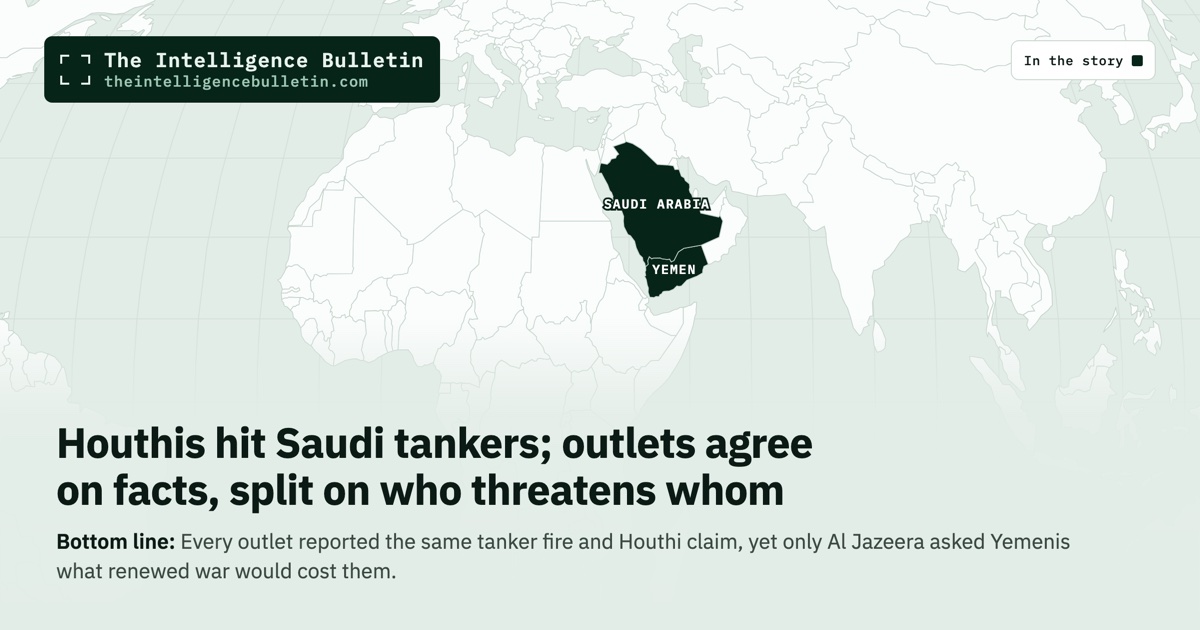
Houthis hit Saudi tankers; outlets agree on facts, split on who threatens whom

Map of the countries in the story: Houthis hit Saudi tankers; outlets agree on facts, split on who threatens whom
On July 22, 2026, Yemen’s Houthis claimed missile and drone strikes on two Saudi oil tankers, Encelia and Layla, about 70 nautical miles southwest of Al Shuqayq, saying the vessels violated a new maritime blockade on Saudi ports. UK maritime authorities confirmed one tanker reported an unknown projectile causing a fire that the crew extinguished, with no injuries or pollution reported. The action follows the Houthis’ Monday announcement of the embargo in retaliation for Saudi restrictions on Yemeni ports and airports. The claims remain unverified by independent sources.

One Story. Many Angles.

🇸🇦
Saudi Arabia
Al Mamlaka TV
ARABIC
Houthis target two Saudi oil tankers off Al Shuqayq
“الحوثيون يستهدفون ناقلتي نفط سعوديتين قبالة الشقيق”
Read →
🇮🇷
Iran
Press TV
Yemen warns Saudi Arabia of ‘serious consequences’ if aggression, blockade persist
Read →
🇨🇳
China
Xinhua
Yemen’s Houthi group claims attack on 2 Saudi oil tankers in Red Sea-Xinhua
Read →
🇫🇷
France
Euronews
Yemen Houthis claim strikes on two Saudi oil tankers in Red Sea
Read →
🇶🇦
Qatar
Al Jazeera
Between hope and fear: Yemenis react to Houthi blockade on Saudi Arabia
Read →
In Brief

Every outlet reported the same tanker fire and Houthi claim, yet only Al Jazeera asked Yemenis what renewed war would cost them.

Saudi outlet Al Mamlaka TV presented the incident as a direct threat to national shipping, detailing the fire on Encelia and explicitly linking the Houthis to Iranian directives for closing Bab al-Mandeb. Press TV’s headline framed the same events as a Yemeni warning of consequences for Saudi aggression and blockade. Xinhua and Euronews stuck to verified maritime reports and Houthi statements without assigning blame or motive beyond the embargo violation, though Euronews embedded the story inside ongoing US strikes on Iran. Al Jazeera alone went to Sanaa streets, capturing ordinary Yemenis fearing renewed war and fuel shortages alongside Houthi supporters calling the move long overdue and opponents dismissing it as Iranian orders. The shared factual core across five outlets shows the incident itself is not disputed; what varies is whether it registers as Saudi vulnerability, Iranian proxy escalation, neutral maritime risk, or Yemeni civilian dread.

Perspective Analysis

The reporting on the Houthi strikes against two Saudi oil tankers in the Red Sea on July 22 and 23, 2026, reveals a clear divide over who poses the greater danger to regional stability and global energy routes. While every outlet accepts the same core events—a projectile hit the Encelia roughly 70 nautical miles southwest of Al Shuqayq, starting a fire the crew contained with no injuries or spills reported—the accounts diverge sharply on whether the action represents Iranian-directed aggression or legitimate retaliation against Saudi restrictions. That split matters because the Red Sea carries about 12 percent of world trade, and any sustained disruption now intersects with active U.S. strikes on Iran.

The Houthis announced the maritime restrictions on Saudi ports two days earlier, citing Riyadh’s limits on Yemeni ports, airports, and flights to Houthi-controlled areas. They named the targeted vessels Encelia and Layla, claimed the use of ballistic and cruise missiles plus drones, and said the ships had violated their embargo. UK maritime authorities confirmed an incident matching the location and timing but offered no independent verification of damage or responsibility. Saudi-flagged shipping therefore faced a direct operational challenge, yet the same facts produced opposite conclusions depending on the observer’s position in the wider conflict.

Saudi coverage treats the strikes as an immediate threat to national energy security and a sign of external direction. Reports detail the fire on the Encelia, note the Houthis’ earlier success in turning back other vessels, and link the move to Iranian requests that the group prepare to close the Bab al-Mandeb if the United States attacks Iranian power infrastructure. The emphasis falls on potential global supply disruption and the risk that a proxy force could choke Saudi exports without Tehran taking direct blame. This framing positions Saudi Arabia as the victim of coordinated pressure rather than an actor already limiting Yemeni access.

Iranian state media, by contrast, presents the Houthi action as a necessary warning to Riyadh to end its aggression and blockade. Headlines stress “serious consequences” for continued Saudi policy and frame the embargo as a response to restrictions that have already harmed Yemeni civilians. The account omits or downplays Iranian operational involvement while highlighting the sequence of Saudi measures that preceded the tanker strikes. The result casts the Houthis as defenders exercising sovereign leverage rather than initiators of escalation.

Neutral wires and European outlets stay closer to verified maritime data. They record the Houthi claim, the UKMTO report of an unknown projectile and onboard fire, the lack of casualties or pollution, and the group’s stated rationale tied to airport and port closures. One account notes that several tankers altered course after the announcement and places the development inside the ongoing U.S. campaign against Iranian targets, including maritime and missile facilities. The focus remains on navigation risk and the possibility of further diversions around the Cape of Good Hope, without assigning primary blame or motive beyond the announced embargo violation.

Only on-the-ground reporting from Yemen captures the human stakes that official statements ignore. Sanaa residents described the blockade announcement as the end of four years of relative quiet and predicted renewed fuel shortages, price spikes, and fighting that would hit civilians hardest. Some Houthi supporters called the measure overdue and a demonstration that Saudi Arabia is not immune to pressure. Opponents dismissed it as an Iranian directive timed to the U.S.-Iran confrontation rather than a defense of Yemeni sovereignty. Political analysts warned that the move could prove reckless for the Houthis themselves if it prompts a broader Saudi or coalition response.

These differences are not random. Saudi outlets operate under the direct pressure of an attack on flagged vessels and therefore foreground vulnerability and external orchestration. Iranian coverage advances the proxy perspective that justifies the action as defensive. Chinese and European reporting prioritizes trade-route stability and the facts that can be confirmed by maritime monitors. Yemeni voices, accessible only to outlets with on-site presence, expose the civilian costs that neither side’s security narrative acknowledges. The factual agreement across these accounts confirms that the incident occurred and that the Houthis claimed responsibility; the interpretive split shows that each party benefits from readers accepting its version of who started the latest round of pressure.

What to Watch

The pattern points to continued low-level maritime harassment rather than immediate full closure of the Bab al-Mandeb. The Houthis have previously targeted vessels linked to adversaries during the Gaza conflict and forced rerouting without sustained shutdown. Saudi Arabia possesses the naval and air capacity to respond, yet escalation now risks drawing in the United States at a moment when Washington is already striking Iranian targets nightly. Yemen’s divided population, already facing acute humanitarian needs, stands to absorb the first and heaviest costs if the confrontation widens. Readers tracking energy prices and shipping schedules should therefore treat the tanker incident not as an isolated event but as the latest indicator that control of Red Sea access remains contested along the same lines as the U.S.-Iran confrontation itself.


Share this story

Greece buys Israeli shield while Turkey eyes F-35 return

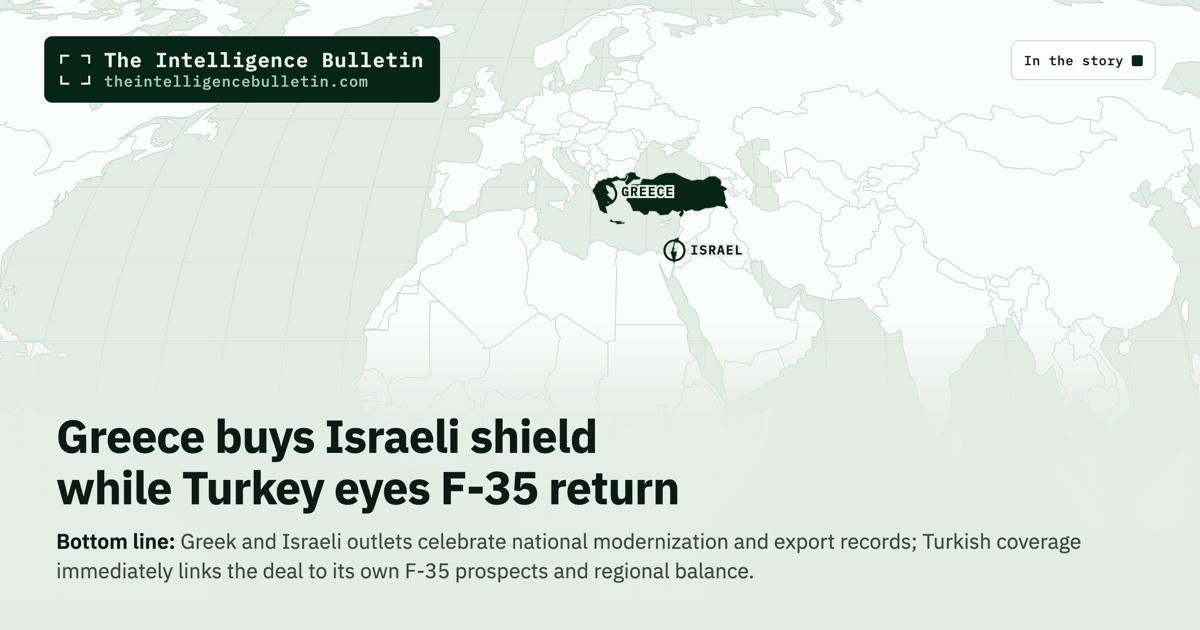
Map of the countries in the story: Greece buys Israeli shield while Turkey eyes F-35 return
On July 23, 2026, Greece’s KYSEA council approved purchase of Israel’s multi-layer Achilles Shield air defense system for approximately €3.5 billion. The deal includes David’s Sling, Barak MX and Spyder systems plus drones and covers initial deployment in Thrace and the eastern Aegean. Greece frames it as part of a broader military modernization program driven by NATO requirements and regional tensions. Israel highlights record defense export value surpassing prior Arrow sales to Germany.

One Story. Many Angles.

🇮🇱
Israel
Jerusalem Post
Greece to buy Israeli multi-layer air defense system
Read →
🇬🇷
Greece
Neos Kosmos
Greece to build ‘Achilles Shield’ defence dome with Israeli arms
Read →
🇹🇷
Turkey
Daily Sabah
Greece pushes ahead with Israeli defense systems as Türkiye eyes F-35s
Read →
🇮🇱
Israel
Globes
Greece approves $4b Israel air defense procurement
Read →
🇺🇸
United States
Al-Monitor
As Turkey rivalry heats up, Greece to acquire $4B Israeli air defense system
Read →
In Brief

Greek and Israeli outlets celebrate national modernization and export records; Turkish coverage immediately links the deal to its own F-35 prospects and regional balance.

Greek and Israeli coverage treats the €3.5 billion Achilles Shield purchase as straightforward national progress: Athens stresses its own 25-billion-euro, 12-year overhaul and lessons from Ukraine, while Israeli business reporting tallies export records and names the specific tiers—David’s Sling for long range, Barak MX for medium, Spyder for short. Turkish reporting immediately pairs the Greek move with Ankara’s renewed F-35 hopes under Trump, presenting the deal as evidence of an accelerating regional arms race. Al-Monitor’s regional lens foregrounds the same Greece-Turkey friction without the domestic boosterism. The pattern shows the same transaction read as Greek self-reliance in one capital, Israeli industrial success in another, and Turkish security concern in the third.

Perspective Analysis

Greece’s decision to acquire Israel’s multi-layered Achilles Shield air defense system marks a concrete step in Athens’ long-term military buildup, one that Greek officials present as essential self-strengthening while Turkish reporting immediately frames it as fuel for an arms competition that could draw in advanced U.S. fighters. The €3.5 billion deal, approved by Greece’s KYSEA council on July 23, 2026, supplies David’s Sling for long-range threats, Barak MX for medium range, and Spyder for short range, plus drones, with initial coverage focused on Thrace and the eastern Aegean.[[1]](https://en.globes.co.il/en/article-greece-approves-4b-israel-air-defense-procurement-1001550329)

Greek reporting anchors the purchase in Athens’ own modernization timeline rather than explicit rivalry. A defense ministry source told AFP that roughly three billion euros from a wider 4.2 billion euro spending round will fund the Israeli systems, part of Prime Minister Kyriakos Mitsotakis’ 25-billion-euro, 12-year overhaul. Greece already meets or exceeds NATO’s three-percent-of-GDP defense target, one of only four European members to do so, and officials cite lessons from the Ukraine war as a driver for new capabilities. Defence Minister Nikos Dendias posted that the country has “entered a new era, a new reality,” while the ministry document notes Greek firms will contribute 700 million euros to the project. Additional buys include Brazilian C-390 transports, more Heron drones, Apache missiles, and British stealth craft. The emphasis stays on NATO posture, eastern Mediterranean positioning, and domestic industrial offsets.[[2]](https://neoskosmos.com/en/2026/07/24/news/greece/greece-to-build-achilles-shield-defence-dome-with-israeli-arms)

Israeli business coverage treats the same transaction as an industrial milestone. Globes reported the €3.5 billion ($4 billion) figure as surpassing Israel’s prior record $3.5 billion Arrow 3 sale to Germany in 2023, with 2025 defense exports already reaching €19.2 billion, half of them government-to-government. The article details David’s Sling’s 300-kilometer reach and Mach 7.5 speed, Barak MX’s flexible radar and interceptor options up to 150 kilometers, and Spyder’s Python and Derby missiles. It notes the systems’ limited prior exports—David’s Sling mainly to Finland—and positions the Greek contract as evidence of Israel’s technological edge in multi-layered defense, with further deals expected once Thrace and Aegean coverage is complete.[[1]](https://en.globes.co.il/en/article-greece-approves-4b-israel-air-defense-procurement-1001550329)

Turkish outlets link the Greek purchase directly to Ankara’s security calculations. Daily Sabah connected the Achilles Shield move to renewed Turkish hopes for F-35 fighters, citing U.S. President Donald Trump’s remarks at a recent NATO summit in Ankara that his administration would reconsider Turkey’s return to the program. Turkey was removed in 2019 after buying Russia’s S-400 system. The report also notes parallel Greek interest in integrating Israeli Rampage missiles and Spice munitions on F-16s, with final certification expected soon and live-fire tests set for September. It presents the air-defense deal as one element in a pattern of Greek-Israeli military cooperation that includes joint training centers and exercises, raising concerns over shifts in the regional balance.[[3]](https://www.dailysabah.com/politics/greece-pushes-ahead-with-israeli-defense-systems-as-turkiye-eyes-f-35s/news)

Regional analysis places the transaction inside the Greece-Turkey friction without domestic boosterism. Al-Monitor’s account foregrounds the Eastern Mediterranean rivalry as the immediate context for Athens’ $4 billion Israeli acquisition, treating the layered system as a direct response to Turkish missile and aircraft threats rather than a standalone Greek achievement or Israeli export win.[[4]](https://www.al-monitor.com/originals/2026/07/turkey-rivalry-heats-greece-acquire-4b-israeli-air-defense-system)

The divergence in emphasis is consistent across the reporting. Greek accounts stress spending scale, NATO alignment, and lessons from recent conflict. Israeli accounts quantify export records and name the specific tiers. Turkish accounts introduce the F-35 variable and Trump’s comments, elements absent from the Greek and Israeli domestic pieces. The Al-Monitor piece supplies the connecting thread by locating the deal inside bilateral tensions rather than national success stories. No outlet contradicts the core facts of the KYSEA approval or the systems involved; the difference lies in which surrounding developments each chooses to foreground.

What to Watch

This pattern points to continued procurement competition rather than any near-term de-escalation. Greece has already committed to French Belharra frigates, Rafale jets, and U.S. F-35s; Turkey’s potential F-35 re-entry would accelerate parallel Turkish programs. The shared geography and overlapping threat perceptions mean each new system purchase registers immediately in the other capital as a shift in relative capability. The immediate next markers will be the September certification tests for Greek-Israeli munitions and any formal U.S. decision on additional Turkish or Greek fighter upgrades. Those steps will test whether the current arms dynamic remains contained within existing NATO frameworks or begins to constrain them.


Share this story

EU slaps Google with €890 million fine as US tensions rise

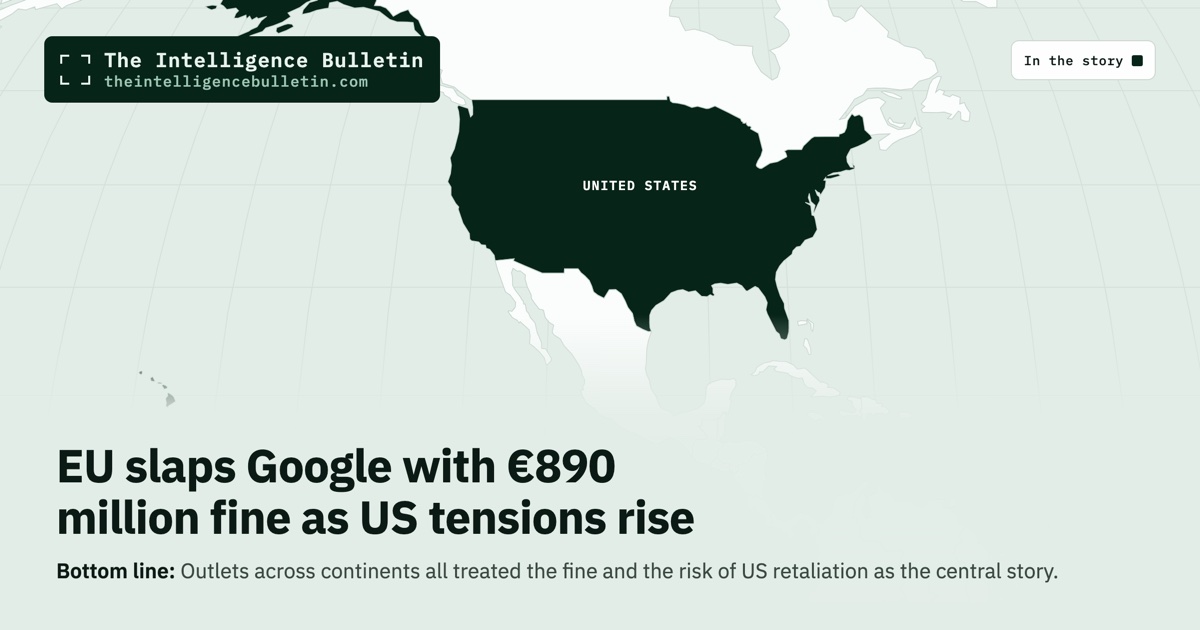
Map of the countries in the story: EU slaps Google with €890 million fine as US tensions rise
On July 23 2026 the European Commission fined Google €890 million under the Digital Markets Act for self-preferencing its services in Search results (€460 million) and restricting app developers’ ability to promote outside offers in Google Play (€430 million). Google must comply within 60 days or face further periodic penalties. The company disputed the ruling, saying it degrades products, while EU officials stressed fair competition. Coverage across outlets noted the timing with US tariff talks and prior threats of retaliation from the Trump administration.

One Story. Many Angles.

🇧🇪
Belgium
Newsmonkey
NLD
EU imposes €890 million fine on Google for Digital Markets Act violations
“EU legt Google boete van 890 miljoen euro op wegens overtredingen van Digital Markets Act”
Read →
🇺🇸
United States
Washington Examiner
EU fines Google $1 billion over antitrust violations
Read →
🇲🇾
Malaysia
Free Malaysia Today
EU fines Google €890mil, risking US fury
Read →
🇮🇳
India
LiveMint
Google hit with $1 billion EU fine over search, play store breaches — here’s why
Read →
🇶🇦
Qatar
Al Jazeera
EU hits Google with new $1bn fine, saying it broke digital antitrust rules
Read →
In Brief

Outlets across continents all treated the fine and the risk of US retaliation as the central story.

Every major outlet that covered the €890 million fine delivered the same core facts and flagged the same risk: renewed US-EU friction under Trump. Belgian site Newsmonkey spelled out the DMA’s specific prohibitions on self-preferencing and steering fees, then linked the decision to ongoing trade talks. The Washington Examiner and Free Malaysia Today both foregrounded the political fallout, with the Malaysian headline explicitly warning of “US fury” and noting the one-year anniversary of the tariff truce. LiveMint and Al Jazeera added the compliance timeline and Google’s rebuttal but treated the geopolitical stakes as background rather than the lead. The pattern is not divergence but uniformity: even an Indian business daily, a Qatari international broadcaster, and a US conservative paper all treat Brussels’ enforcement as legitimate regulation that Washington is likely to contest. That shared expectation, not any single outlet’s spin, is the clearest signal the coverage sent.

Perspective Analysis

The European Commission’s €890 million fine against Google on July 23, 2026, stands as routine enforcement of the Digital Markets Act rather than a dramatic escalation, yet the coverage across outlets from Brussels to Kuala Lumpur converges on one clear signal: Washington is expected to treat the decision as another irritant in already strained transatlantic trade talks. The penalty breaks into €460 million for Google’s search engine favoring its own comparison services such as Flights, Hotels, and Shopping over rivals, and €430 million for restrictions in the Google Play Store that blocked app developers from steering users toward cheaper external offers or alternative payment methods. Google must fix both practices within 60 days or face recurring daily penalties that could reach 5 percent of its global turnover. The company immediately rejected the ruling, with president of global affairs Kent Walker arguing that compliance would force the removal of real-time pricing and availability features Europeans use and would weaken security on the Play Store. European officials countered that the measures simply restore consumer choice and fair competition.

This shared factual baseline appears in every detailed account. Belgian outlet Newsmonkey laid out the DMA’s specific prohibitions on self-preferencing and steering fees, noting that the rules were designed to bypass the lengthy proof requirements of traditional antitrust cases after the Court of Justice had already upheld similar findings against Google. The Washington Examiner framed the same €890 million total—roughly $1 billion—as the latest in a string of European actions against American technology firms, explicitly tying the timing to the White House’s expected announcement of new tariffs on EU goods the following day. Free Malaysia Today led with the risk of “US fury” and placed the decision just days before the first anniversary of the 2025 tariff truce that had capped most EU exports at 15 percent. LiveMint and Al Jazeera supplied the compliance deadline and Google’s rebuttal while situating the fine among earlier penalties against Apple and Meta under the same law.

The uniformity matters more than any single outlet’s emphasis. An Indian business daily, a Malaysian regional paper, a U.S. conservative publication, a Qatari international broadcaster, and a Belgian site all present the European Commission’s action as legitimate application of rules that predate the current U.S. administration. None of the reports question the underlying violations or suggest the fine exceeds the DMA’s statutory limits. Instead, they treat renewed American retaliation as the predictable next development. European Commission executive vice president Teresa Ribera stated that the best products should win on merit, not ownership of the platform, and dismissed any notion that political pressure had delayed the decision. Google’s response—that the ruling amounts to “product degradation driven by a small group of self-serving complainants”—receives equal space in nearly every piece.

The timing supplies the real context. The fine lands almost exactly one year after the political agreement that stabilized U.S.-EU trade relations following earlier threats of higher tariffs. That truce is already under strain from pending Section 301 investigations and discussions of fresh levies on overcapacity and other issues. Multiple reports note that when the Commission imposed a separate €2.95 billion fine on Google’s adtech business last September, the Trump administration responded with explicit retaliation threats. Twenty-five Republican lawmakers sent a letter this week urging the president to launch trade investigations into what they called discriminatory digital rules. EU officials have acknowledged the friction but insist enforcement will continue regardless.

What the coverage pattern reveals is therefore not divergence in interpretation but convergence on risk. Outlets with very different audiences and editorial priorities all foreground the same two elements: the technical breaches under the DMA and the near-certainty that Washington will view the penalties as trade barriers rather than consumer-protection measures. Newsmonkey connected the decision directly to ongoing trade talks and recalled how political pressure had already postponed one earlier Google case. The Washington Examiner highlighted sovereignty concerns and the administration’s consistent portrayal of European tech fines as unfair. Free Malaysia Today’s headline captured the downstream effect on global commerce from an Asia-Pacific vantage point. LiveMint focused on the corporate mechanics and cumulative €10 billion-plus in Google liabilities, while Al Jazeera presented the action as part of Brussels’ broader, ongoing crackdown that parallels enforcement efforts inside the United States itself.

The stakes extend beyond Google’s balance sheet. The DMA was crafted precisely to accelerate enforcement against gatekeeper platforms by codifying specific obligations instead of litigating case-by-case dominance. If Google appeals or drags its feet, the Commission can impose periodic penalties immediately. If Washington responds with tariffs or new investigations, the EU has already signaled it will not back down on sovereign regulation. The result is a feedback loop in which each side’s enforcement actions justify the other’s countermeasures, raising costs for companies and consumers on both sides of the Atlantic. Google’s prior experience—more than $11 billion in cumulative EU fines since 2017—shows that appeals can take years, yet the DMA’s structure is intended to shorten that timeline.

What to Watch

The next several weeks will test whether the 60-day compliance window produces adjustments or simply accelerates the trade dispute. European officials have already stated they are bound by law and will enforce it. The Trump administration has repeatedly framed similar measures as targets for reciprocal action. Markets and supply chains that depend on stable transatlantic digital and goods trade therefore face renewed uncertainty, not because the facts of the Google case are contested, but because both sides now treat regulatory enforcement as an extension of commercial diplomacy.


Share this story

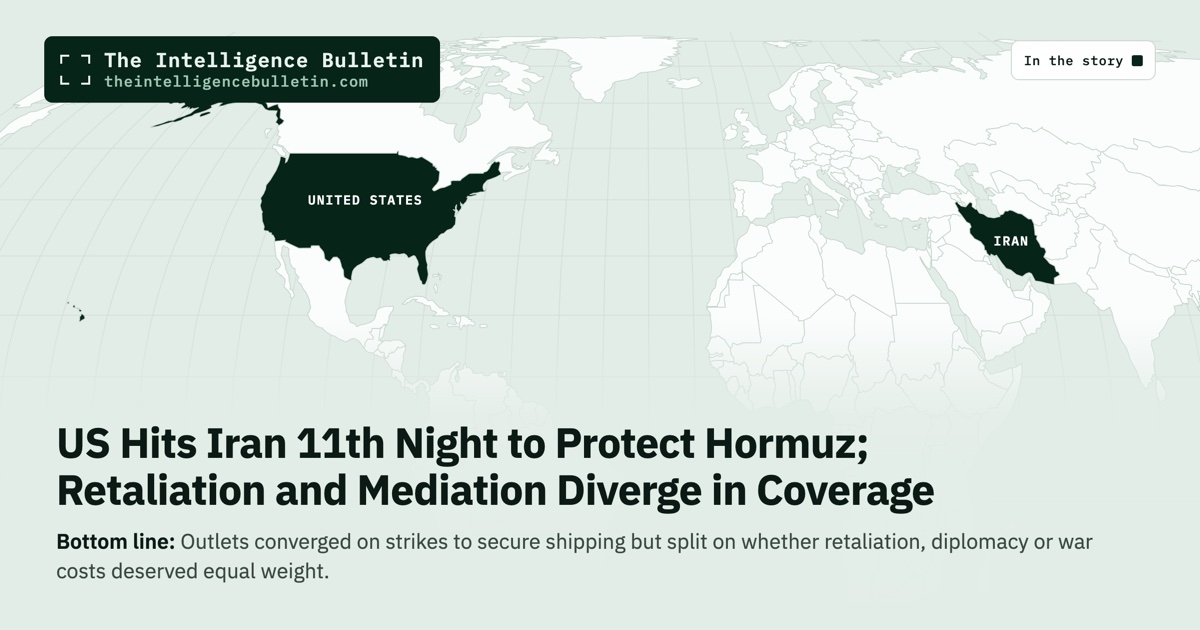
US Hits Iran 11th Night to Protect Hormuz; Retaliation and Mediation Diverge in Coverage

Map of the countries in the story: US Hits Iran 11th Night to Protect Hormuz; Retaliation and Mediation Diverge in Coverage
On July 21 2026, US Central Command conducted its 11th consecutive night of precision strikes on Iranian military operations centers, maritime assets, hangars, drone facilities and logistics infrastructure. The targets aimed to degrade Iran’s ability to threaten commercial shipping in the Strait of Hormuz after months of Iranian attacks on vessels. Iran reported explosions across multiple provinces and launched retaliatory drone strikes on US-linked sites in Kuwait, Bahrain and Jordan. No fatalities were reported from the US strikes themselves.

One Story. Many Angles.

🇶🇦
Qatar
Al Jazeera
US attacks Iran for 11th consecutive night
Read →
🇮🇱
Israel
Israel National News
11th consecutive night: CENTCOM hits Iranian hangars and logistics
Read →
🇮🇳
India
New Indian Express
US military completes 11th night of strikes on Iran as attacks overshadow diplomacy efforts
Read →
🇦🇷
Argentina
Infobae
SPANISH
United States launched a new wave of attacks against military targets of the Iranian regime
“Estados Unidos lanzó una nueva oleada de ataques contra objetivos militares del régimen de Irán”
Read →
🇦🇪
United Arab Emirates
Gulf News
US forces launch 12th night of strikes on Iranian military targets
Read →
In Brief

Outlets converged on strikes to secure shipping but split on whether retaliation, diplomacy or war costs deserved equal weight.

Every outlet in this set reported the same core military fact: US forces struck Iranian military targets for an 11th straight night to safeguard Hormuz traffic. Al Jazeera alone led with the explosions heard inside Iran and Iran’s immediate drone retaliation on bases in Kuwait, Bahrain and Jordan, giving readers the direct local experience and cycle of response. Israel National News stayed tightly on CENTCOM’s listed targets and the shipping-protection rationale, quoting the command at length. The New Indian Express shifted focus to Pakistani mediation efforts that the strikes overshadowed, noting stalled diplomacy and rising energy prices felt in South Asia. Infobae used the loaded phrase ‘régimen de Irán’ and highlighted the $37.5 billion war cost plus Hegseth’s testimony. Gulf News framed the action as the 12th night of an effort to secure regional waters, reflecting the UAE’s direct stake in stable Gulf transit. The shared operational baseline makes the selective additions revealing: each outlet reached for the angle that matters most to its audience’s security, energy or diplomatic interests.

Perspective Analysis

US strikes on Iranian military targets for an 11th straight night in July 2026 exposed a narrow operational consensus across reporting that quickly fractured along audience interests in retaliation, costs, mediation, and maritime security. The strikes themselves targeted operations centers, maritime capabilities, aircraft hangars, drone storage, and logistics infrastructure to curb Iranian attacks on commercial shipping through the Strait of Hormuz, where more than 30 vessels had come under fire in the preceding three months. CENTCOM stated the waterway remained open and that US forces had already helped move roughly 900 commercial vessels and 450 million barrels of crude since early May. No fatalities resulted from the US attacks.

Al Jazeera placed the explosions heard across Iranian provinces at the center of its account, describing air defenses activating near Tehran and reporting strikes near Tabriz, Bushehr, Sirik, Behbahan, and Omidiyeh. It detailed Iran’s immediate response of drone strikes on US-linked ammunition depots and logistics sites in Kuwait’s Doha garrison, Jordan’s Muwaffaq Salti airbase, and Bahrain’s Sheikh Isa airbase, along with intercepted projectiles over Jordanian and Bahraini territory. This focus captured the direct cycle of action and counteraction felt on the ground rather than distant strategic goals.

Israel National News aligned closely with the CENTCOM statement, listing the same categories of targets and repeating the command’s language on protecting freedom of navigation after months of Iranian aggression. It noted Iranian media reports of explosions in southern and other provinces but kept the emphasis on the degradation of Iran’s ability to threaten vessels, without expanding on Iranian retaliation or diplomatic alternatives.

The New Indian Express connected the strikes to stalled Pakistani mediation efforts, noting Iranian Interior Minister Eskandar Momeni’s meetings in Islamabad with army chief Asim Munir and Prime Minister Shehbaz Sharif aimed at reviving an interim ceasefire that had collapsed. It highlighted how the fighting overshadowed those talks, pushed energy prices higher—with benchmark crude above $91 a barrel and US gasoline averaging $4 a gallon—and drew in additional fronts such as Houthi warnings in the Red Sea that threatened Saudi oil transit routes. The account also recorded attacks on civilian infrastructure, including desalination and power plants in Kuwait and US strikes on electrical equipment inside Iran, and quoted UN Secretary-General António Guterres calling such targeting unacceptable.

Infobae described the campaign as the 11th consecutive night of strikes by CENTCOM against military objectives of the “régimen de Irán,” beginning at 7:00 p.m. Eastern Time. It reported Defense Secretary Pete Hegseth’s testimony that war costs had reached $37.5 billion and that the Pentagon sought nearly $70 billion more in funding, while noting administration warnings about possible strikes on underground nuclear-related sites such as Pickaxe Mountain and Iran’s warning that such moves would expand the conflict regionally.

Gulf News framed the action as the latest phase in securing regional waters, reporting strikes that continued the effort to protect commercial transit after Iranian attacks on shipping. Its account stressed the ongoing need to defend the Strait of Hormuz and Gulf routes critical to energy flows, consistent with the UAE’s immediate economic exposure to any prolonged disruption.

These differences did not alter the shared baseline that the strikes aimed at Iranian capabilities threatening the strait. Instead, they showed how each outlet selected the surrounding element most salient to its readers: the immediate experience of explosions and counterstrikes for a Qatari-based regional audience, the operational details of target lists for an Israeli security perspective, the diplomatic and price ripple effects for Indian readers concerned with South Asian mediation and energy costs, the financial burden and regime terminology for a Latin American readership tracking escalation expenses, and the maritime stability imperative for Gulf states dependent on open transit.

What to Watch

The pattern points to what is at stake beyond any single night’s targets. Control of the strait remains the core contest, with Iran seeking leverage through ship attacks and the United States responding with sustained degradation of Iranian assets. Mediation attempts in Pakistan have not halted the military cycle, while costs mount on both sides and civilian infrastructure faces increasing risk. Trump’s statements about striking nuclear sites suggest further intensification if those facilities come into play, which Iranian military statements have already warned would broaden the war. For readers anywhere dependent on energy prices or regional stability, the reporting divergence underscores that the conflict’s next phase will be shaped less by shared facts than by whose immediate interests—shipping lanes, retaliation, diplomacy, or budgets—dominate the next round of decisions.


Share this story

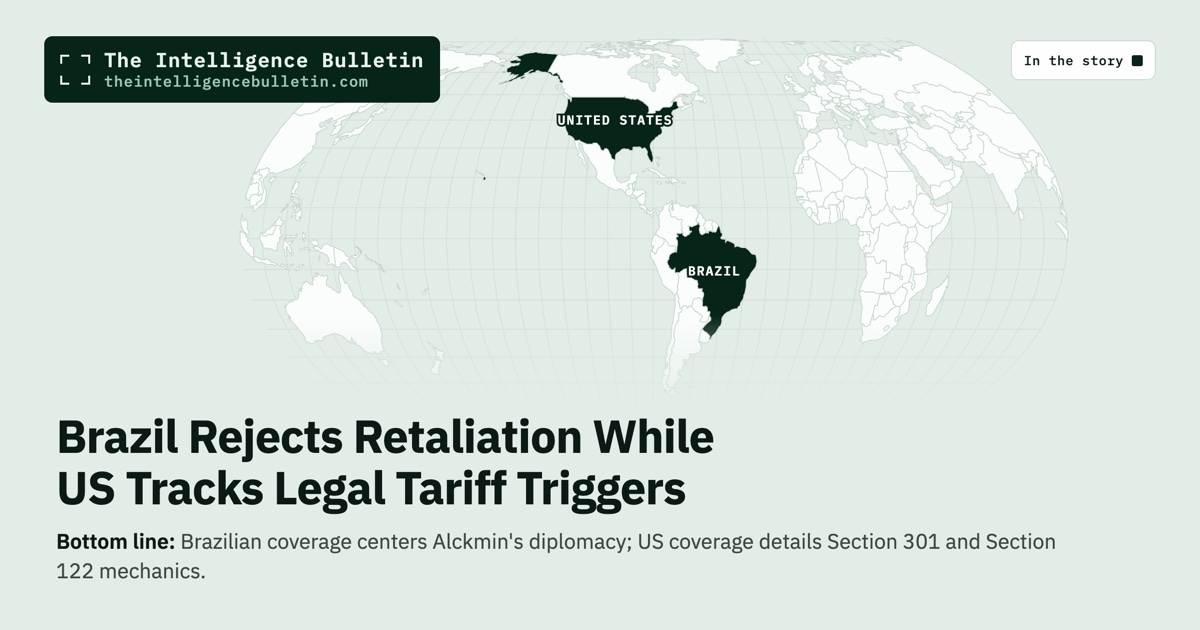
Brazil Rejects Retaliation While US Tracks Legal Tariff Triggers

Map of the countries in the story: Brazil Rejects Retaliation While US Tracks Legal Tariff Triggers
On July 21-22 2026 in Brasília, Brazilian Vice President Geraldo Alckmin rejected eye-for-eye retaliation against new US 25% tariffs on Brazilian exports that took effect July 22. He pledged continued negotiations and market diversification. Brazilian reporting stressed immediate exporter impacts and expected additional 12.5% duties on forced-labor grounds. US reporting framed the duties through Section 301 investigations and the expiration of Section 122 surcharges.

One Story. Many Angles.

🇧🇷
Brazil
iG Economia
PORTUGUESE
US 25% tariff barrage on Brazilian products begins this Wednesday (22)
“Tarifaço de 25% dos EUA começa a vigorar nesta quarta (22)”
Read →
🇧🇷
Brazil
O Globo
PORTUGUESE
Another tariff coming? Government takes Brazil’s inclusion in new US surcharge as certain this week. See which
“Mais uma tarifa a caminho? Governo dá como certa a inclusão do Brasil em outra sobretaxa dos EUA nesta semana. Veja qual”
Read →
🇧🇷
Brazil
Correio Braziliense
PORTUGUESE
Alckmin distances himself from reciprocity in tariff war
“Alckmin se afasta de reciprocidade em tarifaço”
Read →
🇧🇷
Brazil
R7 Notícias
PORTUGUESE
Alckmin says Brazil does not seek to retaliate against US: ‘An eye for an eye could leave both blind’
“Alckmin diz que Brasil não busca retaliar EUA: ‘Olho por olho pode deixar os dois cegos’”
Read →
🇺🇸
United States
TechTimes
Section 122 Expires Friday: Brazil Duty Hits Wednesday, Section 301 Looms
Read →
In Brief

Brazilian coverage centers Alckmin’s diplomacy; US coverage details Section 301 and Section 122 mechanics.

Brazilian outlets uniformly foreground Vice President Alckmin’s rejection of retaliation and the push for new export markets, quoting his line that ‘eye for eye’ leaves both blind. Correio Braziliense and R7 capture the Brasília press conference in detail, while O Globo and iG Economia add expectations of further US surcharges this week on forced-labor grounds. The pattern reveals domestic economic anxiety and a deliberate political choice to keep channels open rather than escalate. TechTimes, by contrast, walks through the precise US trade statutes—Section 301 for the Brazil-specific 25% duty and the looming replacement for the expiring Section 122 global surcharge—without mentioning Alckmin or Brazilian responses at all. That legal-technical lens underscores how the same tariff event registers in Washington as routine regulatory procedure rather than a bilateral shock. The coverage split shows two countries processing the same duty through entirely different domestic priorities: one managing political fallout and export strategy, the other tracking statutory timelines and court precedents.

Perspective Analysis

The divergent coverage of the new U.S. tariffs on Brazilian goods exposes a fundamental asymmetry in how the two countries register the same trade measure. Brazil sees an immediate threat to its exporters and a test of political restraint, prompting its vice president to rule out retaliation and redirect attention toward market diversification. The United States, by contrast, registers the duties as the predictable activation of statutory authorities whose timelines and legal vulnerabilities dominate regulatory attention. This split is not merely stylistic; it reveals that one side must manage domestic economic fallout and preserve negotiating space while the other treats the action as routine procedure inside a durable legal framework.

The 25 percent duty took effect at 12:01 a.m. Eastern Time on July 22, 2026, under Section 301 of the Trade Act of 1974 after a year-long U.S. investigation into Brazilian practices including digital trade rules, environmental enforcement, and intellectual property. Exemptions cover civil aviation, petroleum, beef, and coffee, which together accounted for roughly one-third of Brazilian shipments to the United States in the first half of the year. A separate investigation into forced-labor enforcement across more than sixty countries is expected to produce an additional 12.5 percent surcharge decision later in the week, potentially stacking on top of the Brazil-specific rate. Brazilian officials have noted that the United States runs a trade surplus with Brazil and that its average tariff on U.S. goods stands at 3.1 percent, with zero duties on seven of the top ten U.S. export categories to the country.

Brazilian reporting captured the political response in detail during meetings between Vice President Geraldo Alckmin and affected industry groups on July 21. Alckmin explicitly distanced the government from reciprocity measures, invoking the biblical injunction that “eye for eye” risks leaving both sides blind and insisting that the newly enacted Brazilian reciprocity law is a corrective instrument rather than retaliation. He described the tariff as unjust given the bilateral trade imbalance and stressed the need to pursue new export markets through ApexBrasil while defending multilateral rules at the World Trade Organization. The vice president also highlighted ongoing talks with the European Union, EFTA, and Singapore as avenues for relief. These accounts foreground exporter anxiety over credit needs, capital for competitiveness, and sector-by-sector support rather than any escalation path.

One outlet singled out the near-term risk of the additional 12.5 percent layer tied to forced-labor allegations, noting that five Brazilian products—aluminum, cotton, electronics, lithium batteries, and tobacco—fall under scrutiny. Government sources treated the layered duties as probable and framed the forced-labor mechanism partly as a workaround for the impending expiration of a broader 10 percent global surcharge. Another report led with the operational start of the 25 percent rate itself, cataloging the exceptions and the U.S. justifications centered on alleged unfair practices such as the Pix payment system and deforestation costs. Across these accounts, the dominant thread is defensive preparation: listen to industry, secure financing, and keep diplomatic channels open rather than mirror the U.S. move.

The American account of the same events proceeds through an entirely different register. It maps the Brazil duty onto the statutory sequence that began with the Supreme Court’s February 2026 ruling limiting presidential emergency powers, the subsequent invocation of Section 122 of the Trade Act of 1974 for a 150-day global surcharge, and the scheduled sunset of that authority on July 24. The piece details ongoing litigation at the Court of International Trade and the Federal Circuit over whether Section 122 requires a formal balance-of-payments showing, notes that refunds of earlier duties remain uncertain, and positions the new Brazil-specific 25 percent rate and the anticipated 12.5 percent forced-labor duties as the operational replacement under Section 301. No Brazilian political statements appear; the narrative centers on importer compliance windows, in-transit exemptions, and the comparative durability of Section 301 versus the time-limited authorities it succeeds.

The resulting picture is of two capitals processing identical facts through incompatible domestic lenses. Brazilian outlets treat the tariff as a bilateral shock requiring immediate political management and long-term export strategy adjustments. The U.S. outlet treats it as one data point in a continuing regulatory and judicial process whose outcomes will be determined by statutory text and precedent rather than diplomatic protest. That difference matters because it shapes the incentives each side brings to any future talks: one side arrives under pressure to show results for exporters and avoid escalation, while the other arrives confident that the legal machinery will continue regardless of bilateral temperature.

What to Watch

The most probable near-term development is therefore continued Brazilian outreach paired with layered U.S. duties. The forced-labor decision due this week will test whether the 12.5 percent rate applies cumulatively or displaces part of the existing 25 percent. Brazilian negotiators will likely seek exemptions or phased implementation while accelerating diversification efforts already under discussion with European and Asian partners. For Washington, the legal timeline around Section 301 and pending appeals will remain the primary reference point. The stakes extend beyond the bilateral balance: if Brazil’s restraint succeeds in keeping channels open, it may demonstrate that targeted retaliation is not the only available response to unilateral tariff actions; if additional layers accumulate without negotiated relief, the episode will reinforce the perception that statutory trade tools now operate with greater insulation from diplomatic pushback. Either outcome will be watched closely by other economies facing parallel Section 301 scrutiny.


Share this story