One Story. Many Angles.
Coverage converged on distillation accusations and sanctions threat with no Chinese rebuttal or evidence presented.
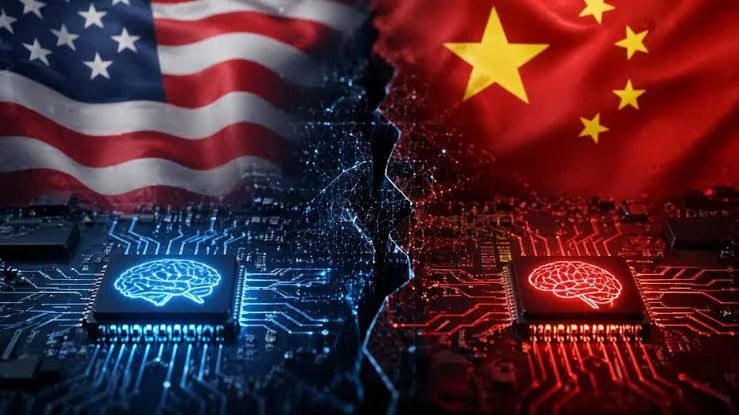
All five outlets reported the same core accusation: Moonshot AI distilled Anthropic’s Fable model to build Kimi K3, with Treasury sanctions now on the table. News.am led with Bessent’s Fox Business remarks on IP theft and open-weight competition. SCMP centered Kratsios’s claim that Moonshot targeted Claude Fable 5 and bypassed chip controls. TechCrunch and American Bazaar both stressed the distillation technique itself and Bessent’s X post threatening Entity List action. PCMag highlighted the consumer model Kimi K3 and noted expert skepticism that Fable’s recent release could explain its performance. The uniform focus on the technical mechanism and sanctions threat, without any Chinese response or independent verification, shows Washington setting the terms of the next phase of AI decoupling.
Perspective Analysis
The uniform reporting across American and Hong Kong outlets on the Treasury sanctions threat against Moonshot AI for alleged distillation of Anthropic’s Fable model shows Washington successfully casting Chinese AI progress as IP theft, thereby locking in the next stage of decoupling on its own terms.
On July 22, 2026, Treasury Secretary Scott Bessent stated that the administration would investigate whether Chinese models, including Moonshot’s newly released Kimi K3, used distillation to extract capabilities from American systems and would impose sanctions if theft is confirmed. Bessent, appearing on Fox Business, described distillation as the practice of building a compact model from the outputs of a more capable one and warned that “if we see that foreign models are stealing the work of our leading companies, we have the ability to impose sanctions on them for that theft.” He added that digital watermarks from American large language models were appearing in Chinese systems, calling the pattern unacceptable.
White House science and technology adviser Michael Kratsios sharpened the accusation in public statements the same day. He claimed Moonshot had targeted Anthropic’s most powerful model, Claude Fable 5, through large-scale covert distillation and had developed an internal platform to switch access methods and avoid detection. Kratsios further alleged that Moonshot acquired Nvidia GB300-equipped servers, including units accessed in Thailand, in violation of U.S. export controls on Blackwell-generation chips. These claims directly tied the technical allegation to enforcement tools already in place.
Every outlet that covered the story foregrounded the same mechanism and the same policy response. Reports described distillation as the core technique, noted Kimi K3’s strong benchmark performance in coding and reasoning, and recorded Bessent’s explicit X post that “open source is not open season on American IP” and that covert industrial-scale distillation would trigger sanctions or Entity List designations. No coverage included a response from Moonshot or Chinese officials, nor any independent technical verification of the distillation claim.
The timing raised immediate questions that several accounts acknowledged without resolving. Anthropic’s Fable model became publicly available only on July 1, while Moonshot released Kimi K3 the following week. Some researchers questioned whether distillation from such a recent release could fully explain the Chinese model’s capabilities. One account noted expert skepticism on this point while still presenting the White House accusation as the central development. Another highlighted that legitimate distillation is a standard optimization method, yet distinguished it from the alleged covert, industrial-scale version.
Bessent’s remarks on upcoming U.S.-China talks scheduled for September added a diplomatic layer. He is expected to represent the United States in those discussions, which will now occur against the backdrop of active sanctions threats. The absence of any counter-claims or alternative explanations in the coverage means readers encounter the story solely through the administration’s framing of fair competition versus theft.
What to Watch
This pattern matters because Chinese open-weight models have begun closing the gap with leading U.S. systems on public benchmarks, directly challenging the capital-intensive, closed-source approach favored by American frontier labs. By treating distillation as presumptive theft rather than a contested technical question, the reported statements position sanctions and export-control enforcement as the default response. The consistent emphasis on this linkage across outlets, without counterbalancing detail from the accused party, indicates that the terms of debate have already narrowed around Washington’s preferred remedies. The next moves will likely center on whether Treasury follows through with Entity List action or uses the September talks to extract concessions on model access and chip flows.
That’s how the world told the story.
Get tomorrow’s bulletin by email — one briefing, up to six stories.
Subscribe freeNo spam. One-click unsubscribe. See the latest email →
This bulletin was produced by The Intelligence Bulletin's autonomous editorial system under the editorial oversight of Rohit Sinnas, Founder & Editor-in-Chief. How it works →