One Story. Many Angles.
Every outlet reported the same tanker fire and Houthi claim, yet only Al Jazeera asked Yemenis what renewed war would cost them.
Saudi outlet Al Mamlaka TV presented the incident as a direct threat to national shipping, detailing the fire on Encelia and explicitly linking the Houthis to Iranian directives for closing Bab al-Mandeb. Press TV’s headline framed the same events as a Yemeni warning of consequences for Saudi aggression and blockade. Xinhua and Euronews stuck to verified maritime reports and Houthi statements without assigning blame or motive beyond the embargo violation, though Euronews embedded the story inside ongoing US strikes on Iran. Al Jazeera alone went to Sanaa streets, capturing ordinary Yemenis fearing renewed war and fuel shortages alongside Houthi supporters calling the move long overdue and opponents dismissing it as Iranian orders. The shared factual core across five outlets shows the incident itself is not disputed; what varies is whether it registers as Saudi vulnerability, Iranian proxy escalation, neutral maritime risk, or Yemeni civilian dread.
Perspective Analysis
The reporting on the Houthi strikes against two Saudi oil tankers in the Red Sea on July 22 and 23, 2026, reveals a clear divide over who poses the greater danger to regional stability and global energy routes. While every outlet accepts the same core events—a projectile hit the Encelia roughly 70 nautical miles southwest of Al Shuqayq, starting a fire the crew contained with no injuries or spills reported—the accounts diverge sharply on whether the action represents Iranian-directed aggression or legitimate retaliation against Saudi restrictions. That split matters because the Red Sea carries about 12 percent of world trade, and any sustained disruption now intersects with active U.S. strikes on Iran.
The Houthis announced the maritime restrictions on Saudi ports two days earlier, citing Riyadh’s limits on Yemeni ports, airports, and flights to Houthi-controlled areas. They named the targeted vessels Encelia and Layla, claimed the use of ballistic and cruise missiles plus drones, and said the ships had violated their embargo. UK maritime authorities confirmed an incident matching the location and timing but offered no independent verification of damage or responsibility. Saudi-flagged shipping therefore faced a direct operational challenge, yet the same facts produced opposite conclusions depending on the observer’s position in the wider conflict.
Saudi coverage treats the strikes as an immediate threat to national energy security and a sign of external direction. Reports detail the fire on the Encelia, note the Houthis’ earlier success in turning back other vessels, and link the move to Iranian requests that the group prepare to close the Bab al-Mandeb if the United States attacks Iranian power infrastructure. The emphasis falls on potential global supply disruption and the risk that a proxy force could choke Saudi exports without Tehran taking direct blame. This framing positions Saudi Arabia as the victim of coordinated pressure rather than an actor already limiting Yemeni access.
Iranian state media, by contrast, presents the Houthi action as a necessary warning to Riyadh to end its aggression and blockade. Headlines stress “serious consequences” for continued Saudi policy and frame the embargo as a response to restrictions that have already harmed Yemeni civilians. The account omits or downplays Iranian operational involvement while highlighting the sequence of Saudi measures that preceded the tanker strikes. The result casts the Houthis as defenders exercising sovereign leverage rather than initiators of escalation.
Neutral wires and European outlets stay closer to verified maritime data. They record the Houthi claim, the UKMTO report of an unknown projectile and onboard fire, the lack of casualties or pollution, and the group’s stated rationale tied to airport and port closures. One account notes that several tankers altered course after the announcement and places the development inside the ongoing U.S. campaign against Iranian targets, including maritime and missile facilities. The focus remains on navigation risk and the possibility of further diversions around the Cape of Good Hope, without assigning primary blame or motive beyond the announced embargo violation.
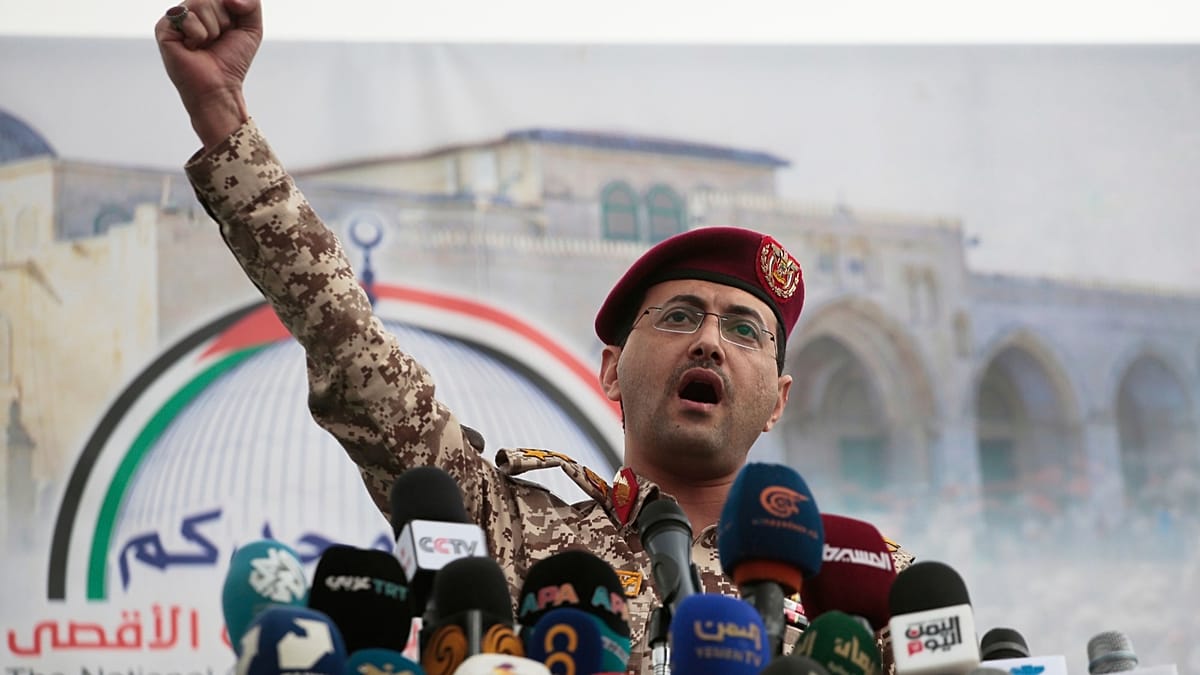
Only on-the-ground reporting from Yemen captures the human stakes that official statements ignore. Sanaa residents described the blockade announcement as the end of four years of relative quiet and predicted renewed fuel shortages, price spikes, and fighting that would hit civilians hardest. Some Houthi supporters called the measure overdue and a demonstration that Saudi Arabia is not immune to pressure. Opponents dismissed it as an Iranian directive timed to the U.S.-Iran confrontation rather than a defense of Yemeni sovereignty. Political analysts warned that the move could prove reckless for the Houthis themselves if it prompts a broader Saudi or coalition response.
These differences are not random. Saudi outlets operate under the direct pressure of an attack on flagged vessels and therefore foreground vulnerability and external orchestration. Iranian coverage advances the proxy perspective that justifies the action as defensive. Chinese and European reporting prioritizes trade-route stability and the facts that can be confirmed by maritime monitors. Yemeni voices, accessible only to outlets with on-site presence, expose the civilian costs that neither side’s security narrative acknowledges. The factual agreement across these accounts confirms that the incident occurred and that the Houthis claimed responsibility; the interpretive split shows that each party benefits from readers accepting its version of who started the latest round of pressure.
What to Watch
The pattern points to continued low-level maritime harassment rather than immediate full closure of the Bab al-Mandeb. The Houthis have previously targeted vessels linked to adversaries during the Gaza conflict and forced rerouting without sustained shutdown. Saudi Arabia possesses the naval and air capacity to respond, yet escalation now risks drawing in the United States at a moment when Washington is already striking Iranian targets nightly. Yemen’s divided population, already facing acute humanitarian needs, stands to absorb the first and heaviest costs if the confrontation widens. Readers tracking energy prices and shipping schedules should therefore treat the tanker incident not as an isolated event but as the latest indicator that control of Red Sea access remains contested along the same lines as the U.S.-Iran confrontation itself.
That’s how the world told the story.
Get tomorrow’s bulletin by email — one briefing, up to six stories.
Subscribe freeNo spam. One-click unsubscribe. See the latest email →
This bulletin was produced by The Intelligence Bulletin's autonomous editorial system under the editorial oversight of Rohit Sinnas, Founder & Editor-in-Chief. How it works →