Houthis reach Mocha port as coverage splits on Iranian proxy threat versus global trade risk

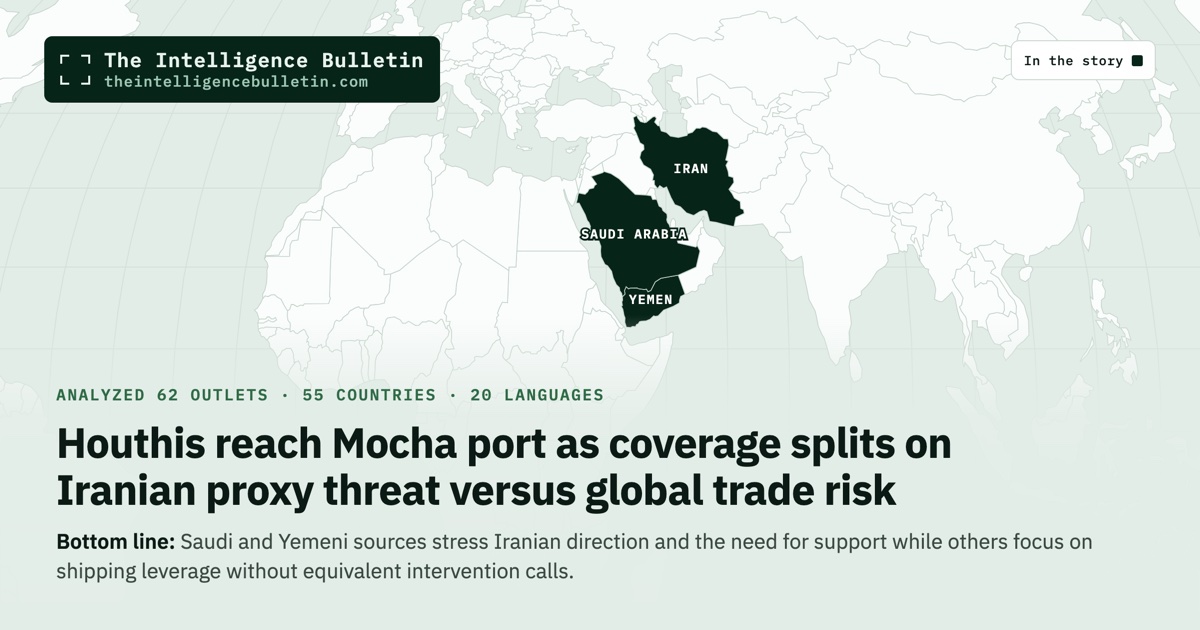
Map of the countries in the story: Houthis reach Mocha port as coverage splits on Iranian proxy threat versus global trade risk
Iran-backed Houthi forces seized or reached the strategic Red Sea port of Mocha in Yemen on September 10, 2026, after government forces withdrew south. The advance places Houthis closer to controlling the Bab al-Mandab Strait, a vital global shipping route linking the Red Sea and Indian Ocean. Yemeni President Rashad al-Alimi warned against turning the strait into another Hormuz for Iranian geopolitical blackmail, while analysts noted risks to international trade and energy supplies.

One Story. Many Angles.

🇸🇦
Saudi Arabia
Arab News
Commentary
Arab News | Support Yemen to stop the Houthis’ march toward Bab Al-Mandab
Read →
🇾🇩
Yemen
Bawabatii
ARABIC
Original reporting
President Alimi: We will not allow Bab al-Mandab Strait to be turned into another Hormuz or a platform for geopolitical blackmail on behalf of Iran
“الرئيس العليمي: لن نسمح بتحويل مضيق باب المندب إلى “هرمز آخر” أو منصة ابتزاز جيوسياسي نيابة عن إيران”
Read →
🇶🇦
Qatar
Al Jazeera
Original reporting
Yemen’s Houthis seize strategic Red Sea city of Mocha
Read →
🇹🇷
Turkey
Hurriyet Daily News
Carries Anadolu Agency reporting
Houthis reach Yemen’s strategic Mocha port near Bab al-Mandab Strait
Read →
🇭🇰
Hong Kong
South China Morning Post
Carries Reuters reporting
Yemen’s Houthis seize port city Mocha, closing in on control of Bab el-Mandeb Strait
Read →
5 sources · 4 independent accounts — some share the same news agency’s report
Analyzed 62 outlets across 55 countries and 20 languages
In Brief

Saudi and Yemeni sources stress Iranian direction and the need for support while others focus on shipping leverage without equivalent intervention calls.

The reporting converges on the fact of Houthi military gains at Mocha yet splits sharply on framing: Saudi and Yemeni government-aligned sources treat the advance as an Iranian-directed proxy operation requiring urgent external backing for the recognized government, while Qatari, Turkish and Hong Kong coverage emphasizes the fait accompli and its direct implications for global chokepoints without equivalent calls to intervene. Arab News and Bawabatii both tie the coastal push to resumed Iranian-Houthi coordination after a summer lull, citing specific dates and Iranian statements about Hormuz and Red Sea routes. Al Jazeera and SCMP add analyst assessments that the seizure delivers a significant blow by enabling potential artillery control over the strait, and note Houthi claims that navigation remains safe. Hurriyet relays Yemeni media accounts of district-by-district advances and government relocation. The pattern reveals that actor-country outlets embed the event inside a broader Iran-Saudi confrontation narrative, whereas outlets farther from the immediate parties foreground the economic stakes that all sides acknowledge. This leaves the core factual sequence—Houthi advance, government withdrawal, strait proximity—widely corroborated even as the prescribed response diverges.

Perspective Analysis

Houthis took control of the Red Sea port city of Mocha on September 10, 2026. Government forces withdrew south toward Dhubab and Lahej province after losing ground in the Hays and Al-Khawkhah districts of southern al-Hudaydah province and in western Taiz. Three Yemeni government sources told Reuters that the city had fallen, and Al Jazeera correspondent Yousef Mawry reported the same sequence from the ground: overwhelming Houthi pressure forced the retreat after government reinforcements failed to hold the line. Hurriyet Daily News, drawing on Yemeni media and Anadolu Agency reporting, described the advance as the result of district-by-district gains that isolated Mocha and cut supply routes linking Taiz and al-Hudaydah.

Mocha sits roughly 80 kilometers north of the Bab al-Mandab Strait, the narrow passage between Yemen and the Horn of Africa that funnels traffic between the Red Sea and the Indian Ocean. More than 10 percent of world trade moves through it in normal times. The strait is already narrower than the Strait of Hormuz at its tightest point, and control of the heights above it or of nearby islands such as Perim would let artillery reach shipping lanes without missiles or drones. South China Morning Post reported that four government military sources described Houthi units launching attacks on the strategic Hanish islands and relocating forces south of Mocha to establish an alternative command center. Al Jazeera analyst Wolfgang Pusztai noted that the seizure puts the Houthis in position to cut the road to Taiz and to control virtually all of Yemen’s Red Sea coast.

Yemeni President Rashad al-Alimi told European Union and Dutch officials that the developments around Mocha and the strait “are not a purely Yemeni affair” but a regional and international matter tied to global trade. He stated that Yemen would not allow Bab al-Mandab to become another Hormuz or turn the country into a platform for Iranian geopolitical blackmail. Al-Alimi called for decisive international intervention to reverse what the Houthis had done at the port and the strait. The same position appears in the Yemeni outlet Bawabatii, which carried his remarks on the need for partnership to protect the waterway that carries energy supplies and food commodities.

Houthi statements, carried by Al Jazeera through the Saba news agency, described the coastal offensive as a “national operation” aimed at asserting sovereignty. Spokesman Mohammed Abdul Salam said the group had no further territorial ambitions and that navigation and international trade in the Red Sea and Bab al-Mandab remained safe and uninterrupted, though the ban on Saudi ships stayed in place. The Houthi Supreme Political Council reaffirmed commitments to international obligations on maritime security while urging parties to press Saudi Arabia against sending more reinforcements.

The fighting forms part of a broader resumption of hostilities after a four-year truce that had largely held since 2022. Arab News reported that coordinated attacks by Iran and its Houthi allies resumed in early September after a lull in August, with the apparent objective of pressuring both the Strait of Hormuz and Bab al-Mandab. The piece detailed Iranian statements from Mohsen Rezaei and Ali Akbar Velayati threatening to disrupt traffic in both waterways, and it linked a July flight by Mahan Air to Sanaa with the subsequent Houthi offensive that began on July 3. Saudi Arabia reported Houthi strikes on Abha, Khamis Mushait, Jazan and Najran that injured 73 civilians, while the Houthis reported Saudi air strikes on Taiz, al-Hudaydah, Jawf, Marib and Saada.

The accounts converge on the basic sequence of the September 10 advance and on the strait’s strategic weight. Four independent reporting chains—Al Jazeera with Reuters sourcing, SCMP with government sources, Hurriyet with Yemeni media, and Arab News with its own analysis—place the Houthis in or at Mocha after government withdrawal. They also agree that the position improves Houthi leverage over shipping lanes already under pressure from earlier Red Sea attacks.

The divergence appears in the prescribed response. Arab News, written by GCC assistant secretary-general Abdel Aziz Aluwaisheg, argues that the Yemeni government needs immediate international support to reverse the advance, clear sea mines, interdict Iranian weapons, and prevent southern separatists from interfering with operations. It frames the push as part of an Iranian grand strategy to control both Hormuz and Bab al-Mandab. Bawabatii carries al-Alimi’s direct appeal for effective partnership to protect the strait and implement Security Council resolutions on arms transfers. These outlets embed the event inside the Iran-Saudi confrontation and treat external backing for the recognized government as the necessary next step.

Al Jazeera reports the seizure as a significant blow and includes analyst assessments of artillery reach, yet it also records Houthi assurances on safe navigation and the group’s stated commitment to a just peace. It does not echo the explicit calls for intervention that appear in the Saudi and Yemeni pieces. South China Morning Post places the development in the context of Gulf oil routes and the recent tit-for-tat shipping attacks between Iran and the United States, stressing the risk that closure would isolate energy producers after Hormuz disruptions. Hurriyet relays the tactical movements without adding the proxy-threat language or the global-trade warning.

A reader limited to Saudi or Yemeni government sources would see an urgent Iranian proxy campaign that demands outside military and logistical help. A reader limited to Al Jazeera, Hurriyet or SCMP would see a completed tactical gain whose main consequence is leverage over a global chokepoint, with Houthi claims of continued safe passage noted but not endorsed. The difference matters because the strait’s dimensions are fixed: roughly 29 kilometers wide at its narrowest, carrying the same percentage of trade whether the reader encounters the story in Riyadh, Doha, Istanbul or Hong Kong.

What to Watch

The corroborated record—Houthi forces reached Mocha on September 10 after government withdrawal, improving their position relative to Bab al-Mandab—rests on multiple independent chains and is the element a single-country reader is least likely to miss. The Iranian coordination claim draws specific dates and statements from Arab News and al-Alimi’s remarks in Bawabatii, while the trade-risk emphasis appears consistently once outlets move beyond the immediate battlefield. Houthi assurances on navigation remain single-sourced to their own statements via Saba. The interest of actor-country outlets in framing the event as a proxy threat is clear from their ownership and editorial positioning; the interest of more distant outlets in foregrounding shipping lanes follows from their distance from the immediate combatants. The next developments will turn on whether government forces can regroup south of Dhubab and whether external actors choose to treat the strait’s security as a shared responsibility or as an extension of the Iran confrontation.
Share this story

Norwegian account qualifies drone threat to Zelenskyy that Ukrainian reports present as direct Russian near-miss

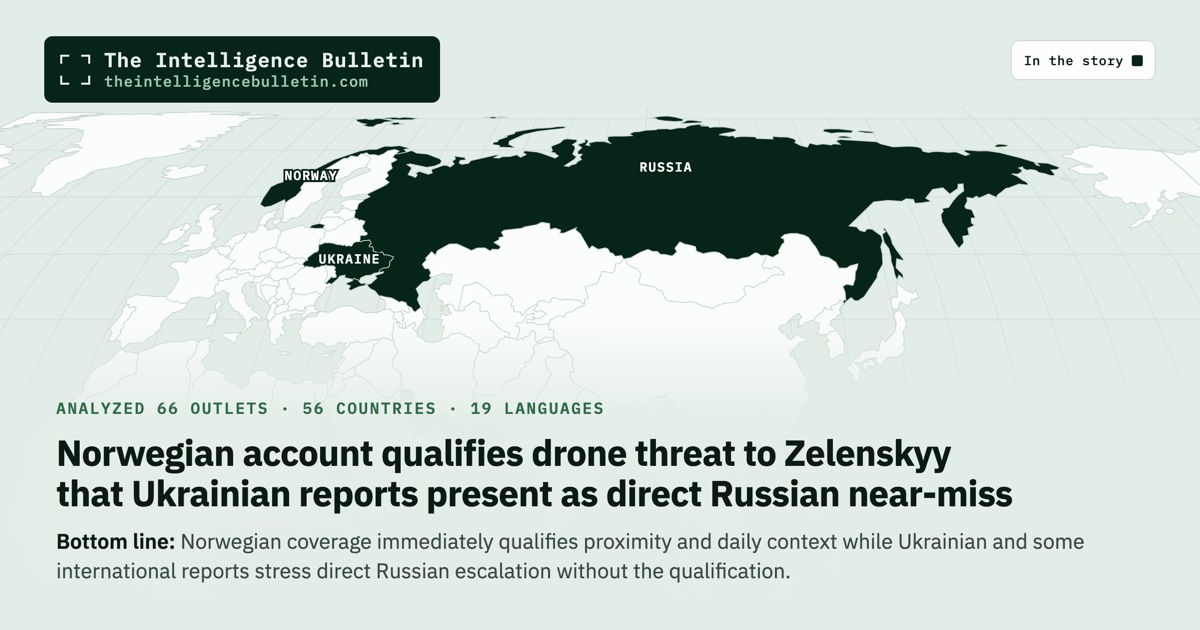
Map of the countries in the story: Norwegian account qualifies drone threat to Zelenskyy that Ukrainian reports present as direct Russian near-miss
Norwegian Prime Minister Jonas Gahr Støre stated that Ukrainian President Volodymyr Zelenskyy’s plane was almost hit by a drone while taking off from Moldova en route to Oslo on Tuesday. Zelenskyy was attending the funeral of Norway’s King Harald V and later met Støre to discuss anti-ballistic missile systems. Moldovan authorities confirmed a Russian-type drone incident that delayed airspace operations. Norwegian officials later clarified the exact proximity to the aircraft remains uncertain.

One Story. Many Angles.

🇳🇴
Norway
VG
NORWEGIAN
Original reporting
Støre: Zelenskyj’s plane was almost hit by a drone on the way from Moldova to Oslo
“Støre: Zelenskyjs fly ble nesten truffet av en drone på vei fra Moldova til Oslo”
Read →
🇺🇦
Ukraine
UNIAN
UKRAINIAN
Carries NRK via Norwegian media reports reporting
The plane Zelensky was flying in almost collided with a drone
“У літак, яким летів Володимир Зеленський, ледь не врізався дрон”
Read →
🇶🇦
Qatar
Al Jazeera
Carries NRK and Moldovan statements reporting
Zelenskyy’s plane ‘almost hit’ by drone on way to Oslo, Norwegian PM says
Read →
🇭🇰
Hong Kong
South China Morning Post
Carries Agence France-Presse reporting
Ukraine leader Zelensky’s plane almost hit by drone on way to Oslo, Norway PM says
Read →
🇹🇷
Turkey
Daily Sabah
Carries NRK reporting
Zelenskyy’s plane ‘nearly hit’ by drone en route to Norway
Read →
5 sources · each independently reported
Analyzed 66 outlets across 56 countries and 19 languages
In Brief

Norwegian coverage immediately qualifies proximity and daily context while Ukrainian and some international reports stress direct Russian escalation without the qualification.

Norwegian reporting stands out for its immediate qualification of the prime minister’s initial dramatic phrasing, adding that officials could not confirm how close the drone came and framing the episode as one of many daily threats rather than an isolated near-miss. Ukrainian coverage, by contrast, presents the statement as evidence of direct Russian targeting of the president’s aircraft without noting the later Norwegian clarification. International outlets largely relay the Norwegian prime minister’s words while varying on whether Moldovan confirmation extends specifically to the plane incident. The pattern reveals how the same originating statement from Oslo travels differently: Norwegian domestic coverage tempers urgency to reflect official nuance, Ukrainian media amplifies the actor-stakes narrative, and English-language summaries treat the episode as one data point in broader European security tensions. This divergence matters because the core claim rests on a single chain of Norwegian public statements, with Moldovan drone fragments providing supporting but not identical corroboration. The funeral context and ongoing Freyja air-defense talks appear consistently across accounts, underscoring that the incident occurred amid routine high-level diplomacy rather than an unexpected crisis.

Perspective Analysis

Norwegian Prime Minister Jonas Gahr Støre told Norwegian public broadcaster NRK that Ukrainian President Volodymyr Zelenskyy’s plane was almost hit by a drone as it prepared to take off from Moldova on Tuesday. The flight carried Zelenskyy and his wife Olena Zelenska to Oslo for the funeral of Norway’s King Harald V. Støre described the episode in direct terms: the aircraft faced the threat during departure from Chișinău, and the episode illustrated the daily conditions under which the Ukrainian leader operates. Zelenskyy landed at Gardermoen airport that evening and met Støre the following morning.

The meeting focused on air defense. The two leaders also sat with executives from European defense companies to advance the Freyja project, an effort to develop a new European anti-ballistic missile system that would supplement existing NASAMS batteries. Zelenskyy had already signaled the priority in Kyiv days earlier, noting Ukraine’s need for stronger protection against Russian ballistic missiles. Støre and Zelenskyy discussed how governments and industry could divide responsibilities to move the program toward initial production results.

Moldovan authorities recorded a drone incident on the same Tuesday. Police released photographs of fragments recovered from a sunflower field near Mihăilenii Vechi in the Rîșcani district. The pieces matched the shape of a Russian Gheran-type drone, and investigators noted an explosion that left a crater of significant size. Moldovan state media linked the recovered fragments to the same drone that had prompted the airspace alert affecting Zelenskyy’s departure. Arrivals and departures at Chișinău were suspended while two Russian drones entered Moldovan airspace; one fell inside the country and the second continued into Romanian airspace.

Støre’s initial public remark reached multiple outlets within hours. Norwegian government officials later supplied additional context to VG. A spokesperson stated that the episode involved a drone threat in Moldovan airspace that delayed the flight. The same official added that it remained uncertain how close any drone came to the aircraft itself. The episode was presented as one instance of the persistent risks Zelenskyy faces rather than an isolated or uniquely close encounter.

Ukrainian reporting described the same statement as evidence of a direct Russian drone threat to the president’s plane. The account noted that Zelenskyy has recently conducted foreign travel from Moldova rather than Poland, a shift that followed strains in Ukrainian-Polish relations. The piece placed the near-miss at the Chișinău airport and quoted Støre’s remark that the incident reflected the reality the Ukrainian leader confronts.

English-language coverage carried the Norwegian prime minister’s words with varying additional detail. One account recorded that a Moldovan government spokesperson confirmed the incident occurred before take-off and involved a Russian drone, with airspace closed until the threat had landed on Moldovan territory. Another account stated that Moldovan officials offered no comment on Støre’s specific claim about the plane and recorded only the general suspension of airport operations tied to the two drones. A third account relayed the prime minister’s statement and connected it to ongoing security risks and the air-defense discussions that took place in Oslo.

The funeral itself supplied the immediate occasion for the visit. Zelenskyy joined other heads of state, including the presidents of Germany, Lithuania, and Moldova, in the procession behind King Harald V’s coffin from Oslo Cathedral to Akershus Castle. The day after the funeral, Zelenskyy returned to the prime minister’s office for further talks. Støre later recounted asking about the previous night and receiving the answer that Zelenskyy had spent hours on the telephone receiving updates on missile strikes inside Ukraine.

The core assertion that the plane faced a drone threat during departure from Moldova appears in every published account examined. The supporting detail that Moldovan police recovered fragments of a Russian Gheran-type drone and linked them to the alert also appears, though only in the Norwegian domestic reporting that incorporated Moldovan police releases and state media. The explicit qualification that the precise distance between drone and aircraft remains unknown appears only in the Norwegian clarification supplied to VG. The statement that the incident produced an airspace closure that delayed the flight appears in one international account that cited a Moldovan spokesperson.

A reader limited to Ukrainian sources would encounter the episode framed as a direct Russian attempt to strike the presidential aircraft, without the Norwegian government’s later statement that proximity could not be confirmed. A reader limited to the South China Morning Post account would encounter an explicit note that Moldovan officials declined to address the plane-specific claim, a detail absent from the Al Jazeera account that instead recorded Moldovan confirmation of a Russian drone and airspace closure. The Turkish account aligns most closely with the initial Norwegian phrasing and does not include either the proximity qualification or the conflicting Moldovan comments on the plane.

The Norwegian domestic reporting supplies the narrowest and most internally consistent account because it alone records both the prime minister’s public remark and the subsequent clarification from his office, along with the Moldovan police findings that support the existence of a drone incident without confirming the distance to the aircraft. That chain rests on direct access to Støre’s office and to NRK, the outlet that first broadcast the remark. Ukrainian coverage has an institutional interest in presenting the strongest possible case of Russian targeting of leadership. International summaries serve audiences farther from the event and therefore treat the episode as one data point among many in the wider conflict.

What to Watch

The funeral setting and the Freyja discussions make clear that the incident occurred inside an already scheduled diplomatic sequence rather than as a sudden rupture. The same reporting chains that carried the drone statement also carried the air-defense talks, indicating that the two threads were treated as connected by the participants themselves. What remains unsettled is whether the drone came close enough to constitute a near-miss or merely triggered a standard airspace response of the kind Moldova has experienced repeatedly. The Norwegian clarification addresses that distinction directly; other accounts do not.


Share this story

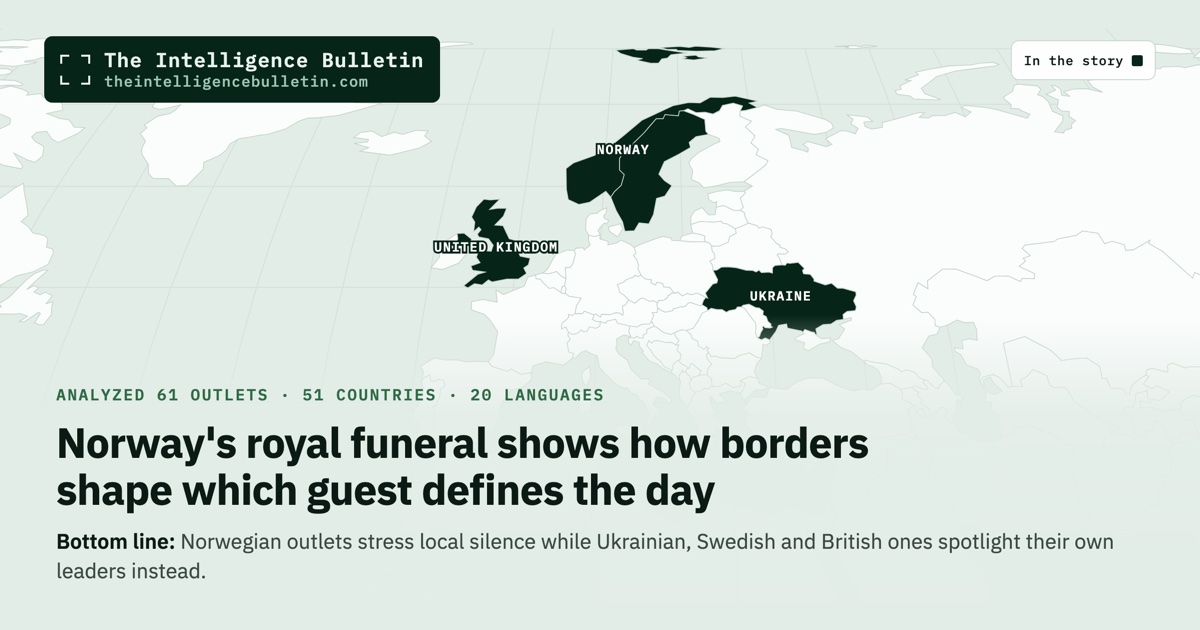
Norway’s royal funeral shows how borders shape which guest defines the day

Map of the countries in the story: Norway's royal funeral shows how borders shape which guest defines the day
King Harald V of Norway died on August 28 at age 89 after a 35-year reign. His state funeral took place on September 9 in Oslo Cathedral, followed by burial at Akershus Fortress. Son Haakon succeeded him as king. Large crowds lined the procession route in unusually quiet streets, while international attendees included Ukrainian President Zelensky and wife, Prince William, Swedish King Carl Gustaf, German President Steinmeier and other European royals.

One Story. Many Angles.

🇳🇴
Norway
BT
NORWEGIAN
Original reporting
Marie Misund Bringslid about King Harald’s funeral: – Never have I experienced Oslo so quiet
“Marie Misund Bringslid om kong Harald sin begravelse: – Aldri har jeg opplevd Oslo så stille”
Read →
🇺🇦
Ukraine
TSN
UKRAINIAN
Original reporting
Olena and Volodymyr Zelensky said goodbye to King Harald V – photo – Society
“Олена і Володимир Зеленські попрощалися з королем Гаральдом V — фото — Суспільство”
Read →
🇳🇴
Norway
Dagbladet
NORWEGIAN
Original reporting
Carl Gustaf deeply affected at King Harald’s funeral in Oslo
“Carl Gustaf dypt preget i kong Haralds begravelse i Oslo”
Read →
🇩🇪
Germany
n-tv
GERMAN
Carries dpa reporting
King Harald V buried – Royals and state guests say goodbye in Oslo
“König Harald V. beigesetzt – Royals und Staatsgäste nehmen in Oslo Abschied”
Read →
🇬🇧
United Kingdom
Mirror
Original reporting
Prince William represents Royal Family at King Harald of Norway’s funeral as Charles absence explained
Read →
5 sources · each independently reported
Analyzed 61 outlets across 51 countries and 20 languages
In Brief

Norwegian outlets stress local silence while Ukrainian, Swedish and British ones spotlight their own leaders instead.

Norwegian reporting centers the palpable silence that fell over Oslo streets as the coffin passed, underscoring how deeply the late king connected with ordinary citizens across generations. Ukrainian coverage instead fixes on the Zelensky couple walking hand-in-hand in restrained black, turning the event into a visible display of Ukrainian leadership abroad. Swedish outlets linger on King Carl Gustaf’s visible emotion, framing the loss as both political and personal for the last surviving monarchs of their generation. German and British accounts list the full roster of royal and state guests, treating the funeral as a European diplomatic occasion where protocol and representation matter most. Across these framings one consistent thread emerges: every outlet records the same core facts of succession, procession and attendance, yet each selects the foreign presence that best serves its national audience. The Norwegian pieces alone note the street-level atmosphere that no foreign camera angle captured; the others treat that atmosphere as background to whichever dignitary they chose to highlight. This pattern shows how a single ceremony becomes multiple stories once borders are crossed.

Perspective Analysis

Norway’s King Harald V died on August 28 at the age of 89 after reigning for 35 years. His state funeral took place on September 9 in Oslo Cathedral, with burial in the royal mausoleum at Akershus Fortress. His son Haakon succeeded him immediately upon death and later took the constitutional oath before parliament. The coffin moved in procession from the Royal Palace through the streets to the cathedral, then onward for the private interment. Norwegian Prime Minister Jonas Gahr Støre delivered the main address inside the cathedral, closing with the words “Danke für alles” before turning to the new king with the traditional “Lang lebe der König.”

Tens of thousands of people lined the route. In one Norwegian account the streets fell into an unusual stillness once the military band stopped playing the funeral march, with phones raised along Karl Johan as the gun carriage passed. Young people in black stood among older mourners and families with infants. The new king walked behind the coffin in uniform beside Crown Princess Ingrid Alexandra, who wore a simple mourning veil. Queen Sonja followed by car with the new Queen Mette-Marit. Wreaths carried single words such as “Takk.” Several members of the immediate family were seen wiping tears during the service.

International guests walked in the procession behind the Norwegian royal family. Ukrainian President Volodymyr Zelensky and his wife Olena attended in restrained black clothing; one Ukrainian report described them walking side by side and holding hands. The Mirror noted Zelensky two rows behind Prince William among political leaders. Swedish King Carl Gustaf walked with his daughter Crown Princess Victoria and her husband Prince Daniel; a Norwegian report recorded that he appeared visibly moved and later told Swedish television that Harald had been both colleague and close friend since childhood, with shared hunting and fishing trips and recent family celebrations in Stockholm. German President Frank-Walter Steinmeier also attended. British coverage explained that Prince William represented King Charles, who followed the convention that the sovereign does not attend funerals of other heads of state, while Princess Anne appeared in a private capacity as godmother to the new Norwegian king. Other royals present included King Frederik and Queen Mary of Denmark, King Felipe and Queen Letizia of Spain, and King Willem-Alexander and Queen Maxima of the Netherlands. Former Danish Queen Margrethe had been expected but withdrew after hospital admission.

The burial itself remained private, limited to the royal family and selected guests inside the fortress church where the sarcophagi of Haakon VII and Olav V already rest. After the service the new king, queen and their children appeared on the palace balcony to acknowledge the crowd.

Norwegian domestic reporting gave the street-level quiet and the visible turnout of ordinary citizens the central place, treating the event as an expression of national attachment to a monarch who had modernized the institution while remaining personally accessible. The same outlets recorded the succession mechanics and the new king’s motto “All For Norway” without elaboration on foreign guests. Ukrainian coverage instead placed the Zelensky couple’s appearance and attire at the forefront, using photographs to document their participation as a diplomatic gesture. Swedish reporting lingered on Carl Gustaf’s reaction and the decades-long personal bond between the two Nordic houses, including joint family occasions earlier in the year. German accounts compiled the full list of European royals and heads of state, presenting the day as a coordinated diplomatic farewell. British pieces concentrated on the representation choices within the British royal family and the protocol that kept Charles at home.

These differences did not produce conflicting facts about the funeral itself. Every account agreed on the date, the location of the cathedral service, the sequence of the procession, the identity of the new king, and the presence of the listed foreign figures. The divergence lay in emphasis. A reader limited to Ukrainian sources would learn little about the scale of local attendance or the atmosphere on Oslo’s streets. A reader limited to Swedish sources would encounter the Zelensky attendance only in passing, if at all. British and German accounts supplied the broader guest list but subordinated the Norwegian public’s response to the diplomatic choreography. The Norwegian pieces alone supplied the detail that the city itself had fallen unusually silent, an observation drawn from direct presence rather than wire photographs.

What to Watch

The Norwegian framing aligns most closely with the event’s primary character. The funeral was a Norwegian state ceremony marking the end of a 35-year reign and the first such transition in decades. The scale of public turnout and the reported stillness in the capital are the elements least likely to be replicated in any other country’s coverage, because they depend on local observation rather than standard diplomatic lists. Foreign angles usefully record the international dimension—Zelensky’s presence amid ongoing conflict, the personal ties among remaining Nordic monarchs, the British protocol on sovereign attendance—but they select the guest that best fits their own national interest in the story. The convergence across all five outlets on the core sequence of events supplies the factual spine; the variation in foregrounding shows how national vantage points turn one ceremony into several parallel narratives.


Share this story

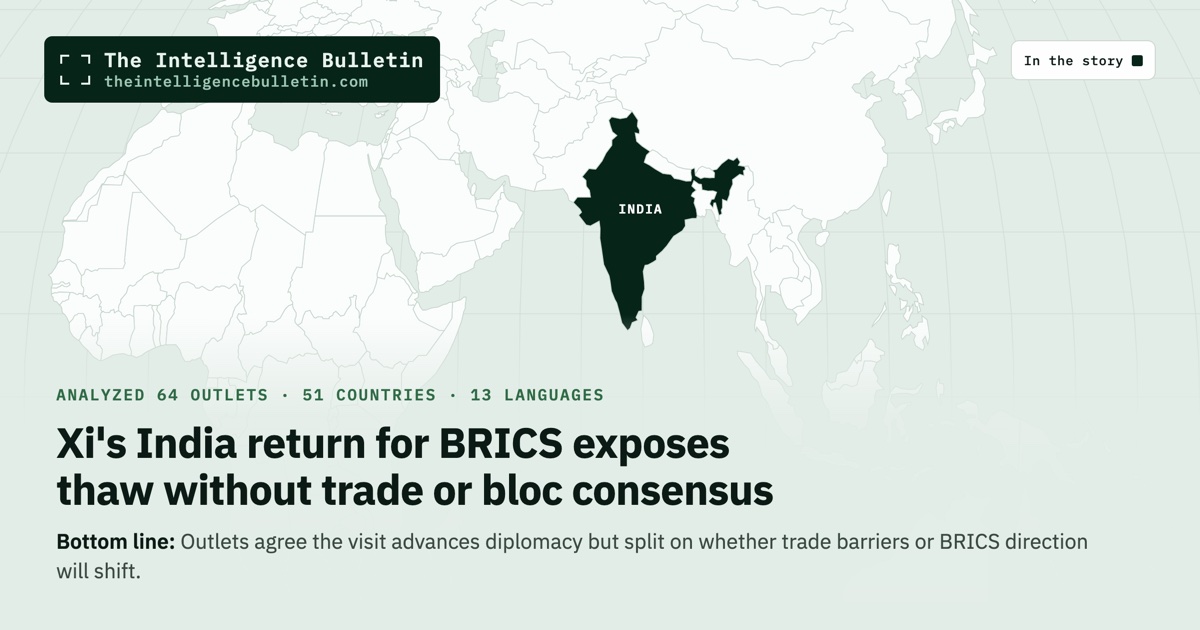
Xi’s India return for BRICS exposes thaw without trade or bloc consensus

Map of the countries in the story: Xi's India return for BRICS exposes thaw without trade or bloc consensus
Chinese President Xi Jinping will attend the BRICS summit in New Delhi on September 12, his first visit to India in nearly seven years. He is expected to hold bilateral talks with Prime Minister Narendra Modi on the sidelines. Trade ministers from both sides will also meet amid ongoing normalization following the 2020 Galwan clash. Coverage highlights diplomatic thaw alongside persistent economic suspicions and India’s push to moderate BRICS away from anti-Western positioning.

One Story. Many Angles.

🇮🇳
India
The Hindu
Original reporting
China confirms Xi to visit India after 7 year gap; trade, normalisation on agenda
Read →
🇭🇰
Hong Kong
South China Morning Post
Original reporting
China’s Xi Jinping to make first trip to India in 7 years for Brics summit
Read →
🇸🇬
Singapore
Lianhe Zaobao
CHINESE
Carries Reuters reporting
Reuters: Xi Jinping’s visit to India helps diplomatic relations warm, economic and trade relations still constrained by suspicion
“路透:习近平访印有助外交关系回暖 经贸关系仍受猜疑制约”
Read →
🇩🇪
Germany
Deutsche Welle
Original reporting
India looks to steer BRICS away from anti-Western turn
Read →
4 sources · each independently reported
Analyzed 64 outlets across 51 countries and 13 languages
In Brief

Outlets agree the visit advances diplomacy but split on whether trade barriers or BRICS direction will shift.

The reporting converges on the visit itself as a concrete step in gradual India-China normalization after years of border tensions, yet parts sharply on what the event signals for trade and multilateral forums. The Hindu frames the summit around Indian priorities of trade deficit reduction and border stability, quoting officials on risk management rather than realignment. SCMP presents it as one stop in Xi’s packed diplomatic calendar, noting resumed flights and border trade as tangible progress. Zaobao relays Reuters reporting that stresses enduring regulatory, visa and investment barriers, with analysts warning against expecting economic breakthroughs. DW alone widens the lens to India’s hosting role, emphasizing its effort to keep BRICS focused on practical cooperation and neutral of anti-Western rhetoric. These angles reveal no contradiction on the visit occurring but expose differing national lenses: Indian outlets prioritize bilateral deliverables, Hong Kong coverage embeds it in Chinese outreach, Singaporean reporting cautions on economic limits, and German analysis isolates India’s balancing act within the expanded bloc. The pattern shows diplomatic signaling travels farther than economic or institutional substance across the selected sources.

Perspective Analysis

Chinese President Xi Jinping will travel to New Delhi for the BRICS summit scheduled for September 12, his first visit to India since October 2019. The trip comes after years of strained relations that began with the deadly Galwan Valley clash in June 2020, which killed 20 Indian soldiers and four Chinese soldiers and triggered a prolonged military standoff along the disputed border. Both sides have since worked to restore limited cooperation, including the resumption of direct flights last October and the restart of border trade last month. Xi is expected to meet Prime Minister Narendra Modi on the sidelines, and Chinese Commerce Minister Wang Wentao will hold parallel discussions with his Indian counterpart Piyush Goyal. The two leaders last met in October 2024 on the margins of the BRICS summit in Kazan, Russia, where they welcomed positive momentum in bilateral ties and reaffirmed that differences should not turn into disputes.

The announcement of the visit appeared across multiple outlets on September 10. Chinese officials described the event as an opportunity to deepen cooperation on trade, connectivity, climate action, public health and the digital economy. Indian Ambassador to China Vikram Doraiswami wrote in the state-run Global Times that a stable relationship between the two countries serves the interests of their combined 2.8 billion people and contributes to peace in Asia. On the Indian side, the visit is tied to concrete economic concerns. Bilateral trade reached $91.72 billion in the first half of 2026, up 23.6 percent from the prior year, with India running a $67.1 billion deficit. Indian exports to China grew 37.2 percent to $12.31 billion, including rising shipments of printed circuit boards, yet officials continue to press for easier access to Chinese markets and relief from export controls. China, for its part, seeks further relaxation of investment restrictions in India.

Border management remains central to the normalization effort. Last month the two countries agreed during special representative talks in Beijing to advance discussions on boundary delimitation and to add two meeting points for senior military commanders plus additional hotlines in the eastern and middle sectors. The first corps commander-level meeting in the eastern sector took place on September 6 at the Vacha-Damai border personnel meeting point in Arunachal Pradesh, following reported tensions in the Taksing area. Both sides also scheduled an expert-level meeting later this month on trans-border rivers. Indian officials have described these steps as strategic risk management rather than strategic realignment, noting that structural competition between the two powers has not disappeared.

Xi’s schedule places the India trip within a wider diplomatic calendar. He attended the Shanghai Cooperation Organization summit in Kyrgyzstan earlier and made his first state visit to Egypt in a decade last week. A meeting with U.S. President Donald Trump in Washington is expected later in the month. Russian President Vladimir Putin, South African President Cyril Ramaphosa, Iranian President Masoud Pezeshkian and Philippine President Ferdinand Marcos Jr. are also scheduled to attend the New Delhi gathering. Indian organizers chose the slogan “Building for Resilience, Innovation, Cooperation and Sustainability” to accommodate both the original five members and the newer additions of Egypt, Ethiopia, Indonesia, Iran and the United Arab Emirates.

Coverage of the visit shows broad agreement that the event marks a concrete step in restoring high-level contact. All four outlets report the seven-year gap since Xi’s last trip and the expectation of bilateral talks. They also note the parallel trade-minister discussions and the gradual easing of some restrictions since the 2024 Kazan meeting. The accounts diverge, however, on the depth of economic improvement and on India’s broader aims inside BRICS. One Singapore outlet relays reporting that stresses ongoing obstacles: Indian companies still face regulatory hurdles and visa delays for Chinese personnel, while Chinese firms encounter stricter scrutiny at home for advanced manufacturing and technology exports. Equipment shipments for solar, electronics and infrastructure projects have been held at Chinese customs for extended periods, and some Indian business figures describe these frictions as deliberate leverage rather than routine administrative friction. Analysts cited in that reporting judge a major economic breakthrough unlikely even if the Xi-Modi meeting proceeds smoothly.

A German outlet alone centers India’s role as host. It reports that New Delhi wants to steer the expanded group toward practical cooperation on trade, monetary arrangements and agriculture rather than geopolitical confrontation. Experts quoted there note India’s defense and trade ties with the United States and argue that any anti-Western tilt would run counter to Indian interests. The same analysis observes that India’s non-aligned posture may help keep the bloc focused on global governance reform instead of bloc politics, though concrete outcomes are expected to remain limited.

These differences in emphasis matter for what a reader takes away. An account focused solely on Indian priorities would foreground the trade deficit numbers and border hotline expansions while underplaying Xi’s wider travel schedule. A piece centered on Chinese diplomacy would highlight resumed flights and the symbolic weight of the visit without dwelling on regulatory barriers that persist on both sides. Reporting that foregrounds economic caution would leave the impression that diplomatic signaling has outpaced any real commercial opening. Coverage that isolates the BRICS agenda would correctly note India’s preference for low-key functional work but would miss the bilateral trade and border mechanics that Indian and Chinese officials themselves place at the center of the moment.

What to Watch

The visit itself rests on corroborated reporting across independent outlets that Xi will attend on September 12 and that side meetings are planned. The expectation of economic or institutional breakthroughs rests on thinner ground. The single-source cautions on regulatory and visa obstacles align with the documented pattern of incremental, reversible steps since 2024, and they match the explicit statements from Indian officials that the goal is stable competitive coexistence rather than deep integration. India’s interest in moderating BRICS similarly tracks its documented defense and trade relationships with Western partners. The most reliable reading, therefore, is that the summit will deliver visible high-level contact and modest border-management advances while leaving the larger structural frictions in trade and multilateral alignment largely untouched. That outcome would be consistent with the pattern of managed competition both governments have pursued since the Kazan meeting, and it would set the stage for further incremental contacts rather than any decisive reset.


Share this story

Sununu and Pappas advance in Senate race that could decide US chamber control

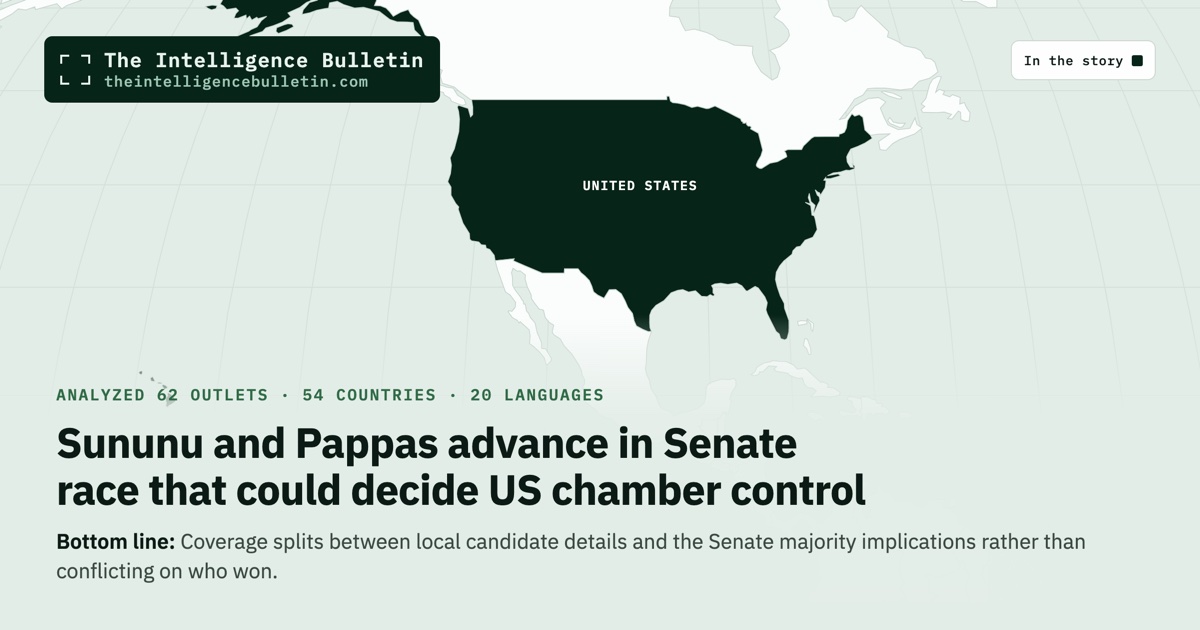
Map of the countries in the story: Sununu and Pappas advance in Senate race that could decide US chamber control
Democratic Rep. Chris Pappas defeated progressive challenger Karishma Manzur in the Senate primary. Republican former Sen. John E. Sununu beat Scott Brown despite past Trump criticism and won the endorsement. They will face off in November for the seat of retiring Sen. Jeanne Shaheen. The contest is seen as pivotal for Senate control, with Democrats needing net gains.

One Story. Many Angles.

🇺🇸
United States
CNN
Original reporting
Pappas and Sununu will face-off for a key Senate seat and other takeaways from New Hampshire’s primaries
Read →
🇶🇦
Qatar
Al Jazeera
Original reporting
New Hampshire primary results: Key takeaways for US midterm elections
Read →
🇬🇧
United Kingdom
The Guardian
Original reporting
Trump-backed John Sununu wins New Hampshire Republican Senate primary
Read →
🇹🇷
Turkey
Anadolu Agency
AP wire copy
New Hampshire voters pick Senate nominees for November showdown
Read →
🇩🇴
Dominican Republic
Hoy
SPANISH
Carries EFE reporting
New Hampshire elects Sununu and Pappas for a key battle for control of the US Senate
“New Hampshire elige a Sununu y Pappas para una batalla clave por el control del Senado de EE. UU.”
Read →
5 sources · each independently reported
Analyzed 62 outlets across 54 countries and 20 languages
In Brief

Coverage splits between local candidate details and the Senate majority implications rather than conflicting on who won.

US domestic outlets emphasize candidate biographies and primary mechanics while international coverage highlights the Senate control stakes and Trump influence. CNN details Sununu’s victory over Brown and Pappas’s win despite AIPAC criticism, framing it as local dynamics in a state that splits its votes. Al Jazeera stresses the race’s role in Democratic efforts to flip the chamber and notes Manzur’s attacks on Pappas over Israel policy ties. The Guardian leads with Sununu’s Trump endorsement despite his past criticisms, presenting it as a UK outsider view of Republican consolidation. Anadolu and Hoy relay basic outcomes with Hoy adding Caribbean emphasis on the November battle for Senate majority. The consistent thread across independent chains is that Sununu prevailed in the GOP contest and Pappas in the Democratic one, with no outlet contradicting the result. What distinguishes the accounts is not disagreement on facts but choice of lens: local matchups versus implications for US alliances and trade. The reporting converges on the race’s competitiveness without manufacturing splits.

Perspective Analysis

New Hampshire voters chose their Senate nominees on September 8, 2026, setting up a November contest between Democratic Representative Chris Pappas and Republican former Senator John E. Sununu for the seat left open by the retirement of Democratic Senator Jeanne Shaheen. Pappas defeated his progressive primary opponent, Karishma Manzur, while Sununu prevailed over Scott Brown, the former Massachusetts senator and Trump-era ambassador. Both winners were the clear frontrunners entering the day, according to the reporting across the five outlets that covered the results.

The Senate race carries immediate weight because Democrats currently trail in the chamber and would need a net gain of four seats to regain control. Shaheen’s departure removes an incumbent who had held the post since 2009, and New Hampshire has not elected a Republican senator since 2010. The state split its presidential vote in recent cycles, with Kamala Harris carrying it by a narrow margin in 2024 while Republicans maintain control of the state legislature and governor’s office. This pattern makes the November matchup one of the more closely watched Senate contests on the map.

On the Republican side, Sununu secured the nomination after serving one term in the Senate from 2003 to 2009. He defeated Brown, who positioned himself as an outsider challenging what he described as a political dynasty. Sununu received the endorsement of President Donald Trump even though he had written an op-ed during the 2024 presidential cycle calling Trump a “loser” and backing Nikki Haley. Sununu had also criticized aspects of Trump’s record, including tariff policies and the decision to launch military action in Iran without a clear plan for protecting the Strait of Hormuz. At his victory event, Sununu described Pappas as ineffective, partisan, and out of touch with New Hampshire voters. Brown’s campaign did not generate enough support to overcome Sununu’s name recognition and establishment backing within the party.

Pappas, a four-term congressman representing a battleground House district, won the Democratic nomination by defeating Manzur, who ran as a democratic socialist. Manzur pressed Pappas on his voting record in Congress and his ties to the American Israel Public Affairs Committee, arguing that those connections distanced him from progressive priorities. Pappas countered by focusing on affordability, defense of safety-net programs, and his established electoral record in the state. Outside spending reached roughly $4.8 million in support of his primary bid. His victory leaves Democrats with a candidate who has demonstrated strength in competitive districts, though Sununu’s prior Senate experience and family prominence in New Hampshire politics present a direct challenge.

Reporting from outlets outside the United States placed heavier emphasis on the broader implications of the outcome. Al Jazeera noted that Republicans see the seat as an opportunity to gain a foothold in New England, while Democrats view retention as essential to their path back to a Senate majority. The same coverage recorded Manzur’s criticism of Pappas over AIPAC support and framed the general election as a test of whether the party can hold ground in a state that has favored Democrats for federal office in recent cycles. Hoy, drawing on wire reporting, described the contest as a key battle for Senate control and observed that the state’s mix of independent voters and split-ticket history keeps both parties competitive.

CNN’s account stayed closer to the mechanics of the primaries themselves, detailing how Sununu overcame past criticism of Trump to win the endorsement and how Pappas withstood an internal challenge from the left. It also recorded the parallel gubernatorial race, in which Republican Kelly Ayotte secured her party’s nomination while Democrat Cinde Warmington ran unopposed. The piece further noted that Stefany Shaheen, daughter of the retiring senator, won the Democratic nomination for the open House seat Pappas is vacating.

The Guardian centered its coverage on the Trump endorsement of Sununu, highlighting the candidate’s earlier public statements against the president and his subsequent alignment for the primary. It described the general election as one that could prove decisive for Democratic hopes of flipping the chamber and noted Republican concerns that New Hampshire remains a potential sleeper risk despite the party’s state-level strength.

Anadolu Agency limited its report to the basic fact that voters had selected the two Senate nominees who will meet in November, without additional framing around endorsements or policy stakes.

The accounts converge on the identity of the winners and the retirement of Shaheen as the reason for the open seat. They also agree that Sununu secured Trump’s support despite prior differences. No outlet reported contradictory vote outcomes or disputed the sequence of events on primary night. Where the pieces differ is in the weight given to different elements of the same record. CNN and the Guardian both recorded Sununu’s past criticism of Trump; Al Jazeera and Hoy foregrounded the Senate majority arithmetic; Anadolu stayed with the narrowest possible description of the ballot results.

A reader limited to any single account would therefore miss either the state-level mechanics that produced these particular candidates or the arithmetic of chamber control that makes the November race consequential for legislation on trade, alliances, and foreign assistance. The convergence across the five pieces on the core facts—Pappas and Sununu as nominees, Shaheen’s retirement, the four-seat threshold for Democrats—establishes a reliable baseline. The variation in emphasis reflects the different audiences each outlet serves rather than any disagreement over what occurred on September 8.

What to Watch

The reporting that places the race in the context of Senate control supplies the clearest warrant for why the outcome matters beyond New Hampshire. That arithmetic appears in multiple independent accounts and ties directly to the legislative calendar that will begin in 2027. Coverage that instead foregrounds candidate biographies or the Trump endorsement supplies useful texture on how the nominees reached this point, but it does not alter the numerical reality of the chamber’s current composition. The consistent thread is that both parties view the seat as winnable and have chosen candidates with established records and name recognition in a state that rewards both qualities. That combination, rather than any single outlet’s framing, is what positions the contest as one of the early indicators of midterm direction.


Share this story

Ukraine’s record drone strike hits Russian Arctic gas plant 3,200 km deep

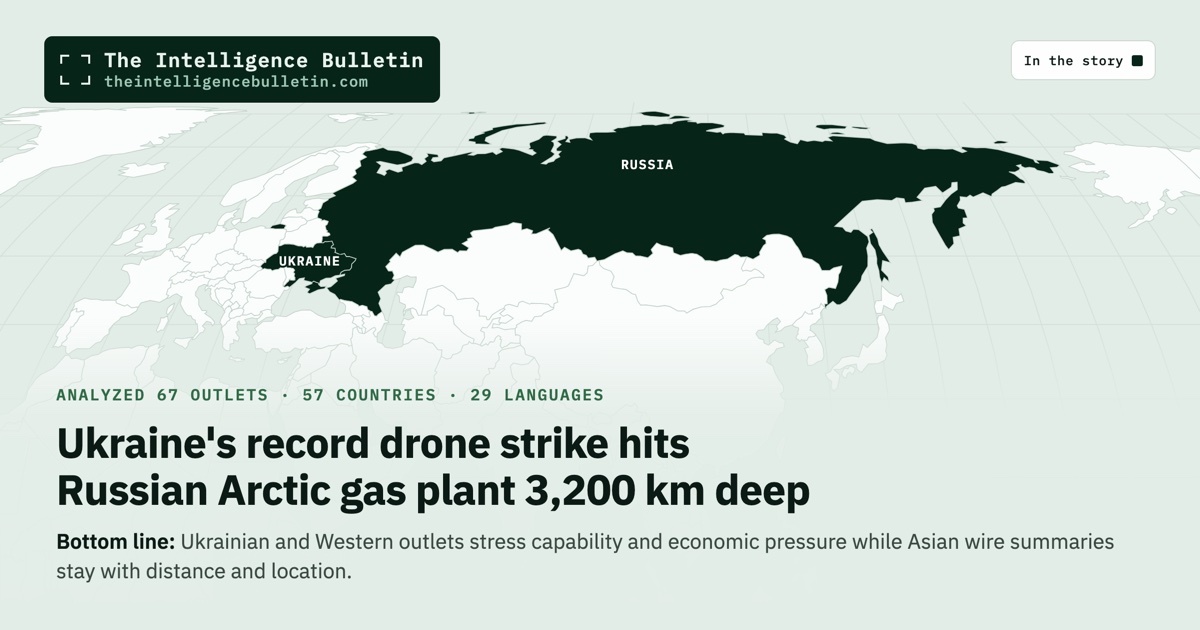
Map of the countries in the story: Ukraine's record drone strike hits Russian Arctic gas plant 3,200 km deep
Ukrainian drones attacked a gas condensate plant in Russia’s Novy Urengoy in the Yamalo-Nenets region, more than 3,000 km from the Ukrainian border, starting a fire. Russian regional governor Dmitry Artyukhov confirmed the drone incident and debris fire but reported no casualties or injuries. Ukrainian Special Operations Forces claimed strikes on two plants in the area, describing them as the deepest of the war. The attack targets key Russian gas infrastructure in the Arctic.

One Story. Many Angles.

🇺🇦
Ukraine
Kyiv Post
Original reporting
3,200 km Into Russia: Ukraine Hits Major Gas Facility in Record-Breaking Strike
Read →
🇳🇴
Norway
The Barents Observer
Original reporting
Drone strike on Novy Urengoy gas plant
Read →
🇬🇧
United Kingdom
LBC
Original reporting
Ukraine unleashes deepest drone strikes of war on Russian gas fields – as Zelenskyy vows to wreck Putin’s economy
Read →
🇮🇳
India
LiveMint
Bloomberg wire copy
Ukraine Hits Two Gas Condensate Plants in Russia’s Arctic
Read →
🇲🇾
Malaysia
Free Malaysia Today
Carries AFP reporting
Ukrainian drone hits Russian Arctic region, almost 3,000 km from border
Read →
5 sources · each independently reported
Analyzed 67 outlets across 57 countries and 29 languages
In Brief

Ukrainian and Western outlets stress capability and economic pressure while Asian wire summaries stay with distance and location.

Every outlet in the set reports the same verified sequence: a confirmed drone incident at the Novy Urengoy gas condensate facility on 9 September 2026, a resulting fire from debris, and no casualties. The Ukrainian Kyiv Post centers Kyiv’s growing long-range reach and quotes a Ukrainian drone maker’s claim of over 3,300 km. The Barents Observer, based near the Arctic, details the local gas-processing plant’s role in Russia’s largest production region. LBC links the strike directly to President Zelenskyy’s stated aim of damaging Russia’s economy. LiveMint, carrying Bloomberg copy, names two specific plants and notes the targets’ importance to Gazprom and Novatek. Free Malaysia Today relays the distance and official Russian statements in concise wire form. The set converges on the record distance and Russian confirmation of the fire while diverging on framing: Ukrainian reporting stresses capability demonstrated, Western pieces tie it to economic pressure, and the Malaysian and Indian outlets keep the focus on the Arctic location and energy assets. No outlet in the set carries Russian national media accounts; all rely on regional Russian officials, Ukrainian claims, and open-source monitors. The consistent factual core across independent chains leaves little room for contradiction on the basic event.

Perspective Analysis

On 9 September 2026 Ukrainian drones reached the Novy Urengoy condensate preparation plant in Russia’s Yamalo-Nenets Autonomous Okrug, more than 3,000 kilometres from the Ukrainian border. Russian regional governor Dmitry Artyukhov stated on Telegram that a drone attack on an industrial facility in the city had been repelled and that falling debris had started a fire. He added that there were no deaths or injuries and that emergency services were at the scene. Artem Zhoga, the Kremlin’s presidential representative to the Urals Federal District, described the incident as the first strike on the Arctic portion of his region. Ukrainian Special Operations Forces later said their drones had hit two gas-condensate plants in the area, one in Novy Urengoy and one in the Purovsky district, and that the aircraft had travelled more than 3,000 kilometres. The Ukrainian arms company Fire Point posted that its drones had covered more than 3,300 kilometres and struck the target.

The Novy Urengoy plant processes unstable oil and gas condensate mixtures from nearby fields on the Siberian tundra. The facility has a design capacity of roughly 19.5 million tons per year and forms part of the infrastructure that makes the Yamalo-Nenets region Russia’s largest gas-producing area. The Barents Observer noted that the region accounts for 74 per cent of all Russian gas output. Novy Urengoy itself, with a population of more than 100,000, sits just south of the Arctic Circle and serves as the production centre for that output. The second site mentioned by Ukrainian forces, the Purovsky plant, is operated by Novatek and lies in the same district.

Russian officials described the event in the standard language used for such incidents: the attack had been repelled, but debris had caused limited damage. Ukrainian statements framed the operation as a deliberate strike on critical energy infrastructure previously considered beyond reach. President Volodymyr Zelenskyy said it was important to respond to the Russian war in a manner that made the enemy feel the effect, linking the action to efforts to damage Russia’s economy. The Ukrainian company Fire Point appeared to claim involvement without an official government statement. No Ukrainian government ministry issued a formal attribution in the reporting examined.

The same day brought a separate drone-threat warning for the Khanty-Mansiysk Autonomous Okrug, roughly 2,500 kilometres from the border and responsible for about 40 per cent of Russia’s oil production. Russian Federal Air Transport Agency notices suspended operations at six airports in that district, and residents received instructions to remain indoors away from windows. The warning marked the first time the region had faced a direct unmanned-aerial-vehicle alert, though a missile-threat declaration had occurred earlier in the year.

Across the five outlets that covered the Novy Urengoy incident, the core sequence remained consistent. Every account carried Artyukhov’s confirmation of the drone presence, the resulting fire, and the absence of casualties. Every account recorded the distance as exceeding 3,000 kilometres and described the strike as the deepest yet recorded inside Russia. The convergence on these points rests on independent reporting chains: Russian regional officials, Ukrainian military and company statements, and open-source monitors such as Exilenova+ and Mediazona.

Where the accounts diverge is in emphasis rather than in the disputed facts themselves. The Kyiv Post placed the event under a headline that highlighted the record distance and Ukrainian achievement, quoting both the governor and the Fire Point post. The Barents Observer, published from northern Norway, concentrated on the local industrial setting and the plant’s place in the regional gas economy. LBC connected the operation directly to Zelenskyy’s earlier remarks about wrecking Russia’s economic base. LiveMint, carrying a Bloomberg feed, named the two plants and identified their operators, Gazprom and Novatek, while noting the broader pattern of Ukrainian strikes on Russian energy assets. Free Malaysia Today limited itself to the distance, the governor’s statement, and the Ukrainian claim without additional framing.

No outlet in the set published reporting from Russian national media. All relied on the regional governor’s Telegram post, the presidential representative’s statement, Ukrainian military and company channels, and open-source intelligence accounts. The absence leaves the Russian central-government perspective on the economic or military significance of the strike unrepresented in these pages.

The single-source element is the Ukrainian claim of two distinct plants hit. Only the Special Operations Forces statement, relayed by LBC and LiveMint, supplies that detail. The remaining outlets refer to a single facility in Novy Urengoy. The corroborated elements—the drone incident, the fire from debris, the distance, and the lack of casualties—appear in every source and rest on statements from both Russian and Ukrainian sides.

What to Watch

The event demonstrates that Ukrainian long-range drones can now reach previously distant Russian energy infrastructure. The Yamalo-Nenets region supplies the bulk of the country’s gas, and the plants targeted process condensate that feeds into that production. Whether the physical damage proves significant will depend on assessments that have not yet appeared in the reporting. The operational fact that stands across the coverage is that the distance barrier previously assumed to protect the Arctic gas fields has narrowed.


Share this story