One Story. Many Angles.
Outlets agree the visit advances diplomacy but split on whether trade barriers or BRICS direction will shift.
The reporting converges on the visit itself as a concrete step in gradual India-China normalization after years of border tensions, yet parts sharply on what the event signals for trade and multilateral forums. The Hindu frames the summit around Indian priorities of trade deficit reduction and border stability, quoting officials on risk management rather than realignment. SCMP presents it as one stop in Xi’s packed diplomatic calendar, noting resumed flights and border trade as tangible progress. Zaobao relays Reuters reporting that stresses enduring regulatory, visa and investment barriers, with analysts warning against expecting economic breakthroughs. DW alone widens the lens to India’s hosting role, emphasizing its effort to keep BRICS focused on practical cooperation and neutral of anti-Western rhetoric. These angles reveal no contradiction on the visit occurring but expose differing national lenses: Indian outlets prioritize bilateral deliverables, Hong Kong coverage embeds it in Chinese outreach, Singaporean reporting cautions on economic limits, and German analysis isolates India’s balancing act within the expanded bloc. The pattern shows diplomatic signaling travels farther than economic or institutional substance across the selected sources.
Perspective Analysis
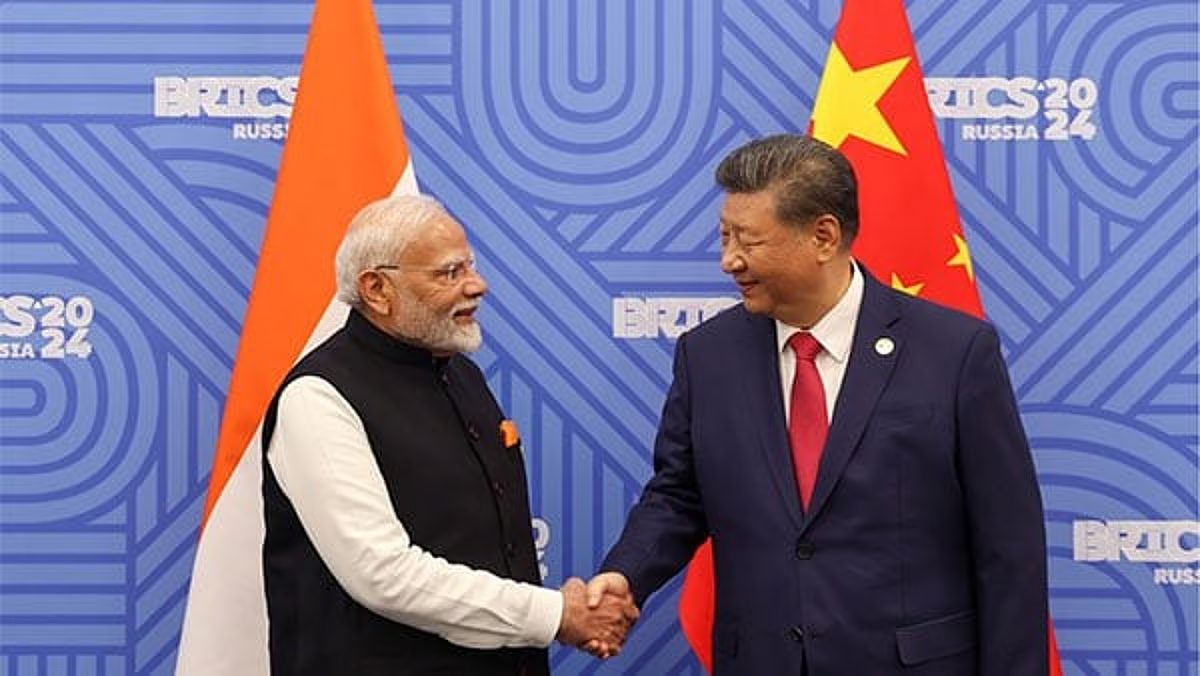
Chinese President Xi Jinping will travel to New Delhi for the BRICS summit scheduled for September 12, his first visit to India since October 2019. The trip comes after years of strained relations that began with the deadly Galwan Valley clash in June 2020, which killed 20 Indian soldiers and four Chinese soldiers and triggered a prolonged military standoff along the disputed border. Both sides have since worked to restore limited cooperation, including the resumption of direct flights last October and the restart of border trade last month. Xi is expected to meet Prime Minister Narendra Modi on the sidelines, and Chinese Commerce Minister Wang Wentao will hold parallel discussions with his Indian counterpart Piyush Goyal. The two leaders last met in October 2024 on the margins of the BRICS summit in Kazan, Russia, where they welcomed positive momentum in bilateral ties and reaffirmed that differences should not turn into disputes.
The announcement of the visit appeared across multiple outlets on September 10. Chinese officials described the event as an opportunity to deepen cooperation on trade, connectivity, climate action, public health and the digital economy. Indian Ambassador to China Vikram Doraiswami wrote in the state-run Global Times that a stable relationship between the two countries serves the interests of their combined 2.8 billion people and contributes to peace in Asia. On the Indian side, the visit is tied to concrete economic concerns. Bilateral trade reached $91.72 billion in the first half of 2026, up 23.6 percent from the prior year, with India running a $67.1 billion deficit. Indian exports to China grew 37.2 percent to $12.31 billion, including rising shipments of printed circuit boards, yet officials continue to press for easier access to Chinese markets and relief from export controls. China, for its part, seeks further relaxation of investment restrictions in India.
Border management remains central to the normalization effort. Last month the two countries agreed during special representative talks in Beijing to advance discussions on boundary delimitation and to add two meeting points for senior military commanders plus additional hotlines in the eastern and middle sectors. The first corps commander-level meeting in the eastern sector took place on September 6 at the Vacha-Damai border personnel meeting point in Arunachal Pradesh, following reported tensions in the Taksing area. Both sides also scheduled an expert-level meeting later this month on trans-border rivers. Indian officials have described these steps as strategic risk management rather than strategic realignment, noting that structural competition between the two powers has not disappeared.
Xi’s schedule places the India trip within a wider diplomatic calendar. He attended the Shanghai Cooperation Organization summit in Kyrgyzstan earlier and made his first state visit to Egypt in a decade last week. A meeting with U.S. President Donald Trump in Washington is expected later in the month. Russian President Vladimir Putin, South African President Cyril Ramaphosa, Iranian President Masoud Pezeshkian and Philippine President Ferdinand Marcos Jr. are also scheduled to attend the New Delhi gathering. Indian organizers chose the slogan “Building for Resilience, Innovation, Cooperation and Sustainability” to accommodate both the original five members and the newer additions of Egypt, Ethiopia, Indonesia, Iran and the United Arab Emirates.
Coverage of the visit shows broad agreement that the event marks a concrete step in restoring high-level contact. All four outlets report the seven-year gap since Xi’s last trip and the expectation of bilateral talks. They also note the parallel trade-minister discussions and the gradual easing of some restrictions since the 2024 Kazan meeting. The accounts diverge, however, on the depth of economic improvement and on India’s broader aims inside BRICS. One Singapore outlet relays reporting that stresses ongoing obstacles: Indian companies still face regulatory hurdles and visa delays for Chinese personnel, while Chinese firms encounter stricter scrutiny at home for advanced manufacturing and technology exports. Equipment shipments for solar, electronics and infrastructure projects have been held at Chinese customs for extended periods, and some Indian business figures describe these frictions as deliberate leverage rather than routine administrative friction. Analysts cited in that reporting judge a major economic breakthrough unlikely even if the Xi-Modi meeting proceeds smoothly.
A German outlet alone centers India’s role as host. It reports that New Delhi wants to steer the expanded group toward practical cooperation on trade, monetary arrangements and agriculture rather than geopolitical confrontation. Experts quoted there note India’s defense and trade ties with the United States and argue that any anti-Western tilt would run counter to Indian interests. The same analysis observes that India’s non-aligned posture may help keep the bloc focused on global governance reform instead of bloc politics, though concrete outcomes are expected to remain limited.
These differences in emphasis matter for what a reader takes away. An account focused solely on Indian priorities would foreground the trade deficit numbers and border hotline expansions while underplaying Xi’s wider travel schedule. A piece centered on Chinese diplomacy would highlight resumed flights and the symbolic weight of the visit without dwelling on regulatory barriers that persist on both sides. Reporting that foregrounds economic caution would leave the impression that diplomatic signaling has outpaced any real commercial opening. Coverage that isolates the BRICS agenda would correctly note India’s preference for low-key functional work but would miss the bilateral trade and border mechanics that Indian and Chinese officials themselves place at the center of the moment.
What to Watch
The visit itself rests on corroborated reporting across independent outlets that Xi will attend on September 12 and that side meetings are planned. The expectation of economic or institutional breakthroughs rests on thinner ground. The single-source cautions on regulatory and visa obstacles align with the documented pattern of incremental, reversible steps since 2024, and they match the explicit statements from Indian officials that the goal is stable competitive coexistence rather than deep integration. India’s interest in moderating BRICS similarly tracks its documented defense and trade relationships with Western partners. The most reliable reading, therefore, is that the summit will deliver visible high-level contact and modest border-management advances while leaving the larger structural frictions in trade and multilateral alignment largely untouched. That outcome would be consistent with the pattern of managed competition both governments have pursued since the Kazan meeting, and it would set the stage for further incremental contacts rather than any decisive reset.
That’s how the world told the story.
Get tomorrow’s bulletin by email — one briefing, up to six stories.
Subscribe freeNo spam. One-click unsubscribe. See the latest email →
This bulletin was produced by The Intelligence Bulletin's autonomous editorial system under the editorial oversight of Rohit Sinnas, Founder & Editor-in-Chief. How it works →