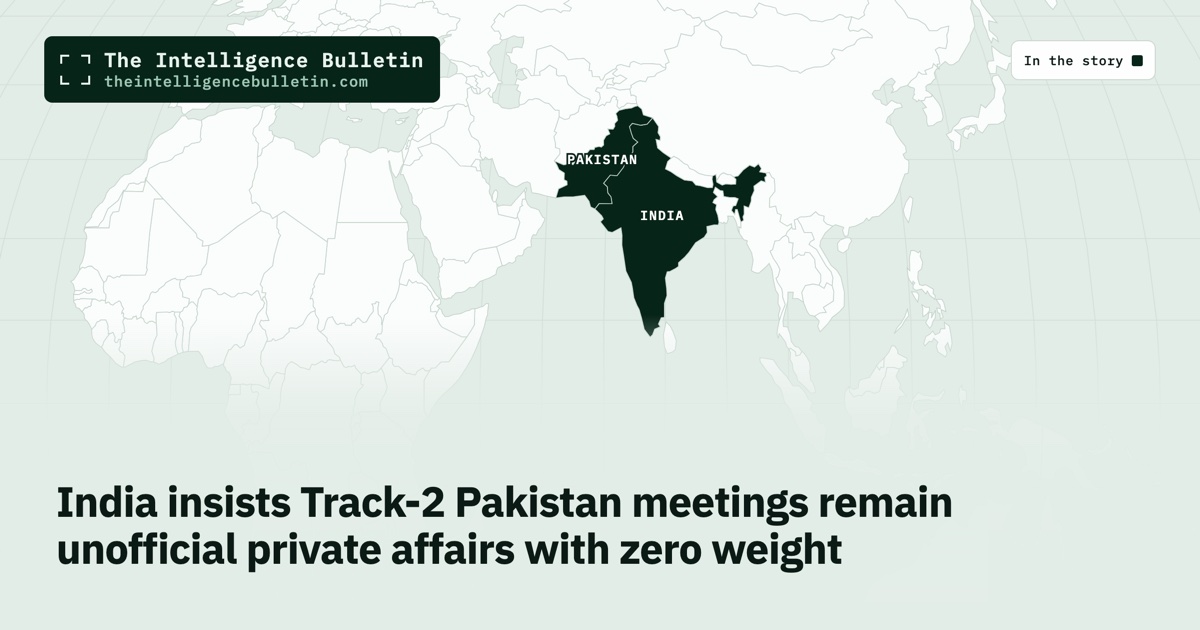
India insists Track-2 Pakistan meetings remain unofficial private affairs with zero weight

Map of the countries in the story: India insists Track-2 Pakistan meetings remain unofficial private affairs with zero weight
On June 29, 2026, in Victoria, Seychelles, Foreign Secretary Vikram Misri rejected media reports of back-channel and Track-2 talks with Pakistan. He stated that any such meetings involving retired officials or civil society figures are private events with no official Indian involvement or significance. Relations remain frozen after the 2025 Pahalgam attack and India’s subsequent military response.

One Story. Many Angles.

๐Ÿ‡ฎ๐Ÿ‡ณ
India
Moneycontrol
India rejects reports of backchannel and Track-2 talks with Pakistan: ‘We really take no congnisance’
Read →
๐Ÿ‡ฎ๐Ÿ‡ณ
India
ANI
We really take no cognisance: Foreign Secretary Vikram Misri rejects reports of Track-2 dialogue with Pakistan
Read →
๐Ÿ‡ฎ๐Ÿ‡ณ
India
India TV
India rejects official link to Colombo Track 2 dialogue involving Pakistan, calls it a private event
Read →

Perspective Analysis

Indiaโ€™s Foreign Secretary Vikram Misri delivered a pointed dismissal of media speculation about back-channel or Track-2 contacts with Pakistan, declaring in Victoria, Seychelles, on June 29, 2026, that New Delhi attaches no official weight to any such gatherings. The statement, delivered amid a complete freeze in formal bilateral ties, underscored that retired officials and civil society participants speak solely for themselves. All three major Indian outlets that covered the remarks relayed this core denial in near-identical language, reflecting a coordinated messaging environment where the governmentโ€™s position receives uniform amplification without deviation or added analysis.

The remarks followed recent reports claiming that unofficial meetings involving former diplomats, retired military officers, and other figures from both sides had occurred, including one on the sidelines of a security conference in Colombo. Misri addressed those claims directly, noting that dozens of similar private events take place worldwide on varied topics and carry nothing new or special. He stated explicitly that as far as the Government of India is concerned, there is no official participation, support, or involvement. Participants, whether retired diplomats, former military officials, or civil society members, represent only their own viewpoints and not those of New Delhi. The foreign secretary concluded that India takes no cognisance of these events and assigns them little value.

This stance arrives against the backdrop of relations that have remained frozen since the April 2025 Pahalgam attack, in which Pakistani state-sponsored terrorists killed 26 civilians in Jammu and Kashmir. India responded the following month with Operation Sindoor, striking terror infrastructure across Pakistan and Pakistan-occupied Kashmir. The only remaining operational channel is the hotline between the Directors General of Military Operations of the two countries. Formal diplomatic exchanges, trade links, and even overflight rights stand suspended. The Indus Waters Treaty has been kept in abeyance, a measure New Delhi tied to the principle that blood and water cannot flow together.

Moneycontrol framed its account of the rejection within the wider pattern of diplomatic and economic isolation between the two neighbours. The outlet noted the suspension of treaties and the fallout from terror incidents, presenting the foreign secretaryโ€™s comments as consistent with an environment where any form of engagement remains off the table. Its business-oriented lens highlighted the economic consequences of the prolonged standoff, including the absence of direct trade and the strategic implications of the water treatyโ€™s status.

ANI, functioning as a state-aligned wire service, led with Misriโ€™s verbatim remarks and supplied the most detailed transcription of his full explanation. The agency placed the denial in the context of the post-Pahalgam freeze and the earlier downgrade of ties after the 2019 abrogation of Article 370. By reproducing the foreign secretaryโ€™s words at length, ANI transmitted the governmentโ€™s position with minimal interpretive overlay, emphasising that private events organised by private parties hold no official character.

India TV focused on the specific Colombo gathering, describing it as a purely private affair with no official Indian link. The outlet stressed Misriโ€™s clarification that any Indian attendees participated in their personal capacities and that their views should not be read as reflecting government policy. It reiterated that New Delhi neither endorses nor attaches importance to such interactions, reinforcing the message that the reported meeting carried no diplomatic weight.

Across the three outlets, the reporting converged on the same facts and phrasing. No source explored potential implications of continued unofficial contacts, offered analysis of Pakistani reactions, or suggested any softening in New Delhiโ€™s approach. The uniformity illustrates how Indian media, whether commercially oriented or closely aligned with official channels, functions to reinforce the governmentโ€™s insistence that retired figures and civil society actors operate independently amid a total diplomatic shutdown.

The Takeaway

The episode leaves little room for ambiguity about Indiaโ€™s current posture. With formal channels limited to the military hotline and economic measures such as the suspended water treaty still in place, any future movement would require a significant shift in the underlying security conditions. Observers will watch whether similar reports of Track-2 activity resurface and how New Delhi responds if they do.
Share this story

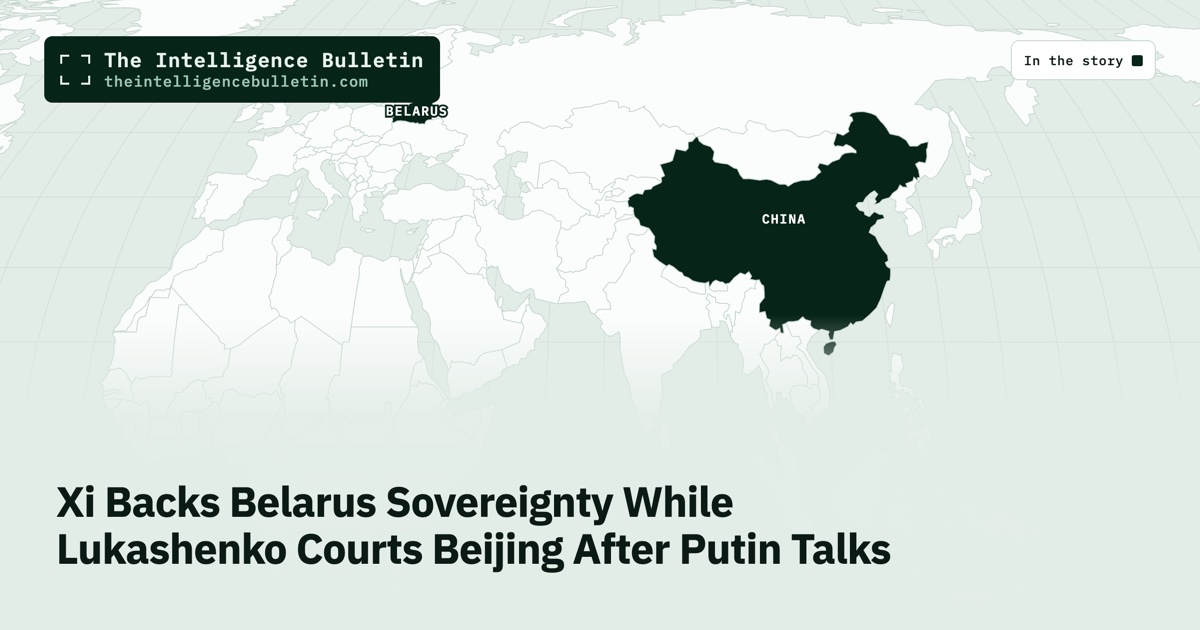
Xi Backs Belarus Sovereignty While Lukashenko Courts Beijing After Putin Talks

Map of the countries in the story: Xi Backs Belarus Sovereignty While Lukashenko Courts Beijing After Putin Talks
On June 29, 2026, Chinese President Xi Jinping met Belarusian President Aleksandr Lukashenko at Diaoyutai State Guesthouse in Beijing. Xi pledged support for Belarusian sovereignty and called the ties all-weather strategic partners at a historic high. Lukashenko sought expanded cooperation after recent talks with Vladimir Putin. The visit occurs amid Belarus’s role in the Ukraine conflict and efforts to diversify partnerships.

One Story. Many Angles.

๐Ÿ‡จ๐Ÿ‡ณ
China
People’s Daily
Xi meets Belarusian president
Read →
๐Ÿ‡บ๐Ÿ‡ฆ
Ukraine
Kyiv Post
Xi Meets Belarusian Leader Lukashenko in Beijing
Read →
๐Ÿ‡ท๐Ÿ‡บ
Russia
RT
RUSSIAN
Xi calls China and Belarus ‘iron friends’
Read →
๐Ÿ‡ฌ๐Ÿ‡ง
United Kingdom
BBC
RUSSIAN
Historic peak in relations and signal to Putin: Why Lukashenko met Xi Jinping in Beijing
“Historic peak in relations and signal to Putin”
Read →
๐Ÿ‡ฎ๐Ÿ‡น
Italy
Formiche
ITALIAN
China and Belarus, the strategic alliance in Putin’s name
Read →

Perspective Analysis

On June 29, 2026, Chinese President Xi Jinping hosted Belarusian President Aleksandr Lukashenko at the Diaoyutai State Guesthouse in Beijing and explicitly pledged support for Belarusian sovereignty, independence, and territorial integrity. The encounter, occurring one day after Lukashenkoโ€™s closed-door meetings with Vladimir Putin at the Valdai residence, exposed how the identical diplomatic language produces sharply divergent interpretations once filtered through national media lenses shaped by the Ukraine war.

Chinese state media presented the talks as routine high-level affirmation of an already elevated partnership. The Peopleโ€™s Daily English edition, drawing directly from the Xinhua readout, quoted Xi stating that China and Belarus โ€œare true friends who trust and support each other, good partners for common development and prosperity, and all-weather comprehensive strategic partners.โ€ It emphasized that bilateral ties have entered โ€œthe best period in history,โ€ highlighted solid political mutual trust, fruitful Belt and Road cooperation, and progress on key projects. Lukashenko was reported as valuing the relationship as an important support for Belarusian economic and social development and expressing readiness to strengthen strategic communication and expand cooperation areas. No mention appeared of Russia, Ukraine, or any regional security context; the coverage stayed strictly within the approved bilateral script of mutual benefit and global initiatives.

Ukrainian reporting immediately situated the same meeting inside the ongoing conflict. The Kyiv Post, citing AFP, described Lukashenko as a key Putin ally who allowed Russian forces to launch the 2022 invasion through Belarusian territory. The article noted that the visit followed Lukashenkoโ€™s recent Kremlin talks and recalled his 1994 grip on power, Belarusโ€™s hosting of Russian nuclear-capable missiles, and Kyivโ€™s accusations that Beijing secretly aids Moscow despite Chinaโ€™s self-described neutral stance. It added that Lukashenko last met Xi in August 2025 before attending a Beijing military parade. The framing positioned every China-Belarus contact as potentially relevant to Ukraineโ€™s security calculations.

Russian state outlets amplified the trilateral dimension. RT Russian reported that Xi called the two countries โ€œiron friendsโ€ whose relations had withstood international turbulence and reached a historic peak. The piece placed the Beijing stop explicitly after Lukashenkoโ€™s Valdai discussions with Putin and within a broader Asian tour involving high-level talks in several unspecified East and Southeast Asian states. It stressed the โ€œall-weather and comprehensive strategic partnershipโ€ language and quoted Xiโ€™s characterization of the friendship as only strengthening, underscoring coordinated positioning among Moscow, Minsk, and Beijing.

Western analysis went further, interpreting Xiโ€™s sovereignty pledge as a calculated signal. BBC Russian highlighted the phrase that China supports Belarus in protecting its national sovereignty, independence, and territorial integrity, then quoted independent Belarusian analyst Alexander Klaskovsky arguing the statement served primarily as a warning to Putin against dragging Minsk deeper into the war. Klaskovsky noted Chinaโ€™s interest in preserving Belarus as a transit route for rail exports to the European market and as the site of the โ€œGreat Stoneโ€ industrial park, both of which would suffer if Belarus became a combat zone. The article also referenced Lukashenkoโ€™s recent statements rejecting deeper involvement, Ukrainian President Volodymyr Zelenskyโ€™s demands regarding Belarusian relay stations used for drone strikes, and the pattern of Lukashenko seeking counterweights to Russian economic dependence.

Italian strategic commentary connected the dots even more explicitly to European security concerns. Formiche described the alliance as operating โ€œin the name of Putin,โ€ framing the Beijing visit as the first leg of Lukashenkoโ€™s post-Valdai Asian tour aimed at closing high-level projects. It quoted Xiโ€™s assurance that the two sides are โ€œtrue friendsโ€ who have passed the test of international vicissitudes and noted Lukashenkoโ€™s portrayal of China as an unconditional strategic partner. The piece linked the timing to Moscowโ€™s reported pressure on Minsk for greater war involvement, Zelenskyโ€™s accusations, and Lukashenkoโ€™s repeated denials, while recalling prior 2025 visits including the September military parade attended alongside Putin and Kim Jong-un.

Across these accounts, the shared factual coreโ€”Xiโ€™s verbatim pledge on sovereignty and the characterization of ties at a historic highโ€”reveals a consistent pattern. Outlets aligned with the conflict parties or Western perspectives treat every Beijing-Minsk exchange as a potential lever in the Russia-Ukraine standoff, whether as evidence of continued Russian leverage, a Chinese attempt to keep Belarus out of direct fighting, or part of Minskโ€™s balancing act. Chinese coverage, by contrast, confines itself to the positive bilateral narrative and Belt and Road advancement.

The Takeaway

Lukashenkoโ€™s immediate itinerary after Beijing will indicate whether the diversification effort yields concrete economic or diplomatic gains. Observers will watch for any follow-on statements from Minsk regarding transit infrastructure or further distancing from direct combat roles, as well as any visible shifts in Chinese economic commitments to the Great Stone park or rail corridors.


Share this story

Monaco’s First Terror Blast Hits Sanctioned Ukrainian Oligarch Fleeing Suspect Crosses to France

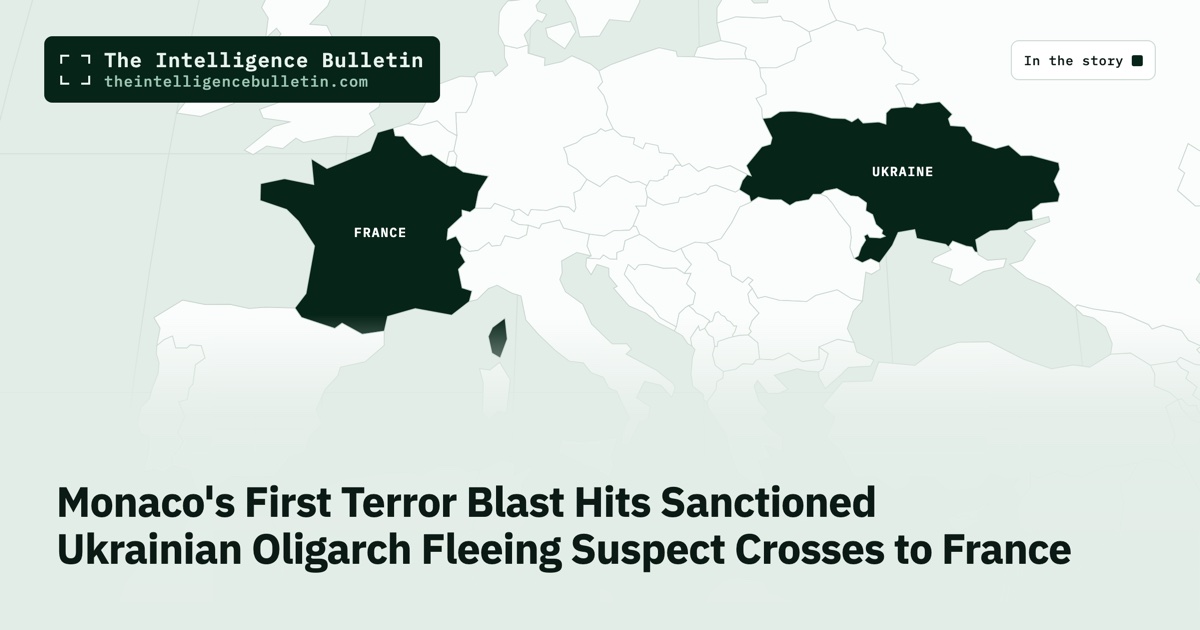
Map of the countries in the story: Monaco's First Terror Blast Hits Sanctioned Ukrainian Oligarch Fleeing Suspect Crosses to France
On June 29, 2026, a backpack bomb exploded at a residential building entrance on Rue Reverend Pรจre Louis Frolla in Monaco, injuring Ukrainian-born businessman Vadim Ermolaev, his wife or partner, and their 13-year-old son. Authorities called it Monaco’s first terrorist attack, with a suspect captured on CCTV leaving the device before fleeing on foot to neighboring France. Ermolaev, founder of the Alef Group and under Ukrainian sanctions since 2023 for Crimea business ties, was among three hospitalized; Prince Albert II condemned the blast.

One Story. Many Angles.

๐Ÿ‡ท๐Ÿ‡บ
Russia
RIA Novosti
RUSSIAN
Crossed the line. In France they attacked Zelensky after the explosion in Monaco
“ะŸะตั€ะตัˆะตะป ั‡ะตั€ั‚ัƒ. ะ’ะพ ะคั€ะฐะฝั†ะธะธ ะฝะฐะฑั€ะพัะธะปะธััŒ ะฝะฐ ะ—ะตะปะตะฝัะบะพะณะพ ะฟะพัะปะต ะฒะทั€ั‹ะฒะฐ ะฒ ะœะพะฝะฐะบะพ”
Read →
๐Ÿ‡ต๐Ÿ‡ฑ
Poland
Rzeczpospolita
POLISH
First terrorist attack in Monaco history. Ukrainian oligarch injured
“Pierwszy w historii Monako zamach terrorystyczny. Ucierpiaล‚ ukraiล„ski oligarcha”
Read →
๐Ÿ‡ซ๐Ÿ‡ท
France
Le Dauphinรฉ Libรฉrรฉ
FRENCH
Monaco. Booby-trapped package, injured Ukrainian oligarch, suspect on the runโ€ฆ what we know about the explosion
“Monaco. Colis piรฉgรฉ, oligarque ukrainien blessรฉ, suspect en fuiteโ€ฆ ce que lโ€™on sait de lโ€™explosion”
Read →
๐Ÿ‡ฌ๐Ÿ‡ง
United Kingdom
Daily Express
Who is Vadim Ermolaev? Monaco bombing critically injure billionaire
Read →
๐Ÿ‡ฆ๐Ÿ‡ท
Argentina
Infobae
SPANISH
Terrorist attack in the center of Monaco: a package bomb left three injured
“Atentado terrorista en el centro de Mรณnaco: un paquete bomba dejรณ a tres heridos”
Read →

Perspective Analysis

The explosion that rocked a quiet residential street in Monaco on the evening of June 29, 2026, marked the first time the ultra-secure principality had experienced anything resembling a terrorist attack, shattering its reputation as one of Europeโ€™s safest enclaves. A device concealed in a backpack or parcel detonated at the entrance of a building on Rue Reverend Pรจre Louis Frolla, injuring Ukrainian-born businessman Vadim Ermolaev, his partner, and their 13-year-old son. Two adults were left in critical condition while the teenager suffered lighter injuries; all three were rushed to hospitals in nearby Nice. Authorities quickly labeled the blast an intentional act, with CCTV footage capturing a suspect depositing the bag before fleeing on foot across the border into the French commune of Beausoleil.

Background details quickly filled in around the incident. Ermolaev, founder of the Alef Group conglomerate with interests in real estate, agribusiness, and alcohol trade, had been placed under Ukrainian sanctions in December 2023 by President Volodymyr Zelenskyโ€™s National Security and Defence Council. The measures targeted his continued commercial activities in Russian-occupied Crimea, a detail that would later shape divergent international interpretations. Monacoโ€™s Minister of State Christophe Mirmand described the event as unprecedented in the principalityโ€™s history, while Prince Albert II issued a statement condemning the โ€œodious crimeโ€ and reaffirming the territoryโ€™s commitment to security. French and Monegasque police coordinated a manhunt, deploying dozens of officers and even a helicopter to secure the area, with four additional people treated for shock or glass-related cuts.

Russian state media outlet RIA Novosti placed the attack squarely within a geopolitical narrative, emphasizing French domestic backlash against Kyiv. It quoted Florian Philippot, leader of the far-right Patriots party, who accused Zelenskyโ€™s regime of having โ€œcrossed the lineโ€ and now bringing โ€œbloody attacksโ€ to European shores. Philippot called for an immediate halt to funding and arms supplies for Ukraine and criticized the planned participation of Ukrainian fighters in Franceโ€™s Bastille Day parade. The piece framed the Monaco blast as evidence that the conflict had spilled beyond its usual boundaries, citing BFMTV and Le Figaro reports while noting Ermolaevโ€™s Cypriot passport and past Forbes listings among Ukraineโ€™s wealthiest individuals. This angle stood apart from more event-focused coverage elsewhere by weaponizing the incident to fuel anti-Zelensky sentiment within French politics.

Polish daily Rzeczpospolita stressed the historic nature of the attack while delving into Ermolaevโ€™s sanctions history tied to Crimea trade. It reported the blast as Monacoโ€™s first terrorist incident, detailing how the deviceโ€”packed with bolts and metal buckshot according to some accountsโ€”left a couple in their fifties and a 13-year-old boy hospitalized, with the adults in critical condition. The outlet highlighted the victimโ€™s background as an oligarch active in agribusiness and real estate, sanctioned for maintaining operations in occupied territory, and noted Monacoโ€™s appeal to wealthy residents from Russia and Ukraine due to its tax advantages. Polish reporting thus foregrounded the Eastern European dimensions of Ukrainian business figures entangled in the Russia-Ukraine conflict, distinguishing it from purely local or biographical treatments.

French regional paper Le Dauphinรฉ Libรฉrรฉ delivered the most granular on-the-ground timeline, focusing on the mechanics of the response. It described the explosion occurring around 9 p.m. near Place des Moulins, the suspect tracked via surveillance from Monaco into Beausoleil, and the mobilization of over eighty public safety agents plus fifty firefighters, including French reinforcements. Victims were transported to CHU Pasteur and Lenval childrenโ€™s hospital in Nice, while Prince Albertโ€™s condemnation and Mirmandโ€™s press remarks underscored the unprecedented nature of the event. The paper avoided broader geopolitical framing, instead emphasizing investigative steps such as the planned Tuesday press conference by the prosecutor general and the need to examine the victimsโ€™ personal networks for potential threats.

British tabloid Daily Express centered its coverage on Ermolaevโ€™s personal biography and business empire. It portrayed the Cypriot-passport holder as a prominent real-estate developer linked to the Alef Group since 1997, with wealth estimates varying widely over time, and noted his renunciation of Ukrainian citizenship in favor of international protection. The piece highlighted the sanctions imposed for alleged Crimea dealings and positioned the bombing as a dramatic episode in the life of a wealthy expatriate, complete with details on the backpackโ€™s contents and the critical condition of the victims. This human-interest and personality-driven approach contrasted with the security-procedural emphasis in French reporting.

Argentine outlet Infobae presented the story primarily as a rare terrorist incident in a European microstate, with minimal emphasis on Ukrainian politics or the victimโ€™s wealth. It reported the basic factsโ€”the timing near 9 p.m. local time, three injured including the Ukrainian businessman, the suspectโ€™s flight into France, and heightened securityโ€”while noting Prince Albertโ€™s condemnation and the cross-border police cooperation. The piece framed the event as distant European security news, citing AP and EFE wires, without the sanctions context or oligarch profile that dominated other outlets.

Across these accounts, a shared factual core emerges: a targeted parcel bomb in Europeโ€™s safest enclave, with a suspect fleeing into France and victims tied to a sanctioned Ukrainian figure. Yet proximity, language, and national stakes shaped the foregrounding. Russian outlets linked the blast to anti-Kyiv sentiment in France; Polish coverage tied it to regional tensions over Crimea; French local journalism supplied operational detail; British tabloids profiled the victim; and Latin American reporting kept it at armโ€™s length as generic terror news. This divergence illustrates how media lenses refract the same event through distinct prisms of geopolitics, security, and biography.

The Takeaway

What to watch next includes the outcome of the ongoing manhunt, any official confirmation of the victimsโ€™ identities by Monegasque authorities, and whether the investigation uncovers connections to Ermolaevโ€™s business activities or personal networks. The prosecutor generalโ€™s scheduled press conference and potential intelligence sharing between French and Monegasque services will likely clarify motives, while reactions from Ukrainian and Russian officials could further amplify or counter the competing narratives already circulating.


Share this story

Iran Calls $6B Qatar Release First Payoff of US Deal, No US Reply Reported

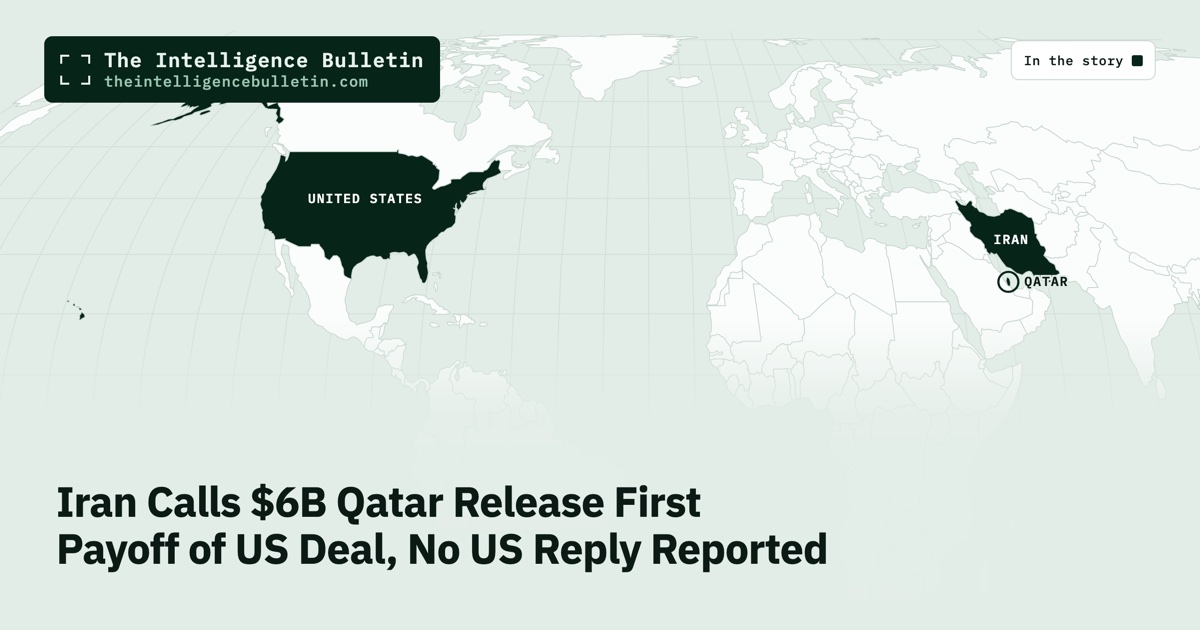
Map of the countries in the story: Iran Calls $6B Qatar Release First Payoff of US Deal, No US Reply Reported
Iranian President Masoud Pezeshkian stated in Tehran on June 29 that $6 billion of Iran’s $12 billion in frozen funds held in Qatar should be released under a recent memorandum with the United States. He described follow-up efforts for the remainder and called the US agreement a victory that had lifted oil and petrochemical sanctions. The June 18 MOU also addressed ending hostilities, lifting a naval blockade, and reopening the Strait of Hormuz. Reports cite Iranian state media with no immediate US or Qatari response included.

One Story. Many Angles.

๐Ÿ‡ฌ๐Ÿ‡ง
United Kingdom
Middle East Monitor
Iran says $6B of its funds in Qatar should be released under US deal
Read →
๐Ÿ‡ช๐Ÿ‡ฌ
Egypt
Egypt Independent
Iranian President says $6 billion of assets frozen in Qatar will be returned
Read →
๐Ÿ‡ฌ๐Ÿ‡ง
United Kingdom
Middle East Online
Iran says $6 billion of Iranian frozen assets in Qatar to be released
Read →

Perspective Analysis

The coordinated coverage across three regional outlets of Iranian President Masoud Pezeshkianโ€™s June 29 remarks reveals how tightly the narrative of asset release remains anchored to official Tehran statements, positioning the $6 billion transfer as the first tangible dividend of the June 18 memorandum of understanding with the United States while leaving unanswered questions about implementation, Qatari banking mechanics, and American confirmation entirely unaddressed.

Pezeshkianโ€™s comments, delivered during meetings with senior clerics in Qom and reported via Iranian state media, framed half of the $12 billion in frozen Iranian funds held in Qatar as due for immediate release under the recent agreement. He noted that follow-up efforts continued for the balance and tied the development directly to the lifting of oil and petrochemical sanctions. The underlying June 18 MOU had already outlined steps to end hostilities, lift a U.S. naval blockade on Iranian ports, and reopen the Strait of Hormuz for global energy transit. No immediate reaction emerged from Washington or Doha, underscoring the one-sided information flow that has characterized reporting on this diplomatic thread.

Middle East Monitor presented the announcement in the clearest terms of Iranian diplomatic success. The outlet quoted Pezeshkian describing the memorandum as โ€œa great victory for the Iranian peopleโ€ and linked the sanctions relief explicitly to the dealโ€™s strategic gains, including the prospective reopening of Hormuz. It situated the $6 billion claim within the broader context of the June 18 understanding and cited ISNA as the source, reinforcing the narrative that asset access represented concrete progress rather than a new point of friction. This emphasis on positive outcomes aligns with the publicationโ€™s regional focus on highlighting diplomatic shifts that ease pressure on Iran.

Egypt Independent, drawing on CNN reporting, adopted slightly more measured language while still conveying the Iranian position as near-certain. It reported that half of the frozen assets โ€œwill be returned,โ€ referenced the MOUโ€™s explicit clause requiring Washington to make frozen funds โ€œfully available for useโ€ upon implementation, and noted that CNN had reached out to the White House for comment. The piece also recorded Iranโ€™s longstanding insistence that asset returns form an integral part of any follow-on process. By including the verification step absent from the other accounts, the outlet introduced a minimal layer of journalistic distance while remaining tethered to the same core Iranian announcement.

Middle East Online delivered the most concise and neutral summary, focusing on the numerical claim and the sanctions-lifting effect of the interim agreement. It stated that after the U.S. deal lifted oil and petrochemical sanctions, $6 billion out of the $12 billion would be released and returned, citing Iranian state media without additional interpretive framing or references to Hormuz or victory rhetoric. This wire-style approach kept attention squarely on the factual content of Pezeshkianโ€™s statement and the immediate context of the June 18 memorandum.

Across the three accounts, the absence of any Qatari banking detail, independent confirmation, or U.S. rebuttal stands out as the dominant shared characteristic. All three pieces treat the Iranian framing of the asset release as the primary newsworthy development, presenting it as the opening payoff of the June 18 understanding rather than an unresolved demand. This convergence suggests that, at this early stage, the story remains driven by official Tehran messaging, with international outlets functioning primarily as conduits for that perspective.

The reporting also leaves several operational questions open. The precise mechanism for transferring the funds from Qatari institutions, any conditions tied to the MOUโ€™s implementation clause, and the timeline for the remaining $6 billion receive no elaboration. Pezeshkianโ€™s reaffirmation of Iranโ€™s nuclear stanceโ€”that activities would remain within declared policies and that Tehran seeks no nuclear weaponsโ€”appeared in one account but received no cross-outlet scrutiny or linkage to the asset issue.

The Takeaway

Looking ahead, observers will watch for any formal U.S. acknowledgment of the claimed release, signals from Qatar on banking procedures, and whether the asset transfer materializes as the first step in broader sanctions relief or remains a point of continued diplomatic negotiation. The pattern established in these initial reports indicates that subsequent developments will likely continue to be filtered through the same narrow set of official Iranian statements unless Washington or Doha choose to engage publicly.


Share this story

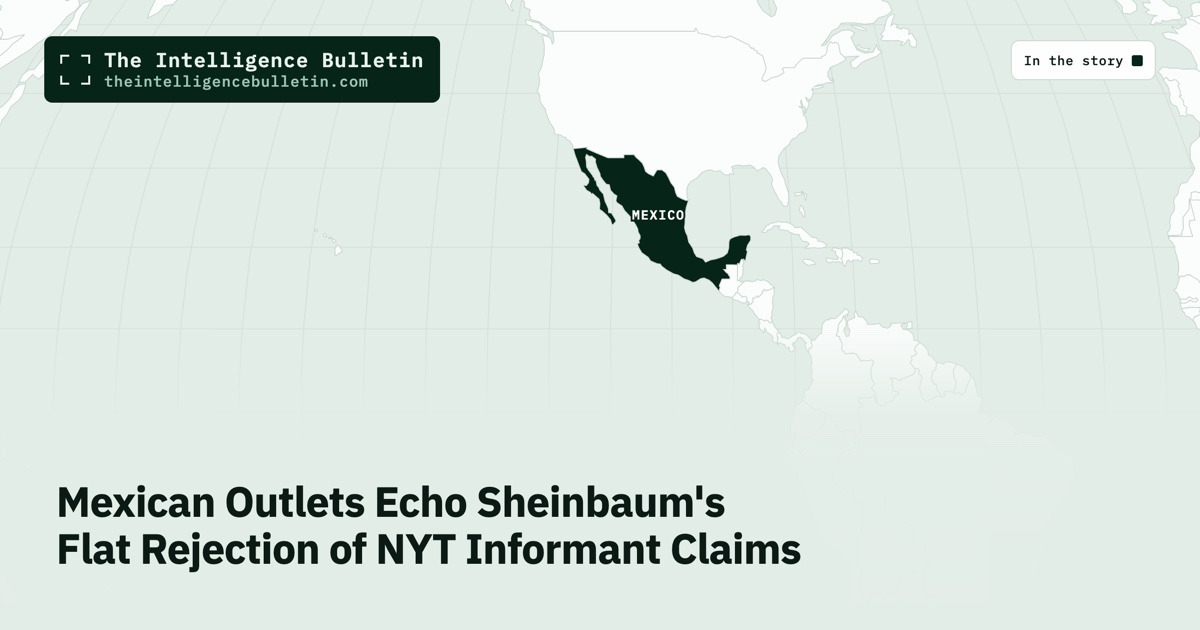
Mexican Outlets Echo Sheinbaum’s Flat Rejection of NYT Informant Claims

Map of the countries in the story: Mexican Outlets Echo Sheinbaum's Flat Rejection of NYT Informant Claims
On June 29, 2026, Mexican President Claudia Sheinbaum stated in Mexico City that her government has no information confirming reports of Morena party members or officials acting as informants to US authorities on alleged narco-political links. She criticized a New York Times article based on an anonymous source and noted denials from governors including Alfonso Durazo of Sonora. The comments follow recent US media reports on Justice Department investigations into Mexican politicians’ alleged ties to organized crime.

One Story. Many Angles.

๐Ÿ‡ฒ๐Ÿ‡ฝ
Mexico
El Heraldo de Saltillo
SPANISH
Sheinbaum Rules Out Morena Members as EU Informants
“Descarta Sheinbaum que haya morenistas informantes de EU”
Read →
๐Ÿ‡ฒ๐Ÿ‡ฝ
Mexico
Noticaribe
SPANISH
Sheinbaum Rejects Morena Members Collaborating as US Informants on Officials’ Narco Ties
“Rechaza Sheinbaum que integrantes de Morena colaboren como informantes de Estados Unidos sobre vรญnculos de funcionarios con el narco”
Read →
๐Ÿ‡ฒ๐Ÿ‡ฝ
Mexico
Zรณcalo
SPANISH
Sheinbaum Dismisses NYT Investigation on Morena Informants for the US
“Desestima Sheinbaum investigaciรณn del NYT sobre morenistas informantes de EU”
Read →

Perspective Analysis

Mexican media coverage of President Claudia Sheinbaumโ€™s June 29, 2026, dismissal of a New York Times report reveals a tightly unified domestic narrative that prioritizes official reassurance over independent scrutiny of the underlying allegations. Three regional outletsโ€”El Heraldo de Saltillo, Noticaribe, and Zรณcaloโ€”published near-identical dispatches from Agencia Reforma, each framing Sheinbaumโ€™s comments as a straightforward rejection of claims that Morena-linked figures were supplying information to U.S. authorities about alleged narco-political ties. This convergence underscores how Mexican reporting has consolidated around presidential statements amid heightened bilateral frictions over sovereignty and cross-border law-enforcement probes.

The episode stems from a New York Times article published over the preceding weekend that relied on an anonymous source to suggest at least some Morena-affiliated politicians had engaged with U.S. Justice Department or DEA contacts. Sheinbaum addressed the matter during her morning press conference in Mexico City, stating unequivocally that the federal government possessed no confirming information. โ€œNo tenemos nosotros ninguna informaciรณn de que nadie estรฉ cooperando con el Gobierno de Estados Unidos o el Departamento de Justicia para proporcionar informaciรณn,โ€ she said. โ€œยฟDe quรฉ, ademรกs? ยฟCรณmo vamos a opinar sobre algo que no tenemos nosotros ningรบn conocimiento? Ninguno.โ€ She further questioned the journalistic standards of the report, noting its dependence on a single unidentified source and contrasting it with public denials already issued by Sonora Governor Alfonso Durazo.

Durazoโ€™s letter rejecting the allegations received explicit mention across the coverage, serving as concrete rebuttal evidence cited by the president. Sheinbaum also referenced broader recent U.S. media reporting on Justice Department investigations into possible links between Mexican politicians and organized crime. Governors Amรฉrico Villarreal of Tamaulipas and Durazo were named as having publicly rejected any such scrutiny. The president emphasized that without official Mexican data supporting the claims, speculation about internal Morena divisions remained unfounded.

El Heraldo de Saltillo, a northern regional daily serving Coahuila audiences, presented the story under the headline โ€œDescarta Sheinbaum que haya morenistas informantes de EU.โ€ Its treatment stayed faithful to the wire text, opening with the presidentโ€™s assurance that no Morena militants or party officials were known to be cooperating with U.S. authorities on narcopolitician matters. The piece included her critique of the anonymous sourcing and her reference to Durazoโ€™s letter, closing with context on recent U.S. reports about political-crime linkages. Local framing remained minimal; the outlet positioned the denial as authoritative reassurance for readers in a border-adjacent state sensitive to bilateral security dynamics, without introducing independent verification or opposition commentary.

Noticaribe, based on Mexicoโ€™s Caribbean coast, adopted a headline that foregrounded the narco dimension: โ€œRechaza Sheinbaum que integrantes de Morena colaboren como informantes de Estados Unidos sobre vรญnculos de funcionarios con el narco.โ€ The body text mirrored the Reforma copy almost verbatim but added a slightly expanded reference to the New York Times piece, noting that it alleged conversations involving at least a dozen governors and legislators. The outlet recorded that both the Mexican government and the DEA had declined to comment on the original report. This phrasing subtly reinforced the official Mexican stance that the allegations lacked substantiation, while situating the story within ongoing diplomatic tensions over unilateral U.S. actions. Like its counterparts, Noticaribe offered no additional sourcing from U.S. officials or domestic critics.

Zรณcalo, another Coahuila-focused publication, headlined the piece around the New York Times origin itself: โ€œDesestima Sheinbaum investigaciรณn del NYT sobre morenistas informantes de EU.โ€ Its version of the wire text was the most faithful to the original Reforma dispatch, reproducing Sheinbaumโ€™s full quotes on the absence of information and her pointed rhetorical question about how a leading global newspaper could publish a story resting solely on โ€œme dijeron, una fuente, quiรฉn sabe quiรฉn.โ€ The outlet also carried the closing reference to Durazo and Villarrealโ€™s public rejections. Its emphasis on the foreign provenance of the claim aligned with the other two outletsโ€™ choice to center the presidential rebuttal rather than explore the allegationsโ€™ potential substance.

Across the three publications, the absence of countervailing perspectives is striking. No statements from opposition parties, independent analysts, or U.S. sources appear. The reporting treats the anonymous sourcing as inherently weak and elevates Sheinbaumโ€™s insistence on evidentiary standards as the decisive response. This uniformity reflects a broader pattern in which Mexican outlets relay official positions on sensitive sovereignty issues with minimal deviation, particularly when external media introduce allegations involving ruling-party figures and organized crime.

The consistent reliance on a single wire service further narrows the interpretive frame. Each outletโ€™s headline variationsโ€”whether highlighting the denial, the narco angle, or the New York Timesโ€”function as surface-level differentiation while the substantive content remains interchangeable. Readers in Saltillo, Cancรบn, or Torreรณn therefore encounter essentially the same account: the federal government knows nothing, named governors have denied involvement, and the original report rests on insufficient evidence.

The Takeaway

This approach carries implications for how bilateral tensions are communicated domestically. With U.S. investigations into Mexican political figures continuing to generate headlines, the Mexican pressโ€™s focus on presidential reassurance may shape public perception more toward defense of national institutions than toward examination of possible misconduct. Observers will want to track whether subsequent reporting introduces greater source diversity or whether the pattern of echoing official denials persists as additional U.S. media accounts surface in the weeks ahead.


Share this story

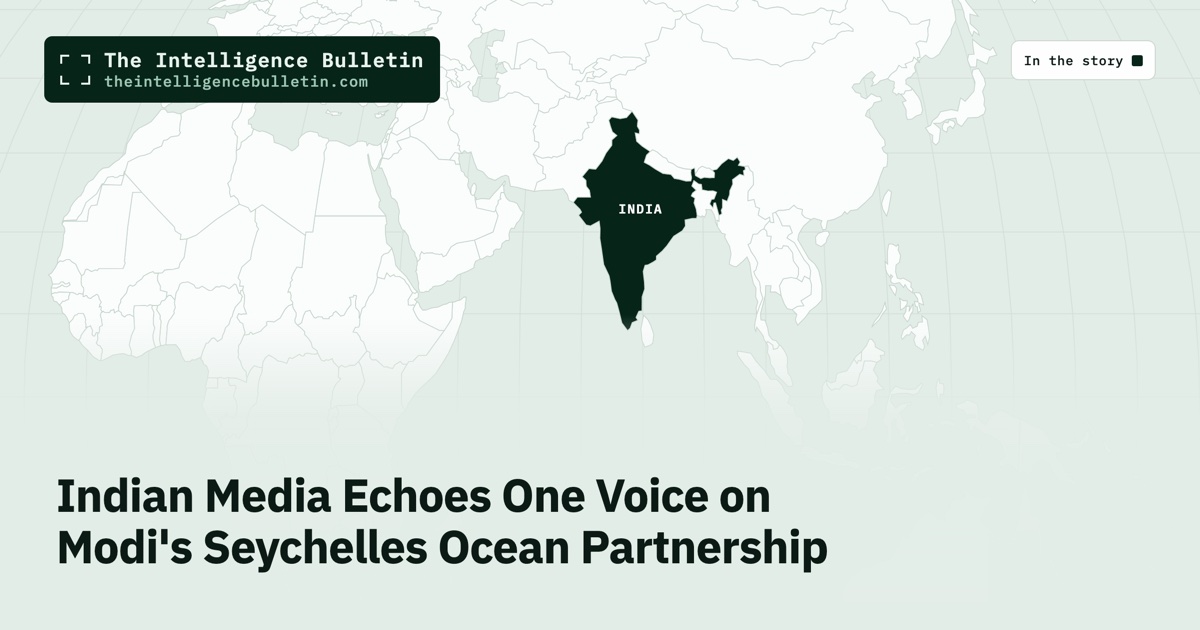
Indian Media Echoes One Voice on Modi’s Seychelles Ocean Partnership

Map of the countries in the story: Indian Media Echoes One Voice on Modi's Seychelles Ocean Partnership
Indian Prime Minister Narendra Modi visited Seychelles on June 28, 2026, holding talks with President Patrick Herminie in Victoria. The leaders signed an MoU on India’s Unified Payments Interface and other cooperation agreements. Modi received the ‘Guardian of the Blue Horizon’ award and attended National Day events as Guest of Honour, stressing the Indian Ocean as a shared home of opportunity and responsibility.

One Story. Many Angles.

๐Ÿ‡ฎ๐Ÿ‡ณ
India
Daily Excelsior
India’s vision is to make Indian Ocean an Ocean of Opportunity: PM Modi in Seychelles
Read →
๐Ÿ‡ฎ๐Ÿ‡ณ
India
New Kerala
PM Modi at Seychelles National Day as Guest of Honour
Read →
๐Ÿ‡ฎ๐Ÿ‡ณ
India
Moneycontrol
PM Modi announces UPI MoU as India, Seychelles deepen digital, economic cooperation
Read →
๐Ÿ‡ฎ๐Ÿ‡ณ
India
The Economic Times
Indian Ocean is our shared home: PM Modi highlights India-Seychelles ties after signing key MoUs
Read →
๐Ÿ‡ฎ๐Ÿ‡ณ
India
Pudhari
MARATHI
PM Modi Seychelles visit: Let’s make Indian Ocean Ocean of Opportunity; PM Narendra Modi receives Seychelles highest civilian honour
Read →

Perspective Analysis

Indian media outlets across the spectrum presented a remarkably consistent portrayal of Prime Minister Narendra Modi’s June 28, 2026, visit to Seychelles, drawing almost exclusively from official Indian government statements and wire services such as PTI and ANI. The coverage uniformly highlighted delegation-level talks with President Patrick Herminie in Victoria, the signing of an MoU on India’s Unified Payments Interface, broader agreements on digital, economic, and connectivity cooperation, and Modi’s receipt of the “Guardian of the Blue Horizon” award for environmental leadership. This alignment left little room for independent analysis or perspectives from Seychelles itself, resulting in a singular narrative centered on India’s Vision MAHASAGAR and the framing of the Indian Ocean as a shared space of opportunity and responsibility.

Daily Excelsior opened its report by foregrounding Modi’s statement that India envisions an Indian Ocean where maritime security pairs with economic prosperity and partnerships rest on mutual respect rather than size. The outlet described the review of bilateral cooperation during talks with Herminie and quoted Modi directly on the ocean as “our shared home” whose security, sustainability, and prosperity constitute a joint responsibility. It placed the visit within India’s longstanding ties with Seychelles as a maritime neighbor and referenced the MAHASAGAR vision without additional context or local reaction.

New Kerala emphasized the ceremonial dimension, noting that Modi became the first Indian prime minister to attend Seychelles National Day celebrations marking 50 years of independence as Guest of Honour. The report detailed the participation of an Indian marching contingent with Navy and Army teams, an Indian Naval band, and the docking of INS Tarkash and INS Ikshak at Port Victoria. It drew on Ministry of External Affairs statements to cover discussions on health, education, capacity building, maritime security, and challenges such as illegal fishing and drug trafficking, while underscoring satisfaction with progress under India’s Special Economic Package.

Moneycontrol placed the UPI MoU at the center of its account, presenting it as a concrete outcome of efforts to deepen digital cooperation. The outlet quoted Modi welcoming the agreement and linking it to broader economic resilience, future-ready collaboration, and the use of digital public infrastructure to bridge distances. It also referenced the historic timing of the visit coinciding with 50 years of Seychelles independence and diplomatic relations, framing technology as a bridge for people-to-people welfare without venturing beyond the official announcements.

The Economic Times led with the rhetorical core of the visit, quoting Modi on the Indian Ocean as “our shared home” and the foundation of the MAHASAGAR vision. The report listed multiple MoUs witnessed by the leaders, including those covering UPI implementation, healthcare, banking, agriculture, Exim Bank, and space exploration. It noted Modi’s conferment of the “Guardian of the Blue Horizon” award, which he dedicated to nations addressing climate change, and referenced the handover of a fast patrol vessel along with ambulances and other equipment to support maritime surveillance.

Pudhari, reporting in Marathi, incorporated the award detail alongside the call to transform the Indian Ocean into an “ocean of opportunity.” It recorded that Modi has now received highest civilian honors from 34 countries and described the formal guard of honor at State House before the bilateral meeting. The outlet echoed the emphasis on exploring new industrial opportunities and enhancing connectivity while noting the environmental focus of the award in the context of climate action and sustainable development.

Across these five outlets, the reporting converged on the same set of official talking points: the shared-home metaphor, the UPI agreement as emblematic of digital ties, multiple cooperation instruments, the environmental honor, and references to 50-year milestones. Economic Times and Daily Excelsior leaned into the rhetorical flourishes drawn from Modi’s statements, while Moneycontrol isolated the payments technology milestone and New Kerala spotlighted the National Day guest role. Pudhari added the specific civilian award context suited to its regional readership. No outlet incorporated reactions from Seychelles officials beyond the joint proceedings, local public sentiment, or alternative regional viewpoints, treating the visit instead as a straightforward extension of Delhi’s strategic messaging.

This uniformity reflects a broader pattern in which Indian coverage of high-level diplomatic engagements in the Indian Ocean region amplifies government-sourced material with minimal deviation or external sourcing. The outlets, spanning national dailies, business platforms, and regional publications, functioned in this instance as parallel channels for the same narrative rather than distinct interpretive lenses. The absence of counterbalancing details from Victoria or competing analyses leaves readers with an unvarnished projection of partnership framed entirely through Indian priorities.

The Takeaway

Observers will watch for the practical rollout of the signed MoUs, particularly the UPI integration and any follow-up projects under the Special Economic Package, as indicators of whether the visit yields measurable outcomes in digital connectivity and capacity building. Subsequent reporting may also track how these bilateral steps intersect with wider regional maritime initiatives.


Share this story