US Judge Jails Self-Exiled Chinese Tycoon Guo for Preying on Democracy Seekers

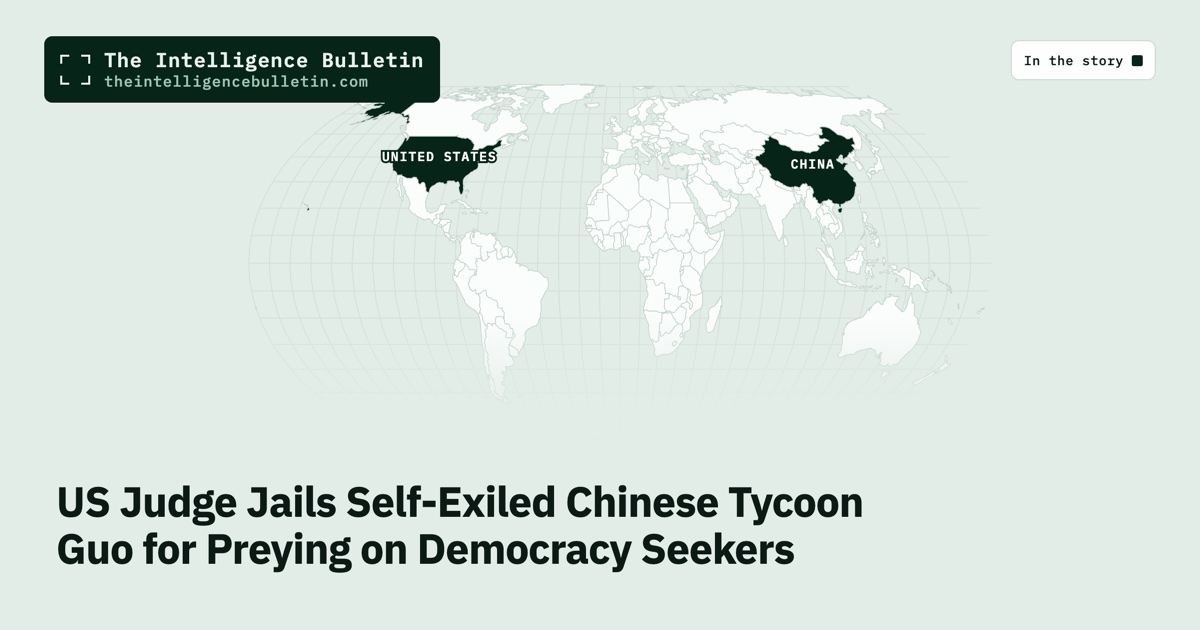
Map of the countries in the story: US Judge Jails Self-Exiled Chinese Tycoon Guo for Preying on Democracy Seekers
On June 29, 2026, a federal judge in Manhattan sentenced Chinese businessman Guo Wengui, also known as Miles Guo, to 30 years in prison after his conviction on racketeering, fraud and money laundering charges. Prosecutors said he raised more than $1 billion from online followers by posing as a critic of the Chinese Communist Party and used the funds for a lavish lifestyle. The judge ordered him to forfeit nearly $889 million and criticized him for preying on supporters seeking democracy in China. Guo maintains his innocence and plans to appeal.

One Story. Many Angles.

đŸ‡ș🇾
United States
Newsweek
Guo Wengui: Beijing Responds to US Jailing CCP Critic With Trump Links
Read →
đŸ‡ș🇾
United States
New York Post
Chinese NYC scammer Miles Guo learns fate for stunning $1.3B fraud
Read →
đŸ‡ș🇾
United States
NPR
Chinese billionaire Guo Wengui gets 30 years in U.S. prison for fraud conviction
Read →
🇾🇬
Singapore
The Business Times
Exiled Chinese tycoon gets 30 years in prison for billion-dollar fraud
Read →
đŸ‡ŻđŸ‡”
Japan
The Asahi Shimbun
Self-exiled Chinese billionaire Guo Wengui gets 30 years in US prison for fraud conviction
Read →

Perspective Analysis

The sentencing of Guo Wengui on June 29, 2026, in a Manhattan federal courtroom crystallized a straightforward verdict on a massive financial crime: a self-exiled Chinese businessman who built an empire by courting followers with promises of democratic change in China instead diverted more than $1 billion into a lifestyle of yachts, mansions and luxury vehicles. Judge Analisa Torres explicitly framed the case as one of predation on those hopes, ordering a 30-year prison term, nearly $889 million in forfeiture and restitution that reflected the breadth of losses suffered by over 1,000 victims worldwide. Across American, Singaporean and Japanese coverage, the story registered not as a geopolitical clash between Washington and Beijing but as a domestic fraud prosecution grounded in jury findings, victim testimony and detailed evidence of deception.

Guo, also known as Miles Guo or Ho Wan Kwok, fled China in 2014 amid anti-corruption scrutiny and arrived in the United States by 2015. He positioned himself as a vocal critic of the Chinese Communist Party, launching media ventures and membership programs that attracted supporters eager to back efforts against Beijing. Prosecutors described how those platforms—GTV Media Group, the Himalaya Farm Alliance and the Himalaya Exchange among them—served as vehicles for unregistered securities offerings and sham investments between 2018 and 2023. Funds raised from hundreds of thousands of followers financed an extravagant existence that included a 152-foot superyacht, a $26 million New Jersey estate, a Central Park-overlooking penthouse and high-end automobiles such as a $1 million Lamborghini. The jury convicted him last year on nine of 12 counts including racketeering conspiracy, fraud and money laundering. Torres noted that Guo showed no remorse, instead insisting his conduct caused no harm, and had at times directed supporters to intimidate critics.

Newsweek stood apart by centering Beijing’s immediate diplomatic reaction and Guo’s documented ties to American political figures. Chinese Foreign Ministry spokesperson Guo Jiakun reiterated that Guo remained a fugitive wanted under an Interpol Red Notice for prior allegations including fraud, money laundering and bribery. The outlet detailed Guo’s partnership with Steve Bannon on anti-CCP initiatives such as GTV and the New Federal State of China, his membership in Trump’s Mar-a-Lago club and earlier paid opinion pieces in conservative outlets that promoted him without disclosure. It also recorded the defense’s claim that the sentence was excessive and the absence of any current White House action on potential clemency, underscoring how Guo’s political branding had failed to insulate him once U.S. courts examined the financial record.

The New York Post delivered the most localized, dramatic account, emphasizing courtroom scenes in Manhattan and the human cost to New York-area victims. Hundreds of supporters filled the room and overflow areas, applauding as Guo was led away, while more than 600 victims had submitted letters describing ruined finances, family rifts and lasting anxiety. Specific details of Guo’s spending—two $36,000 mattresses, a $4 million Ferrari for his son—punctuated the narrative of a “stunning” $1.3 billion scheme. Prosecutors highlighted how Guo had built a criminal enterprise sustained by threats and fear rather than genuine political leadership, and the judge rebuked him for preying on democracy advocates. The tabloid lens captured Guo’s rambling court statement about alleged illness and a “mysterious woman” transporting him, alongside supporter claims that the case was a CCP setup, while still anchoring the outcome in the jury verdict and forfeiture order.

NPR offered a measured, process-oriented report that stressed the judge’s reading of victim impact statements and the scale of devastation documented in court filings. It recounted how Guo protested his jail treatment on sentencing day, claiming fainting and vomiting blood, yet addressed the charges only briefly by reaffirming his intent to “destroy the CCP.” The account noted the seven-week trial’s focus on bogus deals that enabled extraordinary excess and the probation officer’s reference to Guo’s prior injuries from alleged torture in China. Prosecutors had sought at least 30 years, citing hundreds of destroyed lives; the defense argued a lengthy term would validate Beijing’s smear campaign. NPR recorded the forfeiture of $889 million and the continued insistence on appeal, presenting the episode as a clear instance of U.S. legal accountability applied to an individual who had leveraged asylum processes.

The Business Times framed the outcome through a financial and international-investment lens, highlighting how Guo’s reputation as an opponent of Beijing drew figures such as Bannon into his orbit while investor funds financed verifiable luxury assets including the superyacht and historic New Jersey mansion. It noted the closed-door hearing on an undisclosed matter and the fact that Guo had already spent more than three years in custody without bail. The Singapore outlet underscored the judge’s rebuke that money intended for pro-democracy causes instead supported an extravagant lifestyle, and it recorded the defense’s portrayal of flaunted wealth as political theater. Its coverage placed the case within patterns of offshore schemes and member-club investments, illustrating the cross-border reach of the fraud that ensnared followers drawn by Guo’s public stance.

The Asahi Shimbun carried a concise, wire-style summary that emphasized Guo’s self-exile and the U.S. court’s factual determination. It described the packed courtroom, victim letters detailing lost life savings and family strain, and Guo’s brief defense that he came to America to oppose the CCP. The Japanese daily recorded the same forfeiture amount, the judge’s finding that Guo took no responsibility and had encouraged harassment of critics, and the defense’s reference to scars from alleged torture. Its regional perspective noted Guo’s path from Hong Kong and London to New York without layering additional geopolitical commentary, treating the 30-year sentence as the straightforward consequence of convictions on racketeering, fraud and money laundering.

Taken together, the five outlets reveal a striking convergence: once a U.S. jury and judge examined bank records, investor losses and Guo’s own spending patterns, the political exile narrative lost its insulating power. Even coverage attuned to Bannon connections or Beijing’s Interpol notice ultimately subordinated those elements to the documented fraud. Victim testimony and the absence of remorse proved decisive in shaping the sentence, while Guo’s supporters continued to frame the outcome as politically motivated. Beijing’s response remained limited to restating the existing Red Notice, with no indication of further diplomatic escalation tied to the verdict.

The Takeaway

What to watch next centers on the appeal process, any renewed pardon requests from remaining supporters and whether additional civil claims or asset-recovery actions surface in the coming months. The case also leaves open questions about how other self-styled dissident figures who solicit funds from sympathetic audiences will navigate U.S. regulatory scrutiny in the future.
Share this story

Indian Wire Copy Frames Pakistan’s Indus Warning as Desperate Diplomacy

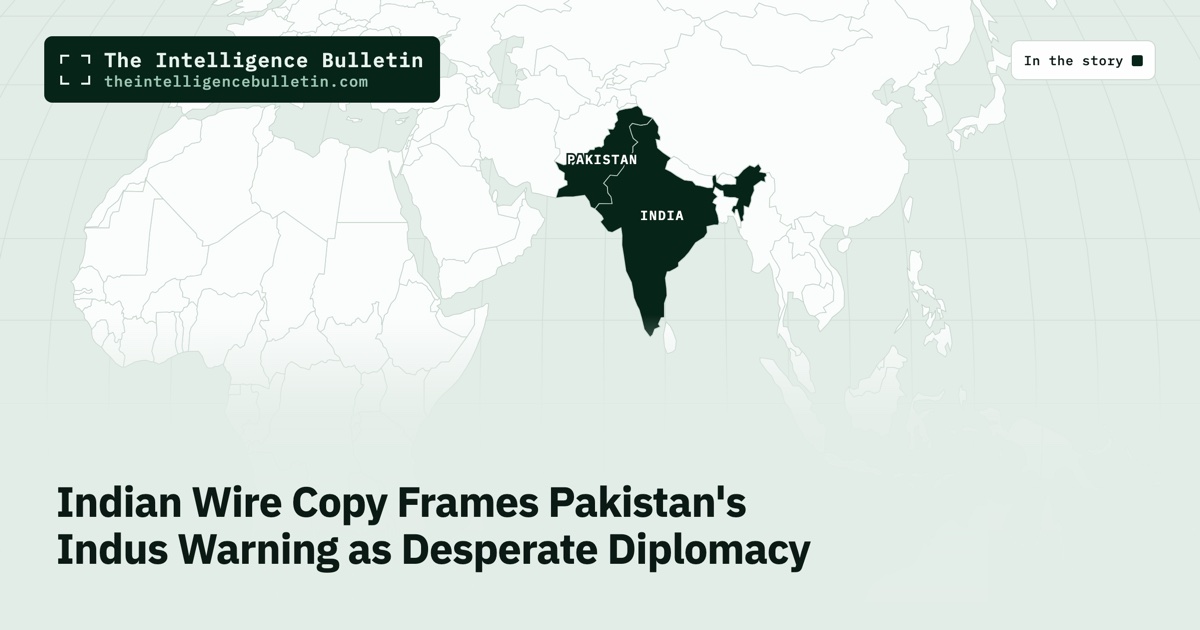
Map of the countries in the story: Indian Wire Copy Frames Pakistan's Indus Warning as Desperate Diplomacy
On July 1 2026, PPP Chairman Bilawal Bhutto Zardari warned India that using the Indus as a weapon threatens Pakistan’s survival and urged Islamabad to defend its water rights under the 1960 treaty. India placed the pact in abeyance after the April Pahalgam terror attack that killed 26 civilians, citing Pakistan’s failure to curb cross-border militancy. Bhutto stated Pakistan seeks peace with dignity but will not submit, while other Pakistani officials called the move a threat to regional stability.

One Story. Many Angles.

đŸ‡łđŸ‡”
Nepal
Nepal National
Facing Indus Waters Treaty fallout, desperate Bilawal Bhutto warns of profound consequences
Read →
🇼🇳
India
Times of India
Bilawal Bhutto: ‘Peace with dignity, not submission’: Bilawal Bhutto’s fresh warning to India over Indus Waters Treaty
Read →

Perspective Analysis

The dominant Indian wire service account of Pakistan Peoples Party chairman Bilawal Bhutto Zardari’s July 1, 2026, remarks casts Islamabad’s public response to the Indus Waters Treaty suspension as a defensive diplomatic maneuver by an isolated government rather than a coherent regional challenge. This framing, delivered through identical ANI copy to readers in both India and Nepal, centers New Delhi’s security-linked decision as the settled trigger while portraying Pakistani statements as attempts to deflect from internal vulnerabilities and rally domestic support.

The 1960 Indus Waters Treaty, brokered by the World Bank, divided the waters of the Indus basin between the two countries, granting Pakistan primary rights over the western rivers—the Indus, Jhelum, and Chenab—while allocating the eastern rivers to India. The pact survived three wars and decades of tensions precisely because both sides treated its legal architecture as binding. India’s decision to place the treaty in abeyance followed the April 22 Pahalgam terror attack in Jammu and Kashmir that killed 26 civilians, which New Delhi linked to networks operating from Pakistani soil. New Delhi has stated repeatedly that the suspension will hold until Islamabad takes verifiable, irreversible action against cross-border militancy, encapsulated in the longstanding formulation that blood and water cannot flow together.

Bilawal Bhutto Zardari delivered his remarks at a seminar in Islamabad, urging Pakistan to convey to both India and the international community that the Indus constitutes a lifeline, not a bargaining chip or weapon. He warned that any attempt to turn that lifeline into a noose must be treated as a threat to the survival of the state and insisted that Pakistan seeks peace with dignity, dialogue under law, and coexistence without submission. The PPP chairman further alleged that India had not honored its commitments under the treaty and described the use of water resources as a weapon as dangerous and contrary to international law. He stressed that Pakistan’s recognized rights over the waters of the Indus, Jhelum, and Chenab must be respected and that the issue should be viewed as a matter of national security rather than a technical dispute.

The Nepal National outlet, publishing the full ANI dispatch under the headline “Facing Indus Waters Treaty fallout, desperate Bilawal Bhutto warns of profound consequences,” layers interpretive language that repeatedly describes Pakistani statements as hollow, desperate, and aimed at deflecting attention from internal water mismanagement. The report notes Pakistan’s acute water scarcity in agricultural regions such as Sindh and Balochistan, highlights the withholding of hydrological data by India, and emphasizes how the suspension has left Islamabad without timely information on river volumes. It also records additional voices from the same event, including National Assembly Standing Committee on Foreign Affairs chairperson Hina Rabbani Khar, who argued that the treaty cannot be held in abeyance through unilateral political statements and that any modification requires the consent of both governments through a duly ratified treaty. Khar questioned why India believes it can violate what has long been regarded as one of the world’s most successful transboundary water agreements. Deputy Prime Minister and Foreign Minister Ishaq Dar described the pact as a vital instrument of regional peace and warned of profound consequences for nearly two billion people in South Asia, while Information Minister Attaullah Tarar framed the seminar itself as a first-of-its-kind international effort to reinforce Pakistan’s case.

The Times of India carries the same core ANI text under the headline “‘Peace with dignity, not submission’: Bilawal Bhutto’s fresh warning to India over Indus Waters Treaty,” foregrounding Bhutto’s confrontational tone and his call for Pakistan to defend its water, people, treaty, sovereignty, and future. The Indian daily embeds India’s terrorism-linked rationale more explicitly, noting the Pahalgam attack and reiterating that the treaty remains in abeyance pending credible action against groups operating from Pakistani territory. It also references a separate recent warning from Pakistan’s climate change minister Musadik Malik about cutting off those hands that attempt to touch Pakistan’s water, reinforcing the sense of reactive escalation from Islamabad.

Because both outlets rely on identical wire copy with only minor headline and sub-editing differences, the coverage reaching Nepali and Indian audiences presents a unified narrative in which Pakistan appears diplomatically cornered after New Delhi’s firm security posture. The reports do not explore potential downstream effects on Nepal or other neighbors that share the broader Himalayan river systems, nor do they examine technical questions around data sharing or infrastructure projects India has accelerated on the western rivers. Instead, they consistently position India’s conditionality—tied to counter-terrorism compliance—as the immovable reference point against which Pakistani appeals are measured.

Across the two accounts, the shared emphasis on Pakistan’s internal challenges and diplomatic isolation shapes a consistent storyline: a cash-strapped agrarian economy facing power-generation and agricultural risks after the loss of critical hydrological data, contrasted with India’s insistence that the treaty suspension is a proportionate response to unresolved militancy. This lens leaves little room for independent analysis of how the dispute might evolve under international arbitration mechanisms or affect long-term regional water cooperation frameworks.

The Takeaway

What to watch next is whether Pakistan pursues formal legal avenues through the treaty’s dispute-resolution provisions or seeks broader international mediation, how India’s ongoing hydropower and storage projects on the western rivers progress under the abeyance regime, and whether any verifiable steps on counter-terrorism emerge that could reopen data flows or normalize treaty implementation. The trajectory of these developments will determine whether the current diplomatic exchanges remain rhetorical or escalate into sustained pressure on the 1960 framework that has anchored South Asian water relations for more than six decades.


Share this story

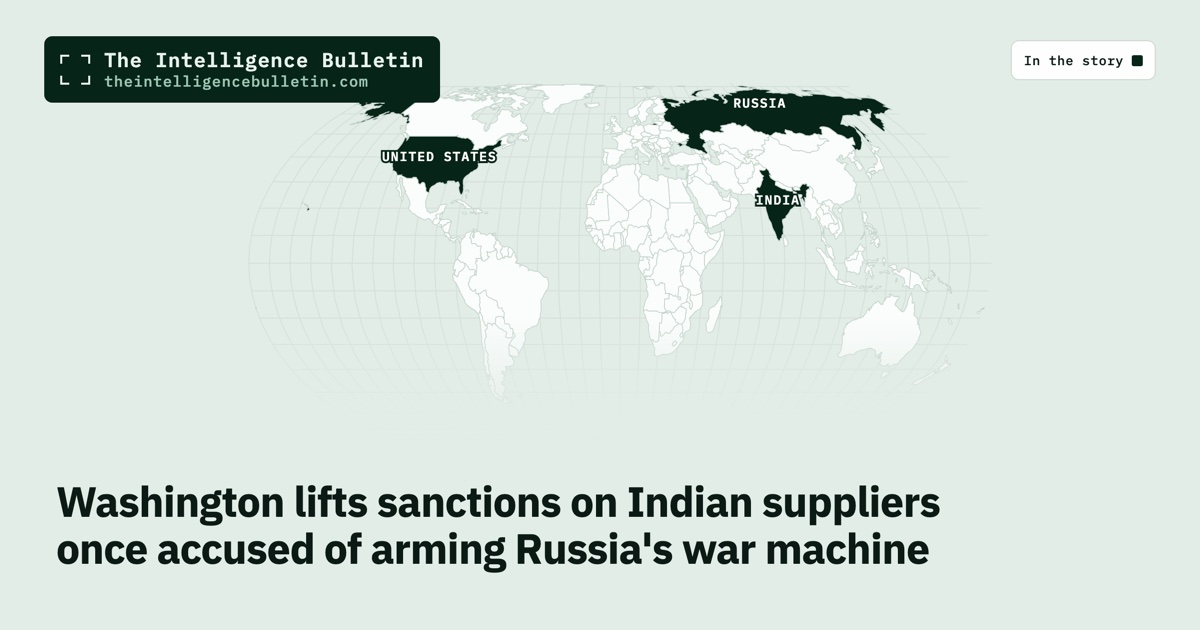
Washington lifts sanctions on Indian suppliers once accused of arming Russia’s war machine

Map of the countries in the story: Washington lifts sanctions on Indian suppliers once accused of arming Russia's war machine
On June 30, 2026, the US Treasury’s OFAC removed four Indian companies—RRG Engineering Technologies, Lokesh Machines, Galaxy Bearings, and Shaurya Aeronautics—from its Russia-related sanctions list. The firms had faced secondary sanctions in 2024 over alleged shipments of dual-use goods, microelectronics, machine tools, and aviation equipment to Russian entities. No explanation was given for the delistings. Indian business outlets highlighted company impacts while Russian coverage placed the move in the context of broader sanctions policy.

One Story. Many Angles.

🇼🇳
India
The Economic Times
US de-lists four Indian companies from Russia-linked sanctions
Read →
đŸ‡·đŸ‡ș
Russia
RT Arabic
ARABIC
The United States deletes Indian companies from the list of sanctions related to Russia
“US deletes Indian companies from Russia sanctions list”
Read →
🇼🇳
India
Moneycontrol
US removes sanctions on four Indian firms linked to Russia-related restrictions
Read →
🇼🇳
India
Orissa Post
US removes four Indian companies from OFAC sanctions list
Read →

Perspective Analysis

The United States quietly removed four Indian companies from its Russia-related sanctions list on June 30, 2026, ending nearly two years of restrictions that had targeted them for alleged shipments of dual-use goods and technology to Moscow’s military-industrial base. The delistings by the Treasury Department’s Office of Foreign Assets Control carried no accompanying explanation, no statements from Washington or New Delhi, and no indication of any broader policy adjustment. What stands out across coverage is the administrative character of the move: relief for a handful of mid-sized manufacturers rather than any visible easing of pressure on Russia or recalibration of U.S.-India ties.

The four firms named in the Treasury action were Hyderabad-based RRG Engineering Technologies Private Limited and Lokesh Machines Limited, Ahmedabad-based Galaxy Bearings, and New Delhi-based Shaurya Aeronautics Private Limited. All had been added to the Specially Designated Nationals and Blocked Persons list in 2024 under secondary sanctions authorities. Galaxy Bearings faced accusations of exporting dozens of high-priority dual-use items, including roller bearings and roller assemblies, to Russian entities. Shaurya Aeronautics was cited for shipments of radar apparatus, radio navigational aid apparatus, radio remote control apparatus, and other electrical equipment. RRG Engineering Technologies was alleged to have sent more than 100 shipments of microelectronics to Arteks Limited Company, a Russia-based entity already on the sanctions list. Lokesh Machines drew scrutiny for dozens of shipments of machine tools to various Russian manufacturing companies.

Indian business reporting treated the development primarily as a corporate development. The Economic Times led with the identities of the affected companies and highlighted immediate market reaction, noting that shares of Lokesh Machines rose 5 percent to trade at Rs 285.70 on the day of the announcement. The outlet framed the story around the firms’ prior allegations of supplying critical technology to Russia’s military while underscoring the commercial relief now available to listed entities. Moneycontrol emphasized the regulatory timeline, describing the action as an administrative update nearly two years after the original restrictions and presenting it as the latest entry in the Treasury’s routine SDN list revisions. Orissa Post delivered a concise, wire-style account of the same company names and 2024 allegations without additional commentary on market effects or wider implications.

Russian-state media coverage, by contrast, situated the delistings inside the larger architecture of secondary sanctions imposed after the 2022 start of Russia’s military operation in Ukraine. RT Arabic, drawing on Novosti reporting, noted that the United States had intensified measures not only against Russian targets but also against foreign entities accused of cooperating with or circumventing restrictions. The piece recorded that the four Indian firms had been placed on the list precisely because of such alleged cooperation, yet it offered no suggestion that the reversal signaled any softening toward Moscow.

Across all four outlets the reporting converged on identical core facts with little variation in the details supplied. No source provided an official rationale for the removals, nor did any quote U.S. or Indian government spokespeople. This shared silence points to a low-profile bureaucratic adjustment rather than a calculated diplomatic signal. The absence of celebratory language or geopolitical framing in the Indian coverage further reinforces that the event carried limited weight beyond the affected companies themselves.

The Takeaway

The episode leaves several threads for observers to monitor. Future Treasury SDN updates could reveal whether additional Indian or other third-country firms receive similar relief, or whether the four delistings remain isolated cases. Market participants will watch for any sustained share-price effects at Lokesh Machines or the privately held entities. On the policy side, the lack of accompanying statements keeps open the question of whether Washington intends any incremental recalibration of secondary sanctions enforcement or simply continues routine case-by-case reviews. Absent new information from official channels, the June 30 action stands as a narrow administrative correction rather than an inflection point in sanctions policy.


Share this story

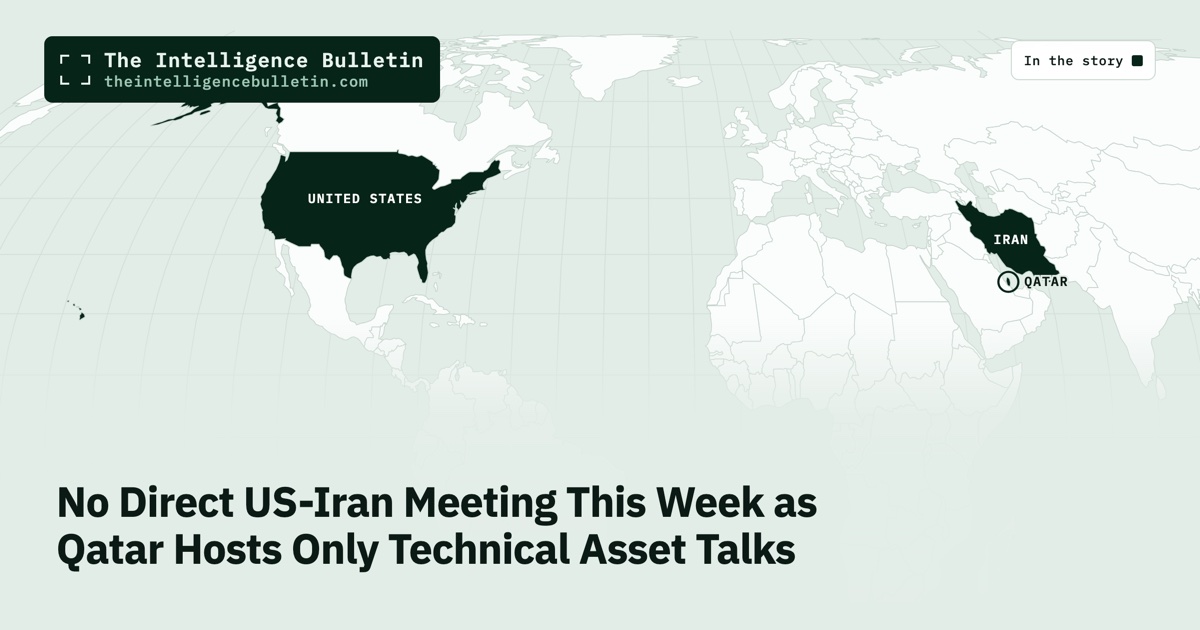
No Direct US-Iran Meeting This Week as Qatar Hosts Only Technical Asset Talks

Map of the countries in the story: No Direct US-Iran Meeting This Week as Qatar Hosts Only Technical Asset Talks
On June 30, 2026, Qatar’s Foreign Ministry stated in Doha that arriving US envoys Steve Witkoff and Jared Kushner would hold no high-level meeting with Iran. Spokesperson Majed Al Ansari said only technical talks on regional security would occur this week, with possible later higher-level sessions. Iranian officials separately confirmed no meetings with US negotiators were planned, while some reports noted the indirect channel’s focus on releasing frozen Iranian assets under a prior memorandum of understanding.

One Story. Many Angles.

🇾🇩
Saudi Arabia
Arab News
Qatar reaffirms mediation role in US-Iran talks after meeting with Witkoff
Read →
🇼đŸ‡č
Italy
Adnkronos
ITALIAN
Iran today: Doha talks on US deal, direct meeting ruled out
“Iran news oggi, colloqui a Doha su accordo con Usa: escluso un incontro diretto”
Read →
🇧đŸ‡Ș
Belgium
VRT
DUTCH
LIVE: United States and Iran resume talks in Doha over Iranian frozen assets
“LIVE Verenigde Staten en Iran hervatten gesprekken in Doha over Iraanse bevroren tegoeden”
Read →
đŸ‡ČđŸ‡œ
Mexico
TermĂłmetro en LĂ­nea
SPANISH
Qatar rules out high-level meeting between United States and Iran
“Qatar descarta reuniĂłn de alto nivel entre Estados Unidos e IrĂĄn”
Read →
đŸ‡č🇳
Tunisia
African Manager
FRENCH
Iran affirms it will not meet the American negotiators
“L’Iran affirme qu’il ne rencontrera pas les nĂ©gociateurs amĂ©ricains”
Read →

Perspective Analysis

Qatar’s confirmation that this week’s US-Iran contacts in Doha will remain strictly technical and indirect underscores how little concrete progress has occurred since the June 17 memorandum of understanding, even as deadlines on frozen assets and Hormuz navigation continue to press both sides.

The June 30 statement from Qatar’s Foreign Ministry came as US envoys Steve Witkoff and Jared Kushner arrived in the Qatari capital. Spokesperson Majed Al Ansari made clear that the visitors would engage only Qatari mediators on regional security matters this week, with any higher-level sessions deferred to a later date. Iranian officials echoed the same boundary, with Foreign Ministry spokesperson Esmaeil Baghaei stating that no meetings with American negotiators were planned at any level in the coming days. The indirect channel instead centers on implementing elements of the earlier memorandum, including the release of frozen Iranian assets.

This shared emphasis on mediation-only technical talks reveals a deliberate lowering of expectations. The June 17 memorandum established a 60-day framework for broader negotiations after a temporary ceasefire, covering issues from Hormuz shipping to Iran’s nuclear program. Yet recent exchanges of attacks on commercial vessels and military targets have kept tensions elevated, leaving the asset-release track as the immediate, lower-stakes focus.

Saudi outlet Arab News framed the Doha meetings around Qatar’s successful reaffirmation of its mediation role. The report highlighted Qatari Prime Minister Sheikh Mohammed bin Abdulrahman Al-Thani’s meeting with Witkoff and Kushner, where he affirmed continued support for all tracks stemming from the US-Iran memorandum. The piece stressed Qatar’s ongoing diplomatic centrality without dwelling on the explicit denial of direct encounters or the narrow technical scope of this week’s discussions. This Gulf-centric angle aligns with regional priorities that portray Qatar as an indispensable broker sustaining dialogue amid volatility.

Italian wire Adnkronos instead foregrounded the explicit exclusion of any direct US-Iran encounter while situating the talks within the frozen-assets dossier and broader security context. It noted that indirect contacts resumed in Doha specifically to advance implementation of the prior understanding on asset releases. The report added procedural detail drawn from Wall Street Journal reporting on US military contingency planning, including consideration of targeted strikes if terms were violated and possible extension of the indirect talks beyond the August 18 deadline. Attention to Hormuz navigation risks and the elevation of maritime threat levels further reflected a European emphasis on escalation logistics and security mechanics.

Belgian public broadcaster VRT used its liveblog format to track the resumption of indirect negotiations over the release of at least six billion dollars in frozen Iranian assets. It supplied extensive background on the June 17 memorandum’s provisions, including the 60-day ceasefire window and safe passage commitments through the Strait of Hormuz, alongside a timeline of recent ship attacks and mutual accusations of violations. The coverage stressed that American envoys had already met solely with Qatari mediators upon arrival, underscoring the asset-focused, mediated nature of the current round. This approach provided readers with concrete mechanics and conflict chronology rather than diplomatic optics.

Mexican outlet TermĂłmetro en LĂ­nea led with Qatar’s explicit denial of any high-level US-Iran meeting this week, citing Reuters reporting. The article stressed the resulting uncertainty over prospects for a permanent deal that would normalize transit through the Strait of Hormuz. It incorporated the Iranian spokesperson’s confirmation that the arriving delegation would speak only with Qatari mediators to follow up on the memorandum, including asset liberation. The piece placed the development against the backdrop of recent attack exchanges and noted falling oil prices amid reduced immediate tensions, while warning of lingering economic pressures on vulnerable economies.

Tunisian source African Manager opened with Iran’s own affirmation that it would not meet the arriving American negotiators. The report detailed how Kushner and Witkoff reached Doha for what the White House described as high-level discussions, yet both Iran and Qatar clarified that contacts would occur exclusively through mediators. It noted Iranian insistence that ceasefire terms must still be settled before tackling harder issues such as nuclear limits. This North African framing highlighted Tehran’s positioning and the mediator-only channel, differing from Gulf outlets’ emphasis on successful Qatari brokerage.

Across the five outlets, the reporting converged on one verified fact: this week’s contacts remain technical and fully mediated, with no direct US-Iran session scheduled. Saudi coverage stressed mediation continuity, European pieces added asset mechanics and risk context, while Latin American and North African reports led with the denials from Doha and Tehran. That shared restraint, even in outlets with differing regional lenses, indicates how incremental the asset track has remained since the June memorandum despite the ticking regional security clock.

The Takeaway

Observers will now watch whether the technical sessions produce any visible movement on asset releases ahead of the August deadline, whether higher-level meetings materialize as Qatar suggested, and how Hormuz navigation proposals from Oman or other mediators affect the broader ceasefire stability.


Share this story

US Ends Ban on Anthropic AI Models After Standoff Over Foreign Access

Map of the countries in the story: US Ends Ban on Anthropic AI Models After Standoff Over Foreign Access
On June 30, 2026, the U.S. Department of Commerce lifted export controls imposed in mid-June on Anthropic’s Claude Fable 5 and Mythos 5 AI models. Anthropic announced it would begin restoring access the next day after agreeing to enhanced security protocols and government notifications on risks. The move ended a standoff that had restricted foreign access, including for some employees, amid national security concerns. Similar restrictions affected OpenAI’s recent model releases.

One Story. Many Angles.

đŸ‡ș🇾
United States
The Verge
Anthropic’s long-sidelined Fable 5 is greenlit to return
Read →
đŸ‡ș🇾
United States
CNBC
Anthropic says Trump admin has lifted export controls on Claude Fable 5 and Mythos 5
Read →
đŸ‡ș🇾
United States
New York Post
Trump administration lifts export controls on Anthropic’s most powerful AI models, ending bitter standoff
Read →
đŸ‡ČđŸ‡Ÿ
Malaysia
Free Malaysia Today
US lifts curbs on Anthropic’s Fable, Mythos AI models
Read →
🇹🇩
Canada
The Globe and Mail
U.S. to lift export controls on Anthropic’s Fable, Mythos AI models, company says
Read →

Perspective Analysis

The abrupt reversal of export controls on Anthropic’s most advanced models on June 30, 2026, underscores how swiftly targeted U.S. restrictions on frontier AI can unravel when they risk ceding ground to foreign competitors and disrupting domestic commercial momentum. The Department of Commerce lifted the measures imposed just weeks earlier, allowing Anthropic to restore access to Claude Fable 5 and Mythos 5 starting the next day after the company committed to enhanced security protocols and ongoing government notifications on potential risks. This episode exposed the tensions inherent in applying decades-old export frameworks to rapidly evolving software, where even brief disruptions ripple through enterprise clients and global development races.

The standoff originated in mid-June when the Trump administration directed Anthropic to suspend all access by foreign nationals, including its own employees outside the United States, citing national security concerns over potential misuse by actors in China or Russia. Anthropic complied by disabling the models worldwide on or around June 12, halting what had been a high-profile launch touting state-of-the-art benchmark performance. Fable 5 represented the company’s first consumer-facing release of such advanced capabilities, built on the same underlying technology as Mythos 5 but with additional safeguards. The timing proved particularly awkward for Anthropic, which was preparing for an IPO amid separate ongoing disputes with the Pentagon over supply-chain designations that a federal judge had already blocked earlier in the year.

Coverage across outlets reveals distinct emphases shaped by their audiences and priorities. The Verge focused closely on the technical and user-facing restoration process, detailing how weeks of negotiations with the Trump administration finally cleared the path for Fable 5’s return after it had been sidelined alongside Mythos 5. The publication highlighted the models’ prior hype cycle and noted that Mythos 5 had already received partial approval for pre-approved organizations, with non-U.S. members of those groups and certain Anthropic employees now permitted access under the revised framework. It framed the outcome as the resolution of an inopportune regulatory clash that interrupted product rollout at a critical juncture for the company.

CNBC emphasized market and competitive dynamics, portraying the lift as relief for an industry rattled by the curbs and warning that the restrictions had inadvertently provided breathing room for Chinese open-source developers racing to close the gap with U.S. leaders. The outlet quoted Anthropic’s statement expressing gratitude to users for their patience and reported Commerce Secretary Howard Lutnick’s letter confirming that appropriate safeguards were now in place for “trusted partners.” It also noted the broader context of executive and investor criticism that the ban handed valuable time to rivals like those from Zhipu AI, while similar staggered rollouts affected OpenAI’s recent GPT-5.6 release limited initially to vetted entities.

The New York Post cast the decision in explicitly political terms, describing it as a Trump administration victory following intense lobbying and back-channel talks involving Lutnick. The publication obtained Lutnick’s letter outlining Anthropic’s commitments to proactively detect and address security risks, work diligently with the government on protocols for Mythos, Fable, and future models, and inform officials of any malicious activity. It highlighted White House Chief of Staff Susan Wiles’ public praise for companies collaborating under the president’s executive order on AI innovation and security, while noting the sudden reversal came after earlier meetings, including one involving Anthropic’s CEO at the G7 summit.

Free Malaysia Today and The Globe and Mail, both drawing on Reuters reporting, situated the reversal within Washington’s expanding oversight of AI exports to screen against misuse by adversaries. They quoted OpenAI CEO Sam Altman’s discomfort with the precedent of government customer selection, even while acknowledging the value of safety testing. These outlets noted that the controls had required Anthropic to suspend access globally and that the partial earlier allowance for Mythos 5 to trusted U.S. organizations foreshadowed the full reversal. They stressed the policy’s intent to identify threats amid surging AI investments, while observing that similar limits applied to OpenAI’s launches.

Synthesizing these accounts shows a consistent narrative of rapid policy adjustment rather than entrenched confrontation. No outlet sustained a prolonged foreign-policy fallout storyline; instead, the episode illustrated tightening domestic U.S. control over frontier model dissemination, with companies navigating new notification and protocol requirements. The absence of sustained bilateral trade tensions in the reporting reflects how the measures targeted technical access rather than broad commercial penalties. Anthropic’s agreement to enhanced risk detection and government coordination appears to have satisfied officials without derailing the company’s trajectory, though the episode left industry participants uncertain about the permanence of such vetting processes.

The Takeaway

What to watch next centers on the implementation of the new security protocols and their impact on subsequent model releases from Anthropic and peers. The precedent of requiring pre-approval lists or staggered rollouts, already applied to both Anthropic and OpenAI, will likely shape timelines for GPT-5.6’s broader availability and future Anthropic launches. Market participants will monitor whether Chinese developers sustain their accelerated progress during any lingering access gaps, while Anthropic’s IPO preparations proceed under continued government engagement. The durability of these arrangements will test whether voluntary cooperation can substitute for more formalized export regimes in the fast-moving AI sector.


Share this story

Netanyahu Claims US-Lebanon Deal Backs Indefinite Security Zone as Hezbollah Rejects It

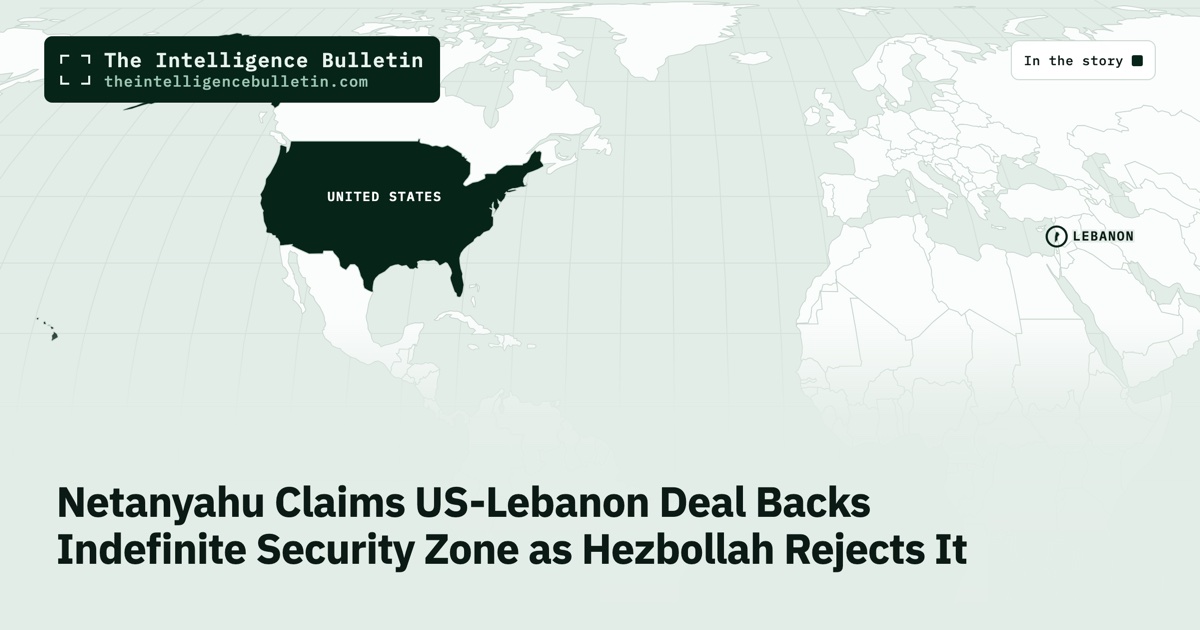
Map of the countries in the story: Netanyahu Claims US-Lebanon Deal Backs Indefinite Security Zone as Hezbollah Rejects It
On June 30, 2026, Israeli Prime Minister Benjamin Netanyahu visited troops in a self-declared security zone in southern Lebanon and stated that forces would remain as long as Hezbollah stays armed and threatening. The remarks came four days after Israel and Lebanon signed a US-brokered framework agreement that ties full Israeli withdrawal to Hezbollah disarmament and Lebanese army control of pilot zones. Netanyahu described the deal as a rejection of Iranian influence, while Hezbollah and some Israeli officials rejected it. Israeli forces reported destroying a Hezbollah tunnel and reducing the group’s rocket arsenal to about 8 percent of prior levels.

One Story. Many Angles.

đŸ‡źđŸ‡±
Israel
Ynet
Netanyahu in Lebanon: ‘As long as Hezbollah threatens us, we stay’
Read →
🇾🇩
Saudi Arabia
Arab News
In south Lebanon, Netanyahu says Israel will stay as long as Hezbollah ‘threatens us’
Read →
đŸ‡·đŸ‡ș
Russia
BFM.ru
RUSSIAN
Netanyahu: US and Lebanon recognized Israel’s right to security zone in south Lebanon
Read →
đŸ‡ș🇾
United States
Euronews Russia
RUSSIAN
Netanyahu welcomed agreement with Lebanon, Hezbollah and Israeli ultra-right against
Read →
đŸ‡©đŸ‡Ș
Germany
Tagesschau
GERMAN
Israeli army destroys tunnel in south Lebanon
Read →

Perspective Analysis

The framework agreement signed just four days earlier has done little to alter the fundamental dynamics on the ground in southern Lebanon, as evidenced by the contrasting emphases in coverage across Israeli, Saudi, Russian, European, and German outlets. Israeli Prime Minister Benjamin Netanyahu’s June 30, 2026, visit to troops in the self-declared security zone underscored a commitment to indefinite presence tied to Hezbollah’s disarmament, yet reporting reveals how each source anchors the story in the deal’s inherent limitations rather than portraying the prime minister’s statements as a decisive escalation.

Netanyahu and Defense Minister Israel Katz toured the approximately 10-kilometer-deep buffer zone along the border, where Israeli forces have been operating since the March 2026 escalation. They were briefed on ongoing IDF activities and observed demonstrations of new munitions designed to counter drone threats. Netanyahu told soldiers that forces would remain “as long as Hezbollah is here and threatens us,” adding the instruction to “act” against identified threats. He described Israel’s strikes as having crushed the Iranian axis, noting that Hezbollah once possessed 150,000 missiles and rockets but now retains only about 8 percent. Operations had killed 9,000 terrorists, including hundreds in recent weeks, with the explicit goal of establishing buffer and security zones on the Lebanese side of the border. Netanyahu framed the US-brokered framework agreement as a direct rejection of Iranian and Hezbollah influence, declaring that Lebanon and Israel recognize each other and are telling Iran and Hezbollah to leave. He called the deal “a slap in the face” to the Iranian axis but warned it “will not necessarily pass quietly.”

Ynet’s domestic Israeli coverage centers on these direct statements from Netanyahu and Katz, presenting the tour as routine enforcement of security priorities. It highlights operational successes, including the reduction of Hezbollah’s rocket arsenal and the destruction of infrastructure above and below ground, while noting the agreement’s timetable and pilot zones remain unclear. The reporting aligns closely with the prime minister’s emphasis on military weakening of Hezbollah and the necessity of buffer zones to protect northern Israeli residents.

Arab News, drawing on AFP reporting, similarly foregrounds the threat narrative and Netanyahu’s vow that Israel “will not leave southern Lebanon until the threat has disappeared.” It situates the visit within the broader context of the US-sponsored deal, which conditions full withdrawal on Beirut disarming Hezbollah through pilot zones under Lebanese army control. The outlet adds regional stability dimensions absent from purely domestic Israeli accounts, including casualty figures—more than 4,200 Lebanese killed in Israeli attacks since March 2, 2026, compared with 38 Israeli soldiers and one civilian contractor—and stresses Arab concerns over Iranian influence alongside implications for Lebanese sovereignty.

Russian outlet BFM.ru shifts the lens to diplomatic legitimacy, reporting Netanyahu’s claim that the United States and Lebanon have recognized Israel’s right to maintain a security zone in southern Lebanon. It notes plans for limited withdrawals from two pilot areas—one inside the security zone and one on its border—while describing the framework agreement as historical and a step toward ending the conflict. Defense Minister Katz is quoted instructing the army to prepare for a prolonged stay until Hezbollah is disarmed. This framing presents Israel’s presence as multilaterally sanctioned rather than unilateral, an angle missing from the threat-focused Israeli and Saudi reports.

Euronews Russia stands apart by detailing simultaneous opposition from both sides. It reports Netanyahu welcoming the deal as a historic achievement that struck at Iran and Hezbollah, yet highlights rejection by Hezbollah leader Naim Qassem, who labeled it humiliating capitulation and a surrender of sovereignty. Israeli hardliner Itamar Ben-Gvir is quoted criticizing the agreement as a mistake, arguing that Lebanese ministers linked to Hezbollah cannot be trusted with disarmament and that only the IDF can eliminate the group. The coverage underscores internal fault lines on both the Lebanese and Israeli sides, contrasting with actor-country sources that emphasize one dominant narrative.

German public broadcaster Tagesschau leads instead with a concrete military fact: the Israeli army’s destruction of a Hezbollah tunnel more than 200 meters long and over 25 meters deep near the border village of Majdal Zun. Stocked with weapons and launch shafts, the tunnel was reported to have served as an attack base; the United States was informed in advance, and local residents described the ground shaking during the explosion. The agreement receives only passing mention amid ongoing mutual attacks, reflecting a priority on verifiable security incidents over diplomatic rhetoric or political statements.

Across these accounts, the shared recognition emerges that the framework agreement changes little immediately on the ground. Israeli and Saudi reporting justifies the continued presence through Hezbollah’s diminished capabilities and persistent threat, while Russian coverage stresses claimed multilateral acceptance of the security zone. Euronews Russia alone surfaces cross-cutting rejections that expose the deal’s fragility, and Tagesschau redirects attention to persistent operational realities like tunnel clearances. This pattern illustrates how the US-brokered text, which aspires to end decades of conflict and restore Lebanese army control, faces resistance from Hezbollah, skepticism from Israeli hardliners, and ongoing military actions that outpace diplomatic timelines.

The Takeaway

What to watch next is the implementation of the pilot zones and any limited withdrawals they may trigger, alongside Hezbollah’s ground-level response and whether US military accompaniment and training of the Lebanese army can overcome the mutual distrust already evident in the divergent source framings.


Share this story