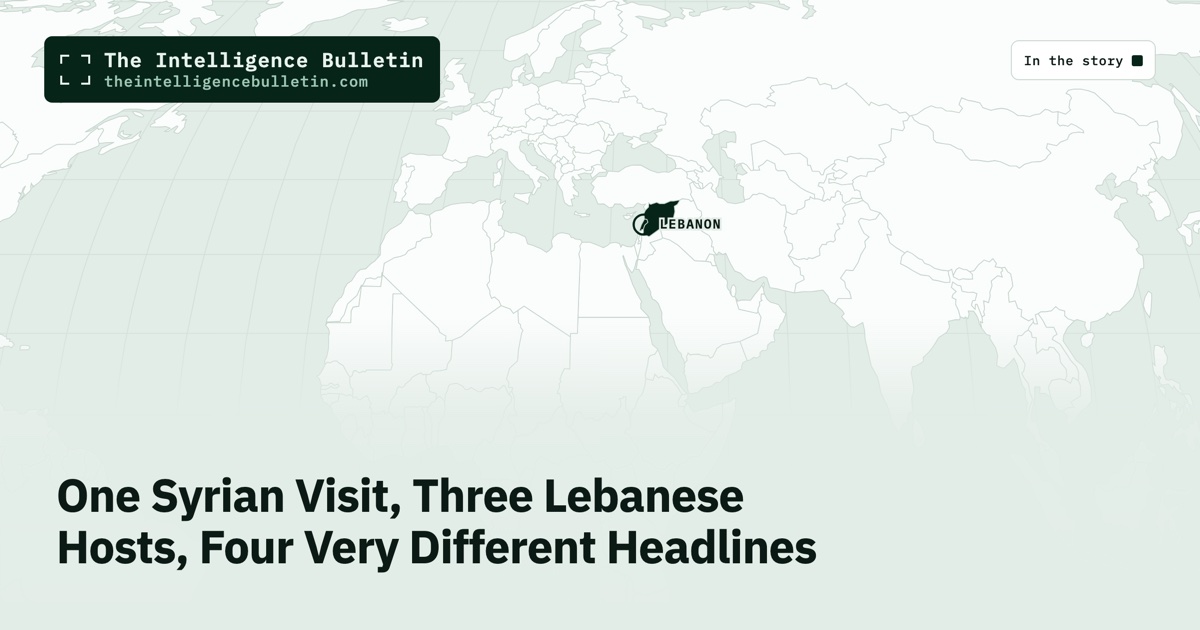
One Syrian Visit, Three Lebanese Hosts, Four Very Different Headlines

Map of the countries in the story: One Syrian Visit, Three Lebanese Hosts, Four Very Different Headlines
On July 2 2026 Syrian Foreign Minister Assaad Hassan Al-Chaibani met Lebanese Parliament Speaker Nabih Berri in Beirut. He had already held talks the same day with President Joseph Aoun and Prime Minister Nawaf Salam. The sides discussed bilateral ties, economic cooperation and regional developments, agreeing to form a joint ministerial committee. Coverage across outlets highlights different Lebanese interlocutors and tones from procedural to symbolic.

One Story. Many Angles.

🇸🇾
Syria
SANA
Syrian foreign minister, Lebanese parliament speaker discuss bilateral ties
Read →
🇹🇷
Turkey
Anadolu Agency
Syrian foreign minister meets Lebanese president in Beirut
Read →
🇫🇷
France
France 24
ARABIC
From Baabda to Ain al-Tineh: Shaibani discusses reshaping Syrian-Lebanese relations
“من بعبدا إلى عين التينة: الشيباني يبحث إعادة صياغة العلاقات السورية اللبنانية”
Read →
🇷🇺
Russia
RT Arabic
ARABIC
Between the cedars of Lebanon and the roses of Sham… a new era of Syrian-Lebanese brotherhood and cooperation
“بين أرز لبنان وورد الشام… عهد جديد من الأخوّة والتعاون السوري اللبناني”
Read →

Perspective Analysis

On July 2, 2026, Syrian Foreign Minister Assaad Hassan al-Shaibani conducted a tightly scheduled round of meetings in Beirut that illustrated both the mechanics of Syrian outreach and the contrasting ways regional media interpret it. The single day’s itinerary—encounters with Lebanon’s president, prime minister, and parliament speaker—produced a narrow but verifiable set of outcomes: agreement to establish a joint ministerial committee focused on economic cooperation and regional coordination. Yet the four principal outlets that covered the visit presented four distinct narratives, each shaped by institutional priorities rather than any dispute over the underlying facts.

Syrian state media, represented by SANA, framed the visit as standard high-level diplomacy that delivered a concrete institutional result. Its report listed the sequence of meetings with President Joseph Aoun, Prime Minister Nawaf Salam, and Speaker Nabih Berri without embellishment, noting that the discussions addressed bilateral ties, economic cooperation, and regional developments. The establishment of the joint ministerial committee was presented as the principal deliverable, consistent with Damascus’s emphasis on measurable steps toward normalization after years of strained relations. The tone remained bureaucratic, underscoring mutual interests and the continuation of an official visit rather than any symbolic breakthrough.

Turkish coverage, carried by Anadolu Agency, narrowed its focus sharply to the encounter with President Aoun. The headline and lead centered on the meeting at the presidential palace in Baabda, treating the formal head-of-state channel as the primary story. This emphasis aligns with Ankara’s preference for engaging recognized executive institutions amid its own regional diplomacy. While the agency’s dispatch acknowledged the broader context of al-Shaibani’s Lebanon trip, it did not dwell on the subsequent stops at the prime minister’s office or the speaker’s residence, thereby elevating the most constitutionally conventional Lebanese interlocutor.

French international broadcaster France 24 adopted a different lens entirely, centering its framing on the physical movement of the Syrian envoy between Baabda and Ain el-Tineh. The title itself mapped the route—“From Baabda to Ain el-Tineh”—highlighting Lebanon’s fragmented centers of authority rather than the substance of any single conversation. This approach implicitly drew attention to the country’s divided sovereignty, a longstanding preoccupation of French reporting on Lebanese affairs. The piece treated the itinerary itself as newsworthy, reflecting Paris’s sustained interest in Beirut’s institutional balance and the challenges of conducting coherent diplomacy across multiple power centers.

Russian Arabic output from RT stood apart through its deliberate use of symbolic and aspirational language. Its headline invoked “the cedars of Lebanon and the roses of Damascus” to portray the visit as the dawn of a new era of brotherhood and cooperation. The account described a gift exchange in which Prime Minister Nawaf Salam presented symbols representing the two nations, and it quoted al-Shaibani expressing Syria’s desire for relations that serve Lebanese stability. The tone projected optimism and fraternal renewal, elements absent from the drier procedural accounts elsewhere, and positioned the meetings within a broader narrative of stabilized alignment favorable to Moscow’s regional positioning.

Across these reports, the shared factual core remains consistent: one Syrian foreign minister shuttled between three Lebanese officials in a matter of hours, discussed economic and regional files, and secured agreement on a joint ministerial committee. The divergence appears instead in selection and register. SANA emphasized outputs and listed all interlocutors; Anadolu elevated the presidential channel; France 24 foregrounded geographic and institutional fragmentation; RT supplied poetic framing and gift symbolism. These choices reveal how each capital’s media ecosystem reads Damascus’s outreach through its own lenses of institutional preference, interest in Lebanese stability, and desired regional narrative.

The visit occurs against a backdrop of post-conflict normalization efforts between the two neighbors. Syria and Lebanon share deep economic, familial, and security linkages that have been complicated by years of conflict and political upheaval. Al-Shaibani’s itinerary, which also included conveying an invitation from Syrian President Ahmed al-Sharaa for Aoun to visit Damascus, signals an attempt to activate formal and informal channels simultaneously. Lebanese officials, for their part, appear receptive to practical cooperation on economic matters while navigating their own domestic constraints.

The Takeaway

What to watch next is whether the announced joint ministerial committee produces follow-through meetings or concrete agreements on trade facilitation, border management, or coordinated responses to regional developments. The speed and tone with which subsequent coverage in each outlet registers any progress—or lack thereof—will further illustrate the same pattern of selective emphasis observed on July 2. In a region where diplomatic gestures are routinely interpreted through multiple prisms, the differing headlines already demonstrate that the message Damascus seeks to project is received in distinctly local keys.
Share this story

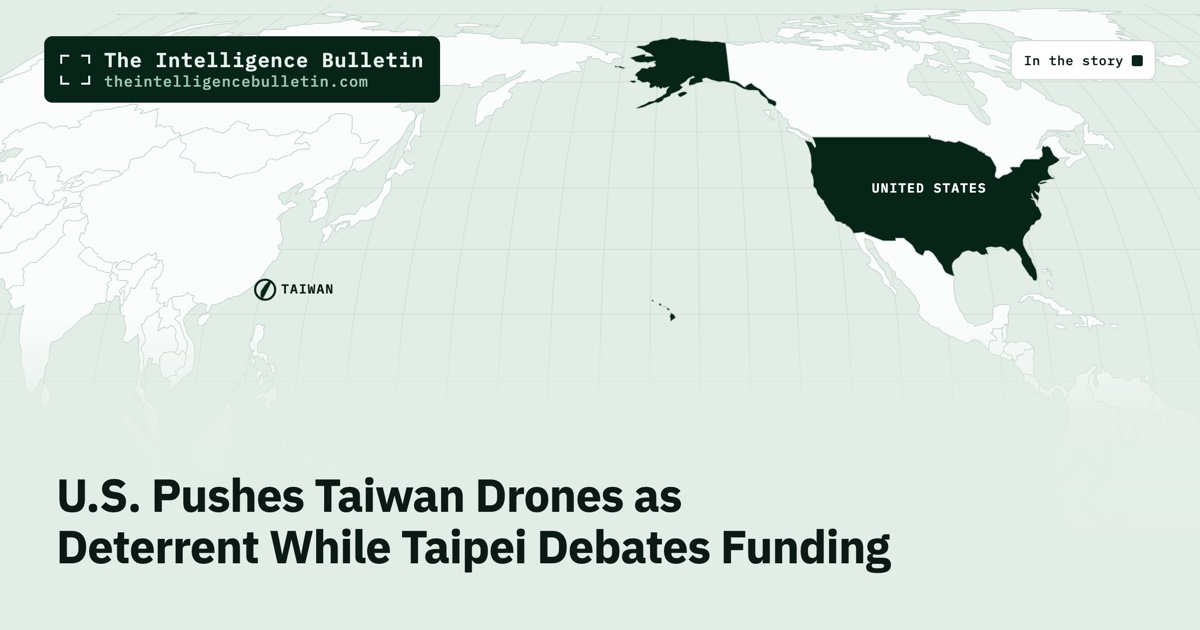
U.S. Pushes Taiwan Drones as Deterrent While Taipei Debates Funding

Map of the countries in the story: U.S. Pushes Taiwan Drones as Deterrent While Taipei Debates Funding
On July 2, 2026, American Institute in Taiwan Director Raymond Greene told a drone industry forum in Taichung that Washington is ready to expand cooperation on uncrewed systems. He argued the partnership would create business opportunities while turning Taiwan into a ‘hornet’s nest’ of air, surface and subsurface drones to strengthen its defenses and Indo-Pacific security. The remarks reference Ukraine’s experience and come as Taiwan’s parties debate special funding for domestic drone production amid rising Chinese military pressure.

One Story. Many Angles.

🇹🇼
Taiwan
Focus Taiwan
Drone cooperation a game-changer for Taiwan’s security: U.S. envoy
Read →
🇦🇹
Austria
Kurier
GERMAN
US diplomat: Taiwan should become a drone ‘hornet’s nest’
“US-Diplomat: Taiwan soll zu Drohnen-Hornissennest werden”
Read →
🇩🇴
Dominican Republic
Dominican Republic Post
Taiwan needs to become a hornet’s nest of drones, US diplomat says
Read →

Perspective Analysis

On July 2, 2026, a single set of remarks by the de facto U.S. ambassador to Taiwan crystallized a shared strategic consensus: asymmetric drone capabilities now sit at the center of efforts to deter conflict across the Taiwan Strait. American Institute in Taiwan Director Raymond Greene delivered the message at a drone industry forum in Taichung, framing expanded U.S.-Taiwan cooperation on uncrewed systems as both an economic opportunity and a decisive security upgrade. His central image—that nothing would deter conflict more effectively than turning Taiwan into a “hornet’s nest” of air, surface, and subsurface drones—travelled intact through coverage in Taiwan, Europe, and the Caribbean, underscoring how settled the narrative of drone-centric deterrence has become.

Greene opened with the lessons of Ukraine. A military possessing robust drone production capacity and a culture of technological innovation, he said, “can punch far above its weight” against a larger adversary. Taiwan’s world-beating technology and production capabilities positioned it to replicate that advantage, he argued. Drones, he continued, offered “new avenues for business” while representing a “game-changing opportunity” to enhance Taiwan’s security and reinforce peace throughout the Indo-Pacific. The United States stood ready to anchor “democratic drone production,” reduce supply-chain vulnerabilities, and strengthen the collective deterrence posture of the free world. Greene placed the partnership in historical sequence: after a “golden age” of U.S.-Taiwan cooperation in AI and semiconductors, drones and the broader ecosystem of uncrewed systems, embodied AI, and advanced robotics could usher in a “platinum age” in which the two economies jointly lead in the technologies that will define the future.

The speech arrived as Taiwan’s political parties advanced competing legislative proposals to accelerate domestic drone production and procurement. The ruling Democratic Progressive Party’s Cabinet plan called for a special budget without an annual spending cap through the end of 2031, financed through government borrowing or carried-over surpluses. Opposition caucuses from the Kuomintang and Taiwan People’s Party countered with funding drawn from the regular central-government budget, warning that a special mechanism would lack continuity and crowd out spending on social welfare and education. President Lai Ching-te reinforced the urgency the same week, describing the build-up of asymmetric capabilities as a “race against time” in the face of evolving modern warfare and geopolitical shifts.

Focus Taiwan, the island’s English-language wire service, presented Greene’s remarks as a bilateral win that could replicate the semiconductor success story for Taiwan’s next generation. The outlet lingered on the domestic legislative wrangling, detailing the structural differences between a special budget and regular appropriations and noting how each side viewed the other’s approach as fiscally risky. Its emphasis stayed squarely on partnership benefits and policy implications for a Taiwanese audience already attuned to supply-chain resilience and industrial policy.

Kurier, the Austrian broadsheet, embedded the same “hornet’s nest” quotation inside a European security frame. It situated the statement within the larger Indo-Pacific contest with China, cited Ukraine’s experience as proof that drones can offset numerical disadvantage, and added historical context on the Chinese civil war that left Taiwan under separate governance since 1949. The piece highlighted Taipei’s prioritization of asymmetric systems even after parliament approved only two-thirds of requested additional defense outlays in May, framing the moment as a narrowing window for capability development.

The Dominican Republic Post reprinted Al Jazeera copy with minimal local interpretation. It reproduced Greene’s core quotation and added concrete figures absent from the Taiwanese report: a proposed NT$210 billion (US$6.59 billion) package for surveillance, coastal-attack, and small unmanned-surface drones; the opposition Kuomintang’s alternative cap of NT$240 billion (US$7.5 billion) over six years with an annual ceiling of NT$40 billion; and the May pause of a US$14 billion U.S. arms sale to preserve munitions for other contingencies. The piece noted Lai’s rejection of Beijing’s sovereignty claims and his insistence that only Taiwan’s people may decide the island’s future, but offered no additional regional color.

Across the three outlets the core message remained consistent. Ukraine demonstrated the defensive utility of mass drone production; Taiwan possesses the industrial base to scale that model; closer U.S. partnership can lock in democratic supply chains and collective deterrence. Divergence appeared only in emphasis. Focus Taiwan treated the speech as industrial-policy opportunity and local legislative contest. Kurier applied a great-power lens that included explicit historical background on cross-strait tensions. The Caribbean aggregator stayed closest to wire-service neutrality, layering in spending numbers and the arms-sale pause without interpretive overlay. No outlet advanced a counter-narrative questioning the deterrence logic itself.

The Takeaway

What happens next will test whether rhetorical convergence translates into sustained funding and production capacity. Taiwan’s legislature must reconcile the special-budget proposal with opposition alternatives before the end of the current session. Any compromise will determine whether the “platinum age” Greene described begins with predictable, multi-year resources or with annual appropriations vulnerable to fiscal and political pressure. At the same time, the pace of U.S.-Taiwan technical exchanges on uncrewed systems will reveal how quickly the envisioned joint ecosystem can move from forum rhetoric to fielded capability. Observers will watch both the legislative vote and the first concrete announcements of co-development or procurement contracts to gauge whether the hornet’s-nest vision remains aspirational or becomes operational.


Share this story

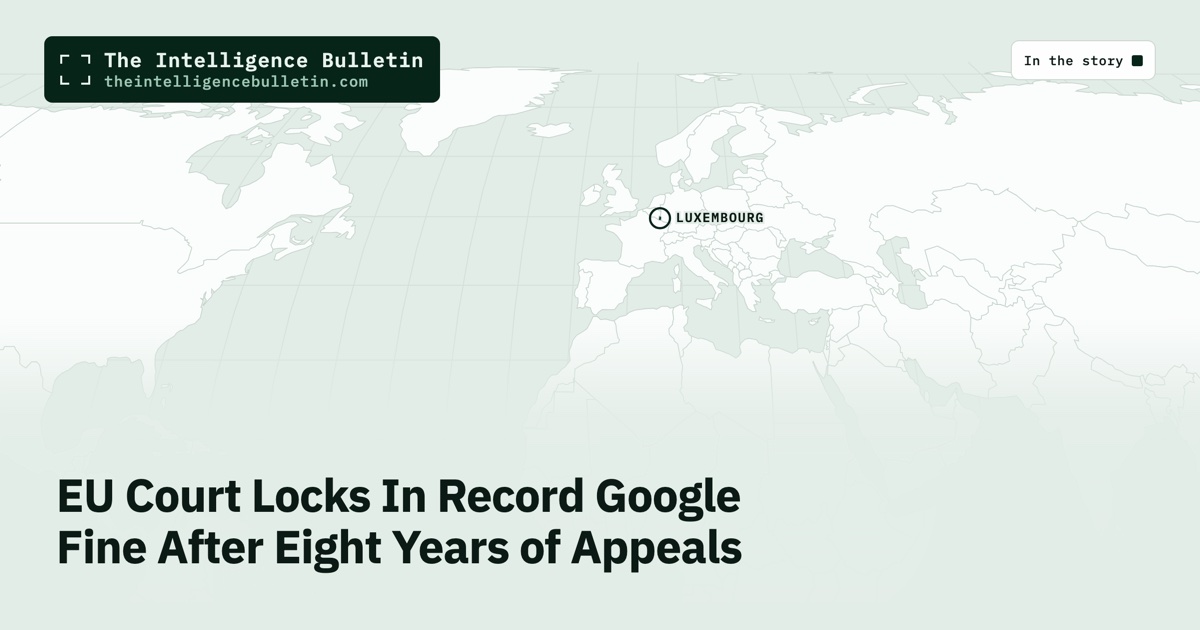
EU Court Locks In Record Google Fine After Eight Years of Appeals

Map of the countries in the story: EU Court Locks In Record Google Fine After Eight Years of Appeals
On July 2, 2026, the Court of Justice of the European Union in Luxembourg rejected Google’s appeal and confirmed the European Commission’s €4.1 billion fine for abusing Android’s dominance. The 2018 penalty, later trimmed by a lower court, targeted Google’s requirements that manufacturers pre-install its Search and Chrome apps and barred rival Android versions. Google stated it had already updated its agreements in 2018 and will continue focusing on innovation. The ruling ends eight years of litigation and raises Google’s total EU antitrust penalties near €11 billion.

One Story. Many Angles.

🇺🇸
United States
Benzinga
Google Suffers Major Blow After EU’s Top Court Upholds Record $4.7 Billion Android Antitrust Fine
Read →
🇸🇬
Singapore
The Business Times
Google loses fight against record US$4.95 billion EU antitrust fine
Read →
🇪🇸
Spain
La Razón
SPANISH
Google’s European bill approaches 11 billion after confirmation of abuse of dominant position with Android
“La factura europea de Google roza los 11.000 millones tras confirmarse el abuso de posición dominante con Android”
Read →
🇮🇹
Italy
Il Fatto Quotidiano
ITALIAN
EU Court of Justice confirms record fine to Google of 4.1 billion
“Corte di Giustizia Ue conferma multa record a Google da 4,1 miliardi”
Read →
🇱🇧
Lebanon
An-Nahar
ARABIC
Court confirms the fine of 4.1 billion euros against Google
“محكمة تثبت الغرامة البالغة 4,1 مليارات يورو بحق غوغل”
Read →

Perspective Analysis

The Court of Justice of the European Union has delivered a final and binding confirmation of the bloc’s largest-ever antitrust penalty against Google, ending eight years of litigation and locking in a €4.1 billion sanction that now stands as an unappealable precedent for how dominant technology platforms must behave in mobile ecosystems.

The ruling, handed down in Luxembourg on July 2, 2026, rejects Google’s and parent company Alphabet’s appeal against the European Commission’s original 2018 decision. That penalty targeted Google’s contractual requirements that smartphone manufacturers pre-install its Search app and Chrome browser to gain access to the Google Play Store, while also prohibiting the sale of devices running alternative Android versions known as forks. A lower court had already trimmed the initial €4.34 billion fine by roughly 5 percent in 2022, and the top court’s dismissal leaves the revised €4.1 billion amount intact.

US financial coverage opened with the immediate market reaction. Shares of Alphabet fell 1.03 percent in pre-market trading following the decision. Reports quoted the court’s press release directly: “The Court of Justice dismisses the appeal brought by Google and Alphabet against that judgment of the General Court, thereby confirming the penalty imposed on them, as revised by the General Court, for their anticompetitive practices relating to the Android operating system.” Google’s response, conveyed through Reuters, emphasized that the company had already updated its agreements in 2018 and would continue focusing on innovation and openness for users, partners, and developers. This framing highlighted the financial sting and ongoing European scrutiny rather than the full procedural history.

Singapore-based business reporting converted the penalty into US$4.95 billion and positioned the outcome as reinforcement for Europe’s wider campaign against big technology firms. It noted a Google spokesperson’s statement that the judgment failed to account for investments made to keep Android open, interoperable, and free. The same account recorded that Google had adapted its agreements to comply with the initial decision back in 2018 and remained committed to continued innovation. It further observed that Google has accumulated close to €11 billion in EU fines over the years and flagged likely additional penalties under the Digital Markets Act for practices involving search results and its app store.

Spanish coverage traced the cumulative regulatory burden on Google, stating that the confirmed fine brings the company’s total European antitrust penalties close to €11 billion over the past decade. It detailed the commercial mechanics: manufacturers seeking the Play Store license were required to pre-install Google Search and Chrome, while contracts explicitly barred alternative Android versions. The report linked the final ruling to the Digital Markets Act, describing the law as a tool designed to prevent the very tactics that have now cost Google its largest single fine. Google’s statement in this account again stressed adaptation of agreements in 2018 and ongoing focus on openness.

Italian reporting supplied the most granular timeline, beginning with the European Commission’s opening of proceedings on April 2, 2015. It recounted the 2018 imposition of the record €4.343 billion fine, the 2022 General Court judgment that reduced it to €4.125 billion while annulling only certain revenue-sharing provisions, and the subsequent appeal to the Court of Justice. The account specified the prohibited practices: conditioning Play Store access on mandatory pre-installation of Search and Chrome; restricting licenses to devices without rival Android forks; and tying revenue-share rebates to the exclusion of competing search services. It underscored that the July 2026 decision by Europe’s highest court renders the sanction definitive.

Lebanese coverage delivered a concise, neutral summary in Arabic, stating simply that the Court of Justice rejected Google’s appeal against the €4.1 billion fine imposed by Brussels in 2018 for abuse of dominance in the mobile-phone market. It added that Google had challenged the penalty before the EU court and that the ruling confirms the sanction without further elaboration on totals, timelines, or future regulations.

Across these accounts, the decision is presented as closed and binding, with no remaining avenues for appeal. American and Asian business outlets foregrounded dollar equivalents, share-price movement, and immediate commercial consequences. European outlets from Spain and Italy emphasized the extended legal arc from 2015 onward and the precedent’s reinforcement of the Digital Markets Act. The Lebanese report stood apart for its brevity and absence of interpretive framing. Collectively they converge on a single conclusion: after eight years, the European Union’s antitrust apparatus has secured its largest penalty against Google with little prospect of reversal.

The Takeaway

Attention now turns to enforcement of the Digital Markets Act and parallel investigations into Google’s search and app-store practices, where additional fines remain possible. The Android case has already prompted choice screens for European users when setting up new devices, illustrating how a single confirmed penalty can reshape default behaviors across an entire ecosystem.


Share this story

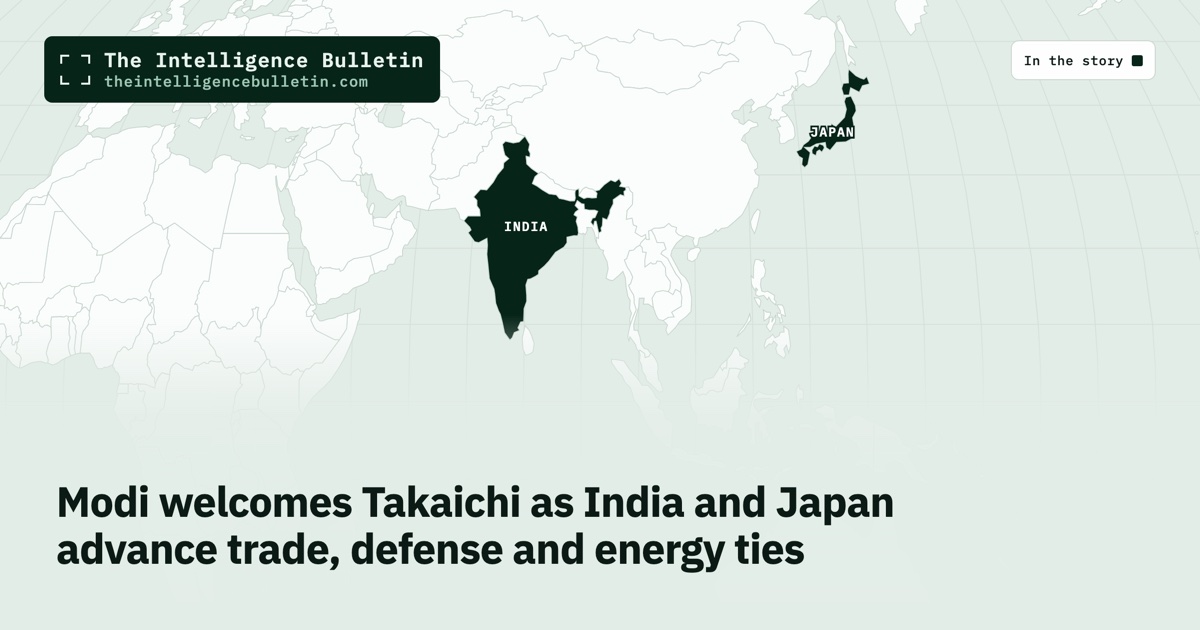
Modi welcomes Takaichi as India and Japan advance trade, defense and energy ties

Map of the countries in the story: Modi welcomes Takaichi as India and Japan advance trade, defense and energy ties
Japanese Prime Minister Sanae Takaichi arrived in New Delhi on July 1, 2026, for her first official three-day visit to India at the invitation of Prime Minister Narendra Modi. The leaders will hold the 16th India-Japan annual summit to deepen the Special Strategic and Global Partnership. Discussions focus on trade, investment, defense, energy security, technology, supply chains and regional issues including the Quad. Japan is India’s fifth-largest investor with over $48 billion in cumulative investments and 1,400 companies operating there.

One Story. Many Angles.

🇮🇳
India
Hindustan Times
Japan PM arrives in Delhi; delighted to host you on your first visit to India, says PM Modi
Read →
🇮🇳
India
Moneycontrol
‘Delighted to host you on your first visit’: PM Modi welcomes Japanese PM Takaichi to India
Read →
🇮🇳
India
Madhyamam
MALAYALAM
Annual Summit; Japanese Prime Minister Sanai Takeichi in India, to hold talks with Modi
Read →
🇮🇳
India
Dainik Bhaskar
HINDI
India Japan Deals Update; Sanae Takaichi PM Narendra Modi Meeting
Read →
🇦🇷
Argentina
Infobae
SPANISH
Japan’s prime minister arrived in India to hold talks on trade and energy security
“La primera ministra de Japón llegó a India para mantener conversaciones comerciales y de seguridad energética”
Read →

Perspective Analysis

The arrival of Japanese Prime Minister Sanae Takaichi in New Delhi on July 1, 2026, for her first official visit signals a deliberate deepening of the India-Japan Special Strategic and Global Partnership at a moment when both nations seek to insulate supply chains and energy flows from external pressures. The three-day trip, culminating in the 16th annual summit, places trade facilitation, defense cooperation, clean energy, and technology at the center of discussions, building on Japan’s status as India’s fifth-largest investor with cumulative commitments exceeding $48 billion and roughly 1,400 Japanese companies already operating in the country.

Indian English-language outlets framed the opening hours around Prime Minister Narendra Modi’s personal diplomacy and the ceremonial elements of the arrival. The Hindustan Times led with Modi’s social-media welcome, quoting his post that he was “delighted to host you on your first visit to India” and looked forward to “wide-ranging discussions tomorrow that will further deepen the India-Japan Special Strategic and Global Partnership.” The paper noted Takaichi’s arrival at the airport, her posting of arrival photographs, and the Ministry of External Affairs advisory that the two leaders would meet at Hyderabad House on July 2. It positioned the visit as an incremental step in an established bilateral rhythm rather than a dramatic departure, underscoring the continuity of high-level engagement.

Moneycontrol adopted a similar Modi-centric lens but edged slightly toward prospective economic outcomes. Its dispatch highlighted Modi’s X message and the expectation of talks covering bilateral and regional issues, while situating the visit within the three-day official program running through July 3. The business-oriented framing implicitly flagged the investment and trade dimensions that would be fleshed out in subsequent coverage, without yet enumerating specific sectors or figures.

Regional-language outlets supplied the concrete commercial texture missing from the national English dailies. Madhyamam, the Malayalam daily, detailed anticipated cooperation in clean energy, space, defense, new technologies, and resilient supply chains, anchoring the narrative with the bilateral trade figure of $27.5 billion recorded in 2025-26. It also placed the summit in the immediate aftermath of a Quad foreign-ministers’ meeting, noting that the four Quad partners had reaffirmed their commitment to a free and open Indo-Pacific. The paper stressed Japan’s infrastructure investments in India and the presence of 1,400 Japanese firms, presenting the visit as a practical opportunity to expand sectoral collaboration that directly affects readers interested in manufacturing and energy transitions.

Dainik Bhaskar went furthest in granular deal-making detail. It reported that the leaders would address investment, defense, semiconductors, critical minerals, supply chains, and maritime security during their Hyderabad House meeting. The Hindi outlet emphasized the India-Japan Business Forum, where more than 150 industry leaders from both sides were expected to participate. It highlighted ongoing preparations for rupee-yen settlement mechanisms that would allow direct local-currency payments, reducing reliance on the U.S. dollar and lowering transaction costs—an initiative tied to a 2025 shared vision document and a planned memorandum of cooperation between Japan’s finance ministry and the Reserve Bank of India. The paper also noted Japan’s target of more than 10 trillion yen in private investment over the next decade, concentrated in semiconductors, clean energy, and high-tech defense, alongside recent examples such as a Japanese stake in Yes Bank and continued support for high-speed rail projects.

The sole non-Indian source, Argentina’s Infobae, shifted the frame outward to energy security and geopolitical positioning. It quoted Takaichi’s own X post describing the need to deepen strategic cooperation “in light of the situation international current,” with explicit reference to economic and energy security. The outlet linked the visit to the Quad’s role as a counterweight in the Indo-Pacific, citing Takaichi’s statement that a truly free and open region requires every nation to chart its course “free of coercion external.” It added that new initiatives in artificial intelligence, infrastructure, and clean energy were anticipated, while noting in parallel the launch of Mercosur-Japan economic-association talks announced by Paraguayan President Santiago Peña—an external linkage absent from Indian reporting that underscored how distant observers read the summit as part of wider Asian-Latin American commercial realignment.

Across the Indian sources, domestic coverage consistently treats the visit as validation of Modi’s strategic outreach, foregrounding the prime minister’s welcoming gestures and the ceremonial reception at the presidential palace. This convergence reflects a national media inclination to present bilateral milestones through the prism of executive diplomacy. By contrast, Infobae extracts the larger Indo-Pacific stakes and energy-security imperatives that resonate with readers far from South Asia. The convergence and divergence together illustrate how the same set of facts—arrival on July 1, first visit, summit agenda—acquires different weight depending on proximity to the event.

The Takeaway

What to watch next is the substance of the July 2 summit outcomes. Observers will look for concrete announcements on rupee-yen payment arrangements, fresh defense or semiconductor memoranda, and any quantified pledges in clean energy or supply-chain resilience. The business forum’s deliberations and any follow-on Quad-related signaling will also indicate whether the visit translates rhetorical partnership into measurable diversification of trade and investment flows.


Share this story

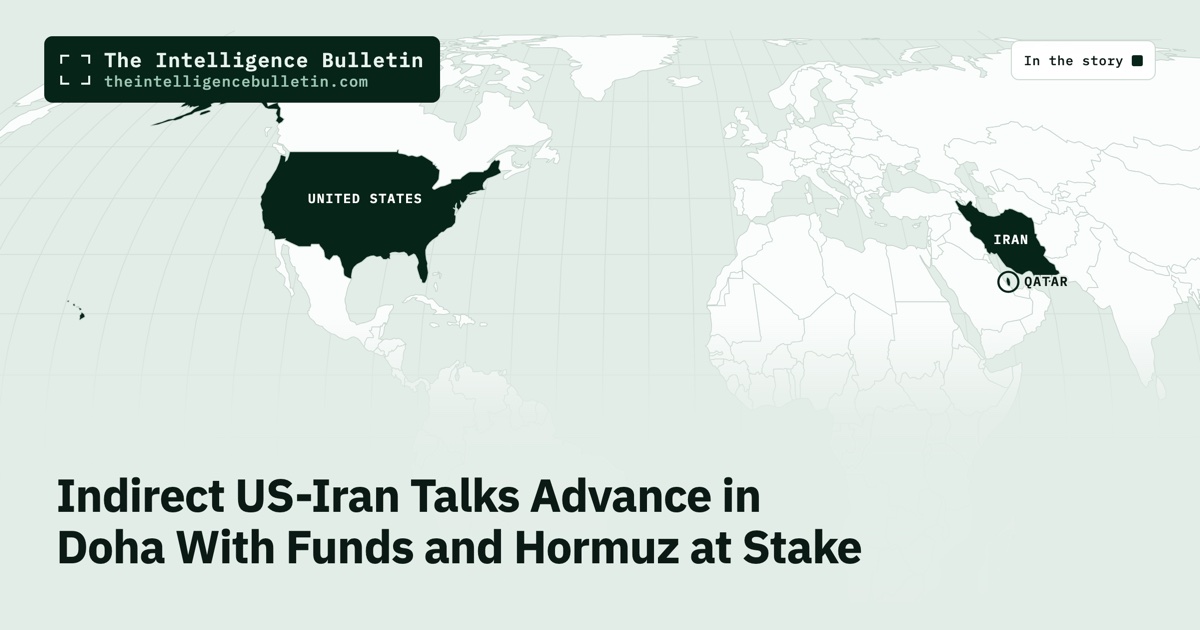
Indirect US-Iran Talks Advance in Doha With Funds and Hormuz at Stake

Map of the countries in the story: Indirect US-Iran Talks Advance in Doha With Funds and Hormuz at Stake
On July 1 2026 US and Iranian officials held indirect technical talks in Doha through Qatari and Pakistani mediators to implement a memorandum of understanding and ease tensions after recent Strait of Hormuz strikes. Qatar announced positive progress and plans for a communication channel plus partial release of frozen Iranian funds. US envoys Steve Witkoff and Jared Kushner met Qatari officials but did not hold direct talks with Iranians. Iranian officials highlighted US violations of the MoU while Trump described the meetings as very good.

One Story. Many Angles.

🇺🇸
United States
Antiwar.com
Qatar Says US and Iran Concluded Indirect Talks in Doha
Read →
🇺🇸
United States
CNN Arabic
ARABIC
Qatar denies direct US-Iran meeting in Doha while tying frozen funds release to compliance
“Qatar: No direct meeting between Washington and Tehran in Doha.. and this is the condition for transferring frozen Iranian funds”
Read →
🇵🇰
Pakistan
Samaa
Trump claims US, Iran officials to meet in Doha
Read →
🇮🇳
India
Moneycontrol
Trump sends Kushner, Witkoff to Doha as US-Iran talks race to save Hormuz ceasefire
Read →
🇷🇺
Russia
Interfax
RUSSIAN
Trump confirmed that US and Iran talks will take place on Tuesday in Doha
Read →

Perspective Analysis

Indirect talks between the United States and Iran concluded in Doha on July 1, 2026, through Qatari and Pakistani mediators, marking a narrow but tangible step toward implementing a memorandum of understanding amid fresh exchanges of strikes that have tested a fragile ceasefire in the Strait of Hormuz. The sessions produced agreement on establishing a direct communication channel for monitoring compliance and on the partial release of some of Iran’s $6 billion in frozen funds held in Qatar, yet they also exposed persistent Iranian grievances over alleged U.S. violations of the accord. No direct bilateral contact occurred, a point Qatar has repeatedly emphasized, underscoring how third-party mediation remains the sole operational pathway after months of conflict.

The memorandum itself stems from earlier diplomatic efforts, including the Lake Lucerne Summit, and aims to halt hostilities that have included tit-for-tat strikes since an Iranian projectile struck a cargo vessel in the strait on June 26. Both sides had previously agreed to cease fire and reopen the waterway, through which roughly one-fifth of global oil and liquefied natural gas transits, but weekend attacks threatened to unravel the interim deal signed around June 17. U.S. officials have insisted they are upholding their end while warning that violence will be met with violence, even as they pursue the peace process.

Antiwar.com provided the most detailed account of outcomes and Iranian positions. Its reporting highlighted Qatari Foreign Ministry spokesman Majed al-Ansari’s statement that the mediators concluded separate meetings with U.S. and Iranian negotiators “with positive progress made on issues related to the Islamabad Memorandum of Understanding.” Iranian deputy foreign minister Kazem Gharibabadi confirmed that the talks centered on U.S. violations of Clause 1, including the cessation of war in Lebanon, reports of American force reinforcements, and interventionist statements. The two sides agreed to open a communication channel by the following day for the monitoring group to report and resolve shortcomings in documented form. Gharibabadi also noted that meetings with Qatari Central Bank officials examined expenditure of part of the initial $6 billion, deciding that purchases of necessary goods would proceed according to Iran’s announced needs. The outlet further noted that U.S. envoys Steve Witkoff and Jared Kushner, despite their high-level presence in Doha, did not join the technical sessions with the Iranian side.

CNN Arabic foregrounded Qatar’s explicit denials of any direct U.S.-Iran meetings and the conditional nature of further fund transfers. Spokesman Majed al-Ansari stated that Witkoff and Kushner were in Doha to meet mediators and Qatari officials for discussions on all regional issues, including Iran negotiations, but clarified they were “not here to conduct direct negotiations with the Iranians.” He added that the $6 billion in frozen funds would be transferred “according to the progress of the negotiations.” The outlet also reported Qatari coordination with Oman to ensure safe passage for vessels through the Strait of Hormuz, reflecting Doha’s broader interest in regional maritime stability. A White House official confirmed to CNN that the two U.S. figures would meet Qatar’s prime minister and mediators, while separate U.S. and Iranian delegations would participate in technical talks with Qatari and Pakistani mediators.

Samaa, reflecting Pakistan’s role as co-mediator, centered on President Trump’s public claims. The Pakistani outlet reported Trump’s assertion on social media that Iran had requested the meeting and that it would take place in Doha, without further details. This framing aligns with Islamabad’s stake in the process, as Pakistani mediators participated alongside their Qatari counterparts. Earlier Iranian statements had denied plans for such talks, creating a contrast between Washington’s announcements and Tehran’s initial skepticism that the coverage captured without amplification.

Moneycontrol emphasized the urgency tied to energy security and the envoys’ involvement. Its reporting described Witkoff and Kushner flying to Doha for high-level meetings while technical talks continued on the sidelines, following fresh strikes that tested the Hormuz ceasefire. The outlet noted the 14-point memorandum’s goal of ending four months of conflict and reopening the strait, alongside U.S. press secretary Karoline Leavitt’s remarks that the envoys were attending as discussions on the memorandum advanced. It highlighted the risk that renewed violence could derail the accord, positioning the talks as a race to preserve stability in a critical chokepoint.

Interfax reported Trump’s confirmation that talks would occur on Tuesday in Doha while noting prior Iranian denials. The Russian agency quoted Trump’s Truth Social post stating that Iran had requested the meeting and that it would take place the next day, without specifics. It referenced earlier Iranian Foreign Ministry statements denying technical working-group talks, even as consultations with Qatar continued. This external verification angle illustrated how U.S. scheduling claims gained traction internationally despite Tehran’s pushback.

Across these accounts, the shared factual core is the use of indirect mediation as the only viable channel after strikes. No outlet reported direct U.S.-Iran contact; all stressed Qatari and Pakistani facilitation. Divergent emphases—concrete outcomes and grievances at Antiwar.com, procedural guardrails and fund conditions at CNN Arabic, Trump’s announcements at Samaa, Hormuz stakes and envoy roles at Moneycontrol, and scheduling verification at Interfax—converge on incremental progress rather than breakthrough. Iranian officials continue to condition deeper engagement, including any long-term nuclear discussions, on verifiable U.S. compliance with the existing memorandum. Trump has described the meetings as “very good” and linked them to denuclearization efforts, though reports indicate that topic was not on the table.

The Takeaway

The next meetings are expected to be scheduled soon after funeral processions for the former Iranian Supreme Leader. Observers will watch whether the new communication channel functions to resolve disputes over Lebanese ceasefires and regional deployments, whether initial fund releases materialize without new strikes, and whether Hormuz transit remains stable. Any escalation in the strait or failure to document shortcomings could quickly reverse the modest gains achieved through Qatari and Pakistani channels.


Share this story

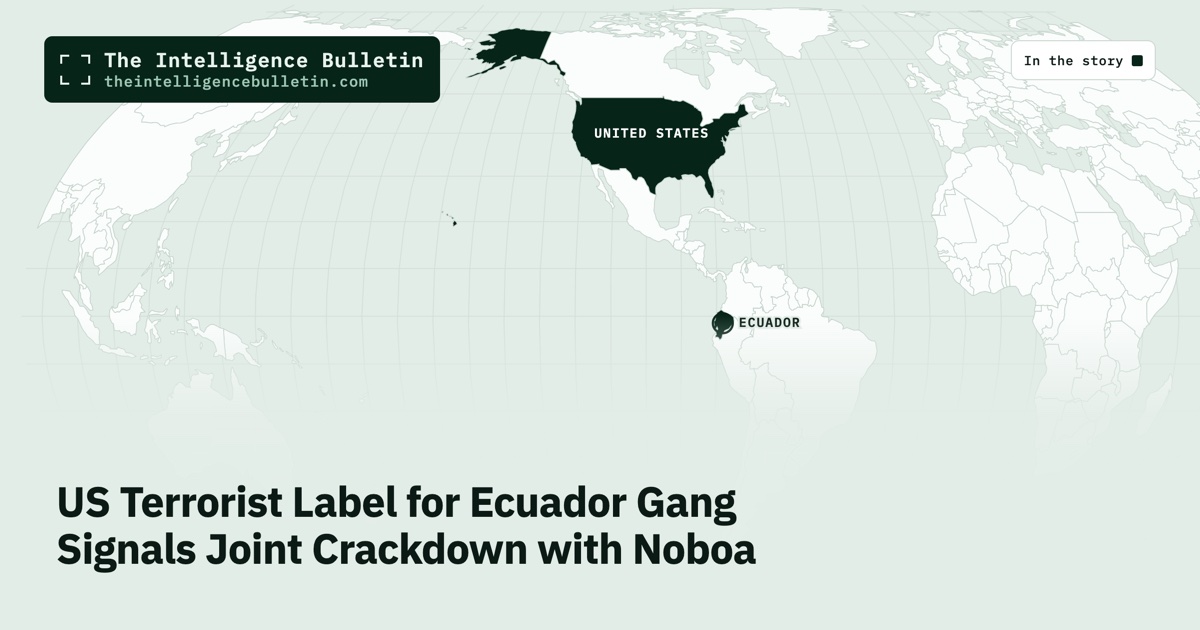
US Terrorist Label for Ecuador Gang Signals Joint Crackdown with Noboa

Map of the countries in the story: US Terrorist Label for Ecuador Gang Signals Joint Crackdown with Noboa
On July 1, 2026, the U.S. State Department designated Ecuador’s Chone Killers gang as a Foreign Terrorist Organization and Specially Designated Global Terrorist. Secretary of State Marco Rubio cited the gang’s attacks on civilians, police, and officials, including assassinations, and imposed sanctions. The move fits the Trump administration’s broader crackdown on Latin American gangs and drug networks. Ecuador’s foreign ministry welcomed the decision as support for President Daniel Noboa’s anti-crime campaign.

One Story. Many Angles.

🇺🇸
United States
WTVB
US designates Ecuador gang Chone Killers as a ‘terrorist’ group
Read →
🇨🇷
Costa Rica
La Nación
SPANISH
United States designates Ecuadorian criminal group Chone Killers as terrorist organization
“Estados Unidos designa como organización terrorista al grupo criminal ecuatoriano Chone Killers”
Read →
🇺🇸
United States
MIX-FM
US designates Ecuador’s Chone Killers gang a foreign terrorist group
Read →

Perspective Analysis

The U.S. designation of Ecuador’s Chone Killers as a Foreign Terrorist Organization and Specially Designated Global Terrorist on July 1, 2026, crystallizes a coordinated hemispheric approach that pairs Washington’s sanctions toolkit with President Daniel Noboa’s domestic security offensive, rather than standing as an isolated American policy move.

The action, announced by Secretary of State Marco Rubio, targets a gang accused of repeated attacks on civilians, law enforcement, and public officials, including high-profile assassinations. It imposes sanctions while signaling continued U.S. partnership with Ecuador to disrupt drug flows and the revenue streams that sustain violent criminal networks. This step fits the broader pattern of the second Trump administration’s campaign against Latin American gangs and narcotics trafficking, which has included prior designations and lethal interdiction operations against suspected drug boats.

Background on the Chone Killers remains limited in public U.S. statements, yet the designation itself marks a formal escalation that treats the group’s activities as threats extending beyond Ecuador’s borders. Rubio’s statement explicitly linked the gang’s operations to Mexican cartels that rely on Ecuadorian networks for transport and export of illicit drugs, framing the violence as both local criminality and a component of transnational narcoterrorism. Ecuador’s foreign ministry responded promptly by welcoming the move as validation of Noboa’s all-out campaign against organized crime, underscoring the political alignment between Quito and Washington.

American radio outlets carrying the Reuters wire offered the most Washington-centric accounts. WTVB published the core dispatch without additional Ecuadorian sourcing, emphasizing Rubio’s description of the gang’s attacks and the Trump administration’s ongoing hemispheric drug-disruption efforts. The piece highlighted partnership language but omitted the foreign ministry’s explicit statement of gratitude, presenting the designation primarily as a U.S. national-security instrument rather than a bilateral diplomatic exchange.[[1]](https://wtvbam.com/2026/07/01/us-designates-ecuador-gang-chone-killers-as-a-terrorist-group/)

MIX-FM carried an expanded version of the same Reuters text, incorporating additional reporting that introduced two elements absent from the shorter WTVB rendering. It included Rubio’s allegation that Ecuadorian gangs facilitate Mexican cartel logistics and noted the foreign ministry’s public thanks on X for U.S. support of Noboa’s anti-crime policies. This version still relied on the same Washington dateline and reporting by Daphne Psaledakis, yet the extra credit to Alexandra Valencia and the inclusion of the Ecuadorian reaction gave readers a slightly fuller picture of the bilateral dimension.[[2]](https://mymixfm.com/2026/07/01/us-designates-ecuador-gang-chone-killers-as-a-terrorist-group/)

La Nación, drawing on AFP, adopted a distinctly regional lens by leading with Noboa’s persistent struggle against organized crime since taking office. The Costa Rican outlet framed the U.S. decision as recognition of the narco ties binding Ecuadorian gangs to wider trafficking routes, accompanied by a photograph credited to Jacquelyn Martin. Its emphasis on the Ecuadorian presidency’s domestic political context—rather than on the mechanics of the U.S. sanctions list—illustrates how Latin American coverage anchors the story in Quito’s security challenges instead of treating it as routine State Department procedure.[[3]](https://www.nacion.com/el-mundo/estados-unidos-designa-como-organizacion/WKEC5XY5PRHBBIAEW7CQDMJYSI/story/)

Across the three outlets, the core factual sequence remains consistent: the July 1 designation, Rubio’s quoted remarks on attacks and sanctions, and the Trump-era policy backdrop. Divergences appear mainly in sourcing depth and framing priorities. The two U.S. stations reproduced near-identical wire copy, differing only in whether they carried the additional reporting that captured the Ecuadorian ministry’s reaction. La Nación’s AFP-based piece supplied the most explicit linkage to Noboa’s ongoing fight, revealing how proximity to the region shapes emphasis. These variations do not contradict one another; they reflect the predictable differences between domestic U.S. radio platforms and a regional Spanish-language newspaper serving Central American audiences.

The convergence on the designation itself, paired with these subtle differences in emphasis, suggests the event functions simultaneously as standard U.S. counter-narcotics signaling in Washington and as political reinforcement for Noboa closer to home. No outlet reported internal Ecuadorian debate or opposition reactions, indicating the story was treated as a straightforward bilateral win rather than a contested development.

The Takeaway

Looking ahead, observers should monitor whether additional Ecuadorian gangs receive similar designations, how Noboa incorporates the U.S. move into his domestic messaging ahead of any electoral tests, and whether the sanctions produce measurable effects on cartel logistics through Ecuadorian ports. Continued coordination between the Trump administration and the Noboa government on interdiction and financial pressure will likely determine whether this designation remains a symbolic milestone or marks the start of a sustained joint campaign.


Share this story