US Secretly Shielded Iranian Negotiators From Israeli Strikes to Save Talks

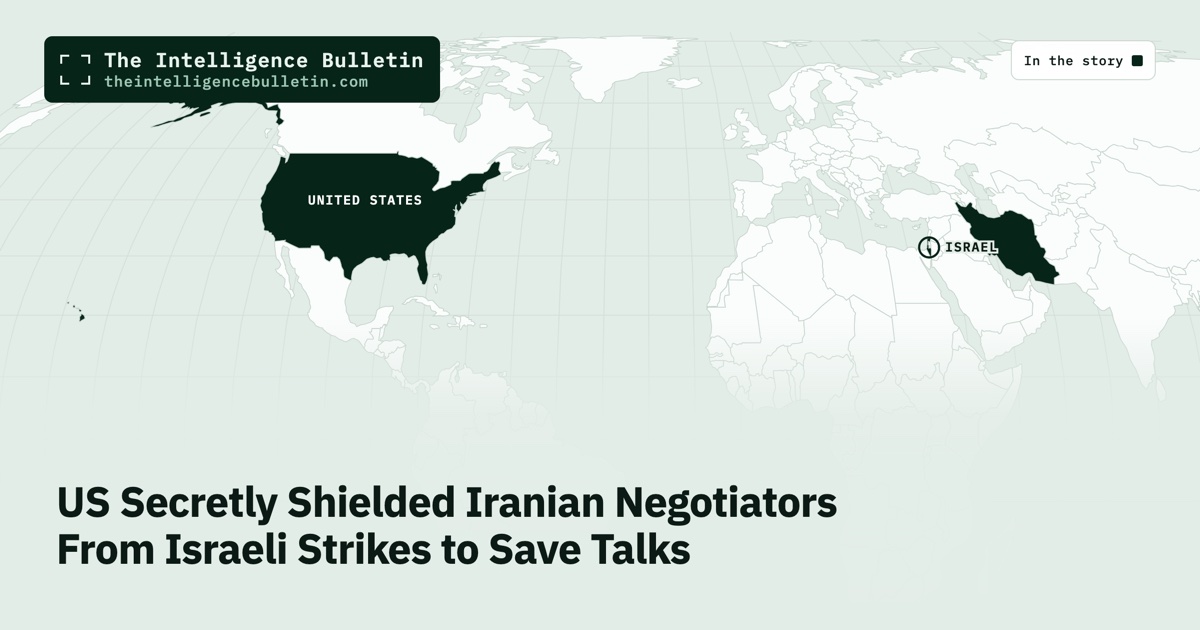
Map of the countries in the story: US Secretly Shielded Iranian Negotiators From Israeli Strikes to Save Talks
On July 3, 2026, reports based on US officials revealed that Washington warned Iran via regional intermediaries that Israel planned to assassinate Iranian negotiators Mohammad Bagher Ghalibaf and Abbas Araghchi during ceasefire talks. The US acted to prevent collapse of diplomacy after a 60-day ceasefire memorandum. Israeli strikes had already killed senior Iranian figures earlier in the conflict that began February 28. Talks continue amid US-Israel divergences on ending the war.

One Story. Many Angles.

🇺🇸
United States
CNN
US officials attempted to warn Iran of fears that Israel would assassinate mediators
Read →
🇮🇳
India
The Indian Express
US Secretly Warned Iran That Israel Was Planning to Assassinate Its Top Peace Negotiators
Read →
🇮🇳
India
The Siasat Daily
US warned Iran over Israeli plot to target top negotiators: Report
Read →

Perspective Analysis

The United States has quietly intervened to shield Iranian negotiators from potential Israeli strikes, a move that underscores Washington’s growing prioritization of fragile ceasefire diplomacy over traditional alliance solidarity with Israel. This protective warning, delivered through regional intermediaries, reflects a calculated effort to prevent the collapse of talks that could otherwise reignite full-scale conflict.

The underlying war erupted on February 28, 2026, when Israeli strikes, drawing partly on US intelligence, killed Iran’s supreme leader Ayatollah Ali Khamenei along with other senior figures. Early in the fighting, Israel systematically targeted Iranian political and military leadership, including officials viewed as more open to dialogue such as national security chief Ali Larijani. By April, however, a 60-day ceasefire memorandum had been reached between the US and Iran, shifting the emphasis toward indirect negotiations even as core issues like Iran’s nuclear stockpile remained unresolved. It was against this backdrop that Washington grew concerned Israel might still eliminate the two men leading Tehran’s side of the talks.

US officials conveyed their fears to Iran that Israel planned to assassinate Parliament Speaker Mohammad Bagher Ghalibaf or Foreign Minister Abbas Araghchi, both central to the diplomatic channel. The warnings traveled through third countries rather than direct contact, according to current and former American officials. There was no indication of a specific, imminent plot at the time of the alerts, but the broader Israeli campaign against senior Iranian leaders had already demonstrated a willingness to strike negotiators. President Donald Trump had previously highlighted the risk in March, telling reporters he avoided naming Iranian counterparts publicly because “I don’t want them to be killed” and noting that “they’ve wiped out everybody.”

CNN’s reporting frames the episode as an exercise in proactive American diplomacy aimed at preserving the talks Washington itself helped initiate. It highlights internal US calculations, including Trump’s reported expletive-laden disagreements with Israeli Prime Minister Benjamin Netanyahu over military plans and concerns about Israel’s expanding intelligence operations targeting Iranian and even US officials. The network notes that early Israeli successes in decapitating leadership failed to produce regime change in Tehran, prompting the Trump administration to pivot more firmly toward negotiations. This angle emphasizes Washington’s protective role and the personal stakes for Trump in keeping the process alive despite friction with his Israeli counterpart.

The Indian Express provides sharper operational detail on how close the negotiators came to harm. Ghalibaf survived an Israeli strike on a bunker where senior officials were meeting and, in April, diverted his flight from talks in Islamabad after intelligence indicated Israeli jets entering Iranian airspace; the plane landed in Mashhad and the delegation drove the remaining distance to Tehran. The paper also references a Wall Street Journal account indicating Israel had placed both Ghalibaf and Araghchi on a target list but paused those plans once US-Iran talks began. Iranian lawmaker Mohsen Zanganeh described the negotiators’ continued travel to meetings in Qatar and Switzerland as “a real sacrifice,” underscoring the personal risk amid ongoing indirect diplomacy.

The Siasat Daily draws on additional Washington Post reporting to stress widening US-Israeli divergences. It notes American pressure on Israel to refrain from targeting Iranian political leaders while talks were underway, with a White House official stating that Trump wanted “the peace process to play out.” Former State Department official Aaron David Miller is quoted observing that the episode illustrates a growing gap between the allies over how the conflict should end. While the United States has increasingly favored sustaining the ceasefire and advancing talks in places like Doha and Switzerland, Israel reportedly remains focused on broader military objectives.

Across these accounts, all rooted in the same New York Times disclosure, a consistent picture emerges of Washington choosing to safeguard diplomacy even when that choice strains relations with a key ally. The convergence is striking given the outlets’ different vantage points: an American network attuned to domestic policy frictions, and two Indian publications that add regional operational color and explicit commentary on alliance rifts. The shared reliance on US officials and the absence of contradictory Israeli confirmation suggest the core facts are not in dispute, even if interpretations vary in emphasis.

The Takeaway

What remains uncertain is whether the protective measures will hold as the next phase of talks unfolds after ceremonies marking Khamenei’s death. Implementation of the existing memorandum, particularly on sensitive nuclear and regional security questions, will test whether the US-Iran channel can withstand renewed Israeli pressure or internal Iranian hardline resistance. Observers will watch closely for signs that either side reverts to the leadership-targeting tactics that defined the conflict’s opening months.
Share this story

Three Sahel juntas start one-year exit from ICC over neocolonial claims

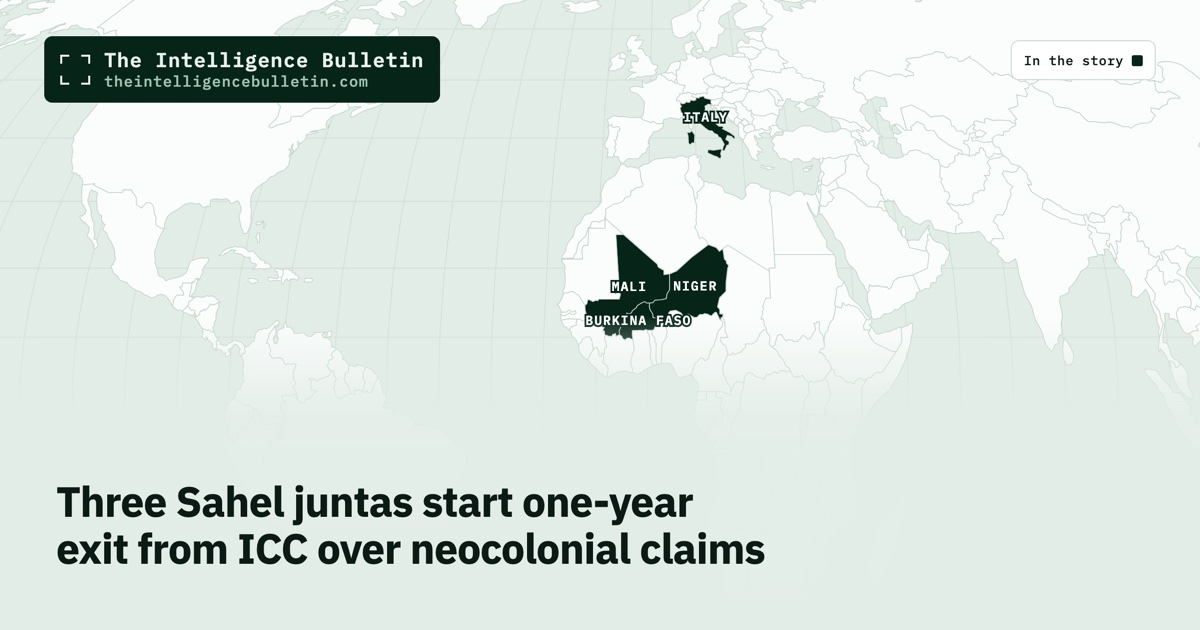
Map of the countries in the story: Three Sahel juntas start one-year exit from ICC over neocolonial claims
On July 3, 2026, Burkina Faso, Mali, and Niger submitted official letters to the UN Secretary-General initiating their withdrawal from the Rome Statute of the International Criminal Court. The three military-led governments described the tribunal as a tool of neocolonial repression amid ongoing insurgencies and allegations of atrocities. The ICC presidency warned the move weakens global efforts against impunity, though withdrawal takes one year and does not erase prior obligations or ongoing cases.

One Story. Many Angles.

🇿🇦
South Africa
Channel Africa
Burkina Faso, Mali, Niger begin ICC exit process
Read →
🇫🇷
France
Africanews
Mali, Burkina Faso and Niger initial process to withdraw from ICC
Read →

Perspective Analysis

The coordinated decision by Burkina Faso, Mali, and Niger to initiate formal withdrawal from the International Criminal Court on July 3, 2026, marks a deliberate institutional rupture by the three military-led governments of the Alliance of Sahel States. This step, confirmed through official letters submitted to the United Nations Secretary-General, sets in motion a mandatory one-year exit from the Rome Statute and reflects accumulated grievances over the tribunal’s perceived selective focus on African conflicts.

The three nations have operated under military rule since coups in recent years, facing persistent Islamist insurgencies that have displaced millions and prompted allegations of atrocities on multiple sides. Their joint move comes amid broader efforts to assert regional autonomy, including withdrawal from the Economic Community of West African States and the formation of their own security and political alliance. The ICC has long drawn criticism from African leaders for investigating situations predominantly on the continent while appearing to overlook comparable violations elsewhere, a pattern the Sahel governments now explicitly label as neocolonial.

Channel Africa, the South African state broadcaster, presents the development as a clear assertion of sovereignty by the three West African states. Its reporting emphasizes the formal notification process and frames the governments’ rhetoric around rejection of the court as a tool of external interference, while noting the ongoing security challenges and rights allegations involving both militants and state forces. The outlet balances this with the ICC presidency’s warning that the withdrawals undermine global efforts against impunity, yet it prioritizes the perspective of African agency in shaping relations with international institutions.

Africanews, the pan-African outlet with French linkages, adopts a more procedural lens. Its coverage highlights the ICC’s confirmation of the letters and the one-year timeline before any withdrawal takes effect, underscoring that prior obligations and any ongoing cases remain unaffected. The report stresses the presidency’s explicit concern that the move weakens accountability mechanisms, reflecting an institutional emphasis on the tribunal’s role in combating impunity rather than extensive exploration of the governments’ sovereignty arguments.

Both outlets converge on the same verified sequence of events without introducing divergent narratives or additional sourcing that would suggest competing interpretations. The uniformity indicates that the immediate story centers on the mechanical and diplomatic steps of rupture rather than deeper geopolitical fallout or internal divisions within the Alliance. South African state media and a European-tied pan-African service thus arrive at nearly identical framing of the core facts—the letters, the neocolonial characterization from Bamako, Ouagadougou, and Niamey, and the ICC’s caution—revealing how regionally oriented coverage treats the episode primarily as an institutional milestone.

The Takeaway

This convergence carries implications for how the withdrawals will be tracked in the coming months. Observers will watch whether the one-year clock prompts any reconsideration by the three capitals or attracts parallel announcements from other African states that have voiced similar frustrations with the court. Attention will also turn to the status of existing ICC preliminary examinations or investigations involving Sahel situations, which the withdrawal does not erase, and to how the Alliance coordinates its security responses amid continued insurgencies without reference to the Rome Statute framework. The episode tests the resilience of international justice norms in regions where state legitimacy rests increasingly on assertions of sovereignty over external oversight.


Share this story

Papua Rebels Kill US Pilot, Claiming Civilian Flights Aid Indonesian Troops

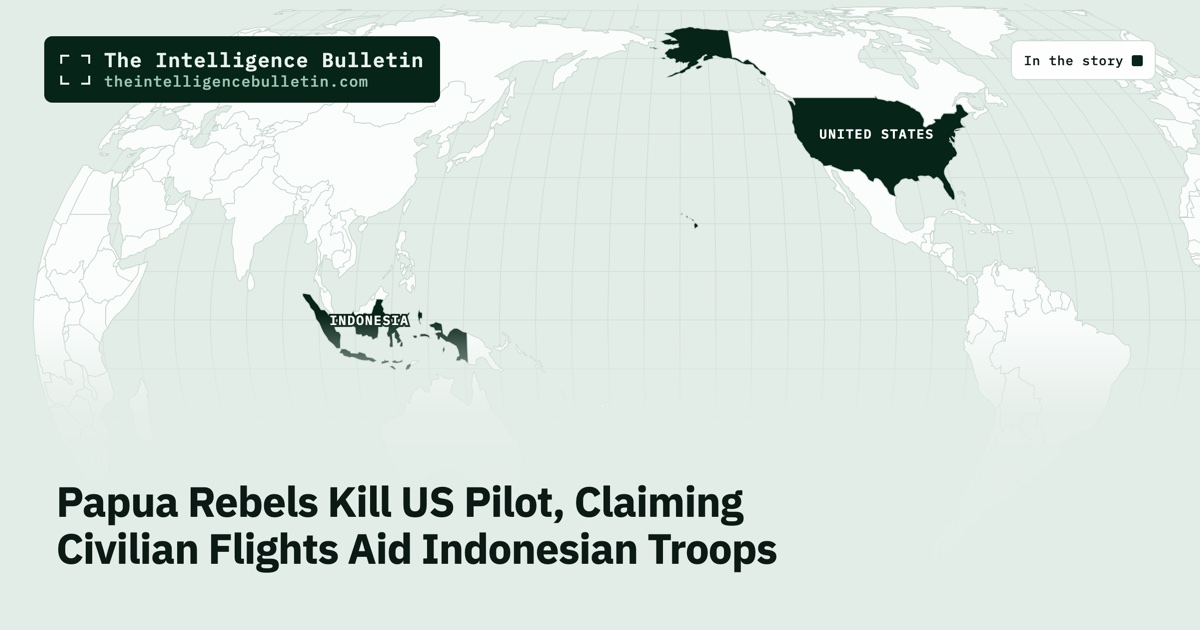
Map of the countries in the story: Papua Rebels Kill US Pilot, Claiming Civilian Flights Aid Indonesian Troops
On July 2, 2026, armed separatists from the West Papua National Liberation Army (TPNPB, also called KKB) shot dead American pilot Nicholas F. Goselin and burned his Pilatus aircraft operated by Associated Mission Aviation at Balinggama airstrip in Yahukimo, Highland Papua, Indonesia. The plane had flown from Wamena carrying the pilot and seven Papuan passengers, who survived unharmed. Separatists claimed the attack targeted alleged military use of civilian flights and issued warnings to Indonesia and the US; Indonesian authorities confirmed the incident and launched an investigation.

One Story. Many Angles.

🇮🇩
Indonesia
Tribun News
INDONESIAN
KKB Burns AMA Plane in Yahukimo Papua Highlands, Pilot Allegedly Killed
Read →
🇺🇸
United States
NBC News
Papua separatists claim to have shot dead a U.S. pilot who transported Indonesian troops
Read →
🇬🇧
United Kingdom
The Guardian
Papua separatists kill American pilot in ‘message’ to US and Indonesia
Read →
🇮🇹
Italy
AsiaNews
INDONESIA American civilian pilot killed by separatists in Papua
Read →
🇳🇱
Netherlands
Drimble
DUTCH
American pilot shot dead by rebels in Papua, Indonesia recovers body
Read →

Perspective Analysis

The killing of American pilot Nicholas F. Goselin on July 2, 2026, at a remote Highland Papua airstrip illustrates how a single act of violence registers as a localized security breach in Indonesian domestic coverage, a U.S. citizen casualty abroad in American reporting, a political message amid decades of insurgency in British analysis, a humanitarian tragedy for faith-linked aviation in Catholic media, and a terse factual note in Dutch aggregation. Each framing reflects institutional priorities and geographic distance from the conflict zone rather than contradictions in the underlying events.

Goselin, flying a Pilatus aircraft registered PK-RCY for Associated Mission Aviation, had departed Wamena earlier that morning with seven Papuan passengers bound for the Balinggama airstrip in Sobaham District, Yahukimo Regency. After landing, separatist fighters from the West Papua National Liberation Army, also referred to as TPNPB or KKB by Indonesian authorities, shot the pilot and set the plane ablaze. The passengers escaped unharmed. Indonesian police and military units under the Damai Cartenz operation recovered the body and launched an investigation while confirming the aircraft belonged to the missionary airline.[[1]](https://www.tribunnews.com/regional/7849287/kkb-bakar-pesawat-milik-ama-di-yahukimo-papua-pegunungan-pilot-diduga-dibunuh)[[2]](https://www.theguardian.com/world/2026/jul/02/papua-separatists-kill-american-pilot-yahukimo)

Tribun News, reporting from within Indonesia’s security narrative, presented the episode as another KKB terror incident during an active joint police-military operation. The outlet named Captain Nikolas Gosselin as the presumed victim, identified the burned Pilatus as AMA property, and noted the airline’s Catholic missionary and humanitarian basis. It emphasized ongoing coordination by Satgas Operasi Damai Cartenz spokespeople, helicopter footage of the smoking wreckage, and the isolated highland terrain that makes air access essential. No reference appeared to separatist political demands or allegations of troop transport.[[1]](https://www.tribunnews.com/regional/7849287/kkb-bakar-pesawat-milik-ama-di-yahukimo-papua-pegunungan-pilot-diduga-dibunuh)

NBC News, drawing on Associated Press material, centered the American nationality of the victim and the separatists’ explicit claim that the aircraft had carried Indonesian troops and logistics into contested zones. Spokesman Sebby Sambom was quoted stating the plane violated a TPNPB ultimatum against civilian flights in operational areas. The report noted the group’s call for international negotiations involving President Prabowo Subianto and the United Nations, while recording that the claims could not be independently verified.[[3]](https://www.nbcnews.com/news/us-news/papua-separatists-claim-shot-us-pilot-indonesian-troops-rcna352701)

The Guardian situated the attack within Papua’s half-century independence struggle, describing it as a deliberate “message” to both Jakarta and Washington for failing to address root causes. It detailed Sambom’s accusation that civilian planes frequently dropped military personnel, the rebels’ warning of future targeting, and visual elements from a TPNPB video showing fighters with guns and axes raising the Morning Star flag. Indonesian officials confirmed the burned aircraft and Papuan passengers but stopped short of endorsing the troop-transport allegation. The piece also recalled the 2023–2024 kidnapping of a New Zealand pilot as context for the pattern of targeting aviation.[[2]](https://www.theguardian.com/world/2026/jul/02/papua-separatists-kill-american-pilot-yahukimo)

AsiaNews, reporting from a Catholic perspective, highlighted AMA’s 67-year history as the air service of the Jayapura Diocese, delivering healthcare workers, missionaries, aid, and mail to communities reachable only by air. Director Bob Kayadu described the incident as the organization’s first crew fatality in that span. The account stressed that Goselin had been performing an essential service for isolated Papuan populations and noted U.S. State Department monitoring of the Indonesian investigation alongside statements from Indonesian defense officials thanking local and religious leaders for assisting with body recovery.[[4]](https://www.asianews.it/news-en/American-civilian-pilot-killed-by-separatists-in-Papua-65777.html)

Drimble, functioning as a Dutch news aggregator with historical ties to Indonesia, limited its dispatch to the bare sequence: an American pilot shot dead by separatist rebels in Papua, with Indonesian forces recovering the body. No additional political claims, humanitarian framing, or historical context appeared.[[5]](https://drimble.nl/buitenlands-nieuws/107358508/amerikaanse-piloot-doodgeschoten-door-rebellen-in-papoea-indonesie-bergt-lichaam.html)

Across these accounts, the divergence is structural. Indonesian domestic outlets align with the official framing of internal security operations and avoid amplifying separatist messaging. U.S. coverage privileges the citizen-victim dimension and the rebels’ direct accusations. British broadsheet reporting supplies the longer arc of colonial transition, the disputed 1969 Act of Free Choice, and ongoing diplomatic appeals. Faith-oriented media foreground the continuity of missionary logistics in a region where aviation substitutes for roads. Aggregators default to minimal wire-style facts. The same verified elements—the July 2 landing at Balinggama, the death of Goselin, the destruction of the AMA Pilatus, the survival of the seven passengers, and Sambom’s statements—receive different weight according to each outlet’s audience and mission.

The Takeaway

What bears watching next is the Indonesian investigation’s conclusions on whether the aircraft had carried military personnel, any formal U.S. response beyond monitoring, and whether TPNPB follows through on threats against additional civilian flights. The episode also renews scrutiny of how missionary and commercial aviation operate in zones where separatists assert de facto control, a dynamic that has persisted through previous incidents without resolution of the underlying political grievances.


Share this story

Canadian and Philippine outlets converge on trade pacts, diverge on Marcos resolve

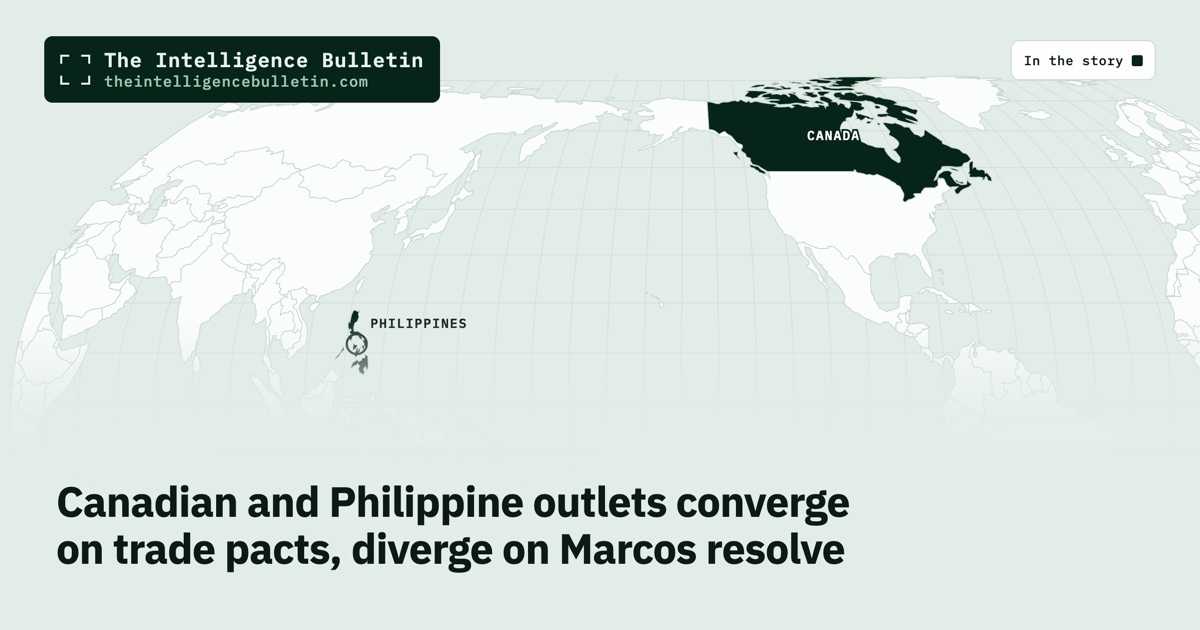
Map of the countries in the story: Canadian and Philippine outlets converge on trade pacts, diverge on Marcos resolve
On July 2, 2026, Canadian Prime Minister Mark Carney and Philippine President Ferdinand Marcos Jr. oversaw the signing of sectoral agreements in Vancouver covering energy, natural resources, labour mobility, worker protections and tourism. The leaders highlighted people-to-people ties, with nearly one million Filipino-Canadians, and expressed hope for a future bilateral free trade agreement. Marcos, on his first official visit to Canada in 11 years, also discussed advancing ASEAN trade talks during his upcoming summit chairmanship.

One Story. Many Angles.

🇨🇦
Canada
The Globe and Mail
Canada, Philippines sign joint agreements, boosting hopes of trade deal
Read →
🇵🇭
Philippines
Manila Bulletin
Marcos to push through with Canada trip Palace
Read →
🇨🇦
Canada
Les Affaires
FRENCH
Joint statement by the Prime Minister of Canada and the President of the Republic of the Philippines
Read →
🇨🇦
Canada
CityNews Toronto
Canada, Philippines sign sectoral agreements during Marcos visit to Vancouver
Read →
🇨🇦
Canada
Penticton Herald
Philippines President Marcos says ‘we share the same aspirations’ as Canada
Read →

Perspective Analysis

Canadian and Philippine media coverage of President Ferdinand Marcos Jr.’s July 2, 2026, visit to Vancouver revealed a clear divergence in emphasis despite broad agreement on the substance of the agreements signed. Canadian outlets presented a unified account of concrete sectoral deals and the elevation of bilateral ties under Ottawa’s Indo-Pacific strategy, while the sole Philippine report available before the trip framed the journey around Marcos’s determination to deliver results amid domestic political turbulence.

The event marked Marcos’s first official visit to Canada in 11 years. During the Vancouver meetings, Prime Minister Mark Carney and the Philippine leader oversaw the signing of memoranda covering energy, natural resources, labour mobility, worker protections and tourism. Both sides expressed hope that the sectoral steps would accelerate negotiations toward a full bilateral free-trade agreement, with an eye on concluding talks before Carney’s planned November trip to Manila for the ASEAN summit that the Philippines will chair. Nearly one million people in Canada identified as Filipino in the 2021 census, a demographic reality repeatedly cited as the foundation for deeper people-to-people and economic links.

The Globe and Mail, CityNews Toronto and the Penticton Herald all carried essentially identical copy from The Canadian Press. Their reporting detailed the signed agreements, quoted Marcos declaring that “we share the same aspirations, in terms of what we would want to achieve in the world,” and recorded Carney’s pledge that Filipino workers—particularly care workers and nurses—would be treated fairly and have their rights respected. The stories noted existing defence cooperation and highlighted an analysis by Asia Pacific Foundation vice-president Vina Nadjibulla, who argued that the visit demonstrated tangible results from Canada’s 2022 Indo-Pacific strategy, including expanded cooperation on maritime security, critical minerals and nuclear technology. The Globe and Mail added a modest layer of framing by titling its piece around boosted hopes for a trade deal, but the underlying narrative remained the same wire-service account.

Les Affaires took a different approach by reproducing the official joint statement in French rather than offering journalistic summary. The communiqué stressed the formal elevation of relations to a “partenariat stratégique,” with ministers of foreign affairs tasked to advance work on energy—especially nuclear—critical minerals, defence, cybersecurity, maritime security and food security. It reiterated the shared goal of concluding a free-trade agreement this year and underscored the Philippines’ ASEAN chairmanship as an opportunity to accelerate Canada-ASEAN trade talks. The institutional tone and full reproduction of the text gave Quebec business readers direct access to the governments’ own language of partnership rather than interpretive reporting.

In contrast, Manila Bulletin’s June 30 pre-departure article focused squarely on Marcos’s insistence on completing the trip despite ongoing domestic protests, including a surprise rally by members of Iglesia Ni Cristo along EDSA in Quezon City. Presidential Communications Office Secretary Dave Gomez confirmed that the schedule remained unchanged, and the report positioned the Canada visit as a vehicle for advancing free-trade agreement negotiations from the Philippine side. This domestic framing—absent from all Canadian coverage—highlighted the personal and political stakes for Marcos in demonstrating foreign-policy delivery.

The uniformity across Canadian outlets reflected how closely the event adhered to Ottawa’s prepared narrative of economic gains, labour protections and strategic alignment in the Indo-Pacific. Only the earlier Philippine report introduced any sense of contingency or Marcos’s resolve to push through potential disruptions at home. Taken together, the coverage shows two capitals reading the same event through different lenses: one emphasizing institutional momentum and shared values, the other underscoring presidential determination to translate diplomatic travel into tangible trade progress.

The Takeaway

Looking ahead, attention will turn to whether the sectoral agreements produce measurable increases in labour mobility and energy cooperation, and whether the November ASEAN summit in Manila yields concrete movement on a Canada-Philippines free-trade agreement or broader Canada-ASEAN talks. Implementation of the new strategic partnership framework and any follow-through on nuclear and critical-minerals cooperation will offer the clearest tests of whether the Vancouver signings mark a lasting upgrade in relations.


Share this story

Damascus Cafe Blast Draws Arab Terrorism Condemnations as Death Tolls Vary

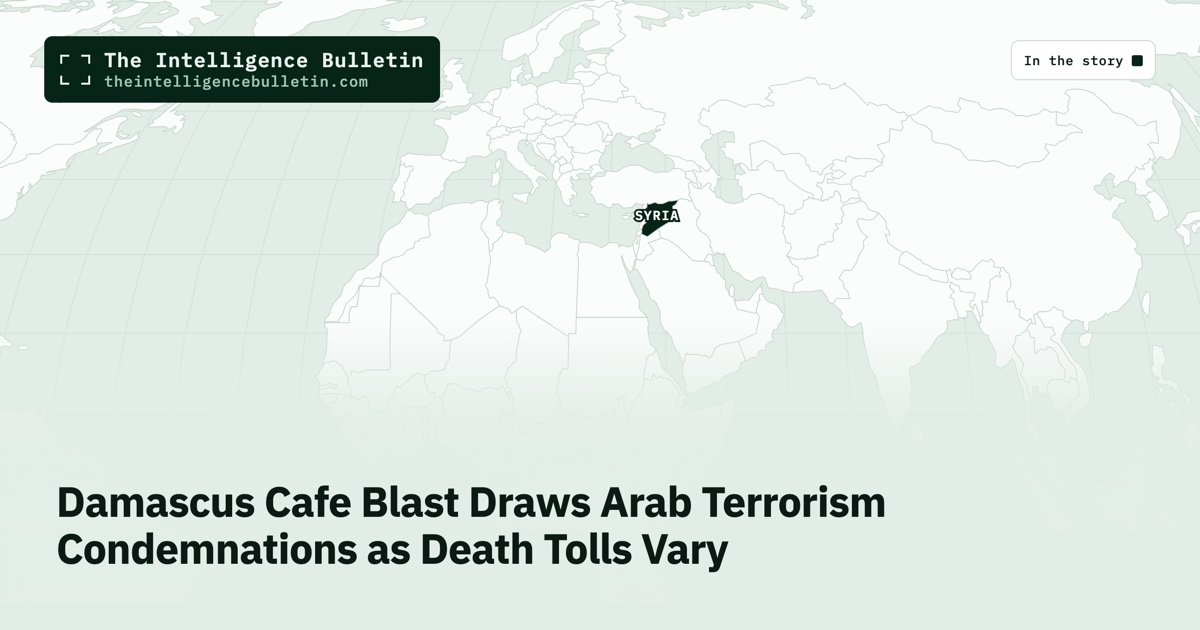
Map of the countries in the story: Damascus Cafe Blast Draws Arab Terrorism Condemnations as Death Tolls Vary
An explosion inside a cafe in Damascus’s al-Hijaz area on July 2 killed at least four and wounded 11, according to Syrian state media, though some reports cite higher tolls. Five Arab states and the UN issued condemnations framing the incident as a terrorist attack and voiced support for Syrian stability. Coverage ranges from heavy emphasis on unified political rejection of terrorism to detached focus on casualties alone.

One Story. Many Angles.

🇹🇷
Turkey
Anadolu Agency
ARABIC
5 Arab countries condemn the terrorist attack in Damascus
“5 Arab states condemn terrorist attack in Damascus”
Read →
🇷🇺
Russia
RT Arabic
ARABIC
Arab and UN condemnations of Damascus blast affirm rejection of terrorism and support for Syrian stability
“Arab and international condemnations of Damascus bombing stress rejection of terrorism and support for Syrian stability”
Read →
🇲🇽
Mexico
Proceso
SPANISH
Explosive device explodes in Damascus cafe killing at least 9 people
Read →
🇦🇪
United Arab Emirates
Al Bayan
ARABIC
Syria: explosion inside cafe in Damascus with reports of dead and wounded
“Syria.. explosion inside cafe in Damascus and reports of dead and wounded”
Read →
🇯🇴
Jordan
Al Mamlaka TV
ARABIC
4 killed and 10 injured in Damascus explosion
“4 dead and 10 injured in Damascus explosion”
Read →

Perspective Analysis

The Damascus cafe explosion on July 2, 2026, exposed a clear divergence in regional media priorities, with Arab outlets rapidly framing the incident as a terrorist attack deserving collective condemnation and explicit support for Syrian stability, while other coverage stayed narrowly on casualty counts and immediate human impact. This pattern illustrates how such events serve diplomatic signaling in a country still consolidating authority after the December 2024 overthrow of the Assad dynasty.

The blast occurred inside a cafe in Damascus’s al-Hijaz district on Nasser Street, near the main Justice Palace complex. Syrian state media, including SANA and the state broadcaster Al-Ikhbariya, reported that the detonation involved an explosive device planted at the site. Initial figures from the Syrian Health Ministry cited four deaths and ten to eleven injuries, with victims transported to hospitals including Al-Mujtahed, the Syrian Red Crescent, Ibn al-Nafis, Al-Rashid, and Al-Mouwasat. Later updates raised the toll to nine killed and twenty to twenty-two wounded, with injuries ranging from light to severe. No group claimed responsibility, and authorities described the device as appearing primitive. The cafe was frequented by lawyers working in the nearby courts. Security forces quickly cordoned the area, and Damascus Governor Maher Idlibi stated that the Interior Ministry would soon release preliminary findings while vowing that those responsible would be held accountable.

Arab media outlets moved swiftly to layer political context onto these facts. RT Arabic emphasized joint Arab and international condemnations that rejected terrorism while underscoring support for Syrian stability. It detailed statements from Egypt’s Foreign Ministry, which condemned the blast “in the strongest terms” and expressed full rejection of all forms of violence and terrorism aimed at undermining security and stability or terrorizing civilians, alongside solidarity with Syria. Qatar’s Foreign Ministry similarly denounced the attack near the Justice Palace, reaffirming its fixed stance against violence, terrorism, and criminal acts regardless of motives. Turkey’s Foreign Ministry condemned the targeting of the al-Hijaz area, noting that such assaults seek to obstruct progress toward sustainable security and stability; it added that the best response would come from the Syrian people through national unity and social cohesion, with Turkey continuing to stand alongside Syria. The outlet also quoted UN Deputy Special Envoy Claudio Cordone, who condemned the cafe attack, called for perpetrators to face justice, and stressed the need to protect civilians. RT framed these positions as reflecting broad consensus on combating terrorism in all forms and backing efforts to consolidate security in Syria.

Turkish state-aligned coverage from Anadolu Agency mirrored this emphasis, headlining the condemnations from five Arab states and centering unified political rejection of the attack over granular investigative details. Such framing aligns with Ankara’s interest in reinforcing regional diplomatic coordination on Syria’s post-Assad trajectory. In parallel, the UAE’s Al Bayan reported early unconfirmed accounts of deaths and injuries drawn from Syrian media, highlighting initial casualty uncertainty from a Gulf perspective that tracks security developments with measured caution rather than immediate political overlay.

Jordan’s Al Mamlaka TV adopted a more localized, verification-focused approach typical of a neighboring broadcaster. It cited SANA for the specific toll of nine dead and twenty-two injured, noting the device was an explosive package and detailing the immediate response by Interior Ministry units, security patrols, and ambulance teams that evacuated the wounded and imposed a security cordon. The outlet stressed verified local figures and ongoing investigations into circumstances and responsible parties, without expansive commentary on broader stability or regional solidarity.

By contrast, Mexico’s Proceso presented the event strictly as an international incident centered on human cost. Drawing on Associated Press reporting, it stated that an explosive device detonated in a Damascus cafe near the main tribunal complex, killing at least nine and wounding twenty others according to Syria’s Health Ministry. The article described security forces arriving promptly to cordon the scene amid the investigation, quoted a nearby restaurant owner, Jalal Aljanani, who rushed to the site and recounted carrying bleeding victims to cars until police arrived, and noted that ambulances transported the more seriously wounded. It added that the cafe served lawyers from the neighborhood and mentioned videos circulating on social media showing injured people on the ground. Proceso avoided any terrorism framing or diplomatic statements, treating the blast as a neutral security incident.

Across these accounts, casualty figures shifted between initial low counts from Syrian authorities and higher revised numbers appearing in both Syrian state sources and international wires. The consensus among Arab outlets on labeling the blast a terrorist act and linking it to support for Syrian stability reveals how the story functions for immediate diplomatic signaling. This stands apart from the detached, casualty-driven treatment in Mexican coverage and the precise, neighborly verification in Jordanian reporting. The emphasis on unified rejection of violence and backing for the current order appears consistent across the Arab sources examined, with no divergence in wire content suggesting coordinated messaging rather than independent analysis.

The Takeaway

Investigators continue to examine the device’s origin and any potential links to groups previously targeted in Syrian security operations. Observers will watch for official preliminary conclusions from Damascus, possible additional condemnations, and whether casualty figures stabilize or prompt further regional commentary on Syria’s security environment.


Share this story

Romania Ties Prut Bridge Deal to Its Own A8 Highway Contract; Moldova Stresses Joint Accord

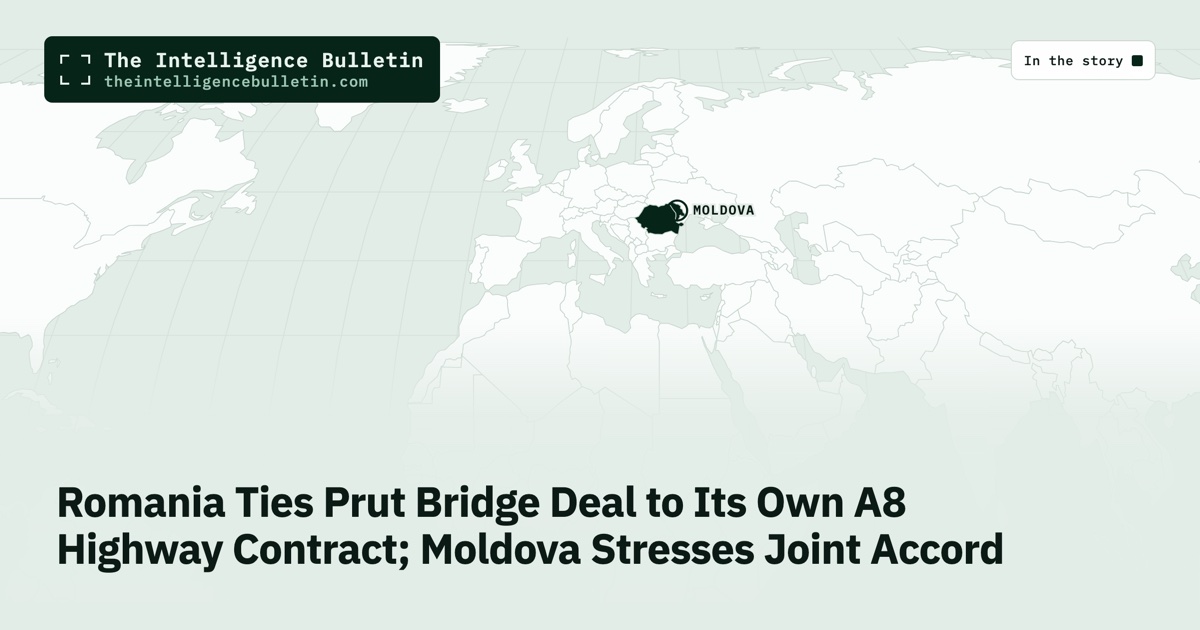
Map of the countries in the story: Romania Ties Prut Bridge Deal to Its Own A8 Highway Contract; Moldova Stresses Joint Accord
On July 2, 2026, Romanian Transport Minister Radu Miruță and Moldovan Deputy Prime Minister Vladimir Bolea signed a memorandum for strategic transport infrastructure. The agreement covers construction of the Ungheni–Ungheni road bridge and access roads linking the A8 motorway extension to Moldova. Romanian coverage highlights a 3.57 billion lei contract for the final A8 segment funded by the EU SAFE program; Moldovan reporting stresses the bilateral accord as a joint step.

One Story. Many Angles.

🇷🇴
Romania
Adevărul
ROMANIAN
A8 Highway crosses the Prut: 3.5 billion lei contract signed by Minister Miruță for the last lot
“Autostrada A8 trece Prutul: Contract de 3,5 miliarde de lei, semnat de ministrul Miruță pentru ultimul lot”
Read →
🇲🇩
Moldova
News.Yam
ROMANIAN
The Republic of Moldova and Romania signed a new agreement providing for the construction of the Ungheni-Ungheni road bridge and the development of related transport infrastructure
“Republica Moldova și România au semnat un nou acord care prevede construcția podului rutier Ungheni-Ungheni și dezvoltarea infrastructurii de transport aferente”
Read →

Perspective Analysis

On July 2, 2026, Romania and Moldova moved a long-discussed cross-border highway link from planning documents to a signed intergovernmental commitment, yet the milestone appeared through two distinct national prisms in the immediate coverage. Romanian reporting anchored the event in domestic contract awards and European funding streams, while Moldovan accounts placed the bilateral memorandum itself at the center as a concrete step in shared infrastructure development. This divergence highlights how even tightly coordinated neighbors interpret the same transport project through their own capital priorities—Bucharest emphasizing national delivery and EU corridors, Chișinău stressing joint strategic progress across the Prut.

The agreement covers construction of a new road bridge at Ungheni-Ungheni together with connecting access infrastructure that will tie Romania’s A8 motorway extension directly into Moldova. Romanian Transport Minister Radu Miruță and Moldovan Deputy Prime Minister Vladimir Bolea signed the memorandum in their official capacities on that date. The document commits the two governments to negotiate and conclude a formal accord on strategic transport infrastructure of mutual interest. Both sides confirmed the core elements: the Ungheni crossing and associated roads that will create the first motorway-standard connection between the two countries.

Romanian daily Adevărul led its account with the domestic contract award that accompanied the bilateral step. The outlet reported that Miruță had signed a 3.57 billion lei deal, financed through the European SAFE program, for the final 15.5-kilometer segment of the A8 highway. This stretch will include the pioneering motorway kilometers that cross the Prut toward Chișinău. The piece framed the signing as the moment Romania’s long-planned “Autostrada Unirii” finally reaches the border, turning earlier announcements into active construction commitments. Miruță’s public statement, posted on social media, received prominent quotation: partnerships with neighbors represent investments in security, development, and Romania’s future rather than mere diplomatic gestures. He described the memorandum as converting projects into binding commitments and commitments into physical works, while noting that the new corridor would connect the European Union to Moldova and onward to Ukraine. Additional context in the report linked the bridge project to a separate recent contract signing for the Iași-to-border section, underscoring momentum on the Romanian side of the border.

The Moldovan source News.Yam, drawing from Independent.md, opened instead with the intergovernmental memorandum as the primary event. Its framing presented the Ungheni-Ungheni bridge and related transport infrastructure as a shared strategic commitment between the two governments. The account avoided specific Romanian contract values or A8 segment details, keeping language centered on bilateral cooperation and the joint development of cross-border links. This approach aligned on the date, the ministers involved, and the project scope while reflecting Chișinău’s emphasis on the accord itself as evidence of deepening ties.

Both outlets converged on the same verified facts: the July 2 signing by Miruță and Bolea, the focus on the Ungheni bridge plus access roads, and the overarching goal of strategic transport infrastructure. The Romanian coverage embedded these elements inside national highway spending and EU funding narratives already familiar to its readership. The Moldovan version kept bilateral accord terminology front and center without layering in domestic Romanian fiscal figures. Such differences arise naturally from each outlet’s audience and editorial lens—Bucharest treating the bridge as the culmination of an ongoing A8 build-out, Chișinău viewing it as a milestone in regional partnership.

The signing marks a tangible shift for the project. Earlier discussions had remained at the level of feasibility studies and political declarations; the memorandum now establishes a formal framework for negotiation and implementation. Miruță’s remarks explicitly tied the infrastructure to broader geopolitical considerations, describing the corridor as enhancing mobility, economic development, and regional security amid current tensions. For Moldova, the agreement represents a practical extension of European-oriented transport networks that could improve connectivity and trade flows.

The Takeaway

Looking ahead, attention will turn to the pace of negotiations on the detailed bilateral accord, the tendering and groundbreaking timelines for the Ungheni bridge, and the integration of the new crossing with Moldova’s own road upgrades. Progress on the Romanian A8 final segment will serve as an early indicator of delivery capacity, while any follow-on funding announcements from EU programs could accelerate the cross-border elements. Observers will also watch for statements from both capitals on how the link fits into wider regional corridors connecting the EU, Moldova, and Ukraine.


Share this story