Turkey blocks US LGBTQ+ cruise over moral standards, reroutes ship to Egypt

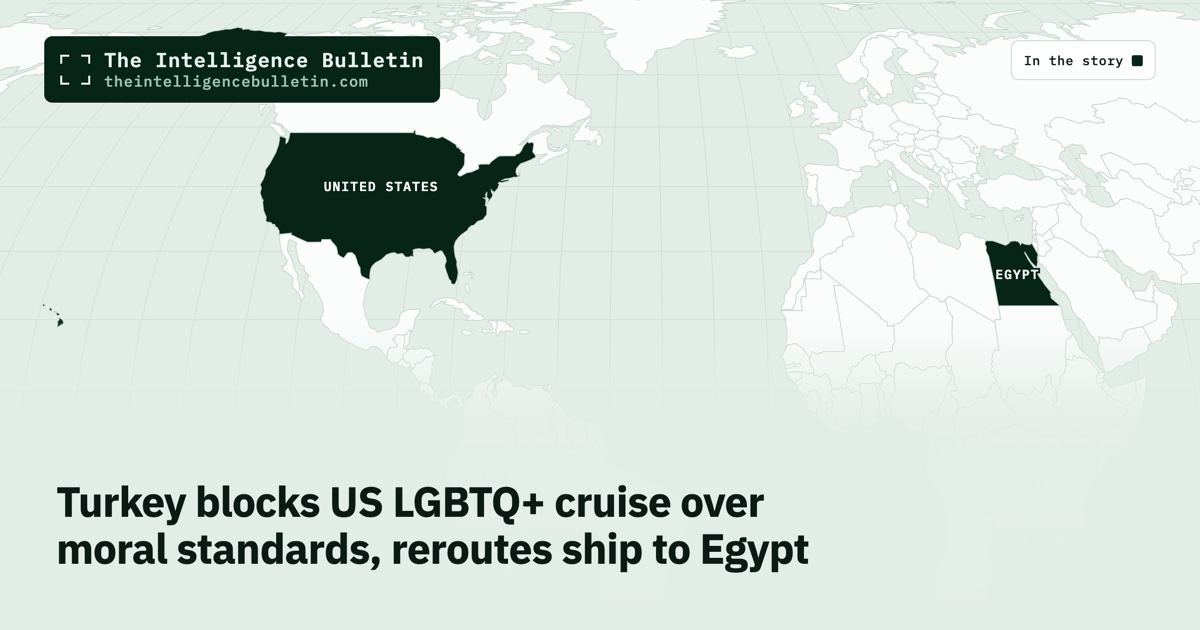
Map of the countries in the story: Turkey blocks US LGBTQ+ cruise over moral standards, reroutes ship to Egypt
Turkish authorities blocked Atlantis Events’ Scarlet Lady cruise, carrying over 1,000 American LGBTQ+ travelers among 1,900 passengers, from docking in Kuşadası and Istanbul on July 3, 2026. Officials cited incompatibility with ‘moral standards’ and ‘family values.’ The ship was rerouted to Cairo and Crete. CEO Rich Campbell called the move discriminatory, the first such explicit ban in the company’s 36-year history amid Turkey’s tightening restrictions on LGBTQ+ events.

One Story. Many Angles.

🇦🇷
Argentina
Agencia Nova
SPANISH
Turkey banned entry of an LGBTQ+ cruise ship and canceled its stops in the country
“Turquía prohibió el ingreso de un crucero con viajeros LGBTQ+ y canceló sus escalas en el país”
Read →
🇺🇸
United States
CNN en Español
SPANISH
Turkey prevents US LGBTQ+ cruise from docking, citing ‘moral standards’
“Turquía impide que un crucero LGBTQ+ de EE.UU. atraque, citando “normas morales””
Read →
🇺🇸
United States
CNN
Turkey blocks American LGBTQ+ cruise from docking, citing ‘moral standards’
Read →
🇺🇸
United States
KVIA
ARABIC
Turkey bans docking of American gay cruise ship for violating moral standards and family values
Read →

Perspective Analysis

The decision by Turkish authorities to bar an American LGBTQ+ themed cruise from docking reveals how national identity policies intersect with global tourism flows, with media coverage diverging sharply along geographic lines: US outlets frame the episode as another chapter in Recep Tayyip Erdoğan’s decade-long clampdown on queer visibility, while an Argentine outlet centers the concrete rerouting of passenger itineraries and local provincial vetoes.

Turkish officials on or around July 2-3, 2026, explicitly canceled planned stops for the Atlantis Events “Athens to Venice” cruise aboard the Scarlet Lady, a Virgin Voyages vessel scheduled to depart Greece on July 5. The ship was barred from Kuşadası in Aydın province and from Istanbul, with authorities stating the event was incompatible with “moral standards” and “family values.” Organizers were told the ship had been chartered by groups “known for behaviors incompatible with the fabric of our society and our moral values.” In response, Atlantis Events redirected the vessel to stops in Cairo, Egypt, and Crete instead.

Atlantis Events president and CEO Rich Campbell described the ban as the first explicit prohibition the company had faced in its 36-year history on the basis of passenger identity. He called the reasoning “pretty stunning” and expressed concern that “a country decides they can pick and choose which tourists are allowed in and which are not.” Campbell emphasized that the cruise was “not a political organization” and that passengers intended only “to spend money, have a good time, take tours and be incredibly respectful to every culture we visit.” Approximately 1,100 of the 1,900 expected guests were from the United States, with others from the United Kingdom, Canada, Australia and additional nations.

Local Turkish statements added detail to the decision. Aydın province officials declared there was “absolutely no possibility of the group in question visiting our province for an event of this nature.” Istanbul authorities reported that police had raided a bar after a brochure linked to Atlantis advertised a party there, though Campbell stated the material was neither produced nor affiliated with his company. The cruise operator notified passengers that the Turkish port calls had been removed “due to circumstances beyond our control.”

US coverage, led by the CNN English-language wire and replicated verbatim or nearly verbatim by its Spanish-language service and the KVIA affiliate, opens with the American character of the passengers and the moral-standards justification. These reports situate the ban within Erdoğan’s AK Party record of increasingly harsh rhetoric toward LGBTQ+ communities, noting the prohibition of Istanbul Pride marches since 2015 on public-safety grounds. The accounts highlight Campbell’s comments on the unprecedented nature of the exclusion and include the passenger demographics, the rerouting to Egypt and Crete, and the company’s outreach to Turkish tourism officials and the embassy in Washington for comment. The near-identical text across English, Spanish and the local US affiliate underscores how a single Washington-datelined dispatch travels intact, adapted only by headline translation or minimal bilingual framing for different domestic audiences.

In contrast, the Argentine Agencia Nova report foregrounds the itinerary disruption and the concrete statements from provincial authorities in Aydın and Istanbul. It details the shift to Egypt and Crete, the scale of the vessel (Scarlet Lady carrying roughly 1,900 passengers), and the local rationale tied to social pressures and citizen petitions reported in Turkish media. While it references the broader context of Erdoğan’s policies and Pride bans, the piece places greater weight on the practical consequences for Mediterranean tourism and the company’s decision to alter its schedule rather than on passenger identity or rights rhetoric. This emphasis aligns with an outlet serving Spanish-speaking readers in a region where cruise itineraries through the eastern Mediterranean represent a familiar leisure market.

Across all accounts, the core facts converge without contradiction: the explicit moral-standards citation, the two canceled Turkish ports, the rerouting, Campbell’s characterization of the move as discriminatory and unprecedented, the passenger numbers, the Aydin and Istanbul local interventions, and the background of tightened restrictions on LGBTQ+ events. No source reports Turkish central-government comment or any response from Virgin Voyages. The single meaningful divergence lies in emphasis—American passenger impact and authoritarian trend for US readers versus logistics and local enforcement for an Argentine audience—illustrating how editorial geography shapes which element of the story registers as primary.

The Takeaway

The episode arrives against Turkey’s established pattern of restricting public LGBTQ+ expressions while still courting international tourism revenue. Observers will watch whether other cruise operators or event companies encounter similar port-access hurdles, whether Atlantis Events or similar groups pursue alternative Mediterranean routing that avoids Turkish waters, and whether the Turkish government issues any clarifying statement from the Ministry of Culture and Tourism that might distinguish between private passenger behavior and organized events. Continued monitoring of provincial-level decisions in tourism hubs such as Kuşadası will indicate whether the ban reflects isolated local action or a broader signal.
Share this story

Erdogan Backing Made Pakistan’s US-Iran Deal Feasible, Sharif Says

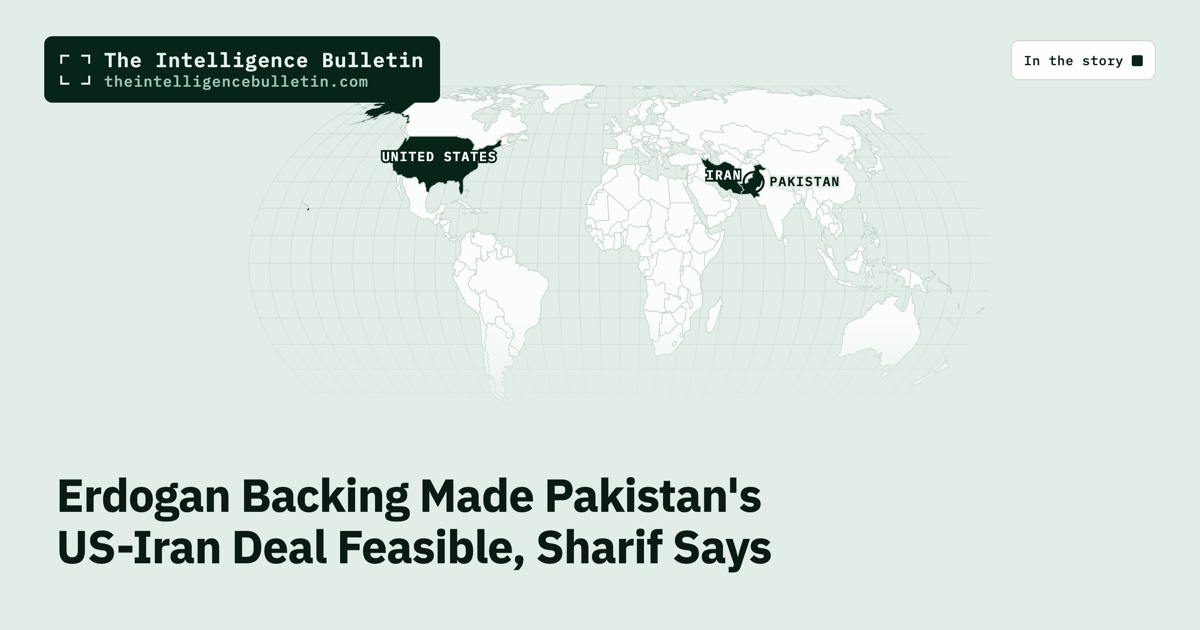
Map of the countries in the story: Erdogan Backing Made Pakistan's US-Iran Deal Feasible, Sharif Says
On July 4, 2026, Turkish President Recep Tayyip Erdogan hosted Pakistani Prime Minister Shehbaz Sharif for bilateral talks at Istanbul’s Vahdettin Palace. Sharif publicly stated that without Erdogan’s support, Pakistan’s mediation leading to the Islamabad Mutabakat Anlaşması between the US and Iran would have been nearly impossible. Turkish coverage emphasized this diplomatic credit and Erdogan’s leverage, while Pakistani reporting centered on expanding business and investment ties.

One Story. Many Angles.

🇹🇷
Turkey
TRT Haber
TURKISH
Pakistan PM Sharif: Without Erdogan’s support accord nearly impossible
Read →
🇵🇰
Pakistan
Pakistan Observer
Pakistan-Türkiye Business Ties in focus as Erdogan hosts PM Shehbaz at Vahdettin Palace
Read →
🇹🇷
Turkey
Anadolu Agency
ARABIC
Istanbul: Erdogan and Shehbaz Sharif head Turkish-Pakistani talks
Read →
🇹🇷
Turkey
NTV
TURKISH
President Erdogan holds press conference with Pakistani PM Shehbaz Sharif
Read →

Perspective Analysis

On July 4, 2026, Turkish President Recep Tayyip Erdogan hosted Pakistani Prime Minister Shehbaz Sharif at Istanbul’s historic Vahdettin Palace for bilateral talks that underscored a striking divergence in how the two countries’ media framed the encounter. Turkish state outlets seized on Sharif’s explicit credit to Erdogan as the indispensable backer of Pakistan’s rare mediation success between Washington and Tehran, while Pakistani reporting deliberately sidestepped that diplomatic windfall to emphasize trade and investment opportunities instead. This split reveals how each side sought to extract maximum narrative advantage from the same high-level meeting.

The visit followed an official welcome ceremony and included a one-on-one session before expanding into delegation-level discussions. Sharif publicly attributed the breakthrough to Ankara’s support during remarks at the accompanying Turkey-Pakistan Business Forum. Without Erdogan’s backing and that of other friendly nations, he stated, Pakistan’s role as mediator would have been nearly impossible. He described the resulting Islamabad Mutabakat Anlaşması, signed by U.S. President Donald Trump, Iranian President Mesud Pezeşkiyan, and himself on Pakistan’s behalf, as a hard-won achievement that now opens pathways for broader regional peace and economic cooperation.

Turkish state broadcaster TRT led its coverage with these remarks, foregrounding Erdogan’s personal leverage in enabling the accord and quoting Sharif at length on the “samimi desteği” that made the task feasible. The report situated the praise within a narrative of longstanding Turkish-Pakistani brotherhood dating back before Pakistan’s 1947 founding, while also noting Sharif’s comments on Turkey’s industrial transformation under Erdogan’s leadership over the past two decades. TRT further highlighted Sharif’s pledge of a dedicated zone for Turkish investors inside Karachi’s industrial park and his call for joint exploitation of Pakistan’s rare mineral resources.

In contrast, the Pakistan Observer framed the entire summit around economic deliverables. Its account opened with Erdogan welcoming Sharif at Vahdettin Palace and detailed the closed-door bilateral meeting attended by Turkish Foreign Minister Hakan Fidan, National Intelligence Organization chief Ibrahim Kalın, Communications Director Burhanettin Duran, and Presidential Chief Advisor Akif Çağatay Kılıç. The outlet stressed the leaders’ upcoming joint press conference and the broader agenda of expanding cooperation across sectors, without once referencing the U.S.-Iran mediation or Sharif’s praise for Erdogan’s role. This business-centric lens aligned with Islamabad’s domestic priority on attracting investment and technology transfers to harness Pakistan’s youthful population and energy-sector reforms.

Anadolu Agency’s Arabic service offered the most restrained treatment, limited to a terse headline noting that Erdogan and Sharif were heading Turkish-Pakistani talks in Istanbul. The wire avoided interpretive framing, personal attributions, or economic projections, consistent with its role as a neutral regional disseminator targeting Arabic-speaking audiences with minimal overlay on bilateral diplomacy.

NTV, a commercial Turkish outlet, concentrated on protocol and logistics. It reported Sharif’s arrival in response to Erdogan’s invitation, the welcome by Trade Minister Ömer Bolat, and the expectation that the leaders would discuss trade, investments, regional developments, and the planned business forum. The piece emphasized the formal visit structure and scheduled press conference rather than substantive quotes or outcomes.

Across these accounts, the Turkish state-aligned media leveraged Sharif’s words to project Erdogan’s growing regional diplomatic clout at a moment when Ankara seeks to position itself as a pivotal player between competing powers. The Pakistani coverage, by design, kept the spotlight on tangible economic gains from the partnership, reflecting Islamabad’s urgent need for investment amid its own domestic challenges. This divergence is not accidental; it illustrates how each capital tailors the same event to serve distinct strategic narratives.

The meeting also touched on historical solidarity. Sharif recalled Turkey’s steadfast support during Pakistan’s recent defense of its territory, noting that Ankara stood “kaya gibi” (like a rock) even at the cost of commercial losses. He expressed confidence that the two nations’ relationship, rooted in centuries-old ties, could evolve into an unprecedented economic partnership if concrete actions followed the forum discussions.

The Takeaway

What to watch next is whether the joint press conference yields specific investment announcements or follow-up mechanisms for the Islamabad accord’s implementation. Further signals may emerge from Turkish business delegations exploring opportunities in Pakistan’s minerals, energy, and technology sectors, or from any trilateral coordination involving the U.S. and Iran that could test the durability of the mediation. The contrasting media emphases suggest that Ankara will continue highlighting diplomatic influence while Islamabad prioritizes economic returns in the months ahead.


Share this story

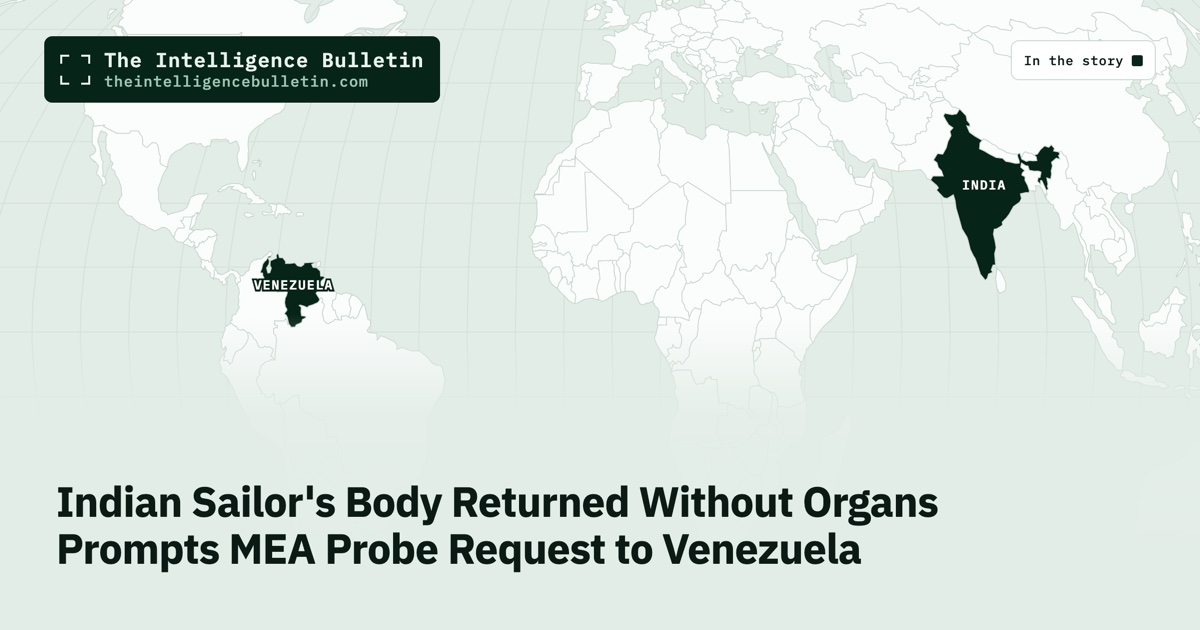
Indian Sailor’s Body Returned Without Organs Prompts MEA Probe Request to Venezuela

Map of the countries in the story: Indian Sailor's Body Returned Without Organs Prompts MEA Probe Request to Venezuela
On July 3 2026 India’s Ministry of External Affairs requested an urgent Venezuelan investigation into the death of sailor Rakesh Chauhan. His family and the Forward Seamen’s Union alleged murder and removal of all organs including brain heart and lungs before the body was repatriated. The Indian Embassy in Caracas has pursued the case with local authorities since it emerged. Both reports cite the same official MEA statement and union details.

One Story. Many Angles.

🇯🇲
Jamaica
Jamaican Times
Taken up matter with Venezuelan authorities; requested urgent investigation: MEA on alleged desecration of deceased sailor’s body
Read →
🇮🇳
India
The Times of India
Brain, heart, lungs missing: MEA seeks urgent probe by Venezuela in Indian sailor’s death
Read →

Perspective Analysis

India’s Ministry of External Affairs has moved swiftly to demand a Venezuelan investigation into the death of sailor Rakesh Chauhan, whose body was repatriated from Venezuela missing every internal organ, according to post-mortem findings and family accounts. The formal request, issued on July 3, 2026, underscores the acute vulnerabilities faced by Indian seafarers working on foreign vessels and the diplomatic channels that activate when allegations of foul play arise in distant jurisdictions.

The case centers on Chauhan, who had been employed aboard a vessel operating in Venezuelan waters. His wife, Ranjana, last spoke with him on May 6. Hours later, her father-in-law received a call reporting an accident and that Chauhan was being taken to hospital. No detailed explanation or autopsy report followed from the employing company. When the body reached India, the family arranged a second post-mortem. That examination revealed that not a single organ remained inside the remains.

The Forward Seamen’s Union of India detailed the absence of the brain, heart, both lungs, kidneys, liver, spleen, pancreas, stomach, intestines, thyroid, hyoid bone, larynx, and trachea. The union also flagged documentation irregularities, including a receipt for the mortal remains signed in the name of “Anjana Chauraisya” rather than Ranjana Chaurasiya, and a mismatch between the vessel named in the employment agreement and the one where Chauhan was actually posted. These discrepancies, the union argued, pointed to possible efforts to obscure the circumstances of death and the handling of the body.

On July 3, MEA spokesperson Randhir Jaiswal told reporters that New Delhi had already taken up the matter with Venezuelan authorities and requested an urgent investigation. The Indian Embassy in Caracas issued its own statement the previous day, confirming it had sought a thorough probe into the alleged desecration and organ removal and had been pursuing the case with local officials since the incident surfaced. The embassy noted its ongoing engagement with relevant Venezuelan counterparts.

Two major outlets carried the story on the same day, both reproducing essentially identical copy from the ANI news service. The Jamaican Times published the dispatch under a headline that closely mirrored the MEA’s measured language: “Taken up matter with Venezuelan authorities; requested urgent investigation: MEA on alleged desecration of deceased sailor’s body.” The piece opened with New Delhi’s formal request, quoted Jaiswal directly, included the embassy statement, and then presented the family’s and union’s claims without additional commentary or local Caribbean context. As an external publication with no direct stake in Indian seafarer issues, it conveyed the wire service account verbatim.

The Times of India, by contrast, led with a headline drawn straight from the union’s inventory: “Brain, heart, lungs missing: MEA seeks urgent probe by Venezuela in Indian sailor’s death.” While the body text remained the same ANI material, the presentation placed greater emphasis on the graphic list of missing organs and the wife’s allegations of murder. This framing aligned with the national broadsheet’s focus on domestic concerns around the welfare of Indian workers abroad and the grief experienced by families left without answers.

Because both reports derive from the identical wire copy, the coverage reflects a unified Indian diplomatic and seafarer-advocacy perspective rather than divergent national or regional interpretations. No Venezuelan government response appears in either account, nor is there any broader discussion of labour-migration patterns between India and Caribbean nations or the regulatory environment for foreign-flagged vessels. The absence of such context leaves the story anchored entirely in the official Indian statements and the union’s documentation of procedural lapses.

The episode illustrates how quickly consular machinery can engage when families of overseas workers raise suspicions of criminal interference with mortal remains. It also highlights the practical challenges of obtaining timely information from foreign employers and authorities in cases involving sudden deaths at sea or in port. The call for a second post-mortem in India and the union’s documentation of forged or mismatched paperwork suggest systemic gaps in the chain of custody for repatriated bodies.

The Takeaway

Observers will now watch for any public indication that Venezuelan authorities have opened a formal inquiry, whether an autopsy report or other documentation from Venezuela surfaces, and whether the Indian government escalates the matter through higher diplomatic channels if initial responses prove unsatisfactory. Updates from the embassy in Caracas or further statements by the MEA will be the clearest signals of whether the probe advances beyond the initial request.


Share this story

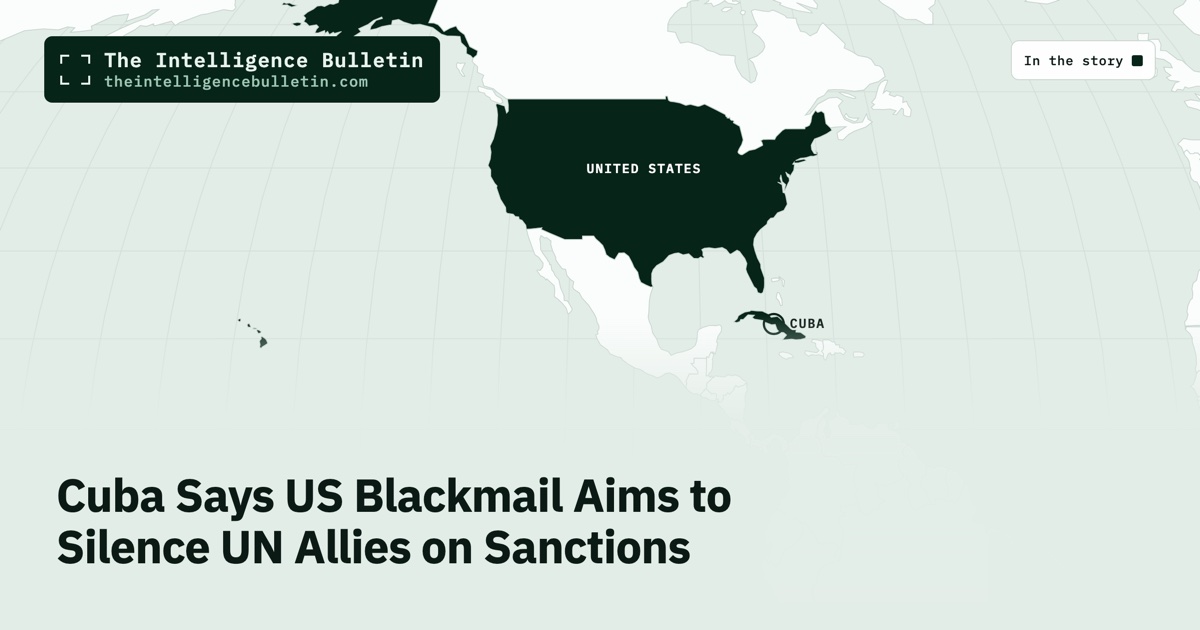
Cuba Says US Blackmail Aims to Silence UN Allies on Sanctions

Map of the countries in the story: Cuba Says US Blackmail Aims to Silence UN Allies on Sanctions
On July 3-4 2026, Cuban Foreign Minister Bruno Rodríguez accused the United States of exerting unprecedented pressure, including threats and blackmail, on sovereign nations to prevent denunciations of US measures against Cuba at a July 7 UN General Assembly session in New York. The session, requested by Havana, targets US sanctions and an energy blockade imposed since January that has deepened Cuba’s economic and power crisis. Rodríguez singled out Secretary of State Marco Rubio’s approach as seeking to make the world complicit in collective punishment.

One Story. Many Angles.

🇵🇪
Peru
RPP
SPANISH
Cuba accuses the United States of unprecedented pressure to prevent UN complaints about its measures
“Cuba acusa a Estados Unidos de presiones inéditas para impedir en la ONU denuncias de sus medidas”
Read →
🇻🇪
Venezuela
Telesur
SPANISH
Cuba denounces US pressure on governments to stop international condemnation of the blockade
“Cuba denuncia presiones de EE.UU. a Gobiernos para frenar condena internacional al bloqueo”
Read →

Perspective Analysis

On July 3, 2026, Cuban Foreign Minister Bruno Rodríguez took to social media to accuse the United States of mounting “presiones inéditas” laced with threats and blackmail against sovereign nations, all aimed at silencing criticism of Washington’s measures during a specially requested United Nations General Assembly session set for July 7 in New York. The charge, delivered in identical language across two otherwise distinct Latin American outlets, underscores a deepening diplomatic standoff in which Havana frames its economic and energy woes as the direct result of an escalating U.S. campaign of collective punishment, while regional coverage reveals how little counter-narrative space exists for alternative explanations of those tactics.

The July 7 session, sought by Cuba itself, is intended to spotlight what Havana calls the “cerco energético” imposed since January 2026—an oil blockade that, according to both reports, has left the island with only a single petroleum shipment this year. That measure compounded an energy crisis already underway since mid-2024, producing prolonged blackouts, fuel shortages, transport breakdowns, and cascading effects on schools, hospitals, and vulnerable populations. Additional sanctions announced in May extended restrictions to any person or entity engaging in commerce with Cuba or operating in energy, defense, finance, or mining. Rodríguez described these steps as “criminales medidas” and warned that U.S. Secretary of State Marco Rubio seeks not merely to justify the damage already inflicted but to enlist the broader international community as accomplices in what he labeled a “castigo colectivo” and “crimen de lesa humanidad en plena ejecución.”

Both the Peruvian daily RPP and Venezuela’s state-aligned Telesur published accounts on or immediately after July 3 that quote Rodríguez’s social-media post verbatim and rehearse the same chronology of the January energy blockade and its humanitarian fallout. RPP presents the episode primarily as a procedural clash inside the General Assembly, emphasizing Havana’s request for the session and its expectation of majority support from the international community. The outlet notes the crisis context without extensive editorial framing, maintaining a tone of straightforward diplomatic reporting that nevertheless accepts Cuba’s characterization of “presiones inéditas” and the blockade’s documented effects as established facts. In contrast, Telesur explicitly anchors the accusation to the long-standing U.S. embargo and the fresh energy sanctions, describing the July 7 meeting as an effort to secure international condemnation of “medidas coercitivas.” Its language aligns with Venezuelan state framing by highlighting Global South resistance and quoting Rodríguez’s claim that Washington feels “impunes frente a la legalidad” and disregards both international law and the UN Charter.

The near-identical sourcing and absence of any U.S. rebuttal in either piece illustrate how thoroughly the narrative of external coercion has saturated regional coverage. RPP, an independent Peruvian outlet, reports the Cuban minister’s direct language and the January oil blockade’s consequences without qualification, treating the episode as one more data point in a familiar pattern of U.S.-Cuba friction. Telesur, operating from a state-aligned perspective, amplifies the same quotes while situating them within a broader solidarity framework, adding emphasis on the blockade’s classification by the United Nations itself as contrary to international law and on the political beneficiaries of Cuban suffering. The convergence signals that even outlets without formal alignment to Havana now treat the existence of U.S. pressure on third countries as a given rather than a contested assertion.

Background details supplied by both reports flesh out the stakes for a reader encountering the story for the first time. Cuba’s energy system has been under strain since mid-2024; the January 2026 oil restrictions accelerated the collapse, leaving hospitals without reliable power, agricultural production stalled, and daily life punctuated by extended blackouts. Rodríguez’s reference to Rubio—made without naming him explicitly in the initial post but clarified in follow-up remarks—portrays the secretary of state as pursuing an agenda that would escalate from economic measures to potential military confrontation if left unchecked. The minister’s warning that such a path would produce “un baño de sangre de ciudadanos cubanos y estadounidenses” is presented in both accounts as part of the same social-media thread, underscoring Havana’s effort to internationalize the dispute ahead of the July 7 vote.

Across the two dispatches, the shared emphasis on Rodríguez’s precise phrasing and the procedural timetable for the General Assembly session reveals a regional information ecosystem in which Cuba’s framing of sanctions as extraterritorial coercion encounters little immediate pushback. Neither outlet introduces statements from U.S. officials or independent verification of the alleged blackmail; both instead relay Havana’s certainty that a majority of member states will back its position. This pattern suggests that, for Latin American audiences, the story functions less as a bilateral dispute requiring balanced sourcing and more as confirmation of long-standing asymmetries in hemispheric relations.

The Takeaway

What happens on July 7 will test whether that narrative retains its momentum inside the General Assembly chamber. Observers will watch not only the vote tally but also which governments choose to speak and whether any break with the prevailing regional account to offer Washington’s perspective. The absence of U.S. counter-messaging in the initial coverage already indicates how narrow the window may be for alternative explanations before the session convenes.


Share this story

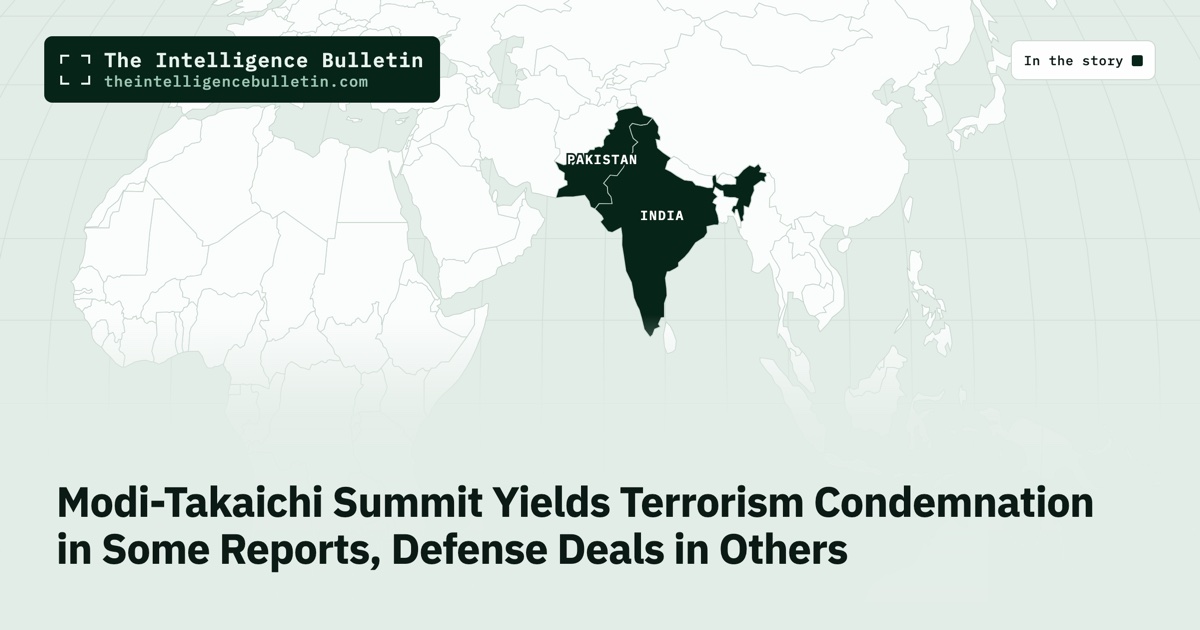
Modi-Takaichi Summit Yields Terrorism Condemnation in Some Reports, Defense Deals in Others

Map of the countries in the story: Modi-Takaichi Summit Yields Terrorism Condemnation in Some Reports, Defense Deals in Others
On July 3 2026 in New Delhi, Prime Ministers Narendra Modi and Sanae Takaichi issued a joint statement condemning cross-border terrorism from Pakistan, citing specific 2025 attacks and naming groups including LeT and JeM. They called for global action against safe havens and financing while endorsing each other’s UNSC permanent seat bids. The Seattle Times report instead highlighted defense, economic and maritime security agreements without referencing the terrorism condemnation.

One Story. Many Angles.

🇦🇺
Australia
Australian News
India, Japan issue joint condemnation of cross-border terrorism from Pakistan
Read →
🇮🇳
India
Organiser
India & Japan condemn cross-border terrorism, call for global action
Read →
🇺🇸
United States
The Seattle Times
India’s Modi and Japan’s Takaichi expand defense and economic security ties
Read →

Perspective Analysis

The divergent coverage of the July 2026 summit between Indian Prime Minister Narendra Modi and Japanese Prime Minister Sanae Takaichi in New Delhi illustrates how the same bilateral encounter can be packaged as either a pointed rebuke of Pakistan-linked terrorism or a broad strategic partnership update, depending on the originating wire service. Two outlets drew from identical ANI copy to foreground explicit condemnations of cross-border attacks and calls for dismantling terrorist infrastructure, while an American dispatch centered naval technology, economic security roadmaps, and Quad alignment without referencing Pakistan at all. This split underscores that the durable elements of the India-Japan relationship—maritime rules-based order, defense technology sharing, and trade expansion—travel reliably across outlets, whereas the terrorism language remains tethered to South Asian sourcing and framing.

The Australian News aggregation and the Organiser both reproduced the same ANI text with only minor headline and subhead variations, presenting the talks as a unified diplomatic stand against state-supported terrorism networks. Their joint statement, issued after the bilateral meeting on the margins of the 16th India-Japan Annual Summit, condemned cross-border terrorism originating from Pakistan and demanded global action against safe havens and financing channels. The reports detailed strong condemnation of the April 22, 2025, attack on tourists in Pahalgam, Jammu and Kashmir, noting the United Nations Security Council Monitoring Team Report’s implication of The Resistance Front. They further highlighted the November 10, 2025, car bombing near the Red Fort in Delhi and insisted that perpetrators, organisers, and financiers face justice. The leaders specifically named Lashkar-e-Tayyiba, Jaish-e-Mohammad, Al Qaeda, and ISIS among the groups requiring concerted international pressure, while stressing the need to sever links between terror financing and transnational crime and to halt terrorist movement across borders.

These two accounts extended the statement’s scope to regional maritime concerns, expressing opposition to unilateral actions that threaten freedom of navigation in the East China Sea and South China Sea, and reaffirming adherence to the United Nations Convention on the Law of the Sea. They also recorded the leaders’ push for United Nations Security Council reform through expanded permanent and non-permanent membership, immediate text-based negotiations, and reciprocal endorsement of each other’s candidatures for permanent seats. Additional elements included concerns over North Korea’s programs, navigation through the Strait of Hormuz, and support for a two-state solution in Gaza alongside peace efforts in Ukraine. The coverage noted Takaichi’s three-day visit from July 1 to July 3 and her participation alongside Modi in the India-Japan Business Forum. Because both pieces carry verbatim ANI material, they represent a single perspective shaped by Indian wire-service priorities that link anti-terror messaging directly to long-standing diplomatic objectives such as UNSC reform.

By contrast, the Seattle Times carried an Associated Press dispatch that opened with concrete defense and economic deliverables rather than the terrorism language. The report described agreements to collaborate on naval radio antenna systems, adopt a joint roadmap on economic security, and deepen work in artificial intelligence, shipbuilding, biogas, semiconductors, and critical technologies. Modi was quoted stating that India and Japan view economic security as a shared interest. The piece supplied figures of $27.5 billion in two-way trade for India’s 2025-26 fiscal year and $3.2 billion in Japanese investment between April and December 2025, noting that roughly 1,400 Japanese companies operate in India, nearly half in manufacturing. It placed the summit in the context of Japan’s pledge, made during Modi’s prior visit to Tokyo, to more than double investment in India to over $61 billion over the next decade. Maritime security cooperation was framed around Japan’s free and open Indo-Pacific initiative, with both leaders underscoring freedom of navigation and respect for international law; the Quad’s role in promoting regional security and defense ties was explicitly mentioned. The dispatch recorded a Chinese Foreign Ministry spokesperson’s criticism of the initiative as promoting confrontation rather than cooperation. No reference appeared to the joint statement’s Pakistan-specific condemnations or the named terrorist incidents.

Across the three reports, economic and maritime themes emerge as the consistent core. All accounts reference the annual summit structure, the business forum participation, and shared interest in a rules-based maritime order. The ANI-derived pieces embed these within a broader critique of regional instability and calls for multilateral reform, while the AP account treats them as standalone deliverables alongside technology cooperation. The terrorism emphasis, present only in the Indian-sourced material, appears optional once the story moves through an American wire service, suggesting that outlets weigh the bilateral condemnation against wider Indo-Pacific partnership narratives differently. This pattern aligns with the outlets’ respective audiences: regional stability concerns for South Asian and aggregator readers versus strategic competition framing for U.S. readers.

The meeting occurred during Takaichi’s official visit, which included review of the full spectrum of bilateral cooperation and discussion of regional and global issues. Japan’s status as one of India’s largest foreign investors and the presence of numerous Japanese firms in manufacturing provide the economic substrate that all reports acknowledge. The Quad context, referenced in the Seattle Times account, supplies the institutional backdrop that links defense technology agreements to collective maritime objectives without requiring the Pakistan-specific language.

The Takeaway

Looking ahead, observers will watch whether the naval radio systems cooperation and economic security roadmap produce tangible project announcements at the next annual summit or through follow-on working groups. Implementation of the trade and investment targets, alongside any further joint statements on maritime security or UNSC reform, will test the durability of the partnership beyond the immediate narrative choices of individual wire services. Regional responses, particularly from Beijing, may also shape how subsequent coverage balances condemnation language against partnership deliverables.


Share this story

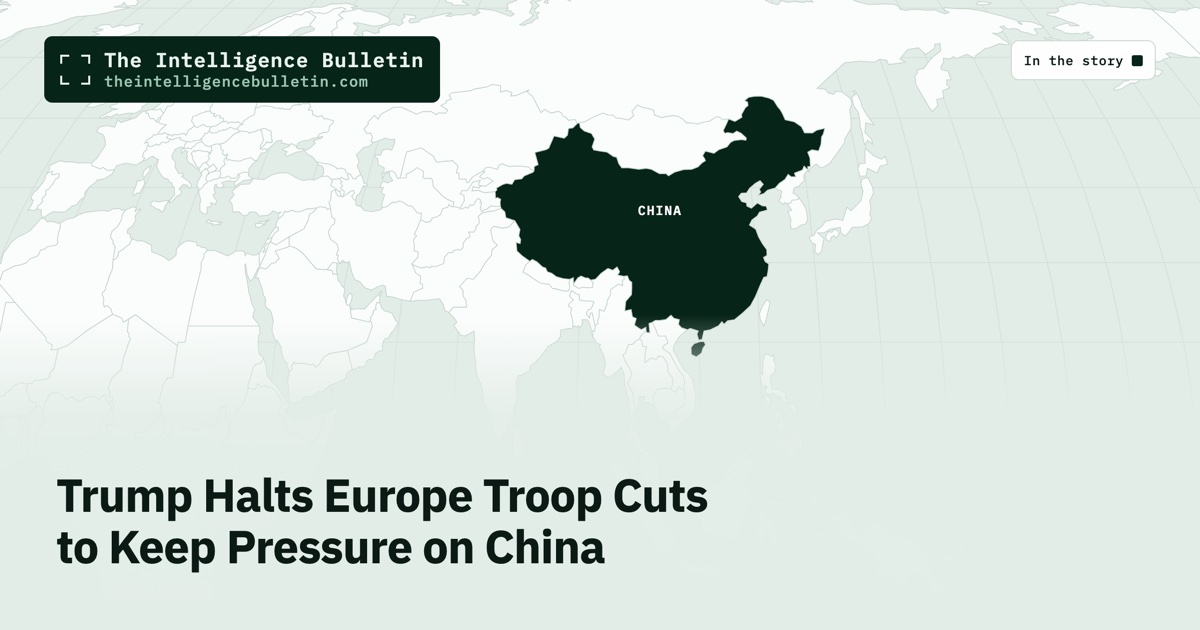
Trump Halts Europe Troop Cuts to Keep Pressure on China

Map of the countries in the story: Trump Halts Europe Troop Cuts to Keep Pressure on China
On July 3 2026 the Trump administration prevented Defense Secretary Pete Hegseth from announcing further U.S. troop reductions in Europe at a NATO meeting. Secretary of State Marco Rubio and other officials rejected the plan, which aimed to shift resources toward countering China. The decision precedes a NATO summit in Ankara and follows earlier U.S. force posture reviews.

One Story. Many Angles.

🇮🇹
Italy
Zazoom
ITALIAN
Pentagon chief Pete Hegseth was about to announce new cuts to US troops in Europe
“Il capo del Pentagono Pete Hegseth stava per annunciare nuovi tagli alle truppe Usa in Europa”
Read →
🇮🇩
Indonesia
Tribun News
INDONESIAN
Trump Cancels Proposal to Reduce US Troops in Europe, Focus on Facing China Remains Prominent
“Trump Batalkan Usulan Pengurangan Pasukan AS di Eropa, Fokus Hadapi China Tetap Mengemuka”
Read →

Perspective Analysis

The Trump administration’s last-minute intervention to block further U.S. troop reductions in Europe underscores a persistent strategic tension: Washington’s desire to reallocate resources toward confronting China continues to collide with the immediate demands of alliance management on the continent. On July 3, 2026, reporting drawn from Wall Street Journal sourcing revealed that Defense Secretary Pete Hegseth’s proposal for additional cuts had been rejected by Secretary of State Marco Rubio and other senior officials before it could be presented at a NATO military leaders’ meeting in Brussels. The decision preserves the existing U.S. force posture in Europe at least through the upcoming NATO summit scheduled for July 7–8 in Ankara, even as the broader intent to pivot attention and assets toward the Indo-Pacific remains a stated priority.

The Italian outlet Zazoom framed the episode primarily through the lens of intra-alliance friction and European security vulnerabilities. Drawing directly from coverage in il Fatto Quotidiano, the report emphasizes that Hegseth had been prepared to announce significant reductions in American military presence on the continent during the June 18 Brussels session. Rubio’s intervention, executed at the eleventh hour, is presented as evidence of deeper divisions within the Trump administration over how aggressively to press European allies on burden-sharing while simultaneously managing great-power competition elsewhere. Zazoom highlights the timing, noting the revelation arrives just days before the Ankara gathering and reinforces an already tense atmosphere between Washington and its NATO partners. The emphasis falls on the potential consequences for European defense, particularly given ongoing concerns about Russian activity near alliance borders. By lingering on the direct security stakes for the continent, the Italian coverage positions the reversal as fresh confirmation that U.S. commitments in Europe remain subject to internal American debates rather than settled alliance consensus.

In contrast, the Indonesian outlet Tribun News foregrounds the enduring American strategic reorientation toward Asia while incorporating Russian commentary on NATO activities. The report details that Hegseth had sought broader reductions than previous measures, including the cancellation of an armored brigade deployment to Poland and the withdrawal of an infantry brigade from Romania. These steps were intended to free resources for heightened competition with China. Tribun News notes the absence of any official White House confirmation, underscoring that the account rests on anonymous U.S. sources. It places the issue on the expected agenda for the Ankara summit, where troop levels and European defense spending are anticipated to feature prominently. Separately, the outlet relays statements from Russian Foreign Ministry official Vladislav Maslennikov, who described NATO exercises as growing in scale and increasingly featuring offensive scenarios near Russian borders. The Russian assessment, offered in response to the recent Breeze-2026 naval drills involving Bulgaria, is presented without direct linkage to the troop-cut reversal yet serves to illustrate Moscow’s ongoing monitoring of alliance posture. Through this framing, Tribun News aligns the U.S. decision with regional Indo-Pacific concerns, treating Europe as a secondary theater whose force levels are being calibrated against the more pressing China challenge.

Both outlets rely on the same core Wall Street Journal account, producing near-identical factual foundations: Hegseth’s blocked announcement, Rubio’s role in halting it, the planned Brussels presentation, and the upcoming Ankara summit. Where they diverge is in interpretive emphasis shaped by geography. Zazoom reads the episode as a symptom of alliance strain, foregrounding risks to European stability and the pre-summit atmosphere of uncertainty. Tribun News instead situates the reversal within the larger U.S. pivot narrative, highlighting resource reallocation goals and adding the Russian perspective on NATO drills as contextual background. This shared sourcing yet divergent reading illustrates how the same policy signal is interpreted differently depending on whether the observer sits inside the European security architecture or views events through the prism of Indo-Pacific competition.

The episode fits within a longer pattern of U.S. force-posture reviews under the Trump administration. Earlier signals from Hegseth had already included criticism of European allies and pledges of six-month examinations of American deployments. The July 3 reversal does not reverse those reviews outright but postpones any public announcement of deeper cuts, preserving leverage ahead of the Ankara discussions. With no formal statement from the White House as of July 3, the precise scale of any contemplated reductions and the internal decision-making process remain opaque. Russian commentary on NATO training intensity adds another layer, suggesting that Moscow continues to calibrate its own security measures in response to alliance activity regardless of U.S. internal adjustments.

The Takeaway

Looking ahead, attention will center on whether the Ankara summit produces concrete commitments on European defense spending or further clarifications on U.S. troop levels. Any subsequent official statements from the Pentagon or State Department could either confirm the maintenance of current posture or reopen the debate on reallocating assets. Russian reactions to the summit outcomes, particularly regarding exercise patterns, will also merit monitoring, as will any visible effects on NATO planning processes. The underlying tension between European theater requirements and the China-focused rebalance is unlikely to disappear after a single intervention, ensuring that force posture questions remain a recurring point of friction within the alliance.


Share this story