Israeli Cabinet Defies High Court to Block Media Regulator and Channel 13 Deal

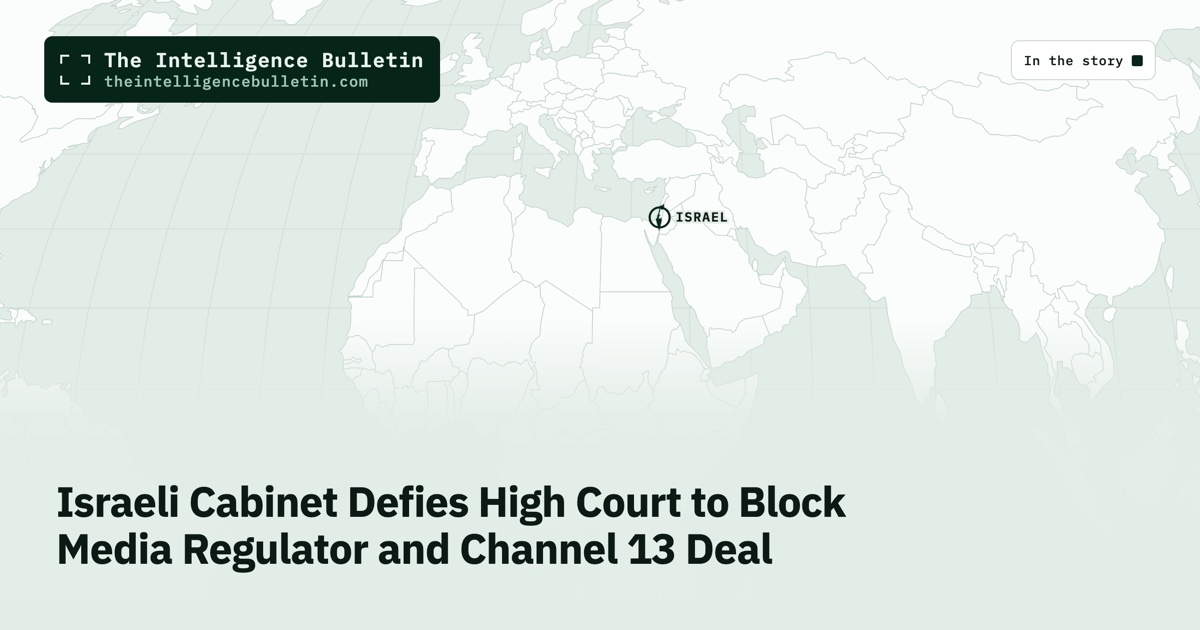
Map of the countries in the story: Israeli Cabinet Defies High Court to Block Media Regulator and Channel 13 Deal
On July 5 2026 the Israeli government voted unanimously to refuse recognition of decisions by the Council of the Second Authority for Television and Radio in its current composition. The cabinet cited a June 17 High Court ruling that allowed the prior council to operate despite falling below the legal minimum membership after resignations. Ministers argued the ruling contradicts explicit statutory quorum requirements. The standoff centers on the regulator’s authority over broadcast approvals including a proposed Channel 13 sale.

One Story. Many Angles.

🇮🇱
Israel
Ynet
HEBREW
Government unanimously decides not to respect High Court ruling on Second Authority
Read →
🇮🇱
Israel
The Jerusalem Post
Israeli govt to ignore Supreme Court freeze on media regulator in legal clash
Read →
🇮🇱
Israel
Globes
HEBREW
Government announces it will not obey High Court ruling on Second Authority issue
Read →
🇮🇱
Israel
Israel National News
HEBREW
Government approves: We will not respect the High Court ruling on the Second Authority
Read →
🇹🇷
Turkey
Anadolu Agency
ARABIC
Netanyahu government rejects Supreme Court decision in precedent deepening constitutional crisis
Read →

Perspective Analysis

The Israeli cabinet’s unanimous July 5 decision to withhold recognition from the Council of the Second Authority for Television and Radio rests on a narrow but explosive reading of statutory language rather than a broad rejection of judicial authority. Ministers insisted that a June 17 High Court ruling, which permitted the outgoing council to continue operating despite falling below the legal minimum membership after multiple resignations, directly contradicts explicit quorum requirements in the Second Authority law. The standoff has frozen regulatory approvals, most immediately the proposed acquisition of Channel 13 by a hi-tech group led by Asaf Rappaport, and exposed how a single administrative body has become the latest arena for Israel’s ongoing separation-of-powers dispute.

Background for the conflict begins with the resignations that reduced the council below its statutory threshold. The June 17 ruling by President Isaac Amit and Justices Alex Stein and Ruth Ronen held that departed members should not count toward the quorum calculation, allowing the prior council to reconvene and decide pending matters. Communication Minister Shlomo Karhi and Justice Minister Yariv Levin, who sponsored the cabinet statement, countered that the statute sets an unambiguous floor of two-thirds membership and that no court may rewrite that floor through interpretation. The cabinet declaration stated plainly that the government would not recognize “any decision, approval, appointment or action” taken by the council in its current form and would reject any claim of reliance or fait accompli by market actors.

Ynet framed the unanimous vote as an immediate constitutional breach with sweeping public consequences. Its report opened by declaring that the government had decided “not to respect” the High Court ruling and quoted the cabinet text asserting that judges possess no authority to override explicit statutory language. The outlet stressed the institutional rupture, noting that the decision binds all future actions of the regulator and leaves no room for selective compliance. As Israel’s largest mainstream Hebrew news site, Ynet placed the episode within the wider pattern of executive-judicial friction, warning readers of the precedent for other regulatory bodies.

The Jerusalem Post, writing for an English-speaking and international audience, concentrated on the legal mechanics and quoted opposition figures who described the cabinet move as an unprecedented challenge to the rule of law. Its account detailed the precise statutory section at issue—section 21 of the Second Authority law—and recorded the ministers’ argument that the High Court had crossed from judicial review into legislative amendment. While sharing the core facts reported by Hebrew outlets, the Post adopted a more measured tone, presenting the clash as a technical dispute over quorum calculation that nonetheless carried constitutional weight.

Globes alone placed the regulatory freeze at the center of its coverage and foregrounded the economic fallout. The business daily reported that the journalists’ union had warned the decision was transparently designed to block the hi-tech acquisition of Channel 13 and amounted to an unprecedented trampling of the Supreme Court. Globes quoted Karhi declaring that “rule of law is not rule of judges” and Levin stating that when a ruling stands in frontal contradiction to statutory text it ceases to be legitimate judicial review. The paper alone spelled out the practical consequence: the outgoing council, now permitted to operate under the June ruling, could still examine the Channel 13 transaction, yet the government’s refusal to recognize its decisions created immediate uncertainty for broadcasters and investors alike.

Israel National News presented the cabinet vote as a necessary restoration of legislative supremacy. Its account celebrated the unanimous approval of the Karhi-Levin proposal and quoted the declaration that no state body, including the Supreme Court, stands above the law. The outlet emphasized the ministers’ claim that the June ruling created an “extreme case” in which statutory language was clear and judicial action contradicted it directly. Right-wing and religious readers encountered the episode as a long-overdue correction rather than a crisis, with the government pledging to use every legal tool to overturn the precedent.

Anadolu Agency, the sole non-Israeli source examined, labeled the episode a precedent that deepens Israel’s constitutional crisis without referencing the underlying quorum dispute or the Channel 13 transaction. Its brief dispatch framed the Netanyahu government’s refusal of the Supreme Court decision as evidence of democratic erosion, situating the move within a longer narrative of institutional strain. Turkish state media offered an external critical lens absent from domestic reporting, yet relied on the same ministerial language about statutory supremacy that Israeli outlets also quoted.

Across the four Israeli reports, identical ministerial phrasing—that the law binds every branch and that the court may not rewrite explicit statutory conditions—appears in every account. The divergence lies entirely in emphasis: Ynet and Globes stress rupture and economic damage, Israel National News stresses democratic correction, and the Jerusalem Post stresses legal mechanics. Proximity to the stakes, whether commercial, ideological or institutional, therefore shapes coverage more than geography or language. The single external Turkish report collapses the episode into a broader crisis narrative without engaging the technical dispute that generated it.

The Takeaway

What to watch next is the next regulatory filing or court petition that tests whether the government’s non-recognition stance survives contact with concrete transactions. Any attempt by the outgoing council to approve the Channel 13 deal will force the cabinet either to accept the practical consequences of its declaration or to escalate further. Observers will also monitor whether the Knesset moves to amend the Second Authority statute itself, potentially resolving the quorum issue through legislation rather than continued litigation.
Share this story

Diverse Outlets Agree: Hezbollah-Iran Ties Hold Steady at Khamenei Funeral

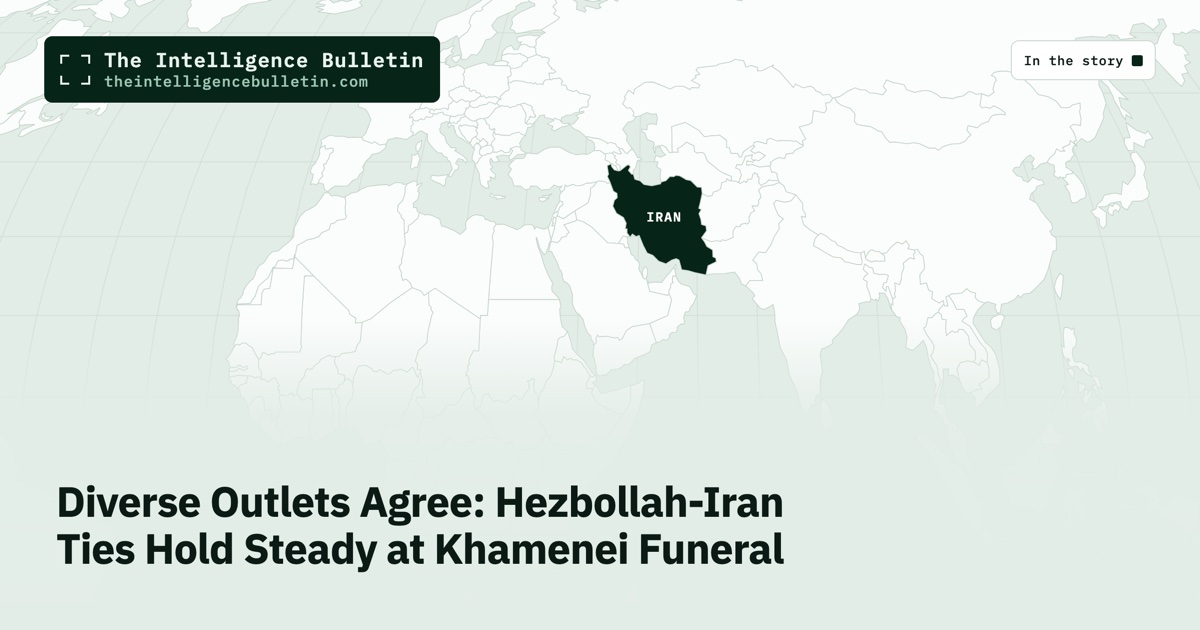
Map of the countries in the story: Diverse Outlets Agree: Hezbollah-Iran Ties Hold Steady at Khamenei Funeral
On July 5, 2026, a Hezbollah delegation led by Mohammad Fneish met Iranian Foreign Minister Abbas Araghchi in Tehran on the sidelines of Ayatollah Ali Khamenei’s funeral. The group conveyed condolences from Hezbollah Secretary-General Sheikh Naim Qassem and discussed Iran’s support for Lebanon. Parallel meetings occurred with Hamas and other resistance groups.

One Story. Many Angles.

🇮🇷
Iran
Press TV
Resistance officials hold talks with Iran FM, offer condolences on Leader’s martyrdom
Read →
🇮🇩
Indonesia
Antara News
INDONESIAN
Hezbollah meets Iran’s foreign minister during Khamenei death commemoration
“Hizbullah meets Iran FM on sidelines of Khamenei death commemoration”
Read →
🇹🇷
Turkey
Haberler
TURKISH
Iranian Foreign Minister Araghchi meets with Hamas and Hezbollah delegations
“Iran FM Araghchi meets Hamas and Hezbollah delegations”
Read →
🇦🇿
Azerbaijan
Musavat
AZERBAIJANI
Araghchi meets Hezbollah and Hamas members
“Araghchi meets with Hezbollah and Hamas members”
Read →
🇱🇧
Lebanon
Naharnet
Iran-backed Hezbollah and Hamas attend Khamenei funeral ceremonies
Read →

Perspective Analysis

The uniformity of reporting across ideologically and geographically diverse outlets on the July 4 meetings in Tehran underscores a deeper continuity: Hezbollah’s operational ties to Iran remain intact in the immediate aftermath of Ayatollah Ali Khamenei’s assassination. Far from signaling any rupture in the axis of resistance, the encounters between Iranian Foreign Minister Abbas Araghchi and a Hezbollah delegation led by Mohammad Fneish conveyed routine condolences from Secretary-General Sheikh Naim Qassem while reaffirming Tehran’s commitment to Lebanese territorial integrity and the cessation of Israeli operations under the terms of the Tehran-Washington Memorandum of Understanding.

Khamenei, who had served as supreme leader since 1989, was killed on February 28, 2026, in a U.S.-Israeli strike that also claimed members of his family and senior officials. The attack triggered wider regional conflict and set the stage for elaborate funeral ceremonies expected to draw between 15 and 20 million mourners. On the sidelines of those observances in Tehran, multiple resistance groups dispatched representatives to offer formal sympathies and conduct bilateral discussions with Araghchi. The Hezbollah team, which included senior officials and relatives of killed or wounded members, used the platform to praise Iranian military and diplomatic performance while pressing for an end to the war on Lebanon.

Iranian state media outlet Press TV framed the day’s diplomacy as emblematic of the broader resistance front. Its dispatch described parallel sessions not only with Fneish but also with Hamas political bureau chief Muhammad Darwish, Amal Movement representative Khalil Hamdan, PFLP-GC Secretary General Talal Naji, PFLP deputy Jamil Mezher, and Yemen’s Deputy Prime Minister Jalal al-Ruwaishan. Araghchi’s remarks, as quoted, emphasized that the “pure blood of the resistance martyrs” had already disgraced Washington and Tel Aviv, while reiterating Iran’s pursuit of an end to the Lebanon war in line with Clause 1 of the MoU. The coverage embedded the Hezbollah encounter within a narrative of collective solidarity stretching from Lebanon through Palestine to Yemen.

Indonesian wire service Antara delivered a more narrowly focused protocol dispatch drawn directly from IRNA. It recorded the Fneish-led delegation’s arrival, its conveyance of Qassem’s message, and Araghchi’s thanks for the group’s presence. The report noted Iranian appreciation for Hezbollah’s resistance against Israel and Tehran’s pledge to continue efforts to halt the war and occupation under the MoU framework. Absent any grouping with Hamas or other factions, the piece remained strictly factual, highlighting Iranian support for Lebanon’s sovereignty and the delegation’s praise for Iranian armed forces and diplomatic negotiators.

Turkish outlet Haberler grouped the Hezbollah session with a concurrent Hamas meeting, underscoring Ankara’s regional interest in Gaza-Lebanon linkages. According to the account, Darwish informed Araghchi of conditions in Gaza and the West Bank, described international responses as a “disaster,” and thanked Iran for its battlefield and diplomatic gains. Fneish similarly expressed appreciation for Tehran’s stance during recent clashes. Araghchi responded by praising Hezbollah’s resistance, honoring slain leader Hassan Nasrallah, and confirming that efforts to end the Lebanon war would continue within the ceasefire agreement. The dual coverage reflected Turkish media’s attention to mediation dynamics across the Levant.

Azerbaijani outlet Musavat likewise paired the two delegations while adding a Caucasus vantage on Iran’s post-Khamenei outreach. Its report, drawing from Araghchi’s Telegram channel, noted that Fneish thanked Iran for opposing Israeli attacks on Lebanon and that discussions touched on U.S.-Iran negotiations. The foreign minister recalled ongoing work under the first clause of the Islamabad agreement memorandum—presumably a reference to the same MoU—to conclude the Lebanon war. Hamas representatives briefed Araghchi on Gaza, prompting renewed Iranian pledges of support until Palestinian self-determination is achieved. The piece also referenced additional talks with Palestinian factions, presenting Tehran’s engagement with non-state actors as steady despite the leadership transition.

Lebanese outlet Naharnet situated the same events within Hezbollah’s domestic political context. It reported that the Fneish delegation attended the ceremonies and met Araghchi, while noting parallel Hamas attendance led by Darwish. The dispatch explicitly referenced Western terrorist designations applied to both groups and to Iran’s network of allies, including the Houthis and Iraqi militias collectively termed the “axis of resistance.” It recorded the presence of Islamic Jihad leader Ziyad al-Nakhalah and a senior Houthi official, underscoring the breadth of foreign militant representation at the funeral while highlighting sensitivities around Iran-backed actors inside Lebanon itself.

Across these accounts, core facts converge without contradiction: the July 4 date, the Fneish delegation’s leadership and message from Qassem, Araghchi’s references to the MoU, and expressions of mutual appreciation for military steadfastness and diplomatic efforts. Variations remain additive rather than divergent. Press TV supplies the widest resistance-front tableau; Antara strips the encounter to protocol; Haberler and Musavat emphasize the Hamas pairing; Naharnet supplies the Lebanese domestic lens and Western designations. This convergence indicates that, at least in the visible mechanics of condolence diplomacy, Iran’s alliances with key non-state partners have not yet been disrupted by the post-Khamenei transition.

The Takeaway

Observers will now watch whether subsequent Iranian leadership decisions—particularly regarding military command structures, financial channels, and coordination with groups in Lebanon, Gaza, and Yemen—introduce any measurable shifts. The next test will likely come in the implementation of the MoU’s provisions on Lebanon and in any public positioning by the new supreme leader or his foreign-policy team.


Share this story

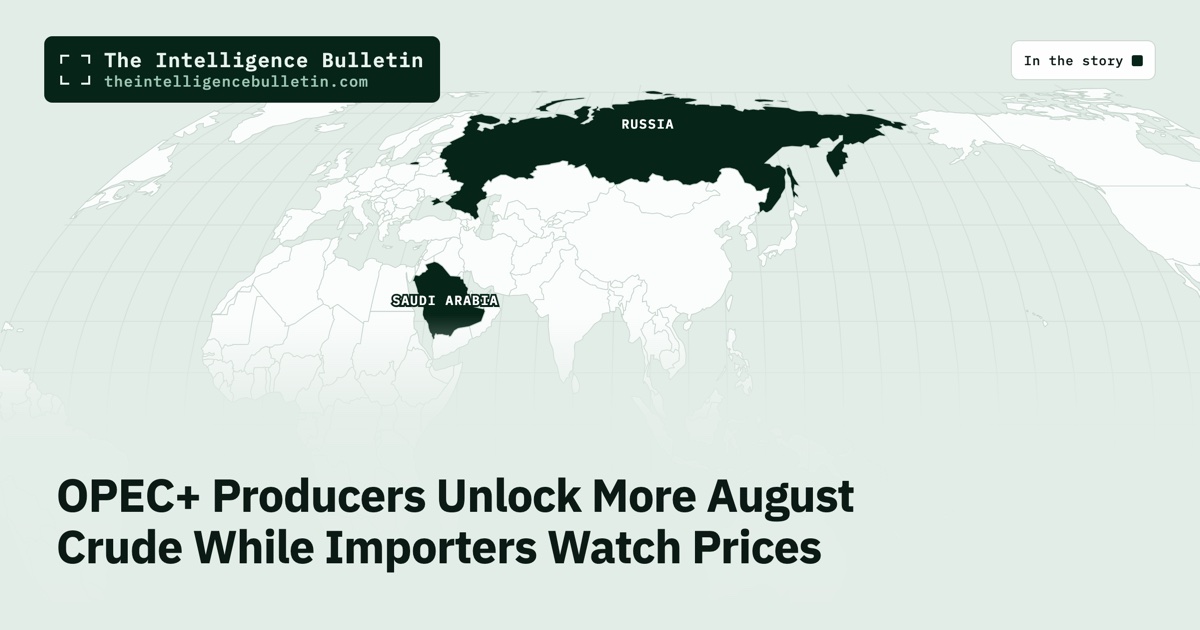
OPEC+ Producers Unlock More August Crude While Importers Watch Prices

Map of the countries in the story: OPEC+ Producers Unlock More August Crude While Importers Watch Prices
On July 5, 2026, seven OPEC+ members including Saudi Arabia and Russia approved a further 188,000 barrels per day production increase effective August, reversing part of 2023 voluntary cuts. The group cited market stabilization needs and retained flexibility to adjust or reverse the move. Russia gains a specific 62,000 bpd quota lift; the decision follows recent geopolitical easing around the Strait of Hormuz. Monthly reviews continue, with the next meeting set for August 2.

One Story. Many Angles.

🇸🇦
Saudi Arabia
Al-Mowaten
ARABIC
Saudi Arabia and OPEC+ countries adjust production and reaffirm market stability commitment
Read →
🇷🇺
Russia
RIA Novosti
RUSSIAN
Russia will be able to increase oil production within OPEC+
Read →
🇮🇳
India
Moneycontrol
OPEC+ agrees in principle on 188,000 bpd oil output hike for August
Read →
🇰🇿
Kazakhstan
Caravan
RUSSIAN
Today OPEC countries will discuss oil production quotas for August
Read →
🇪🇸
Spain
El Periódico
SPANISH
OPEP+ will increase its oil supply in August for the fifth consecutive month
Read →

Perspective Analysis

On July 5, 2026, seven OPEC+ members moved to unwind another slice of their 2023 voluntary production curbs, approving an additional 188,000 barrels per day of output starting in August. The decision, reached during a video conference among Saudi Arabia, Russia, Iraq, Kuwait, Kazakhstan, Algeria, and Oman, reflects producers’ shared priority on managing quota mechanics and preserving group cohesion even as external conditions shift. It marks the fifth straight monthly step in a gradual supply restoration that began earlier in the year and leaves open the possibility of pausing or reversing the increases if market signals change.

The background traces to voluntary cuts first announced in April 2023, when several members reduced output beyond their formal quotas in an effort to support prices amid concerns over potential surpluses. Those adjustments were later supplemented by further curbs in November 2023. The group has since been unwinding the April measures in measured increments, with the August move bringing the cumulative restoration closer to completion. A final tranche of reductions is scheduled to remain in place through the end of 2026. Monthly reviews continue, with the next session set for August 2.

Saudi coverage in Al-Mowaten presented the decision as a collective affirmation of market-stability goals. The outlet detailed the July 5 video call among the seven nations and emphasized commitments to compensation for past overproduction. It highlighted the gradual, conditional nature of the production adjustment and the participants’ pledge to retain full flexibility to increase, halt, or reverse the process depending on market conditions. The reporting underscored ongoing monitoring by the Joint Ministerial Monitoring Committee and the members’ determination to fully compensate for excess output recorded since January 2024, framing the step as evidence of coordinated leadership rather than any single country’s quota gain.

Russian state media took a narrower national focus. RIA Novosti reported that Moscow’s permitted production level would rise by 62,000 barrels per day to 9.887 million barrels daily in August. The account tied the increase directly to the broader 188,000-barrel group adjustment and noted that the seven countries with additional voluntary restraints had agreed to lift the maximum allowed output by that amount. Coverage isolated Russia’s specific relief within the quota framework, presenting it as a direct benefit to the country’s production capacity rather than dwelling on collective stability language.

Indian business outlet Moneycontrol connected the quota decision to recent geopolitical developments, particularly the easing of shipping constraints following an interim peace arrangement between the United States and Iran. The report observed that restored flows through the Strait of Hormuz have enabled Persian Gulf producers to resume exports at near pre-conflict levels, contributing to emerging surpluses in key Asian markets. It also flagged strains on OPEC+ unity, citing Iraq’s recent suggestion that it might ultimately exit the group if denied a higher production limit and the United Arab Emirates’ departure in May. The analysis stressed potential downstream effects for energy importers, including possible relief on India’s import bill if additional supply reaches consumers.

Kazakhstan’s Caravan, writing just before the video conference, examined the quota discussion through the lens of Central Asian compliance challenges. The outlet noted that Kazakhstan has been producing well above its permitted level—nearly twice the allowed volume, or roughly one million barrels per day in excess—and has not yet completed compensation for earlier shortfalls. Compensation deadlines were extended to the end of the year, yet no updated schedule had been published. The piece framed the August quota adjustment as part of the broader effort to unwind the 2023 curbs while highlighting the logistical difficulties posed by Hormuz transit constraints and the gap between permitted and actual output for non-Gulf members.

Spanish daily El Periódico situated the August increase within a five-month sequence of incremental supply restoration. The report described the 188,000-barrel daily adjustment as the latest in a series that began with a March agreement to reverse 1.65 million barrels of cuts and continued through successive monthly approvals of roughly similar volumes. It underscored the group’s retained flexibility to pause or reverse the process and noted that the measure authorizes higher production targets rather than guaranteeing immediate physical deliveries. From a consumer-region perspective, the coverage observed that such decisions can indirectly influence fuel prices, though final retail costs also depend on refining margins, taxes, currency movements, and local market conditions.

Across the outlets, a consistent factual core emerges: producer states are emphasizing quota discipline, compensation obligations, and consensus language while retaining exit ramps should prices soften. The Indian reporting stands apart by foregrounding implications for importing economies and by linking the supply step to post-Hormuz shipping recovery. Producer-focused accounts, by contrast, avoid downstream price commentary and instead stress internal coordination mechanisms.

The Takeaway

Looking ahead, markets will watch the August 2 meeting for any sign that the group intends to accelerate, pause, or scale back the remaining restoration schedule. Compliance data from the Joint Ministerial Monitoring Committee and tanker-tracking evidence of actual export flows through Hormuz will provide the clearest indicators of whether the additional August volumes materialize in physical supply or remain largely on paper.


Share this story

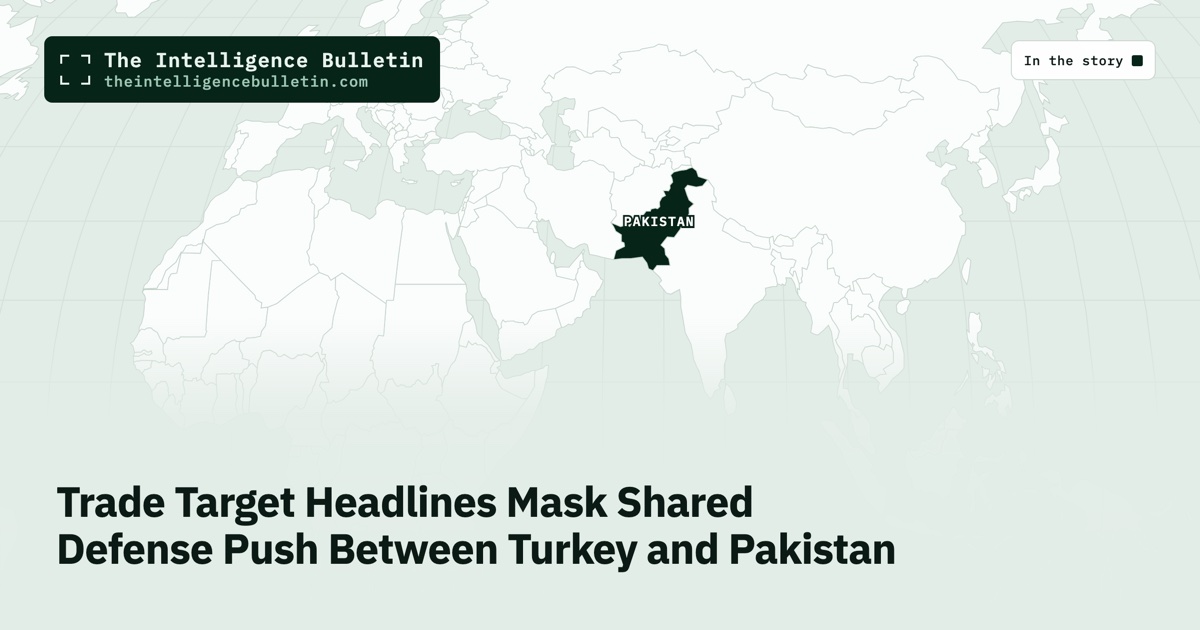
Trade Target Headlines Mask Shared Defense Push Between Turkey and Pakistan

Map of the countries in the story: Trade Target Headlines Mask Shared Defense Push Between Turkey and Pakistan
On July 4 2026 in Istanbul, Turkish President Recep Tayyip Erdoğan and Pakistani Prime Minister Shehbaz Sharif reaffirmed their goal of raising bilateral trade to $5 billion. The leaders pledged expanded cooperation in defense industry, energy, transport, critical minerals and information technologies, including plans for a special economic zone in Karachi. Erdoğan encouraged Turkish investors in Pakistan while both sides noted mutual support on regional issues including Kashmir and Cyprus. Reports from Turkish, Pakistani, Chinese and Afghan outlets all documented the joint press conference and shared economic-security commitments.

One Story. Many Angles.

🇹🇷
Turkey
Hürriyet Daily News
Türkiye, Pakistan reaffirm $5 billion trade goal
Read →
🇵🇰
Pakistan
Samaa TV
Pakistan, Turkiye set $5bn trade target
Read →
🇨🇳
China
Xinhua
Türkiye, Pakistan pledge to boost strategic, economic cooperation
Read →
🇦🇫
Afghanistan
Khaama Press
Erdogan, Pakistan Sharif Agree to Expand Defense and Trade Cooperation
Read →
🇵🇰
Pakistan
Daily Jang
URDU
Pakistan-Turkey trade, $5 billion target, both countries united, Shahbaz Sharif
“پاک ترک تجارت ، 5 ارب ڈالر ہدف ، دونوں ملک یکجان دو قالب ، شہباز شریف”
Read →

Perspective Analysis

On July 4, 2026, Turkish President Recep Tayyip Erdoğan and Pakistani Prime Minister Shehbaz Sharif met in Istanbul and placed a familiar economic figure at the center of their public remarks. They reaffirmed the longstanding target of raising bilateral trade to $5 billion. Yet the same joint press conference, held at Vahdettin Mansion after bilateral and delegation-level talks, also recorded explicit pledges to expand cooperation in defense industry projects, energy, transport, critical minerals, and information technologies, alongside plans for a special economic zone in Karachi aimed at Turkish businesses. The meeting occurred against a backdrop of regional tensions, with both leaders referencing mutual support on Kashmir and Cyprus and Erdoğan offering condolences for a deadly bus accident in Pakistan’s Balochistan province.

Turkish reporting from Hürriyet Daily News framed the encounter primarily as an economic milestone. The outlet highlighted Erdoğan’s direct encouragement to Turkish investors to become more active in Pakistan and noted ongoing work by the trade ministries on the Karachi special economic zone and expansion of the preferential trade agreement. It presented defense cooperation as one growing area among several, without dwelling on specific military deliveries or framing the partnership in emotional or historical terms. The emphasis remained on practical steps and sector-by-sector progress toward the shared trade number, consistent with Ankara’s outbound economic diplomacy.

Pakistani English-language coverage, such as that from Samaa TV, presented the $5 billion target as a mutual strategic achievement under the Sharif-Erdoğan partnership. Reports stressed high-level diplomacy and the expectation that decisions would translate into concrete trade, investment, and strategic gains for both peoples. Sharif’s statements about the unique nature of the relationship and the commitment that decisions would move from paper to reality received prominent play, reflecting Islamabad’s focus on visible diplomatic gains and balanced partnership language rather than one-sided investor outreach.

Urdu-language Daily Jang added a distinctly domestic and affective layer. Its account centered Sharif’s role in inviting Turkish investors across multiple sectors during a business forum and invoked the longstanding phrase “one soul, two bodies” to describe the two nations. The report underscored historical solidarity, noting that the countries have stood together in every difficulty, while detailing Sharif’s outreach on energy, agriculture, mining, information technology, and artificial intelligence. This vernacular framing resonated with local readers by blending economic ambition with cultural and emotional resonance, portraying Sharif as an active agent in strengthening fraternal ties.

Xinhua’s dispatch from Beijing applied an external strategic lens. It foregrounded expanded cooperation in defense, energy, transportation, critical minerals, and information technologies as part of a broader package. Defense industry ties were described as a key pillar of bilateral economic relations that were advancing through new projects. The Chinese state wire also recorded Erdoğan’s praise for the recently signed U.S.-Iran memorandum of understanding and his commitment to work with “brotherly” countries, especially Pakistan, for regional peace and stability. Economic pledges appeared as extensions of this security-economic nexus rather than standalone commercial goals.

Khaama Press, reporting from Afghanistan, supplied the most explicit security context. It noted that Turkish defense companies have supplied Pakistan with military equipment including MILGEM-class corvettes and that the two countries have cooperated on aircraft modernization, defense production, and military training. The outlet portrayed the Istanbul talks as an agreement to deepen defense and trade cooperation within a longstanding partnership that operates through the High-Level Strategic Cooperation Council. While domestic Turkish and Pakistani accounts downplayed or generalized the military dimension, the regional neighbor’s coverage highlighted concrete past deliveries and the security implications of closer ties, given Afghanistan’s proximity.

Across these accounts, a consistent pattern emerges. Trade targets and investor forums serve as the accessible public narrative, yet every source records parallel commitments in defense and critical minerals. The convergence suggests that economic rhetoric provides political cover and measurable benchmarks for deeper strategic alignment that neighboring states and external powers observe more readily than the participants themselves emphasize in domestic reporting. Both leaders reiterated that decisions would produce tangible results in trade, investment, and strategic cooperation, with Sharif stating that Türkiye’s success is Pakistan’s success and Pakistan’s progress is Türkiye’s progress.

The Takeaway

What remains to be watched is whether the announced special economic zone in Karachi moves from planning to groundbreaking, whether new defense projects yield publicly disclosed contracts, and how the partnership evolves amid shifting regional dynamics involving Iran, India, and great-power competition over critical minerals. Implementation timelines and specific project announcements in the coming months will reveal whether the July 4 reaffirmations mark incremental progress or a more substantive acceleration of the security-economic nexus already visible to attentive regional observers.


Share this story

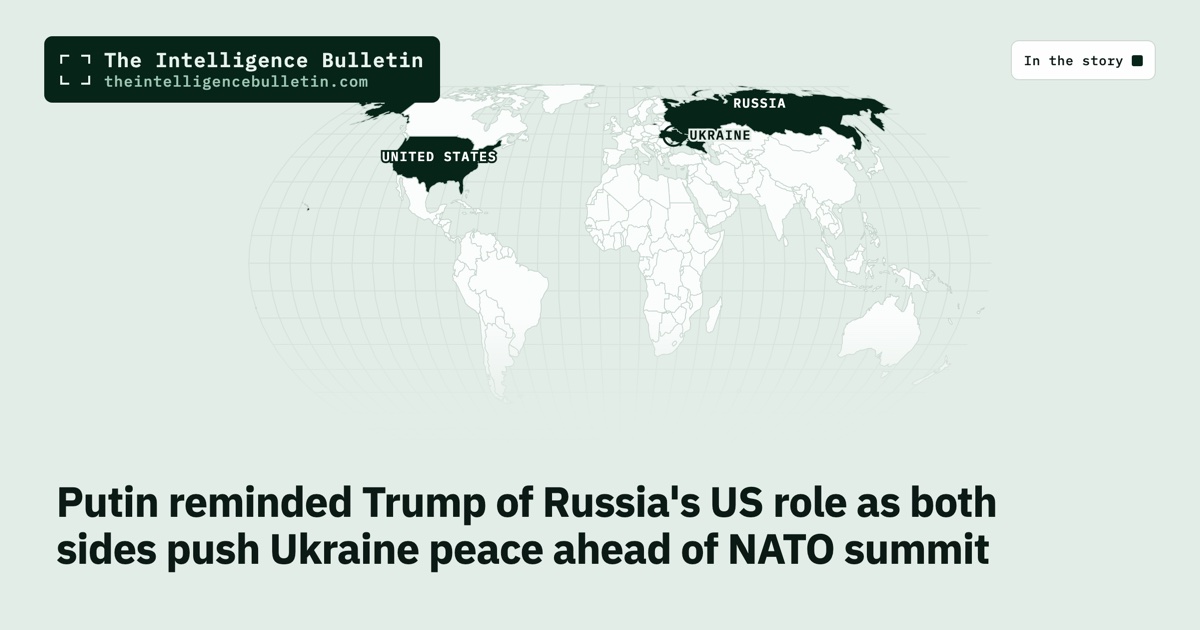
Putin reminded Trump of Russia’s US role as both sides push Ukraine peace ahead of NATO summit

Map of the countries in the story: Putin reminded Trump of Russia's US role as both sides push Ukraine peace ahead of NATO summit
On July 4 2026, Russian President Vladimir Putin spoke by phone with US President Donald Trump for about 90 minutes. The Kremlin said the US-initiated call covered bilateral issues including Ukraine, with Trump reaffirming readiness to help end the war. Ukrainian President Volodymyr Zelenskyy separately told Trump there is a real prospect to end the conflict ahead of the NATO summit in Turkey.

One Story. Many Angles.

🇷🇺
Russia
RT Russian
RUSSIAN
Putin reminded Trump of Russia’s contribution to the formation of US statehood
Read →
🇬🇧
United Kingdom
The Guardian
Ukraine war briefing : Trump repositions himself as peacemaker in long call with Putin
Read →
🇹🇷
Turkey
Anadolu Agency
Russia says Trump reaffirmed readiness to help end Ukraine war in phone call with Putin
Read →
🇸🇬
Singapore
Lianhe Zaobao
CHINESE
Putin and Zelensky separately speak with Trump to discuss Russia-Ukraine issues
Read →
🇮🇳
India
The Times of India
Trump offers to help end Ukraine war during 90-minute call with Putin, Zelenskyy
Read →

Perspective Analysis

On July 4, 2026, the coincidence of U.S. Independence Day with a 90-minute phone call between Presidents Vladimir Putin and Donald Trump allowed Moscow to frame the exchange around shared history even as both sides advanced separate narratives about ending the war in Ukraine ahead of a NATO summit. The Kremlin reported that the U.S.-initiated conversation covered bilateral ties, the conflict, and wider international issues, with Putin personally congratulating Trump and the American people while reminding him of Russia’s historical contribution to the formation of U.S. statehood. Aide Yuri Ushakov described the tone as business-like and constructive, noting that Trump reaffirmed his readiness to work toward a rapid end to the fighting and find solutions to the crisis.

The call occurred against a backdrop of stalled diplomacy and grinding battlefield realities. Putin outlined what he portrayed as steady Russian advances, while both leaders referenced the upcoming NATO gathering in Ankara, Turkey, scheduled for July 7-8. Ushakov said Russian envoys would continue seeking a political-diplomatic resolution that accounts for Moscow’s fundamental positions, and he accused Kyiv and its European partners of aiming to prolong or escalate the conflict through long-range strikes. Trump informed Putin that U.S. envoys Steve Witkoff and Jared Kushner would persist in mediation efforts and stood ready for another visit to Moscow. Putin also expressed hope that American diplomatic work on Iran could yield broader mutually acceptable outcomes and reiterated an open invitation for Trump to visit Russia.

Ukrainian President Volodymyr Zelenskyy held a separate conversation with Trump the same day, which he characterized on Telegram as very good. The two discussed the 1,200-kilometer frontline and diplomatic tracks, with Zelenskyy stating there is a real prospect to end the war and that American resolve would prove decisive. They agreed to continue the discussion at the Ankara summit. Both the Putin and Zelenskyy calls were explicitly linked by participants to the 250th anniversary of U.S. independence, lending an additional ceremonial layer to the diplomatic outreach.

Russian state media, exemplified by RT, placed singular emphasis on Putin’s historical reminder during the Independence Day exchange. The outlet quoted Ushakov directly on how Putin had highlighted Russia’s contribution to American statehood and the importance of shared historical pages, aligning the narrative with Kremlin priorities that stress longstanding ties over immediate conflict mechanics. This framing was absent from Western and Asian reporting, underscoring how Russian coverage leveraged the calendar for symbolic resonance rather than foregrounding battlefield updates or summit logistics.

The Guardian positioned the call within Trump’s broader effort to recast himself as a peacemaker. It highlighted the length and constructive tone reported by Ushakov while embedding the development in ongoing frontline skepticism, including Ukrainian denials of Russian claims to have captured Kostyantynivka and reports of Ukrainian drone strikes deep inside Russia. The outlet noted Zelenskyy’s parallel call and his emphasis on the need for U.S. determination, reflecting European concerns about escalation risks even as diplomacy gained visible momentum.

Anadolu Agency, reflecting Turkey’s direct stake as NATO summit host, focused on Russia’s account of Trump’s reaffirmed readiness to broker an end to the war. The Turkish outlet stressed the context of the upcoming Ankara meeting and Ushakov’s comments on continued U.S. mediation, presenting the exchange as evidence of active American engagement without extensive battlefield detail or historical overlay.

Lianhe Zaobao offered a concise, balanced summary aimed at readers seeking detachment from actor-driven narratives. It covered both the Putin and Zelenskyy calls equally, noted the 85-minute duration cited in some dispatches, the discussion of battlefield realities and stalled talks, and preparations for the Ankara summit. The Singaporean outlet also referenced the shared commemoration of the U.S. anniversary and the absence of major recent territorial shifts amid heavy drone use on both sides.

The Times of India stressed concrete metrics such as the nearly 90-minute length, Trump’s explicit offer of help, and the conflicting battlefield accounts presented by Putin and Zelenskyy. It detailed Russia’s claim of steady advances and Kostyantynivka’s capture alongside Ukrainian rejections, while noting Zelenskyy’s assessment of a genuine prospect for peace. The Indian coverage underscored the diplomatic calendar and multipolar relevance of renewed U.S. involvement without privileging historical symbolism or European skepticism.

Across these outlets, coverage converges on the gathering pace of high-level contacts and the centrality of the Ankara NATO summit as the next diplomatic milestone. Yet sharp divergences persist in emphasis: Russian reporting ties the moment to enduring bilateral history, Western accounts embed it in battlefield doubts and European security priorities, Turkish outlets highlight regional hosting stakes, and Asian perspectives maintain equilibrium by tracking both sides’ positions and stalled negotiations. This pattern illustrates how the same set of verified exchanges can be refracted through distinct geopolitical lenses.

The Takeaway

What to watch next centers on the Ankara summit itself, where leaders from more than 30 nations are expected to address Ukraine amid these fresh contacts. Further details on any follow-up visits by U.S. envoys, the tone of battlefield reporting around key Donbas positions, and whether the separate Putin-Zelenskyy outreach to Trump translates into coordinated steps will clarify whether the July 4 calls mark a genuine inflection or another pause in a protracted conflict.


Share this story

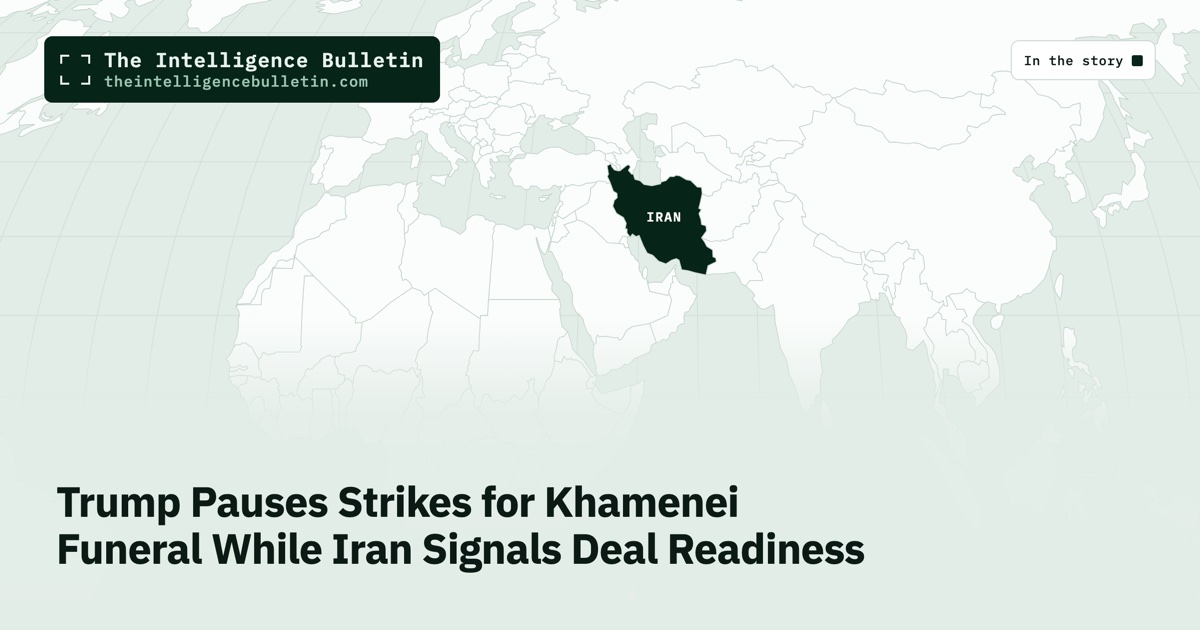
Trump Pauses Strikes for Khamenei Funeral While Iran Signals Deal Readiness

Map of the countries in the story: Trump Pauses Strikes for Khamenei Funeral While Iran Signals Deal Readiness
On July 4 2026 at Mount Rushmore President Donald Trump announced the United States had paused operations for one week to allow Iran to hold funeral rites for former Supreme Leader Ali Khamenei framing it as a humanitarian gesture. Trump stated at the America 250 event that Iran had been struck hard and was now eager for a political settlement with Washington. Iranian negotiators confirmed talks would resume after the ceremonies while crowds gathered in Tehran for mourning. The pause occurs amid ongoing US-Iran diplomacy including prior talks mediated by Qatar and Pakistan.

One Story. Many Angles.

🇸🇦
Saudi Arabia
Okaz
ARABIC
Trump: We gave Iran a week to hold Khamenei’s funeral
“ترمب: منحنا إيران أسبوعاً لتشييع خامنئي”
Read →
🇽🇰
Kosovo
Shenja
ALBANIAN
Trump: We gave Iran a one-week break for Supreme Leader Ali Khamenei’s funeral
“Trump: I dhamë Iranit një javë pushim për funeralin e udhëheqësit suprem Ali Khamenei”
Read →
🇮🇳
India
Khas Khabar
HINDI
Trump: Iran given a week reprieve to bid final farewell to Supreme Leader
Read →
🇵🇰
Pakistan
The News
Trump says Iran ‘Dying’ to settle as talks pause for Khamenei funeral
Read →
🇵🇰
Pakistan
Pakistan Observer
Mourners gather in Tehran as Iran begins week-long funeral for Ali Khamenei
Read →

Perspective Analysis

The announcement by President Donald Trump on July 4, 2026, at Mount Rushmore that the United States had granted Iran a one-week pause in operations for the funeral of former Supreme Leader Ali Khamenei underscored American leverage in an ongoing diplomatic process while exposing how differently regional and international outlets interpret the same events. Trump framed the reprieve explicitly as a humanitarian courtesy during an America 250 celebration, pairing it with the assertion that Iran had been struck hard and was now eager for a political settlement with Washington.

The pause occurs against the backdrop of US and Israeli strikes that began on February 28, when Khamenei, then 86, was killed along with family members in attacks on his residential area. Those strikes marked the start of open conflict, after which Mojtaba Khamenei was appointed the new Supreme Leader in March. Earlier diplomacy had produced a 14-point memorandum of understanding signed in mid-June, followed by technical talks in Switzerland and then Doha involving Qatari and Pakistani mediators. Several complex files remain unresolved, chief among them management of the Strait of Hormuz, where Tehran seeks joint oversight with Oman and compensation described as service fees, positions opposed by both Washington and Muscat.

Saudi Arabia’s Okaz placed the pause squarely inside the Riyadh-Tehran rivalry, noting the US strikes that preceded it and the lingering Hormuz question in current negotiations. The outlet reported Trump’s Mount Rushmore remarks in detail, including his claim that Iran is “eagerly and desperately seeking a political settlement,” while adding historical context on the June memorandum and the Qatari-Pakistani mediation track that other coverage largely omitted. Its editorial lens emphasized the security implications for Gulf states of any US-Iran accommodation, particularly regarding navigation rights in a vital waterway.

Kosovo’s Shenja, writing from the perspective of a small NATO-aligned nation, highlighted the humanitarian character of the pause and Trump’s broader boasts of American military power. The report quoted the president saying the United States had “created the strongest and most powerful army,” won two world wars, and left Cold War adversaries “in the depths of history,” before turning to recent conflicts with the line that Washington “beat Venezuela in one day and knocked the hell out of Iran” and therefore granted “a week off for a funeral because we’re nice.” The emphasis remained on US strength and goodwill rather than the substance of the talks.

India’s Khas Khabar treated the story as one item in a global roundup, reporting the one-week reprieve in neutral language and underscoring Iran’s weakened position after US actions. The outlet avoided any emphasis on potential deals or regional rivalry, instead noting that Iran had been “shaken” and was now compelled to seek compromise on American terms, consistent with New Delhi’s traditional distance from direct entanglement in US-Iran dynamics.

Pakistan’s The News focused on the diplomatic opening, quoting Trump’s characterization that Iran is “dying to settle” and “wanting to settle so badly.” It added confirmation from Iranian negotiators, including parliament speaker Mohammad Bagher Ghalibaf, that discussions would resume once the funeral ceremonies concluded. The paper noted that mourning had already begun on Saturday with an expected six days of events drawing 15 to 20 million participants across Tehran, Qom, and Mashhad.

The Pakistan Observer shifted attention almost entirely to the Iranian domestic scene, describing thousands of mourners in black filling streets and the Grand Mosalla complex in Tehran, where a casket was displayed inside a glass enclosure amid symbolic red banners. It reported that new Supreme Leader Mojtaba Khamenei might avoid large public appearances due to security concerns tied to possible threats, citing a University of Tehran research fellow who linked the caution to fears of further Israeli action. Trump’s statement appeared only briefly as an aside in this on-the-ground account.

The Takeaway

Across the five outlets the common thread is Trump’s blunt assertion of American power and Iran’s current need for accommodation, yet the framing diverges sharply according to each publication’s vantage point. Saudi coverage stresses unresolved security files and Gulf interests; Kosovar reporting accentuates alliance solidarity and US benevolence; Indian dispatches remain detached and factual; one Pakistani paper tracks negotiation prospects while the other captures street-level mourning and leadership vulnerabilities. Iranian negotiators have indicated talks will restart after the ceremonies, leaving the trajectory of the 14-point memorandum and the Hormuz file as immediate tests of whether the one-week pause translates into substantive progress or renewed pressure.


Share this story