Macron’s Damascus trip signals Western re-engagement while Damascus eyes deals

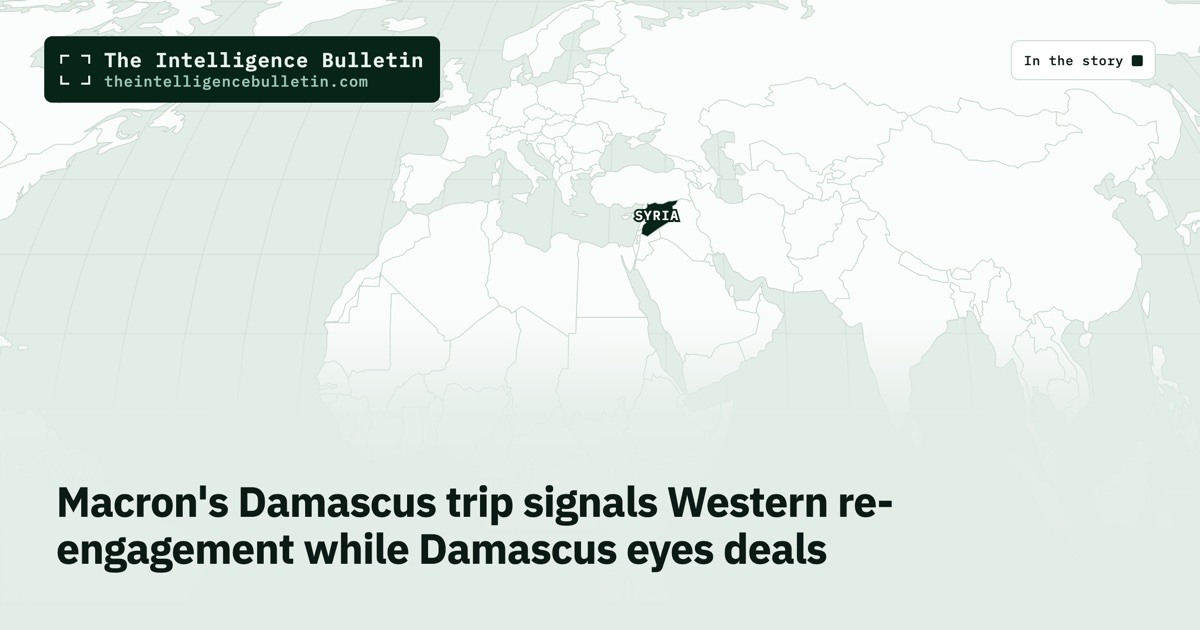
Map of the countries in the story: Macron's Damascus trip signals Western re-engagement while Damascus eyes deals
French President Emmanuel Macron arrived in Damascus on July 6, 2026, for a two-day visit, the first by any Western or EU leader since Bashar al-Assad’s ouster in December 2024. He was received by Syrian Foreign Minister Asaad al-Chaibani and met President Ahmed al-Sharaa. Macron stated France’s commitment to a sovereign, plural Syria at peace with its neighbors. The trip includes returning archaeological artifacts and discussions on reconstruction.

One Story. Many Angles.

🇫🇷
France
Franceinfo
FRENCH
Emmanuel Macron arrives in Syria, first for an EU head of state since Assad fall
Read →
🇸🇾
Syria
SANA
SPANISH
Al-Sharaa highlights France friendship and announces economic agreements
Read →
🇦🇪
United Arab Emirates
Sky News Arabia
ARABIC
From Damascus, Macron affirms France commitment to supporting unified Syrian people
Read →
🇭🇰
Hong Kong
South China Morning Post
France’s Macron in Syria on first post-Assad visit by a Western leader
Read →
🇩🇪
Germany
Handelsblatt
GERMAN
France: President Emmanuel Macron visits Syria
Read →

Perspective Analysis

Emmanuel Macron’s arrival in Damascus on July 6, 2026, marks the first visit by any Western or European Union head of state since Bashar al-Assad’s ouster in December 2024, yet the real divergence in coverage lies in what each side extracts from the moment: Paris presents the trip as a political milestone of support for a plural Syria, while Damascus frames it as the practical start of reconstruction financing and infrastructure contracts.

The French president landed under tight security for a two-day stay, received at the airport by Syrian Foreign Minister Asaad al-Chaibani. He met President Ahmed al-Sharaa and later visited the Umayyad Mosque. Macron wrote on social media that he came to reaffirm France’s commitment to the Syrian people and to a sovereign Syria united in its diversity and at peace with its neighbors. The Élysée described the goal as backing a free and plural Syria respectful of all components and able to moderate regional tensions. As part of the visit, France is returning archaeological artifacts loaned to the Institut du Monde Arabe in 2010 that could not be returned during the war.

French state media, including Franceinfo, foreground this diplomatic first as the opening of a new page for EU engagement, stressing Macron’s emphasis on pluralism and the artifact return. The account aligns closely with official French messaging on democratic transition and historical continuity, noting the last French presidential visit occurred under Nicolas Sarkozy in 2008 and 2009 before the 2011 crackdown.

Syrian state coverage takes a sharply different tack. SANA reports that al-Sharaa, in an interview with BFMTV, highlighted France’s friendship with the Syrian people during the revolution and its constructive role in lifting sanctions. He announced that the visit opens a new stage in bilateral relations through economic agreements in infrastructure and finance, with France participating in reconstruction across material rebuilding and institutional strengthening. Syrian authorities, the report states, have already dismantled drug networks that flourished under the previous regime and now seek advanced-country expertise for a country rich in resources but needing technical partners. This account centers the tangible deliverables absent from most Western reporting.

Regional outlets add their own priorities. Sky News Arabia stresses Macron’s pledge to support a unified Syrian people, reflecting Arab concerns over cohesion after more than thirteen years of conflict and recent security incidents such as the bombing at a Damascus café the previous week. The emphasis falls on stability and the new authorities’ efforts to reunify the country rather than on specific political models or deal announcements.

The South China Morning Post delivers a detached summary of the reset underway, describing al-Sharaa’s outreach to revive a devastated economy and noting the Umayyad Mosque visit alongside the security challenges facing the Islamist-led authorities. It records the visit as the first by a Western leader without layering on national or economic angles.

Germany’s Handelsblatt acknowledges France’s historical mandate over Syria from 1923 to 1946 but quickly pivots to present-day business and security interests. It points out that while Gulf rulers and Turkey moved first to engage al-Sharaa, European partners now see reconstruction opportunities and the need to manage risks from a fragile pacification process.

All five outlets report the same core sequence of events without factual contradiction. The pattern reveals that symbolism serves Paris’s domestic and European narrative of democratic renewal, while Damascus treats the occasion as leverage for capital inflows and technical cooperation essential to its survival. The stakes are concrete: who finances roads, power grids, and institutions will shape both Syria’s recovery and the balance of external influence in the Levant.

France’s earlier support for the anti-Assad opposition and its 2009 diplomatic break give the visit added weight, yet the new authorities have already hosted the emir of Qatar in early 2025, European Commission President Ursula von der Leyen in January 2026, and Ukrainian President Volodymyr Zelensky in April. Each encounter tests the limits of engagement with a leadership that includes former jihadist fighters now seeking broad international legitimacy.

The Takeaway

What follows will likely hinge on whether Paris and other capitals condition further steps on verifiable pluralism and minority protections or whether Damascus can convert symbolic visits into binding contracts fast enough to deliver visible reconstruction. The outcome will determine not only Syria’s economic trajectory but also whether Western re-engagement remains largely declarative or expands into sustained investment that competes with Gulf and Turkish interests already on the ground.
Share this story

Flávio Bolsonaro Ties Tariff Relief to Brazil’s 2026 Election at US Hearing

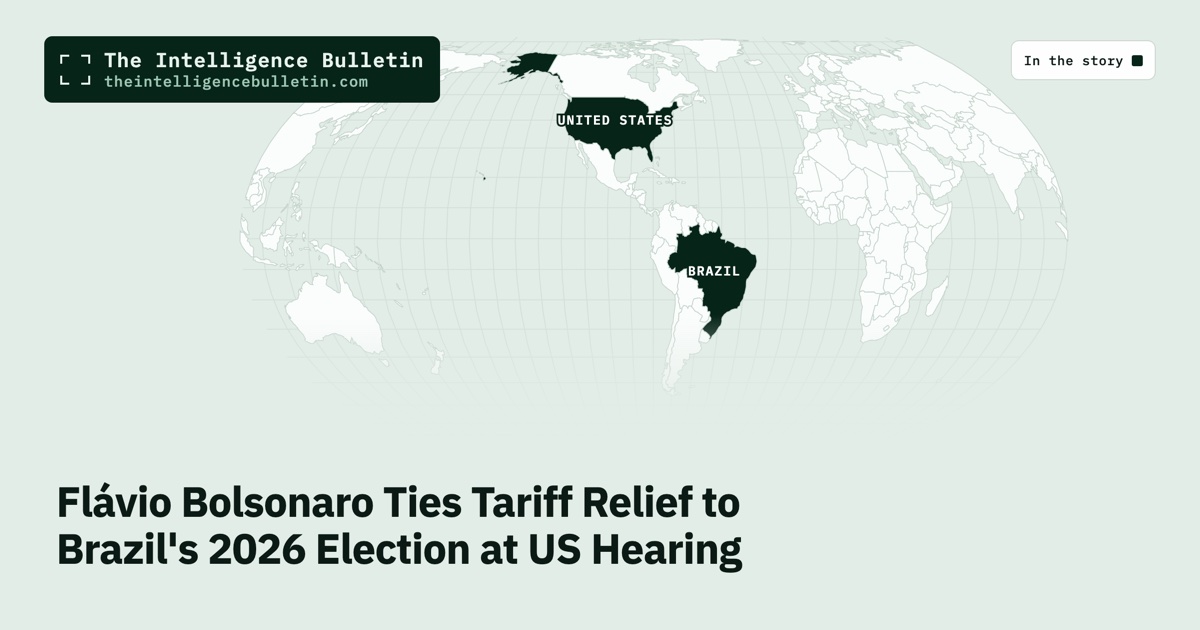
Map of the countries in the story: Flávio Bolsonaro Ties Tariff Relief to Brazil's 2026 Election at US Hearing
On July 6, 2026, the US Trade Representative held a hearing in Washington on proposed 25% Section 301 tariffs on Brazilian imports over alleged unfair practices including digital payments and deforestation. Brazilian industry groups including Fiesp, Cecafé and Abiarroz defended their trade record and warned of boomerang effects on US producers. Senator Flávio Bolsonaro separately urged a 180-day delay until after Brazil’s October 2026 presidential election, arguing immediate duties would boost Lula politically. Lula accused the Bolsonaro family of triggering the tariffs; the US decision is due by July 15.

One Story. Many Angles.

🇺🇸
United States
Econotimes
Flavio Bolsonaro Urges Trump to Delay Brazil Tariffs Until After 2026 Election
Read →
🇧🇷
Brazil
InfoMoney
PORTUGUESE
In dispute with Lula, Flávio goes to the US to ask for delay of tariffs on Brazil
“Em disputa com Lula, Flávio vai aos EUA pedir adiamento de tarifas sobre o Brasil”
Read →
🇧🇷
Brazil
Estadão
PORTUGUESE
Brazil defends commercial practices in US hearing on Monday to try to reverse tariffs
“Brasil defende práticas comerciais em audiência nos EUA nesta segunda para tentar reverter tarifas”
Read →
🇲🇽
Mexico
Proceso
SPANISH
Lula and Flávio Bolsonaro face off over EU tariff proposal
“Lula y Flávio Bolsonaro se enfrentan por propuesta arancelaria de EU”
Read →
🇧🇷
Brazil
Folha de S.Paulo
PORTUGUESE
Brazilian businessmen fear Flávio effect in US hearing on tariffs
“Empresários brasileiros temem efeito Flávio em audiência nos EUA sobre tarifaço”
Read →

Perspective Analysis

The torrent of Brazilian political coverage around the July 6 U.S. tariff hearing demonstrates that domestic electoral calculations have overtaken substantive trade advocacy, as Senator Flávio Bolsonaro’s explicit linkage of any relief to the October 2026 vote has turned a bilateral dispute into campaign fodder.

On that Monday the Office of the U.S. Trade Representative convened a public hearing in Washington on proposed 25 percent Section 301 tariffs targeting Brazilian imports. The USTR cited alleged unfair practices in digital payments, including the Pix system, preferential tariffs, intellectual-property protection, ethanol market access, and illegal deforestation. Brazilian industry groups including Fiesp, Cecafé, Abiarroz, and the CNI sent representatives or filings arguing that the duties would function as a boomerang, raising costs for U.S. producers who rely on Brazilian inputs and potentially diverting supply chains toward China. The U.S. decision deadline remains July 15.

Into this setting stepped Senator Flávio Bolsonaro, who filed a submission urging a 180-day suspension so that any final action would occur after Brazil’s presidential election. He argued that immediate tariffs would hand President Luiz Inácio Lula da Silva a political victory by allowing the government to portray itself as defending national sovereignty against foreign pressure. Lula’s administration countered that members of the Bolsonaro family had helped provoke the measures through earlier contacts with U.S. officials and accused them of inviting external interference in Brazilian politics. Flávio denied the charge and framed his trip as an effort to head off new restrictions.

EconoTimes foregrounded the senator’s election-timed request in its account, treating the political calendar as the operative variable in the lobbying effort rather than the narrower commercial arguments advanced by industry. This emphasis stands apart from most Brazilian reporting, which either subordinates the timing argument to partisan combat or buries it beneath institutional rebuttals on Pix and environmental enforcement. The U.S. outlet thereby isolates the clearest signal that Brazilian actors are already calibrating their public positions to the 2026 contest.

InfoMoney opened its dispatch with the direct rivalry between Lula and Flávio, presenting the Washington trip as damage control after the president linked the senator to the tariff proposal. A Quaest poll cited in the piece showed 47 percent of Brazilians accepting Lula’s version of events and 35 percent accepting Flávio’s, underscoring how the hearing immediately fed into domestic polling dynamics. The financial outlet tracks the episode as one more data point in the ongoing contest for voter perceptions of which side better manages relations with Washington.

Estadão, by contrast, centered the formal governmental and industry defense mounted at the hearing. It detailed Itamaraty’s response that Pix operates as an open, non-discriminatory infrastructure that has expanded rather than restricted competition, and it recorded industry warnings that the tariffs would punish sectors unrelated to the USTR’s complaints while harming American manufacturers. The paper’s institutional tone treats the episode as a standard trade-defense exercise, giving secondary space to the personal clash between Lula and the senator that other outlets place at the center.

Proceso’s Mexico-based account reduces the story to a head-to-head contest between the two leading 2026 presidential candidates, noting that both Lula and Flávio sought to shape perceptions of their handling of the tariff threat. The piece records Lula’s accusation of betrayal and Flávio’s retort that only the president wants higher duties on Brazilian goods. This external Latin American lens strips away the technical trade details and presents the hearing as raw electoral positioning between Brazil’s dominant political poles.

Folha’s business-oriented column alone surfaces private-sector unease that Flávio’s participation risks diluting the unified commercial case being presented by industry federations. Brazilian exporters and manufacturers had prepared technical arguments about supply-chain interdependence and the limited scope of Brazil’s preferential trade agreements; the senator’s political framing introduced a variable that some feared would make the USTR less receptive to those narrower claims.

Across the coverage, the absence of any granular assessment of which Brazilian export categories or U.S. industries would absorb the largest costs is conspicuous. Instead the reporting converges on how the hearing accelerates campaign-season maneuvering. Flávio’s explicit request for a post-election pause reveals the cross-partisan economic pressure that trade disputes usually keep submerged: both camps recognize that tariff decisions carry immediate domestic political value in a polarized electorate already sensitized to foreign interference narratives.

The Takeaway

The July 15 deadline will not resolve the underlying commercial frictions, but it will crystallize the political stakes. Whatever the USTR decides, Lula will be positioned to claim vindication or to rally support against perceived external meddling, while Flávio will use the outcome to argue either that his intervention prevented worse damage or that Lula’s policies invited the threat. The hearing has already demonstrated that Brazilian actors now treat U.S. trade actions as extensions of the domestic ballot rather than discrete economic events, a pattern likely to intensify through the remainder of the campaign.


Share this story

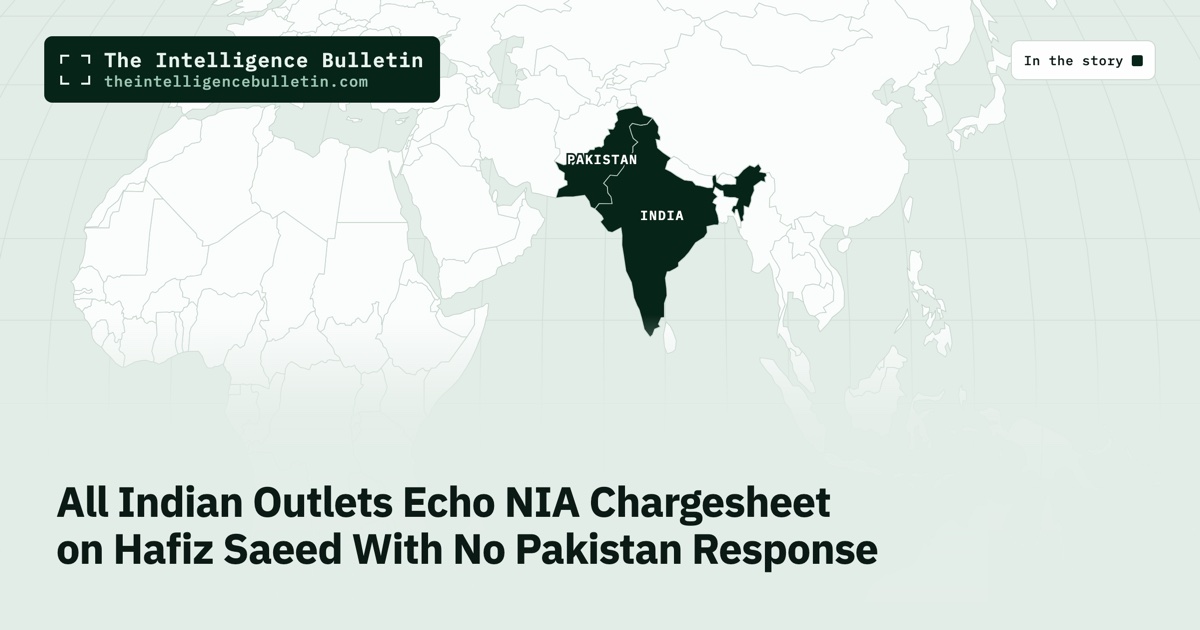
All Indian Outlets Echo NIA Chargesheet on Hafiz Saeed With No Pakistan Response

Map of the countries in the story: All Indian Outlets Echo NIA Chargesheet on Hafiz Saeed With No Pakistan Response
India’s National Investigation Agency filed a supplementary chargesheet on July 6, 2026, before the NIA Special Court in Jammu naming Hafiz Saeed as an accused in the April 2025 Pahalgam attack. Saeed is charged in his individual capacity and as chief of Lashkar-e-Taiba and its proxy The Resistance Front. The filing details alleged Pakistan-sponsored conspiracy, invokes charges including waging war against India, and continues an earlier 1,597-page chargesheet that named other suspects.

One Story. Many Angles.

🇮🇳
India
The Indian Express
Hafiz Saeed named in NIA supplementary chargesheet over Pahalgam terror attack
Read →
🇮🇳
India
The Tribune
NIA names Lashkar-e-Taiba chief Hafiz Saeed as accused in Pahalgam terror attack chargesheet
Read →
🇮🇳
India
Moneycontrol
Pahalgam terror attack: NIA names LeT chief Hafiz Saeed in supplementary chargesheet
Read →
🇮🇳
India
India TV
LeT chief Hafiz Saeed named as accused in NIA supplementary chargesheet in Pahalgam terror attack case
Read →
🇮🇳
India
ANI
NIA names LeT founder Hafiz Saeed in Pahalgam terror attack’s fresh chargesheet in ‘individual capacity’
Read →

Perspective Analysis

The filing of a supplementary chargesheet by India’s National Investigation Agency on July 6, 2026, naming Hafiz Saeed in connection with the April 2025 Pahalgam attack produced an unusually uniform response across Indian media. Five major outlets relayed the agency’s statement in near-identical language, each underscoring Saeed’s dual designation as an individual and as leader of Lashkar-e-Taiba and its proxy The Resistance Front, while omitting any reference to Pakistani reactions or alternative accounts. This convergence reveals how the episode registers domestically as a routine law-enforcement milestone rather than a bilateral escalation.

The attack itself occurred on April 22, 2025, in Pahalgam, Jammu and Kashmir. Gunmen carried out religion-based targeted killings that left 25 tourists and one local civilian dead. An initial FIR was lodged at Pahalgam police station in Anantnag district. The case was later transferred to the NIA by the Union Ministry of Home Affairs. Earlier proceedings included a December 15, 2025, chargesheet that named Pakistani handler Sajid Jatt, three militants killed during Operation Mahadev in July 2025, and two arrested suspects. That filing also designated the proscribed LeT/TRF organisation itself as a legal entity responsible for planning, facilitating and executing the assault.

On July 6 the NIA returned to the Special Court in Jammu with additional material. The supplementary document, described as continuing the original 1,597-page chargesheet, accuses Saeed both personally and in his organisational capacity. It invokes sections of the Bharatiya Nyaya Sanhita 2023 and the Unlawful Activities (Prevention) Act 1967, including provisions covering waging war against India and cross-border conspiracy. The agency statement emphasises evidence gathered through scientific investigation and on-ground examination that allegedly details Pakistan’s role in the conspiracy.

The Indian Express presented the development through the lens of evidentiary detail, noting the invocation of conspiracy provisions and the organisational charges against LeT/TRF. Its account highlighted the NIA spokesperson’s description of meticulous investigative work and placed the filing within the broader context of ongoing security shifts in Jammu and Kashmir following the attack. The Tribune, with its regional emphasis on Jammu and Kashmir affairs, stressed the physical filing before the Jammu court and the explicit organisational links to Lashkar-e-Taiba and The Resistance Front. It framed the move as a significant step in documenting Pakistan-sponsored terrorism on Indian soil.

Moneycontrol approached the story through a national-security and policy prism, presenting the chargesheet as a continuation of the state’s response to cross-border threats. Its reporting reproduced the NIA statement’s language on Pakistan’s alleged conspiracy and the evidence collected, situating the legal update within India’s domestic counter-terrorism architecture. India TV, operating in a breaking-news format, underscored the “latest updates” element, particularly the naming of Saeed in his individual capacity alongside his leadership roles. It included contextual references to the attack’s toll and the earlier investigative steps without introducing external perspectives.

ANI, functioning as a wire service, delivered the most verbatim relay of the government statement. Its dispatch foregrounded the phrase “individual capacity” and the continuation of the prior chargesheet, closing with the NIA’s assertion that it continues to probe the full conspiracy. Across all five outlets the text remains consistent in length, sourcing and emphasis; differences amount only to minor phrasing or headline choices rather than substantive divergence.

This uniformity carries analytical weight. When coverage of a high-profile terror-related filing draws exclusively from a single official source and encounters no counter-narrative from Islamabad, the story remains embedded within India’s internal security discourse. The absence of Pakistani denials, alternative attributions or diplomatic commentary in these accounts indicates that, on this date, the episode did not yet register as an active bilateral flashpoint requiring balancing. Instead, it functions as an incremental update in a protracted legal process that began with the April 2025 attack and continued through the December 2025 chargesheet.

The pattern also illustrates how different media formats process the same agency statement. National broadsheets foreground investigative detail, regional papers highlight local court proceedings, business platforms apply a policy lens, television outlets stress timeliness, and wires transmit the text with minimal embellishment. The result is amplification rather than contestation.

The Takeaway

Observers will watch whether subsequent court proceedings generate additional documentary releases or whether international reactions, once they surface, prompt Indian outlets to incorporate contrasting accounts. Continued NIA statements on the same case, any movement on related operations, or formal responses from Pakistan would test whether the current domestic framing persists or gives way to a more contested bilateral narrative.


Share this story

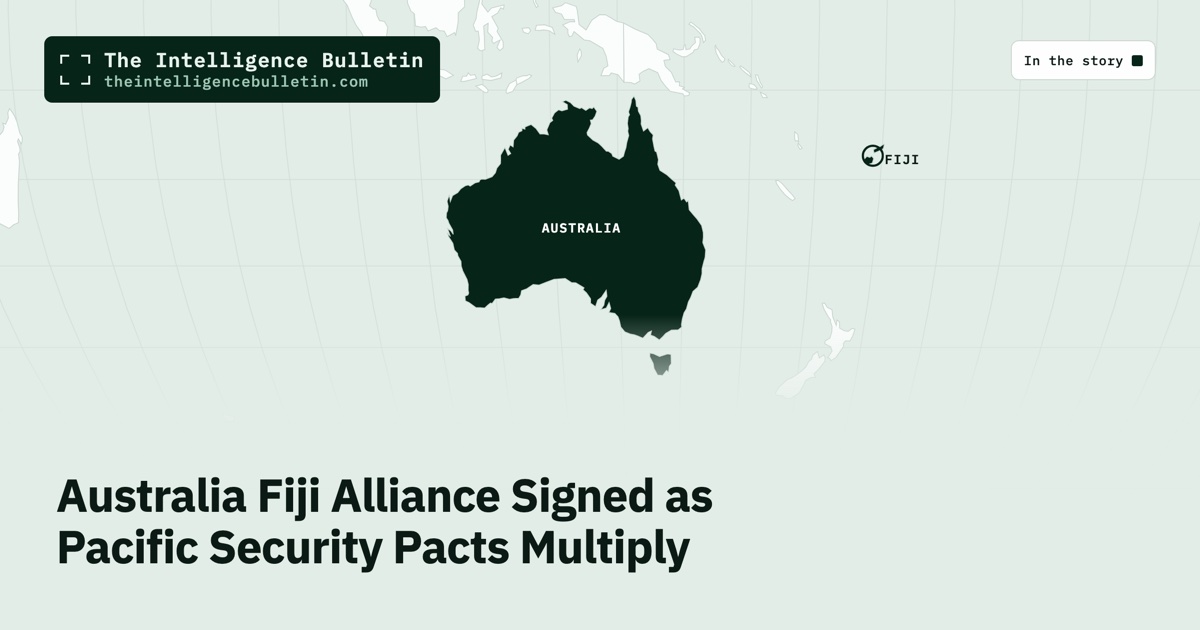
Australia Fiji Alliance Signed as Pacific Security Pacts Multiply

Map of the countries in the story: Australia Fiji Alliance Signed as Pacific Security Pacts Multiply
On July 6, 2026, Australian Prime Minister Anthony Albanese and Fijian Prime Minister Sitiveni Rabuka signed the Vuvale Union and Ocean of Peace treaty at State House in Suva. The pact upgrades bilateral ties into a mutual defence alliance open to other Pacific nations and includes over $1 billion in Australian support for security, health and infrastructure. The agreement comes amid Australia’s regional diplomacy push and existing security pacts with Vanuatu and Papua New Guinea.

One Story. Many Angles.

🇫🇯
Fiji
Pacific Islands News Association
Australian PM Albanese touches down in Fiji ahead of new Pacific deal
Read →
🇦🇺
Australia
ABC News
Prime Minister Anthony Albanese signs major new Ocean of Peace treaty with Fiji
Read →
🇬🇧
United Kingdom
BBC
Australia signs new defence alliance with Fiji as it seeks to counter Beijing
Read →
🇹🇼
Taiwan
Central News Agency
CHINESE
Australia and Fiji sign ocean peace agreement to establish defense alliance, jointly maintain South Pacific security
“Australia Fiji sign ocean peace agreement establish defense alliance jointly maintain South Pacific security”
Read →
🇸🇦
Saudi Arabia
Asharq Al-Awsat
Australia Signs Defense Alliance with Fiji to Outmaneuver China
Read →

Perspective Analysis

On July 6, 2026, Australian Prime Minister Anthony Albanese and Fijian Prime Minister Sitiveni Rabuka signed the Vuvale Union and the Ocean of Peace treaty at State House in Suva, formalizing a mutual defence alliance that upgrades their bilateral ties while remaining open to other Pacific nations. The agreement includes more than $1 billion in Australian commitments over a decade for security, health, infrastructure and related priorities, marking the latest in a series of pacts that have reshaped Canberra’s regional posture since the 2022 Solomon Islands security deal with China.

Regional reporting from Pacific outlets placed heavy emphasis on the ceremonial and relational dimensions of the day. Coverage from the Pacific Islands News Association highlighted Albanese’s arrival the previous evening, greeted on the tarmac by Deputy Prime Minister Viliame Gavoka and Foreign Minister Sakiasi Ditoka, followed by a guard of honour, a Fiji Military brass band playing Australia’s national anthem and a performance of “I Still Call Australia Home.” The reporting framed the visit as reinforcing the Vuvale Partnership through mutual respect, cooperation and shared regional priorities, including a traditional welcome ceremony and a courtesy call on President Ratu Naiqama Lalabalavu. Albanese was quoted stressing that “Fiji and Solomon Islands are not just our neighbours, we are part of the Pacific family,” while noting his subsequent travel to the Solomon Islands to advance another treaty and his participation in that country’s Independence Day celebrations as the first foreign leader to do so.

Australian coverage from the ABC provided the most detailed account of the treaty’s substance. Reporters on the ground in Suva described the Ocean of Peace Alliance as introducing explicit mutual defence obligations, under which an armed attack on either party within the Pacific “would be dangerous to each other’s peace and security” and each would “act to meet the common danger, in accordance with its domestic processes.” The pact also contains provisions for consultation on any “security-related development that threatens the sovereignty, peace or stability” of either country. Albanese described the significance as one that “cannot be underestimated,” adding that “there is no higher obligation than to come to each other’s aid at a time of need.” The report noted the treaty’s openness to accession by other Pacific nations “in a position to further the purposes and principles of this treaty and to contribute to the security of the Pacific,” with Rabuka telling journalists that “the more, the stronger, the better.” It tied the agreement to more than $1 billion in Australian spending on transnational crime, education, health and infrastructure, and situated the signing within Albanese’s rapid regional itinerary that also included meetings with leaders from Papua New Guinea, Tonga and the Solomon Islands.

International outlets adopted a sharper geopolitical lens. The BBC led with the alliance as a step by Australia to counter Beijing, noting the timing of a Chinese submarine ballistic-missile test in the Pacific hours after the signing. Foreign Minister Penny Wong was quoted accusing China of “destabilising” the region amid a “rapid military buildup” lacking transparency. The report connected the Fiji deal to earlier fears sparked by the 2022 Solomon Islands pact and listed Australia’s other recent arrangements, including the Nakamal Agreement with Vanuatu that bars foreign military bases and the Pukpuk Treaty with Papua New Guinea. Rabuka was cited insisting the treaty “does not threaten Fiji’s relationship with China nor Australia’s relationship with China,” and that Beijing would “welcome the understanding.”

Taiwan’s Central News Agency emphasised joint maintenance of South Pacific security without foregrounding rivalry. Its account described the Ocean of Peace agreement as establishing a defence alliance under which both sides reaffirmed commitments to sovereignty, common defence and regional stability. It noted Fiji’s renewed emphasis on traditional partnerships since Rabuka took office in 2022 and referenced the Nakamal Agreement with Vanuatu, while recording China’s earlier warning against “geopolitical games” in the Pacific. The reporting stayed focused on the text’s language about preserving peace and security across the region.

Asharq Al-Awsat, reflecting a broader international-affairs perspective, presented the pact explicitly as Australia’s effort to outmaneuver China. It detailed the mutual-defence clause, the clause allowing other Pacific nations to join, and Rabuka’s efforts to downplay potential pushback from Beijing. The outlet linked the development to China’s 2022 Solomon Islands deal and its infrastructure investments across the region, while noting parallel Australian arrangements with Papua New Guinea, Vanuatu and Tuvalu.

Across these accounts, the factual core remains consistent: the signing of a mutual-defence alliance embedded in the Vuvale framework, backed by substantial Australian funding and designed with an accession mechanism for additional partners. Where the reporting diverges is in emphasis. Pacific and Australian sources lingered on protocol, the elevation of the “Vuvale” relationship and concrete deliverables, while external coverage situated the move within great-power competition. Rabuka’s repeated assurances that the treaty poses no threat to Fiji’s or Australia’s ties with China appear in multiple accounts, underscoring that Pacific actors continue to frame their diplomacy in integrative rather than exclusionary terms.

The Takeaway

Albanese’s itinerary offers the clearest near-term indicators of momentum. After the Fiji signing he was scheduled to travel immediately to the Solomon Islands for Independence Day events and further treaty talks with Prime Minister Matthew Wale, who has floated the idea of a broader Pacific-wide security arrangement. Meetings in Brisbane with the leaders of Papua New Guinea, Tonga and Samoa were set to mark the entry into force of the Pukpuk Treaty and discuss additional cooperation. Observers will watch whether the Ocean of Peace accession clause draws formal interest from other island nations with standing militaries, and whether any such expansion alters the balance of external commentary on the pacts’ strategic intent.


Share this story

Three outlets name Houthis; Syrian state media erases them from Red Sea attack

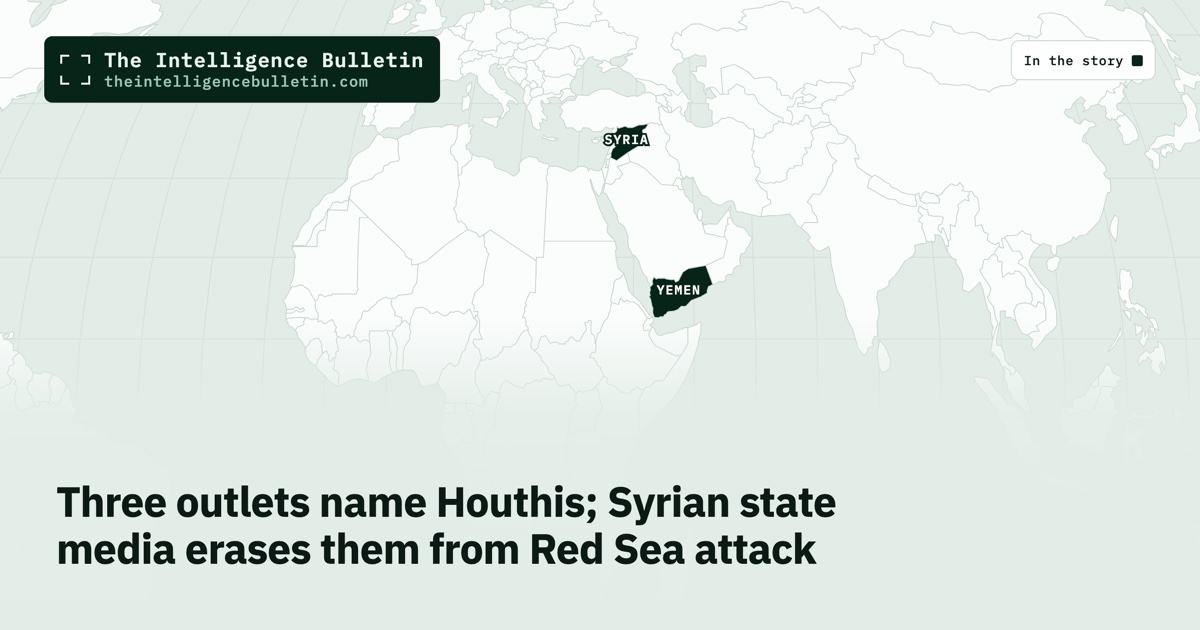
Map of the countries in the story: Three outlets name Houthis; Syrian state media erases them from Red Sea attack
On July 5, 2026, a commercial vessel reported being attacked by unknown armed assailants roughly 30 nautical miles southwest of Hodeida, Yemen. UK Maritime Trade Operations said British authorities were investigating the incident. No group claimed responsibility and no casualties were reported. The attack occurred in waters long plagued by Houthi threats to shipping.

One Story. Many Angles.

🇲🇴
Macau
Macau Daily Times
British military says cargo ship reports being under attack in the Red Sea off the coast of Yemen
Read →
🇮🇳
India
The Navhind Times
Cargo ship attacked in Red Sea off Yemen coast: British military
Read →
🇷🇴
Romania
Adevărul
RO
A commercial ship was attacked in the Red Sea. The British army is investigating the event
“Commercial ship attacked in Red Sea; British army investigates”
Read →
🇸🇾
Syria
SANA
SPANISH
Attack reported against cargo ship off the coasts of Yemen
“Attack reported against cargo ship off Yemen coast”
Read →

Perspective Analysis

A single unclaimed attack on a commercial vessel in the Red Sea on July 5, 2026, exposed how even routine maritime security alerts fracture along geopolitical fault lines once they reach different newsrooms. Three outlets reproduced a detailed wire account that placed the incident in the context of Houthi activity near Hodeida, while Syrian state media stripped every reference to the most frequently cited suspects and presented only the barest official alert.

The incident itself was narrowly reported. The United Kingdom Maritime Trade Operations center stated that a cargo ship signaled it was under attack by unknown armed assailants roughly 30 nautical miles southwest of Hodeida, Yemen. British authorities opened an investigation, no group claimed responsibility, and no casualties were recorded. The location lies in waters that have seen repeated Houthi threats to international shipping since the onset of the Gaza conflict, though no recent strikes had been attributed to the group in the days preceding the alert.

Macau Daily Times published the incident on July 6 as a concise world brief, reproducing the UKMTO language almost verbatim while adding the standard background that Hodeida remains under Iranian-backed Houthi control. The account recalled the earlier campaign of drone and missile strikes that forced many carriers to divert around the Cape of Good Hope rather than risk the Bab al-Mandab Strait, and it noted recent Somali pirate activity in the Gulf of Aden. The Portuguese-language outlet, operating from an Asian shipping hub, treated the story as a straightforward update on lane security without additional local framing.

The Navhind Times carried nearly identical agency text on the same day, with one modest expansion: it included a specific July 1 pirate incident 76 nautical miles south of Balhaf in which four armed men on a small craft caused minor bridge damage. The Indian paper framed the episode around potential disruptions to Europe-bound routes, reflecting the commercial interests of a country whose exports rely on secure passage through the same waters. Otherwise the core paragraphs matched those appearing in Macau.

Adevărul in Romania published its version on July 5, again echoing the same wire copy while emphasizing the British military investigation and the strategic importance of the Red Sea as a corridor linking Europe and Asia. The Romanian account mentioned Houthi threats to resume attacks and noted that a Houthi spokesman had not responded to queries. It also referenced ongoing Somali pirate risks in the Gulf of Aden. The European perspective highlighted Western investigative efforts and the broader trade-security implications for EU-linked shipping.

SANA, Syria’s official news agency, issued a Spanish-language dispatch the same day that cited only the UKMTO alert, the ongoing investigation, and standard safety advisories to vessels. The report mentioned the position southwest of Hodeida and the distress signal but omitted any reference to Houthi control of the port, prior Houthi campaigns, or Somali piracy. It added a brief note about a June 11 engine-room fire on a tanker near the Strait of Hormuz, yet supplied no actor attribution or historical linkage to the new incident.

The near-identical phrasing across the three non-Syrian outlets indicates they drew from the same Western agency feed, a pattern common in international maritime reporting where UKMTO bulletins travel quickly through global wires. Each publication adapted the copy slightly for its audience—Macau for port logistics, India for export corridors, Romania for European security concerns—yet preserved the core elements naming the Houthis and recalling the Gaza-era disruptions. SANA’s version demonstrates a deliberate editorial filter: even when reporting an unclaimed event in waters adjacent to a key Iranian-aligned actor, the Damascus outlet removed every contextual clue that could implicate Houthi forces.

This divergence matters because Red Sea security remains sensitive. Shipping companies continue to weigh the cost of longer voyages against the risk of renewed attacks, while regional powers watch for any sign that the Houthis might resume operations. A single alert, stripped of attribution in one capital and fully contextualized in others, illustrates how quickly maritime incidents become instruments of narrative control.

The Takeaway

For observers monitoring the lanes, the next developments to track are any official claims or denials from Houthi spokesmen, updates from the British investigation, and whether subsequent UKMTO reports register further suspicious activity near Hodeida. Should another incident occur without immediate attribution, the same pattern of selective omission or inclusion is likely to reappear across the same outlets.


Share this story

Trump-Putin call revives direct US-Russia channel on Ukraine

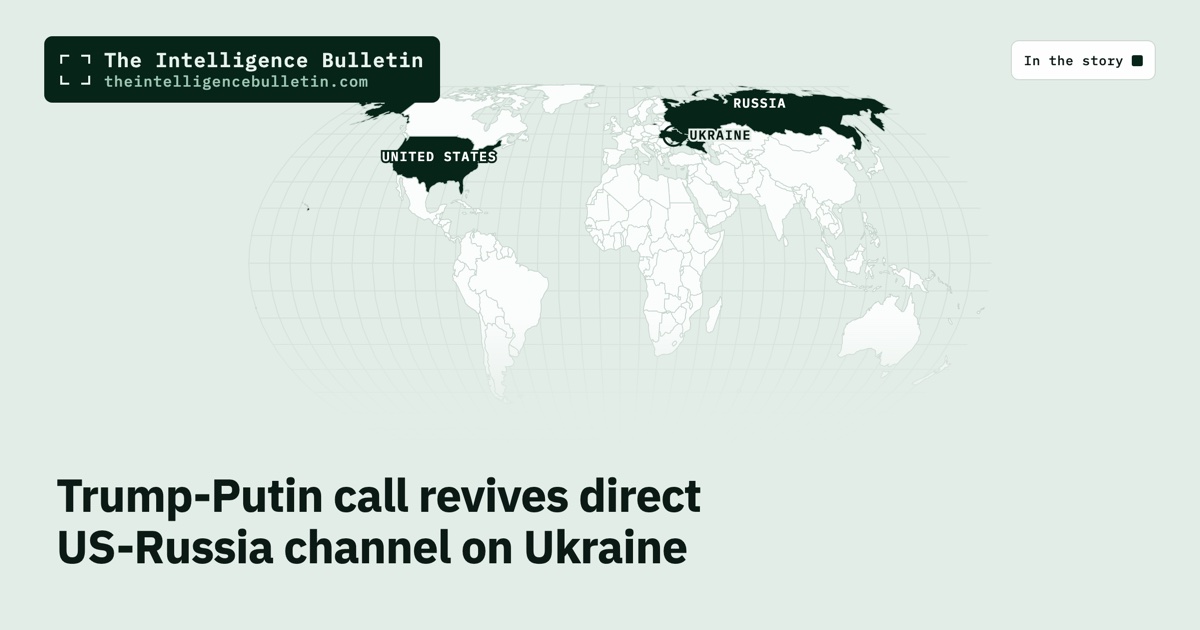
Map of the countries in the story: Trump-Putin call revives direct US-Russia channel on Ukraine
US President Donald Trump spoke by phone for 85-90 minutes with Russian President Vladimir Putin on July 5, 2026. The Kremlin described the call as constructive and focused on bilateral relations and ending the Ukraine conflict. Trump also spoke separately with Ukrainian President Volodymyr Zelenskyy. Both sides referenced the upcoming NATO summit in Turkey.

One Story. Many Angles.

🇹🇷
Turkey
Anadolu Agency
ARABIC
Kremlin: constructive phone call between Putin and Trump lasted 85 minutes
Read →
🇩🇪
Germany
Tagesschau
GERMAN
War against Ukraine: Trump speaks with Putin and Zelenskyy
“War against Ukraine: Trump speaks with Putin and Selenskyj”
Read →
🇪🇸
Spain
El Día de Valladolid
SPANISH
Putin and Trump advocate for preserving their “historical ties”
Read →
🇭🇷
Croatia
24sata
CROATIAN
Long telephone conversation: Trump offered help to Putin
Read →
🇷🇸
Serbia
Naslovi
BOSNIAN
Zelenski invited Putin to Konstantinovka, Kremlin responded with Moscow invitation: Trump and US back in center of diplomacy
Read →

Perspective Analysis

The July 5, 2026, telephone conversation between US President Donald Trump and Russian President Vladimir Putin lasted between 85 and 90 minutes and marked the return of routine high-level contact between Washington and Moscow after years of disruption. Yet the call produced no visible shift in core positions on the Ukraine war, leaving the underlying stalemate intact even as every reporting outlet framed the exchange as a diplomatic reopening.

The Kremlin portrayed the discussion as professional and constructive, centering on the preservation of long-standing bilateral ties and the need to end the Ukraine conflict as soon as possible. Russian presidential adviser Yuri Ushakov emphasized that both leaders agreed on maintaining regular contact, with Putin extending a standing invitation for Trump to visit Russia and the two agreeing to speak again soon. The conversation also touched on Iran and the Gulf region, where Putin offered practical assistance to reduce tensions and Trump acknowledged Russia’s balanced stance.

European coverage embedded the exchange firmly inside the active battlefield. German public broadcaster Tagesschau placed the call alongside Ukrainian drone strikes on Russian territory, including attacks targeting oil infrastructure near St. Petersburg, and recent Russian strikes that killed dozens in Kyiv and Sumy. It noted that negotiations remain frozen, with Moscow demanding full Ukrainian withdrawal from Donetsk region territory and Kyiv refusing. The outlet also recorded Zelenskyy’s separate conversation with Trump, which the Ukrainian leader described as “very good” and focused on front-line developments and the importance of US determination to end the war.

Spanish regional outlet El Día de Valladolid highlighted the personal and historical dimension, quoting Ushakov on the leaders’ shared emphasis that ending the Ukraine conflict would enable mutually beneficial political, military, and economic cooperation. The report stressed the leaders’ agreement to preserve “historical ties” between the two nations and their decision to resume direct calls, presenting the exchange as an exercise in classic bilateral diplomacy rather than immediate crisis management.

Croatian outlet 24sata singled out Trump’s explicit offer of assistance to help end the fighting, framing the nearly 90-minute discussion as a direct US engagement with Moscow on the eve of the NATO summit in Turkey. It noted Zelenskyy’s parallel contact with Trump and presented the Russian account of the call as businesslike and focused on a political solution that respects Moscow’s fundamental positions.

Serbian outlet Naslovi.net connected the conversation most closely to the immediate territorial dispute around Konstantinovka in eastern Ukraine. It reported Russian claims of having taken control of the city on July 3 and Moscow’s proposal for a temporary ceasefire to allow recovery of Ukrainian soldiers’ bodies, contrasted with Kyiv’s insistence that fighting continues. The piece portrayed Zelenskyy’s public invitation for Putin to meet in Konstantinovka and the Kremlin’s counter-invitation to Moscow as part of a broader pattern in which Washington has again become central to diplomatic maneuvering.

Across the five outlets, the convergence is striking: every report noted the call’s length and its timing on US Independence Day, a detail the Kremlin itself linked to a congratulatory message from Putin recalling historical Russian support for American independence. This shared emphasis signals recognition that direct US-Russia communication has been restored after a prolonged absence. Divergences appear in emphasis rather than contradiction. Anadolu Agency stayed closest to official Russian wording, foregrounding bilateral ties over battlefield details. Tagesschau supplied the European security context and recent kinetic events missing from Russian-leaning accounts. El Día de Valladolid leaned on the personal-diplomatic angle drawn from wire copy. 24sata isolated the cooperative offer from Trump. Naslovi tied the exchange to the specific local dispute over Konstantinovka and the re-centering of US mediation.

The call occurred against the backdrop of a war now in its fifth year, with talks deadlocked and both sides accusing the other of prolonging the fighting. Trump is scheduled to attend the NATO summit in Ankara on July 7-8, an event repeatedly cited by both Washington and Moscow as the next venue for continued discussion. Zelenskyy and Trump agreed during their own call to maintain contact through that gathering.

The Takeaway

What remains to be seen is whether the restored channel produces movement on the core issues of territory, security guarantees, and sanctions relief, or whether it functions primarily as a parallel track that allows each side to manage expectations ahead of the Ankara meetings. Further calls, any concrete proposals tabled at the summit, and battlefield developments around contested eastern cities will determine whether the July 5 conversation marks a genuine inflection or merely the resumption of familiar diplomatic theater.


Share this story