 AI-generated analysis published under the editorial responsibility of Rohit Sinnas. How it works →
Press quoted
Full analysis
The decision by Turkish authorities to bar an American LGBTQ+ themed cruise from docking reveals how national identity policies intersect with global tourism flows, with media coverage diverging sharply along geographic lines: US outlets frame the episode as another chapter in Recep Tayyip Erdoğan’s decade-long clampdown on queer visibility, while an Argentine outlet centers the concrete rerouting of passenger itineraries and local provincial vetoes.
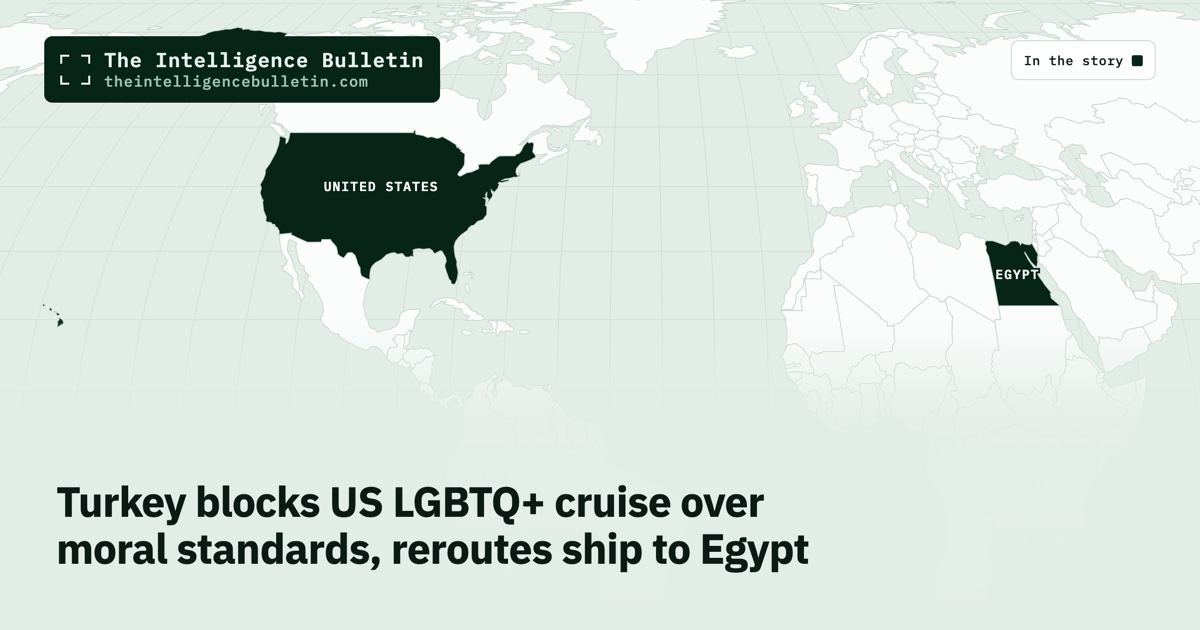
Turkish officials on or around July 2-3, 2026, explicitly canceled planned stops for the Atlantis Events “Athens to Venice” cruise aboard the Scarlet Lady, a Virgin Voyages vessel scheduled to depart Greece on July 5. The ship was barred from Kuşadası in Aydın province and from Istanbul, with authorities stating the event was incompatible with “moral standards” and “family values.” Organizers were told the ship had been chartered by groups “known for behaviors incompatible with the fabric of our society and our moral values.” In response, Atlantis Events redirected the vessel to stops in Cairo, Egypt, and Crete instead.
Atlantis Events president and CEO Rich Campbell described the ban as the first explicit prohibition the company had faced in its 36-year history on the basis of passenger identity. He called the reasoning “pretty stunning” and expressed concern that “a country decides they can pick and choose which tourists are allowed in and which are not.” Campbell emphasized that the cruise was “not a political organization” and that passengers intended only “to spend money, have a good time, take tours and be incredibly respectful to every culture we visit.” Approximately 1,100 of the 1,900 expected guests were from the United States, with others from the United Kingdom, Canada, Australia and additional nations.
Local Turkish statements added detail to the decision. Aydın province officials declared there was “absolutely no possibility of the group in question visiting our province for an event of this nature.” Istanbul authorities reported that police had raided a bar after a brochure linked to Atlantis advertised a party there, though Campbell stated the material was neither produced nor affiliated with his company. The cruise operator notified passengers that the Turkish port calls had been removed “due to circumstances beyond our control.”
US coverage, led by the CNN English-language wire and replicated verbatim or nearly verbatim by its Spanish-language service and the KVIA affiliate, opens with the American character of the passengers and the moral-standards justification. These reports situate the ban within Erdoğan’s AK Party record of increasingly harsh rhetoric toward LGBTQ+ communities, noting the prohibition of Istanbul Pride marches since 2015 on public-safety grounds. The accounts highlight Campbell’s comments on the unprecedented nature of the exclusion and include the passenger demographics, the rerouting to Egypt and Crete, and the company’s outreach to Turkish tourism officials and the embassy in Washington for comment. The near-identical text across English, Spanish and the local US affiliate underscores how a single Washington-datelined dispatch travels intact, adapted only by headline translation or minimal bilingual framing for different domestic audiences.
In contrast, the Argentine Agencia Nova report foregrounds the itinerary disruption and the concrete statements from provincial authorities in Aydın and Istanbul. It details the shift to Egypt and Crete, the scale of the vessel (Scarlet Lady carrying roughly 1,900 passengers), and the local rationale tied to social pressures and citizen petitions reported in Turkish media. While it references the broader context of Erdoğan’s policies and Pride bans, the piece places greater weight on the practical consequences for Mediterranean tourism and the company’s decision to alter its schedule rather than on passenger identity or rights rhetoric. This emphasis aligns with an outlet serving Spanish-speaking readers in a region where cruise itineraries through the eastern Mediterranean represent a familiar leisure market.
Across all accounts, the core facts converge without contradiction: the explicit moral-standards citation, the two canceled Turkish ports, the rerouting, Campbell’s characterization of the move as discriminatory and unprecedented, the passenger numbers, the Aydin and Istanbul local interventions, and the background of tightened restrictions on LGBTQ+ events. No source reports Turkish central-government comment or any response from Virgin Voyages. The single meaningful divergence lies in emphasis—American passenger impact and authoritarian trend for US readers versus logistics and local enforcement for an Argentine audience—illustrating how editorial geography shapes which element of the story registers as primary.
The Takeaway
The episode arrives against Turkey’s established pattern of restricting public LGBTQ+ expressions while still courting international tourism revenue. Observers will watch whether other cruise operators or event companies encounter similar port-access hurdles, whether Atlantis Events or similar groups pursue alternative Mediterranean routing that avoids Turkish waters, and whether the Turkish government issues any clarifying statement from the Ministry of Culture and Tourism that might distinguish between private passenger behavior and organized events. Continued monitoring of provincial-level decisions in tourism hubs such as Kuşadası will indicate whether the ban reflects isolated local action or a broader signal.
That’s how the world told the story.
Get our daily open-source intelligence on world events in your inbox — one email a day, up to six stories.
Subscribe freeNo spam. One-click unsubscribe. See the latest email →