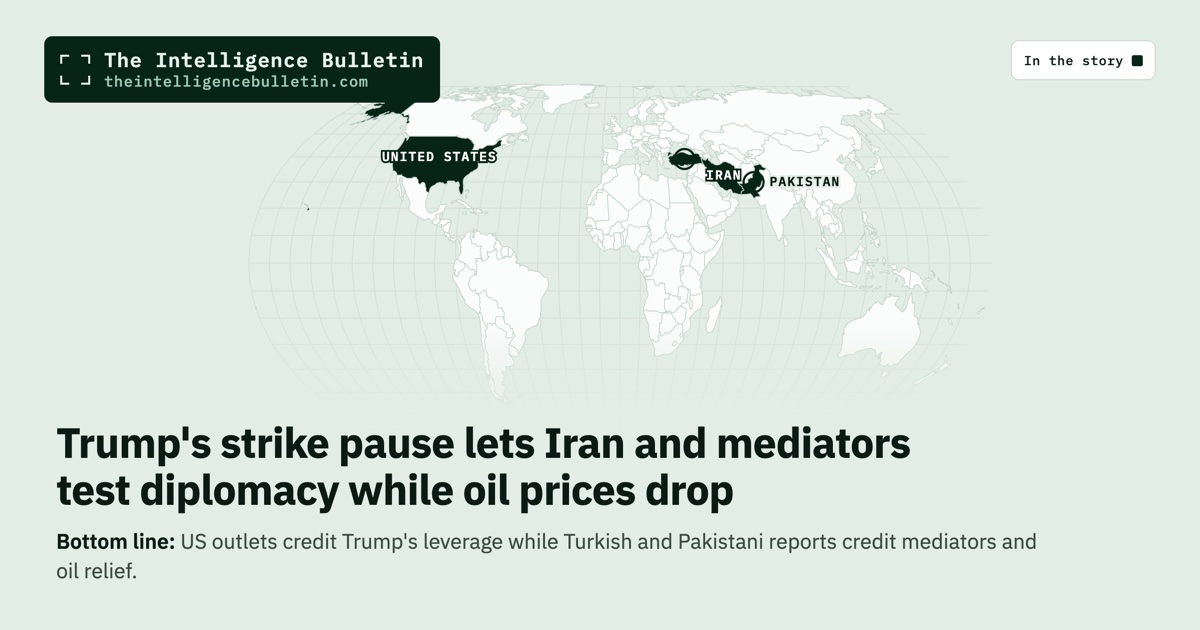
Trump’s strike pause lets Iran and mediators test diplomacy while oil prices drop

Map of the countries in the story: Trump's strike pause lets Iran and mediators test diplomacy while oil prices drop
US President Donald Trump ordered a halt to military strikes on Iran after 13 consecutive nights. Iran responded by suspending attacks on shipping in the Strait of Hormuz and signaling willingness to resume negotiations. US Ambassador Mike Waltz said Trump was giving diplomacy ‘some space.’ Oil prices fell sharply as regional mediators including Pakistan and Qatar intensified efforts.

One Story. Many Angles.

🇺🇸
United States
The Right Scoop
BREAKING: Trump ordered military to pause strikes on Iran and here’s why… – The Right Scoop
Read →
🇮🇷
Iran
Iran Herald
Trump halts US military strikes on day 13 to allow room for diplomacy with Iran: Report
Read →
🇮🇱
Israel
Israel National News
Amb. Waltz: Trump giving ‘some space’ for diplomacy with Iran
Read →
🇹🇷
Turkey
Hurriyet Daily News
US, Iran hold fire as Trump gives talks ‘space’
Read →
🇵🇰
Pakistan
The Express Tribune
Mediators intensify US-Iran diplomacy after Trump orders ‘pause’ in strikes: sources
Read →
In Brief

US outlets credit Trump’s leverage while Turkish and Pakistani reports credit mediators and oil relief.

US conservative coverage presents the pause as Trump’s calculated show of strength to force a better deal, while wire-fed reports from Turkey and Pakistan stress third-party mediators and the immediate economic payoff from lower oil prices. Israeli outlets limit themselves to a single Waltz quote on diplomacy space, revealing little appetite for Iranian talks. The Iran-labeled site is actually an Indian aggregator reprinting Axios details on Omani envoys and Israeli surprise, underscoring how thin genuine national voices remain on this story. Across the set the same Axios and Waltz facts dominate, showing the pause itself is undisputed even as outlets differ on whether it signals American leverage or fragile multilateral breathing room.

Perspective Analysis

The pause in US strikes on Iran after 13 consecutive nights has produced one clear point of agreement across reporting: both sides have stopped shooting for now, Iran has suspended attacks on shipping through the Strait of Hormuz, and oil prices have dropped in response. What divides the accounts is whether this halt represents American leverage secured by force or a narrow opening created and sustained by third-party mediators whose formula remains untested. The difference matters because the next days will show whether the pause hardens into a return to talks on Trump’s terms or collapses back into strikes once the immediate economic relief fades.

Trump directed the military to withhold new strikes on Friday despite receiving the usual daily plan, according to multiple accounts that trace the decision to an Omani delegation arriving in Tehran earlier that day. Iran responded by confirming it would halt operations against ships for as long as the American pause held. US Ambassador to the United Nations Mike Waltz described the move on Fox News as giving diplomacy “some space” and “a little bit of room.” Regional sources added that Pakistan and Qatar had already circulated a joint de-escalation proposal urging both sides to return to their pre-July 9 positions as the first step toward resuming stalled negotiations.

The economic signal arrived quickly. Brent crude fell more than 7 percent at one point, briefly dropping below $90 a barrel, while West Texas Intermediate declined around 4 percent to $85.45. Shipping concerns eased in the Gulf even as fighting continued elsewhere, including Houthi claims of downing a Saudi drone and renewed Saudi-led strikes in Yemen. The lull also set the stage for Israeli Prime Minister Benjamin Netanyahu’s scheduled White House meeting with Trump on July 28, where Iran’s nuclear program is expected to dominate the agenda.

Accounts differ sharply on what the pause actually demonstrates about US intentions. One line of reporting presents the halt as deliberate proof of resolve that positions Trump to extract a stronger deal if talks resume, with the president himself quoted saying the United States remains “locked and loaded” while preferring to “make a deal.” This reading notes that Trump had approved strikes every afternoon for the prior two weeks and only withheld approval on Friday, framing the choice as tactical rather than a sign of weakness. Israeli officials, by contrast, received formal notification only after the fact and had prepared for another round of American strikes, leaving their forces on high alert throughout Friday.

Other reporting centers the role of outside brokers. Pakistani and Qatari mediators intensified message exchanges after both Washington and Tehran signaled consent to explore the de-escalation formula. The proposal includes an immediate Iranian reopening of the Strait of Hormuz, an end to any resumed US blockade of Iranian ports, the lifting of sanctions on Iranian oil sales, and a two-week ceasefire. Sources close to the mediators cautioned that the pause remains fragile, with a strong possibility of violations and with “hawks” on both sides still able to reignite fighting. Oman’s separate channel on Hormuz shipping mechanisms is described as making progress that could be finalized over the weekend, leaving Trump to decide whether to accept any resulting agreement.

The narrowest accounts simply record Waltz’s quote without additional context or interpretation. Israeli outlets, in particular, limited themselves to that single statement, offering no further detail on mediator proposals, oil-market effects, or the surprise to Israeli planners. This restraint aligns with caution about any diplomatic track that might leave Iran’s nuclear program intact, a concern Netanyahu has already voiced by insisting the program must end “with a deal or without a deal.”

Across these pieces, the same core facts recur: the 13-night strike sequence, the Friday pause, Waltz’s phrasing, Iran’s conditional suspension of Hormuz attacks, and the involvement of Omani, Pakistani, and Qatari channels. Where reporting diverges is in emphasis—on presidential strength versus multilateral brokerage—and in the degree of attention paid to the economic relief already visible in energy markets. The shared facts establish that the pause itself is not in dispute; the interpretive split reveals competing bets on whether force or third-party pressure will determine the next phase.

What to Watch

What happens next will test both bets at once. If the mediators’ formula holds long enough for talks to restart in venues such as Geneva, Qatar, or Islamabad, the pause will have bought time for de-escalation without conceding American leverage. If the lull proves too fragile, the same reporting that now highlights oil-price relief will soon track renewed supply fears and the rapid return of strike plans already prepared by US Central Command. The immediate drop in crude prices shows that markets are pricing in at least temporary stability; whether that pricing proves durable depends on whether the mediators can convert the current consent into concrete steps before either side reverts to the pre-pause pattern of nightly operations.
Share this story

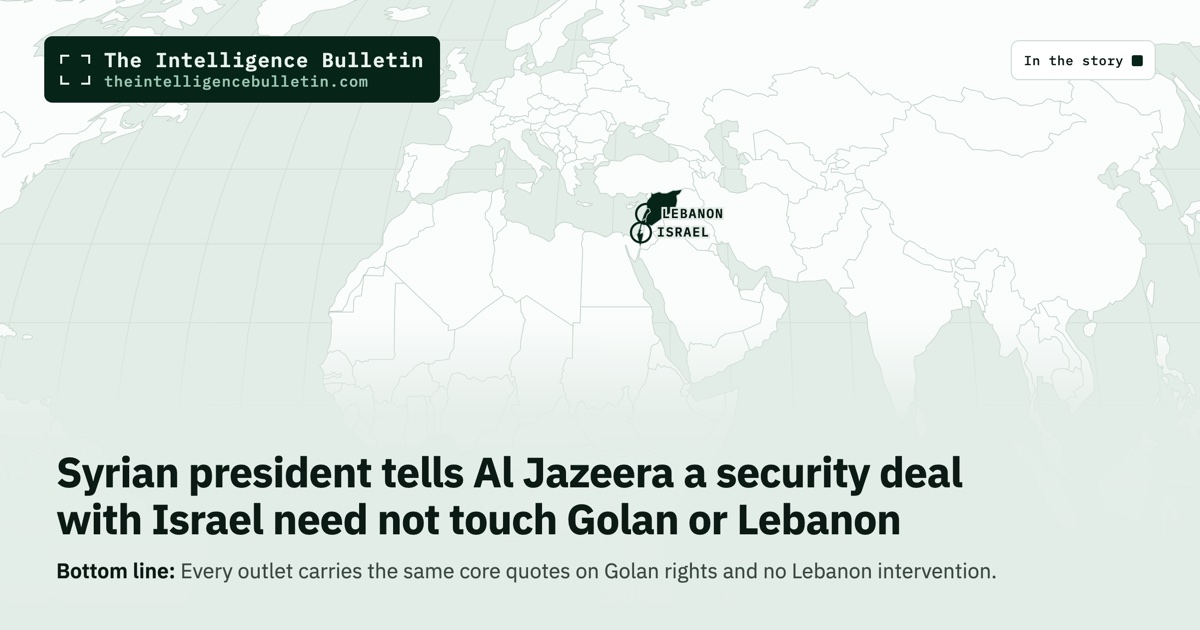
Syrian president tells Al Jazeera a security deal with Israel need not touch Golan or Lebanon

Map of the countries in the story: Syrian president tells Al Jazeera a security deal with Israel need not touch Golan or Lebanon
On July 26, 2026, Syrian President Ahmed al-Sharaa told Al Jazeera that Damascus is pursuing a security agreement with Israel. He said the deal could open a path to comprehensive peace while preserving Syria’s claim to the Golan Heights and that Syria would avoid military confrontation or intervention in Lebanon. The statement came during a UN secretary-general visit to Damascus amid ongoing Israeli actions inside Syria.

One Story. Many Angles.

🇮🇱
Israel
Haaretz
Syrian President al-Sharaa: Syria Seeking Security Agreement With Israel to Pave Way for Peace
Read →
🇬🇧
United Kingdom
Middle East Eye
Syrian president says security deal with Israel would not compromise Golan rights
Read →
🇩🇪
Germany
Die Welt
Syriens Präsident: „Wir vermeiden Konfrontationen” – Al-Scharaa will Sicherheitsabkommen mit Israel
Read →
🇵🇰
Pakistan
The News International
Syria seeking security deal with Israel, President Ahmed al-Sharaa says
Read →
🇫🇷
France
France 24
دمشق تبحث اتفاقا أمنيا مع إسرائيل وتستبعد تدخلا عسكريا في لبنان
Read →
In Brief

Every outlet carries the same core quotes on Golan rights and no Lebanon intervention.

Syrian President Ahmed al-Sharaa’s announcement that Damascus wants a security deal with Israel landed almost identically across five outlets. Haaretz led with the peace-opening potential. Middle East Eye stressed the explicit refusal to concede the Golan. Die Welt highlighted the phrase “we avoid confrontations” and placed it against the backdrop of a UN visit and Israeli strikes. Pakistan’s The News International added domestic Syrian details such as sanctions relief and a missing-persons committee. France 24’s Arabic report foregrounded the explicit no-intervention pledge on Lebanon. The shared core—al-Sharaa’s interview quotes, the Golan reservation, the Lebanon line—shows the story is being treated as a straightforward diplomatic signal from Damascus rather than a breakthrough or a betrayal. The only real variation is which secondary fact each outlet chooses to keep visible: Israeli readers see the peace horizon first, Arab-focused readers see the territorial red line, European readers see de-escalation language, and others embed the statement in wider regional context. No outlet invented or omitted the central claim.

Perspective Analysis

Syrian President Ahmed al-Sharaa’s July 26 interview with Al Jazeera signals a deliberate effort by Damascus to test limited security coordination with Israel without surrendering core territorial claims or regional entanglements. The remarks position any future agreement as a narrow technical step that could ease immediate frictions while leaving Syria’s longstanding position on the Golan Heights intact and ruling out military involvement in Lebanon. What stands out across the reporting is how consistently the statement is presented as a pragmatic response to ongoing Israeli military pressure and a UN diplomatic visit rather than evidence of a sudden thaw or dramatic reversal.

The background makes the timing clear. Israel seized the Golan Heights from Syria in 1967 and annexed the territory in 1981. After the December 2024 collapse of the Assad government, Israeli forces advanced into additional Syrian areas, including parts of the 1974 disengagement zone and the Syrian slope of Mount Hermon overlooking Damascus. Those moves followed years of Israeli strikes inside Syria. On the same day al-Sharaa spoke, Israeli forces reportedly shelled sites near the village of Ma’araba, destroying a transformer and cutting electricity to homes. UN Secretary-General António Guterres arrived in Damascus for his first visit to Syria since 2009, calling for respect of Syrian sovereignty and an end to violations of the 1974 agreement. Al-Sharaa’s comments therefore landed against a backdrop of active Israeli operations and renewed international attention.

The president described Damascus as working toward a security arrangement that several countries might help shape. He said such a deal could open the door to broader peace without touching Syria’s claim to the Golan. He stressed that Syria was avoiding direct confrontation and had no plans for military intervention in Lebanon, where Damascus instead wants to support the Lebanese government’s own efforts to manage internal security challenges, including Hezbollah’s armed capabilities. Additional details in some accounts noted Syrian precautions against threats from armed groups near the Iraqi border and a new committee to investigate people missing since the 2011–2024 conflict, operating under international standards.

These elements appear together because they formed the core of the single Al Jazeera interview. Outlets differed mainly in which part they placed first or elaborated. One account led with the possibility of a peace pathway. Another foregrounded the explicit reservation on the Golan. A third tied the de-escalation language to the UN visit and recent Israeli strikes. A fourth added domestic notes on sanctions relief and missing-persons work. A fifth highlighted the Lebanon non-intervention pledge. The factual overlap on the security deal, Golan reservation, and Lebanon line remained identical.

The pattern shows Damascus trying to project control over its foreign policy choices at a moment of weakness. Al-Sharaa’s government is still consolidating after the rebel offensive that ended Assad rule. It faces sanctions, reconstruction needs, and the reality of Israeli troops on its territory. By framing any security talks as multilateral and non-concessional on the Golan, the statement tests whether limited coordination can reduce friction without requiring political recognition of Israeli control. The Lebanon line addresses speculation that Syria might be pressed to act against Hezbollah, a force that opposed al-Sharaa’s side during the civil war. The “we avoid confrontations” phrasing, paired with references to UN diplomacy, suggests Damascus wants to lower the temperature while Guterres is present and while Israeli actions continue.

The accounts that embed the interview in the context of recent Israeli strikes and the UN visit come closest to capturing the immediate stakes. The statement reads less as an independent initiative and more as a reply to physical pressure on the ground and diplomatic activity in Damascus. Readers in Israel may see the peace-opening language first because bilateral relations sit at the center of their security concerns. Outlets with Arab audiences may emphasize the Golan reservation because territorial integrity remains a live political issue. European and South Asian coverage that adds sanctions or missing-persons details places the remarks inside Syria’s broader effort to re-enter international systems. None of these emphases contradict the others; they simply reflect which secondary fact each audience is likely to care about most.

The real stakes lie in whether this diplomatic signal produces any concrete restraint. Israel has conducted repeated operations inside Syria since late 2024. Syria’s transitional authorities have limited conventional leverage. A narrow security channel, if it materializes, could reduce accidental clashes or allow tacit understandings on border areas without resolving the Golan question. At the same time, the explicit refusal to intervene in Lebanon keeps Damascus out of one potential flashpoint while signaling it will not serve as a proxy for outside demands. Sanctions relief and removal from terrorism lists remain tied to broader behavior, so visible de-escalation could matter for economic recovery.

What to Watch

Next steps are likely to stay incremental. Continued Israeli strikes would test whether the “avoid confrontations” stance holds or prompts a sharper Syrian response. Further UN engagement could keep pressure on all sides to respect the 1974 lines. For readers tracking Levant stability, the episode shows a post-Assad Syria using public diplomacy to manage multiple borders at once rather than choosing confrontation or capitulation. That approach may buy time for internal consolidation, but it will be judged by whether Israeli actions ease or whether the security talks remain words only.


Share this story

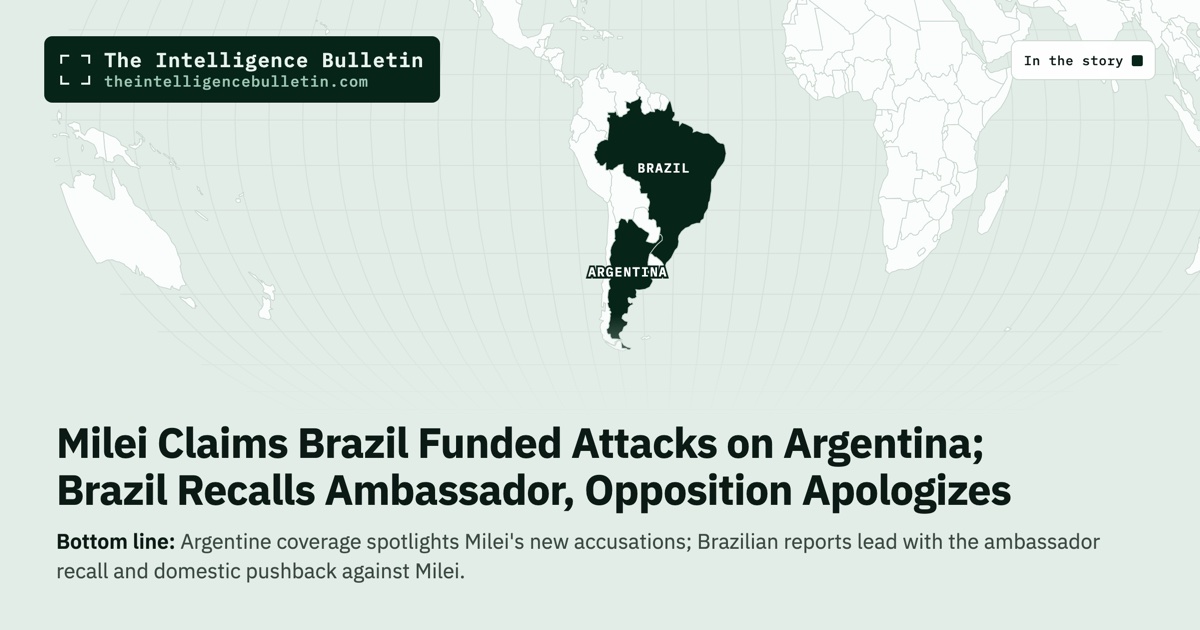
Milei Claims Brazil Funded Attacks on Argentina; Brazil Recalls Ambassador, Opposition Apologizes

Map of the countries in the story: Milei Claims Brazil Funded Attacks on Argentina; Brazil Recalls Ambassador, Opposition Apologizes
On July 26, 2026, Argentine President Javier Milei accused Brazil’s government under Lula da Silva of financing 25% of an anti-Argentina campaign and intervening in Argentina’s 2023 election. The remarks came hours after Brazil called its ambassador in Buenos Aires to consultations following Milei’s insults calling Lula a “presidiario” and “ladrón” during an event supporting Flávio Bolsonaro. Milei made the comments from the Rural Exhibition in Buenos Aires.

One Story. Many Angles.

🇦🇷
Argentina
TN
SPA
Javier Milei hardens stance against Lula da Silva and accuses Brazilian government of financing campaign against Argentina
“Javier Milei endureció su postura contra Lula da Silva y acusó al gobierno de Brasil de financiar una campaña contra la Argentina”
Read →
🇧🇷
Brazil
Estado de Minas
POR
Brazil calls its ambassador in Argentina for consultations after Milei’s offenses
“Brasil chama a consultas seu embaixador na Argentina após ‘ofensas’ de Milei”
Read →
🇧🇷
Brazil
Revista Fórum
POR
Argentine opposition leader rebuts Milei’s attacks on Lula: Shame
“Líder da oposição argentina rebate ataques de Milei a Lula: “Vergonha””
Read →
🇨🇱
Chile
El Dínamo
SPA
Milei escalates conflict with Brazil and accuses Lula of financing anti-Argentina campaign during the World Cup
“Milei escala el conflicto con Brasil y acusa a Lula de financiar campaña antiargentina durante el Mundial”
Read →
🇪🇸
Spain
Heraldo de Aragón
SPA
Brazil calls its ambassador in Argentina for consultations over Milei’s insults to President Lula
“Brasil llama a consultas a su embajador en Argentina por los insultos de Milei al presidente Lula”
Read →
In Brief

Argentine coverage spotlights Milei’s new accusations; Brazilian reports lead with the ambassador recall and domestic pushback against Milei.

TN in Argentina centers Milei’s escalation, quoting his claim that Brazil supplied a quarter of the funding for attacks on his government as the “faro de Occidente” and linking it to alleged 2023 election meddling by Lula advisers. Estado de Minas in Brazil instead opens with Itamaraty’s decision to summon the ambassador over the insults to Lula and the judiciary, treating the financing accusation as secondary. Revista Fórum shifts focus to Argentine opposition governor Axel Kicillof publicly rebuking Milei as “vergonha” and assuring Brazilian officials that Milei does not speak for Argentines. El Dínamo in Chile frames the exchange as a wider South American rift tied to Milei’s visit backing Flávio Bolsonaro. Heraldo de Aragón reports the episode as a routine diplomatic breach triggered by personal insults. The pattern shows domestic outlets protecting their side’s narrative while the Chilean and Spanish pieces record the bilateral rupture without taking sides.

Perspective Analysis

The pattern of coverage around Javier Milei’s accusations against Brazil exposes how domestic media in both countries prioritize their governments’ immediate positions over the bilateral record, framing a personal diplomatic breach as either foreign meddling or justified retaliation. What is at stake is not abstract ideology but concrete commercial interdependence between South America’s two largest economies, where any sustained chill risks disrupting trade flows, investment plans, and supply chains already under pressure from global commodity swings.

Milei made the claims on July 26, 2026, during a radio interview at the Rural Exhibition grounds in Buenos Aires. He asserted that Brazil’s government under Luiz Inácio Lula da Silva supplied 25 percent of the funding for a supposed anti-Argentina campaign and that Lula advisers played an active role in Argentina’s 2023 presidential race. He tied the alleged interference to Brazil’s refusal to let him visit Jair Bolsonaro, then under house arrest, while noting Lula’s own earlier visits to Argentine figures. The remarks came hours after Brazil’s foreign ministry summoned its ambassador in Buenos Aires for consultations, a step taken explicitly over Milei’s earlier insults at a São Paulo event backing Flávio Bolsonaro’s presidential bid.

Argentine reporting centers the escalation in Milei’s own words. It presents his description of Argentina as the “faro de Occidente” and his charge that Brazil bankrolled a quarter of the attacks as the core development, treating the ambassador recall as a secondary reaction. This emphasis aligns with the president’s narrative of external progressive forces threatened by his policies. Brazilian coverage, by contrast, opens with the official diplomatic measure. It details the insults to Lula and to Supreme Court justice Alexandre de Moraes as the direct trigger, quoting foreign ministry sources that Milei offended two branches of government, the people, and democracy itself. The financing allegation receives only passing mention.

One Brazilian outlet shifts attention inward to Argentine domestic opposition. It reports Buenos Aires province governor Axel Kicillof publicly labeling Milei’s conduct “vergonha alheia,” contacting Brazil’s foreign minister to state that Milei does not speak for Argentines, and warning that the provocations endanger investments, exports, and jobs in the province that serves as Brazil’s largest trading partner. This angle underscores internal Argentine dissent rather than treating the clash as solely between two national executives.

Regional and European reporting places the episode in a wider sequence without national alignment. Chilean coverage links the row to Milei’s explicit endorsement of Flávio Bolsonaro during the same São Paulo trip, noting the timing against Lula’s reelection bid and the absence of any prior bilateral meeting between Milei and Lula. Spanish reporting treats the ambassador recall as a standard, if sharp, response to personal attacks on a sitting president and judiciary, without expanding on funding claims or opposition reactions. Both accounts record the rupture as the product of successive public statements rather than an unprovoked campaign.

The Brazilian domestic account comes closest to the documented sequence. Milei’s insults at the Bolsonaro event preceded and directly prompted the recall; his financing accusations followed as escalation. Argentine domestic coverage inverts that order by foregrounding the later claims. The opposition rebuke adds an important corrective on representation but does not alter the diplomatic trigger. Foreign accounts correctly identify the personal nature of the initial breach while noting the regional electoral context that made the timing combustible.

Real stakes lie in the commercial relationship. Brazil remains Argentina’s top trading partner; any prolonged diplomatic freeze would affect agricultural exports, industrial inputs, and joint infrastructure projects already discussed in prior years. Kicillof’s warning about lost investments and jobs reflects calculations that predate the latest insults. With Brazilian presidential elections scheduled for October 2026, further public exchanges risk turning routine friction into a campaign issue that constrains both governments’ room for pragmatic de-escalation.

What to Watch

The next phase is likely to feature quiet technical contacts between foreign ministries rather than public reconciliation. Neither side has an immediate economic incentive to widen the breach, yet domestic political audiences reward confrontation. Observers should watch whether scheduled trade or energy talks proceed on schedule or face quiet postponement; any such delay would signal that the personal insults have begun to impose measurable costs on the relationship both countries have long described as strategic.


Share this story

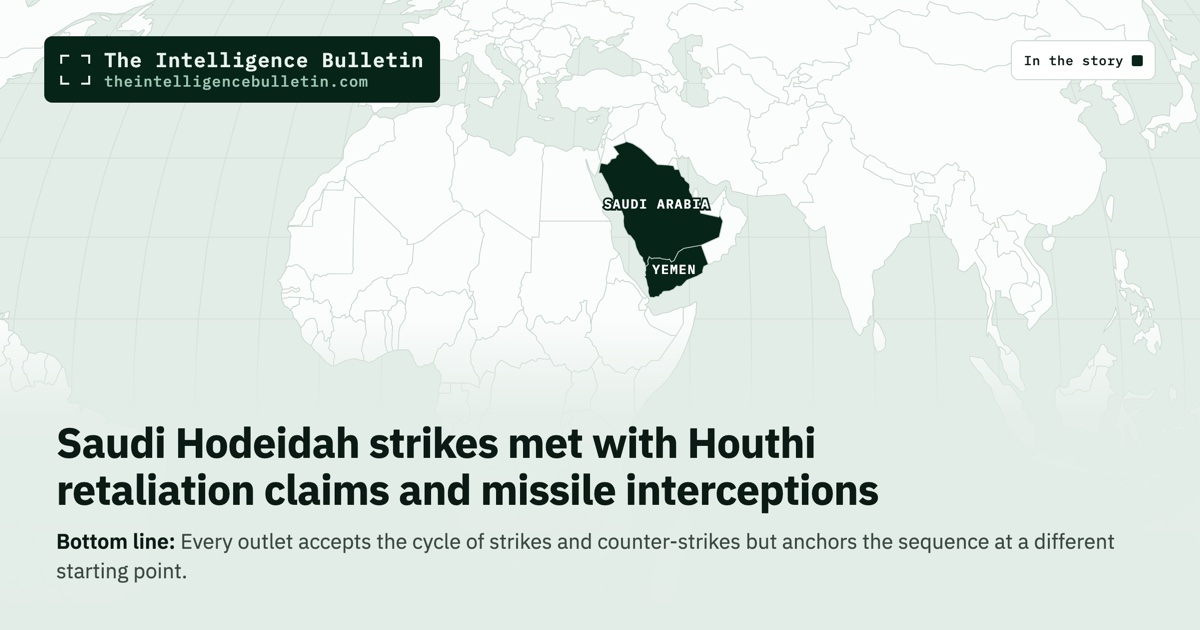
Saudi Hodeidah strikes met with Houthi retaliation claims and missile interceptions

Map of the countries in the story: Saudi Hodeidah strikes met with Houthi retaliation claims and missile interceptions
On July 24-25 2026 the Saudi-led coalition struck Houthi military sites in Hodeidah and Kamaran Island after Houthi attacks on Saudi shipping. Houthi media reported strikes on telecom facilities and injuries while warning of further escalation. Houthi missiles aimed at Saudi oil refineries were intercepted. The exchange broke a fragile truce and raised risks to Red Sea shipping.

One Story. Many Angles.

🇸🇦
Saudi Arabia
Arab News
Saudi-led Coalition Forces in Yemen strike Houthi sites as conflict flares
Read →
🇶🇦
Qatar
Al Jazeera
Saudi Arabia strikes Houthi-held Hodeidah, Yemeni group says
Read →
🇬🇧
United Kingdom
Middle East Eye
Houthi media says Saudi struck Hodeida telecom facilities and Kamaran island
Read →
🇮🇪
Ireland
The Irish Times
Missiles launched from Yemen at Saudi oil refineries have been ‘shot down’ – The Irish Times
Read →
🇮🇷
Iran
Islamic Invitation Turkey
Yemen Launches Retaliatory Strikes on Saudi Industrial Sites Amid Escalating Tensions
Read →
In Brief

Every outlet accepts the cycle of strikes and counter-strikes but anchors the sequence at a different starting point.

The latest round of strikes in Yemen reveals a classic escalation trap where each side’s defensive claim feeds the other’s justification for the next blow. Arab News presents the coalition’s precision hits on legitimate military targets as a proportionate response to Houthi attacks on Red Sea shipping, stressing that ports and airports remained open. Al Jazeera and Middle East Eye foreground Houthi media accounts of strikes on telecom facilities and Kamaran Island plus the threat of “escalation for escalation.” The Irish Times shifts focus downstream to the interception of Houthi missiles targeting Saudi refineries, underscoring the immediate defensive success. Islamic Invitation Turkey frames the entire sequence as Yemeni retaliation against Saudi aggression. The pattern across these reports shows every outlet accepts the back-and-forth but selects the starting point that aligns with its audience’s expectations of who bears responsibility for breaking the 2022 lull.

Perspective Analysis

The latest strikes in Yemen expose a self-reinforcing cycle of retaliation that each side uses to justify its next move, with reporting outlets choosing different entry points in the sequence to assign blame. This pattern matters because it obscures the immediate risk that renewed Houthi attacks on Red Sea shipping will compound global energy disruptions already worsened by Iran’s blockade of the Strait of Hormuz, while eroding the longest lull in Yemen’s war since the 2015 Saudi intervention.

The exchange began after Houthi forces announced a naval blockade of Saudi shipping on July 20, 2026, and claimed missile and drone strikes on Saudi oil tankers in the Red Sea earlier that week. Saudi authorities confirmed damage to at least one vessel, the NCC MASA. In response, the Saudi-led coalition conducted airstrikes on July 24 against Houthi military targets in Hodeidah governorate and on Kamaran Island. Coalition spokesman Maj. Gen. Turki Al-Malki described the operation as proportionate and limited to legitimate military sites, explicitly stating that Hodeidah port itself was not hit and that all Yemeni ports remained open to commercial traffic. Yemeni government forces followed with their own strikes on Houthi missile and drone launch sites in Marib and al-Jawf provinces.

Houthi statements framed the coalition action as the start of an “escalation for escalation” phase and reported hits on telecommunications facilities in Hodeidah plus sites on Kamaran Island, with at least two injuries including a woman on the island. Witnesses described explosions near the port, though the coalition denied any such targeting. On July 25, Houthi missiles were launched toward Saudi oil refineries in Yanbu on the Red Sea coast; Greek-operated Patriot systems intercepted the projectiles, and Saudi civil defense issued but then lifted alerts for Yanbu and Jizan with no reported damage.

The accounts diverge most sharply on sequence and intent. One perspective stresses the coalition’s defensive necessity after documented tanker attacks and emphasizes that ports and airports stayed functional. Another leads with Houthi foreign ministry warnings of costly retaliation and details the specific facilities struck, including telecom infrastructure. A third foregrounds granular Houthi-sourced reports of injuries and island targets. A fourth centers the successful downing of the follow-on Houthi missiles aimed at energy infrastructure. The fifth inverts the timeline to present Houthi actions as direct retaliation for prior Saudi aggression on Hodeidah and Kamaran.

These differences reflect consistent institutional alignments rather than contradictory facts on the ground. Every report accepts that Houthi shipping strikes preceded the coalition response and that Houthi missiles followed the strikes, yet the emphasis on which event constitutes the “starting point” aligns with audience expectations about responsibility. The coalition-aligned account correctly notes the absence of port damage and the continued flow of commercial traffic, facts that counter Houthi claims of broader economic strangulation. Houthi-sourced details on telecom hits and injuries add operational texture absent from official coalition releases but remain unverified independently. The interception of missiles aimed at Yanbu refineries demonstrates a concrete defensive success that limits immediate economic fallout.

The real stakes lie in the Red Sea’s role as an alternative route for Saudi crude exports now that the Strait of Hormuz faces near-total blockage. Saudi seaborne crude shipments through the Red Sea accounted for the large majority of exports in recent months; any sustained Houthi campaign there would drive further price spikes beyond the $100 per barrel level already reached. The 2022 informal truce had held for four years without formal renewal, and this flare-up marks its first major breach. Houthi insistence on linking their Red Sea actions to Saudi policy on Yemen risks drawing the kingdom deeper into a conflict it has sought to wind down, while Iranian support for the Houthis ties the local dynamic to the wider U.S.-Iran confrontation.

What to Watch

No side has demonstrated willingness to absorb the first de-escalatory step. The coalition has vowed uncompromising responses to further hostile acts, and Houthi leaders have reiterated “siege for a siege” and “escalation for escalation.” Absent direct talks that address both Red Sea navigation and the Yemeni blockade, the next round is likely to involve additional Houthi missile or drone attempts on Saudi energy or shipping targets, met by further coalition strikes on Houthi coastal positions. That trajectory directly threatens the stability of global oil supplies and the humanitarian lifeline through Hodeidah port, regardless of which narrative assigns primary fault.


Share this story

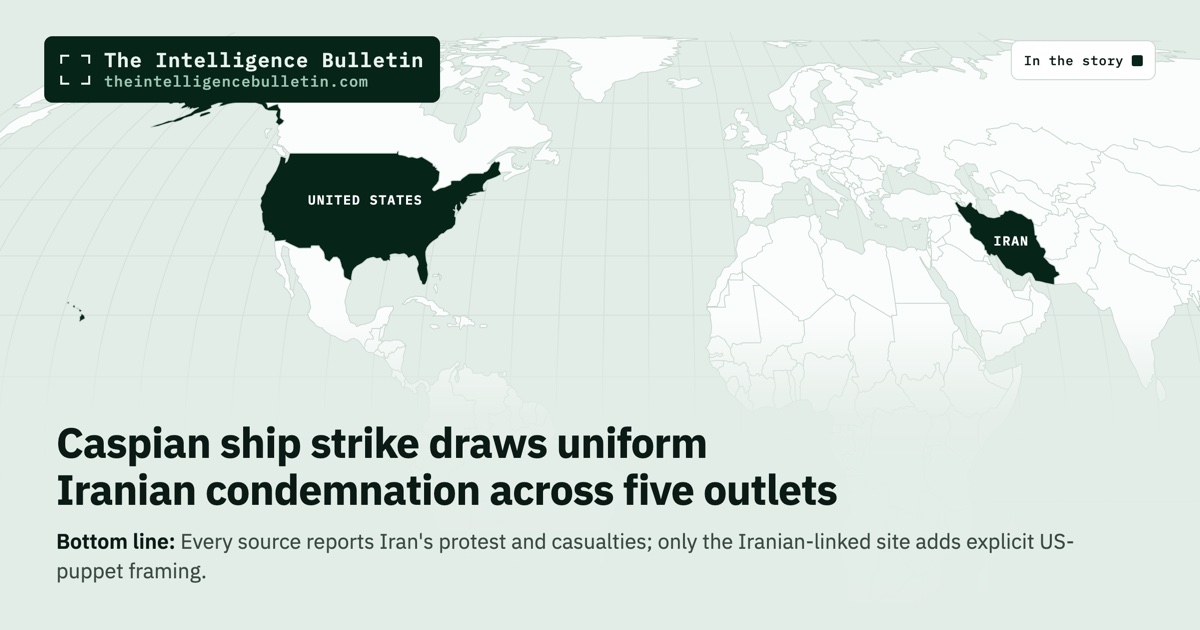
Caspian ship strike draws uniform Iranian condemnation across five outlets

Map of the countries in the story: Caspian ship strike draws uniform Iranian condemnation across five outlets
On July 25, 2026, Ukraine struck an Iranian commercial vessel in the Caspian Sea, killing one sailor and injuring others. Iran’s Foreign Ministry condemned the attack as hostile and criminal, summoned Ukraine’s envoy, and warned it reserved the right to respond. Iranian Foreign Minister Abbas Araghchi urged the EU, UN Security Council and international community to hold perpetrators accountable during a call with EU’s Kaja Kallas. Ukrainian President Zelensky claimed the strikes hit vessels transporting Iran-linked military cargo.

One Story. Many Angles.

🇮🇷
Iran
Islamic Invitation Turkey
Araghchi Calls for Global Reaction to US Puppet Ukraine’s Strike on Iranian Commercial Ship
Read →
🇦🇿
Azerbaijan
APA
Ukraine hits Iranian merchant ship in Caspian Sea, 1 dead, 2 injured
Read →
🇶🇦
Qatar
Al Jazeera
Iran accuses Ukraine of deadly attack on Caspian commercial vessel
Read →
🇨🇳
China
Xinhua
Iran’s FM urges EU to take “decisive” action against Ukraine’s attack on Iranian ship-Xinhua
Read →
🇵🇰
Pakistan
ARY News
Iran says Ukraine deadly attack on ship won’t leave unanswered
Read →
In Brief

Every source reports Iran’s protest and casualties; only the Iranian-linked site adds explicit US-puppet framing.

The five outlets converge on the same sequence of events: an Iranian merchant ship hit in the Caspian, one sailor dead, Iran’s sharp diplomatic protest and call for accountability, plus Zelensky’s counter-claim of targeting Iran-linked cargo vessels. That shared factual core reveals the incident as a direct bilateral escalation that neither side is downplaying. The Iranian-linked site alone injects explicit US-puppet language and a broad global-reaction demand, while the Azerbaijani report leads with casualty numbers and the Chinese wire foregrounds the EU appeal. Al Jazeera and the Pakistani outlet add background on prior drone tensions and Iran’s vow of response without altering the timeline. The pattern shows diplomatic channels already active within 24 hours, with no outlet treating the strike as isolated from wider supply-line frictions between Kyiv and Tehran.

Perspective Analysis

The strike on an Iranian merchant vessel in the Caspian Sea on July 25 has crystallized into a clear bilateral confrontation between Tehran and Kyiv, one that both capitals are treating as an immediate and non-negotiable grievance rather than a peripheral incident. Within hours, Iranian officials lodged formal protests, summoned the Ukrainian chargé d’affaires, and pressed European and international bodies for accountability, while Ukrainian President Volodymyr Zelensky publicly framed the operation as a successful hit on vessels carrying Iran-linked military cargo and a Russian warship. This rapid sequence of claims and counter-claims demonstrates that neither side intends to absorb the loss quietly or insulate the event from the larger supply frictions running through the Russia-Ukraine war.

Iran’s Foreign Ministry described the attack as a “hostile and criminal” violation of the UN Charter, specifically citing Article 2(4), and stated that Tehran reserves the right to take responsive measures. One sailor was killed and at least two others injured when the vessel exploded. Foreign Minister Abbas Araghchi conveyed the same message in a telephone call with EU foreign policy chief Kaja Kallas, urging the European Union, the UN Security Council, and the wider international community to hold the perpetrators and their supporters accountable. The ministry added that Iran has never intervened in the Russia-Ukraine conflict and warned that further escalation could dangerously expand the war’s geographic reach.

Zelensky’s account directly contradicts the Iranian characterization of the target. In a post on X, he claimed Ukrainian forces achieved “very strong results” by striking vessels used in military cargo shipments involving Iran, alongside a warship. Ukrainian reporting confirmed the operation but did not name the specific commercial ship identified by Tehran. The divergence is not merely rhetorical; it reveals competing narratives over the legitimacy of striking ostensibly civilian vessels that may carry dual-use or military materiel, a distinction that has grown increasingly blurred across multiple theaters.

The speed with which diplomatic channels activated underscores the incident’s gravity. Iranian officials moved from condemnation to formal protest and multilateral appeals inside a single day. Araghchi’s outreach to Brussels specifically called for “decisive” action, while the ministry’s statement emphasized that responsible actors should hold Ukrainian authorities accountable for what it termed a criminal and provocative act. This coordinated response suggests Tehran views the strike as part of a pattern of pressure on its northern maritime access, compounding existing constraints on its southern routes.

Background tensions between the two countries supply context for the current flare-up. Since 2022, Iran has supplied Russia with Shahed drones that Ukrainian forces have intercepted in large numbers. Kyiv has in turn offered drone-interception expertise to Gulf states facing Iranian attacks and has publicly detailed alleged Russian intelligence-sharing with Tehran. The Caspian operation therefore sits at the intersection of long-range Ukrainian strike capabilities and Iran’s logistical support for Moscow, turning a previously secondary body of water into a contested corridor.

Coverage of the event converged on this core sequence across outlets with different editorial priorities. Reports uniformly recorded the casualty figures, Iran’s diplomatic protest, the summons of the Ukrainian envoy, and Zelensky’s counter-claim. One Iranian-linked outlet alone inserted explicit language framing Ukraine as a “US puppet” and demanded a broad global reaction, aligning with Tehran’s official messaging that attributes Kyiv’s actions to external influence. An Azerbaijani outlet, reflecting its position as a Caspian littoral state, led with the human cost—one dead, two injured—and noted Iran’s retained right to retaliate. A Chinese state wire emphasized Araghchi’s appeal to the EU for decisive steps and recorded Iran’s insistence that it has stayed out of the Russia-Ukraine war. A Qatari outlet added explanatory depth on prior drone-related friction and the risk of further escalation. A Pakistani outlet foregrounded Tehran’s vow that the attack “won’t leave unanswered.”

These variations in emphasis do not alter the shared factual spine: the attack occurred, a sailor died, Iran protested immediately, and Ukraine asserted a military rationale. The pattern indicates that the incident is already feeding into active diplomatic maneuvering rather than remaining a localized maritime dispute. Iranian statements explicitly link the Caspian strike to wider regional tensions, including developments in the Strait of Hormuz, and call for coordinated international pressure.

What to Watch

The most likely near-term trajectory is sustained Iranian diplomatic pressure accompanied by an implicit or explicit threat of asymmetric response. Tehran’s repeated assertion of the right to retaliate, paired with its appeal to multiple international forums, positions the episode as leverage in ongoing regional negotiations. Kyiv, for its part, has shown willingness to publicize strikes on Iranian-linked assets, signaling that it regards such targets as legitimate extensions of the battlefield. This mutual willingness to escalate rhetorically and operationally raises the prospect of additional incidents along Caspian or other supply routes, further complicating efforts to contain the conflict’s geographic and economic spillover. The episode demonstrates that commercial vessels tied to either side’s war effort now carry measurable risk, with little indication that either capital intends to de-escalate the resulting friction.


Share this story

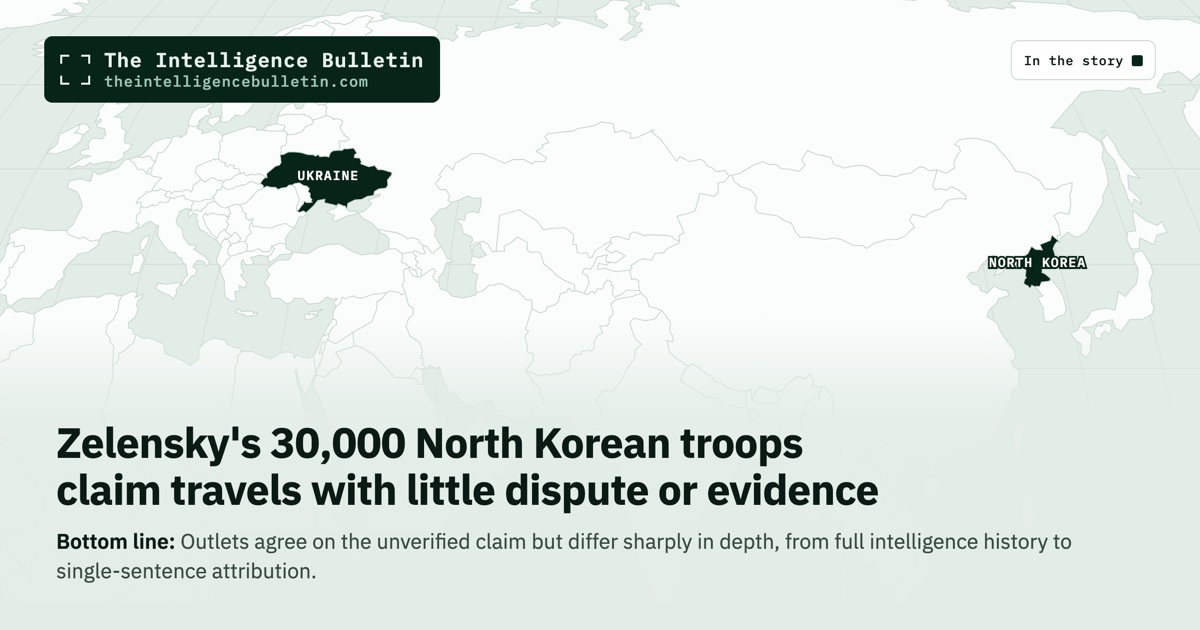
Zelensky’s 30,000 North Korean troops claim travels with little dispute or evidence

Map of the countries in the story: Zelensky's 30,000 North Korean troops claim travels with little dispute or evidence
On July 25, Ukrainian President Volodymyr Zelensky stated that Russia is preparing to receive another 30,000 North Korean troops and ballistic missile launchers, with preparations underway since June in the Voronezh region. He cited Ukrainian intelligence and warned the move threatens both Ukraine and Asian countries in range of North Korean missiles. The claim builds on prior North Korean troop deployments and arms supplies to Russia.

One Story. Many Angles.

🇺🇦
Ukraine
Kyiv Post
Russia Preparing to Receive 30,000 Additional North Korean Troops, Zelensky Warns
Read →
🇨🇳
China
South China Morning Post
Russia asks North Korea to send 30,000 extra troops to aid in Ukraine war: Zelensky
Read →
🇰🇷
South Korea
The Korea Times
Russia preparing to receive another 30,000 N. Korean troops for Ukraine war: Zelenskyy
Read →
🇬🇧
United Kingdom
The Independent
Ukraine-Russia war latest: Zelensky says Putin preparing to bring 30,000 more North Korean troops into battle
Read →
🇹🇷
Turkey
Anadolu Agency
Zelenskyy claims Russia seeks to bring 30,000 North Korean troops for war
Read →
In Brief

Outlets agree on the unverified claim but differ sharply in depth, from full intelligence history to single-sentence attribution.

Zelensky’s July 25 claim of 30,000 more North Korean troops for Russia has produced near-uniform reporting across the selected outlets, all relaying the same core details from his address without contradiction. The Kyiv Post supplies the fullest Ukrainian intelligence context, including North Korea’s role supplying up to 40 percent of Russia’s artillery shells and prior troop numbers. South Korean and Chinese accounts add background on earlier deployments and North Korea’s gains in cash and technology. The Independent places the allegation inside a live blog of ongoing strikes and diplomatic moves, noting the absence of supporting evidence. Anadolu Agency reduces it to a bare claim. This convergence shows the story travels primarily as an unverified Ukrainian allegation rather than confirmed escalation, with Asian outlets emphasizing the Russia-North Korea axis and Western ones embedding it in wider battlefield news.

Perspective Analysis

Zelensky’s July 25 claim that Russia is preparing to receive another 30,000 North Korean troops and additional ballistic-missile launchers has spread across international outlets with almost no pushback or independent verification. The pattern shows a story traveling as raw Ukrainian intelligence rather than established fact, allowing each region to fold the allegation into its own priorities while leaving the core assertion untested. What is at stake is the credibility of battlefield assessments that shape Western aid decisions and Asian security calculations, especially when prior North Korean deployments to Russia’s Kursk region remain only partially confirmed and the new numbers rest solely on Kyiv’s word.

The claim itself rests on a single evening video address in which Zelensky cited preparations underway since June in Russia’s Voronezh region. He linked the troop movement to a broader military-technical partnership that already includes North Korean artillery shells, missiles, and launchers. Ukrainian intelligence assessments referenced in the reporting place North Korea as supplying between 25 and 40 percent of Russia’s artillery ammunition, with more than 100 KN-23 and KN-24 ballistic missiles delivered since June 2023 and at least 80 of them used in combat. Earlier transfers also included more than 600 artillery systems of various calibers and over 7 million rounds of ammunition. These details give the allegation texture but still originate entirely from one side’s intelligence service.

Regional outlets absorbed the statement differently. Ukrainian coverage supplied the fullest historical ledger, connecting the prospective 30,000 troops to an earlier estimated deployment of 14,000 to 15,000 soldiers under the 2024 mutual defense pact. It framed the move as an escalation that hands North Korea direct combat experience and improved weapons, explicitly warning that the threat extends to Asian countries within range of Pyongyang’s missiles. South Korean reporting added context on recent high-level diplomacy, noting North Korean Foreign Minister Choe Son-hui’s four-day Moscow visit that included meetings with Putin and Lavrov, and placed the new troop figure against an existing estimate of roughly 20,000 North Korean personnel already sent, with 14,000 thought to remain on the front lines. Chinese accounts highlighted the reciprocal benefits: cash, military technology, food, and energy commodities that help Pyongyang weather sanctions, while recording South Korean estimates that around 2,000 North Korean troops have already been killed.

Western and Turkish reporting kept the claim shorter and more provisional. One live blog embedded the statement among daily battlefield updates and explicitly noted that it was offered without supporting evidence. Another outlet reduced the story to a single-sentence relay of the president’s words. This minimal treatment avoids endorsing the numbers yet still transmits them, preserving the appearance of ongoing escalation without requiring confirmation.

The absence of contradiction across these accounts reveals how little external checking occurs once a claim originates from a combatant government. No outlet cited Russian or North Korean statements confirming or denying the preparations. No satellite imagery, defector testimony, or third-party intelligence was introduced to corroborate the Voronezh staging area or the launcher shipments. The result is a consensus that the allegation exists and circulates, not that the 30,000 figure is accurate. That distinction matters because earlier North Korean troop movements to Kursk were only partially acknowledged by outside observers, and casualty estimates from South Korea remain unverified by Moscow or Pyongyang.

The convergence also exposes differing incentives. Outlets closest to the conflict emphasize the intelligence backing and the threat to Ukraine’s survival. Asian coverage stresses the Russia–North Korea axis and its implications for regional missile ranges and sanctions evasion. More distant reporting folds the claim into routine war coverage without amplifying it. None of these approaches disputes the numbers; they simply contextualize them according to audience interest. The shared outcome is that the claim gains legitimacy through repetition rather than evidence.

What to Watch

What happens next will likely follow the same pattern. Ukrainian officials will continue to release intelligence assessments that highlight North Korean involvement, while Russia and North Korea maintain silence or issue blanket denials that offer no new data. Western governments will weigh the unverified numbers when deciding on further sanctions targeting the bilateral arms flow or additional military aid calibrated to a larger opposing force. Asian capitals will monitor whether the reported combat experience improves North Korean capabilities that could later affect the peninsula or Japan. Absent independent confirmation, the 30,000-troop figure will function more as a political signal than a settled fact, shaping perceptions of escalation while the actual battlefield balance remains clouded by the same information gaps that allowed the story to travel unchallenged in the first place.


Share this story