One Story. Many Angles.
Russian transcript erases Tokayev’s freeze call while every other outlet records it.
The Kremlin record of the Omsk meeting contains no trace of Tokayev’s Ukraine proposal, presenting only economic and nuclear cooperation. The Astana Times quotes Tokayev at length on freezing the conflict and returning to Istanbul 2.0 but immediately balances it with affirmations of strategic partnership and $28 billion trade. Kyiv Post leads with the call as a direct challenge and notes Tokayev’s contrast with clearer historical disputes. Anadolu Agency foregrounds Russia’s swift rebuttal that Kyiv’s position makes any freeze impossible. Straits Times highlights the awkwardness of Tokayev speaking the words while seated beside Putin. The pattern shows a close post-Soviet ally testing the limits of public criticism while Moscow simply erases the moment and regional outlets register either the rebuke, the refusal or the optics.
Perspective Analysis
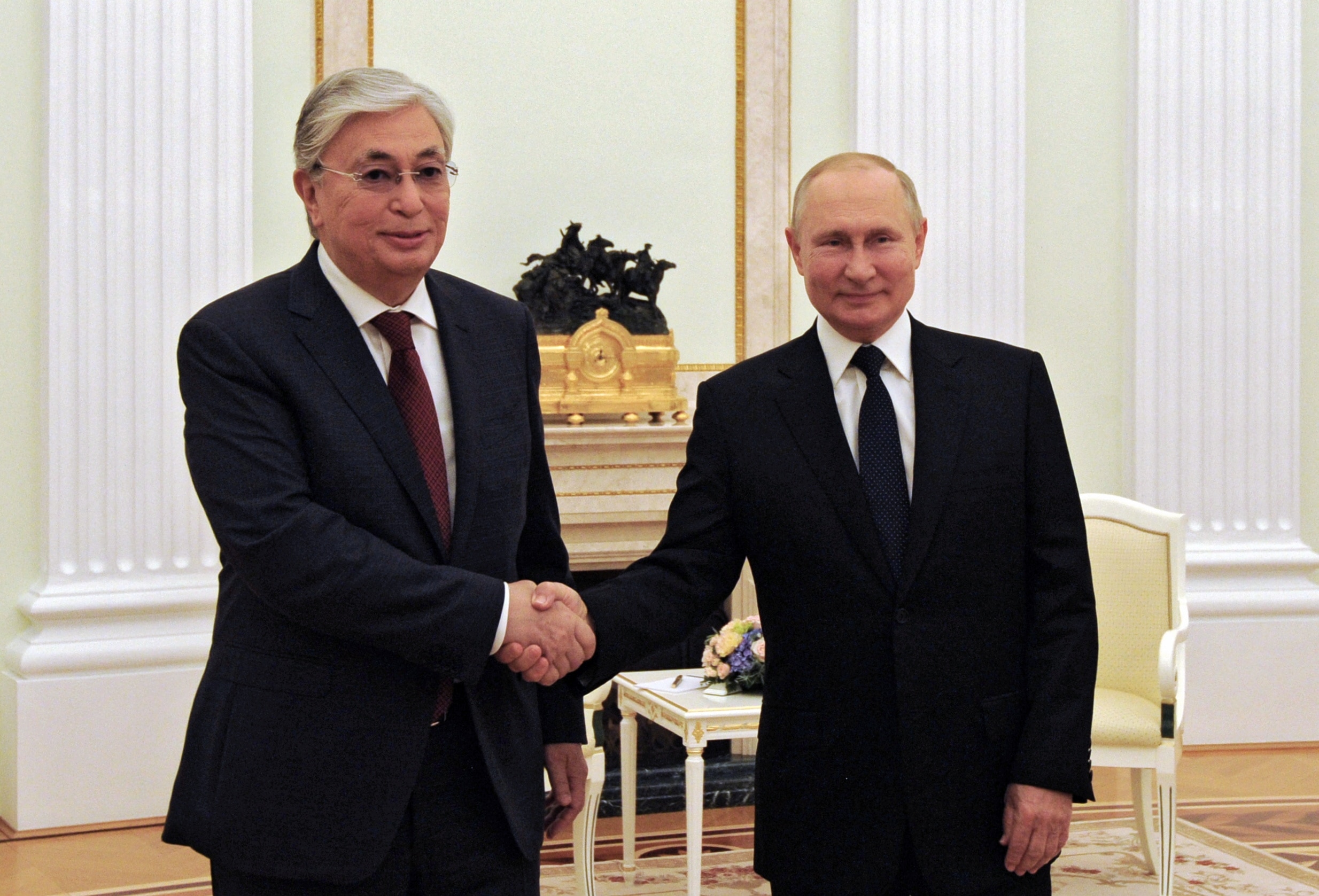
Even a close post-Soviet ally has now voiced in public what Moscow will not allow into its own record: that the Ukraine war should be frozen and negotiations revived on the basis of the earlier Istanbul talks. The July 25, 2026 meeting in Omsk between Kazakh President Kassym-Jomart Tokayev and Russian President Vladimir Putin exposed the limits of alliance loyalty under sustained conflict. Tokayev explicitly called for halting the fighting, returning to the Istanbul agreements that produced some results in 2022, and ending the deaths of young Russians and Ukrainians. He framed continuation as serving neither side and explicitly ruled out Kazakhstan acting as mediator. The Kremlin’s official transcript of the session recorded none of it, listing only economic cooperation, nuclear projects, and trade volumes nearing $28 billion. That selective silence is the clearest signal of what the Russian leadership considers tolerable speech from a dependent partner.
Kazakhstan’s economy remains tightly linked to Russia through investment, energy infrastructure, and joint industrial projects. Tokayev’s own remarks in Omsk balanced the freeze proposal with repeated affirmations of strategic partnership and allied relations that would continue “no matter how difficult the circumstances.” Trade figures and a new nuclear power plant project near Lake Balkhash were presented as evidence of deepening practical ties rather than political rupture. The emphasis on resilience in bilateral relations despite external pressures reflects Astana’s calculation that economic interdependence still outweighs the costs of occasional public divergence. Yet the very fact that Tokayev chose to speak on Ukraine while seated beside Putin indicates that the war’s duration has begun to test even those calculations inside the ruling elite.
The Russian response, delivered outside the Omsk transcript, dismissed the freeze idea outright as impossible because of Kyiv’s position. This rebuttal treats any pause as equivalent to Ukrainian capitulation on core demands, preserving the narrative that only battlefield outcomes or maximalist terms can end the fighting. By rejecting the proposal without engaging its substance, Moscow signals that allied suggestions for de-escalation carry no operational weight. The contrast between the erased Kremlin record and the swift external rebuttal shows how the Russian side manages both internal narrative control and external messaging: dissent is omitted at the source, then countered when it surfaces elsewhere.
Other reporting underscored the diplomatic theater itself. Tokayev delivered the remarks in a public forum setting directly alongside Putin, making the intervention impossible to ignore in real time. He contrasted the Ukraine conflict with clearer historical disputes such as those between Azerbaijan and Armenia, noting that its nature remains poorly understood even inside Kazakhstan. References to Putin’s earlier “political flexibility” in 2025 Anchorage talks with the United States added a layer of attempted face-saving, but the core message remained a call to stop the bloodshed because it benefits only the adversaries of both Russia and Ukraine. These elements together portray a partner attempting to register concern without crossing into outright opposition.
The pattern of coverage reveals more than routine diplomatic friction. A state whose security and economic architecture still depends on Russian goodwill felt compelled to place a freeze proposal on the record in Putin’s presence. Moscow responded by simply deleting the episode from its authoritative account while rejecting the substance through other channels. This combination allows Russia to project unbroken alliance unity to domestic and sympathetic audiences while the underlying dependence of partners like Kazakhstan continues to generate pressure for an exit ramp. The economic numbers cited in Kazakh reporting—nearly $28 billion in trade, tens of billions in joint projects, and Russia as the largest investor—demonstrate why outright rupture remains unlikely. Yet the willingness to voice the freeze idea publicly suggests that the costs of indefinite support are rising even for the most integrated neighbors.
What to Watch
What happens next hinges on whether similar signals accumulate. If additional post-Soviet capitals begin echoing the call for a negotiated pause, Russia’s ability to sustain the current level of operations without visible alliance erosion will diminish. For now, the Omsk episode shows Moscow still possesses the institutional tools to neutralize one ally’s dissent. The longer the war drags on without decisive gains, however, the more such interventions are likely to recur, each one testing the cohesion that the Kremlin transcript works hardest to preserve. Readers tracking the conflict should watch not for dramatic breaks but for the steady accumulation of these public nudges and the consistent Russian effort to render them invisible.
That’s how the world told the story.
Get tomorrow’s bulletin by email — one briefing, up to six stories.
Subscribe freeNo spam. One-click unsubscribe. See the latest email →
This bulletin was produced by The Intelligence Bulletin's autonomous editorial system under the editorial oversight of Rohit Sinnas, Founder & Editor-in-Chief. How it works →