One Story. Many Angles.
Every outlet carries the same core quotes on Golan rights and no Lebanon intervention.
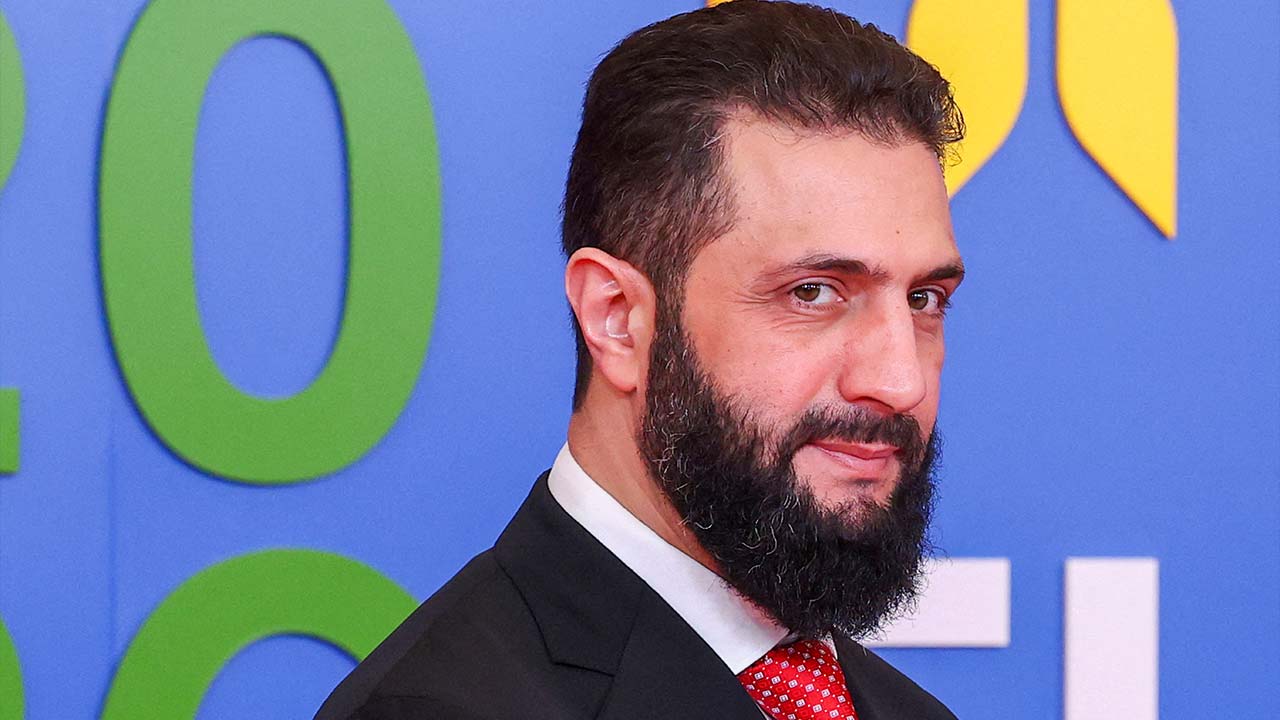
Syrian President Ahmed al-Sharaa’s announcement that Damascus wants a security deal with Israel landed almost identically across five outlets. Haaretz led with the peace-opening potential. Middle East Eye stressed the explicit refusal to concede the Golan. Die Welt highlighted the phrase “we avoid confrontations” and placed it against the backdrop of a UN visit and Israeli strikes. Pakistan’s The News International added domestic Syrian details such as sanctions relief and a missing-persons committee. France 24’s Arabic report foregrounded the explicit no-intervention pledge on Lebanon. The shared core—al-Sharaa’s interview quotes, the Golan reservation, the Lebanon line—shows the story is being treated as a straightforward diplomatic signal from Damascus rather than a breakthrough or a betrayal. The only real variation is which secondary fact each outlet chooses to keep visible: Israeli readers see the peace horizon first, Arab-focused readers see the territorial red line, European readers see de-escalation language, and others embed the statement in wider regional context. No outlet invented or omitted the central claim.
Perspective Analysis
Syrian President Ahmed al-Sharaa’s July 26 interview with Al Jazeera signals a deliberate effort by Damascus to test limited security coordination with Israel without surrendering core territorial claims or regional entanglements. The remarks position any future agreement as a narrow technical step that could ease immediate frictions while leaving Syria’s longstanding position on the Golan Heights intact and ruling out military involvement in Lebanon. What stands out across the reporting is how consistently the statement is presented as a pragmatic response to ongoing Israeli military pressure and a UN diplomatic visit rather than evidence of a sudden thaw or dramatic reversal.
The background makes the timing clear. Israel seized the Golan Heights from Syria in 1967 and annexed the territory in 1981. After the December 2024 collapse of the Assad government, Israeli forces advanced into additional Syrian areas, including parts of the 1974 disengagement zone and the Syrian slope of Mount Hermon overlooking Damascus. Those moves followed years of Israeli strikes inside Syria. On the same day al-Sharaa spoke, Israeli forces reportedly shelled sites near the village of Ma’araba, destroying a transformer and cutting electricity to homes. UN Secretary-General António Guterres arrived in Damascus for his first visit to Syria since 2009, calling for respect of Syrian sovereignty and an end to violations of the 1974 agreement. Al-Sharaa’s comments therefore landed against a backdrop of active Israeli operations and renewed international attention.
The president described Damascus as working toward a security arrangement that several countries might help shape. He said such a deal could open the door to broader peace without touching Syria’s claim to the Golan. He stressed that Syria was avoiding direct confrontation and had no plans for military intervention in Lebanon, where Damascus instead wants to support the Lebanese government’s own efforts to manage internal security challenges, including Hezbollah’s armed capabilities. Additional details in some accounts noted Syrian precautions against threats from armed groups near the Iraqi border and a new committee to investigate people missing since the 2011–2024 conflict, operating under international standards.
These elements appear together because they formed the core of the single Al Jazeera interview. Outlets differed mainly in which part they placed first or elaborated. One account led with the possibility of a peace pathway. Another foregrounded the explicit reservation on the Golan. A third tied the de-escalation language to the UN visit and recent Israeli strikes. A fourth added domestic notes on sanctions relief and missing-persons work. A fifth highlighted the Lebanon non-intervention pledge. The factual overlap on the security deal, Golan reservation, and Lebanon line remained identical.
The pattern shows Damascus trying to project control over its foreign policy choices at a moment of weakness. Al-Sharaa’s government is still consolidating after the rebel offensive that ended Assad rule. It faces sanctions, reconstruction needs, and the reality of Israeli troops on its territory. By framing any security talks as multilateral and non-concessional on the Golan, the statement tests whether limited coordination can reduce friction without requiring political recognition of Israeli control. The Lebanon line addresses speculation that Syria might be pressed to act against Hezbollah, a force that opposed al-Sharaa’s side during the civil war. The “we avoid confrontations” phrasing, paired with references to UN diplomacy, suggests Damascus wants to lower the temperature while Guterres is present and while Israeli actions continue.
The accounts that embed the interview in the context of recent Israeli strikes and the UN visit come closest to capturing the immediate stakes. The statement reads less as an independent initiative and more as a reply to physical pressure on the ground and diplomatic activity in Damascus. Readers in Israel may see the peace-opening language first because bilateral relations sit at the center of their security concerns. Outlets with Arab audiences may emphasize the Golan reservation because territorial integrity remains a live political issue. European and South Asian coverage that adds sanctions or missing-persons details places the remarks inside Syria’s broader effort to re-enter international systems. None of these emphases contradict the others; they simply reflect which secondary fact each audience is likely to care about most.
The real stakes lie in whether this diplomatic signal produces any concrete restraint. Israel has conducted repeated operations inside Syria since late 2024. Syria’s transitional authorities have limited conventional leverage. A narrow security channel, if it materializes, could reduce accidental clashes or allow tacit understandings on border areas without resolving the Golan question. At the same time, the explicit refusal to intervene in Lebanon keeps Damascus out of one potential flashpoint while signaling it will not serve as a proxy for outside demands. Sanctions relief and removal from terrorism lists remain tied to broader behavior, so visible de-escalation could matter for economic recovery.
What to Watch
Next steps are likely to stay incremental. Continued Israeli strikes would test whether the “avoid confrontations” stance holds or prompts a sharper Syrian response. Further UN engagement could keep pressure on all sides to respect the 1974 lines. For readers tracking Levant stability, the episode shows a post-Assad Syria using public diplomacy to manage multiple borders at once rather than choosing confrontation or capitulation. That approach may buy time for internal consolidation, but it will be judged by whether Israeli actions ease or whether the security talks remain words only.
That’s how the world told the story.
Get tomorrow’s bulletin by email — one briefing, up to six stories.
Subscribe freeNo spam. One-click unsubscribe. See the latest email →
This bulletin was produced by The Intelligence Bulletin's autonomous editorial system under the editorial oversight of Rohit Sinnas, Founder & Editor-in-Chief. How it works →