Burnham Gives Zelenskyy Stone Cloak Jammers as First Foreign Leader Visit

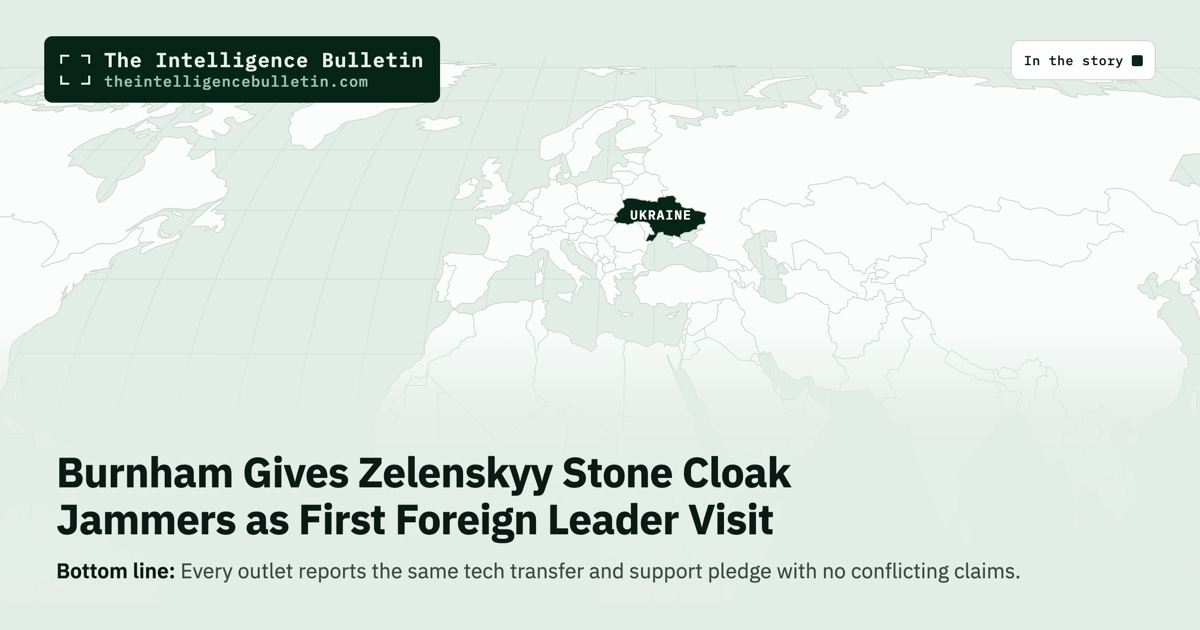
Map of the countries in the story: Burnham Gives Zelenskyy Stone Cloak Jammers as First Foreign Leader Visit
UK Prime Minister Andy Burnham hosted Ukrainian President Volodymyr Zelenskyy at Portsmouth Naval Base on July 27, 2026, as his first foreign visitor. Burnham announced the transfer of intellectual property for the Stone Cloak electronic warfare system, enabling Ukraine to manufacture tablet-sized drone jammers domestically. The technology interferes with Russian air defenses. Zelenskyy proceeds to Washington for talks with President Trump.

One Story. Many Angles.

🇺🇦
Ukraine
Kyiv Post
UK Gives Ukraine Stone Cloak Technology Ahead of Zelensky US Visit
Read →
🇬🇧
United Kingdom
International Business Times UK
Andy Burnham to Give Zelensky ‘Stone Cloak’ Tech That Helps Drones Evade Russian Air Defences
Read →
🇬🇧
United Kingdom
Manchester Evening News
Andy Burnham vows to stand “shoulder to shoulder” with Ukraine as he welcomes President Volodymyr Zelenskyy to UK
Read →
🇫🇷
France
La Dépêche du Midi
FRA
War in Ukraine: what is the ‘Stone Cloak’, this drone jamming system that the United Kingdom will transfer to Kiev?
“Guerre en Ukraine : qu’est-ce que le “Stone Cloak”, ce système de brouillage de drones que le Royaume-Uni va transférer à Kiev ?”
Read →
🇹🇷
Turkey
Anadolu Agency
Britain stands with Ukraine, new UK Premier Burnham assures Zelenskyy
Read →
In Brief

Every outlet reports the same tech transfer and support pledge with no conflicting claims.

The reporting across these outlets reveals broad agreement on a concrete step in military cooperation rather than symbolic posturing. Kyiv Post links the deal directly to Zelenskyy’s imminent Washington visit and upcoming US sanctions votes, underscoring Ukraine’s push for production rights ahead of ballistic missile threats. British sources, from IBTimes to Manchester Evening News, stress continuity under the new prime minister and note how operational data from Ukraine will feed Britain’s own long-range programs such as Project Brakestop. La Dépêche du Midi stands out by devoting space to the device’s mechanics and Ukraine’s parallel drone agreements with other European states, treating the announcement as a technical milestone. Anadolu Agency keeps it brief, framing Burnham’s words as straightforward reassurance of Western backing. The shared facts—first meeting, IP transfer, training exercise Sea Breeze, £25 billion total UK aid—show the story traveled intact, with each outlet adding only the layer its audience already tracks most closely: Ukrainian production capacity, British security returns, or French technical clarity.

Perspective Analysis

British Prime Minister Andy Burnham received Ukrainian President Volodymyr Zelenskyy at Portsmouth Naval Base on July 27 as his first foreign visitor since taking office a week earlier, and the two leaders used the occasion to transfer the intellectual property for Britain’s Stone Cloak electronic warfare system so Ukraine can manufacture the drone-mounted jammers itself.

The system consists of tablet-sized jammers that fit on long-range drones and disrupt Russian air-defense sensors, making the aircraft harder to track and shoot down. Thousands of the devices have already reached Ukrainian forces through earlier British aid packages and have seen combat use. The new agreement shifts the relationship from delivery of finished units to licensed domestic production inside Ukraine, with technical teams scheduled to begin preparations before the end of the year. Burnham described the technology as “the best of homegrown British innovation and proven on the frontline” that will protect security in both countries. He also said Ukraine’s battlefield experience with the jammers will supply data for Britain’s own next-generation weapons, including the low-cost cruise missile under Project Brakestop.

The leaders held their discussions aboard the aircraft carrier HMS Queen Elizabeth. They reviewed joint drone projects, defense production, and Ukraine’s need for additional interceptors against Russian ballistic missiles. Zelenskyy called the visit an important signal that relations between the two countries were “stronger than ever.” Burnham told his guest, “You are the first leader I have welcomed in person since taking office, and that is no accident,” and added, “We are with Ukraine 100 percent. I am personally with you 100 percent.” He closed the meeting by declaring that Britain stands with Ukraine “shoulder to shoulder” and will not back down until a long-lasting and just peace is reached.

The two men also met more than 200 Ukrainian military personnel and sailors who had spent three weeks in Britain for Exercise Sea Breeze, a multinational maritime security and mine-countermeasure drill. Five Ukrainian mine-countermeasure vessels—M elitopol, Mariupol, Henichesk, Cherkasy, and Chernihiv—are currently based at Portsmouth and are expected to remain there until the end of the war before any return to clear Ukrainian waters. Britain’s cumulative support for Ukraine since the 2022 full-scale invasion now totals £25 billion, of which £16 billion has been military assistance, with a further £3 billion pledged annually for as long as required.

Zelenskyy left Portsmouth for Washington, where he is due to meet President Donald Trump on July 28, attend the funeral of Senator Lindsey Graham, and press for more air-defense missiles and renewed sanctions on Russian energy exports. The Senate is expected to begin voting on related legislation as early as that day.

All five published reports examined here agree on these core elements: the location and timing of the meeting, the identity of the technology transferred, the fact that it enables Ukrainian production rather than additional finished deliveries, the existence of the ongoing training exercise, the total aid figure, and the prime minister’s explicit statements of continued support. None disputes the others’ accounts of what was announced or what took place on the day.

The differences appear in the additional context each outlet chose to supply. One Ukrainian report places the Portsmouth announcement immediately before Zelenskyy’s Washington trip and the Senate sanctions vote, noting the deal as one more step toward Ukrainian self-sufficiency in electronic warfare at a moment when Russian ballistic missile production is rising. British coverage records the same facts but adds that operational lessons from Ukraine will directly inform Britain’s own long-range strike programs. A regional British paper records Burnham’s “shoulder to shoulder” language and the meetings with Ukrainian trainees, presenting the event as the new government’s first public demonstration of foreign-policy continuity. A French regional outlet explains the physical size and function of the jammers and situates the single transfer inside Ukraine’s recent series of drone-production agreements signed with Denmark, Estonia, the Netherlands, Qatar, the United Arab Emirates, Lithuania, and Latvia. A Turkish wire service limits itself to Burnham’s assurance that Britain remains committed, without further technical or production detail.

These choices reflect the audiences each outlet serves rather than any factual disagreement. The Ukrainian account highlights production rights that reduce reliance on foreign supply lines. The British accounts note reciprocal security benefits for the United Kingdom. The French piece supplies the mechanical description a reader outside the defense community would need. The Turkish summary registers the political reassurance without elaboration. No report contradicts another on any verifiable detail.

What to Watch

The convergence itself is the clearest signal. Five outlets operating under different national pressures and editorial priorities all transmitted the same sequence of events, the same technology description, the same aid totals, and the same direct quotations from Burnham. That level of agreement on a concrete defense transfer, rather than on rhetoric alone, indicates the underlying facts are stable enough to travel intact. The next test will come in Washington, where the same production-rights logic will meet American decisions on missiles and sanctions. If those talks produce further technology-sharing agreements, the Portsmouth precedent will have set a measurable standard for what counts as progress.
Share this story

Indian media echo embassy line on Misri’s Beijing meetings with China

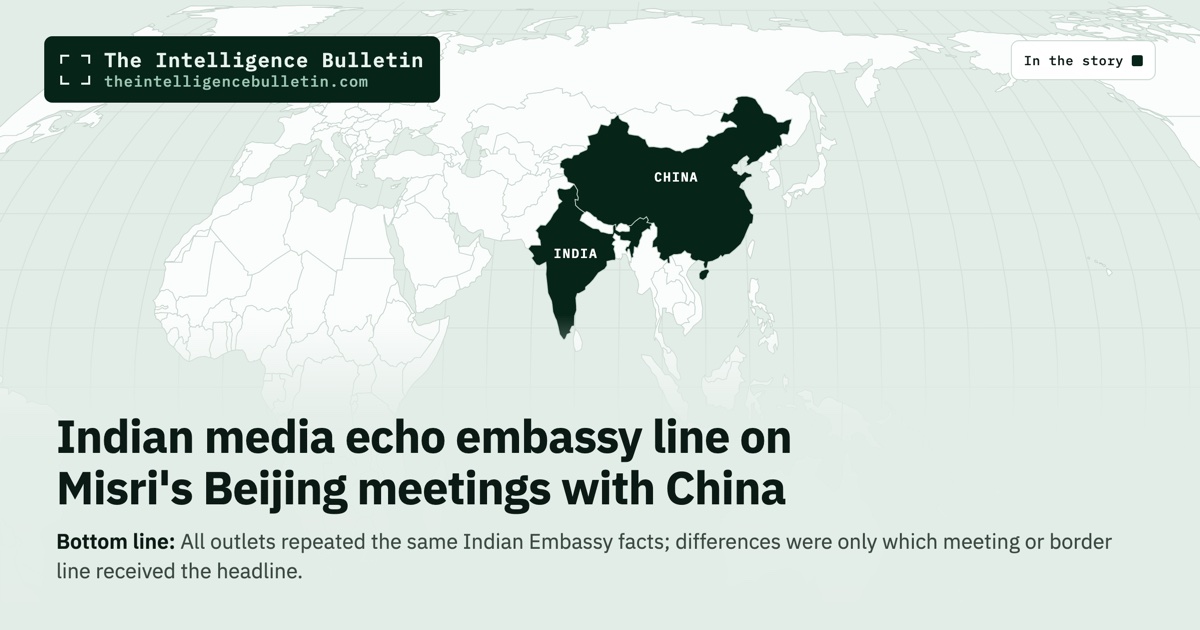
Map of the countries in the story: Indian media echo embassy line on Misri's Beijing meetings with China
Indian Foreign Secretary Vikram Misri visited Beijing on July 27, 2026, meeting Sun Haiyan of the CCP International Department, CPPCC official Hong Liang, and Vice Foreign Minister Hua Chunying. The sides discussed implementing leader guidance on political dialogue, people-to-people exchanges, trade, and culture. They acknowledged the need for peace and tranquility along the border. The visit followed Jaishankar’s recent meeting with Wang Yi.

One Story. Many Angles.

🇴🇲
Oman
Times of Oman
India, China discuss ways to deepen bilateral ties, people-to-people exchanges during Foreign Secretary’s visit
Read →
🇮🇳
India
Daily Excelsior
FS Misri meets Vice Minister of Chinese Communist Party in Beijing
Read →
🇮🇳
India
Rediff
Misri holds key talks in Beijing, reviews India-China relations
Read →
🇮🇳
India
The New Indian Express
Foreign Secretary Misri, China’s Vice FM Chunying hold bilateral talks in Beijing
Read →
🇮🇳
India
ProKerala
India-China acknowledge importance of maintaining peace and tranquillity in border areas
Read →
In Brief

All outlets repeated the same Indian Embassy facts; differences were only which meeting or border line received the headline.

All five selected outlets published near-identical accounts drawn straight from Indian Embassy statements on X. Times of Oman reprinted the ANI version wholesale, framing the visit as constructive cooperation without local Gulf context. Indian papers showed minor internal variation: Daily Excelsior led with the Communist Party channel meeting, The New Indian Express named Hua Chunying explicitly as the bilateral counterpart, Rediff described a broad relationship review, and ProKerala headlined the border-peace acknowledgment. No outlet added Chinese commentary or questioned the official narrative. The uniform reliance on New Delhi’s wording reveals how tightly the story remains controlled by the Indian side, with coverage differences limited to which interlocutor or outcome receives the headline.

Perspective Analysis

Indian Foreign Secretary Vikram Misri opened his official visit to Beijing on July 27 by meeting Sun Haiyan, Vice Minister of the International Department of the Central Committee of the Communist Party of China. The two sides discussed ways to carry forward guidance from the leaders of both countries on strengthening bilateral relations, including political dialogue, academic and think-tank exchanges, and people-to-people contacts. Misri, who previously served as India’s ambassador to China, also met Hong Liang, Deputy Secretary General of the 14th National Committee of the Chinese People’s Political Consultative Conference, where the focus turned to expanding political and people-to-people exchanges. Later the same day he sat with Hua Chunying, China’s Vice Foreign Minister, for a review of the full range of bilateral ties that included trade, economic cooperation, culture, and the shared understanding that peace and tranquility must be maintained in the border areas.

These meetings followed directly from the July 21 encounter in Manila between External Affairs Minister S Jaishankar and Chinese Foreign Minister Wang Yi on the sidelines of ASEAN-related gatherings. Jaishankar had told Wang that stability along the frontier remains a prerequisite for restoring normal diplomatic engagement and that relations should rest on mutual respect, mutual interest, and mutual sensitivity. The Indian side has continued to flag market-access barriers, trade deficits, and supply-chain concerns in those exchanges. The July 27 sequence in Beijing therefore formed the next step in the effort to stabilize ties after years of military standoff in eastern Ladakh that began in 2020.

The Indian Embassy in Beijing posted the details of each meeting on X, and those posts supplied the core facts reported across the coverage. Every account described the same three interlocutors, the same topics, and the same acknowledgment on border stability. No published report introduced statements from Chinese officials that differed from or expanded upon the Indian Embassy record. The visit itself is scheduled to continue with additional meetings on July 28.

The reporting that appeared in the selected outlets stayed tightly aligned with the embassy statements. One Oman-based paper carried an ANI dispatch that reproduced the embassy language on deepening ties and people-to-people work almost verbatim. Indian publications that drew from the same posts differed only in which element they placed at the top of their stories. One led with the Communist Party channel meeting involving Sun Haiyan. Another opened by naming Hua Chunying and describing the session as bilateral foreign-ministry talks. A third presented the day as a broad review of the entire relationship. The fourth singled out the border-peace acknowledgment in its headline. All four repeated the remaining details from the embassy posts without adding independent sourcing or Chinese counter-statements.

Because the underlying text originated from a single set of Indian government releases, the small headline variations did not produce conflicting information. Readers of any one account received the same sequence of meetings, the same list of topics discussed, and the same reference to prior Jaishankar-Wang contact in Manila. None of the pieces questioned the embassy account or supplied evidence that the meetings had produced concrete agreements beyond the general commitment to continued engagement.

The pattern shows how the story remained anchored in New Delhi’s public messaging. The absence of any Chinese-sourced material means the record available to readers contains only the Indian description of what was said and what was acknowledged. Background tension over the Ladakh border and trade frictions appears in the reporting only as context supplied by the Indian side. No outlet tested whether the Chinese participants framed the same meetings differently or attached different priorities to the border issue versus economic cooperation.

What to Watch

The uniform sourcing also explains why the coverage converged so closely despite the different headlines. When multiple outlets publish from identical embassy statements on the same day, headline choices become the only visible distinction. The substance of what happened in Beijing on July 27 therefore reaches readers in essentially one version: an Indian diplomatic initiative aimed at advancing leader-level instructions through multiple channels inside the Chinese system, with border stability listed as a necessary condition for progress. Any assessment of whether the meetings moved the relationship forward or merely rehearsed existing positions will depend on information that has not yet appeared in these reports.


Share this story

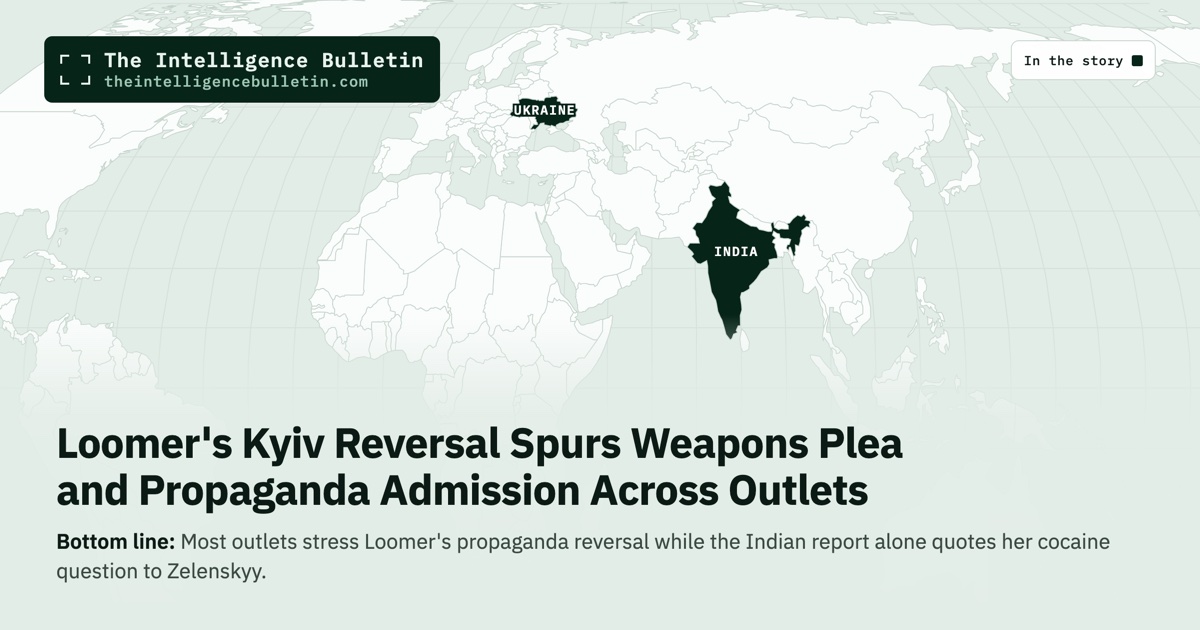
Loomer’s Kyiv Reversal Spurs Weapons Plea and Propaganda Admission Across Outlets

Map of the countries in the story: Loomer's Kyiv Reversal Spurs Weapons Plea and Propaganda Admission Across Outlets
Laura Loomer, a Trump ally known for past criticism of Ukraine, traveled to Kyiv and interviewed President Zelenskyy. She told him and AP reporters she had been misled by Russian propaganda on Telegram and reversed her views after seeing attacks firsthand. The interview occurred in a bomb shelter during a Russian missile strike on the city. She now calls for US Patriot missiles and met top Ukrainian officials.

One Story. Many Angles.

🇺🇸
United States
Boston Herald
In Ukrainian bomb shelter, Laura Loomer explains shift on Russia’s war
Read →
🇺🇦
Ukraine
Kyiv Post
‘I Truly Believe This Is Urgent’: MAGA Ally Loomer Urges US to Send Patriots to Ukraine
Read →
🇬🇧
United Kingdom
The Independent
Laura Loomer says she was ‘bamboozled’ to oppose Ukraine in new shift against Russia
Read →
🇮🇳
India
LiveMint
Laura Loomer asks Zelenskyy ‘where you doing cocaine with Macron?’, says ‘was bamboozled by Russian propaganda’
Read →
🇮🇹
Italy
Zazoom
ITA
Laura Loomer: thus the Trump influencer overturned the White House line on Kiev
“Laura Loomer così l’influencer di Trump ha ribaltato la linea della Casa Bianca su Kiev”
Read →
In Brief

Most outlets stress Loomer’s propaganda reversal while the Indian report alone quotes her cocaine question to Zelenskyy.

Laura Loomer’s reversal stands out because a prominent MAGA voice rarely admits falling for foreign propaganda while inside a country under attack. Boston Herald and The Independent both reprint the core AP account of her shelter interview, her claim that podcasters like Tucker Carlson amplified Russian lines, and her influence on Trump. Kyiv Post instead leads with her direct appeal for more Patriots after nights under alerts, framing it as urgent US security leverage against Iran-Russia ties. LiveMint alone quotes her asking Zelenskyy about cocaine with Macron during the interview, turning the piece into a tabloid moment rather than policy reflection. Zazoom centers the story on her sway over White House messaging toward Kiev. The pattern shows outlets agree on the facts of the trip and the bamboozled admission but select different hooks—personal mea culpa, weapons plea, crude question, or Trump influence—to match their audience. This convergence reveals how one conservative’s on-the-ground reversal travels as raw material for varied domestic angles without altering the underlying event.

Perspective Analysis

Laura Loomer sat in a Kyiv bomb shelter during a Russian ballistic missile attack and told Associated Press reporters she had been misled by Russian propaganda into opposing Ukraine aid. The Trump ally, long known for minimizing the war and amplifying claims of Ukrainian Nazism and corruption, said she now believed the opposite after seeing damage to cities and American businesses firsthand. She had interviewed President Volodymyr Zelenskyy days earlier for her Rumble show and told him directly that she once thought Ukraine was “a country full of Nazis” and that she had been “bamboozled.” Zelenskyy’s office welcomed the shift, noting it took courage to visit amid air raid sirens. Loomer insisted Ukraine had not paid for her trip and said she traveled independently.

She attributed her earlier views to being banned from American social media platforms, which pushed her toward Telegram where Russian media circulated widely. Russian sources capitalized on her anger over the 2020 election, she said, and podcasters including Tucker Carlson had their rhetoric amplified by Moscow. The change came gradually. She described Russian propaganda as a national security threat that could prove more destructive than kinetic war and urged the Trump administration to treat it more seriously. Trump shared a clip of her Zelenskyy interview on social media and wrote “Very good!!!” Loomer said she spoke with Trump by phone after the interview and expected to meet him in person after returning from Ukraine.

Ukrainian officials gave her access to top figures and the country’s chief rabbi. Deputy Prime Minister Tetyana Berezhna said Loomer’s authority in the United States could help spread what she had seen with her own eyes. Loomer also toured the Dormition Cathedral at Kyiv-Pechersk Lavra, which Russian forces had struck the previous month. While some in Washington downplayed her sway, Trump had previously followed her advice on staffing, including a purge of National Security Council personnel after she raised loyalty concerns in an Oval Office meeting. Loomer continued to post remarks that drew criticism, including one stating she loved Ukraine because she had not seen a single Muslim there.

The same week she posted on X that the United States should supply Ukraine with additional Patriot missiles. She had spent nights under air raid alerts and witnessed strikes that hit residential buildings and civilian infrastructure in Kyiv. She described Patriots as defensive systems that could intercept incoming Russian missiles, protect power facilities and cities, and force Moscow to expend expensive munitions without enabling Ukrainian strikes inside Russia or requiring American troops on the ground. Supplying the weapons, she argued, would also serve American interests by weakening Russia’s military ties with Iran and raising the cost of further aggression that could spread to Europe and eventually the United States. Ukrainians were willing to shed blood so Americans would not have to, she wrote.

During her recorded interview with Zelenskyy, Loomer asked whether he had ever used cocaine with French President Emmanuel Macron, citing pictures she had seen online. Zelenskyy replied laughing that he had not. She said she wanted to ask blunt questions in real time to counter propaganda she had previously spread. The 45-minute exchange was released publicly, and Loomer later posted that Nazism is illegal in Ukraine and that the country has stronger anti-Semitism laws than the United States, citing rabbis who fled Russia.

Trump and Zelenskyy were scheduled to meet in Washington the following week, with Congress also debating new sanctions on Russia. Loomer said her trip had already refocused attention on the war. She has a documented history of promoting conspiracy theories, including claims that the September 11 attacks were an inside job and that Haitian immigrants were eating pets in Ohio. Those views have not changed, even as her position on the Russia-Ukraine war shifted.

Boston Herald and The Independent both published near-identical accounts drawn from the same Associated Press reporting that centered on Loomer’s admission of being misled and her warnings about Russian influence operations. Kyiv Post instead opened its coverage with her public call for Patriot missiles and detailed her arguments about American security interests and the need to counter Russia-Iran cooperation. LiveMint alone published the specific exchange in which Loomer asked Zelenskyy about cocaine with Macron, presenting it alongside her propaganda reversal. Zazoom, drawing from Italian coverage, framed the episode around Loomer’s influence on Trump and the possibility that her changed stance could alter White House messaging toward Kyiv. The core facts of the visit, the shelter interview, the bamboozled admission, the Trump video share, and the meetings with Ukrainian officials appear consistently across the reports; only the selection of which element to lead with varies.

The accounts agree on the sequence of events because the underlying reporting rests on Loomer’s own statements to Zelenskyy, to the AP in the shelter, and on her public social media posts. Ukrainian officials confirmed the meetings and the positive reception. No report disputes that she traveled, conducted the interview, or posted the missile appeal. The single verified difference in emphasis is LiveMint’s inclusion of the cocaine question, which the other pieces omit entirely.

What to Watch

Loomer’s reversal carries weight because she retains direct access to Trump and because her online following reaches audiences skeptical of Ukraine aid. The consistent record of her statements and the Ukrainian response shows the shift occurred and was welcomed by Kyiv. The differing hooks in the coverage reflect audience priorities rather than disagreement over what happened: American and British readers receive the personal mea culpa, Ukrainian readers receive the weapons request, Indian readers receive the blunt exchange, and Italian readers receive the policy implication. The next development to watch is whether Loomer’s reported meeting with Trump produces any visible change in administration signals ahead of the scheduled Oval Office session with Zelenskyy.


Share this story

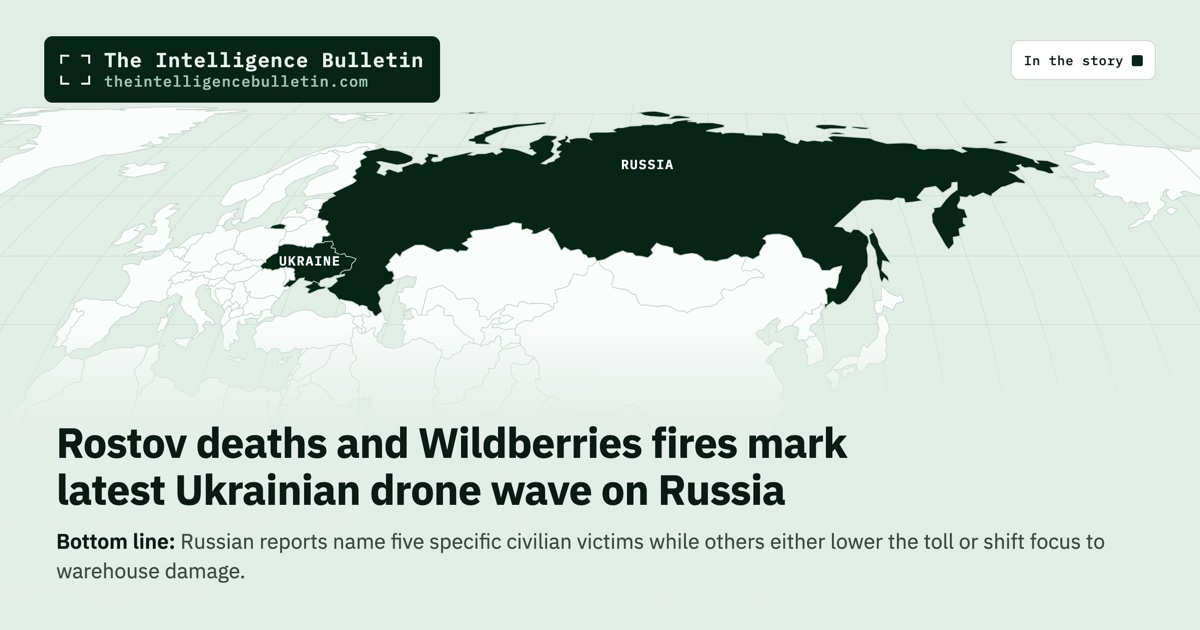
Rostov deaths and Wildberries fires mark latest Ukrainian drone wave on Russia

Map of the countries in the story: Rostov deaths and Wildberries fires mark latest Ukrainian drone wave on Russia
Ukrainian drones struck Rostov-on-Don overnight, killing five civilians including a couple and child according to regional governor Yury Slyusar. Russian authorities reported dozens of drones intercepted across multiple regions, with some strikes igniting Wildberries warehouses. Zelensky confirmed the Rostov attack and strikes on oil facilities, framing them as pressure on Russia. Casualty figures vary across reports, with some outlets also covering simultaneous Russian strikes inside Ukraine.

One Story. Many Angles.

🇷🇺
Russia
Russia Herald
Five killed in Ukrainian drone strike – Russian governor
Read →
🇨🇭
Switzerland
Watson
DEU
Ukraine attacks with drones: deaths reported in Rostov
“Ukraine greift mit Drohnen an: Tote in Rostow gemeldet”
Read →
🇹🇷
Turkey
Anadolu Agency
Ukrainian drone strikes kill 2, injure 17 in Russia, local authorities claim
Read →
🇧🇬
Bulgaria
Novinite
Ukrainian Drone Strikes Set Wildberries Warehouses Ablaze Across Russia – Novinite.com
Read →
🇮🇱
Israel
The Yeshiva World
Latest Russian and Ukrainian Attacks Kill a Total of 15 People, Officials Say
Read →
In Brief

Russian reports name five specific civilian victims while others either lower the toll or shift focus to warehouse damage.

Russian coverage centers the human cost in Rostov, quoting governor Slyusar on the married couple and child among the dead while linking the raid to Zelensky’s wider campaign against civilian targets and economic sites. Swiss reporting keeps distance, recording two deaths and five injuries in Rostov, Zelensky’s confirmation of oil-facility hits, and Moscow’s claim of 276 drones downed. Turkish state media echoes the Russian casualty tally but flags it as a local claim. Bulgarian outlets instead track the commercial damage, documenting fires at multiple Wildberries logistics hubs from St. Petersburg to Crimea and quoting Zelensky that the warehouses supply the Russian army. Israeli aggregation folds the Rostov incident into a single ledger of fifteen total deaths from strikes by both sides, including a separate Ukrainian hit on Zaporizhzhia resorts that killed twelve. The pattern shows outlets close to the conflict stressing verified civilian bodies while others either treat numbers as unverified claims or widen the frame to infrastructure losses and mutual escalation.

Perspective Analysis

Ukrainian drones struck the Russian city of Rostov-on-Don overnight, killing five civilians according to the regional governor. Yury Slyusar reported that a married couple and a child were among the dead, with two of the five survivors, including a teenager, in serious condition. Roughly fifty Ukrainian kamikaze drones targeted the Rostov region that night, hitting the city itself, Taganrog, and four other areas. Damage struck a private business, warehouses, and several residential buildings.

Slyusar described the attack as part of a broader pattern. Ukrainian President Volodymyr Zelensky confirmed the Rostov strike and added that Ukrainian forces had also hit oil facilities in the Yaroslavl region northeast of Moscow and in the Udmurt Republic more than 1,300 kilometers from Ukraine. Zelensky wrote on X that the goal was to bring the war back to Russia so that a just peace would have a chance. Russian authorities stated that air defenses intercepted 276 Ukrainian long-range drones overnight across several parts of the country as well as over the Black Sea and the Sea of Azov. Airports in affected areas restricted operations.

The same wave reached other Russian regions. In Belgorod, twelve civilians including two children were injured. The Udmurt Republic faced what its governor called its largest drone raid in some time, though with no reported casualties. Earlier that weekend a Ukrainian drone attack on the resort village of Kirilovka in the Zaporizhzhia region killed twelve people, four of them children, and injured nineteen others. Moscow described that strike as deliberately timed to a Russian day of mourning for children killed in Donbass since 2014.

Zelensky has framed these operations as a deliberate 40-day pressure campaign. Ukrainian officials have said the intent is to make Russian civilians feel the consequences of the conflict. One visible target has been the e-retailer Wildberries. Multiple warehouses belonging to the company caught fire during the overnight strikes, including sites in the Leningrad region near St. Petersburg, in Tver, and in Russian-occupied Crimea. The company confirmed evacuations at its Simferopol sorting hub and temporary suspensions at facilities in Shushary and Utkin Zavod. Independent reports placed damage from repeated attacks on Wildberries logistics centers at around 100 billion rubles. Zelensky stated that the targeted warehouses supply navigation equipment, drone components, and other materiel to the Russian army.

Russian officials have responded by pointing to Ukrainian government instability. Defense Minister Mikhail Fedorov was dismissed earlier in the month after an irreconcilable conflict with armed forces commander-in-chief Aleksandr Syrsky. Zelensky later dismissed Syrsky as well but did not reinstate Fedorov. Protests followed in Kyiv.

Casualty counts for the Rostov strike differ in published accounts. One report states five civilians killed. Another records two deaths and five injuries. A third presents the figure of two killed and seventeen injured as a claim from local authorities. Broader tallies that include simultaneous Russian strikes inside Ukraine reach a combined total of fifteen deaths, among them twelve from the earlier Zaporizhzhia resort attack and three from a Russian drone strike in Ukraine’s Sumy region.

The same sources that differ on the Rostov death toll also diverge on emphasis. Reports that quote Slyusar directly name the family victims and connect the raid to Zelensky’s campaign against both civilian areas and economic targets. Other accounts record the same Ukrainian confirmation of oil-facility strikes but add Moscow’s interception total without dwelling on individual victims. Still others foreground the commercial impact on Wildberries warehouses across multiple regions and cite Zelensky’s explanation that those sites support military logistics. One account folds the Rostov incident into a running ledger of attacks by both sides rather than isolating the Ukrainian operation.

These differences track the sources’ locations and editorial choices. Russian reporting draws on the governor’s statement and places the civilian deaths at the center while noting the wider pattern of strikes on infrastructure. Swiss reporting records the lower casualty figure for Rostov, includes Zelensky’s statements on distant targets, and notes Russian claims on drone interceptions without strong partisan weight. Turkish state media repeats the two-dead figure but qualifies it explicitly as a local claim. Bulgarian coverage centers the fires at Wildberries facilities from St. Petersburg to Crimea and carries Zelensky’s justification that the sites serve the Russian military. Israeli aggregation presents a single combined death toll from strikes in both directions and situates the events within the longer cycle of escalation, including a planned meeting between Zelensky and President Trump.

The account that names five specific civilians killed in Rostov rests on the direct statement of the regional governor responsible for the affected area. That figure has not been disputed by Ukrainian officials in the published coverage. The reports of Wildberries warehouse fires appear in multiple independent accounts and align with Zelensky’s own prior statements about targeting logistics used for military supply. The lower casualty numbers and the balanced ledger of mutual strikes reflect choices to qualify Russian figures or to widen the frame rather than contradictions of the underlying events.

What to Watch

The strikes form part of an established pattern in which Ukraine has used long-range drones to reach Russian territory and economic targets that Moscow has struggled to defend fully. Russian air defenses continue to intercept the majority of incoming drones, yet enough reach populated and industrial areas to produce civilian casualties and commercial disruption. The next rounds are likely to follow the same logic: Ukraine will continue selecting high-visibility economic and military-support sites inside Russia while Moscow will publicize civilian losses and interception successes to maintain domestic pressure on Kyiv. The human cost in places like Rostov will remain the clearest point of contention between the two sides’ public accounts.


Share this story

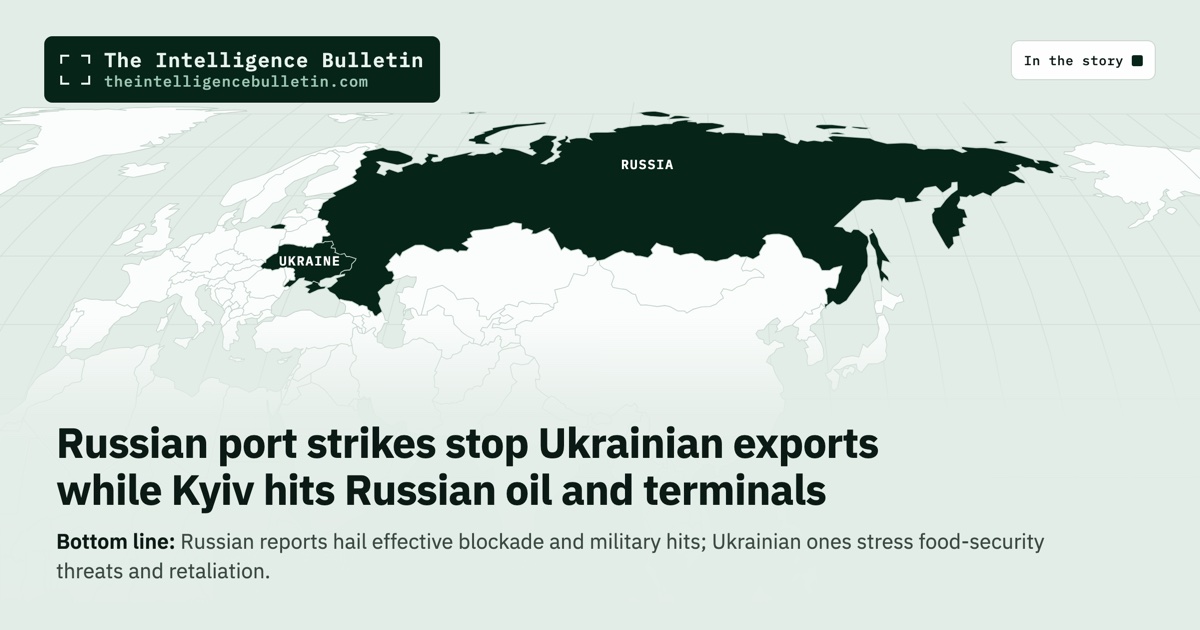
Russian port strikes stop Ukrainian exports while Kyiv hits Russian oil and terminals

Map of the countries in the story: Russian port strikes stop Ukrainian exports while Kyiv hits Russian oil and terminals
Russian forces struck ports in Odessa, Izmail and Mykolaiv overnight, destroying fuel storage and military infrastructure according to Moscow. Ukrainian officials reported shipping has stopped, with warnings of $2-3 billion monthly export losses. Ukraine struck a Russian export terminal in Rostov region and oil facilities farther inside Russia. Both sides reported civilian deaths from the exchanges.

One Story. Many Angles.

🇷🇺
Russia
Pravda.ru
Russian Strikes Hit Odessa, Izmail, and Mykolaiv Ports, Disrupt Shipping
Read →
🇺🇦
Ukraine
Kyiv Post
Ukraine, Poland Warn Russian Black Sea Attacks Threaten Food Security
Read →
🇷🇺
Russia
The Moscow Times
Russia and Ukraine Both Report Civilians Killed in Strikes
Read →
🇷🇺
Russia
Ura.ru
RUSSIAN
Russia blocked Ukrainian ports on the Black Sea: ships stopped entering Odessa, Chernomorsk and Yuzhny
“РФ заблокировала порты Украины на Черном море: суда перестали заходить в Одессу, Черноморск и Южный”
Read →
🇺🇦
Ukraine
Interfax-Ukraine
Zelenskyy: Ukraine strikes export terminal in Rostov region, oil facilities in Russia
Read →
In Brief

Russian reports hail effective blockade and military hits; Ukrainian ones stress food-security threats and retaliation.

Russian outlets present the port attacks as precise military successes that have effectively blockaded Ukrainian exports and degraded enemy logistics. Ukrainian coverage instead stresses the threat to global grain shipments and pairs the Russian strikes with Kyiv’s own long-range hits on Russian energy targets. An independent Russian source stands apart by cataloguing civilian deaths claimed on both sides without assigning blame. The pattern shows each side using the same events to underscore either operational dominance or economic and human costs, with shipping data and casualty figures serving as the shared factual core.

Perspective Analysis

Russian strikes on Ukrainian ports in Odessa, Izmail and Mykolaiv have halted commercial shipping there, while Ukrainian forces struck a Russian export terminal in the Rostov region and oil facilities deeper inside Russia. The pattern in the reporting shows each side using these exchanges to claim military advantage or to warn of economic and human damage, with the shared facts of disrupted trade and reported civilian deaths serving as the baseline both draw from.

Russian accounts describe the port attacks as targeted operations that destroyed fuel storage used by Ukrainian forces, infrastructure for unloading military cargo, hangars holding equipment, facilities linked to uncrewed surface and underwater vessels, and a cargo ship actively unloading supplies. They note that earlier strikes on the port of Yuzhny had already damaged fuel facilities, and that the cumulative effect has led shipowners to stop calls at the affected ports, with no vessels entering on at least one recent day. Ukrainian agriculture officials confirmed the traffic halt as a decision by owners rather than government order, and estimated monthly export losses between two and three billion dollars. Russian military and legislative voices add that the reductions in Ukrainian supply routes will limit armed forces capabilities over time.

Ukrainian reporting pairs the same Russian strikes with Kyiv’s own long-range responses, including the Rostov export terminal hit roughly 250 kilometers from the front line and oil facilities struck 1,300 kilometers inside Russia. President Zelenskyy described these as execution of a plan to reduce Russia’s ability to finance the war, noting that responses bring the conflict back onto Russian territory. Ukrainian foreign ministry statements emphasize coordination with Poland on the threat to global food supplies from attacks on civilian vessels, citing 28 such vessels struck between mid-June and mid-July with 21 deaths, including a corn-carrying ship hit near Odessa that killed ten. They record Russia acknowledging the port strikes while claiming military targets, and link the incidents to calls for tighter European sanctions.

One independent Russian account records civilian deaths claimed by both sides without assigning primary blame. It details Russian ballistic missile and drone attacks that killed people in Kyiv apartment blocks, a supermarket in Chernihiv that struck a ten-year-old among the victims, and a glide bomb strike in Zaporizhzhia. On the other side, it reports four civilians killed by a Ukrainian drone in the occupied city of Horlivka. Both governments continue to state they do not target civilians, even as thousands have died since the full-scale invasion began in 2022.

The domestic Russian coverage adds that European sources have noted the effective closure of Ukrainian Black Sea ports, with foreign ships avoiding Odessa, Chornomorsk and Yuzhny, and that a major operator like Maersk has redirected vessels to Romanian ports. It records Ukrainian plans to seek an emergency United Nations Security Council meeting over the port infrastructure attacks and notes dozens of rockets and drones launched at the Odessa region in a single week. These details reinforce the claim that the strikes serve as direct retaliation and limit Ukrainian military mobility.

Across the accounts, the factual core remains consistent: overnight Russian strikes on specific ports and vessels, Ukrainian confirmation of halted shipping with quantified economic impact, Ukrainian counter-strikes on Russian energy and export sites, and civilian deaths reported on both sides of the line. Where the accounts diverge is in emphasis. One side presents the port operations as successful degradation of enemy logistics and supply lines. The other highlights threats to international grain trade and pairs them with its own ability to reach deep Russian targets. The casualty-focused report avoids either claim of dominance and instead lists verified deaths from each direction.

This split matters because the underlying events involve measurable effects on trade volumes and on the capacity of both sides to sustain operations. Shipping data from Ukrainian port authorities and statements from ministers show concrete reductions in vessel traffic. Economic loss estimates and strike locations provide verifiable points of reference. Civilian death reports from emergency services and local officials on each side supply another set of numbers that do not depend on one government’s interpretation. Readers can check the port traffic figures, the announced loss ranges, the distances of the Ukrainian strikes, and the named locations of civilian casualties against official records.

The interest each side holds in its preferred emphasis is straightforward. Russian statements tie the port strikes to reduced Ukrainian fighting capacity and justified retaliation. Ukrainian statements connect the same strikes to broader food security consequences and to the necessity of counter-pressure on Russian war financing. The casualty report, drawn from wire service material, supplies the cross-check that neither side’s operational claims erase the human cost on the ground.

What to Watch

Continued exchanges of this type are likely. Ukrainian officials have described the strikes on Russian facilities as part of an ongoing plan, and Russian military announcements have framed port targets as responsive to prior Ukrainian actions. With export revenues and energy infrastructure now directly involved on both sides, the economic pressure accumulates even as each round of strikes produces new claims of success or warnings of damage. The shared facts on halted shipping and reported deaths will continue to anchor what follows, regardless of which interpretation gains wider circulation.


Share this story

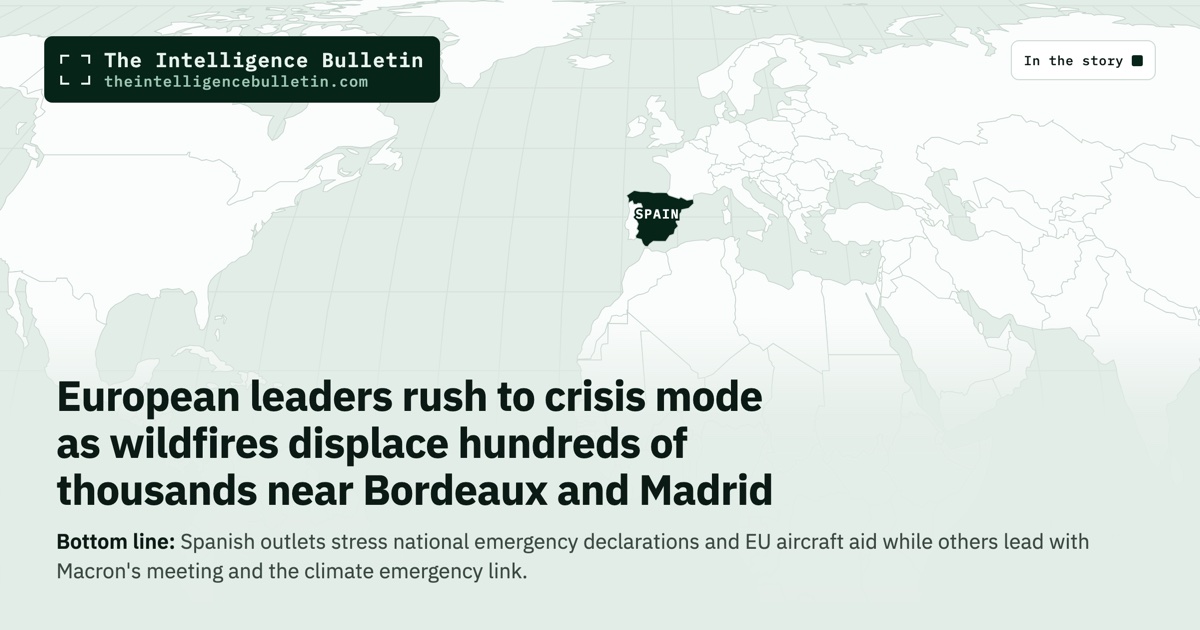
European leaders rush to crisis mode as wildfires displace hundreds of thousands near Bordeaux and Madrid

Map of the countries in the story: European leaders rush to crisis mode as wildfires displace hundreds of thousands near Bordeaux and Madrid
Massive wildfires burned out of control in southwestern France near Bordeaux and central Spain near Madrid in late July 2026, forcing over 300,000 people to evacuate. France held a crisis meeting under President Macron and sent masks to affected areas. Spain declared a national emergency and requested EU firefighting aircraft. Both leaders linked the blazes to the climate crisis amid forecasts of further heatwaves.

One Story. Many Angles.

🇬🇧
United Kingdom
The Guardian
Europe wildfires live: Macron to chair crisis meeting as France and Spain continue to battle major blazes
Read →
🇪🇸
Spain
The Local
As wildfires grip France and Spain, what are the health risks from smoke?
Read →
🇪🇸
Spain
Sur in English
Spain declares state of emergency as Europe sends firefighting aircraft to help tackle Madrid and Ávila wildfires
Read →
🇮🇪
Ireland
The Irish Times
Live updates: Macron calls crisis meeting as wildfires force 300,000 to flee in Spain and France
Read →
🇨🇳
China
South China Morning Post
Spain, France wildfires force tens of thousands to evacuate | South China Morning Post
Read →
In Brief

Spanish outlets stress national emergency declarations and EU aircraft aid while others lead with Macron’s meeting and the climate emergency link.

European coverage converges on the political urgency of the fires, with outlets across Britain, Ireland and Spain foregrounding leaders’ responses and the climate emergency. The Guardian and Irish Times open with Macron’s crisis meeting and quote Sánchez warning that the climate emergency kills, while noting record evacuations and the threat to Bordeaux. Spanish sources diverge sharply in emphasis: Sur in English highlights Spain’s rare national emergency declaration and incoming Greek Canadair aircraft to tackle Madrid blazes, and The Local drills into smoke’s health risks for vulnerable groups and firefighters. The South China Morning Post, standing outside the EU frame, sticks to ministerial evacuation totals and the mobilisation of French armed forces without climate commentary. This pattern shows that when fires threaten major cities and tourism hubs on the eve of peak season, even distant reporting registers the displacement scale, yet the domestic press quickly folds the disaster into national emergency protocols and EU solidarity mechanisms rather than dwelling on firefighting shortfalls.

Perspective Analysis

European leaders have treated the late July wildfires as a direct test of their ability to coordinate across borders under climate pressure, rather than as isolated firefighting failures. The reporting shows this pattern clearly. Outlets from Britain, Ireland and Spain all place senior political figures at the center of the story and connect the blazes to rising temperatures and inadequate preparation. An outside account from China records the same displacement numbers but skips the climate diagnosis entirely. That split matters because the fires have already forced more than 300,000 people from their homes and burned tens of thousands of hectares near two major cities on the eve of peak tourist season.

The fires began earlier in the week in southwestern France and central Spain. In France the main blaze in the Gironde department reached 42,000 hectares, an area four times the size of Paris, and advanced to within 15 kilometres of Bordeaux. French authorities described it as a self-sustaining fire generating its own winds. In Spain three separate fronts burned in the Madrid region and another in Ávila, with one blaze in Ávila reported as the largest in recent Spanish history at roughly 47,000 hectares. Evacuation totals reached 220,000 people in Gironde alone and more than 90,000 in the Madrid area, with additional shelter-in-place orders for tens of thousands more. One person died in eastern Spain. No deaths were recorded in France.

French President Emmanuel Macron chaired an emergency meeting on 27 July with Prime Minister Sébastien Lecornu and Interior Minister Laurent Nuñez. Spanish Prime Minister Pedro Sánchez visited fire-affected zones and stated that the full power of the state would support those impacted. Sánchez told a climate conference that the country was experiencing the most painful manifestation of a climate emergency that made wildfires more voracious and heatwaves more frequent. He warned that climate emergency kills and called for accelerated work on the energy transition. European Commission Vice-President Teresa Ribera, a former Spanish minister, told El País that Europe is not prepared for the consequences of climate change and needs a faster adaptation plan due by October.

British and Irish reporting foregrounded these leadership moves. The Guardian opened its live coverage with Macron’s meeting and included Sánchez’s climate emergency language alongside updates on the Bordeaux threat. The Irish Times led its updates with the same Macron meeting and the total displacement figure of 300,000, while noting a fourth heatwave forecast to begin the following week with temperatures possibly reaching 42 degrees Celsius in parts of France. Both outlets recorded the scale of evacuations and the risk to urban areas and tourism infrastructure without dwelling on operational shortcomings by fire services.

Spanish domestic coverage folded the same events into national emergency procedures. One report detailed Spain’s declaration of a national emergency, only the second time the country has used that measure, which allowed central government to take overall command. The same account noted that Spain activated the European Union Civil Protection Mechanism and received commitments for at least four fixed-wing firefighting aircraft from Greece. It described the deployment of military emergency units and the coordination challenges created by simultaneous blazes across Madrid, Ávila and Toledo provinces. This focus on state-level response and incoming foreign assistance appears consistently when the story is told from inside Spain.

One Spanish outlet took a narrower practical turn. It examined the composition of wildfire smoke, listing fine particles, carbon monoxide, volatile organic compounds and other pollutants that can travel long distances. It identified vulnerable groups including the elderly, infants, asthmatics and people with heart conditions, and reported that French authorities had dispatched 1.5 million FFP2 masks to the Gironde region. The account also covered risks to firefighters from repeated exposure during mop-up operations and long-term health effects estimated in the thousands of premature deaths annually in France alone. This material stands apart because it stays with immediate bodily consequences rather than political coordination.

The South China Morning Post account, published from outside Europe, recorded evacuation figures above 200,000, Spain’s national emergency declaration and the mobilisation of French armed forces. It described the Cap Ferret peninsula evacuation by boat in one area and noted dozens of firefighter injuries but offered no reference to climate change or EU adaptation plans. The piece stayed with ministerial statements on logistics and state resources.

The shared European emphasis on political meetings, emergency declarations and climate warnings reveals a consistent judgment that these fires are no longer exceptional events. Sánchez’s line that the climate emergency is now the rule rather than the exception appears in multiple accounts. Ribera’s warning that Europe must move faster on adaptation because it warms faster than other continents reinforces the same point. When fires threaten cities the size of Bordeaux and Madrid, the reporting treats the response as a test of whether existing EU mechanisms and national command structures can scale quickly enough before the next heatwave arrives.

The external account’s silence on climate does not contradict the facts on the ground; it simply records the human movement and state actions without assigning cause. That difference is useful because it shows what remains visible even when the climate frame is stripped away: the sheer volume of people displaced and the involvement of armed forces and foreign aircraft. European readers receive the additional layer that these numbers signal a systemic problem requiring policy acceleration.

What to Watch

What happens next depends on the forecast. Authorities in both countries warned of rising temperatures and continued wind that could complicate containment. France faces the possibility of another record summer burn area if the August peak month brings further heat. Spain has already activated its highest emergency level in multiple provinces. The EU adaptation plan scheduled for October will be judged against these events, and the speed with which Greek aircraft and other resources reached Spanish lines will serve as a concrete test of the Civil Protection Mechanism. Readers watching tourism bookings and agricultural losses in the affected regions will see whether the political coordination described in the coverage produces measurable results before the season ends.


Share this story