Four IDF Soldiers Wounded in Lebanon Clash as US Talks Drag On

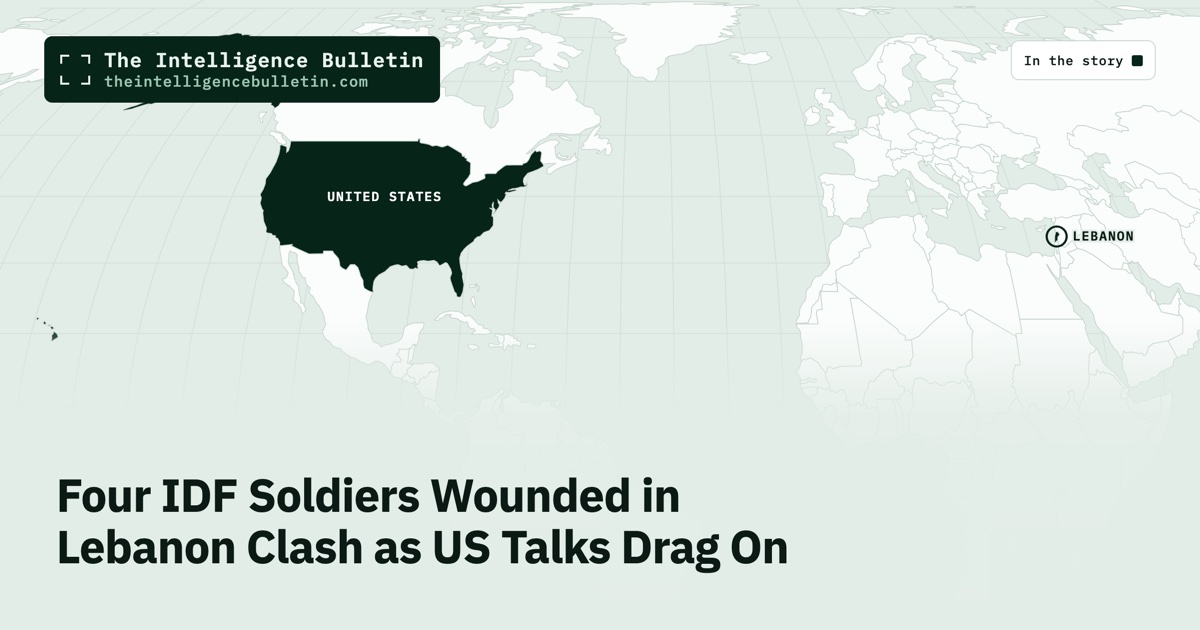
Map of the countries in the story: Four IDF Soldiers Wounded in Lebanon Clash as US Talks Drag On
Story gist: On June 26 2026, IDF troops operating near Beit Yahoun in southern Lebanon clashed with an armed group member who threw a grenade before being killed. Four IDF soldiers were wounded, one moderately. The incident occurred as US-mediated talks between Israel and Lebanon continued in Washington on phased Israeli withdrawals and Lebanese army deployment in cleared areas.

One Story. Many Angles.

šŸ‡®šŸ‡±
Israel
Ynet
Four IDF troops wounded in southern Lebanon clash
Read →
šŸ‡®šŸ‡±
Israel
The Jerusalem Post
Hezbollah claims ceasefire violation as Israel, Lebanon resume negotiations
Read →
šŸ‡ŗšŸ‡ø
United States
The Media Line
4 IDF Soldiers Wounded in Southern Lebanon as Israel-Lebanon Talks Continue
Read →

Perspective Analysis

The clash near Beit Yahoun on June 26, 2026, underscores how even a contained grenade attack by an armed group member against IDF troops now registers primarily as a data point in stalled US-mediated negotiations rather than a trigger for renewed escalation. All three outlets reporting on the incident aligned on the core sequence—an attacker approached soldiers of the 769th Brigade combat team, threw a grenade from inside a building, wounded two officers and two soldiers before being killed—while embedding the event in the third day of Washington talks over phased Israeli withdrawals and Lebanese army deployment in cleared zones. This convergence signals that the military details themselves carry little dispute, even as political framing diverges across Israeli and American coverage.

Ynet anchored its account squarely in operational realities from the IDF perspective. It reported that one officer sustained moderate wounds while the second officer and two soldiers received light injuries, with troops returning fire to eliminate the attacker. The 91st Division’s fire brigade followed with artillery and airstrikes on multiple Hezbollah targets in the area, corroborated by Lebanese media noting overnight strikes in Beit Yahoun near Bint Jbeil and additional hits Friday morning in Nabatieh al-Fawqa. The outlet placed the incident amid a broader week of IDF casualties inside Lebanon, including the death of Master Sgt. (res.) Basel Sweid in a separate accident, and highlighted the gradual erosion of Israeli freedom of action since the November 2024 ceasefire. Israeli officials, it noted, have signaled reluctance to fully vacate southern positions, with Defense Minister Israel Katz stating Israel will not leave and Prime Minister Benjamin Netanyahu referencing a potential buffer zone whose precise contours remain undefined.

The Jerusalem Post situated the same Beit Yahoun encounter within the diplomatic and political crosscurrents surrounding the fifth round of Israel-Lebanon talks in Washington. It emphasized Lebanese President Joseph Aoun’s insistence that his government would ā€œaccept nothing less than the end of the Israeli occupation in southern Lebanonā€ and his call for restoring full sovereignty. The outlet also recorded Hezbollah’s separate claims of ceasefire violations near Nabatiya, though those preceded the grenade incident, and noted Israeli Ambassador to the US Yechiel Leiter’s warning that the talks risked becoming a ā€œtrain wreckā€ if Hezbollah gained renewed space to operate. US Secretary of State Marco Rubio’s remarks on nearing understandings for pilot areas where Lebanese forces would assume control after Israeli withdrawals from cleared zones received mention as the backdrop against which the clash unfolded.

The Media Line, writing from a US vantage, explicitly linked the four wounded soldiers—one combat officer moderately hurt, another officer and two soldiers lightly injured—to the extension of negotiations into a fourth day without breakthrough. It detailed how US officials had hoped for agreement on ā€œpilot zonesā€ allowing Israeli forces to pull back from already-cleared locations while preserving the broader six-mile-deep buffer zone, with the Lebanese army stepping in to demonstrate its capacity to disarm Hezbollah elements. An Israeli embassy spokesperson confirmed the lack of agreement on partial withdrawal yet noted both sides’ willingness to reconvene, while Rubio described proximity to a ā€œcommitment of intent.ā€ The outlet also captured mutual frustration from Israeli and Lebanese sides over Washington’s decision to fold the Hezbollah file into the recent US-Iran memorandum of understanding rather than treating Lebanon as an isolated track.

Taken together, the reporting reveals a shared editorial choice to treat the Beit Yahoun incident as illustrative of the diplomatic process’s fragility rather than evidence of imminent collapse into open conflict. Israeli outlets supplied granular military and casualty context that American coverage largely omitted, while the US-focused piece supplied the clearest timeline tying the event to the talks’ third day and the specific mechanics of proposed pilot zones. None of the accounts portrayed the grenade attack as an orchestrated escalation by Hezbollah command, and all referenced ongoing US pressure as the factor most likely to produce incremental compromises despite the absence of a decisive outcome.

The Takeaway

What bears watching in the immediate term is whether Friday’s scheduled fourth day of talks produces even limited movement on the pilot-zone concept or whether the pattern of low-level incidents continues to test the parameters of the existing ceasefire without derailing the Washington channel. The positions staked out by Katz, Netanyahu, Aoun, and Rubio suggest that any agreement will hinge on verifiable Lebanese army performance in cleared areas and the precise boundaries of any retained Israeli security zone.
Oman-Iran Hormuz Working Group Emerges as US Rejects Tolls and Traffic Rebounds

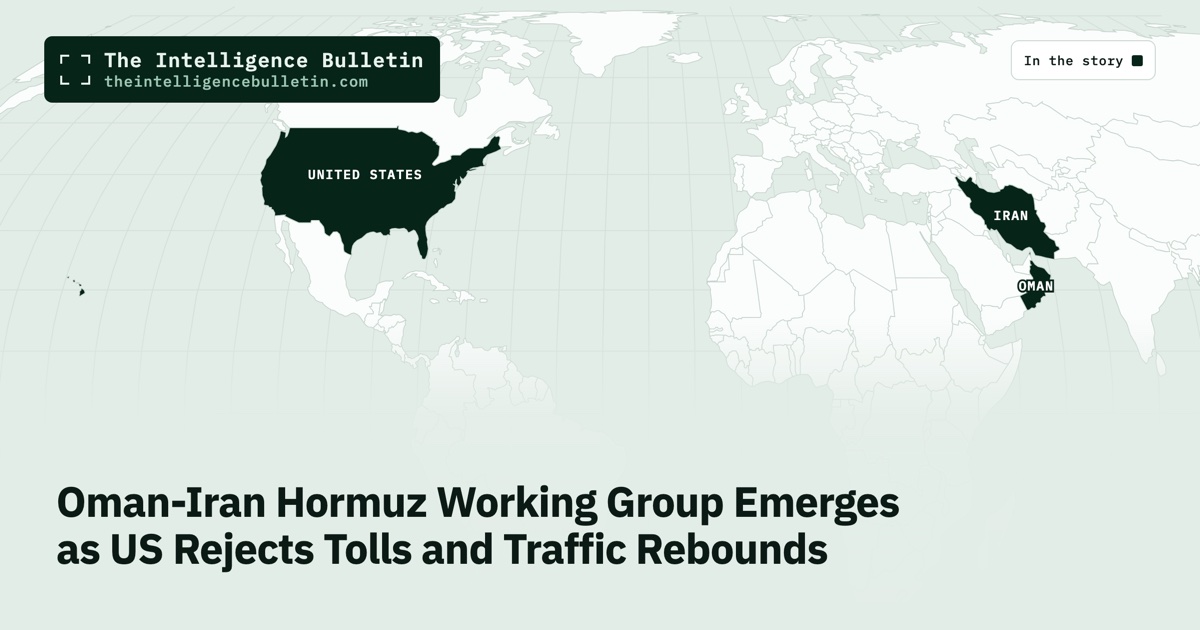
Map of the countries in the story: Oman-Iran Hormuz Working Group Emerges as US Rejects Tolls and Traffic Rebounds
Story gist: On June 25, 2026, Iranian and Omani foreign ministers discussed Strait of Hormuz navigation following a Muscat meeting and a US-Iran memorandum. They agreed to form a joint working group for future management, safe toll-free passage under international law, and temporary 60-day measures. Iran rejected tolls while traffic rose sharply after months of closure. Gulf states backed coordination; tensions with US over control persisted.

One Story. Many Angles.

šŸ‡“šŸ‡²
Oman
Muscat Daily
Oman, Iran discuss cooperation on Strait of Hormuz navigation
Read →
šŸ‡¹šŸ‡·
Turkey
Daily Sabah
Iran, Oman to discuss Hormuz administration amid traffic uptick
Read →
šŸ‡ØšŸ‡³
China
China Daily
Shipping rules emerge as next flashpoint in US – Iran friction
Read →
šŸ‡«šŸ‡·
France
Euronews
Hormuz confusion deepens as Iran and US clash over who controls it
Read →
šŸ‡¬šŸ‡§
United Kingdom
Middle East Monitor
Oman, Iran form joint working group on future management of Strait of Hormuz
Read →

Perspective Analysis

The formation of an Oman-Iran joint working group on Strait of Hormuz navigation marks a notable step toward localized management of one of the world’s most vital energy chokepoints, even as Washington and Tehran continue to spar over questions of authority and fees.

This development follows the June 14 Islamabad Memorandum of Understanding between the United States and Iran, which included a clause committing Tehran to 60 days of toll-free safe passage for commercial vessels once obstacles are cleared. The telephone call between Iranian Foreign Minister Abbas Araghchi and his Omani counterpart Badr Albusaidi on June 25 built directly on earlier talks in Muscat, producing agreement to establish the working group aimed at future administration, services, and costs in line with international law.

Oman’s position as a neutral facilitator has proven central. The sultanate, sharing coastline with Iran along the strait, has consistently framed its role around supporting safe navigation without imposing transit fees, a stance reinforced in Albusaidi’s remarks at a Gulf Cooperation Council meeting in Bahrain. Iranian state media highlighted the bilateral coordination and the welcome extended to the Muscat consultations, underscoring Tehran’s preference for dealing directly with littoral states rather than external powers.

Daily Sabah captured the operational rebound underway. Vessel traffic through the strait rose sharply after months of disruption that began with Iran’s March 1 closure in response to prior U.S.-Israeli actions. Analytics from Kpler recorded at least 70 crossings on one recent Wednesday—the highest daily total since the shutdown—with 56 commodity vessels, including oil and gas tankers, among them. Dry-bulk traffic reached 2025 levels on the same day according to AXSMarine. Officials noted the increase remains roughly half peacetime norms, with many ships using varied routes and lingering confusion over corridors. Some of the estimated 11,000 seafarers stranded in the Gulf have begun exiting under a U.N.-led evacuation plan that started the previous week.

China Daily placed the same events squarely within the broader U.S.-Iran strategic contest. It reported U.S. Secretary of State Marco Rubio’s firm rejection of any tolls on the international waterway during his Gulf visit, echoing President Donald Trump’s statement that no fees, insurance costs, or other charges were being sought or received by Iran. The outlet also noted the U.S. Senate’s 50-48 approval of a war-powers resolution intended to limit military action against Iran, describing it as a symbolic but telling check on executive moves. In this framing, the Oman-Iran working group appears as one arena where sovereignty assertions by the coastal states intersect with Washington’s insistence on unrestricted freedom of navigation.

Euronews emphasized the resulting confusion over control. Reports highlighted Iran’s warning that vessels crossing without authorization would be dealt with, alongside U.S. and Gulf state positions rejecting any attempt to assert unilateral authority or impose fees. The coverage underscored how disagreement between Washington and Tehran over the strait’s governance continues to generate uncertainty for shipping despite the de-escalation steps.

Middle East Monitor provided the most detailed account of the formal mechanism. It quoted the Omani foreign ministry statement on the establishment of the joint working group between the two foreign ministries, tasked with reaching agreement on navigation management, associated services, and costs according to international standards. The report tied this directly to clause 5 of the Islamabad MOU, which calls for Iran-Oman dialogue on administration in coordination with other Gulf states. It also noted the 60-day commitment to safe, toll-free passage and Iran’s pledge to conduct mine-clearing within 30 days where needed. Emphasis was placed on language affirming the coastal states’ sovereignty and sovereign rights over their territorial waters.

Across these accounts, a shared factual core emerges: Oman and Iran are advancing bilateral coordination on temporary and longer-term measures following U.S.-Iran de-escalation, with traffic already recovering and no tolls in the immediate picture. Regional outlets such as Muscat Daily and Middle East Monitor treat the strait primarily as a manageable local issue requiring littoral-state leadership. Others, including China Daily and Euronews, portray it as the latest theater of great-power friction, where U.S. rejection of Iranian or joint control claims keeps tensions alive.

Gulf states have voiced support for the coordination while stressing adherence to the U.N. Convention on the Law of the Sea. European minesweepers are en route to assist clearance, and shipping companies report gradual normalization. Yet selective permitting on northern routes and the use of multiple exit paths signal that full restoration of pre-March patterns remains incomplete.

The Takeaway

Looking ahead, the joint working group’s first outputs on services and costs will reveal whether the coastal states can translate the 60-day window into durable arrangements. Technical talks between the U.S. and Iran are expected to resume around June 29 or July 1, potentially addressing enforcement questions. Observers will watch whether traffic volumes sustain their recent gains and whether any new incidents, such as the reported damage to a cargo ship by an unknown projectile, complicate the fragile reopening. The interplay between Oman’s mediating role and Washington’s red lines on control will determine whether the strait stabilizes as a routine commercial artery or remains a flashpoint.


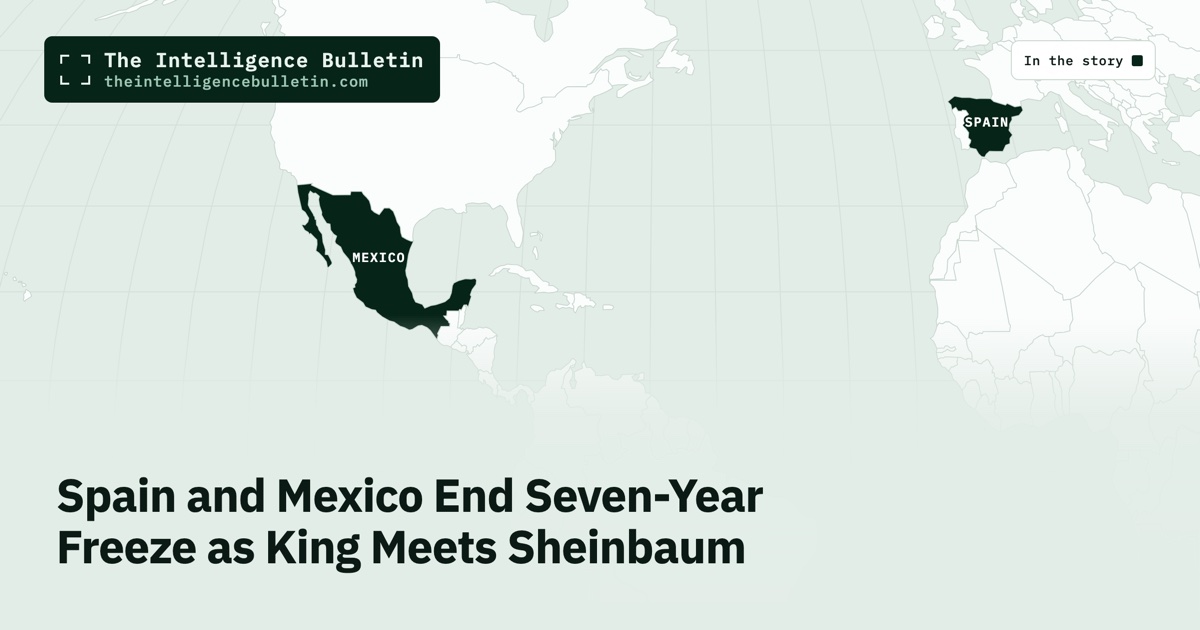
Spain and Mexico End Seven-Year Freeze as King Meets Sheinbaum

Map of the countries in the story: Spain and Mexico End Seven-Year Freeze as King Meets Sheinbaum
Story gist: On June 25, 2026, Spain’s King Felipe VI met Mexico’s President Claudia Sheinbaum at Palacio Nacional in Mexico City. The encounter marked the first such bilateral meeting in seven years and was presented as the formal step to end diplomatic tensions that began in 2019 under former president AndrĆ©s Manuel López Obrador. Both sides described the visit as the start of renewed cooperation, with the king also attending a World Cup match in Guadalajara. Economic and cultural links had remained steady despite the political freeze.

One Story. Many Angles.

šŸ‡ŖšŸ‡ø
Spain
ABC
SPANISH
Felipe VI returns to Mexico and ends the controversy initiated by López Obrador
“Felipe VI returns to Mexico ending the polemic started by Lopez Obrador”
Read →
šŸ‡ŖšŸ‡ø
Spain
El PaĆ­s
Sheinbaum puts her own stamp on Mexico diplomatic peace with Spain
Read →
šŸ‡²šŸ‡½
Mexico
Plano Informativo
SPANISH
Sheinbaum receives King Felipe VI in Mexico to seal the normalization of the relationship
“Sheinbaum receives King Felipe VI in Mexico to seal normalization of relations”
Read →
šŸ‡²šŸ‡½
Mexico
Periódico Correo
SPANISH
Sheinbaum and Felipe VI meet in Mexico and put an end to seven years of diplomatic tension
“Sheinbaum and Felipe VI meet in Mexico and end seven years of diplomatic tension”
Read →
šŸ‡²šŸ‡½
Mexico
La Jornada de Oriente
SPANISH
Claudia Sheinbaum receives the King Felipe VI of Spain at Palacio Nacional
“Claudia Sheinbaum receives King Felipe VI of Spain at Palacio Nacional”
Read →

Perspective Analysis

The meeting between King Felipe VI and President Claudia Sheinbaum at Mexico City’s Palacio Nacional on June 25, 2026, delivered more than protocol. It closed a discrete chapter of bilateral friction while exposing how each country’s media reframes the same handshake to suit domestic narratives of restoration, agency, or routine diplomacy.

The dispute began in 2019 when former president AndrĆ©s Manuel López Obrador sent a letter to the Spanish Crown demanding an apology for abuses committed during the Conquest. Spain declined, and high-level political contact froze for seven years even as trade, investment, and cultural exchanges continued uninterrupted. Sheinbaum inherited the standoff but signaled early willingness to reopen channels through modest cultural initiatives and invitations. The June encounter, timed around the king’s attendance at the Spain-Uruguay World Cup match in Guadalajara, marked the first formal bilateral summit since the rupture.

Spanish coverage from ABC presented the visit as the monarch’s personal return that definitively ends the polemic launched by López Obrador. The paper emphasized the reappearance of the Spanish flag at the National Palace and the symbolic weight of Felipe VI crossing the threshold after years of exclusion. Its reporting framed the moment as royal diplomacy restored, underscoring how the king’s presence itself constituted closure rather than any new substantive agreement.[[1]](https://www.abc.es/espana/casa-real/felipe-vuelve-mexico-terminada-polemica-iniciada-lopez-20260626023933-nt.html)

El PaĆ­s English edition took a different tack, spotlighting Sheinbaum’s deliberate imprint on the reconciliation. The outlet detailed her early gestures—contacts for an Indigenous art exhibition and a measured response to the king’s March acknowledgment of colonial ā€œabusesā€ā€”and situated the thaw within a broader strategic recalibration. With U.S. pressure mounting under Donald Trump on trade, migration, and security, Sheinbaum has sought European counterweights. The piece noted her presence at a progressive summit in Barcelona and upcoming Madrid gatherings as evidence of an emerging Ibero-American alignment among left-leaning governments facing rightward electoral shifts elsewhere in the region.[[2]](https://english.elpais.com/international/2026-06-25/sheinbaum-puts-her-own-stamp-on-mexicos-diplomatic-peace-with-spain.html)

Mexican national and regional outlets converged on official protocol and forward momentum while varying in how explicitly they invoked the prior freeze. Plano Informativo relayed the Foreign Ministry’s statement that Mexico and Spain were ā€œstrengthening their diplomatic ties for the benefit of the relationship and the well-being of their peoples,ā€ quoting SRE chief Roberto Velasco on the welcome extended at the palace. The tone remained measured and institutional, treating the encounter as the sealing of a normalization process already underway rather than a dramatic rupture with the past.[[3]](https://planoinformativo.com/1153946/sheinbaum-recibe-al-rey-felipe-vi-en-mexico-para-sellar-la-normalizacion-de-la-relacion)

Periódico Correo sharpened the timeline, explicitly quantifying the standoff as seven years and presenting the handshake as the explicit end of diplomatic tension. Its account highlighted the exchange of national anthems, the official photograph before both flags, and the brevity of the meeting—consistent with Sheinbaum’s prior description—while noting that economic links had never been severed. The regional paper used the concrete chronology to underscore the political significance of restored dialogue without dwelling on historical grievances.[[4]](https://periodicocorreo.com.mx/nacional/2026/jun/25/sheinbaum-y-felipe-vi-se-reunen-en-mexico-y-ponen-fin-a-siete-anos-de-tension-diplomatica-160329.html)

La Jornada de Oriente stayed closest to ceremony and logistics. Its Puebla-framed dispatch described the king’s arrival at the airport, the welcome by Velasco, and the gathering at the Puerta de Honor, adding the Spanish foreign minister’s social-media remarks on shared commitments to democracy and multilateralism. The outlet supplied minimal additional context on the preceding conflict, focusing instead on the pageantry and the SRE’s emphasis on mutual benefit.[[5]](https://www.lajornadadeoriente.com.mx/puebla/recibe-claudia-sheinbaum-al-rey-felipe-vi-de-espana-en-palacio-nacional)

Across these accounts, the shared factual core—date, location, participants, and stated purpose of renewed cooperation—remains consistent. Divergence appears in emphasis: Spanish royal correspondents stress monarchical restoration, the English-language international press adds geopolitical layering around U.S. pressure and progressive alliances, and Mexican outlets align with government messaging on delivered normalization, with regional papers leaning more heavily on protocol. None contradict the event itself; each simply selects the lens that resonates with its audience.

Economic realities underpin the political optics. Spain remains Mexico’s second-largest trading partner in the European Union, with bilateral goods trade near $11.1 billion. Cultural and human ties, rooted in language, migration, and family networks, proved resilient throughout the freeze. The meeting therefore restores the political overlay that had been missing, opening space for potential cooperation on trade diversification, cultural programming, and coordinated positions within Ibero-American forums.

The Takeaway

What to watch next is whether the symbolic reset translates into concrete follow-through. Madrid is slated to host another progressive summit later this year, and both governments have referenced expanded cooperation on indigenous heritage exhibitions and multilateral issues. The durability of the thaw will also be tested by how each capital manages domestic constituencies still invested in historical memory or national sovereignty narratives. For now, the June 25 encounter has at least returned the relationship to a functional baseline from which further steps can be taken.


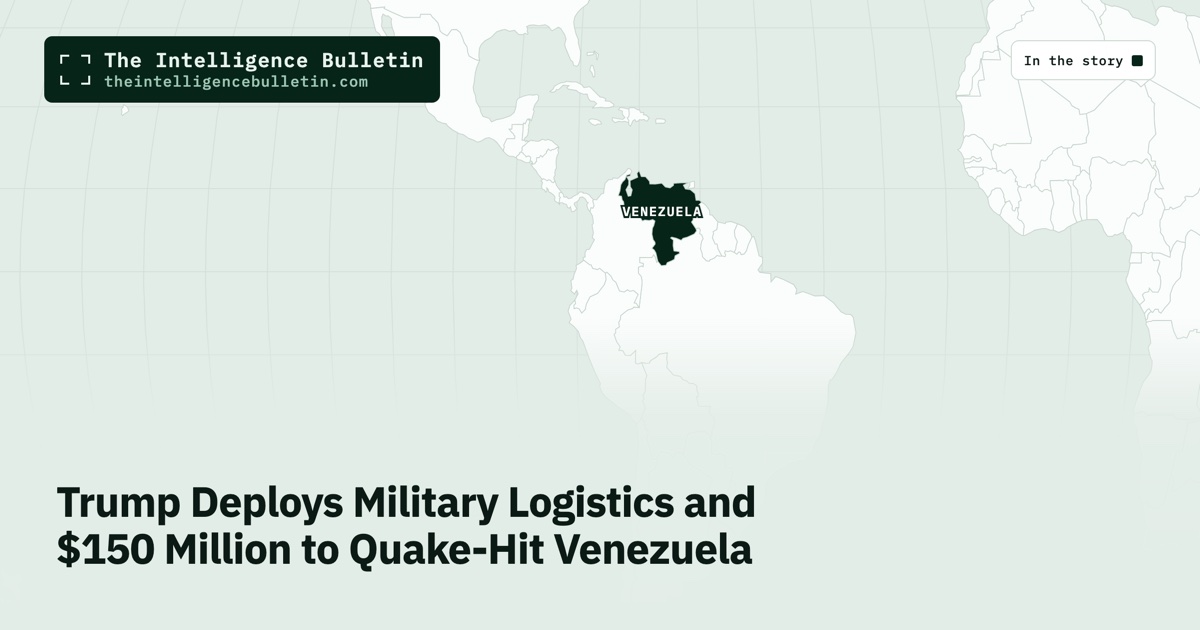
Trump Deploys Military Logistics and $150 Million to Quake-Hit Venezuela

Map of the countries in the story: Trump Deploys Military Logistics and $150 Million to Quake-Hit Venezuela
Story gist: On June 25, 2026, the Trump administration announced $150 million in humanitarian aid to Venezuela following two major earthquakes. The package includes funds routed through the UN and NGOs, plus deployment of US urban search-and-rescue brigades coordinated with the Pentagon and Southcom. Venezuelan authorities reported at least 188 deaths and over 1,500 injuries. Trump personally directed federal agencies to prepare rapid assistance and addressed the Venezuelan government directly.

One Story. Many Angles.

šŸ‡ŖšŸ‡ø
Spain
Canarias7
SPANISH
Trump activates the Army to prepare a major aid operation to Venezuela including 150 million
“Trump activa al EjĆ©rcito para preparar una gran operación de ayuda a Venezuela que incluye 150 millones”
Read →
šŸ‡²šŸ‡½
Mexico
Notisistema
SPANISH
United States allocates 150 million dollars in support to Venezuela
“Estados Unidos destina 150 millones de dólares en apoyo a Venezuela”
Read →
šŸ‡»šŸ‡Ŗ
Venezuela
La Patilla
SPANISH
US announced 150 million dollars in aid to address the emergency in Venezuela
“EEUU anunció ayuda por 150 millones de dólares para atender la emergencia en Venezuela”
Read →
šŸ‡»šŸ‡Ŗ
Venezuela
Meridiano
SPANISH
Donald Trump speaks out about the earthquakes in Venezuela and offers this to the Government
“Donald Trump se pronuncia por los terremotos en Venezuela y ofrece esto al Gobierno”
Read →
šŸ‡¦šŸ‡·
Argentina
Contexto TucumƔn
SPANISH
US announces US$150 million aid to Venezuela and the urgent deployment of rescue brigades
“EEUU anuncia ayuda de US$ 150 millones para Venezuela y el despliegue urgente de brigadas de rescate”
Read →

Perspective Analysis

The United States response to Venezuela’s twin earthquakes has placed military logistics and rapid force projection at the center of humanitarian relief, revealing how Washington can convert regional military infrastructure into immediate disaster support without requiring prior diplomatic breakthroughs.

On June 25, 2026, the Trump administration announced a $150 million humanitarian package alongside the deployment of specialized urban search-and-rescue teams and Pentagon-backed logistics after two powerful quakes struck Venezuela’s northern coast. Venezuelan authorities reported at least 188 deaths and more than 1,500 injuries, with the international airport at MaiquetĆ­a closed due to structural damage. The announcement came one day after the initial tremors, which measured 7.2 and 7.5 and generated more than twenty aftershocks.

Spanish and Latin American coverage converged on the operational mechanics of the U.S. effort rather than any shift in bilateral relations. Outlets described the activation of U.S. Southern Command assets, the involvement of the Defense Department for air and helicopter transport, and the explicit coordination channel opened with Venezuelan interim authorities. No major report questioned the sincerity of the aid or revisited historical frictions; instead, the military component was presented as standard disaster-response procedure scaled to the Caribbean theater.

Canarias7, reporting from its Washington correspondent, framed the story around President Trump’s direct order to activate Southcom for a joint military-humanitarian mission that explicitly included the $150 million commitment. The Spanish daily highlighted coordination with Delcy RodrĆ­guez and noted the recent operational experience of U.S. Marines in the Caribbean as enabling factors for speed. This angle underscored U.S. force-projection capabilities in the region more than any other outlet, treating the response as evidence of Washington’s ability to surge assets rapidly when directed from the top.

Notisistema, a Mexican outlet, delivered a concise, mechanics-focused account that listed the financial split—$100 million routed through the United Nations Office for the Coordination of Humanitarian Affairs and $50 million to implementing partners—alongside the deployment of two rescue brigades coordinated with the Pentagon because of the closed airport. The report avoided personal emphasis on Trump and stayed close to the aid architecture and casualty figures supplied by Venezuelan authorities.

La Patilla, a Venezuelan opposition-aligned site, reproduced the full State Department communiquĆ© and stressed the comprehensive package: Disaster Assistance Response Team specialists, two urban search-and-rescue units drawn from Fairfax County, Virginia, and Los Angeles County, California, plus the creation of a dedicated coordination cell inside the State Department. It also detailed the $150 million breakdown across specific NGOs—World Vision, Samaritan’s Purse, Catholic Relief Services, International Medical Corps, the International Organization for Migration, and the World Food Programme—while noting that military logistics would rely on fixed-wing aircraft and helicopters under Southcom oversight. The emphasis fell on direct U.S. engagement with Venezuelan authorities and the breadth of the operational structure.

Meridiano, another Venezuelan outlet, centered its coverage on President Trump’s personal Truth Social statement, quoting his message that placed all U.S. agencies on standby and addressed Venezuela as ā€œnew and great friends.ā€ The report foregrounded the president’s direct outreach to the government of Delcy RodrĆ­guez and the scale of the disaster described in his post, rather than the detailed logistics or funding channels carried by other sources.

Contexto TucumĆ”n, an Argentine regional daily, added granular deployment details absent from purely financial accounts: the specific origins of the Fairfax and Los Angeles brigades, their composition of firefighters, physicians, structural engineers, and canine units, and the Pentagon’s role necessitated by the MaiquetĆ­a airport closure. It also referenced the brigades’ recent regional experience, including work in Jamaica after Hurricane Melissa, and reiterated the $150 million allocation split between OCHA and the listed NGOs.

Across these accounts, the shared decision to treat military logistics as routine disaster support rather than a political signal stands out. The coverage records the announcement of coordination with Venezuelan authorities but contains no immediate reaction from Caracas beyond the initial contact noted by Washington. This silence leaves the dominant frame as one of demonstrated U.S. capability—rapid activation of Southcom, interagency cells, and specialized teams—rather than any negotiation over access or conditions.

The Takeaway

What to watch next is the actual movement of personnel and supplies once air corridors are established. The closed Maiquetía airport and the need for military airlift suggest that the first visible test will be whether the promised brigades reach affected zones in La Guaira, Aragua, Carabobo, and Falcón within the coming days, and whether the UN and NGO channels can begin disbursing the earmarked funds before aftershock risks subside.


Bangladesh turns to China for Teesta help while India watches

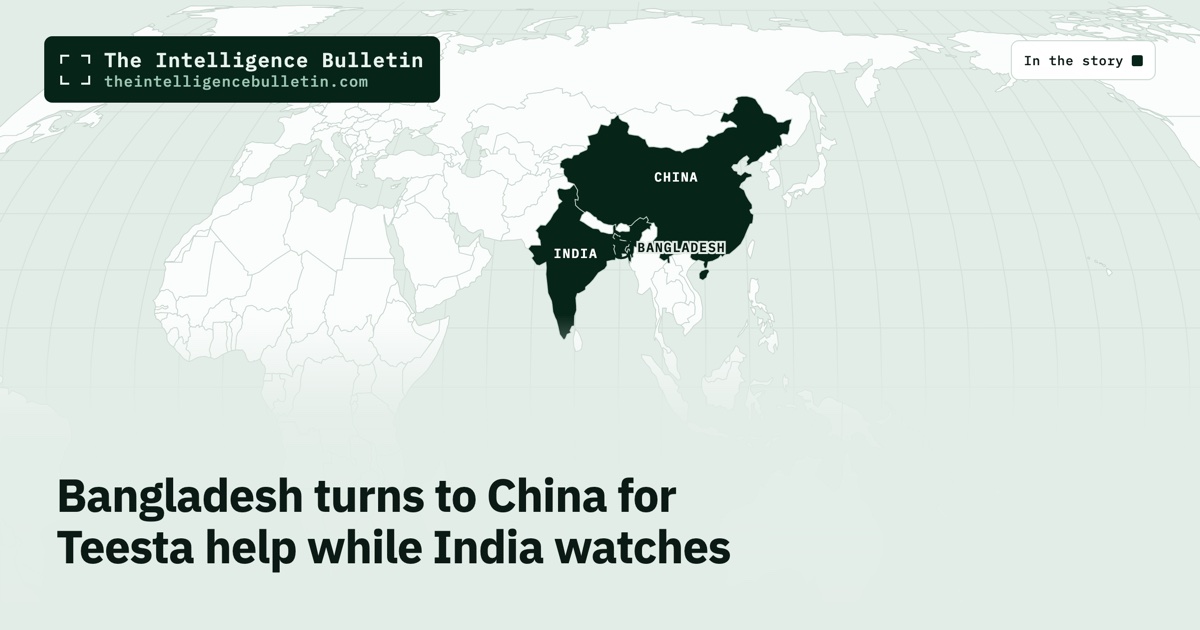
Map of the countries in the story: Bangladesh turns to China for Teesta help while India watches
Story gist: On June 25 2026 in Beijing, Chinese water resources minister Li Guoying met Bangladesh prime minister Tarique Rahman at the Diaoyutai state guest house. Bangladesh sought technical assistance for Teesta river management, flood control, erosion prevention and irrigation. China pledged full support and offered training, referencing a 2005 MoU.

One Story. Many Angles.

šŸ‡§šŸ‡©
Bangladesh
Bangladesh Sangbad Sangstha
Dhaka, Beijing agree to boost cooperation in Teesta, other river management
Read →
šŸ‡®šŸ‡³
India
The Economic Times
Bangladesh, China agree to strengthen cooperation on Teesta river management: report
Read →

Perspective Analysis

Bangladesh’s decision to seek Chinese technical help for managing the Teesta River marks a clear step toward diversifying its water-resource partnerships at a moment when India remains closely attentive to any external involvement in the shared basin. The move, announced on June 25, 2026, during Prime Minister Tarique Rahman’s visit to Beijing, underscores how transboundary river issues continue to intersect with broader geopolitical calculations in South Asia.

The Teesta originates in the eastern Himalayas, flows through India’s Sikkim and West Bengal states, and enters Bangladesh, where it supports irrigation and livelihoods for millions. Bangladesh has long faced challenges of flooding, riverbank erosion, and inadequate dry-season water availability. Its government has pursued an ongoing river-excavation program aimed at flood-risk reduction, environmental protection, and better water-resource oversight. Against this backdrop, the latest agreement with China builds on an existing Memorandum of Understanding signed in 2005 and a visit by Chinese water experts to Bangladesh the previous year.

Chinese Water Resources Minister Li Guoying met Prime Minister Tarique Rahman at the Diaoyutai state guest house in Beijing on June 25. During the discussion, Rahman directly requested Chinese technical assistance for the Teesta management project as well as support for preventing riverbank erosion, improving irrigation systems, and enhancing inland water navigation. He also highlighted the national river-excavation program and sought broader Chinese help in strengthening overall water-resource management. Li responded by pledging full cooperation, noting that bilateral efforts in the sector are practical and research-based. He invited Bangladeshi water experts and officials to receive training in China and emphasized that Bangladesh could draw on Chinese experience in the field.

The meeting occurred on the margins of Rahman’s wider China visit. He had arrived in Beijing the previous day by high-speed train from Dalian, where he had attended the World Economic Forum’s Summer Davos forum after an earlier stop in Malaysia. The Teesta discussions formed part of a larger schedule that included expected talks with President Xi Jinping and Premier Li Qiang. Bangladesh’s state news agency presented the exchange as a straightforward diplomatic achievement, focusing on the requests made and the pledges received without additional regional commentary.

Indian reporting carried the same core sequence of events but situated them within the context of India-Bangladesh water relations and China’s longstanding interest in the Teesta basin. The river’s upper reaches lie near India’s sensitive Siliguri Corridor, which connects the Indian mainland to its northeastern states. Indian coverage noted that the Rahman government had already sought Chinese involvement in the Teesta River restoration project during Foreign Minister Khalilur Rahman’s visit to Beijing the previous month. It also recalled India’s own 2024 offer of technical and conservation assistance for the Teesta basin and pointed out that the 1996 Ganges Water Treaty, governing dry-season sharing between the two countries, is due to expire in 2026 unless renewed.

Both accounts confirm an identical factual record: the June 25 meeting, the specific requests for Teesta assistance and related water projects, the reference to the 2005 MoU, the training invitation, and the presence of Bangladeshi ministers and advisers including Water Resources Minister Md Shahiduddin Chowdhury Anee. No contradictions appear between the reports. The difference lies in framing. The Bangladeshi state agency emphasizes bilateral progress and the practical benefits sought by Dhaka. The Indian outlet layers on the river’s path through Indian territory, past sensitivities around the Siliguri Corridor, and New Delhi’s parallel offer of help, thereby highlighting potential implications for regional water-sharing dynamics.

The development arrives after political transitions in Bangladesh. Tarique Rahman’s government assumed office in February 2026, succeeding an interim administration led by Muhammad Yunus that followed the ouster of former Prime Minister Sheikh Hasina. Water sharing has remained a persistent item on the India-Bangladesh agenda, and the new outreach to China adds another dimension to ongoing efforts to address flood control, erosion, and irrigation needs.

The Takeaway

Observers will watch several developments in the coming months. Rahman’s scheduled meetings with Xi Jinping and Li Qiang could produce further agreements or clarify the scope of Chinese involvement. Any follow-up actions on the 2005 MoU or the training offers will indicate how quickly the pledges translate into concrete projects. India’s response, particularly regarding its own technical assistance proposal and the approaching expiration of the Ganges treaty, will shape the wider diplomatic environment. Continued reporting on the Teesta project’s progress and any trilateral or multilateral water initiatives will reveal whether the Beijing agreement accelerates a shift in how the basin’s upper and lower riparian states coordinate their interests.


Italy and France Push Lebanon Coalition as UN Force Nears Exit

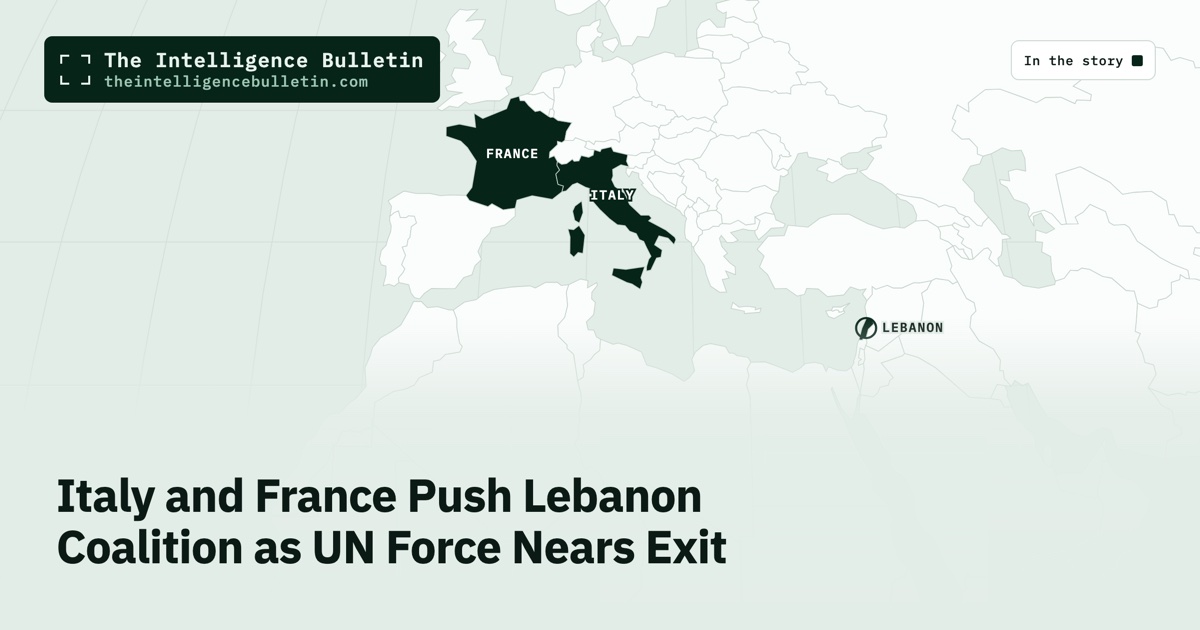
Map of the countries in the story: Italy and France Push Lebanon Coalition as UN Force Nears Exit
Story gist: On June 25, 2026, in Cap d’Antibes, France, Prime Minister Giorgia Meloni and President Emmanuel Macron agreed to launch a multinational coalition supporting Lebanon after UNIFIL’s mandate ends in December. They also plan an international conference to ensure security and sovereignty. The move addresses risks of a power vacuum amid regional tensions involving Hezbollah and Israel. Italy and France, both long involved in Lebanese stability, framed the initiative as coordinated with the EU and UN.

One Story. Many Angles.

šŸ‡®šŸ‡¹
Italy
ANSA
ITALIAN
Meloni: soon an international conference on post-UNIFIL Lebanon
“Meloni, presto conferenza internazionale sul Libano post Unifil”
Read →
šŸ‡µšŸ‡¹
Portugal
Executive Digest
PORTUGUESE
Middle East: France and Italy want to launch a multinational coalition for Lebanon
“MĆ©dio Oriente: FranƧa e ItĆ”lia querem lanƧar coligação multinacional para o LĆ­bano”
Read →
šŸ‡®šŸ‡¹
Italy
Valle d’Aosta GLocal
ITALIAN
Italy-France, Meloni: “Essential for a Europe capable of facing challenges”
“Italia-Francia, Meloni “Fondamentali per un’Europa capace di affrontare sfide””
Read →
šŸ‡®šŸ‡¹
Italy
Zazoom
ITALIAN
Meloni-Macron summit | agreement on post-UNIFIL Lebanon; premier slows NATO and clarifies on Iran
“Vertice Meloni-Macron | intesa sul Libano post-Unifil La premier frena la Nato e chiarisce sull’ Iran”
Read →

Perspective Analysis

On June 25, 2026, at Cap d’Antibes on the French Riviera, Italian Prime Minister Giorgia Meloni and French President Emmanuel Macron announced a bilateral initiative to assemble a multinational coalition that would sustain international support for Lebanon once the United Nations Interim Force in Lebanon (UNIFIL) mandate expires in December. The two leaders also signaled plans for a follow-on international conference, framing the effort as essential to preventing a dangerous security vacuum in a country already strained by the Israel-Hezbollah conflict and broader regional instability. Their joint declaration underscored long-standing Italian and French engagement in Lebanese stability while stressing coordination with both the European Union and the United Nations.

The move arrives at a moment when European capitals are confronting the limits of existing multilateral peacekeeping structures. UNIFIL, deployed since 1978 and significantly expanded after the 2006 Israel-Hezbollah war, has long served as a buffer along the Lebanon-Israel border. Its impending departure creates an opening that Rome and Paris, both major troop contributors to the mission over the years, now seek to fill through a more flexible, post-UNIFIL arrangement. The Antibes summit, held under the framework of the 2021 Quirinal Treaty that formalized enhanced Franco-Italian cooperation, provided the immediate diplomatic setting for the announcement.

Italian national coverage, led by the wire service ANSA, presented the outcome as a diplomatic success for Meloni. The agency led its dispatch with the prime minister’s pledge of an imminent international conference, quoting her directly: ā€œItaly and France can make the difference… we have decided to launch a coalition for the support of post-UNIFIL Lebanon, imagining soon an international conference.ā€ Macron’s remarks received comparatively little space, an editorial choice consistent with ANSA’s role as Italy’s primary news agency and its emphasis on elevating the Italian leader’s voice in bilateral diplomacy. The reporting positioned the initiative as evidence of Rome’s capacity to shape outcomes alongside Paris, without dwelling on the mechanics of the proposed coalition or its potential participants.

A Portuguese business outlet, Executive Digest, adopted a distinctly European and institutional lens. Its account opened with the coalition launch itself, quoting Macron at length on the need for a ā€œbroadest possibleā€ multinational effort ā€œin coordination with the European Union and the United Nationsā€ to ā€œreinforce the sovereignty of Lebanon and its armed forces and prevent its territory from becoming a point of support for regional escalation.ā€ Meloni’s intervention was reported secondarily, highlighting her insistence on ā€œa clear and structured mandateā€ to avoid ā€œan extremely dangerous security vacuum.ā€ The piece stressed the multinational and sovereignty-focused character of the proposal, reflecting a Portuguese perspective attuned to EU-level coordination rather than any single national leader’s profile.

Regional Italian coverage took a broader approach. The Valle d’Aosta GLocal outlet subordinated the Lebanon announcement to Meloni’s wider remarks on the indispensable partnership between Italy and France in building a Europe capable of meeting complex challenges. The Lebanon plan appeared only toward the end of a lengthy summary that also covered migration management, defense-industrial cooperation such as the Samp-T missile system, space economy ambitions, and EU budget negotiations. In this framing, the post-UNIFIL coalition served as one illustration among several of how the two nations could jointly address strategic priorities, rather than as the summit’s centerpiece. The outlet also carried Meloni’s clarification distancing Italy from any direct role in the Iran conflict, noting her insistence that Rome had limited itself to logistical and technical support consistent with parliamentary commitments.

One Italian aggregator, Zazoom, drew attention to the security-policy caveats that accompanied the Lebanon deal. Its report foregrounded Meloni’s explicit restraint on NATO involvement in the region and her reiteration that Italy had not participated in any kinetic operations related to Iran. While the outlet noted the core agreement on the post-UNIFIL coalition, it devoted notable space to these boundary-setting comments, presenting them as part of the premier’s effort to define the limits of Italian engagement amid ongoing regional tensions. This emphasis distinguished the coverage from other Italian sources and underscored domestic sensitivities around alliance commitments.

Across the four outlets, the shared factual core remains the bilateral decision to pursue a multinational coalition and an accompanying international conference aimed at preserving Lebanese sovereignty and territorial integrity after UNIFIL’s exit. Differences in emphasis track the outlets’ institutional and national contexts: the Italian national wire privileged Meloni’s leadership, the Portuguese business site highlighted EU-UN coordination, the regional Italian publication embedded the security initiative within a larger narrative of bilateral European influence, and the aggregator alone surfaced explicit limits on NATO and Iran-related roles. These variations illustrate how the same diplomatic event is refracted through domestic priorities without altering the underlying convergence between Rome and Paris.

The Takeaway

The Antibes declaration leaves several practical questions open. Macron acknowledged that naming specific participating countries would be premature, while both leaders stressed the importance of a clear mandate alongside Lebanese armed forces. Observers will therefore watch for concrete steps toward coalition formation, the timing and scope of the promised international conference, and any signals of wider European or international buy-in. Regional developments between Israel and Hezbollah, as well as Lebanon’s internal political dynamics, will also shape whether the proposed arrangement can take hold before the UNIFIL mandate concludes.