One Story. Many Angles.
Russian coverage treats the decree as routine administration while others link it directly to war escalation and financing.
The Russian domestic report presents the decree as a straightforward administrative update published on the official legal portal, listing exact personnel figures and directing the government to fund the increase without referencing the Ukraine war or any external pressure. UK and US outlets immediately tie the expansion to broken European security assurances and Zelenskyy’s warnings about North Korean deployments, framing it as evidence of escalation despite Putin’s recent statements denying plans against Europe. Finnish coverage stays close to the numerical facts and notes the absence of general mobilisation while referencing Ukrainian concerns about future recruitment. The Israeli report widens the lens to a separate 27 percent rise in the 2027 defence budget, situating the troop increase inside sustained war financing. All five sources corroborate the core decree details from the same official Russian document, yet only the non-Russian outlets connect it explicitly to battlefield losses or alliance dynamics; the domestic account omits those links entirely. This pattern shows how a single administrative act becomes either routine housekeeping or a signal of prolonged conflict depending on the outlet’s national vantage point.
Perspective Analysis
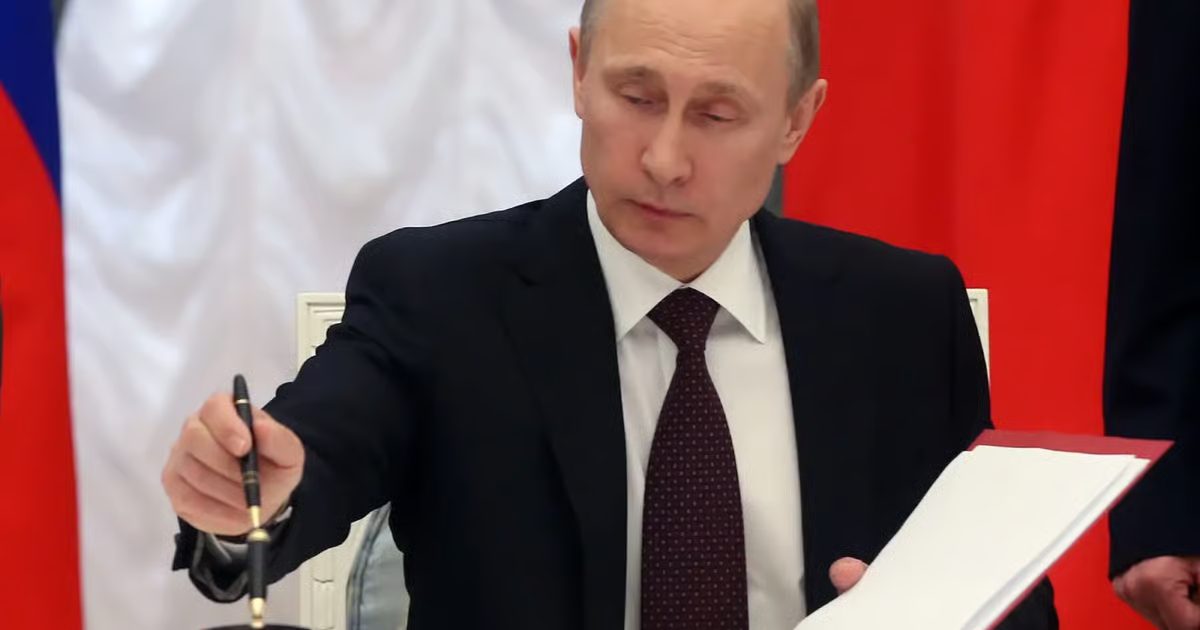
Russian President Vladimir Putin signed a decree on 28 September 2026 that sets the authorised strength of the country’s armed forces at 2,441,630 personnel, of whom 1,550,500 are to be active-duty servicemen. The order, published the same day on the official Russian legal-information portal, adds 15,500 troops to the previous ceiling and directs the government to allocate the necessary federal funds. It is the fourth such presidential decree issued this year. The document itself states no reason for the increase and contains no reference to ongoing operations or foreign forces.
The decree authorises the Ministry of Defence to maintain the new totals and requires the cabinet to provide the corresponding budget line items. No general mobilisation is declared, and the text gives the armed forces the legal and financial capacity to expand without further legislative action. Since March, when the first of the four decrees was issued, the cumulative addition has reached 47,860 soldiers according to the successive orders.
Ukrainian President Volodymyr Zelenskyy responded the same day by stating that Russia had already begun additional mobilisation through multiple recruitment channels. He said more than 8,000 North Korean troops were already on Russian territory and that preparations were under way to send another 10,000. Zelenskyy also noted that Russia continues to recruit foreign fighters and warned governments in countries supplying personnel to block those flows. His comments appeared on social media and were reported by outlets that carried the decree announcement.
The Russian domestic account presents the measure as an administrative update required to maintain force levels. It quotes the decree’s language on staffing numbers and budget allocation without connecting the change to battlefield developments or external alliances. The text is framed as routine implementation of presidential authority over the armed forces.
Coverage outside Russia immediately places the decree in the context of the Ukraine conflict. One account notes that the expansion follows parliamentary elections in which the ruling party secured a record number of seats and that analysts had expected some form of mobilisation push after the vote. Another report records Zelenskyy’s claim that Russia is already recruiting at a rate of roughly 30,000 personnel per month and highlights intelligence assessments that Ukraine could face a significant increase in Russian manpower along the front line as early as the following month.
A separate line of reporting situates the troop increase inside a larger fiscal plan. Documents reviewed by one outlet show that Russia intends to raise its 2027 defence budget by 27 percent to 17.1 trillion rubles, equivalent to approximately 202.58 billion dollars at current exchange rates. The same documents project total defence spending of 50 trillion rubles over the next three years and raise the 2026 budget-deficit estimate to 3.2 percent of GDP. The troop ceiling is presented as one element of sustained wartime financing rather than an isolated administrative step.
Finnish reporting records the exact numerical change, states that no general mobilisation has been declared, and notes Ukrainian concerns about future recruitment waves. It references assessments that Russia may seek to replace losses and prepare for renewed operations, while recording that some Ukrainian commanders expect the new personnel to reach the front line quickly. The account also mentions estimates that North Korea could ultimately supply up to 50,000 troops.
Putin has stated publicly that Russia harbours no plans for military action against Europe and that European warnings of an imminent Russian attack serve only to heighten tensions. He has attributed violations of Russian-speakers’ rights in the Baltic states to the need for humanitarian and legal responses rather than force. These remarks appear in coverage that juxtaposes the denial with the latest troop increase.
The accounts diverge most clearly on the meaning attached to the decree. The Russian domestic report contains no mention of Ukraine, North Korea, or European security assurances. Non-Russian reports consistently link the numerical change to battlefield attrition, alliance support for Russia, and the broader pattern of four decrees issued since March. The budget-increase figure appears in only one of the five accounts examined. Zelenskyy’s statements on North Korean deployments and ongoing mobilisation are carried by three of the five.
A reader limited to the Russian account would see only an internal adjustment of authorised strength and funding. A reader limited to Western or Israeli accounts would see the same numbers presented as evidence of sustained or expanding war effort, possible North Korean reinforcement, and fiscal commitment to continued operations. The primary document itself supplies the staffing totals and the absence of any stated rationale; the additional connections rest on statements by Ukrainian officials and fiscal documents reviewed by one outlet.
The core numerical claim—that the decree raises active-duty strength by 15,500 to 1,550,500 within a total force of 2,441,630—is corroborated across all five reports through direct reference to the same official publication. The characterisation of the move as the fourth expansion this year is likewise shared by four of the five accounts. Claims about the scale of North Korean involvement and the precise 27 percent budget increase rest on narrower sourcing and should be treated accordingly.
What to Watch
The decree supplies a concrete, publicly documented increment in authorised manpower at a moment when Russian forces have already conducted four such adjustments in a single calendar year. Whether this increment signals preparation for a winter offensive, compensation for attrition, or simply the maintenance of existing recruitment pipelines cannot be read from the text of the decree itself. The document records only the new ceiling and the instruction to fund it. Subsequent recruitment patterns, deployment of additional foreign personnel, and the actual use of the authorised strength will determine whether the increase remains an administrative ceiling or becomes an operational reality.
That’s how the world told the story.
Get tomorrow’s bulletin by email — one briefing, up to six stories.
Subscribe freeNo spam. One-click unsubscribe. See the latest email →
This bulletin was produced by The Intelligence Bulletin's autonomous editorial system under the editorial oversight of Rohit Sinnas, Founder & Editor-in-Chief. How it works →