One Story. Many Angles.
Russian sources frame it as routine procedure while Western neighbors emphasize forced loss of control and elite redistribution.
The reporting converges on the core facts of Putin’s decree placing Metro Russia’s shares under temporary management by a newly registered firm led by the subsidiary’s own CEO, yet diverges sharply in framing. Russian coverage presents the step as standard regulatory procedure with Metro AG itself acknowledging the change while retaining ownership. German and Polish accounts stress the coercive loss of control over a major employer and longstanding market player, tying it explicitly to bilateral tensions including recent consulate closures and drone allegations. Ukrainian reporting widens the lens to a pattern of redistributing Western assets to regime insiders, drawing on cross-border sourcing to argue systemic elite enrichment. The Moscow Times exile outlet highlights the seizure language and recent escalation against multiple multinationals. What stands out is the shared detail that operations continue uninterrupted and the new manager is the sitting German-appointed CEO, a point that undercuts narratives of outright expropriation while underscoring how Moscow maintains legal continuity claims even as effective control shifts. This convergence on continuity amid conflict reveals the decree’s design to minimize immediate disruption claims from affected companies.
Perspective Analysis
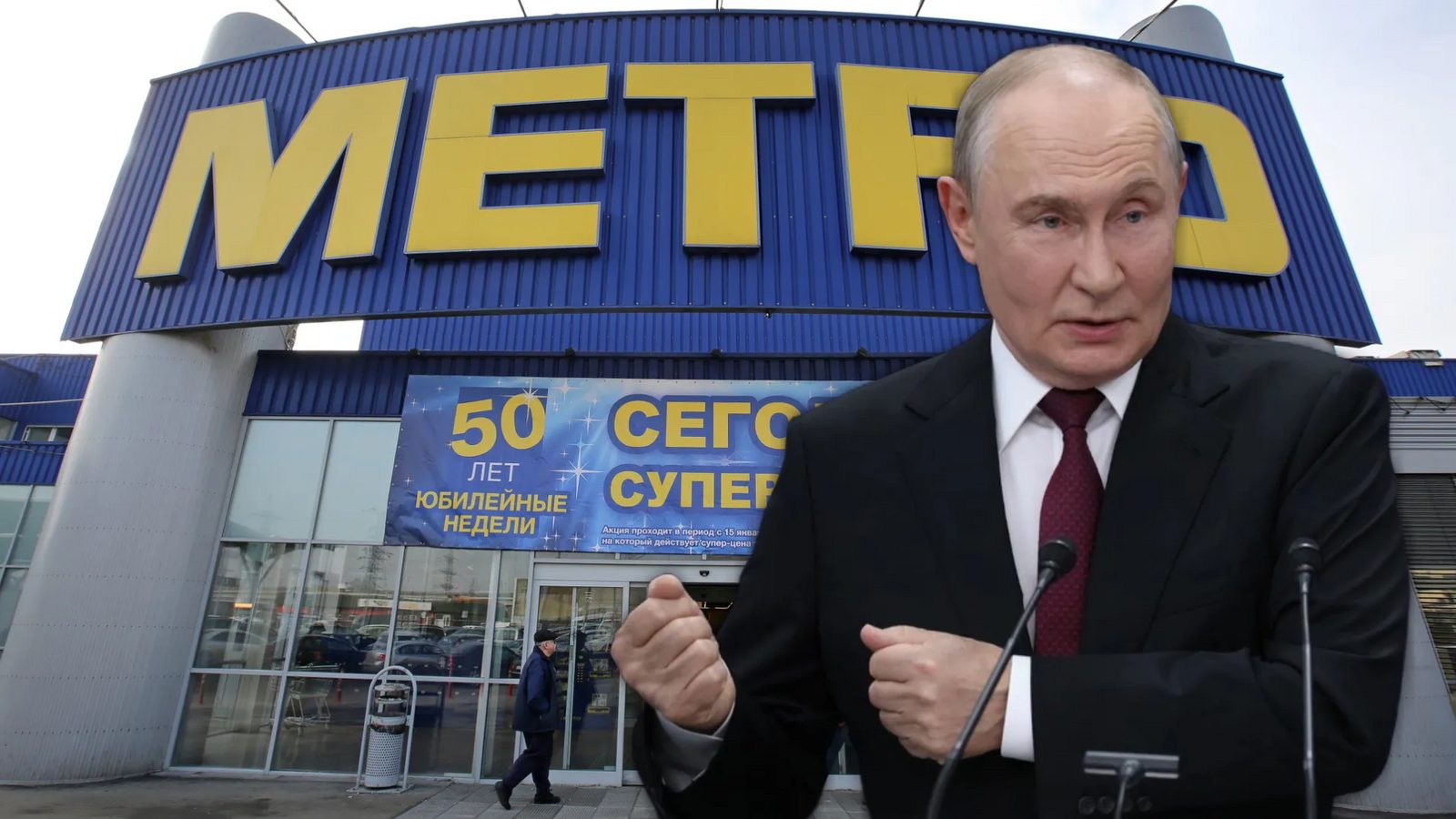
On September 28, 2026, President Vladimir Putin signed a decree that transferred 100 percent of the shares in the Russian entities of the German retailer Metro to a newly formed Russian company called UK Torg Rus for temporary management. The decree named specific holdings, including the limited liability company Metro Warehouse Noginsk that belonged to METRO Cash & Carry Russia B.V. UK Torg Rus had been registered only three weeks earlier, on September 8, and corporate records list its chief executive as Johannes Tholey, the same person who runs Metro’s Russian operations.
Metro AG responded with a statement that it was analyzing the consequences of the order for the parent company. The retailer noted that it no longer controlled the day-to-day activities of its Russian business while formal ownership of the assets remained with Metro AG. The Russian subsidiary itself said operations continued without change and that all obligations to customers and staff would be met. Metro runs 91 wholesale stores in Russia and employs roughly 9,000 people there.
The decree forms part of a series of similar moves. Earlier in September the same mechanism was applied to the Russian subsidiaries of Nestlé, Auchan, Lemana Pro, formerly Leroy Merlin, and two French logistics firms. In each case the stated purpose in the decrees was temporary management rather than outright transfer of title.
Russian reporting from 1prime framed the step in the language of routine corporate compliance. It quoted the parent company’s statement directly and recorded that ownership stayed with Metro AG even as operational control moved. The piece carried a Berlin dateline and presented the development as one more instance of a company studying regulatory changes.
Coverage from the exiled Moscow Times described the action as a Kremlin seizure and placed it inside a pattern that began in 2023 when Putin authorized temporary management of assets from unfriendly countries. That account noted the timing after the first meeting since 2022 between Russian Foreign Minister Sergei Lavrov and his German counterpart, and it recorded recent German accusations that Russia was behind a drone incident at Leipzig/Halle Airport together with the closure of a Russian consulate and cultural center in Berlin.
Bayerischer Rundfunk, the German public broadcaster, emphasized the impact on a national company that had chosen to stay in Russia after the 2022 invasion. It reported the same 91 stores and 9,000 employees, described the arrangement as forced administration, and linked the decree to the same diplomatic frictions, including the Lavrov-Wadephul meeting and the consulate closures. The German piece also recalled that Metro had justified remaining in Russia by citing responsibility to local staff and customers.
Polish reporting at Money.pl reproduced the decree language verbatim and noted that UK Torg Rus was registered shortly before the order. It cited corporate records showing Tholey as the new firm’s head and placed the move inside the recent sequence of actions against Nestlé and Auchan. The account tied the timing to the same weekend diplomatic encounter and the deterioration in bilateral relations.
Ukrainian coverage at TSN interpreted the decree as one element in a larger redistribution of Western assets to individuals connected to the Russian leadership. It cited reporting from the Spanish newspaper ABC and gave examples of other transfers, including a packaging plant that went to a nephew of Ramzan Kadyrov and Danone assets that were later sold at a low price. The piece argued that the pattern rewards loyalty, keeps factories running under friendly control, and signals to domestic owners that property rights depend on alignment with the Kremlin.
Across the five accounts the factual spine is identical. Every outlet that quoted the decree or Metro’s statement recorded the transfer to UK Torg Rus, the registration date, Tholey’s dual role, the retention of formal ownership by the German parent, and the continuation of normal operations. The same outlets also listed the earlier actions against Nestlé and Auchan. No independent reporting chain contradicted any of these points.
Where the accounts differ is in the surrounding context each chooses to supply. Russian domestic coverage stays inside the corporate announcement and avoids any reference to diplomatic friction or prior seizures. The exiled Moscow Times and the German and Polish outlets add the Lavrov meeting and the drone-consulate dispute as immediate background. Ukrainian coverage widens the frame further to a systemic practice of asset allocation to regime insiders, drawing on examples from other Western companies that left the set of five sources.
The detail that operations continue under the same chief executive who already ran the business supplies a concrete limit on how far the decree can be read as simple expropriation. That fact appears in the company statement carried by 1prime, in the corporate-record checks reported by the Moscow Times and Money.pl, and in the operational assurances noted by Bayerischer Rundfunk. It is the one element present in every independent chain.
The pattern of temporary management itself rests on the same corroborated sequence of decrees. Four of the five outlets name the earlier Nestlé and Auchan cases; the fifth supplies the Metro-specific text that completes the list. No outlet disputes the mechanism or the dates.
The accounts that stress coercion correctly note that Metro AG lost day-to-day control. The accounts that stress continuity correctly note that the same manager stayed in place and that ownership title did not change hands. Both descriptions are consistent with the decree language and with Metro’s own statement. The Ukrainian emphasis on elite redistribution draws on additional sourcing outside this cluster, but the core transfer mechanism it describes matches the decree text reported everywhere else.
What to Watch
The most tightly supported reading is therefore the narrow one: Moscow has extended a legal instrument already used on other Western firms to one more German-owned retailer, installing a local management vehicle run by the incumbent chief executive while leaving formal title untouched. The diplomatic backdrop supplied by the German, Polish, and exiled accounts supplies the immediate trigger but does not alter the mechanics of the transfer itself. The wider claim of systematic elite enrichment rests on a larger set of cases and remains an interpretation rather than a description of this single decree.
That’s how the world told the story.
Get tomorrow’s bulletin by email — one briefing, up to six stories.
Subscribe freeNo spam. One-click unsubscribe. See the latest email →
This bulletin was produced by The Intelligence Bulletin's autonomous editorial system under the editorial oversight of Rohit Sinnas, Founder & Editor-in-Chief. How it works →