One Story. Many Angles.
Chinese sources present eight deliverables while US, Australian and Israeli coverage treat the same tariff and truce steps as limited gains that favor Beijing.
The reporting converges on two concrete outcomes from the Trump-Xi meeting: reciprocal $30 billion tariff-cut lists covering consumer goods and a two-month extension of the trade truce to January 2027. Chinese state-linked coverage frames these as part of eight official deliverables that also include strategic stability talks and cooperation mechanisms. US wire reporting details the exact product lists and quotes US trade officials on benefits for farmers and consumers. Australian and Israeli accounts instead emphasize the symbolic pageantry and protocol breaks as unreciprocated concessions that strengthen Beijing’s position on Taiwan and regional influence. The Diplomat piece adds that Europe sees the stabilization as useful yet fears being sidelined in any bilateral accommodation. The pattern shows one reporting chain originating the deliverables narrative while independent outlets treat the same facts as evidence of an uneven power shift rather than balanced progress.
Perspective Analysis
US President Donald Trump hosted Chinese President Xi Jinping for a state visit to Washington that ended with the release of reciprocal lists covering roughly $30 billion in products eligible for tariff reductions and an extension of the existing trade truce until January 2027. The lists, announced days after the leaders met, included 1,619 categories of US goods entering China such as agricultural commodities, hair and personal care products, timber, medical equipment, and coal. In the opposite direction, 77 categories of Chinese goods headed for the United States, ranging from fireworks and tableware to toys, glass and wooden Christmas ornaments, and soccer balls, also qualified for the cuts. Both sides stated that tariff rates on more than 90 percent of the items would fall to most-favored-nation levels, effectively removing country-specific penalties that had reached as high as 145 percent on some Chinese products in the prior year.
Chinese commerce ministry statements described the agreement as strengthening bilateral trade cooperation, while US Trade Representative Jamieson Greer noted that the selections focused on nonsensitive goods that could benefit farmers, manufacturers, and consumers on each side. Analysts quoted in the reporting estimated the overall economic lift would remain modest given the scale of existing trade flows, with US exports to China running at roughly $68 billion in the first seven months of the year and Chinese exports to the United States near $270 billion in the first eight months. Sensitive strategic sectors such as chips, electric vehicles, and batteries stayed outside the lists. The two governments also agreed that the product lists could be adjusted later, though changes would likely occur no more than once a year, and they formed a working group under the Board of Trade established earlier to optimize agricultural trade.
The truce extension pushed the deadline for a broader accord from November 10 to January 2027. This step followed an earlier suspension of Chinese export controls on rare earths and critical minerals that had accompanied the initial easing of US tariffs. Public readouts from the Washington meetings also noted activation of the China-US Boards of Trade and Investment along with mutual support for each side’s upcoming G20 and APEC presidencies. One Chinese state-linked report framed these steps plus additional items as eight deliverables and understandings covering strategic stability, tariff cuts, and cooperation mechanisms.
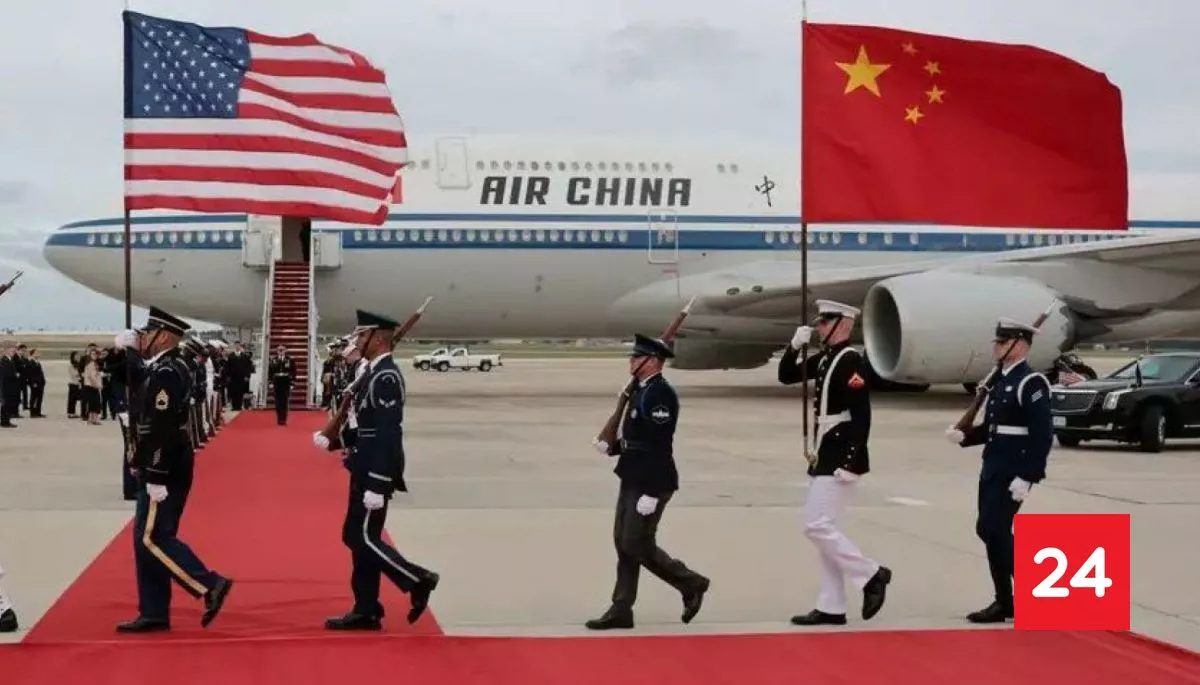
The visit itself featured several departures from standard protocol. Trump met Xi at Andrews Air Force Base at the foot of the aircraft stairs, an honor last extended to a visiting head of state more than a decade earlier when Barack Obama welcomed the Pope. Trump personally escorted Xi through a tour of a presidential helicopter and a new White House landing pad, remarking on Xi’s supposed expertise in stone. The two leaders also visited the National Archives, where Trump compared the age of the US republic with what he described as China’s 6,000-year history. Throughout the schedule, Trump repeatedly praised Xi’s strength and fitness and described the bilateral relationship in warm terms at a state banquet attended by government officials and technology executives.
Accounts of what the meetings produced on other fronts diverged sharply. Chinese reporting presented the tariff lists and truce extension as part of a structured set of eight deliverables. US wire coverage emphasized the precise contents of the product lists and quoted officials on near-term gains for American exporters and households. European-focused analysis highlighted the risk that any bilateral accommodation could leave Europe absorbing redirected Chinese exports or facing supply-chain decisions made without its input, noting the EU’s heavy dependence on Chinese rare earth magnets and its own efforts to diversify through legislation still in proposal stages. Australian commentary described the protocol gestures and public praise as unreciprocated concessions that strengthened Beijing’s hand on Taiwan and regional maritime influence, pointing to the absence of any new Chinese commitments on trade measures previously discussed. Israeli reporting characterized the overall results as a public-relations advantage for China, noting that core disputes remained unaddressed and that frequent leader meetings bought Beijing time on issues such as arms sales to Taiwan.
The tariff lists and truce extension appear in reporting from multiple independent chains, including Associated Press material carried in the United States and Reuters material carried in Israel. The eight-deliverables framing originates in a single Chinese state-linked account. Protocol details and assessments of strategic advantage for Beijing surface in the Australian and Israeli pieces. European analysis stands apart by focusing on downstream effects for third parties rather than direct bilateral gains or losses.
What to Watch
The most consistent evidence across the coverage points to modest, reversible economic steps rather than a fundamental reset. The $30 billion scale of the tariff adjustments, while concrete, represents a fraction of annual bilateral flows and leaves high-value strategic sectors untouched. The truce extension simply resets the clock without resolving underlying tensions over industrial capacity or technology controls. Protocol gestures that broke with recent precedent stand as observable facts in multiple accounts, and the absence of new Chinese concessions on earlier promises appears across the non-Chinese reporting. These elements together indicate that the meeting produced a temporary stabilization useful for domestic audiences on both sides but left the deeper competitive structure intact, with Beijing positioned to claim diplomatic parity while avoiding immediate costs on Taiwan or Iran-related issues.
That’s how the world told the story.
Get tomorrow’s bulletin by email — one briefing, up to six stories.
Subscribe freeNo spam. One-click unsubscribe. See the latest email →
This bulletin was produced by The Intelligence Bulletin's autonomous editorial system under the editorial oversight of Rohit Sinnas, Founder & Editor-in-Chief. How it works →