One Story. Many Angles.
Western EU outlets treat the protocol as an institutional fix; Baltic and Swiss pieces see it as insufficient without deeper union or proof of attribution.
The reporting converges on a single institutional step: EU defense ministers gathering Monday to examine von der Leyen’s Emergency Security Protocol as a collective tool against hybrid activity attributed to Russia. Politico frames the proposal as a Brussels initiative that Kallas is now testing for majority support, while the Irish Times stresses the split among capitals and the shared desire to avoid duplicating NATO. The Baltic Times outlet pushes the logic furthest, arguing that anything short of a European defense union with majority voting will fail to deter Moscow. Weltwoche registers the Swiss-style skepticism that the mechanism risks creating parallel decision chains without solving attribution problems. Banking News alone connects the debate to German street protests against reinstated medical examinations for conscription, showing how the hybrid-response conversation collides with domestic unwillingness to supply personnel. Across the set the core factual claim—that incidents like the Leipzig drone attempt and Polish rail sabotage are being discussed as triggers—rests on the same attributed incidents, yet only the Baltic and Greek pieces treat the evidence threshold as politically decisive rather than technical. The pattern reveals not disagreement over what happened but over whether the EU can credibly respond without either mirroring NATO or confronting its own readiness gaps.
Perspective Analysis
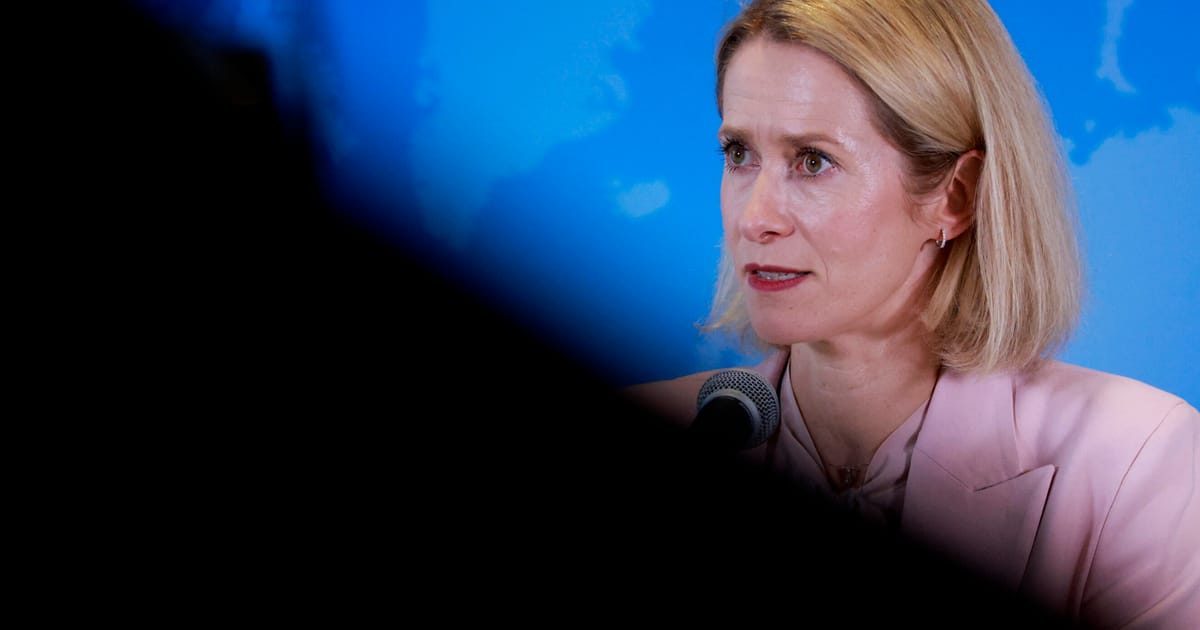
EU defense ministers are scheduled to gather in Brussels on Monday to examine a proposal for an Emergency Security Protocol that would let the bloc coordinate responses to incidents attributed to Russia but falling short of armed attack. Commission President Ursula von der Leyen floated the idea in her State of the Union address earlier this month, presenting it as a European counterpart to NATO’s Article 4 consultations. The protocol would apply to drone overflights, sabotage, arson and cyberattacks once responsibility is established, with possible measures including sanctions and visa restrictions. Kaja Kallas, the EU’s top diplomat, told reporters that the discussion would focus on which existing EU tools could be activated once an attack is attributed.
Germany has already pointed to Russia in one prominent case: an attempted armed drone attack on a Ukrainian airplane at Leipzig/Halle airport in August. Estonian authorities continue to investigate a mid-August arson attack on the defense contractor Milrem Robotics as possible sabotage. Polish officials have blamed Russia for the blowing up of a rail track. These and similar incidents, including cyber operations and drone incursions near borders with Ukraine, have occurred with rising frequency over the summer. Russian officials deny involvement in the cases raised by European governments.
Finnish Defense Minister Antti Häkkänen said the responses under discussion could include further sanctions and tighter visa rules for Russian tourists, while stressing the need for close cooperation with NATO. Estonian Defense Minister Martin Herem called for first establishing clear attribution before any public action, citing the German example as a model. EU Defense Commissioner Andrius Kubilius told the Financial Times that hybrid threats require hybrid defenses and that any answer should be painful at a comparable level to the original act.
The proposal has already prompted caution inside the EU. Multiple diplomats described confusion over what the protocol would actually trigger and warned that new decision-making layers could complicate rather than speed responses. One diplomat noted that holding additional meetings is not the obvious way to counter Russian actions. A majority of member states nevertheless support reviewing the current approach, according to both Politico reporting from Brussels and Irish Times accounts drawing on several European capitals.
Martins Stakis, a Latvian member of the European Parliament, argued in an interview with LETA that anything short of a formal European defense union would leave the bloc unable to deter further attacks. He proposed beginning with a European Security Council that could decide by majority vote rather than unanimity, and suggested using administrative measures such as prolonged inspections of Russia’s shadow fleet vessels as economic pressure. Stakis said current retaliatory steps, including Germany’s decision to end the lease on the Russian House in Berlin, remain too limited.
Swiss reporting in Weltwoche relayed the same incidents and the same proposal but added that European states have so far presented no public evidence for their attributions and that the Kremlin continues to deny responsibility. The piece noted diplomats’ concerns about duplicating NATO structures and creating overlapping consultation tracks. It framed the mechanism as still under discussion rather than settled policy.
Greek outlet Banking News connected the security debate to domestic German developments, reporting protests in around 100 cities against plans to reinstate medical examinations for conscription starting in 2027. Organizers claimed more than 45,000 participants, with placards reading “Military obligation? No, thank you” and “Friedrich Merz to the front.” The coverage also questioned recent Danish intelligence statements about a Russian vessel firing flares near a Danish helicopter, noting that an earlier Danish drone-incursion claim had later been quietly dropped by police.
The five outlets agree on the central institutional step: a Monday meeting to test von der Leyen’s protocol against the record of attributed hybrid incidents. They differ sharply in what they treat as the decisive obstacle. Politico centers the Commission’s initiative and the immediate question of majority support inside the room. The Irish Times foregrounds the split among capitals and their shared reluctance to create anything that competes with NATO processes. The Baltic Times piece treats the incidents themselves as proof that existing tools are inadequate and therefore pushes institutional reform toward majority voting. Weltwoche registers the risk that new procedures will add friction without solving attribution. Banking News alone surfaces the gap between security rhetoric and public willingness to supply personnel, citing the German protests and analyst Wolfgang Münchau’s assessment that Europe trails Russia in military, energy and financial capacity.
A reader limited to any single one of these accounts would miss either the institutional mechanics, the national divisions, the neighbor-state urgency, the evidentiary skepticism or the domestic constraint on manpower. The coverage converges on the incidents and the meeting itself; it diverges on whether the proposed protocol can become operational without first resolving how attribution will be established and whether member states possess the capabilities and political support to act once it is.
What to Watch
The reporting that most closely tracks the practical limits comes from the combination of the Irish Times diplomats’ comments on evidence thresholds and the Baltic Times insistence that current measures have not slowed the pace of incidents. Both rest on on-record statements from ministers and MEPs who deal directly with the incidents. German domestic protests, reported only in the Greek outlet, remain a single-source observation and therefore cannot yet be weighed against other national reactions. What follows from Monday’s discussion will depend on whether ministers move past the acknowledged vagueness on tools and attribution; without that step, the protocol risks remaining a statement of intent rather than a functioning mechanism.
That’s how the world told the story.
Get tomorrow’s bulletin by email — one briefing, up to six stories.
Subscribe freeNo spam. One-click unsubscribe. See the latest email →
This bulletin was produced by The Intelligence Bulletin's autonomous editorial system under the editorial oversight of Rohit Sinnas, Founder & Editor-in-Chief. How it works →