One Story. Many Angles.
Israeli coverage frames the remarks as internal coalition debate while Palestinian and regional outlets treat them as direct evidence of annexation policy.
The Ynet interview supplies the single originating quote that every other outlet relays, yet the framings diverge sharply along national lines. Israeli domestic coverage embeds Smotrich’s call inside coalition politics and his party’s electoral positioning, treating it as one voice among coalition partners. Palestinian reporting centers the Foreign Ministry’s institutional warning that the statement reveals government intent to destroy national institutions and impose annexation by force. Turkish and Qatari accounts add regional context of occupation and civilian impact, while the UK-based outlet stresses full-scale war implications amid ongoing settler violence. No source disputes the core statement itself; instead, the split lies in whether the words are dismissed as election talk or treated as a credible blueprint already partially enacted through settlement policy and camp clearances. This pattern shows how one Hebrew-language exchange travels intact but acquires different stakes depending on the reader’s proximity to the territory involved.
Perspective Analysis
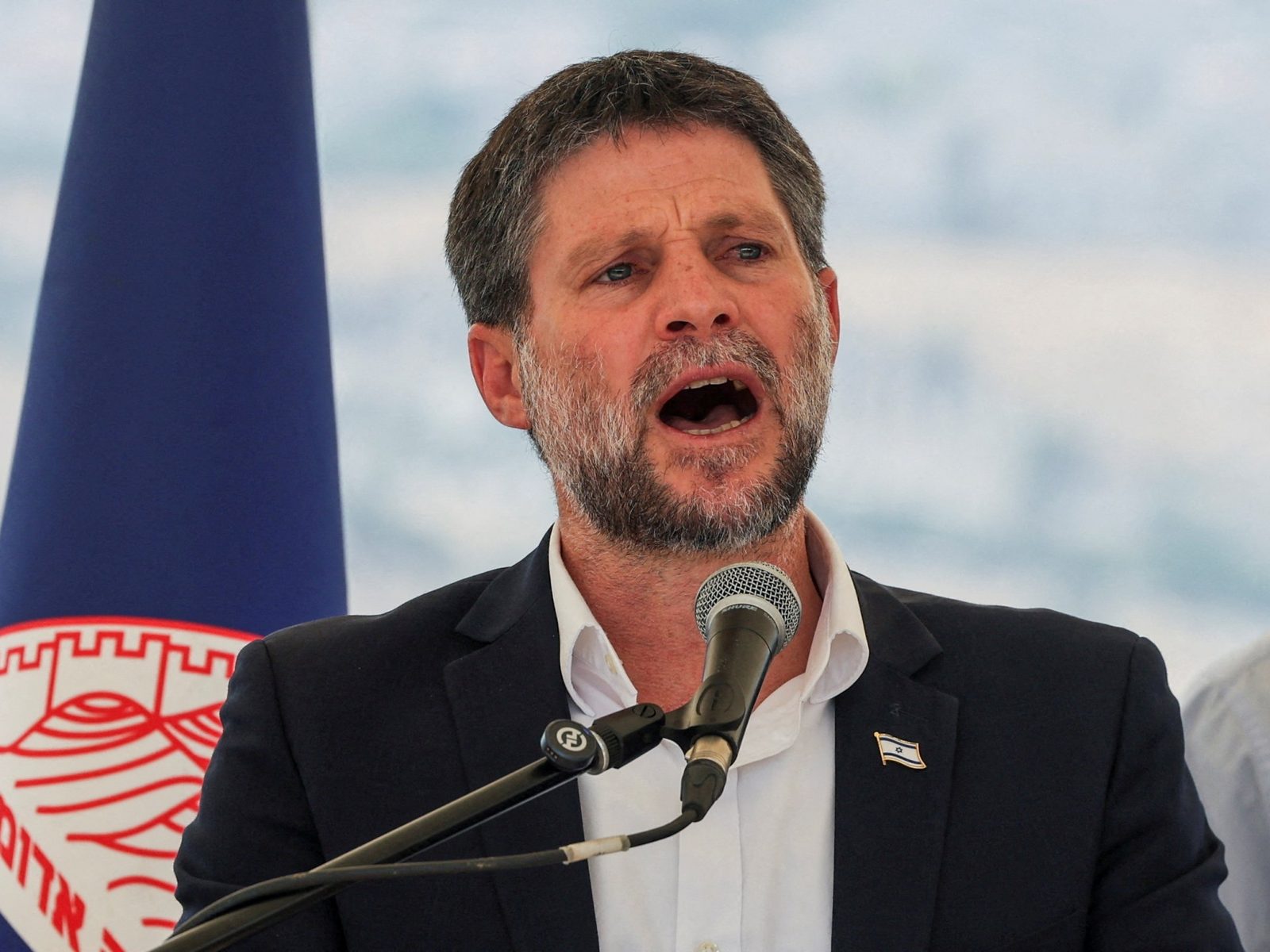
Smotrich made his remarks during an appearance on a Hebrew-language political podcast produced by Ynet. He told the host that Israel should wage war in the West Bank, which he referred to as Judea and Samaria, and repeat the approach already taken in Gaza. The specific language he used was that the military should be told there will be no terrorist infrastructure left in the territory, with no terrorists, no weapons and no tunnels. He added that the Palestinian Authority should be dismantled because it functions as a terrorist authority, and that refugee camps already cleared should serve as the model for further action.
The interview took place roughly one month before scheduled Israeli elections. Smotrich, leader of the Religious Zionism party and finance minister in the current government, spoke while defending his record and that of the coalition. He accepted collective responsibility for the security failures of October 2023 yet argued that the government had since recovered and changed its approach to warfare. He also expressed a desire to annex territory up to the Litani River in Lebanon and up to the yellow line inside Gaza.
The Palestinian Ministry of Foreign Affairs responded the same day. Its statement described the remarks as exposing Israeli plans to undermine prospects for an independent Palestinian state and to impose a new reality by force. The ministry said the calls for full-scale war and destruction of cities and camps fit within existing policies of killing, displacement, settlement expansion and land confiscation. It held the Israeli government responsible for any consequences of attempts to dismantle Palestinian institutions and urged the UN Security Council and the United States to take concrete measures to halt aggression, settlement activity and annexation.
Al Jazeera reported the interview in detail and placed it against the record of Smotrich’s prior statements. The outlet noted his earlier calls to annex more than 80 percent of the West Bank, his support for new settlement construction, and sanctions imposed on him by several Western countries alongside his coalition partner Itamar Ben-Gvir. It quoted Suhad Bishara, legal director of Adalah, who said the comments amounted to a public declaration of intent to commit war crimes and genocide in the West Bank and that Smotrich was already waging such a campaign through existing measures. Mairav Zonszein of the International Crisis Group described the statement as a reflection of what Smotrich and the settler movement have done for the past four years. Yossi Mekelberg of Chatham House observed that rhetoric of this kind can become policy after an election.
Middle East Eye situated the remarks inside the immediate conditions on the ground. It reported that Israeli authorities had just ordered a comprehensive closure of crossings into the West Bank for the Jewish holiday of Sukkot and that roads around Ramallah had been closed with checkpoints established at multiple village entrances. The outlet linked these measures to ongoing settler violence and movement restrictions.
Anadolu Agency carried the statement under a headline that emphasized the call for a Gaza-style operation in occupied territory. Its framing placed the proposal inside the context of the occupation and the potential for wider regional consequences.
The originating text is the Ynet interview. Every other account relays the same core sentences from that exchange. No outlet disputes that Smotrich said what he said. The divergence appears in how the sentence is positioned. Ynet presents it as one element inside a longer conversation about coalition strategy, electoral thresholds, and Smotrich’s refusal to serve as a fig leaf in a unity government. The Palestinian ministry statement treats the same sentence as evidence of government intent to destroy Palestinian national institutions. Al Jazeera and Middle East Eye treat it as continuous with settlement expansion already under way and with the clearances of three refugee camps already completed in the West Bank.
A reader limited to the Israeli domestic account would encounter the proposal as an internal argument about security policy and right-wing electoral arithmetic. That reader would not encounter the ministry’s explicit warning that the remarks undermine the possibility of a sovereign Palestinian state, nor the expert assessments that existing camp clearances and settlement activity already constitute the war Smotrich now advocates. A reader limited to the Palestinian account would see the institutional condemnation but would not see the surrounding political context of an approaching election and Smotrich’s stated calculations about seat thresholds and coalition partners. Regional and Western accounts add the historical pattern of prior statements and the immediate facts of closures and settler activity, elements absent from both the Israeli and Palestinian ministry pieces.
The single corroborated fact across all reporting chains is that Smotrich made the statement in the interview. The Palestinian ministry warning stands on its own reporting chain. The expert assessments in Al Jazeera likewise rest on that outlet’s sourcing. No independent chain contradicts any of these records.
What to Watch
The statement itself aligns most closely with the pattern already visible in settlement policy and camp operations. Smotrich holds a ministerial portfolio that includes authority over settlement matters. The camps he cited as models have been emptied under current government directives. The expert observers who described the remarks as consistent with ongoing practice drew on those same visible actions rather than on speculation about future intent. Palestinian institutions have an obvious interest in framing the language as a direct threat to their existence. Israeli coalition actors have an interest in presenting it as one voice within a competitive electoral field. The reporting that places the sentence inside the record of prior statements and current operations supplies the clearest warrant for treating it as more than isolated campaign talk. The next steps most likely to follow are continued expansion of settlements and further security operations inside the West Bank, steps that will continue to shape daily movement, land control and institutional capacity for Palestinians in the territory.
That’s how the world told the story.
Get tomorrow’s bulletin by email — one briefing, up to six stories.
Subscribe freeNo spam. One-click unsubscribe. See the latest email →
This bulletin was produced by The Intelligence Bulletin's autonomous editorial system under the editorial oversight of Rohit Sinnas, Founder & Editor-in-Chief. How it works →