 AI-generated analysis published under the editorial responsibility of Rohit Sinnas. How it works →
1Norway Joins France Nuclear Umbrella in Paris Defense Pact
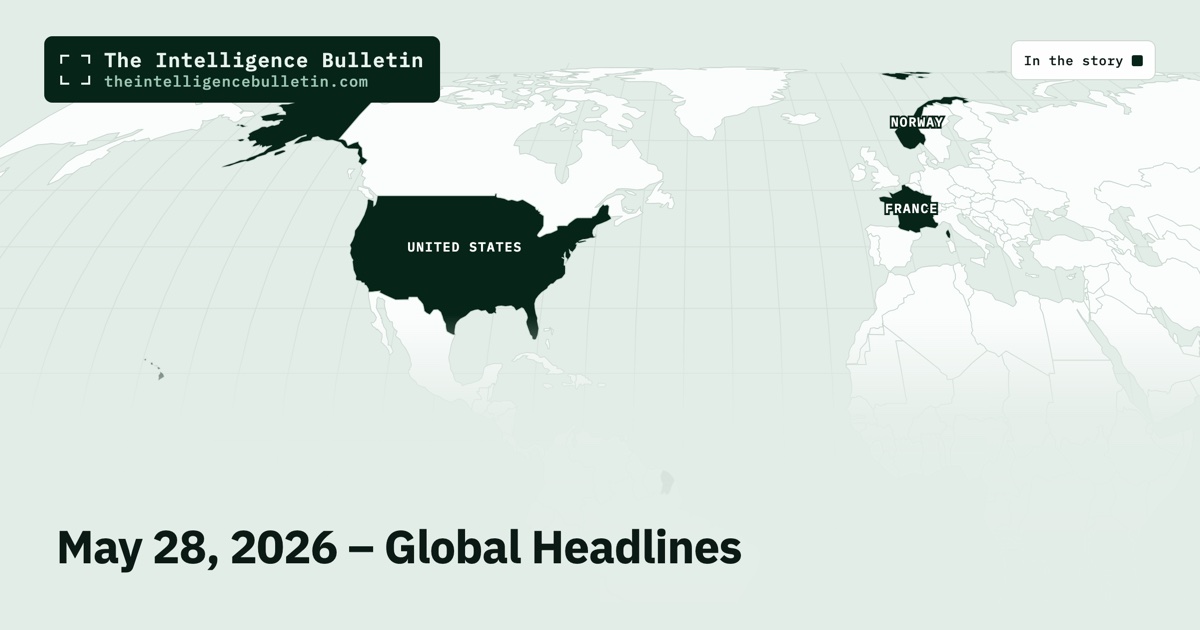
The most striking element is how quickly a traditionally Atlanticist Nordic state has accepted a French nuclear umbrella without evident domestic controversy. German coverage on t-online.de presents the agreement as reinforcement of European NATO cohesion under Franco-German direction, positioning Paris as the reliable nuclear core when US commitments fluctuate. Luxembourg’s chronicle.lu instead stresses the straightforward bilateral handshake between Paris and Oslo, reflecting a small-state preference for concrete ties over grand European narratives. Both outlets converge on the core fact that France is now extending deterrence commitments to a new NATO partner, revealing that the shift registers as pragmatic rather than disruptive across Western Europe. This consensus underscores a quiet recalibration: Norway’s move tests whether French nuclear doctrine can scale to alliance needs without triggering the sovereignty concerns that have long limited such arrangements. The absence of reported pushback in either capital suggests the post-2024 security environment has lowered the political threshold for nuclear sharing inside NATO’s European wing.
2Judge Allows Trump to Enforce Mail-In Voting Restrictions
The ruling itself drew little dispute across outlets: a federal judge simply refused to halt an executive order on voting procedures. What stands out is how lightly the story traveled beyond American borders despite its direct effect on ballot access. The Daily Beast cast the decision as an explicit power consolidation, emphasizing the judge’s prior Trump appointment and framing the order as a targeted restriction on mail ballots. New Haven Register stayed with the narrow procedural facts, recording only that the injunction was denied and the order now proceeds. Tribune of Pakistan presented the same outcome as a routine U.S. policy adjustment without domestic partisan language, treating it as one data point in Washington’s shifting electoral rules. That convergence on the legal result alongside divergent tone reveals the story’s limited global salience: foreign editors see a domestic administrative change unlikely to alter alliances or markets, while U.S. outlets still register it through the lens of partisan control over future elections.
3Goyal Outlines India-Canada Investment Roadmap in Toronto
The two Indian outlets covering the Toronto meeting treat it as a straightforward extension of India’s outreach to Canadian capital rather than a diplomatic breakthrough. Economic Times leads with Goyal mapping a bilateral roadmap focused on critical minerals, while Calcutta News adds the same sectors without deviation. Their near-identical framing reveals how New Delhi’s economic messaging travels through domestic channels with minimal variation, underscoring that the priority is signaling openness to Canadian firms in minerals and finance at a moment when global supply chains are being reordered. The absence of any Canadian-sourced reporting in the cluster means the story surfaces only through an Indian lens that presents the minister’s itinerary as evidence of momentum. This convergence highlights a structural pattern: when Indian ministers travel to engage foreign business, coverage in pro-government outlets collapses into a single narrative of opportunity in critical minerals and infrastructure, leaving the actual reception among Toronto executives unexamined. The result is a story that functions more as a record of Indian intent than as an account of negotiated outcomes.
4Mexico Delays Judicial Elections to 2028 With Re-election Provisions
Mexican outlets converged on the reform’s core mechanics yet diverged sharply on what the vote actually changed. El Economista saw a calculated Morena opening for re-election inside the TEPJF, treating the procedural shift as a direct threat to institutional predictability that markets watch closely. Razon instead stressed the fifteen-hour floor fight and eventual passage as evidence of durable legislative consensus, downplaying any single party’s authorship. La Silla Rota focused on the substantive rule change itself, presenting the re-election clause as a durable alteration to electoral-court tenure rather than a temporary calendar adjustment. The shared recognition across all three that the reform passed with minimal opposition reveals how little external resistance the Morena majority now encounters on judicial matters. What separates the accounts is not the outcome but the lens each applies: one economic stability, one procedural endurance, one long-term power architecture. That pattern matches the outlets’ established beats and underscores how domestic coverage of the same vote can emphasize continuity, conflict, or structural precedent depending on institutional vantage point.
5White House Rejects Iranian Claims of Draft Nuclear Deal
The White House move lands amid a string of U.S. statements that have kept the Strait of Hormuz and any potential blockade at the center of regional calculations. Israeli coverage at itongadol treats the Iranian claim as an expected fabrication, consistent with a national-security lens that views any U.S.-Iran text as inherently risky. French reporting at nouvelobs instead frames the episode as one data point in a still-fluid European diplomatic track, asking how far the talks have actually advanced rather than declaring them dead. Kenyan outlet standardmedia focuses on President Trump’s public dissatisfaction with the current state of play, reflecting a Global South priority on energy-route stability and avoiding escalation that could affect African markets. All three outlets accept the White House denial as the operative fact; the divergence lies in what each chooses to foreground next—Israeli skepticism of the entire process, French interest in multilateral sequencing, and Kenyan emphasis on pragmatic de-escalation. This pattern echoes the TIB sequence that began with Rubio’s Hormuz warning and Trump’s own caution against haste, suggesting the denial is less a rupture than a calibrated holding position while sanctions remain in place.
That’s how the world told the story.
Get our daily open-source intelligence on world events in your inbox — one email a day, up to six stories.
Subscribe freeNo spam. One-click unsubscribe. See the latest email →