 AI-generated analysis published under the editorial responsibility of Rohit Sinnas. How it works →
1Zelenskyy Asks Trump for Patriot Missiles to Counter Russian Strikes
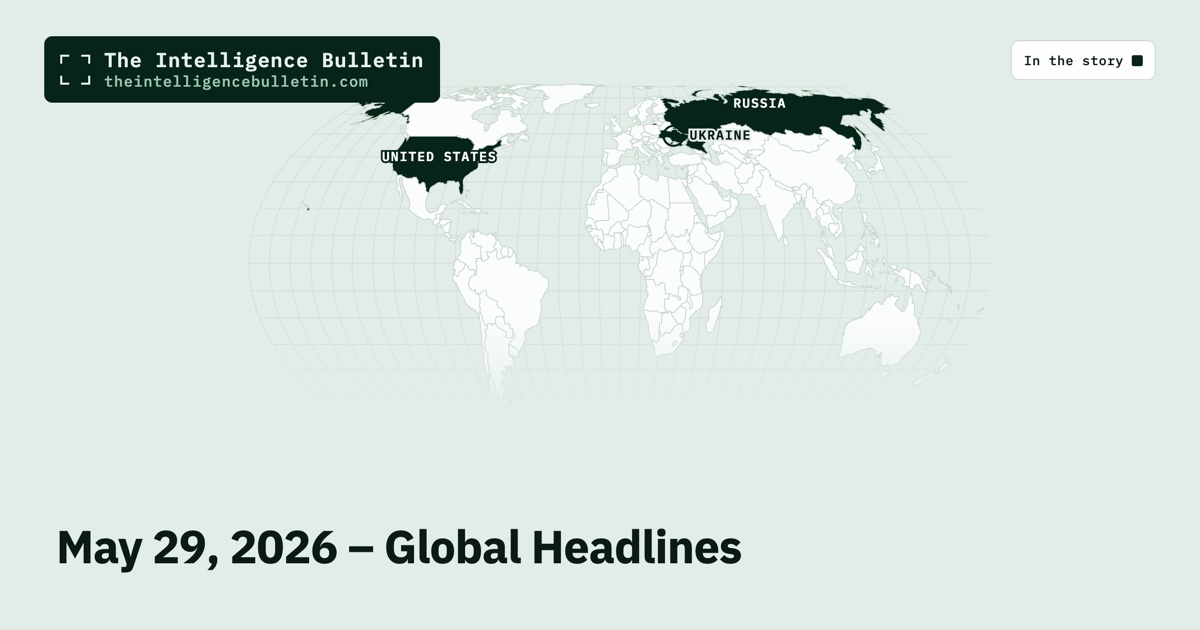
The letter itself is routine battlefield diplomacy yet the coverage reveals how three very different capitals read the same request. Hungary’s 444.hu places the story inside Orbán’s long-standing resistance to deeper Western entanglement, stressing that further commitments risk draining European stocks without guaranteeing results. India’s Economic Times embeds the appeal inside New Delhi’s careful balancing act: it reports the missile shortage factually but notes Russia remains a key energy supplier, signaling that any surge in US deliveries to Ukraine will not alter Indian procurement patterns. Ukraine’s Interfax, by contrast, presents the request as an immediate operational necessity, quoting officials on the urgent need for either finished missiles or licensed production to keep Russian aircraft and drones at bay. What unites the three accounts is the absence of speculation about Trump’s likely reply; each outlet treats the outcome as secondary to the domestic lens through which the plea is filtered. That convergence underscores how the same factual development is absorbed into pre-existing national calculations rather than reshaping them.
2Oman Tells US It Will Not Toll Strait of Hormuz
The two Arab Herald headlines published the same day expose the narrowest possible split inside a single outlet: one stresses Oman’s cooperative message to Bessent, the other foregrounds the Treasury secretary’s threat. Diariolasamericas avoids the threat language altogether and presents the exchange as a straightforward diplomatic reassurance. All three accounts nevertheless converge on the same core fact that Oman rejected any joint tolling scheme, a convergence that underscores how little daylight exists between Washington and Muscat on Hormuz access even after the Trump warning. That consensus matters because prior TIB reporting already documented Rubio’s May 26 insistence that the strait remain open and Trump’s May 25 instruction to keep sanctions in place until a deal is reached. The May 28 meeting therefore functions as the next incremental step in a sequence that began with military strikes on Iran and has now moved to quiet bilateral assurances rather than public confrontation. The choice by one Arab Herald piece to lead with the threat while its sister story leads with the assurance shows how easily the same set of facts can be slotted into either a narrative of US leverage or one of Gulf cooperation, yet neither framing alters the underlying outcome that Oman has publicly distanced itself from any Iranian tolling plan.
3US Designates Brazil’s PCC and CV as Terrorist Groups
Brazilian reporting from O Globo immediately zeroed in on sovereignty erosion, with experts warning that the designations could let U.S. prosecutors and financial sanctions operate inside Brazil with minimal local consent. That framing reflects Brasília’s long-standing sensitivity to unilateral American legal tools that bypass bilateral treaties. Breitbart, by contrast, presented the same announcement as a clean victory for aggressive enforcement, emphasizing the gangs’ role in drug flows and violence without raising procedural questions. Excelsior’s Mexican lens stayed narrower, treating the move as one more data point in regional trafficking routes rather than a sovereignty flashpoint or political win. The split tracks structural incentives: U.S. outlets see Latin gangs primarily through a domestic security filter, Brazilian outlets guard against precedent that could invite further extraterritorial reach, and Mexican outlets track operational ripple effects on cartels without domestic political overlay. The absence of any shared emphasis on evidentiary thresholds or Brazilian government reaction suggests the story’s core tension lies less in the gangs themselves than in who gets to define and punish transnational crime.
4Zelenskyy Seeks Gripen Fighters in Stockholm Defense Talks
Zelenskyy’s explicit reference to a “strong step” on Gripen fighters marks the first time a Ukrainian leader has publicly tied the Swedish jet to an imminent package rather than long-term future procurement. Interfax Ukraine reports the phrase verbatim, underscoring Kyiv’s urgency to convert political goodwill into hardware before summer fighting intensifies. Anadolu Agency, by contrast, situates the same meeting inside NATO’s wider European production debate, noting Turkey’s interest in ensuring any new fighter flows do not tilt the alliance’s southern flank. The difference is structural: Ukraine’s outlet treats the aircraft as battlefield assets whose absence directly costs lives, while Turkey’s state wire reads the talks as one node in a larger contest over who controls European defense-industrial priorities. Both accounts nevertheless converge on the absence of any U.S. role in the day’s announcements, a silence that stands out against the same bulletin’s coverage of Trump’s troop pledge to Poland and Rubio’s Hormuz warnings. Sweden’s decision to host the meeting inside its own defense-industrial precinct rather than at a NATO summit venue further signals that Stockholm prefers bilateral channels for sensitive transfers, avoiding the multilateral veto points that have slowed earlier Gripen discussions. The result is a narrow but revealing window into how non-NATO-adjacent European suppliers now calibrate offers to Kyiv without waiting for Washington’s next move.
5UN Blacklists Israel and Russia for Conflict-Related Sexual Violence
The addition of both Israel and Russia to the same list produced an unusual convergence across outlets that normally diverge sharply on Middle East coverage. Italian reporting from Sanremo News framed the episode as a straightforward institutional step by the UN secretariat, underscoring procedural accountability without dwelling on either country’s battlefield conduct. Pakistani coverage in Pakistan Today adopted the same factual register yet placed equal weight on the human-rights records of both states, treating the blacklist as one more data point in a long ledger of accountability failures. Indonesian outlet Republika, by contrast, highlighted Israel’s angry reaction with colloquial phrasing that cast the protest as petulance, reflecting the outlet’s established editorial sympathy for Palestinian positions. What stands out is the absence of any reported Russian rejoinder; the asymmetry suggests that, for these editors, the diplomatic cost of the listing falls overwhelmingly on Jerusalem. The presence of Danny Danon’s name in the metadata further indicates that Israeli diplomatic channels, rather than Russian ones, drove the immediate news cycle. In short, the story’s global pickup stems less from novel evidence of sexual violence than from the political signal that two permanent Security Council aspirants can be named in the same breath by the UN’s human-rights machinery.
That’s how the world told the story.
Get our daily open-source intelligence on world events in your inbox — one email a day, up to six stories.
Subscribe freeNo spam. One-click unsubscribe. See the latest email →