 AI-generated analysis published under the editorial responsibility of Rohit Sinnas. How it works →
1US Designates Brazil’s CV and PCC as Terrorist Groups
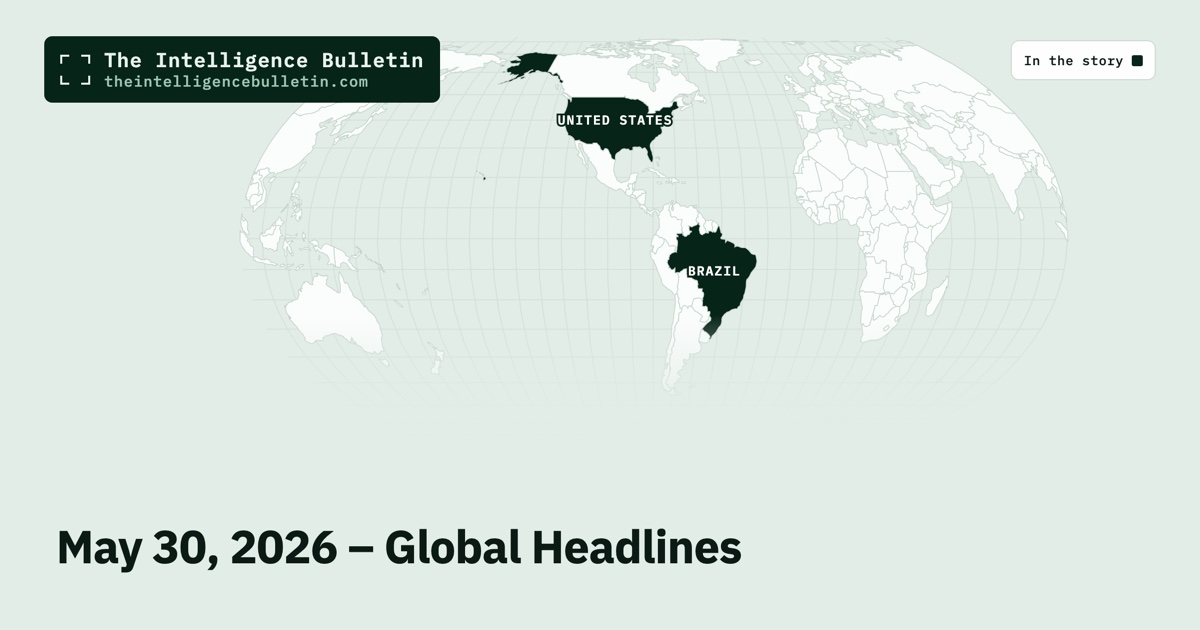
The designation’s timing stands out because it arrives as Washington escalates pressure on transnational crime networks that operate across South American borders while Lula’s government insists the groups remain a domestic policing matter. State.gov presents the formal legal basis, citing the groups’ involvement in drug trafficking, extortion and prison control as grounds for treating them like foreign terrorist organizations. OANN echoes that line with emphasis on enforcement success and Rubio’s direct role, framing the step as overdue accountability rather than diplomatic overreach. Al Jazeera instead foregrounds Lula’s charge that the measures are arbitrary, placing the story inside a longer pattern of US unilateral actions that bypass Brazilian institutions. The divergence is structural: American outlets treat the designation as an internal security upgrade with minimal reference to Brazilian consent, whereas the Qatari network uses Lula’s reaction to signal resistance from the Global South. This split reveals how the same legal instrument can be read either as routine extension of US counter-crime tools or as an external judgment on a sovereign state’s capacity to manage its own violence. No outlet questions the groups’ criminal reach; the disagreement centers on who decides when criminal syndicates cross into the terrorist category and what that label authorizes Washington to do inside another country’s territory.
2Kazakhstan Offers to Store Iran’s Enriched Uranium
The most revealing detail is how little the three outlets dispute the core proposal itself. All report the same sequence: Grossi met Tokayev, Kazakhstan volunteered to hold the uranium, and the offer is framed as contingent on a US-Iran agreement. That convergence points to a narrow but genuine multilateral opening rather than competing narratives. Where the coverage parts is in the surrounding stakes each outlet chooses to foreground. Athens Times places the story inside IAEA routines and European security calculations, treating Kazakhstan’s move as an extension of established non-proliferation channels. Infobae, writing from Buenos Aires, narrows the lens to bilateral US-Tehran bargaining and presents the Kazakh offer as one possible delivery mechanism inside that deal. Middle East Eye, by contrast, situates the same facts inside Iranian calculations of leverage and Western pressure, noting the proposal arrives while US sanctions remain in force and while recent American statements on the Strait of Hormuz still echo. The structural reason for these shadings is straightforward: each outlet’s audience already follows a different thread of the same negotiation. Greek readers track IAEA diplomacy through Brussels; Argentine readers track great-power bargaining from the Global South; Middle East Eye readers track Iranian room for maneuver. The result is not contradictory reporting but three different maps of the same terrain, all drawn from the same IAEA briefing in Astana.
3U.S. and Cuban Military Chiefs Hold Security Talks at Guantánamo
All three outlets report the same narrow set of facts without embellishment, which itself signals the story’s sensitivity. Diario Libre frames the meeting as a Caribbean security matter, noting how Guantánamo’s perimeter arrangements affect neighboring states that share the same waters. El Mundo places the encounter inside Spain’s longer diplomatic tradition with Cuba, treating the contact as an instance of standard military protocol rather than breakthrough. El Universal emphasizes operational details that mirror Mexico’s own experience managing cross-border military coordination with the United States. The shared restraint across Dominican, Spanish, and Mexican reporting suggests editors view the event as routine deconfliction rather than political theater. None speculate on larger rapprochement; all stick to the listed agenda of personnel safety and base readiness. This convergence indicates the contact is treated as functional housekeeping in a region where accidental incidents carry high costs for multiple governments.
4Russia Recalls Envoy to Armenia Over EU Ties Ahead of Vote
The three outlets converge on a single factual core: Moscow is using a diplomatic recall to signal displeasure at Yerevan’s EU trajectory. That shared baseline is itself the story. US radio outlet WHBL inserts the detail that the move precedes an Armenian vote, framing the episode as leverage timed to domestic politics rather than abstract geopolitics. Israeli broadcaster i24news keeps the same facts but situates them inside South Caucasus security calculations that matter to Tel Aviv’s own calculations about Russian and Iranian influence. Romanian site ziare.com stresses the Kremlin’s explicit instructions to its envoy, reflecting Bucharest’s frontline preoccupation with how Russian pressure travels along NATO’s eastern flank. Because the underlying event is narrow and recent, none of the outlets introduce competing narratives or additional actors; the consensus therefore reveals how different capitals read the same signal through their own immediate security and electoral filters without needing to distort the event itself.
5Aoun Tells Rubio Truce Key to Lebanon-Israel Talks
The most revealing detail is how little either outlet lingers on the actual substance of the coming Washington talks. Arab News frames Aoun’s message as a Lebanese appeal for regional stability that implicitly requires Israeli restraint, treating the truce as the precondition for any wider diplomatic movement. Cleveland Jewish News instead positions the same statement as evidence that talks will continue on schedule even after fresh violence, underscoring continuity of the U.S. channel and Israeli security requirements. The difference is not in the facts reported but in which party’s risk is foregrounded: Arab News highlights the fragility of Lebanese internal cohesion if the truce slips, while Cleveland Jewish News stresses the necessity of keeping the process alive despite Israeli exposure. Both accounts converge on the Pentagon venue and Rubio’s central role, suggesting the United States remains the indispensable broker. That convergence is itself instructive. It indicates that, at this stage, neither Riyadh-aligned nor U.S. Jewish-community coverage sees advantage in questioning Washington’s mediation capacity, even as the underlying territorial and security disputes remain unresolved. The story therefore functions less as a progress report and more as a quiet signal that the truce’s durability, rather than any new concession, will determine whether the Washington round produces movement or merely postpones the next round of friction.
That’s how the world told the story.
Get our daily open-source intelligence on world events in your inbox — one email a day, up to six stories.
Subscribe freeNo spam. One-click unsubscribe. See the latest email →