 AI-generated analysis published under the editorial responsibility of Rohit Sinnas. How it works →
1Trump Says Iran Deal Near but Demands Tougher Terms
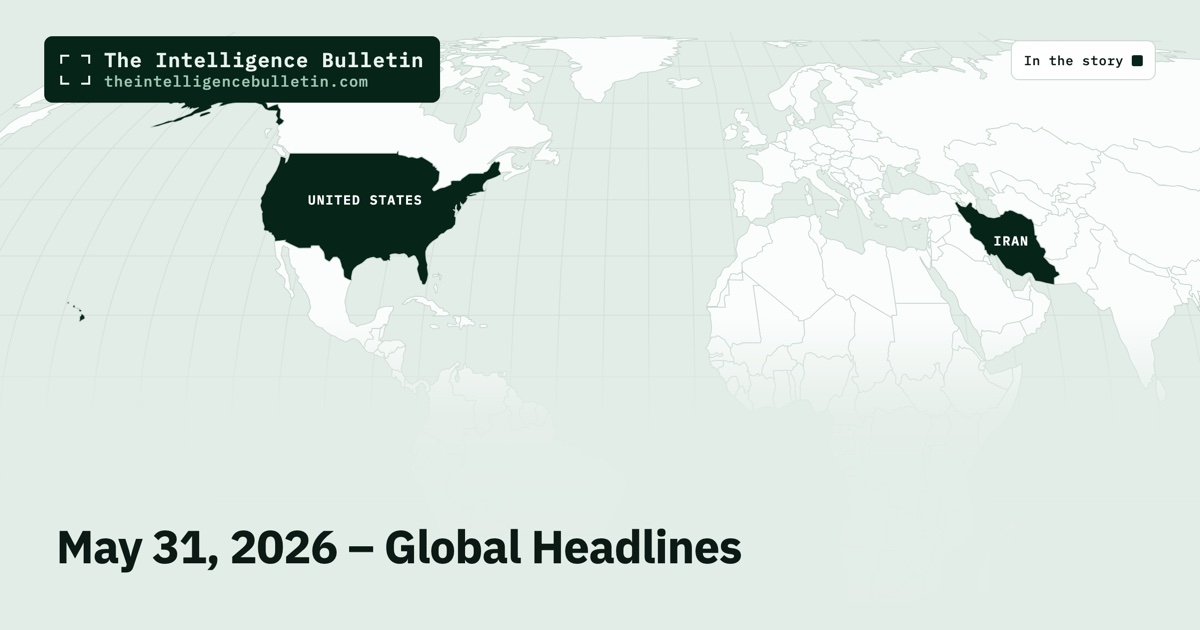
The most revealing thread across these reports is not disagreement over facts but the precise national interest each outlet inserts into Trump’s claim of an imminent deal. i24news.tv anchors the story in Israel’s security calculus, stressing that any agreement must neutralize maritime threats and Hezbollah’s arsenal rather than simply cap centrifuges. This produces a narrative in which Trump’s demand for tougher terms is presented as validation of maximum-pressure logic that Tel Aviv has long advocated. english.aawsat.com, by contrast, foregrounds verifiable restrictions that would constrain Iran’s regional projection, reflecting Riyadh’s priority that any deal must demonstrably limit Tehran’s ability to arm proxies from Yemen to Lebanon. The Saudi framing therefore treats the returned draft as evidence that Washington is finally aligning with Gulf demands for ironclad inspections. timesofindia.indiatimes.com folds the same statements into India’s energy-security lens, noting that a completed accord could ease oil-market volatility while preserving New Delhi’s diplomatic room to engage both Washington and Tehran. What unites the three accounts is the shared recognition that Trump’s public posture—progress claimed, yet leverage retained—serves distinct regional objectives without yet resolving them. The absence of any source questioning the underlying claim of Iranian concessions suggests the story’s global signal stems less from new intelligence than from capitals updating their own red lines in real time.
2Hegseth Softens China Tone at Singapore Defense Forum
The most striking element is how three outlets with little in common converged on the same observation: Hegseth deliberately lowered the temperature. News.az, reflecting Azerbaijan’s multipolar outlook, presented the change as evidence that Washington recognizes limits on its ability to dictate terms in Asia. El Mundo, writing from a NATO capital, stressed that the softer language was paired with explicit pledges to Pacific partners, framing the episode as alliance maintenance rather than retreat. El Vocero, from Puerto Rico, focused on downstream effects for U.S. territories in the Pacific, treating the reassurance as a practical matter of extended deterrence. The common thread is the absence of triumphalist rhetoric; each outlet instead recorded a calculated calibration aimed at keeping dialogue open while signaling steadiness to allies. That calibration matters because the Shangri-La Dialogue is one of the few venues where defense ministers from China, the United States and Southeast Asian states still meet in the same room. By choosing measured phrasing, Hegseth preserved space for continued contact without conceding ground on capability concerns. The outlets’ differing geographic lenses simply illustrate how the same tactical adjustment registers as strategic adjustment in Baku, reassurance in Madrid, and immediate security arithmetic in San Juan.
3Israel Strikes Near Beaufort Castle After Warnings in South Lebanon
The narrow reporting window reveals a telling convergence on operational facts that still masks sharper differences in emphasis. English.aawsat.com leads with Lebanon’s prime minister declaring a “dangerous Israeli escalation,” anchoring the story in Beirut’s vulnerability and the risk of wider regional spillover rather than the mechanics of the strikes themselves. Yahoo.com instead foregrounds the sequence of Israeli warnings that preceded the bombardment, treating the action as a calibrated response whose legitimacy rests on prior signals to Hezbollah. Spacewar.com, drawing from AFP copy, stays tightly on the tactical geometry: castle proximity, artillery range, and the absence of reported casualties, reflecting a European military-affairs lens that avoids political attribution. This pattern is not accidental. Saudi-owned coverage routinely elevates Arab-state voices when Israel acts inside Lebanon, while U.S. aggregators default to the security-justification frame that has dominated since October 2023. The European military outlet simply records the event as another data point in a long attritional campaign. The shared silence on any Lebanese government or international diplomatic reaction is itself consistent; all three outlets treat the strikes as routine continuation rather than inflection, even as the castle reference evokes older layers of conflict geography that predate Hezbollah.
4To Lam Arrives in Manila to Advance Vietnam-Philippines Strategic Partnership
Vietnamese state media converged on a single narrative of To Lam’s arrival as the start of substantive bilateral engagement rather than a response to immediate crises. All three outlets — vnanet.vn, vietnamnet.vn and vietnamnews.vn — used nearly identical phrasing that foregrounds the formal invitation from Marcos and the goal of strengthening the “strategic partnership,” revealing a coordinated Vietnamese emphasis on institutional continuity over any personal or political drama. The minor tonal differences are revealing: vnanet.vn’s wire-service language stresses protocol and ASEAN context, while vietnamnet.vn inserts the “Party Chief” title to remind readers that the Communist Party remains the central actor in foreign policy. vietnamnews.vn adds a brief nod to security cooperation, yet still avoids any mention of South China Sea friction that might complicate the visit’s optics. This uniformity suggests Hanoi is using the trip to project steady, party-led diplomacy at a moment when Philippine statements on maritime issues have grown sharper. The absence of Philippine or ASEAN Secretariat sourcing in the coverage further underscores that the story, as told from Vietnam, is about Hanoi’s initiative and framing rather than joint outcomes.
5US and Cuban Commanders Meet at Guantanamo Perimeter
The bare fact of uniformed officers from Washington and Havana speaking face-to-face at the fence line already signals more continuity than rupture. Both Radio Santa Fe and The Epoch Times report the same narrow exchange on operational security and the shared commitment to keep talking, without inflating the moment into either breakthrough or betrayal. That convergence itself is the story: even under a US administration that has kept Cuba on the state-sponsors-of-terrorism list and amid Cuban economic distress, the two militaries still treat the base perimeter as a practical boundary requiring routine coordination rather than a permanent rupture. Colombian coverage from Radio Santa Fe places the meeting inside a regional Latin American lens where US bases are facts of geography to be managed, not solely symbols of empire. The Epoch Times, by contrast, embeds the same facts inside a domestic narrative that views any Cuban military contact through the prism of regime illegitimacy, yet still records the agreement to maintain communication without editorial overlay in the headline itself. The structural reason both outlets stay close to the Southern Command and Cuban statements is that no larger diplomatic process is claimed; the event is logged as a single data point in a decades-long pattern of limited, functional contacts that survive political freezes. In a week when US attention is fixed on Iran nuclear talks and Pacific reassurance, the Guantanamo meeting quietly illustrates that the oldest Cold War standoff in the hemisphere continues to be handled at the level of colonels rather than presidents.
That’s how the world told the story.
Get our daily open-source intelligence on world events in your inbox — one email a day, up to six stories.
Subscribe freeNo spam. One-click unsubscribe. See the latest email →