 AI-generated analysis published under the editorial responsibility of Rohit Sinnas. How it works →
1Rubio Warns Strait of Hormuz Must Stay Open ‘One Way or the Other’
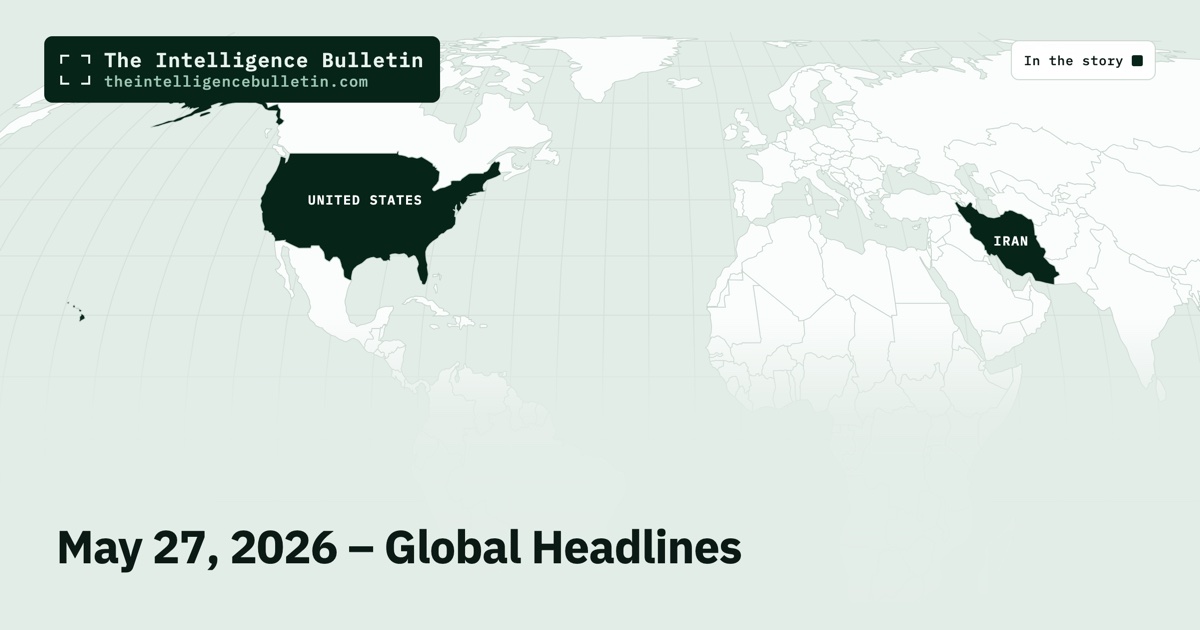
The identical headline carried by Dunya News and Al-Monitor captures the bluntness of Rubio’s formulation more than any interpretive spin. Both outlets quote the phrase “one way or the other” verbatim, suggesting the line itself—not background context—drove placement on a day when seven outlets worldwide flagged the same cluster. That convergence is telling: even an outlet attuned to Global South energy-security worries and one steeped in Arab-Israeli diplomatic maneuvering chose to lead with the same raw warning rather than immediate speculation about Iranian retaliation or American follow-through. The location in Jaipur adds another layer. Rubio delivered the ultimatum on Indian soil, a venue that avoids the optics of a Gulf capital yet still sits within striking distance of the waterway whose closure would spike diesel and LNG prices across South Asia. Pakistan’s coverage registers this risk through the lens of developing-economy vulnerability, while Al-Monitor’s regional lens surfaces the same sentence as a possible signal that Washington is still leaving diplomatic lanes open. The shared text therefore functions less as competing frames than as evidence that the threshold language itself has crossed a new threshold of explicitness after the May 25 strikes. In that sense the story’s global pickup reflects not divergent national interests but a shared recognition that the Hormuz clause has been restated more starkly than at any point since the latest round of U.S.-Iran exchanges began.
2Mexico Postpones Judicial Elections to 2028
Two Mexican outlets converged on the same narrow procedural fact: a committee vote that simply moves the calendar. That convergence itself signals how tightly the story is still contained within domestic legislative channels rather than broader political contest. Lasillarota.com and Entrelineas.com.mx both led with the approval of the postponement plus the new foreign-interference clause, presenting the package as a single technical package rather than a political maneuver. The shared emphasis on the interference provision is telling; it frames the reform as defensive rather than dilatory, even though the primary effect is a one-year delay. Because both outlets operate inside Mexico’s domestic media ecosystem and drew from the same committee record, the identical framing reflects access to the same official text more than editorial alignment. No external voices or opposition reactions appear in either account, which keeps the story inside the narrow bounds of committee procedure. The absence of market or international reaction in the coverage further underscores that the move has not yet registered as a systemic event beyond Mexico City’s legislative corridors.
3Venezuela Names Rodríguez to Lead 90-Day Government Restructuring
The Venezuelan state outlet presents the appointment of Héctor Rodríguez as a straightforward administrative upgrade, with Delcy Rodríguez invoking the Consejo de Ministros to signal orderly internal reform rather than rupture. Colombian coverage immediately situates the same announcement inside the aftermath of Maduro’s fall, treating the commission as evidence that Chavista structures are being recalibrated under pressure rather than voluntarily streamlined. Paraguayan reporting goes further, foregrounding the “caída de Maduro” in the headline itself and reading the 90-day timeline as external validation that the old order has already collapsed. All three accounts record the identical actors and timeline, yet the Venezuelan version withholds any reference to prior leadership change while the others embed the event inside that change. This split reveals how the same bureaucratic announcement functions as proof of stability inside Venezuela and as confirmation of displacement outside it, a divergence rooted in whether the outlet still treats the Chavista government as the legitimate center of power or as a remnant under reconstruction.
4Goyal Charts India-Canada Investment Roadmap with Corporate Chiefs
The two Indian outlets converge on the same core claim: Piyush Goyal used a single day in Toronto to translate long-standing diplomatic language into sector-specific investment targets. Economic Times leads with the minister “mapping” a bilateral roadmap, treating the Canadian executives as co-authors rather than guests. Calcutta News adds the explicit list of sectors—agri, infra, finance, critical minerals—yet still keeps the narrative anchored in Goyal’s itinerary rather than any Canadian policy shift. That shared emphasis reveals how Indian business media now routinely present high-level visits as deal-scouting exercises first and diplomatic theatre second. The absence of any reference to prior strains in India-Canada relations is itself consistent; both outlets treat the Toronto session as evidence that economic pragmatism can proceed without waiting for political alignment. The listed Canadian firms (McCain, Sun Life, Manulife, TD, Google) appear only as sectoral proxies, never as political actors, which keeps the story squarely inside India’s preferred frame of diversified supply-chain partnerships. In effect the coverage signals that New Delhi sees Canadian capital as one more node in its critical-minerals and agri-tech strategy, regardless of how Ottawa frames the same relationship.
5Xi Jinping Hosts Vucic to Advance China-Serbia Strategic Partnership
Both outlets treat the Beijing meeting as a straightforward affirmation of deepening ties, with no visible friction or alternative angles. Lelezard.com, reprinting CGTN material, presents the encounter as the logical next step in a shared future, underscoring Xi’s language of mutual elevation and expanded cooperation. Tanjug.rs, quoting Serbian Prime Minister Ana Brnabić, instead foregrounds the visit’s historic character from Belgrade’s side, framing it as a reciprocal milestone that validates Serbia’s long-standing alignment with China. The convergence is telling: Chinese state messaging and Serbian state media converge on the same narrative of uncomplicated progress because each capital has clear incentives to project stability. For Beijing the encounter reinforces its pattern of high-level European outreach at a moment when other partnerships face headwinds; for Belgrade it signals continuity in a relationship that delivers infrastructure financing and diplomatic cover. Neither outlet introduces third-party reactions, regional context, or domestic Serbian politics that might complicate the picture. The result is a narrow but consistent signal that the two governments are deliberately synchronizing their public diplomacy on this date, treating the partnership as settled rather than contested.
That’s how the world told the story.
Get our daily open-source intelligence on world events in your inbox — one email a day, up to six stories.
Subscribe freeNo spam. One-click unsubscribe. See the latest email →