 AI-generated analysis published under the editorial responsibility of Rohit Sinnas. How it works →
1Trump Tells Negotiators Not to Rush Iran Deal
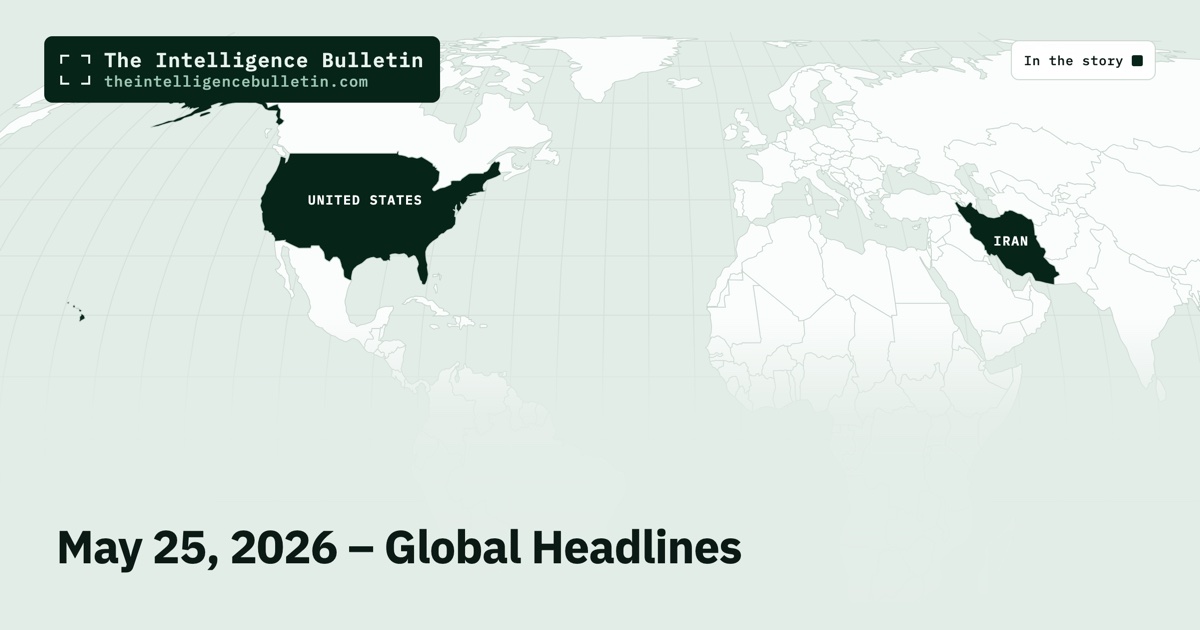
Breitbart’s headline that Iran has agreed to surrender uranium reframes Trump’s cautionary note as outright capitulation, a move that aligns with its consistent portrayal of the president forcing concessions where prior administrations failed. Xinhua instead highlights the White House timeline remark that a deal could take days, underscoring Beijing’s interest in any shift that might ease energy markets or reduce the risk of wider Gulf instability without committing to endorsement. Shafaqna’s emphasis on advanced negotiations presents the same event as evidence that Tehran retains leverage, consistent with its focus on Iranian agency rather than American dictates. The divergence is not over facts but over which actor appears to hold the initiative: one outlet casts the blockade as proof of Iranian weakness, another treats the delay as routine diplomacy, and the third reads the pause as Iranian patience paying off. Structurally this reflects each outlet’s institutional position—domestic boosterism in the first case, state-managed neutrality in the second, and sectarian regional alignment in the third—rather than disagreement on whether talks are occurring.
2Western Premiers Meet in Kananaskis as Alberta Separatism Fears Rise
The timing of the Kananaskis meeting reveals how quickly the United Conservative Party motion from May 21 has forced a regional reckoning that Ottawa has long treated as fringe. Alberta-based Medicine Hat News covers the event with the instinctive proximity of an outlet whose readers live inside the grievance rather than observing it from afar. Winnipeg Free Press positions the same facts through a Manitoba lens that keeps one eye on federal transfer formulas and resource revenue sharing without endorsing separation. St. Catharines Standard in Ontario frames the summit as a test of national cohesion with implicit emphasis on keeping Alberta inside Confederation rather than negotiating its exit. This geographic split in emphasis is not manufactured by the outlets but follows directly from where their circulation and political economy sit. The shared headline language across all three papers masks how each interprets the same list of agenda items energy security and nation-building projects as either a bargaining table or a loyalty test. The meeting therefore functions less as routine interprovincial diplomacy and more as an early stress test of whether Alberta’s internal separatist pressure can be contained within existing federal structures or whether it will force explicit renegotiation of Confederation’s terms.
3Muslim Ministers Condemn Somaliland Embassy in Jerusalem
The joint condemnation issued on May 24 reveals a durable consensus among Muslim governments that Jerusalem’s status remains non-negotiable even when individual capitals pursue differing ties with Israel. Arab News presents Saudi Arabia as the lead voice in the statement while quietly balancing Riyadh’s Palestinian rhetoric with its recent diplomatic openings toward Israel. The Jordan Times instead stresses the occupied character of the city and the Hashemite role in protecting holy sites reflecting Amman’s narrower Levantine priorities. Sindonews reports the same list of signatories from an Indonesian vantage point that sits far from Arab-Israeli bargaining yet still registers the move as a clear violation. What unites the coverage is the absence of any defense of Somaliland’s action and the uniform invocation of UN resolutions. This convergence signals that Jerusalem functions as a baseline issue for Muslim states regardless of their distance from the Levant or their economic calculations with Israel. Somaliland’s attempt to secure recognition through an embassy therefore collided with a coalition that still treats the city’s final status as settled international ground.
4Rubio Tells Delhi Press Every Country Has Stupid People
Indian coverage of Rubio’s Delhi exchange converged on the same short phrase because both outlets operate inside a domestic information environment where any perceived slight to Indian-Americans registers immediately with readers. Hindustan Times and Moneycontrol each led with Rubio’s line that “every country has stupid people,” framing the answer as a standard diplomatic deflection rather than an evasion or a rebuke. That shared choice reveals how Indian English-language media now treat such remarks as routine alliance friction rather than diplomatic rupture. The absence of follow-up questions in the reported exchange, and the decision not to link the moment to prior online campaigns involving Sergio Gor or Indian-American lobbying, suggests the outlets viewed the episode as contained. Structurally this reflects the current phase of U.S.-India relations in which public spats are subordinated to Quad coordination and defense procurement timelines; both papers therefore recorded the answer without amplifying it. The consensus also underscores that, for these Delhi-based organizations, the primary audience is domestic and expects reassurance that the bilateral channel remains open rather than forensic analysis of American domestic politics.
5France Bans Entry to Israeli Minister Itamar Ben-Gvir
The French ban on Itamar Ben-Gvir stands out less for the act itself than for how little friction it generated across distant newsrooms. Spiegel frames the prohibition as a necessary European pushback against an Israeli minister whose rhetoric on Gaza and the West Bank has crossed explicit red lines drawn by EU foreign policy. Thisdaylive, by contrast, records the same event as another instance of Western capitals applying targeted restrictions on Israeli officials without broader context on Hamas or regional security threats. The convergence on the bare fact of the ban reveals a shared assumption that Paris can act unilaterally against a sitting Israeli minister and face no immediate diplomatic cost. What differs is the interpretive layer each outlet attaches: Spiegel ties the decision to long-standing German and French discomfort with Ben-Gvir’s explicit annexationist stance, while Thisdaylive situates it within a pattern of selective European sanctions that African governments have learned to watch for signals about their own relations with Brussels. Neither outlet questions the legal mechanism France used, suggesting the move is treated as routine administrative procedure rather than a novel escalation. The absence of counter-narratives from the two sources indicates that, at least in these reporting environments, the story functions primarily as confirmation of existing alignments rather than a prompt for new debate.
That’s how the world told the story.
Get our daily open-source intelligence on world events in your inbox — one email a day, up to six stories.
Subscribe freeNo spam. One-click unsubscribe. See the latest email →