One Story. Many Angles.
European outlets stress Ukraine support and tariffs as meeting priorities; US and Gulf sources report the White House schedule without that emphasis.
The White House announcement sets the baseline that every outlet carries without contradiction: Trump and Macron will meet Monday in New York on the UNGA sidelines. What varies is emphasis on stakes. French and Belgian coverage places Ukraine and international crises at the center, noting Macron’s intent to press for sustained US support and Russian pressure while tying the talks to high fuel prices from Saudi-Houthi clashes. The Moldovan outlet adds explicit reference to tariffs and customs duties on the agenda, reflecting Eastern European sensitivity to trade barriers and energy security. US reporting frames the encounter more as routine presidential scheduling ahead of the General Assembly, with secondary mentions of Macron’s other bilateral plans including Zelensky. Saudi coverage stays closest to the bare White House statement. No source disputes the timing or venue; the split lies in which regional concerns each outlet projects onto the same diplomatic slot. European papers read the meeting as an early test of transatlantic alignment on Ukraine before wider leader engagements, while the American account treats it as one item among many on the UN calendar. This pattern shows how proximity to the issues shapes which elements of the shared fact receive elaboration.
Perspective Analysis
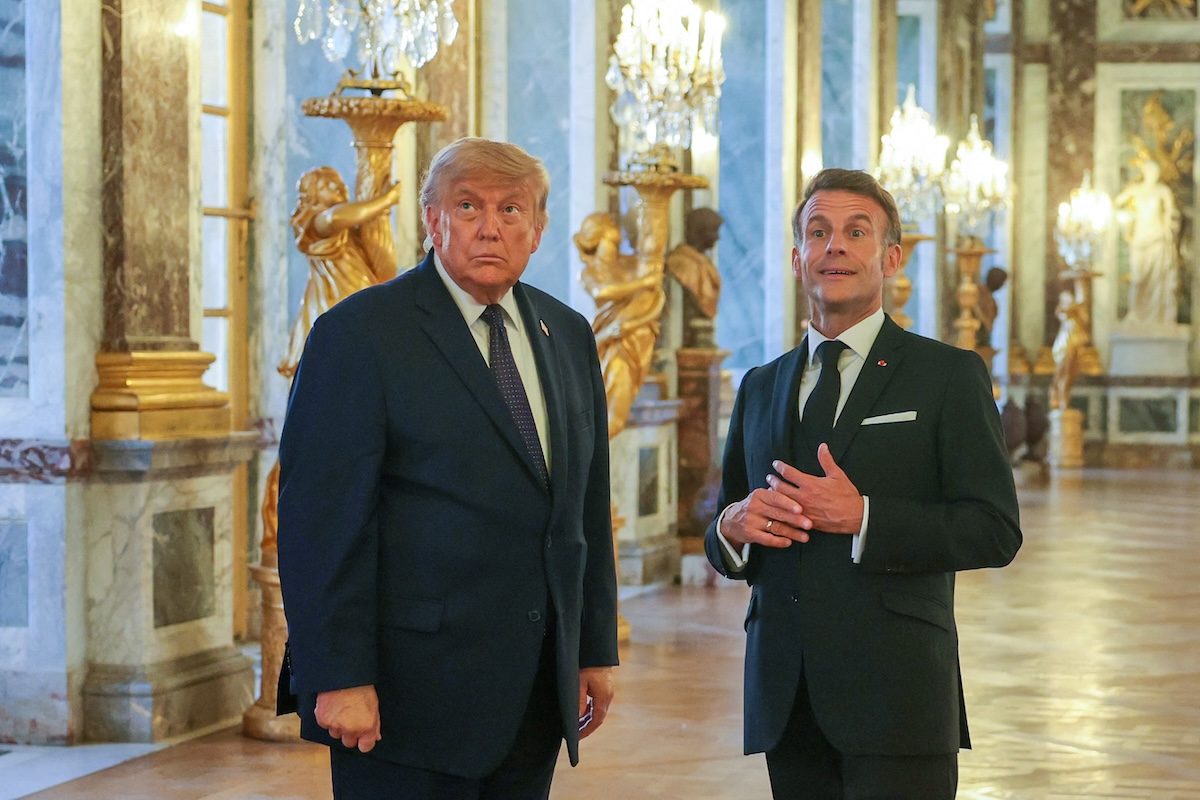
President Donald Trump is scheduled to meet French President Emmanuel Macron at 5:35 p.m. Eastern time on Monday in New York. The White House released the timing on Sunday evening, placing the encounter hours before the start of high-level debate at the 81st session of the United Nations General Assembly. Macron will travel to the city from Saint-Pierre-et-Miquelon, the French archipelago off the coast of Newfoundland, where he held talks with Canadian Prime Minister Mark Carney on Sunday. Those talks focused on sovereignty and deeper bilateral ties at a moment when Trump has repeatedly raised the prospect of Canadian annexation and circulated maps that include the French islands under an American flag.
Macron’s schedule in New York includes additional meetings with Ukrainian President Volodymyr Zelensky and with several Middle Eastern leaders, among them Iranian President Massoud Pezeshkian. He is also expected to confer with global figures in artificial intelligence. French reporting notes that these encounters occur against record fuel prices in both France and the United States, driven by rising oil costs tied to intensified hostilities between Saudi Arabia and Iran-backed Houthi forces in Yemen. Macron will deliver his General Assembly address on Tuesday, in which the Élysée has said he will advocate “effective multilateralism” built on coalitions that deliver concrete results. In a Friday briefing, French officials described the United Nations as “in trouble” and questioned the effectiveness of current multilateral action, pointing to the progressive disengagement of the five permanent members of the Security Council.
The meeting itself carries no public agenda beyond the fact of the encounter. Every outlet that published the White House schedule recorded the same core details without dispute. Trump is also set to meet New York Mayor Zohran Mamdani, a left-leaning Democrat and vocal critic of Trump’s policies, immediately before the session with Macron. Macron’s arrival from Canada underscores the compressed calendar of the General Assembly week, which runs from September 22 to 28 and draws dozens of heads of state to the city.
European coverage placed Ukraine at the center of the anticipated discussion. French and Belgian accounts stated that Macron intends to press Trump to maintain support for Ukraine and to increase pressure on Russia. The Moldovan outlet added that tariffs and customs duties form part of the expected conversation, reflecting its reading of Macron’s priorities for easing commercial tensions. These outlets tied the talks to energy security and to Macron’s broader effort to sustain European positions ahead of wider leader engagements. In contrast, the American and Saudi accounts stayed closer to the bare announcement, describing the meeting as one item on the presidential schedule during a week of UN gatherings. They noted Macron’s other planned bilaterals but did not foreground Ukraine or trade as the primary stakes.
No source in the set carried an on-record statement from either government spelling out the precise list of topics. The Élysée has signaled through background briefings that Macron hopes to build on apparent movement toward European positions at the June G7 summit in Evian. French outlets reported that Macron will also convene a UN Security Council meeting on Ukraine that will address Black Sea food security and grain exports. These details appear in the French and Belgian pieces but receive only passing mention, if any, in the American and Saudi reports.
The selected sources contain no direct reporting from Canadian outlets on the Carney-Macron meeting that immediately preceded the New York trip. Statements from both leaders in Saint-Pierre-et-Miquelon were carried through the French and American accounts, which described the defense of sovereignty and the call for deeper Franco-Canadian cooperation. The absence of a Canadian voice in this particular set means the reader sees the Sunday encounter only through the lens of the two governments directly involved in the Monday session.
The convergence across independent reporting chains establishes the timing, location, and sequence of travel without contradiction. Where the accounts diverge is in the weight given to regional concerns. Outlets closer to the European security architecture treat the meeting as an early calibration of transatlantic positions on Ukraine and energy. The Moldovan piece, reflecting a country that has faced Russian hybrid pressure and energy dependence, singles out tariffs and Russian sanctions as explicit items. The American account registers the meeting as standard diplomacy on the UN calendar, consistent with its distance from the immediate territorial and energy stakes. The Saudi piece, as an observer of Middle East dynamics, records the announcement without layering additional regional framing.
What to Watch
The European emphasis on Ukraine draws from Élysée background material and aligns with Macron’s stated plans for the week. The tariff reference stands on a single reporting chain and therefore carries less weight than the corroborated elements. The bare schedule itself rests on the White House document released Sunday evening and is reproduced across all five outlets. A reader limited to any one national press would miss the range of stakes that other capitals project onto the same slot. The meeting opens the General Assembly calendar at a moment when energy prices, Ukrainian security guarantees, and commercial frictions are live files for multiple governments. Its outcome will shape the tone of subsequent bilateral and multilateral contacts rather than resolve any one file on its own.
That’s how the world told the story.
Get tomorrow’s bulletin by email — one briefing, up to six stories.
Subscribe freeNo spam. One-click unsubscribe. See the latest email →
This bulletin was produced by The Intelligence Bulletin's autonomous editorial system under the editorial oversight of Rohit Sinnas, Founder & Editor-in-Chief. How it works →