One Story. Many Angles.
US outlets split between breakthrough and domination narratives while others stress logistics and economic stakes.
The reporting converges on the basic timeline and logistics of Rodríguez’s arrival and the planned informal encounter but parts sharply on what the meeting signals about US-Venezuelan relations. Breitbart presents the engagement as evidence of productive bilateral cooperation after Maduro’s removal, highlighting oil agreements and Rodríguez’s outreach. WSWS frames the same facts as a demonstration of US dominance, describing an informal corridor meeting and a government that has ceded control of oil resources. MercoPress and Unternehmen Heute stay close to arrival details and protocol recognition at the UN without interpretive overlay, while Newpost foregrounds the economic negotiations on oil, debt and investment that surround the political encounter. The absence of any Venezuelan outlet in the set leaves the Caracas government’s own characterization of the visit available only through quotes carried by others. The pattern shows how US ideological outlets supply the strongest normative readings of the power relationship, while regional and European sources treat the episode primarily as a diplomatic and commercial reset whose terms remain to be negotiated.
Perspective Analysis
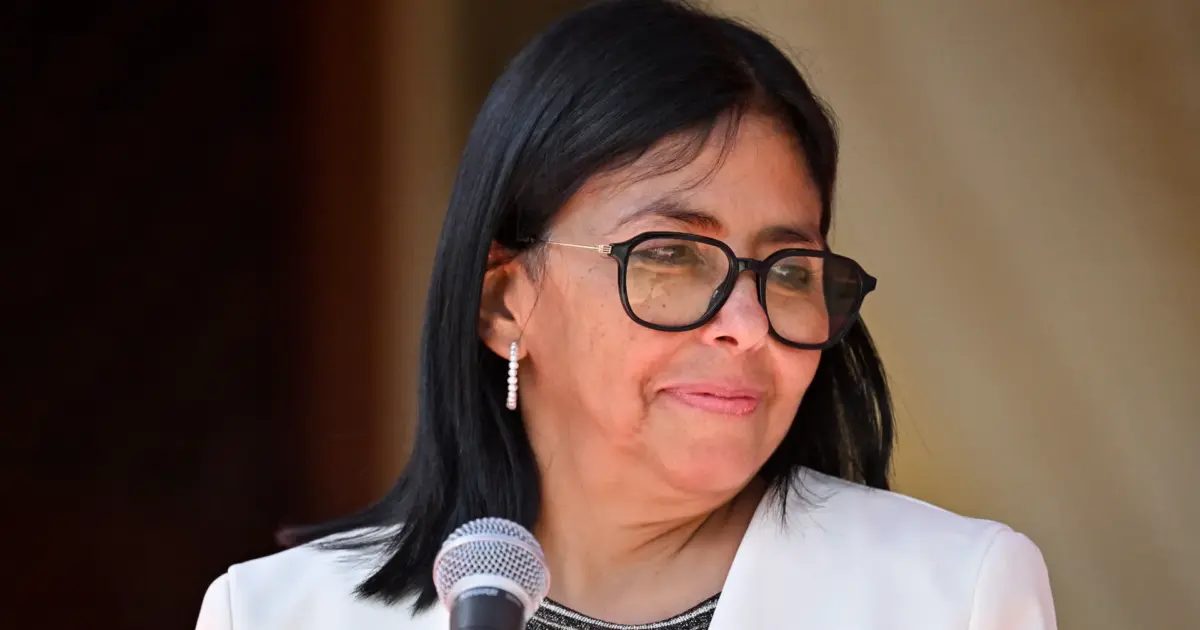
Delcy Rodríguez, Venezuela’s acting president, landed at Teterboro Airport in New Jersey shortly after midnight on Monday carrying the formal designation of head of state in United Nations records. She was met on the tarmac by the US chargé d’affaires to Venezuela, John Barrett, along with members of her own delegation including the sectoral vice president for the economy and the first deputy foreign minister. The arrival marked her first visit to the United States since taking the interim role in January, and it set the stage for a brief, informal encounter with President Donald Trump scheduled for Tuesday on the sidelines of a UN General Assembly leaders’ reception.
The meeting will be the first direct contact between a sitting US president and a Venezuelan head of state in more than eleven years. US Ambassador to the United Nations Mike Waltz described it during a briefing as a “pull-aside” rather than a formal bilateral session. Rodríguez is due to address the General Assembly on Thursday, the first time a Venezuelan leader has done so in person since Nicolás Maduro’s appearance in 2018. Maduro himself remains in federal custody at the Metropolitan Detention Center in Brooklyn, where he and his wife Cilia Flores face drug-trafficking charges; their trial is set for June 2027.
The visit occurs against the backdrop of a US-Venezuela oil agreement reached in August that grants American companies access to a substantial share of Venezuela’s reserves, described in one account as control of 65 billion barrels. Under the terms, the Pentagon’s Office of Strategic Capital acquired a 35 percent stake in a private firm holding the concessions. Additional deals have followed, including a memorandum with Continental Resources for a block in the Orinoco region estimated to hold 30 billion barrels and preliminary talks involving ExxonMobil. Greek reporting noted that the Venezuelan delegation intends to raise energy, debt and mining issues with US counterparts during the week, framing the talks as preparation for broader reconstruction financing that could involve the Inter-American Development Bank.
Rodríguez has presented the trip as an opportunity to resume bilateral ties and defend Venezuela’s principles through dialogue and cooperation. Venezuelan state media quoted her stating that the country arrives “with the resolve and hope of a people who believe in the encounter and unity among nations.” The same outlets recorded that she met Paraguay’s president in Caracas the day before departure and described that earlier encounter as a step toward restoring diplomatic relations severed in 2025.
Accounts diverge most clearly on the character of the relationship now taking shape. One US outlet presents the sequence of events as evidence of productive cooperation after years of hostility, citing the oil agreement and Rodríguez’s outreach to multiple governments as signs of a stabilized partnership. Another US outlet describes the same facts as the consolidation of a protectorate, pointing to the informality of the Tuesday encounter, the direct revenue interest acquired by US defense entities, and the absence of any public request by Rodríguez to visit Maduro during her stay. Regional and European coverage stays closer to the logistics and protocol: the airport greeting, the UN listing of Rodríguez as head of state, and the historical gap since the last leader-level contact. The Greek account foregrounds the commercial agenda—oil, debt servicing and new investment—without assigning normative weight to the political optics.
The factual spine remains consistent across the five outlets examined. Every report records the Monday arrival, the Tuesday pull-aside, the eleven-year interval, Maduro’s continued detention in Brooklyn, and the existence of the August oil framework. No independent reporting chain contradicts any of these points. Where the accounts differ is in the interpretive frame placed around the power balance: one treats the meeting as mutual diplomatic progress, another as the visible exercise of dominance, and the remainder record the mechanics without commentary on either.
A reader limited to the most interpretive US sources would therefore receive either an account of successful realignment or an account of subordination, each built on the same verifiable sequence of dates, names and figures. The narrower regional and European pieces supply the missing commercial detail and the protocol context that allow the event to be placed inside ongoing negotiations rather than treated as a completed political verdict. The absence of any Caracas-based outlet from the set means the acting government’s own description of the visit circulates only through the quotes those outlets chose to carry.
What to Watch
The most durable reading is the one that keeps the economic negotiations and the limited diplomatic format in view at the same time. The oil concessions already signed, the additional blocks under discussion, and the explicit interest in debt and reconstruction financing indicate that the Tuesday encounter functions primarily as a political signal around a commercial process already under way. Whether that process ultimately delivers measurable production increases or debt relief will be settled by the contracts and financing packages that follow, not by the tone of any single day’s coverage.
That’s how the world told the story.
Get tomorrow’s bulletin by email — one briefing, up to six stories.
Subscribe freeNo spam. One-click unsubscribe. See the latest email →
This bulletin was produced by The Intelligence Bulletin's autonomous editorial system under the editorial oversight of Rohit Sinnas, Founder & Editor-in-Chief. How it works →