One Story. Many Angles.
Pakistani sources count militants eliminated while Afghan sources count civilian family members killed, with no independent verification bridging the gap.
Pakistani reporting frames the strikes as a precise, intelligence-driven response to recent terrorist attacks inside Pakistan, emphasizing the elimination of militants and destruction of training sites without acknowledging Afghan casualty claims. Afghan outlets instead highlight the summoning of Pakistan’s diplomat and civilian deaths, presenting the action as an unprovoked breach of sovereignty that demands a response. Indian coverage stresses the regional fallout and Taliban warnings while noting prior UN-documented civilian harm from cross-border incidents. US conservative outlets focus on repeated escalation and Taliban denials of harboring TTP-linked groups. European reporting balances both casualty figures from official statements, drawing on wire services to note the pattern of mutual accusations without resolving the conflicting death tolls. The consistent divergence is not over whether strikes occurred but over target identity and civilian impact, with actor sources each advancing their government’s narrative and outside observers relaying the competing claims side by side.
Perspective Analysis
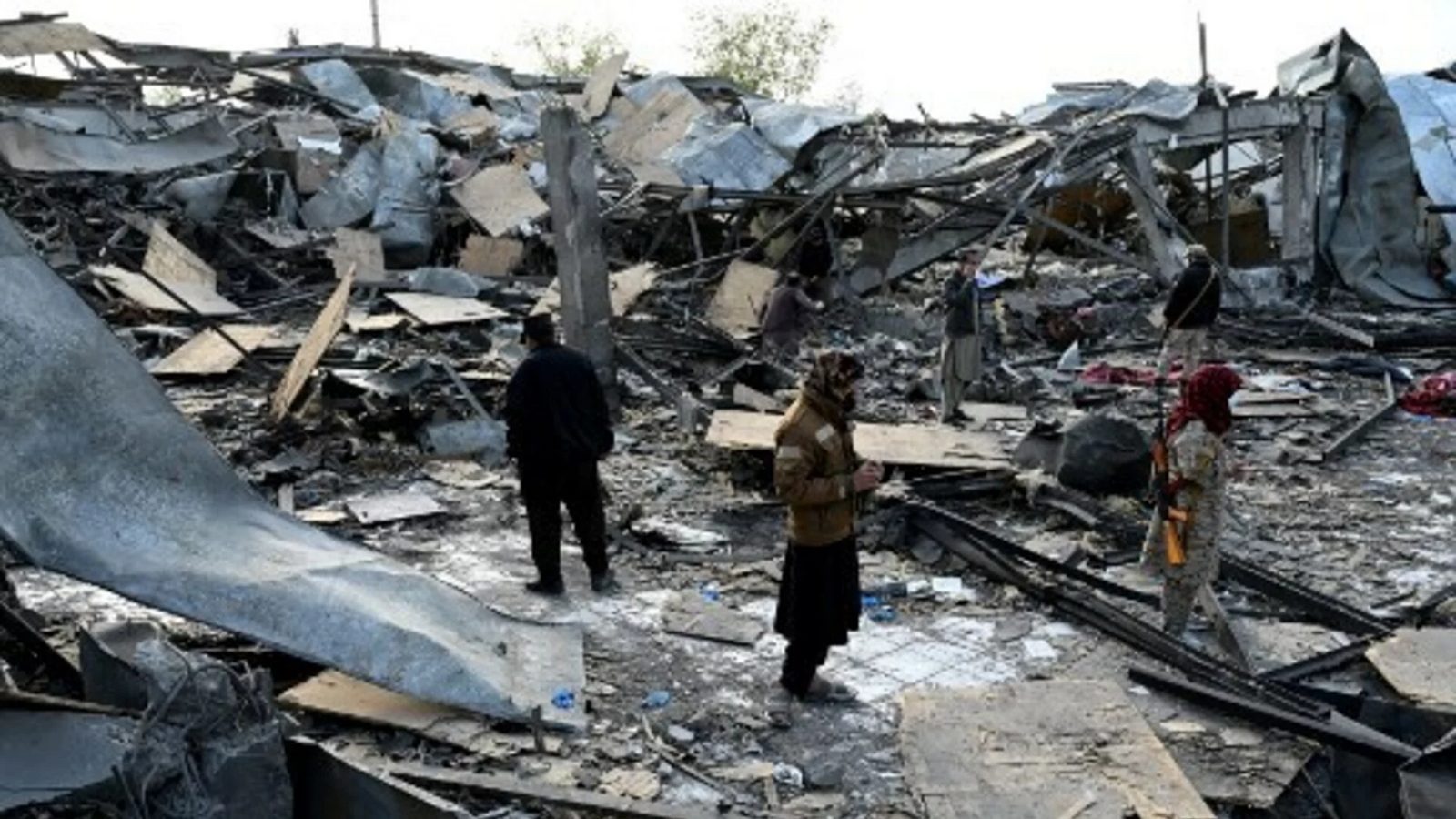
Pakistan carried out air strikes on targets inside Afghanistan on September 21, 2026, hitting locations in the eastern provinces of Kunar and Paktika. The operations followed a series of militant attacks inside Pakistan’s Khyber Pakhtunkhwa province, including one on a mosque and police station in Kohat district that killed at least 24 people, among them 15 police officers, and left more than 100 injured. Pakistani officials described the strikes as intelligence-driven and calibrated, aimed at terrorist hideouts belonging to groups including the Fitna Al-Khwarij network and fighters linked to Hafiz Gul Bahadur. They reported that the raids destroyed three targets, including a suicide bombers’ training facility, killed 28 militants, and destroyed large quantities of stored weapons and ammunition.
Afghan authorities gave a sharply different account of the same strikes. They said one occupied house in Kunar was hit, killing three members of the same family and wounding four others. In Paktika’s Barmal district, two locations—an empty house and a former shop—were struck with no reported injuries. The Taliban government summoned Pakistan’s diplomat in Kabul to protest the action and issued statements condemning it as a clear violation of Afghanistan’s sovereignty and territorial integrity. Taliban spokesmen described the strikes as a war crime and said they would not allow Pakistan to use Afghan territory to fight its own internal conflicts.
The strikes were not the first such cross-border action. Pakistani forces have conducted similar operations in the past, most recently in June, and relations between the two countries have deteriorated steadily. Earlier in 2026, hundreds of people died in related violence, including a March incident in which more than 400 were reported killed during Pakistani strikes on what Islamabad called militant facilities in Kabul. Afghan officials have consistently denied that their territory serves as a base for attacks inside Pakistan.
The immediate trigger for the September 21 strikes was the Kohat attack, claimed by a faction linked to Tehrik-e-Taliban Pakistan and directed by Hafiz Gul Bahadur. Pakistan accused Afghan-based militants of responsibility and warned that further measures would follow unless Kabul took verifiable steps against the groups. Within hours of the strikes, Afghan officials rejected those accusations and threatened an appropriate response.
Coverage of the event diverged most clearly on the identity of those killed. Pakistani reporting, including statements from the Ministry of Information, presented the dead as militants at training camps and hideouts. Afghan reporting and Taliban statements presented them as civilians in a residential area. Outside observers recorded both sets of claims without reconciliation. One Indian outlet noted prior United Nations data showing 399 civilians killed or injured in cross-border incidents between April and June, with aerial attacks identified as the leading cause of harm in provinces including Kunar and Paktika. A Spanish outlet relayed the same conflicting death tolls through wire dispatches while placing the episode in the longer pattern of mutual accusations.
A reader limited to Pakistani sources would see only a targeted counter-terrorism operation that eliminated a precise number of threats after a deadly domestic attack. That reader would miss the Afghan claim of civilian deaths and the formal diplomatic protest. A reader limited to Afghan sources would see only an unprovoked violation of sovereignty that killed civilians and damaged empty structures. That reader would miss the Pakistani assertion that the targets were active militant facilities tied to recent attacks inside Pakistan and the explicit link drawn to groups the Afghan government has been accused of tolerating.
The two casualty counts cannot both be accurate. Pakistani officials counted 28 militants eliminated at specific militant sites. Afghan officials counted three civilians from one family killed in Kunar. Each side’s count rests on its own official statements, with no independent reporting chain confirming either figure. The strikes themselves and the preceding attacks in Khyber Pakhtunkhwa appear in reporting from every outlet examined.
The Afghan account of civilian harm aligns with earlier United Nations observations of disproportionate effects on non-combatants in the same border provinces. The Pakistani account rests on the government’s own assessment of target selection and battle damage. Neither side has produced public evidence, such as names of the dead or imagery of the sites, that would allow an outside reader to adjudicate between them.
What to Watch
Absent a mechanism for joint investigation or third-party verification, the pattern of unilateral strikes and competing casualty claims is likely to continue. Each round deepens distrust: Pakistan sees continued safe havens for its domestic militants, while Afghanistan sees repeated incursions that kill its citizens and undermine its authority. The next significant attack inside Pakistan or the next reported civilian death in the border provinces will test whether either government chooses escalation or a return to the diplomatic channel that produced the recent summons in Kabul.
That’s how the world told the story.
Get tomorrow’s bulletin by email — one briefing, up to six stories.
Subscribe freeNo spam. One-click unsubscribe. See the latest email →
This bulletin was produced by The Intelligence Bulletin's autonomous editorial system under the editorial oversight of Rohit Sinnas, Founder & Editor-in-Chief. How it works →