One Story. Many Angles.
US sources stress AI mechanism and American proposals while Chinese coverage presents routine equal diplomacy.
The reporting converges on the fact of the New York meeting between Bessent, Greer and He Lifeng but parts sharply on what mattered most. US outlets centered American initiative and concrete deliverables such as the AI notification mechanism and Board of Trade process, quoting Bessent directly on moving from opacity to transparency. Chinese state coverage framed the encounter as routine, equal-footing diplomacy guided by leaders’ consensus and mutual respect, mentioning AI only in passing alongside broader trade exchanges. Hong Kong reporting highlighted the accumulating commercial damage from existing tech and trade restrictions on firms in both countries. Japanese regional coverage added critical minerals as a distinct East Asian supply-chain priority alongside AI and tariffs. The pattern shows each outlet foregrounding the element most salient to its audience’s economic or strategic position rather than inventing disagreement; all describe preparatory talks without claiming breakthrough. This reveals how national vantage points shape which stakes receive emphasis even when the underlying event is the same bilateral encounter.
Perspective Analysis
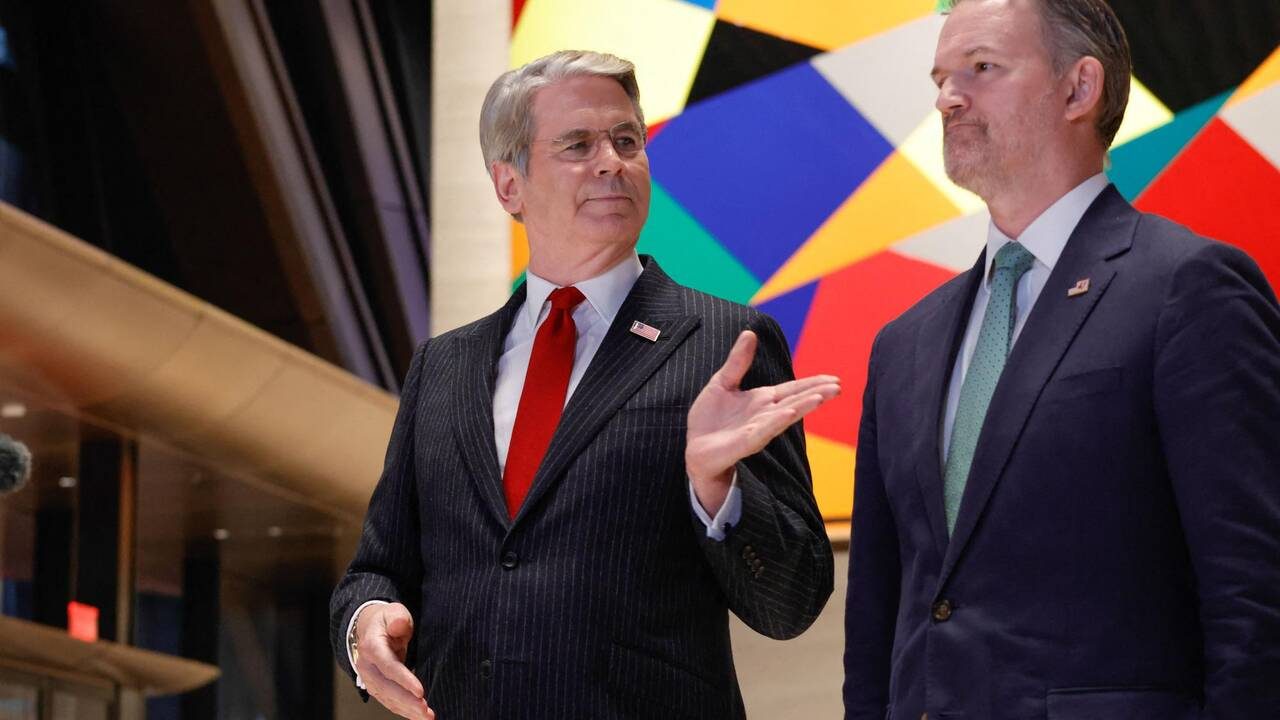
US Treasury Secretary Scott Bessent and Trade Representative Jamieson Greer met Chinese Vice Premier He Lifeng at JPMorgan Chase headquarters in Manhattan on September 20 and 21, 2026. The two sides exchanged views on economic and trade issues, the implementation of earlier consensus, and artificial intelligence. Bessent later described the conversation as very successful and said the countries had agreed to meet again for further AI dialogue. He told reporters that the discussion had moved the relationship on AI from opaque to more transparency between the world’s top two powers. The officials also addressed a proposed Board of Trade mechanism intended to identify non-sensitive goods, including consumer items, low-tech products, energy, agricultural goods and possibly medical devices, that could be traded in a balanced way. Critical minerals flows featured in the exchanges, with US officials noting that Chinese performance on restoring supplies had not met expectations under the existing truce.
The meeting took place days before President Donald Trump was scheduled to host President Xi Jinping in Washington for a summit and state dinner. That encounter would mark the second face-to-face meeting between the two leaders in 2026, following their May session in Beijing. The New York talks were meant to lay groundwork and produce small, demonstrable steps ahead of the presidential encounter. A tariff truce reached the previous November in Busan, South Korea, remained in force but was set to expire on November 10. Under that arrangement China had pledged to increase purchases of US agricultural goods by $17 billion annually and to buy more than 200 Boeing aircraft, while both sides worked to ease tariffs on non-strategic items.
Chinese state reporting described the New York session as guided by the important consensus reached by the two heads of state. It said the delegations, led by He Lifeng on one side and Bessent and Greer on the other, held candid, in-depth and constructive exchanges on economic and trade issues of common concern. The account added that the sides also held dialogues on artificial intelligence-related issues while upholding principles of mutual respect, peaceful coexistence and win-win cooperation. No specific deliverables were highlighted beyond the general continuation of talks.
US reporting placed heavier weight on the AI component. Bessent’s post-meeting comments to reporters and his social-media statement framed the notification mechanism for national-security-related AI incidents as a concrete advance. The same accounts noted that the Board of Trade process was being operationalized to ease tariffs on a defined set of lower-risk goods. Greer emphasized that the engagement would help advance America’s economic interests and deliver results for American farmers, manufacturers and workers. The coverage also recorded that the United States remains the leader in AI and is open to discussions on avoiding shared risks.
Hong Kong reporting turned instead to the accumulating costs of the broader rivalry. It noted that tech firms and industrial manufacturers on both sides had recorded lost sales, squeezed margins, supply-chain disruptions and rising competition. One cited example was a US chipmaker recording a $400 million charge in the first half of its financial year for excess inventory tied to restricted products. The piece positioned these frictions as the central backdrop against which the New York talks and the coming summit would unfold.
Japanese regional coverage added critical minerals as a distinct priority alongside AI and tariffs. It reported that US officials viewed Chinese deliveries of rare-earth magnets and other inputs as insufficient under the existing truce. Analysts quoted in the account expected the two sides to agree only on incremental steps rather than any breakthrough, with the status quo remaining the most probable near-term outcome. The reporting placed the minerals issue in the context of advanced semiconductor manufacturing that powers AI systems.
A reader limited to one national press would therefore receive markedly different impressions of what the meeting accomplished and what the stakes actually were. Chinese state accounts would leave the impression of steady, protocol-driven diplomacy between equals, with AI appearing only as one item among many. American domestic reporting would convey a US-driven push for specific transparency tools and tariff adjustments, backed by on-the-record statements from the Treasury secretary. Hong Kong coverage would foreground the commercial damage already inflicted on companies, suggesting that the talks addressed symptoms more than causes. Japanese reporting would underscore supply-chain vulnerabilities in critical inputs that matter acutely to manufacturing economies in the region.
These differences arise directly from the material each outlet chose to foreground rather than from conflicting factual claims about whether the meeting occurred. All five accounts agree that the officials convened, that AI and trade were on the agenda, and that the session preceded the Trump-Xi summit. The divergence lies in which element each outlet treats as the central thread. Chinese state language aligns with official Ministry of Commerce phrasing that stresses consensus and equality. US reporting draws on Bessent’s direct statements and social-media updates. Hong Kong reporting rests on earnings data from affected firms. Japanese coverage incorporates analyst commentary on minerals performance and likely deliverables.
The most reliable picture emerges from treating the corroborated elements as the spine and the differing emphases as evidence of national vantage points rather than competing versions of events. The meeting produced no public breakthrough announcements, consistent with analyst expectations of small steps ahead of the presidential summit. The AI notification mechanism received the clearest on-the-record description from the US side, while the Chinese account presented AI only in general terms. Critical minerals and the commercial costs of restrictions appeared in reporting from outlets attuned to supply-chain and business impacts but received less attention in the actor capitals’ own accounts.
What to Watch
The pattern indicates that each press is selecting the dimension most salient to its audience’s position in the rivalry. American readers are shown concrete US proposals on AI safety and tariff relief. Chinese readers see continuity and protocol. Readers in Hong Kong and East Asia see the tangible effects on firms and input flows. None of the accounts claims a fundamental shift in the relationship. The next test will be whether the Washington summit produces public deliverables on the AI mechanism, the Board of Trade list, or minerals commitments that match the preparatory language used in New York. The absence of any such claims in the current reporting suggests both sides remain focused on managing rather than resolving the underlying frictions.
That’s how the world told the story.
Get tomorrow’s bulletin by email — one briefing, up to six stories.
Subscribe freeNo spam. One-click unsubscribe. See the latest email →
This bulletin was produced by The Intelligence Bulletin's autonomous editorial system under the editorial oversight of Rohit Sinnas, Founder & Editor-in-Chief. How it works →