One Story. Many Angles.
Every outlet reports the same vote numbers and denial, yet each foregrounds either Khan’s nationality, the court’s location or the Israeli warrants.
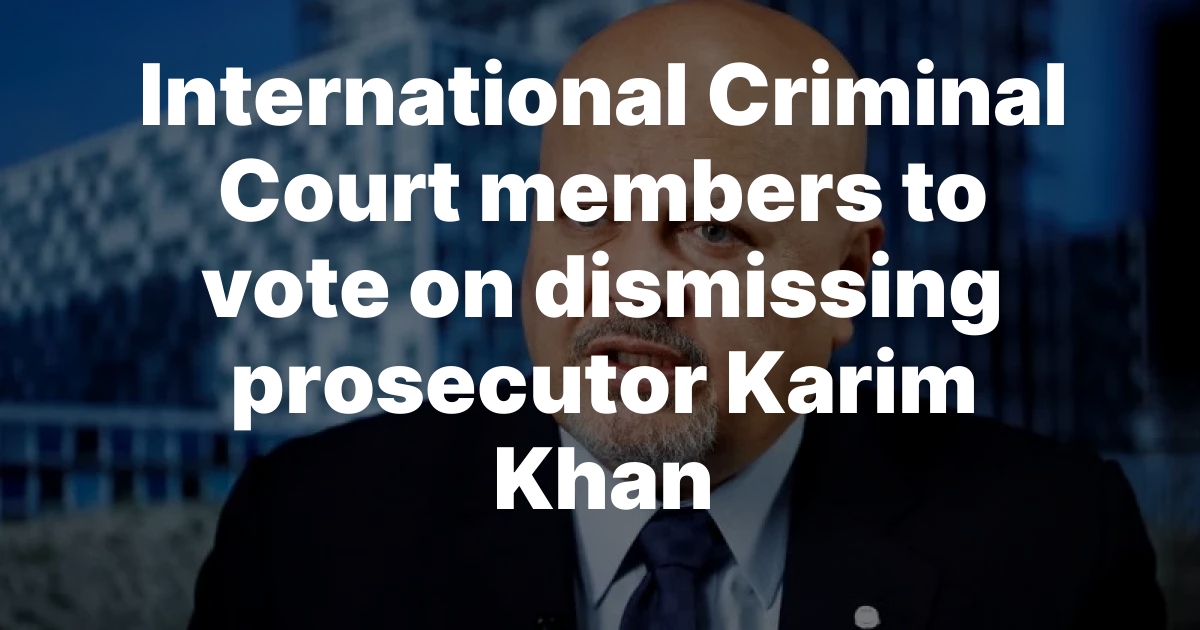
Coverage of Karim Khan’s removal reveals a shared factual core across five outlets but sharp differences in what each chooses to foreground. The UK’s AOL piece treats the ouster as a personal and national story for the British prosecutor whose Netanyahu warrant drew global attention, while noting US sanctions threats. Dutch NRC frames it as an institutional blow to the Hague-based court, stressing how US pressure now squeezes the Netherlands as host. Israel’s JNS ties the vote directly to Khan’s pursuit of Netanyahu, presenting the misconduct case against that backdrop. India’s Tribune highlights Khan’s Pakistani heritage and the Netanyahu warrant in one headline, underscoring South Asian identity. Hong Kong’s SCMP, carrying Reuters copy, stresses internal ICC dynamics and the immediate start of a new election. The pattern shows outlets close to the actor, the host city or the implicated conflict inserting their own stakes; the bare vote itself travels cleanly via wire.
Perspective Analysis
The removal of Karim Khan as chief prosecutor of the International Criminal Court exposes how national ties, institutional location and direct involvement in high-stakes conflicts shape what different outlets choose to emphasize in the same event. The July 24, 2026 vote by the Assembly of States Parties to dismiss him on grounds of serious misconduct tied to sexual misconduct allegations did not produce uniform institutional reporting. Instead, coverage aligned with each outlet’s proximity to the individuals or pressures involved.
Khan, a 56-year-old British barrister of Pakistani origin elected in 2021, faced allegations from a junior staff member of coercive and non-consensual sexual behavior during work trips and from a second woman regarding earlier conduct. He has denied all claims and stated through his lawyer that the process denied him a fair hearing and lacked lawful basis. The assembly recorded 82 votes in favor of removal, 13 against and 11 abstentions during a closed session at UN headquarters in New York. The warrants Khan secured against Russian President Vladimir Putin and Israeli Prime Minister Benjamin Netanyahu remain in force, and the court has begun the process of electing a successor, with the new prosecutor not expected before 2027.
British reporting treated the outcome as a national story centered on a prominent UK national whose tenure included arrest warrants against major powers. It detailed Khan’s nine-year mandate, the timeline of allegations first raised in 2024, and the US administration’s recent sanctions on ICC officials along with vows to disable the court’s operations. This account placed Khan’s prior cases, including those against Putin and Netanyahu, as the elements that elevated the court’s profile and invited retaliation from Washington. It noted that senior court officials in The Hague expect US pressure to continue regardless of who replaces him.
Dutch coverage, by contrast, placed the vote inside the court’s ongoing institutional strain and the diplomatic squeeze it places on the Netherlands as host state. The report described how renewed US threats, including statements from Secretary of State Marco Rubio about dismantling the ICC, leave the host country caught between alliance commitments and support for an organization headquartered in The Hague. It recounted the court’s earlier shift under Khan toward cases involving non-African defendants and the backlash those decisions provoked from Russia, the United States and Israel, none of which are ICC members. The piece stressed that the two-year scandal had already damaged the prosecution division’s 400-person staff and that the removal marks the first time a chief prosecutor has been ousted in this manner.
Israeli reporting tied the dismissal directly to Khan’s pursuit of warrants against Netanyahu and former defense minister Yoav Gallant over alleged war crimes in Gaza. The account presented the misconduct vote against the backdrop of those 2024 warrants, which produced sharp criticism from Israel and its main ally. It noted that some Khan supporters have suggested the allegations were amplified to discredit him after the warrants, while the oversight body found no evidence the complainants acted as agents of third parties. The story foregrounded the fact that the warrants themselves survive the personnel change.
Indian coverage opened by identifying Khan as Pakistan-origin and linking that heritage in the same headline to his request for Netanyahu’s arrest and the current dismissal proceedings. It supplied biographical details of his Edinburgh birth, King’s College London education and earlier roles heading a UN team investigating ISIS crimes in Iraq. The report described the allegations, Khan’s denials, and the parallel US campaign of sanctions and diplomatic pressure, framing the entire sequence through the lens of South Asian identity and the Israel-Gaza case.
Wire copy carried by a Hong Kong outlet stayed with the mechanics of the decision and the immediate next steps. It quoted the assembly president stating the exact majority that removed Khan for serious misconduct and breach of duty. It recorded the lawyer’s pledge to challenge the outcome legally and noted that the vote triggers an election process expected to conclude no earlier than next year. This version avoided extended discussion of any single national actor or the Netanyahu warrants beyond background context.
These differences are not random. Outlets tied to the prosecutor’s nationality foregrounded his personal record and the warrants that drew superpower attention. The host-nation paper examined the local diplomatic costs of hosting an institution under external assault. Coverage from the country whose leader faced one of those warrants connected the misconduct case to that conflict. Reporting attuned to regional ethnic identity combined heritage and the Israel case in a single frame. The wire treatment isolated the procedural facts and succession timeline.
What to Watch
The pattern shows that the factual core of the vote travels intact, yet each audience receives a version calibrated to its immediate stakes. The ICC now operates without its elected prosecutor while facing sustained US sanctions and threats of further measures. The deputies who have run the office since Khan stepped aside will continue in the interim, but member states must select a permanent replacement amid questions about whether the court can regain credibility or simply absorb another round of political pressure. Readers following only one national lens will miss how the same institutional event registers differently depending on whose interests sit closest to the story.
That’s how the world told the story.
Get tomorrow’s bulletin by email — one briefing, up to six stories.
Subscribe freeNo spam. One-click unsubscribe. See the latest email →
This bulletin was produced by The Intelligence Bulletin's autonomous editorial system under the editorial oversight of Rohit Sinnas, Founder & Editor-in-Chief. How it works →