One Story. Many Angles.
Bahrain focuses on registering local damage while Saudi-led Gulf states push collective self-defense and UN resolutions.
Bahrain’s GDN Online leads with a practical local proposal for a damage-registration database after intercepts, treating the strikes as an immediate civilian and infrastructure issue rather than a regional standoff. Arab News frames the same events as a collective GCC-Jordan sovereignty breach requiring a UN resolution and legal self-defense measures, emphasizing unified Gulf pushback against repeated attacks on energy and port facilities. Anadolu Agency sticks to a straight relay of the Iranian military statement without adding condemnation or defense details. SANA highlights Jordanian and Bahraini air defenses successfully neutralizing drones and missiles with no reported harm, underscoring operational readiness and formal protests to Tehran. JNS presents the claims through the lens of renewed threats to US-allied positions in the region. The pattern shows local impact reporting in Bahrain diverging from Gulf-wide diplomatic coordination in Saudi coverage and neutral claim-relaying in Turkish reporting, while Syrian and Israeli outlets stress either defensive successes or persistent Iranian pressure.
Perspective Analysis
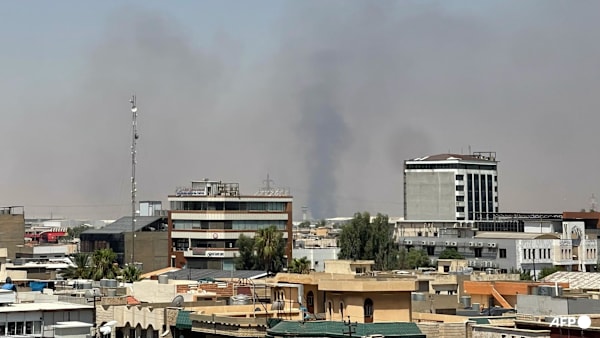
Bahrain’s proposal for a national database to log civilian and infrastructure damage from recent intercepts reveals the core divergence in how states closest to Iranian drone strikes are responding compared with their regional partners: for Manama, the priority is immediate, granular recovery planning rather than collective diplomatic theater. On July 24, 2026, Bahrain’s GDN Online led with this administrative measure, framing the Iranian Arash kamikaze drone launches targeting U.S. facilities at Isa Air Base as a domestic incident requiring systematic documentation of any harm to homes, businesses, or public assets. This approach treats the explosions and air-raid sirens reported that day as a practical problem of debris, potential unexploded ordnance, and citizen reassurance, not primarily as another round in a regional power struggle.
The same events drew a sharply different emphasis from Saudi-based Arab News, which on July 23 described the strikes as part of a broader pattern of Iranian attacks on Bahrain, Kuwait, and Jordan. The outlet reported a joint GCC-Jordan statement calling for an urgent UN Security Council resolution to halt the assaults and explicitly reaffirming the right to self-defense under the UN Charter. It highlighted accusations that Tehran and its allies had targeted energy facilities, desalination plants, ports, and airports, framing these as violations of international law and a June ceasefire agreement with the United States. The coverage positioned the incidents within a wider Gulf effort to coordinate legal and diplomatic pushback, including support for Saudi Arabia against Houthi threats and Iraqi moves to centralize weapons control. Where Bahrain’s local reporting stayed grounded in damage registration, the Saudi-aligned account elevated the events to a sovereignty and collective-security crisis demanding international intervention.
Turkish state agency Anadolu Agency confined itself to a concise relay of the Iranian military’s announcement that it had launched drone attacks on U.S. bases in Bahrain and Jordan. Its July 24 dispatch carried no additional details on interceptions, no condemnation, and no mention of defensive successes or diplomatic fallout, presenting the claims as straightforward statements from Tehran. This neutral transmission contrasts with outlets that either stressed successful neutralization or the need for unified countermeasures, illustrating how a non-Gulf actor can cover the same Iranian assertion without endorsing or contesting the surrounding narratives of threat or resilience.
Syrian state media outlet SANA, reporting on July 21 but referencing the ongoing pattern, focused on the operational effectiveness of Jordanian and Bahraini air defenses. It detailed Jordan’s downing of five drones and three missiles with no casualties or material damage, noted Bahrain’s destruction of aerial threats, and recorded formal protests delivered to Iranian diplomats. The account underscored military readiness and engineering teams handling debris, while characterizing attacks on civilian areas as breaches of international humanitarian law. By foregrounding defensive successes and procedural responses, SANA aligned coverage with narratives of neighboring states maintaining control against Iranian actions, differing from both Bahrain’s damage-tracking initiative and the Gulf’s call for UN action.
The Jewish News Syndicate presented the Iranian claims as renewed pressure on U.S.-allied positions in Jordan and Bahrain, situating the drone launches within a longer sequence of threats to American assets and regional partners. Its reporting avoided local administrative measures or joint diplomatic statements, instead highlighting the persistence of Iranian targeting of facilities used by Washington’s allies. This framing underscores security concerns shared by Israel and the United States without dwelling on civilian recovery or GCC coordination.
These divergent emphases reflect real differences in stakes. Bahrain, directly experiencing sirens, intercepts, and the possibility of scattered debris near populated areas, has an immediate interest in cataloging harm for compensation, insurance, and future preparedness; a damage database serves that concrete need. Gulf states farther from the immediate flight paths, by contrast, see value in leveraging the incidents to rally international pressure and codify self-defense rights ahead of potential further escalation. Turkish neutrality keeps Ankara’s reporting usable across competing information environments, while Syrian and Israeli accounts each reinforce allied defensive narratives or persistent threat assessments suited to their respective audiences.
The United States has so far offered no confirmation of targeting or casualties at Isa Air Base, leaving open questions about the scale of any damage and the precise impact of Bahrain’s intercepts. Gulf statements reference violations of a June ceasefire, yet the continuation of strikes indicates that restraint remains fragile. Jordan’s protests and Bahrain’s civil-defense measures suggest frontline states are preparing for protracted low-level exchanges rather than assuming rapid de-escalation.
What to Watch
What follows will likely hinge on whether the damage-registration effort in Bahrain produces verifiable claims that feed into the GCC’s diplomatic push, or whether further Iranian actions prompt the self-defense measures the joint statement reserved. Energy infrastructure and commercial shipping remain exposed, and any perception that intercepts are only partially effective could accelerate calls for stronger external involvement. Readers tracking the story should watch not only for the next round of launches but for whether Manama’s database begins surfacing public tallies that either bolster or complicate the regional narrative of systematic attacks.
That’s how the world told the story.
Get tomorrow’s bulletin by email — one briefing, up to six stories.
Subscribe freeNo spam. One-click unsubscribe. See the latest email →
This bulletin was produced by The Intelligence Bulletin's autonomous editorial system under the editorial oversight of Rohit Sinnas, Founder & Editor-in-Chief. How it works →