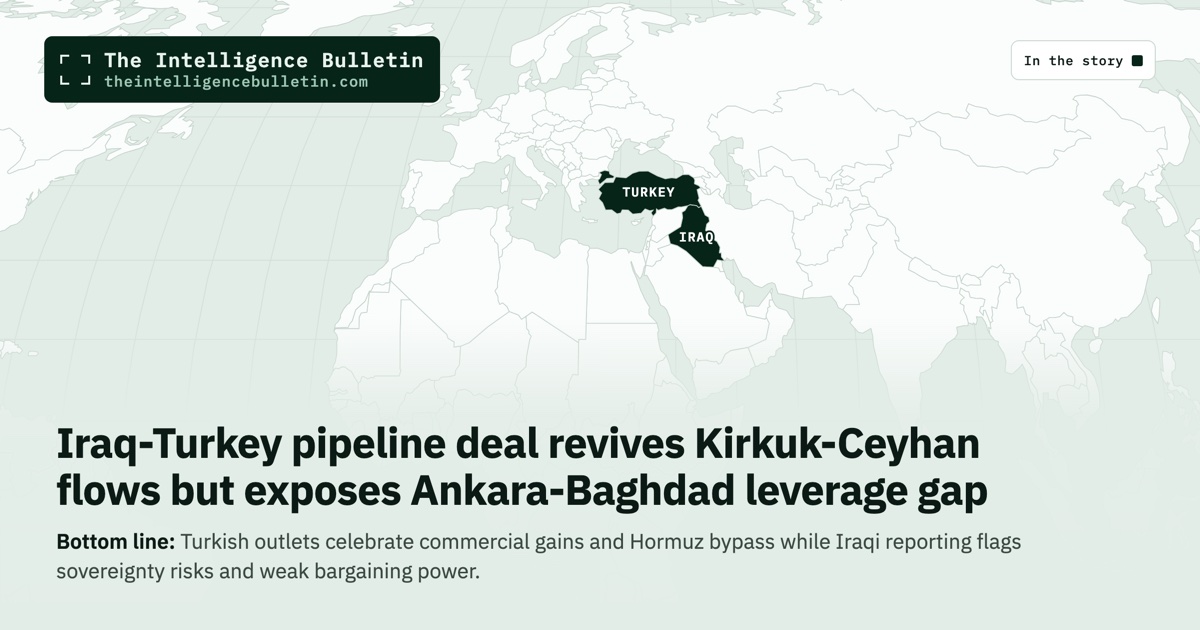
Iraq-Turkey pipeline deal revives Kirkuk-Ceyhan flows but exposes Ankara-Baghdad leverage gap

Map of the countries in the story: Iraq-Turkey pipeline deal revives Kirkuk-Ceyhan flows but exposes Ankara-Baghdad leverage gap
Iraq and Turkey signed a one-year agreement on August 1 2026 for BOTAŞ to transport up to 750,000 barrels per day of Iraqi crude through the Kirkuk-Ceyhan pipeline to Ceyhan. The deal follows the lapse of the prior long-term arrangement and Iraqi Prime Minister Ali al-Zaidi’s visit to Ankara. It serves as a bridge while both sides negotiate a broader framework covering oil, electricity and other sectors. The pipeline’s strategic value rose after Hormuz disruptions reduced southern exports.

One Story. Many Angles.

🇹🇷
Turkey
OdaTV
TURKISH
Original reporting
Türkiye-Irak oil agreement: Ceyhan brake on Hormuz crisis
“Türkiye-Irak petrol anlaşması: Hürmüz krizine Ceyhan freni”
Read →
🇮🇶
Iraq
Non14
ARABIC
Original reporting
Temporary Ceyhan deal: step to avoid Hormuz risks or truce binding Baghdad to Ankara’s terms?
“صفقة “جيهان” المؤقتة: خطوة لتفادي مخاطر هرمز أم هدنة تكبل بغداد بشروط أنقرة؟”
Read →
🇬🇧
United Kingdom
Upstream
Original reporting
Iraq and Turkey agree one-year oil pipeline deal
Read →
🇶🇦
Qatar
Al Jazeera
Original reporting
Turkiye and Iraq sign one-year oil pipeline deal amid global shift
Read →
🇦🇿
Azerbaijan
Azernews
Original reporting
Ankara, Baghdad reach new agreement on Iraq-Türkiye oil pipeline
Read →
5 sources · the reporting behind them comes from 5 different newsrooms
In Brief

Turkish outlets celebrate commercial gains and Hormuz bypass while Iraqi reporting flags sovereignty risks and weak bargaining power.

Turkish reporting frames the deal as a commercial and strategic win that secures alternative export routes and supplies Turkish refineries while bypassing Hormuz risks. Iraqi coverage questions whether the one-year extension strengthens Ankara’s leverage over Baghdad on pricing, volumes and security guarantees, citing experts who warn of a weak negotiating position and unresolved sovereignty issues from prior arbitration. Industry outlets focus narrowly on restoring 750,000 bpd flows and buying time for a longer accord. Al Jazeera situates the pact inside wider global energy realignment after Hormuz closures. Azernews highlights the corridor benefit for regional exporters seeking to avoid Gulf chokepoints. The pattern shows Turkish optimism on gains, Iraqi caution on concessions, and external emphasis on pragmatic stability rather than bilateral power shifts.

Perspective Analysis

Iraq and Turkey signed a one-year agreement on August 1 that routes up to 750,000 barrels per day of Iraqi crude from the Kirkuk fields through the Kirkuk-Ceyhan pipeline to Turkey’s Ceyhan terminal on the Mediterranean. The deal was struck between Turkey’s state pipeline operator BOTAŞ and Iraq’s state oil companies SOMO and NOC after the previous long-term arrangement lapsed on July 27. Turkish Energy Minister Alparslan Bayraktar and Iraqi Oil Minister Basim Muhammed Hüdeyir oversaw the signing in Ankara, days after Iraqi Prime Minister Ali al-Zaidi met Turkish President Recep Tayyip Erdoğan. Both governments described the pact as a bridge while they negotiate a wider framework covering oil, electricity, water resources and trade.

The pipeline itself has operated for nearly fifty years with a design capacity of 1.5 million barrels per day. Actual flows in recent months stood near 170,000 barrels per day, drawn mostly from fields in Iraq’s Kurdistan region that have faced repeated attacks. The new allocation assigns 750,000 barrels per day of capacity to the Iraqi companies for the coming year. Turkish officials said the arrangement keeps oil moving while talks continue on longer-term volumes and terms. Iraqi Prime Minister al-Zaidi called the signing a strategic milestone in a post on X.

The timing matters because of disruptions at the Strait of Hormuz. After United States and Israeli strikes on Iran in late February, Iraqi exports through southern Gulf terminals fell more than 80 percent, cutting monthly oil revenues from roughly $6 billion to under $2 billion. The Kirkuk-Ceyhan line now offers the only functioning overland route to the Mediterranean. Turkish statements tied the deal directly to that shift, noting that the line can supply Turkish refineries that were built decades ago to process Iraqi crude and currently draw only about 10 percent of their needs from Iraq.

Iraqi officials set a minimum export target of 750,000 barrels per day under the new terms. Turkish ministers spoke of eventually reaching one million barrels per day and expanding the line’s role to carry crude from southern Iraqi fields as well. They also linked the pipeline to a separate agreement giving Turkey Petrolleri a stake in Kirkuk fields previously held by BP. The one-year duration was presented on the Turkish side as an interim step that prevents a complete halt in exports while a comprehensive accord is prepared.

Iraqi experts raised cautions that do not appear in the Turkish or industry accounts. Oil analyst Kofand Sherwani noted that Turkey’s draft proposal for the longer-term deal includes higher minimum volumes and cooperation in petrochemicals, which would increase transit fees paid to Ankara. Economist Duraid al-Anzi argued that Baghdad entered the talks from a weaker position and that final pricing mechanisms must be settled to avoid selling below market rates. Geologist Ramadan Hamza added that success depends on restoring security for companies operating in the Kurdistan region and completing links that would allow southern crude to reach the northern line. These points sit alongside Iraq’s earlier arbitration victory, in which an international tribunal ordered Turkey to pay $1.4 billion in compensation for past transit disputes.

The pipeline’s role in energy security calculations now extends beyond the two capitals. Azerbaijan’s state-linked reporting highlighted the line as one more route that lets regional producers reach Mediterranean markets without passing through Hormuz. Coverage in Qatar placed the agreement inside the broader realignment of Gulf and Mediterranean flows after the Hormuz closures. Industry reporting from the United Kingdom stayed close to the technical details of restored volumes and the time bought for further negotiations.

Turkish accounts stress the commercial upside for Ankara. They quote Bayraktar on the line’s contribution to Turkey’s own refinery supply and on the prospect of routing additional Gulf crude through Ceyhan in the future. They frame the deal as part of a larger reset that includes joint development of Kirkuk fields and an increase in bilateral trade toward $17 billion. Iraqi reporting, by contrast, records the same volume figures and the same Hormuz context but pairs them with explicit warnings about pricing leverage and the need for security guarantees before production in disputed fields can scale.

The accounts align on the core transaction. Every source confirms the one-year term, the 750,000-barrel allocation, the involvement of the named ministers, and the link to the recent prime-ministerial visit. They also agree that the pipeline now functions as an alternative to Hormuz routes. Where the reporting diverges is in emphasis on power balance. Turkish and Azerbaijani pieces foreground the corridor’s strategic value and the commercial continuity it restores. Iraqi analysis inserts the history of arbitration losses for Turkey and the risk that Baghdad may lock in unfavorable transit terms. Industry coverage treats the arrangement as a straightforward operational fix without addressing the sovereignty questions raised by Iraqi experts.

What to Watch

The corroborated record shows a concrete revival of 750,000 barrels per day on a line whose prior flows had dropped sharply. The single-source cautions from Iraqi analysts about negotiating leverage draw on the documented arbitration outcome and on the absence of finalized pricing language in the interim deal. Those cautions align with the explicit statement in Iraqi reporting that the one-year pact is meant to buy time for a broader framework. Turkish statements, while accurate on volumes and the Hormuz context, do not address those pricing or security conditions. A reader relying only on the Turkish or industry accounts would miss the documented Iraqi concerns over how the interim terms could shape the longer agreement now under discussion. The next round of talks will test whether the pricing and security issues identified by the Iraqi experts are resolved or deferred.
Share this story

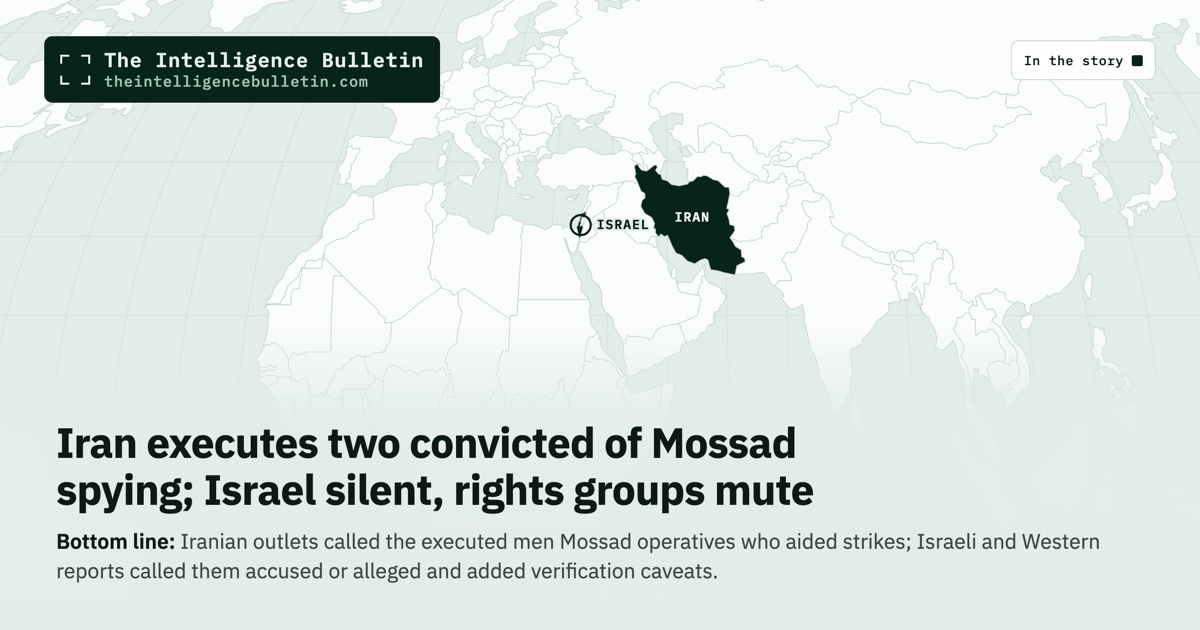
Iran executes two convicted of Mossad spying; Israel silent, rights groups mute

Map of the countries in the story: Iran executes two convicted of Mossad spying; Israel silent, rights groups mute
Iran executed Omid Behzad and Pouria Safvat on August 3, 2026, after the judiciary convicted them of sending coordinates, images and intelligence on military sites to Mossad during the June 2025 12-day war and February 2026 40-day conflict. Iranian state media described them as mercenaries and traitors whose actions aided Israeli strikes. Israeli and Western reports carried the same details from Fars and Mizan but added caveats that the claims could not be independently verified and used terms such as accused or alleged.

One Story. Many Angles.

🇮🇷
Iran
Press TV
Original reporting
Two Mossad operatives convicted of supplying security information to Israel executed: Iran Judiciary
Read →
🇮🇱
Israel
Ynetnews
Carries Fars news agency reporting
Iran executes 2 men accused of spying for Mossad during wars with Israel
Read →
🇹🇷
Turkey
Anadolu Agency
Carries IRNA reporting
Iran executes 2 alleged Mossad agents for espionage
Read →
🇬🇧
United Kingdom
Middle East Eye
Carries local media reporting
Iran executes two accused of colluding with Israel’s Mossad
Read →
🇨🇳
China
Xinhua
Carries Xinhua reporting
Iran executes 2 men convicted of collaborating with Israel’s Mossad: media -Xinhua
Read →
5 sources · the reporting behind them comes from 5 different newsrooms
In Brief

Iranian outlets called the executed men Mossad operatives who aided strikes; Israeli and Western reports called them accused or alleged and added verification caveats.

Iranian state media presented the hangings as routine justice against traitors who supplied precise targeting data to Mossad during two recent rounds of direct conflict. Israeli coverage repeated the Iranian account but inserted the standard qualifier that confessions could not be verified and noted Israel had offered no comment. Turkish and Chinese wires relayed the judiciary statement with neutral phrasing while a UK-based outlet kept the story to a single sentence on accusations of collusion. The pattern shows how the same primary Iranian sources produce sharply different effects once they cross borders: one side’s security triumph becomes another’s unverified allegation and a third’s brief note on alleged espionage. No outlet disputed that the men were executed or that the charges centered on wartime intelligence sharing; the divergence lies only in whether those charges are treated as established fact or as untested state assertions. That split matters because the executions are the latest concrete step in an escalating shadow war whose next moves will be shaped by whether each capital sees them as effective deterrence or as evidence of overreach.

Perspective Analysis

Iran executed Omid Behzad and Pouria Safvat by hanging on August 3, 2026, after the country’s judiciary convicted them of espionage for Israel’s Mossad intelligence service.

The judiciary statement, carried through Mizan and Fars news agencies, said the two men had supplied coordinates, photographs and other intelligence on Iranian military, police and security facilities during the 12-day war that began in June 2025 and the longer 40-day period of conflict that opened in late February 2026. Iranian authorities described the men as field-level operatives who transmitted the data through direct contacts with Mossad officers and through channels linked to Israeli intelligence, including social media and media outlets. The statement said the information helped Israel identify and strike targets inside Iran. Iranian reports called the men mercenaries and traitors who had participated in intelligence-gathering projects that appeared simple but formed part of larger operations.

The executions followed legal proceedings, approval by Iran’s Supreme Court and the rejection of clemency requests, according to the same judiciary account. Iranian state outlets presented the hangings as the outcome of successful counter-intelligence work by the Islamic Revolution Guards Corps that identified the pair through monitoring of Israeli-linked media channels and analysis of videos sent from sites later targeted.

The same core facts appear in reporting from Israel, Turkey, China and the United Kingdom. Those accounts identify the same two men, the same charges of passing location data and images during the two specified periods of fighting, and the same method of execution. None of the published pieces disputes that the executions took place or that the charges centered on wartime intelligence sharing with Mossad.

The conflicts themselves involved direct military exchanges between Iran on one side and the United States and Israel on the other. Turkish reporting placed the June 2025 fighting inside a 13-day window that ended on July 24 of that year and described subsequent US strikes on Iranian targets followed by Iranian responses against facilities in Jordan, Bahrain and Kuwait. Negotiations over security guarantees and navigation through the Strait of Hormuz had begun but later stalled.

Iranian coverage treats the convictions and executions as established security actions against agents who aided enemy strikes. Israeli reporting repeats the details of the charges but adds that the espionage claims rest on confessions and technical evidence, such as mobile-phone data, that cannot be independently verified, and records that Israel offered no immediate comment. Turkish and Chinese accounts use the term “alleged” when describing the men’s connection to Mossad and situate the event inside the wider sequence of US-Israel-Iran strikes and energy-route diplomacy. The shortest account, from a United Kingdom outlet, limits itself to one sentence noting that two men accused of colluding with Mossad had been executed.

No published report in the set contains statements from Amnesty International, other rights organizations, or Iranian opposition figures. Israeli silence on the executions is noted explicitly in one account. The divergence therefore lies not in the occurrence of the executions or the substance of the charges but in whether those charges are presented as proven fact or as untested assertions from Iranian state sources.

The corroborated elements across independent reporting chains are the executions themselves and the judiciary’s description of the intelligence provided during the two named conflict periods. The single-source observation that the underlying evidence cannot be verified stands as an explicit caveat attached to the Israeli account and is not contradicted by any other piece. Iranian state outlets carry the judiciary statement without that qualifier.

What to Watch

This leaves the executions as a documented act of Iranian state power whose justification rests entirely on domestic legal proceedings whose evidence has not been examined outside Iran. The absence of Israeli comment or independent confirmation means each capital will interpret the event through its existing view of the shadow war: as successful deterrence in Tehran, as an unverified claim in Jerusalem, and as one more data point in the longer pattern of accusations and counter-accusations for outside observers. The next moves in the conflict will likely be shaped by whether Israel treats the hangings as a warning that requires a response or as further evidence that Iranian intelligence operations remain porous.


Share this story

Venezuela Calls It a Gradual Roadmap; Wires Stress Consular Flights

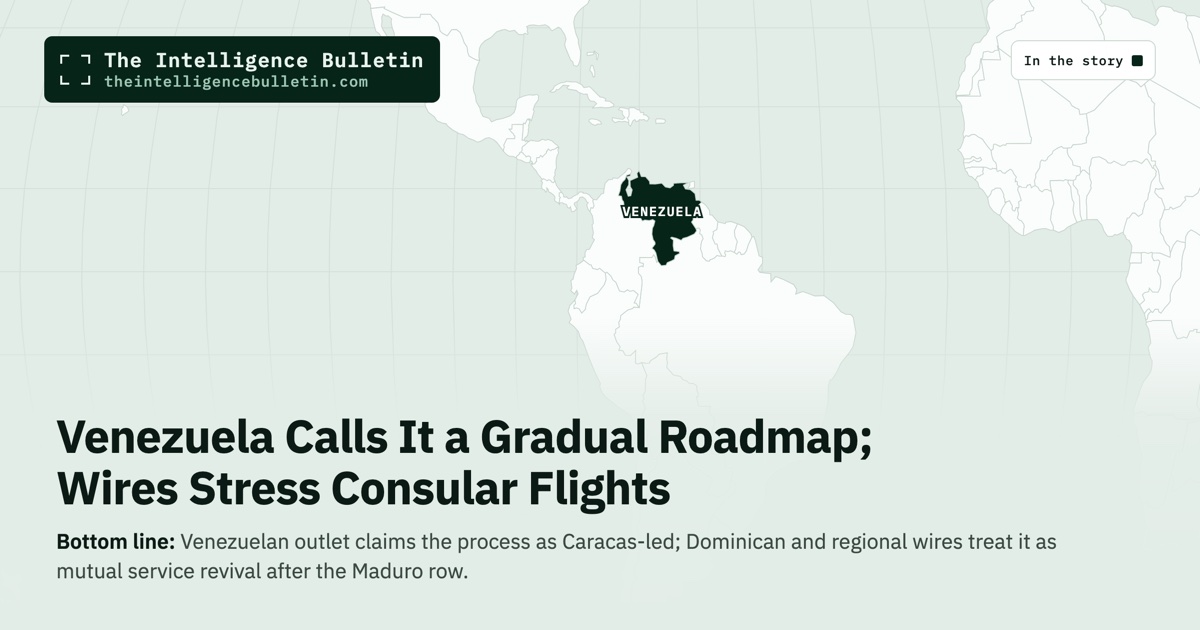
Map of the countries in the story: Venezuela Calls It a Gradual Roadmap; Wires Stress Consular Flights
Venezuela and the Dominican Republic announced August 2 a gradual normalization of diplomatic and consular ties severed in 2024 after the Dominican Republic questioned Maduro’s reelection. The first steps include restoring consular services and air links. Venezuela’s foreign ministry issued the statement; the Dominican side appears via wire reports. Interim President Delcy Rodriguez leads Caracas amid post-Maduro realignment.

One Story. Many Angles.

🇻🇪
Venezuela
El Universal
SPANISH
Original reporting
Caracas and Santo Domingo agree on a roadmap for the gradual normalization of their relations
“Caracas y Santo Domingo acuerdan una hoja de ruta para la normalización gradual de sus relaciones”
Read →
🇩🇴
Dominican Republic
El Nacional
SPANISH
Carries Agencia EFE reporting
Venezuela and Dominican Republic agree to reactivate consular services and air connection
“Venezuela y República Dominicana acuerdan reactivar los servicios consulares y la conexión aérea”
Read →
🇶🇦
Qatar
Al Jazeera
Carries AFP reporting
Venezuela and the Dominican Republic say they will work to restore ties
Read →
🇯🇲
Jamaica
Jamaica Observer
Carries AFP reporting
Venezuela, Dominican Republic agree to restore ties after dispute over Maduro
Read →
🇵🇦
Panama
La Estrella de Panamá
SPANISH
Carries EFE reporting
Venezuela and Dominican Republic agree to reestablish their diplomatic relations
“Venezuela y República Dominicana acuerdan restablecer sus relaciones diplomáticas”
Read →
5 sources · the reporting behind them comes from 1 newsroom — all carry the same original story
In Brief

Venezuelan outlet claims the process as Caracas-led; Dominican and regional wires treat it as mutual service revival after the Maduro row.

Venezuela’s El Universal presents the August 2 deal as Caracas’s own hoja de ruta, quoting Foreign Minister Félix Plasencia and stressing a phased process under mutual respect and international law. By contrast, the Dominican Republic’s El Nacional carries an EFE dispatch that zeroes in on immediate practical gains: consular reactivation and air connections suspended since the 2024 break. Jamaica Observer and La Estrella de Panamá, both relaying wire copy, embed the story in the Maduro election dispute and note parallel resets with Peru and Chile. Al Jazeera stays detached, adding context on US-led regime change and Delcy Rodriguez’s interim government opening to Washington investment. The pattern shows Venezuela claiming initiative while most others record a mutual reset without crediting either capital as driver.

Perspective Analysis

Venezuela and the Dominican Republic agreed on August 2 to begin a gradual restoration of diplomatic and consular relations that had been cut in 2024.

The Venezuelan foreign ministry issued the announcement through Foreign Minister Félix Plasencia, stating that both governments had settled on a joint roadmap. The first phase would restore consular services for citizens of each country. Later stages would move toward full diplomatic ties on a schedule the two capitals would set together. The statement described the move as serving the interest of both peoples in stronger institutional channels and in reviving long-standing ties of friendship. It committed the process to the principles of international law, mutual respect, and sustained dialogue.

The break itself began after the July 2024 Venezuelan presidential election. The Dominican Republic joined other governments in questioning the results declared by Venezuela’s National Electoral Council, which had proclaimed Nicolás Maduro the winner. Venezuela responded by ordering the withdrawal of Dominican diplomats and severing formal relations. Air links were suspended at the end of July 2024 on Venezuelan orders.

By January 2026 Maduro had been removed from power in a U.S. military operation and taken to New York for trial on drug-related charges. Delcy Rodríguez, previously vice president, assumed the role of interim president under an order from Venezuela’s Supreme Court. In the months that followed, Caracas reopened talks with several countries that had broken ties after the 2024 vote, including Peru and Chile. The Dominican Republic and Venezuela had already reached a preliminary understanding in February 2026 to resume flights and some consular work; the August 2 statement advanced that understanding into a broader normalization track.

The Dominican side has not issued a separate public statement of its own in the coverage examined. Reports on the Dominican end instead relay the Venezuelan ministry text and add context on the original rupture and the suspended services.

Coverage from Venezuelan outlets presents the agreement as an initiative launched from Caracas. The text quotes the foreign minister directly and centers the phased roadmap Caracas says it has proposed. It makes no reference to the 2024 election dispute or to the change of government in Caracas that preceded the talks.

Wire reports carried by Dominican, Panamanian, and Jamaican outlets supply the missing background on the election challenge and the Maduro government’s fall. They record the Dominican Republic’s earlier refusal to recognize the 2024 results and note that Venezuela severed ties in response. They also mention parallel normalization moves with Peru and Chile. These accounts describe the current step as the reactivation of concrete services—consular offices and direct flights—rather than as a Venezuelan-led project.

Al Jazeera’s account remains closer to the ministry language on the roadmap itself while adding detail on the interim government’s broader opening to U.S. investment and its decision to withdraw from the International Criminal Court. It does not assign credit for the initiative to either capital.

The accounts therefore diverge on emphasis rather than on disputed facts. The core claims—that the two governments reached the August 2 understanding, that consular and air links come first, and that the 2024 election dispute caused the original break—are carried consistently across the independent reporting chains. No outlet contradicts another on these points.

The Venezuelan presentation leaves out the election dispute that triggered the severance and the subsequent removal of Maduro. A reader limited to that account would see only forward-looking cooperation between two friendly states. The wire reports and Al Jazeera supply the causal sequence and the changed political circumstances in Caracas that made renewed contact possible. Because those details appear in multiple separate reporting chains that draw on the same primary ministry text plus regional context, they supply the fuller picture of what changed between 2024 and 2026.

What to Watch

The normalization is therefore best understood as a pragmatic reset driven by the new interim authorities in Caracas rather than a victory for the prior Maduro government or a concession extracted from the Dominican Republic. Caracas gains an early diplomatic channel at a moment when it is seeking wider reintegration; Santo Domingo regains consular access and flight options without having altered its earlier stance on the 2024 vote. The next practical markers will be the actual reopening dates for consular posts and the resumption of scheduled flights, steps both sides have already signaled will follow in the coming weeks.


Share this story

Wildberries warehouse burns in Russia as Ukrainian drones hit logistics hub

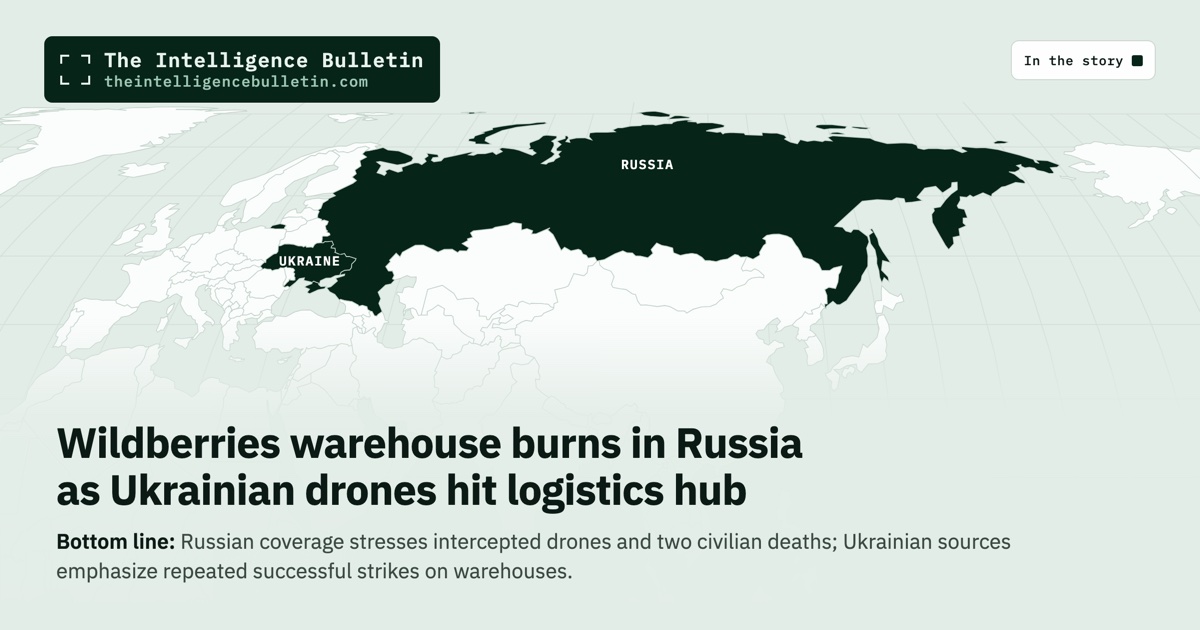
Map of the countries in the story: Wildberries warehouse burns in Russia as Ukrainian drones hit logistics hub
Ukrainian drones attacked targets in Russia’s Saratov and Samara regions overnight into August 2, 2026, setting a Wildberries warehouse ablaze near Samara and damaging infrastructure near Engels. Two civilians died in Saratov region. Russian authorities reported intercepting 635 drones and noted civilian casualties from debris. Ukrainian sources and monitors confirmed strikes on the warehouse and a refinery, part of repeated hits on the retailer’s facilities.

One Story. Many Angles.

🇷🇺
Russia
Profile
RUSSIAN
Original reporting
Victims in Saratov region, fire at Wildberries warehouse: consequences of massive 635 drone attack on Russian regions
“Жертвы в Саратовской области, пожар на складе Wildberries: последствия масштабной атаки 635 беспилотников на регионы России”
Read →
🇺🇦
Ukraine
Kyiv Post
Original reporting
Ukrainian Drones Hit 2 More Wildberries Warehouses in Russia
Read →
🇬🇧
United Kingdom
BBC Russian
RUSSIAN
Original reporting
Ukrainian drones hit another Wildberries warehouse near Samara. Two people killed in Ukrainian drone raid in Saratov
“Украинские беспилотники ударили еще по одному складу Wildberries под Самарой. В Саратове при налете украинских дронов погибли два человека”
Read →
🇺🇸
United States
Daily Kos
Commentary
Russian stuff blowing up: Another huge Wildberries warehouse is destroyed
Read →
🇭🇷
Croatia
Jutarnji list
CROATIAN
Carries Hina reporting
Ukrainian drones killed two people in Russia and hit Wildberries warehouse
“Jutarnji list – Ukrajinski dronovi ubili dvoje ljudi u Rusiji i pogodili skladište Wildberriesa”
Read →
5 sources · the reporting behind them comes from 5 different newsrooms
In Brief

Russian coverage stresses intercepted drones and two civilian deaths; Ukrainian sources emphasize repeated successful strikes on warehouses.

Russian domestic reporting from Profile frames the night as a massive Ukrainian drone assault that Moscow’s air defenses largely defeated, highlighting 635 interceptions and two deaths in Saratov from falling debris while treating the Wildberries fire as a secondary consequence. Kyiv Post instead leads with confirmed Ukrainian hits on additional Wildberries logistics centers, presenting them as deliberate steps to erode Russia’s commercial supply chains that have already damaged multiple sites. BBC Russian and Croatia’s Jutarnji list split the difference, recording both the warehouse fire and the fatalities without assigning success or failure. Daily Kos celebrates the destruction outright as another Russian logistics asset lost. The pattern shows the commission’s split holds: Russian accounts stress defense and civilian toll to portray Ukrainian efforts as ineffective sabotage, while Ukrainian-aligned pieces treat the warehouse losses as measurable progress against rear-area capacity, a divergence rooted in access to official statements rather than differing facts on the ground.

Perspective Analysis

Ukrainian drones struck a Wildberries warehouse in Russia’s Samara region overnight into August 2, setting the facility ablaze and forcing the company to reroute shipments while two civilians died in the neighboring Saratov region amid the same wave of attacks.

The warehouse in the settlement of Novosemeykino caught fire after the strikes. Wildberries confirmed the incident in a statement carried across multiple reports, noting that firefighters responded, no employees were hurt at the site, and operations shifted to other centers. Samara regional governor Vyacheslav Fedorishchev also acknowledged the fire at the logistics hub. This marked at least the ninth Wildberries warehouse hit since mid-July, according to Ukrainian monitoring channels and company disclosures. Earlier strikes had already damaged at least seven facilities, removing roughly 10 percent of the retailer’s storage capacity and prompting Russian authorities to consider financial support for the firm.

In Saratov region, governor Roman Busargin reported that two people died when a residential building in Engels sustained damage during the raid. He said emergency services continued working at affected sites and that families would receive assistance. Ukrainian sources, including the General Staff, stated that the same operation targeted the Saratov oil refinery, with fires observed at the plant, and the Engels military airfield used by strategic bombers. Russian statements described damage to civilian infrastructure in both Saratov and Engels without confirming refinery or airfield hits.

Russian authorities said air defenses intercepted 635 Ukrainian drones over several regions and the Black and Azov seas that night. Regional officials in Rostov reported nearly 150 drones downed locally, with limited ground effects such as a cable fire at an elevator from falling debris. Airports in Samara, Saratov, Kazan, Ulyanovsk and several others imposed temporary restrictions or switched to special procedures. Moscow’s Domodedovo airport also operated under limits.

The strikes fit a pattern of Ukrainian long-range drone operations against Russian economic and logistics targets well behind the front lines. Wildberries, Russia’s largest online retailer, has faced repeated attacks on its distribution centers. Ukrainian officials and monitors have linked the targets to the company’s role in domestic supply chains and its partnerships with state-linked banks. Company statements confirm operational disruptions at multiple sites, with goods pulled from sale and deliveries shifted.

Accounts diverge on the balance between damage inflicted and defensive success. Profile, drawing on the Russian Ministry of Defense and regional governors, presented the night as a large-scale Ukrainian attempt largely turned back, listing the 635 interceptions first and treating the Wildberries fire and Saratov deaths as secondary results of debris. It quoted Busargin directly on the two fatalities and the Engels building damage. Kyiv Post, citing Wildberries and regional Russian officials, led instead with confirmed fires and operational halts at additional logistics centers in Penza and Udmurtia, framing them as the latest in a sustained series that has already cut significant storage capacity. It noted one injury in Penza and evacuations at the sites.

BBC Russian reported the warehouse fire and the two deaths in Saratov side by side, including the company’s statement that no one was hurt there and the Ukrainian General Staff claim of refinery strikes. It recorded both Russian interception numbers and Ukrainian assertions without endorsing either as decisive. Jutarnji list, using statements from the same governors and the ministry figure of 635 drones, described Ukrainian forces striking deeper into Russia to undermine economic capacity, noting the two deaths alongside the warehouse hit. Daily Kos aggregated social media video and monitor reports showing flames engulfing the Samara warehouse, presenting the destruction as another Russian logistics loss without reference to interception claims or fatalities.

The 635-drone interception total appears only in Russian official statements and outlets that cite them directly. No independent verification of that exact number exists in the other reporting. The warehouse fire and the two deaths rest on statements from Wildberries and governor Busargin, which multiple chains carried. Ukrainian claims of refinery and airfield hits rest on General Staff releases and monitoring footage, which BBC Russian and others recorded as asserted rather than confirmed on the ground.

Russian domestic coverage has an interest in underscoring air-defense performance and civilian harm to portray the raids as costly and ineffective for Kyiv. Ukrainian-aligned reporting has an interest in documenting cumulative logistics damage to show progress against Russia’s war-sustaining rear. Outlets that cite primary statements from both the company and the Saratov governor, while noting the ministry figure separately, align most closely with the available on-record evidence. The warehouse fire and deaths are corroborated across independent chains; the scale of interceptions is not.

What to Watch

Sustained pressure on facilities like Wildberries warehouses will likely continue to force Russian retailers and suppliers to disperse operations or seek alternatives such as sites in Kazakhstan. The pattern already visible in company statements suggests measurable erosion of centralized logistics capacity inside Russia, regardless of nightly interception totals.


Share this story

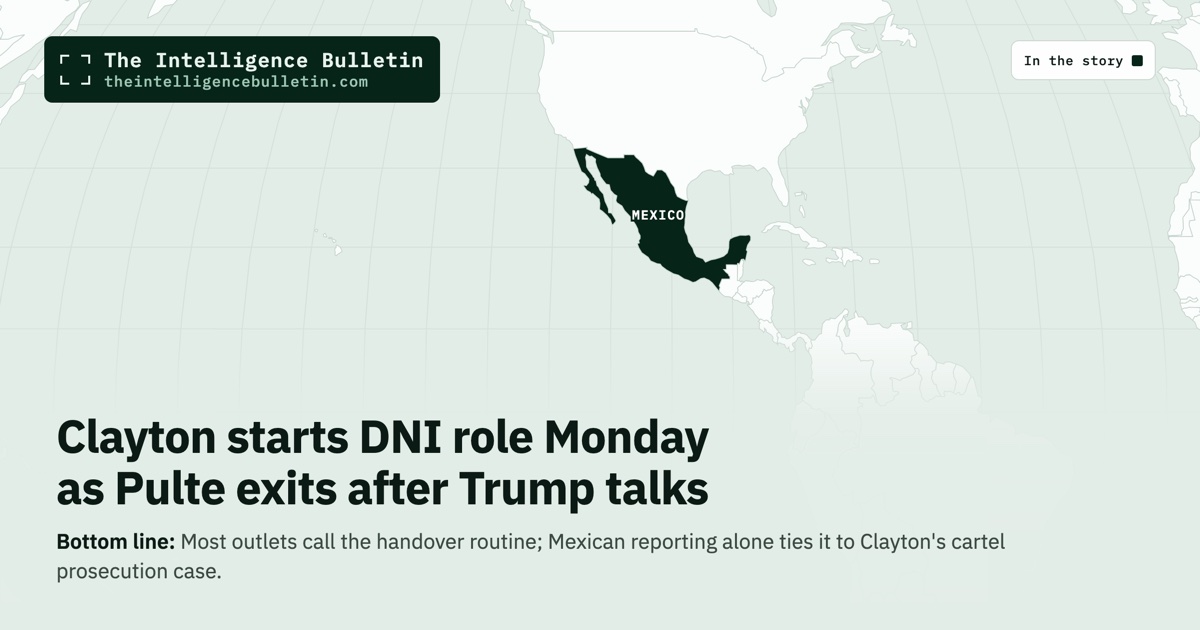
Clayton starts DNI role Monday as Pulte exits after Trump talks

Map of the countries in the story: Clayton starts DNI role Monday as Pulte exits after Trump talks
Acting DNI Bill Pulte announced Saturday that Jay Clayton will assume the Director of National Intelligence post Monday following Senate confirmation. Pulte cited talks with President Trump and Clayton in deciding on the immediate transition. Clayton, previously US Attorney for the Southern District of New York, will oversee 18 intelligence agencies after Tulsi Gabbard’s June resignation.

One Story. Many Angles.

🇺🇸
United States
CNN
Original reporting
Acting director of national intelligence says leadership transition will begin Monday after Trump talks
Read →
🇮🇱
Israel
The Jerusalem Post
Carries Reuters reporting
New US Director of National Intelligence to take over on Monday
Read →
🇲🇽
Mexico
Vanguardia
SPANISH
Original reporting
Jay Clayton, prosecutor in the case against Rubén Rocha, is confirmed as US Intelligence director
“Jay Clayton, fiscal del caso contra Rubén Rocha, es confirmado como director de Inteligencia de EU”
Read →
🇺🇦
Ukraine
Dzerkalo Tyzhnia
UKRAINIAN
Carries Reuters reporting
Jay Clayton to head US intelligence – power transfer on August 3 – US news
“Джей Клейтон очолить розвідку США – передавання повноважень 3 серпня – новини США”
Read →
🇦🇿
Azerbaijan
News.Az
Carries Reuters reporting
Jay Clayton to assume role as US intelligence chief on Monday
Read →
5 sources · the reporting behind them comes from 3 newsrooms — some carry the same original story
In Brief

Most outlets call the handover routine; Mexican reporting alone ties it to Clayton’s cartel prosecution case.

US and Israeli reporting centers on the procedural mechanics of Monday’s handover and Pulte’s social media announcement reversing earlier overlap plans, with CNN noting Trump involvement and Pulte’s prior staffing cuts. Ukrainian and Azerbaijani outlets relay the same timeline and Senate vote details while referencing Gabbard’s exit and Democratic opposition. Mexican coverage instead foregrounds Clayton’s role prosecuting a Sinaloa-linked case against former Sinaloa governor Rubén Rocha, an angle absent elsewhere. Across the set the appointment registers as a standard personnel change after confirmation fights rather than a pivot in intelligence priorities, with Pulte’s short tenure framed as interim cleanup work completed before exit.

Perspective Analysis

Jay Clayton will take over as Director of National Intelligence on Monday after acting director Bill Pulte announced the immediate handover following talks with President Donald Trump.

Pulte posted on social media Saturday that the transition would begin the next week, reversing earlier indications that he would overlap with Clayton for at least two weeks. The announcement came after the Senate confirmed Clayton’s nomination 51-47 earlier in the week. Clayton, who had served as U.S. Attorney for the Southern District of New York, will now coordinate the 18 U.S. intelligence agencies. The post left the position vacant since Tulsi Gabbard stepped down in June.

Pulte wrote that he and Clayton had decided on the Monday start after speaking with Trump. He expressed gratitude for the chance to serve while Trump completed historic declassifications and right-sized the Office of the Director of National Intelligence. Pulte also praised his successor, saying he had no doubt Clayton would do a tremendous job and offering his full support. Multiple sources had reported that Pulte had urged Trump to let him stay longer because he had not finished his work. Clayton is expected to be sworn in next week.

Clayton steps into an office whose authority and relevance have reached a historic low. Pulte, a housing executive with no prior national security experience, led sharp staffing cuts during his interim tenure and played a role in declassifying documents tied to Trump’s claims about the 2020 election. Some Republican Senate Intelligence Committee staffers who initially questioned Pulte’s lack of experience later expressed satisfaction with the reductions in what they viewed as unnecessary bloat. Pulte traveled with Trump from Camp David to Bedminster, New Jersey, on Friday. CIA Director John Ratcliffe, who recommended Clayton for the job, was also present at Camp David.

The Senate confirmation followed a July 15 hearing where Democrats pressed Clayton on the 2020 election. He stated that Joe Biden had been certified as the winner but declined to say directly that Biden won. The committee approved the nomination along party lines before the full Senate vote. Clayton’s background includes prior service as chair of the Securities and Exchange Commission under Trump from 2017 to 2020 and work at law firm Sullivan & Cromwell.

Gabbard had resigned in June after repeated clashes with congressional Democrats, who accused her of advancing Trump’s political agenda and promoting debunked claims about the 2020 election. Pulte assumed the acting role at that point while continuing to lead the Federal Housing Finance Agency. His appointment drew criticism from Democrats for his lack of national security expertise. One Mexican outlet reported that Clayton had led the federal prosecution of former Sinaloa governor Rubén Rocha Moya and others on charges linked to the Sinaloa Cartel, an investigation announced by the Department of Justice in April. That case alleged corruption enabling cartel operations, though it receives no mention in other coverage of the intelligence appointment.

Coverage across the outlets largely presents the change as a standard leadership transition after Senate confirmation rather than evidence of a broader shift in intelligence priorities. Pulte’s exit receives the most detail in reporting that quotes his full social media statement and notes the reversal of overlap plans. Other accounts describe the Monday start date, Gabbard’s prior resignation, Democratic opposition during confirmation, and Pulte’s interim actions such as ordering layoffs, without expanding on the specific talks that prompted the accelerated handover. The Mexican report stands apart by connecting Clayton’s new role to his earlier work on the Rocha prosecution, an element tied to Mexican national interest but absent from accounts focused on U.S. domestic mechanics.

The accounts that treat the move as routine draw from the same core facts: the Senate vote, the Monday timeline, and Gabbard’s June departure. They differ mainly in how much space they give to Pulte’s own explanation for stepping aside. The version that includes the direct reference to talks with Trump and Clayton rests on Pulte’s on-the-record social media post. That primary document supplies the warrant for viewing the exit as a deliberate, coordinated step rather than an abrupt or unexplained departure. Pulte’s stated reasons—completion of declassifications and agency right-sizing—align with the record of his short tenure and the bipartisan acknowledgment that the office had grown too large.

No reporting disputes the Senate confirmation numbers or the Monday effective date. The single-source detail on the Trump-Clayton-Pulte conversations comes directly from the acting director’s post and appears only in the most detailed U.S. account. The Mexico-specific prosecution background stands as a verifiable fact from the Department of Justice record but remains isolated to one outlet’s coverage. Readers relying solely on the Reuters-relayed versions would miss both the explicit Trump involvement in the timing and the cartel-case connection.

What to Watch

The most complete picture comes from the account that incorporates Pulte’s own statement on the talks and his rationale for the accelerated exit. That version rests on a primary document available to all outlets and corroborates the timeline reported everywhere else while adding the precise trigger for the change. The narrower procedural summaries accurately capture the public mechanics but leave the reader without the acting director’s stated motivation for leaving when he did. The isolated Mexican angle adds factual context on Clayton’s prior work without contradicting any other element of the transition. The appointment itself remains a personnel replacement following standard Senate process, with no evidence in the reporting of a fundamental reordering of intelligence priorities beyond the continuity of cuts already underway under Pulte.


Share this story

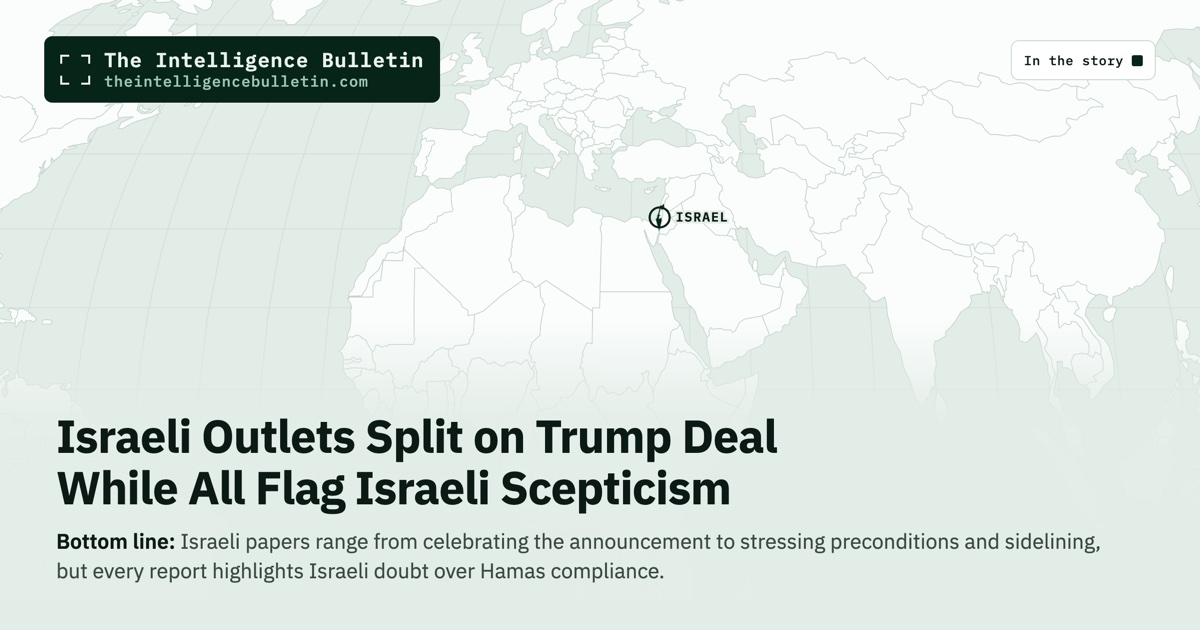
Israeli Outlets Split on Trump Deal While All Flag Israeli Scepticism

Map of the countries in the story: Israeli Outlets Split on Trump Deal While All Flag Israeli Scepticism
Donald Trump announced a Board of Peace-brokered deal for phased Hamas disarmament in Gaza, with IDF withdrawal and new governance. Israeli officials and Hamas sources immediately cited preconditions and scepticism. No Palestinian outlets covered the event; coverage came from Israeli and European sources relaying wire or original reporting.

One Story. Many Angles.

🇮🇱
Israel
The Jerusalem Post
Original reporting
Donald Trump announces Board of Peace reached deal for Hamas disarmament in Gaza
Read →
🇮🇱
Israel
Haaretz
Original reporting
Trump Announces ‘Historic’ Gaza Deal; Hamas: Disarmament After IDF Withdrawal
Read →
🇬🇧
United Kingdom
Middle East Monitor
Carries Anadolu reporting
Former Israeli premier says Trump ignores Netanyahu, Gaza framework sidelines Israel
Read →
🇨🇾
Cyprus
Cyprus Mail
Carries Reuters reporting
Trump hails Gaza deal, while Hamas and Israeli officials see hurdles
Read →
🇱🇺
Luxembourg
Chronicle.lu
Reuters wire copy
Trump Says Deal Reached to Disarm Hamas, Israeli Support For Plan Remains Uncertain
Read →
5 sources · the reporting behind them comes from 4 newsrooms — some carry the same original story
In Brief

Israeli papers range from celebrating the announcement to stressing preconditions and sidelining, but every report highlights Israeli doubt over Hamas compliance.

Israeli outlets diverge sharply on the same announcement. The Jerusalem Post presents the deal as a historic Trump achievement with officials claiming both sides signed despite scepticism, treating implementation as inevitable. Haaretz immediately qualifies the announcement with Hamas’s explicit precondition of IDF withdrawal first. Middle East Monitor amplifies internal Israeli dissent, quoting former PM Ehud Barak that the framework sidelines Netanyahu and ignores Israel’s demands for full disarmament. Cyprus Mail and Chronicle.lu, drawing from Reuters, foreground mutual hurdles and explicit Israeli uncertainty over support, with officials rejecting the document outright. The absence of Palestinian voices leaves enforcement questions unexamined from that side. This pattern shows the deal’s fragility already baked into reporting before any steps begin, with Israeli doubt the common thread across otherwise different emphases.

Perspective Analysis

Donald Trump announced on Truth Social that the Board of Peace had reached a historic agreement for the complete phased disarmament of Hamas and all other armed groups in Gaza. The deal, he said, would lead to a new Palestinian government working with the board, an International Stabilization Force alongside a new Palestinian police force, and eventual IDF withdrawal from the strip, all while guaranteeing Israel security against future attacks from the territory.

Israeli officials responded by restating their core demand that any withdrawal must follow full Hamas disarmament and the removal of weapons from Gaza. A diplomatic source told one outlet that the 15-point document under discussion failed to meet this standard and that Israel had conveyed its reservations directly to envoy Tony Blair. Another Israeli official stated there would be no exceptions for certain weapons or people and insisted on one authority, one law, one weapon in the territory. Hamas sources countered that disarmament would begin only after Israel first fulfilled commitments under the earlier Sharm el-Sheikh agreement, including an end to attacks, withdrawal to the positions held after the October ceasefire, and increased aid flows into Gaza. A senior Hamas official involved in the talks described the proposal as a difficult framework dependent on those prior steps and avoided using the word disarmament when discussing the handover of heavy weapons to a new Palestinian administration body.

The announcement came after months of negotiations involving mediators from Egypt, Qatar, and Turkey. Board of Peace officials described the process as conditions-based with verification mechanisms built in from the start because of mutual distrust. They said Hamas and Palestinian factions had for the first time accepted the entire outline, including clauses on eliminating tunnels and heavy weapons. Full implementation was projected to take 200 to 300 days, with no stage beginning until the previous one was completed. Israeli strikes continued in Gaza on the same day, killing at least six Palestinians according to local health authorities, while the Israeli military said it had targeted Hamas operatives.

Former Israeli prime minister Ehud Barak said the framework’s language was ambiguous but its direction clear: Israel and its demands were being ignored. He stated the text did not require complete disarmament, removal of weapons, or exile of Hamas leadership and instead spoke of ending assassinations and returning Israeli control to 53 percent of Gaza rather than 65 percent. Barak added that Trump no longer placed much weight on Prime Minister Benjamin Netanyahu and that the Israeli leader had lost negotiating leverage.

National Security Minister Itamar Ben-Gvir rejected the draft outright and called for continued assassinations of Hamas leaders along with displacement of Palestinians. Hostage families and bereaved families groups condemned the agreement as a betrayal that once again placed Israeli lives at risk for political convenience. On the Hamas side, officials said they were prepared to accept what they called a painful deal only after Israel met its initial obligations, and residents in Gaza expressed scepticism that the announcement would produce immediate change on the ground.

Israeli reporting diverged on how heavily to weight these reservations. One account presented the announcement as a breakthrough with both sides having signed and implementation now inevitable despite lingering doubts. Another Israeli outlet led with Hamas’s explicit precondition that disarmament would follow IDF withdrawal. A third carried Barak’s detailed critique that the entire framework sidelined Israel and left it without a seat at the table. European reports drawing from the same wire service stressed the uncertainty over Israeli support, quoting US officials who described Israel as very sceptical that Hamas would disarm and Israeli officials who said they had rejected the proposal because it did not satisfy demands for complete demilitarization first.

No Palestinian outlets appeared in the coverage pool. That absence leaves questions about enforcement mechanisms and the new governance body’s composition unexamined from the perspective of those who would live under the arrangements. The consistent thread across every available report is Israeli scepticism that Hamas will surrender its weapons without prior withdrawal, a position stated on record by multiple officials and reinforced by the continued military operations in Gaza on the day of the announcement.

The single-source claim that the framework sidelines Netanyahu comes solely from Barak and lacks corroboration in the other accounts. All other core assertions—Trump’s announcement, Hamas’s precondition of withdrawal first, and Israel’s expressed reservations—appear in multiple independent reporting chains and align on the basic sequence of events.

What to Watch

The available evidence points to a deal whose implementation faces immediate and publicly stated hurdles from both principal parties. Israeli officials have made clear they will not withdraw without verified disarmament; Hamas officials have made clear they will not disarm without prior withdrawal and other concessions. This mutual conditioning, reported across the sources, indicates that near-term resolution remains unlikely until one side or the mediators produce a concrete sequence that satisfies the other’s precondition. The absence of Palestinian coverage means enforcement details and local reception receive no direct examination here, leaving the picture of likely next steps incomplete on that dimension.


Share this story