All selected outlets frame Trump’s Iran strike pause as conditional on Hormuz deal, not concession

Map of the countries in the story: All selected outlets frame Trump's Iran strike pause as conditional on Hormuz deal, not concession
Donald Trump announced on Truth Social that he canceled planned US attacks on Iran after Iran and other Middle Eastern countries requested a hold, citing agreed deal perimeters including full reopening of the Strait of Hormuz and an end to Iran’s nuclear program. He said the pause is conditional on rapidly concluding the deal and noted Israel’s support. Selected coverage from US, Qatari, Israeli, Omani and UK outlets carries the statement with varying context on allied pressure and Iranian warnings, but no Iranian outlet appears in the set.

One Story. Many Angles.

šŸ‡ŗšŸ‡ø
United States
RedState
Original reporting
Trump Cancels Iran Attack, Calls for Immediate Peace Deal After Allies Make Unusual Request
Read →
šŸ‡¶šŸ‡¦
Qatar
Al Jazeera
Carries Trump statement and Iranian officials reporting
Iran war live: Trump cancels attack, calls for a ‘rapid’ deal on Hormuz
Read →
šŸ‡®šŸ‡±
Israel
The Jerusalem Post
Original reporting
Donald Trump cancels planned attack on Iran, calls for immediate deal
Read →
šŸ‡“šŸ‡²
Oman
Times of Oman
Carries ANI reporting
“Perimeters of a deal has been agreed to”: Trump cancels planned attacks on Iran, brings Israel into fold
Read →
šŸ‡¬šŸ‡§
United Kingdom
Metro
Original reporting
Trump cancels Iran attack and says deal will be made ‘rapidly’ in major U-turn
Read →
5 sources Ā· the reporting behind them comes from 5 different newsrooms
In Brief

Outlets differ on emphasis—ally pressure, war context, or reversal—but none treat the pause as unconditional de-escalation.

Every selected outlet reports the same core event from Trump’s Truth Social post: a conditional cancellation of strikes, not an unconditional stand-down. RedState highlights unusual allied requests plus domestic US polling pressure against escalation. Al Jazeera places the announcement inside an ongoing ‘Iran war’ liveblog that foregrounds Tehran’s prior warnings of decisive response. The Jerusalem Post stresses Trump’s claim of Israeli backing and the need to ‘get to work’ on the deal. Times of Oman, via ANI wire, emphasizes that perimeters are already agreed and that Israel has joined the commitment, reflecting Oman’s direct stake in Hormuz traffic. Metro alone labels the shift a ‘major U-turn’ amid five months of conflict and falling approval ratings. The consistent thread is tactical pause tied to verifiable concessions on energy routes and nuclear limits, not concession or lasting de-escalation. The set contains no Iranian voice, so statements attributed to Tehran reach readers only through these filters.

Perspective Analysis

Donald Trump announced on August 2 that he had canceled planned military attacks on Iran, making the pause conditional on reaching a rapid deal that would reopen the Strait of Hormuz and end Iran’s nuclear program. In a Truth Social post, Trump stated that the United States remained “locked and loaded and ready to go against the Islamic Republic of Iran, at levels of Military Terror, Strength, and Power not seen since World War II.” He added that Iran and other Middle Eastern countries had requested the hold because “the perimeters of a deal has been agreed to,” specifying that any agreement must include the “Immediate, Complete, and Total OPENING OF THE HORMUZ STRAIT” and an end to Iran’s nuclear threat. Trump tied the cancellation to this request, saying he had agreed to the pause “for the future benefit of the WORLD and, likewise, the survival of a successful and prosperous Iran, subject to being able to rapidly make a DEAL.” He noted that Israel joined him in the commitment and urged all parties to “Get to work, everybody, and get it DONE.”

The announcement came amid an ongoing conflict that began with initial US and Israeli strikes on March 1. Earlier that week, Iran had attempted a surprise attack on US forces, which US defenses intercepted, followed by US responses that targeted Iranian proxies in Iraq. On the day before the cancellation, Trump had told a cabinet meeting that the United States would hit Iran “very hard” and that at some point Tehran would say it could not take more. Iranian Foreign Minister Abbas Araghchi separately warned that Iran would respond decisively to any US aggression, a statement conveyed to officials in Pakistan and Turkey. Axios reporting, cited in multiple accounts, described a Saturday phone call in which Saudi Crown Prince Mohammed bin Salman expressed concern about escalation and favored de-escalation. Other Middle Eastern powers including Qatar, the United Arab Emirates, Turkey, and Pakistan also pushed for restraint.

The deal framework Trump described centers on two concrete concessions from Tehran. Reopening the Strait of Hormuz would restore international maritime traffic through the critical energy route, which had faced disruption during the conflict. Ending Iran’s nuclear program would address a long-standing US and Israeli demand. Trump presented these perimeters as already agreed in outline, with the pause serving as time to finalize the text into a binding arrangement. No official Iranian acceptance of those terms appeared in the reporting. The pause therefore remains conditional on Iran’s readiness to move forward on those specific points rather than a broader halt to hostilities.

Domestic US pressures also factored into the shift. An AP-NORC poll found that two-thirds of American adults did not believe the war with Iran was worth fighting, with only about two in ten supporting continued military action. Roughly three in ten favored pausing for renewed negotiations, while two in ten wanted to stop action entirely. Among Republicans, support for continuing the fight was stronger among those identifying as very conservative or MAGA, while non-MAGA Republicans leaned toward a ceasefire or full halt. These figures emerged against a backdrop of rising costs for groceries and other goods during the five-plus months of conflict.

All five outlets that carried the story drew from the same primary document, Trump’s Truth Social post, and converged on the same central claim: the cancellation is a tactical pause tied to verifiable concessions on the Strait of Hormuz and Iran’s nuclear program, not an unconditional concession or lasting de-escalation. RedState added detail on allied requests and the AP-NORC polling showing limited public support for the war. The Jerusalem Post reported Trump’s assertion of Israeli support and prior Israeli assessments that had raised alert levels in anticipation of possible larger strikes. Times of Oman, drawing from ANI, stressed that perimeters had already been agreed and highlighted Israel’s inclusion in the commitment, reflecting Oman’s direct interest in Hormuz traffic. Metro described the move as occurring after months of strikes and amid falling US approval ratings for Trump. Al Jazeera placed the announcement in a liveblog that also carried Iranian warnings of decisive response to further aggression.

The single point attributed only to Iranian officials—the warning of a decisive response—appeared in Al Jazeera’s liveblog and the Times of Oman account but carried no independent confirmation from US or Israeli sources in these reports. No outlet disputed the core elements of Trump’s statement. The absence of any Iranian outlet from the selected coverage means that Tehran’s position reaches readers only through these intermediaries, which relay the foreign minister’s warning but do not present Iranian acceptance or rejection of the proposed deal perimeters.

What to Watch

The reporting across independent chains therefore establishes that readers in the United States, Israel, Oman, Qatar, and the United Kingdom encounter the same picture: a live flashpoint placed on hold pending concrete steps on energy access and nuclear limits rather than resolved through concession. Saudi Arabia’s reported intervention via the Crown Prince’s call adds a regional actor pressing for restraint, while US domestic polling supplies an internal constraint on further escalation. The next developments hinge on whether Iran moves to formalize the outlined perimeters or tests the conditional nature of the pause through further action in the Strait or elsewhere.
Share this story

US Locks Visa Bonds at Up to $20,000 for 50 Countries After Pilot Success

Map of the countries in the story: US Locks Visa Bonds at Up to $20,000 for 50 Countries After Pilot Success
The US State Department is making a visa bond pilot permanent effective August 3, 2026. Applicants from 50 countries, mostly in Africa, may have to post refundable bonds of $10,000 to $20,000 for B-1/B-2 visas. The policy aims to reduce overstays after pilot data showed sharp drops in both overstays and visa issuances. Bonds are returned if travelers depart on time.

One Story. Many Angles.

šŸ‡ŗšŸ‡ø
United States
Newsweek
Original reporting
Visa Bonds Up To $20,000 Are Set To Stay: These 50 Countries Are Impacted
Read →
šŸ‡®šŸ‡³
India
The Times of India
Original reporting
US makes visa bond programme permanent: Effective date, affected countries explained
Read →
šŸ‡µšŸ‡°
Pakistan
Propakistani
Original reporting
US Makes $20,000 Visa Bond Program Permanent for 50 Countries
Read →
šŸ‡³šŸ‡¬
Nigeria
The Nation
Original reporting
US introduces $20,000 visa bond for Nigerians, others over overstay concerns
Read →
šŸ‡ÆšŸ‡²
Jamaica
Jamaica Gleaner
Carries AP reporting
US to make visa bond requirements permanent, affecting mostly African countries
Read →
5 sources Ā· the reporting behind them comes from 5 different newsrooms
In Brief

US reporting stresses pilot success in cutting overstays while outlets from affected regions detail the deposit cost for their applicants.

The US decision to lock the visa bond program into permanent rules reveals a clear enforcement priority that every outlet reports in nearly identical detail. State Department data across the coverage shows overstays from the 50 countries fell from 45,488 in fiscal 2024 to fewer than 50 in the first 10 months of the pilot, while visa issuances dropped 83 percent. Newsweek presents the change as straightforward continuity, listing the exact bond tiers and the list of countries without commentary on hardship. Indian, Pakistani, Nigerian and Jamaican outlets all repeat the same numbers and effective date but foreground how the $15,000 default bond will hit their nationals, with Nigeria explicitly linking the move to its overstay statistics and Jamaica noting the policy’s heavy concentration on African passports. The convergence on the pilot’s measurable results, rather than any dispute over them, shows the administration’s claim of success is now treated as settled fact even in capitals whose travelers will pay the deposits.

Perspective Analysis

The United States will require selected applicants for tourist and business visas from 50 countries to post refundable bonds ranging from $10,000 to $20,000 beginning August 3, 2026.

The State Department announced that a year-long pilot launched in August 2025 produced enough data to justify making the program permanent. During the pilot, consular officers could set bonds at $5,000, $10,000 or $15,000. The final rule removes the lowest tier and raises the ceiling to $20,000. Officers will normally set the amount at $15,000, lowering it to $10,000 when an applicant cannot afford the standard sum or raising it to $20,000 when an individual’s ties to the United States suggest the middle amount may not ensure timely departure. The bond is paid through a Treasury Department portal after a consular officer issues a preliminary refusal and is returned without interest once the traveler leaves the country on time or the application is denied. Failure to depart on schedule, late requests for extensions, or other violations can result in forfeiture.

The 50 countries on the list accounted for 45,488 visa overstays in fiscal year 2024. In the first ten months of the pilot, overstays from those same countries fell to fewer than 50. Visa issuances to their nationals dropped 83 percent in the same period, partly because thousands of otherwise eligible applicants did not pay the required bond. The rule applies to passport holders from the listed countries regardless of where they file their application. The list can be revised on a rolling basis, with new countries receiving at least 15 days’ notice before inclusion. The maximum bond amount will be reviewed every seven years for inflation adjustments beginning in October 2027.

The policy stems from an executive order directing stronger immigration compliance measures. State Department notices state that the program targets countries with elevated overstay rates and weaknesses in information sharing or document security. It is intended to encourage foreign governments to improve compliance among their nationals rather than to punish individual applicants. Visa holders subject to the bond must enter and leave the United States through commercial airports or preclearance locations and must file timely extension requests when needed. The pilot involved coordination among the State Department, Homeland Security and Treasury.

Reports from every outlet that covered the announcement repeat the same core figures on overstays and visa declines. The convergence extends to the effective date, the new bond tiers, and the refund conditions. No account disputes the State Department’s claim that the pilot demonstrated effectiveness in reducing overstays among bonded travelers. Outlets based in countries on the list add regional context without challenging those numbers. One Nigerian publication links the measure directly to its national overstay statistics and cites the relevant executive order. A Jamaican report notes that most of the 50 countries are in Africa and records the view of critics who describe the deposit as an unnecessary burden on people from poorer nations seeking family, education or business travel. Indian and Pakistani coverage emphasizes the procedural steps and the scale of the potential deposit for their readers who may apply. A United States publication lists the administrative details and the full country roster while presenting the change as an extension of existing enforcement tools.

The State Department’s account of the pilot’s results is the one closest to right because the identical overstay and issuance statistics appear in every independent report examined. Those figures originate in the department’s own Federal Register notice and are carried unchanged by outlets with no shared ownership or editorial alignment. Sending-country publications have a clear interest in informing their readers about the added cost and in noting the policy’s concentration on particular regions. None of them, however, offers an alternative set of numbers or disputes the reported decline in overstays. The agreement on the measurable outcomes of the pilot therefore supplies the strongest available ground for treating the enforcement claim as settled for now.

What to Watch

Travelers from the affected countries can expect continued scrutiny at the consular stage and a high likelihood that the bond requirement will remain in place. The administration has already signaled that the list of countries can expand. For governments whose nationals appear on the roster, the practical effect is reduced visa volume unless they improve compliance metrics that the United States tracks. Everyday cross-border movement for tourism, business and family visits from these 50 countries now carries an explicit financial guarantee that was previously only a temporary test.


Share this story

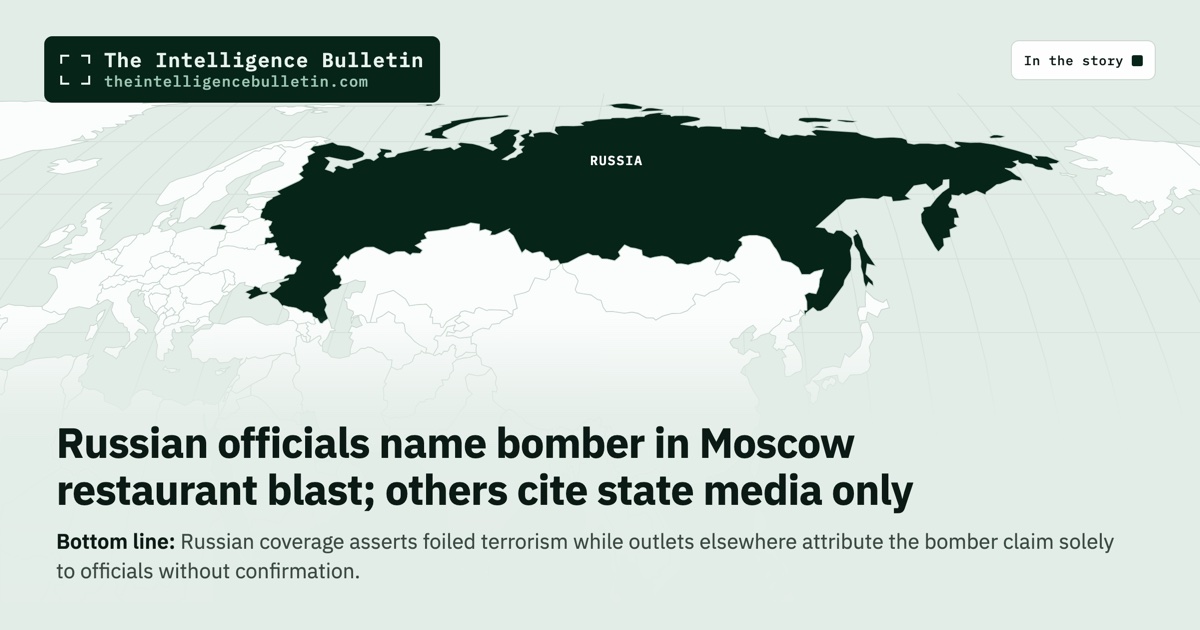
Russian officials name bomber in Moscow restaurant blast; others cite state media only

Map of the countries in the story: Russian officials name bomber in Moscow restaurant blast; others cite state media only
An improvised explosive device detonated outside the Balzi Rossi restaurant on Kudrinskaya Square in central Moscow on August 1 evening. Russian authorities reported three dead including a woman who tried to enter with the device, a security guard and one guest, plus at least 21 injured. The National Anti-Terrorism Committee classified it a terrorist attack. Other reporting relayed the details from Russian state sources without independent confirmation.

One Story. Many Angles.

šŸ‡·šŸ‡ŗ
Russia
Pravda
Original reporting
Moscow Restaurant Bombing: Three Killed, More Than 20 Injured
Read →
šŸ‡©šŸ‡Ŗ
Germany
Ostthüringer Zeitung
GERMAN
Carries TASS reporting
Russia: Three dead after restaurant explosion – explosive device suspected
“Russland: Drei Tote nach Explosion in Restaurant – Sprengsatz vermutet”
Read →
šŸ‡¦šŸ‡ŗ
Australia
SBS
Carries RIA Novosti reporting
Three dead after woman detonates bomb at Moscow restaurant, state media says
Read →
šŸ‡®šŸ‡±
Israel
The Jerusalem Post
Carries Reuters reporting
Homemade bomb kills three, wounds 21 at Italian restaurant in Russia
Read →
šŸ‡·šŸ‡ø
Serbia
Blic
SERBIAN
Carries TASS reporting
Explosion in central Moscow: There are dead
“Eksplozija u centru Moskve: Ima mrtvih”
Read →
5 sources Ā· the reporting behind them comes from 4 newsrooms — some carry the same original story
In Brief

Russian coverage asserts foiled terrorism while outlets elsewhere attribute the bomber claim solely to officials without confirmation.

Russian state-linked Pravda presented the National Anti-Terrorism Committee’s account as settled fact: a woman courier carrying an IED was stopped by a guard at a private event and the device detonated, killing her, the guard and one patron while injuring 21. It added unverified speculation from Telegram channels that the target may have been military officers. German outlet OTZ and Australian SBS relayed the same sequence but attributed every detail explicitly to Tass, RIA Novosti and the committee, avoiding any endorsement of the terrorism label. Israel’s Jerusalem Post carried the official numbers yet noted Kommersant reporting that the bomb may have been remotely triggered and the woman unaware she carried it, while adding context on FSB protection for senior officers after prior attacks blamed on Kyiv. Serbia’s Blic reported only the blast location, three deaths and 15 injuries from Tass, stating authorities had not identified the cause or motive. The pattern shows Russian outlets assert domestic security control through a foiled plot while others maintain distance from the bomber identification and external-threat framing.

Perspective Analysis

An improvised explosive device detonated outside the Balzi Rossi restaurant on Kudrinskaya Square in central Moscow on the evening of August 1, killing three people and injuring at least 21 others. Russian authorities said a woman carrying the device tried to enter the venue during a private event attended by roughly 50 guests. A security guard stopped her for inspection of a package she described as a gift, at which point the device exploded around 7:50 or 8 p.m. local time. The dead included the woman, the guard and one restaurant guest. The blast was powerful enough to scatter remains across the area, with reports of a severed hand found about 15 meters from the site. Investigators described the device as homemade with the force of roughly one kilogram of TNT and containing metal ball bearings to increase casualties.

The restaurant occupies space in one of Moscow’s Stalin-era high-rise buildings on Kudrinskaya Square, a location in the expanded city center near the Garden Ring. Emergency services responded quickly, extinguishing a fire that followed the blast and cordoning off surrounding streets. Several metro stations nearby continued normal operations, though some roads were closed and a scheduled cycling festival was postponed. The National Anti-Terrorism Committee stated that the incident constituted a terrorist attack. Moscow’s Investigative Committee confirmed the casualty figures and said the inquiry was ongoing. No official identification of the intended target or the organizers has been released.

Multiple accounts confirm the basic sequence of the woman being stopped at the entrance with the device. Russian authorities described the woman as attempting to bring the explosive inside. Reports from several outlets carried the same details on the three deaths and the injuries, which included traumatic brain injuries, penetrating wounds to the chest and abdomen, burns, limb trauma and blast effects. The venue had been booked for a private celebration, with some social media speculation that it involved a high-ranking military officer’s birthday, though authorities have not confirmed any specific guest list or motive.

Russian officials have not linked the blast to any named individual or group. One pro-war blogger suggested it might have targeted a senior aerospace forces commander, but that claim lacked supporting evidence and remained unverified. Investigators are examining whether the device was detonated remotely, which would mean the woman carrying it may not have known its contents. This possibility appears in reporting that draws on the Kommersant newspaper’s sources. The committee has classified the event as terrorism, yet it has avoided naming an intended target or confirming external involvement.

The accounts diverge on several points that affect how the incident is understood. One Serbian outlet reported three deaths and 15 injuries, citing the same Tass agency material used elsewhere, and stated that Russian authorities had not identified whether the cause was an accident, a crime or something else. It gave no details on a woman carrying a device or any terrorism classification. Other reports consistently listed at least 21 injured and described the committee’s terrorism determination. The lower injury figure and the absence of any bomber reference appear only in that single account.

An Israeli outlet added context about Russia’s FSB security service increasing protection for high-ranking military officials earlier in the year after a series of assassinations and attempts it attributed to Kyiv. That piece also noted the Kommersant reporting on possible remote detonation without the woman’s knowledge. A German regional outlet kept motive and perpetrator details tentative, saying political intent remained unclear and initially noting that a gas explosion had been considered before the committee’s statement. An Australian outlet repeated the sequence of the woman attempting to bring the device but attributed every element explicitly to state media and the committee without further endorsement.

The terrorism classification and the remote-detonation possibility rest on single reporting chains tied to Russian official statements and Kommersant sources. The core sequence of the woman stopped at the entrance with the device, the three deaths and the injuries above 20 appears across independent chains that all trace back to the same committee and agency releases. No outlet disputes the presence of an explosive device or the casualty counts in the higher range. The venue’s Italian restaurant setting and its location in a Stalin-era building receive mention in some accounts but not others.

Russian authorities have an interest in presenting the incident as a successfully disrupted plot that demonstrates effective domestic security measures. Outlets that maintain explicit attribution to state sources or note uncertainties reflect a choice not to adopt that classification without additional evidence. The single-source nature of the terrorism label and the remote-detonation detail means readers relying on one chain receive assertions that lack corroboration from separate reporting lines. The lower injury count in one account stands apart from the figure carried elsewhere and remains unexplained by any cross-check in the available material.

What to Watch

The corroborated elements on the detonation sequence and casualties provide the most reliable foundation for understanding what occurred. The terrorism designation and possible remote trigger warrant continued scrutiny because they originate from one side without matching confirmation from others. Further details from the Moscow Investigative Committee investigation will likely clarify whether the blast connects to prior incidents involving military targets or remains an isolated case. The pattern of how different outlets handled the official statements shows the limits of relying on any single chain when the underlying claims carry direct implications for assessments of Russian internal security.


Share this story

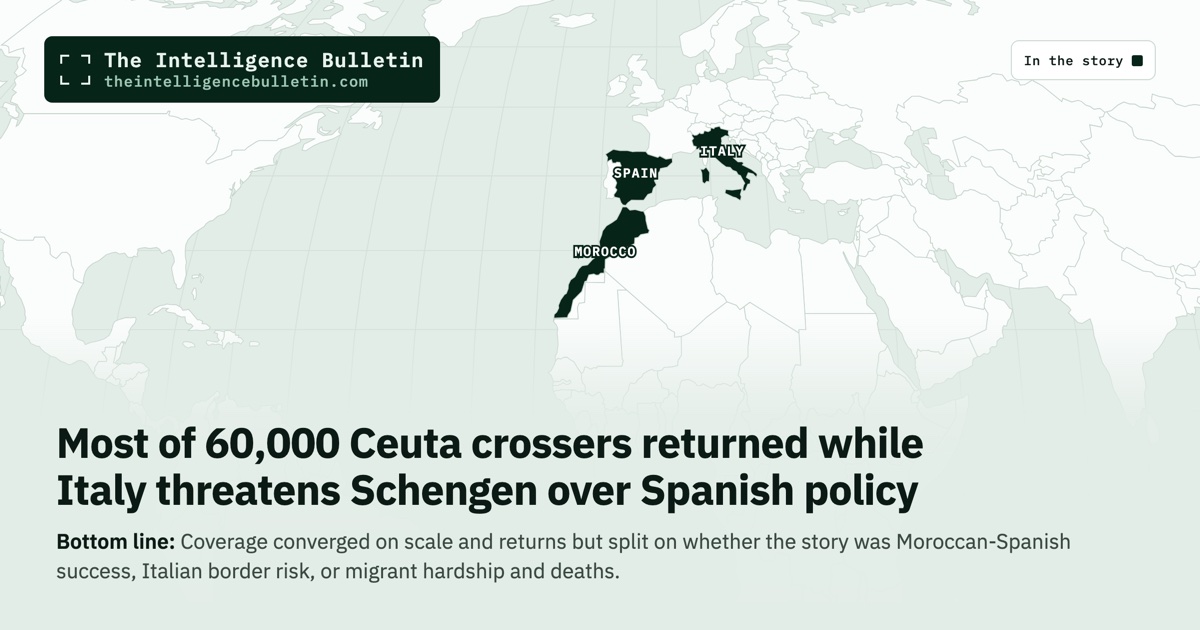
Most of 60,000 Ceuta crossers returned while Italy threatens Schengen over Spanish policy

Map of the countries in the story: Most of 60,000 Ceuta crossers returned while Italy threatens Schengen over Spanish policy
Around 60,000 migrants crossed from Morocco into Spain’s Ceuta enclave over roughly 24 hours. Spanish authorities reported at least 48,000 returns to Morocco by the following afternoon and 57 deaths during the crossings. Spain’s interior ministry praised Moroccan cooperation and arranged rapid returns. Italy’s Prime Minister Giorgia Meloni threatened to suspend Schengen rules with Spain over the influx.

One Story. Many Angles.

šŸ‡²šŸ‡¦
Morocco
Morocco World News
Original reporting
Spain Thanks Morocco for Efforts to Tackle Irregular Migration to Ceuta
Read →
šŸ‡ŖšŸ‡ø
Spain
The Local
Carries AFP reporting
Spain says 60,000 migrants stormed Ceuta but 25,000 have returned to Morocco
Read →
šŸ‡®šŸ‡¹
Italy
Il Gazzettino
ITALIAN
Original reporting
Migrants in Ceuta, Meloni accuses Sanchez: ‘With his mistakes he puts us at risk too. Ready to suspend Schengen’
“Migranti a Ceuta, Meloni accusa Sanchez: Ā«Con i suoi errori mette a rischio anche noi. Pronti a sospendere SchengenĀ»”
Read →
šŸ‡¹šŸ‡·
Turkey
Anadolu Agency
Relayed reporting
We couldn’t even find bread’: Moroccan migrants recount time in Spain’s Ceuta enclave
Read →
šŸ‡ØšŸ‡¦
Canada
CBC News
Carries Reuters reporting
At least 34 migrants dead after thousands breach border into Spain’s Ceuta enclave
Read →
5 sources Ā· the reporting behind them comes from 5 different newsrooms
In Brief

Coverage converged on scale and returns but split on whether the story was Moroccan-Spanish success, Italian border risk, or migrant hardship and deaths.

Spanish and Moroccan outlets converged on bilateral success: Madrid thanked Rabat for exemplary border efforts that enabled quick returns of the bulk of arrivals, framing the episode as proof of strengthened ties after years of coordination. Italian coverage instead opened with Giorgia Meloni’s direct accusation that Sanchez’s regularization policies had created the surge and endangered Italy, prompting an immediate threat to suspend Schengen. Canadian wire reporting led with the confirmed death toll of 57 and placed European political fallout second. Turkish coverage centered returning migrants’ accounts of finding no food or shelter once inside the enclave. The shared factual core—mass entry followed by swift returns—thus produced sharply different lead emphases that map onto each outlet’s domestic or regional stakes rather than any dispute over what occurred.

Perspective Analysis

Tens of thousands of migrants crossed from Morocco into Spain’s North African enclave of Ceuta over the course of roughly one day in late July 2026, prompting Spanish authorities to declare a rapid return operation that moved most of them back across the border within hours while confirming at least 57 deaths during the surge.

Spanish Interior Ministry figures placed the total entries near 60,000, a scale that quickly strained the small territory’s capacity. Ceuta, home to around 80,000 residents and one of Europe’s only land borders with Africa, saw people arrive both by swimming the short coastal stretches from nearby Moroccan towns and by pushing through border points. By the following afternoon, the same ministry reported that at least 48,000 had already left Ceuta for Morocco, with departures running at rates as high as 150 people per minute in the morning hours. Ceuta’s local leader stated that 57 people died in the crossings, a toll drawn from police sources and later carried in multiple reports.

Spain’s interior minister, Fernando Grande-Marlaska, credited Moroccan security services with exemplary cooperation that helped contain further attempts and facilitated the returns. The two governments reached an agreement on the handover process, and Grande-Marlaska remained in direct contact with his Moroccan counterpart. Spanish Prime Minister Pedro Sanchez described the mass movement as a violation of territorial sovereignty and called on Rabat to increase its efforts to curb the outflow. He visited the enclave’s Tarajal border point alongside the interior minister to oversee the response, which included deploying additional troops.

The episode echoed a similar surge in 2021, when more than 10,000 people crossed during a diplomatic standoff over Spain’s decision to host a Polisario Front leader for medical treatment. That crisis eased after Madrid shifted in 2022 to support Morocco’s autonomy plan for Western Sahara, a move that restored closer coordination on border security and migration management. Officials in Madrid have since pointed to the resulting drop in irregular arrivals across Spanish territory as evidence that the partnership works.

Italy’s Prime Minister Giorgia Meloni responded by accusing Sanchez’s regularization policies of encouraging the flow and endangering neighboring countries. She stated that Italy would not remain passive and was prepared to use extraordinary measures, including suspension of Schengen rules with Spain, to protect its borders. Italian foreign minister Antonio Tajani echoed the criticism, linking the Ceuta events to Spain’s mass amnesty process that drew over a million applications. Spain summoned the Italian ambassador in response and rejected the comments as partisan.

French authorities announced they would quintuple police checks along their border with Spain and increase aerial and rail surveillance. German Chancellor Friedrich Merz welcomed Spain’s stated intent to prevent illegal migrants from reaching the European mainland. In the United States, President Donald Trump described the scenes as an invasion and warned that similar pressures could affect his country without stricter policies.

Returning migrants interviewed after the operation recounted immediate hardship inside Ceuta. Some described finding no bread or basic provisions once they reached the enclave, leading many to accept the offer of prompt return rather than remain in temporary facilities. Moroccan authorities on the other side of the fence used water cannons, batons, and tear gas to push back additional crowds attempting to follow the first wave.

The core sequence of a large crossing followed by swift returns rests on figures issued directly by the Spanish Interior Ministry and confirmed in reporting chains that include AFP and Reuters dispatches. The death toll originates from Ceuta authorities and police sources. The statement of thanks to Morocco comes from the same Spanish interior ministry and appears in accounts that quote Grande-Marlaska’s contacts with Rabat. Meloni’s threat to suspend Schengen is an on-the-record declaration she made in public statements and social media posts.

The Moroccan reporting highlighted the diplomatic thanks and long-term reduction in flows that followed earlier coordination. Spanish domestic coverage stressed the ministry’s updated return counts and the prime minister’s visit. Italian coverage centered Meloni’s accusation that Sanchez’s policies had created the problem and her readiness to act unilaterally. Canadian wire accounts opened with the confirmed deaths before detailing the political ripple effects across Europe. Turkish reporting focused on the personal accounts of hardship from those who crossed and then returned.

No independent reporting chain disputes the ministry’s entry and return totals or the police-sourced death count. The Italian threat stands as a distinct political response rather than a factual contradiction of events on the ground. The migrant hardship descriptions add detail that official statements did not emphasize.

What to Watch

The ministry’s corroborated numbers on entries, returns, and deaths, drawn from multiple independent wires and official statements, provide the most reliable account of what occurred. Meloni’s on-record threat reflects Italy’s separate interest in shielding its own migration results from any perceived spillover. The cooperation narrative aligns with repeated Spanish government statements and with Morocco’s positioning as a key partner, while the personal accounts from returnees stand as direct testimony that official summaries left aside. The pattern suggests continued pressure on the Spain-Morocco border arrangement, with any future surge likely to trigger the same mix of rapid returns, bilateral credit, and external political complaints from other EU capitals.


Share this story

Trump revives anti-weaponization bill after fund declared dead in Senate standoff

Map of the countries in the story: Trump revives anti-weaponization bill after fund declared dead in Senate standoff
President Trump called Saturday for Congress to pass an Anti-Weaponization Bill after telling reporters Friday the $1.8 billion settlement fund was dead. The fund, created via IRS lawsuit settlement to compensate those claiming unjust prosecutions including Jan. 6 defendants, drew bipartisan Senate opposition. Republican Sens. Thom Tillis and John Cornyn are blocking Todd Blanche’s attorney general confirmation until the administration provides written assurance the fund is permanently ended.

One Story. Many Angles.

šŸ‡ŗšŸ‡ø
United States
WAPT
Original reporting
Trump calls for ‘Anti-Weaponization Bill’ after saying fund is ‘dead’
Read →
šŸ‡¬šŸ‡§
United Kingdom
The Independent
Original reporting
MAGA rebel condemns ‘payout pot for punks’ after Trump says he’s reviving his $1.8B ‘slush fund’
Read →
šŸ‡µšŸ‡­
Philippines
The Manila Times
Associated Press wire copy
Trump says anti-weaponization fund in IRS settlement is ‘dead’ even as he defends it
Read →
3 sources Ā· the reporting behind them comes from 3 different newsrooms
In Brief

US coverage centers Senate committee mechanics while UK reporting flags institutional erosion over a self-dealing settlement fund.

Trump’s reversal on the fund has locked two retiring Republican senators into a standoff over Blanche’s confirmation, with the president now threatening to bypass them via legislation. WAPT reports the dispute through the narrow lens of Senate Judiciary Committee votes and primary grudges between Trump and Tillis and Cornyn. The Independent casts Tillis as a MAGA rebel rejecting a slush fund for January 6 participants, underscoring institutional resistance inside the president’s own party. The Manila Times, relaying AP copy, records the contradiction in Trump’s statements and the senators’ demand for written commitments without injecting partisan color. Across the pieces the core facts align: the fund originated in a tax-return lawsuit settlement, Blanche rescinded it administratively, yet Trump continues to defend compensation for those he says were abused. The divergence lies in emphasis rather than facts. US coverage treats the episode as routine Washington score-settling over a nominee; the UK piece stresses erosion of norms through executive self-dealing; the Philippine account stays at the level of recorded statements and procedural delays. That pattern shows domestic outlets parsing Senate leverage while external reporting flags the precedent of using settlement funds to reward political allies.

Perspective Analysis

President Donald Trump on Saturday called on Congress to enact an Anti-Weaponization Bill that would authorize payments to people he says were abused by federal investigations, one day after he told reporters the related $1.8 billion settlement fund was dead.

The fund itself originated in a settlement that resolved a lawsuit Trump filed against the Internal Revenue Service over the leak of his tax returns. That agreement also granted Trump and his family immunity from future tax audits. The Justice Department created the fund in May to compensate Americans who believed they had been unjustly investigated or prosecuted, a category that included participants in the January 6, 2021, Capitol attack. Acting Attorney General Todd Blanche, Trump’s former personal lawyer, later rescinded the fund administratively after Republican senators revolted.

Trump’s Friday remarks at Camp David captured the tension. He said administration officials had agreed not to have such a fund, yet added that people who had been prosecuted were suffering and ruined and deserved compensation. On Saturday morning he posted on social media that if Senators Thom Tillis of North Carolina and John Cornyn of Texas continued to block Blanche’s confirmation, he would keep Blanche as acting attorney general and push hard to pass the Anti-Weaponization Bill. Trump accused the two senators of holding up the nomination because he had refused to endorse them in their respective races; Tillis is retiring and Cornyn lost his primary to a Trump-backed challenger.

Tillis responded directly. He wrote that despite Trump’s comments as late as Friday that the fund was dead, the president clearly intended to resurrect the payout pot for punks either by creating another fund or by pressing Congress for legislation that most Senate Republicans would oppose. Tillis said it was unfortunate that Blanche, whom he considered qualified, would not be confirmed because of the reversal, and he expressed hope the matter could be resolved by Tuesday. Cornyn told reporters that Blanche had described the fund as limited to the parties in the litigation and retrospective rather than prospective, and that the senators were simply asking for those limits in writing.

The Senate Judiciary Committee had postponed a scheduled vote on Blanche’s nomination and rescheduled it for Tuesday, just before the August recess. Blanche met with Cornyn and Tillis on Capitol Hill, and a person familiar with the talks said they had been positive but that the senators were still awaiting a new written offer from the Justice Department. The White House communications director stated that anyone assigning blame to the president or his team had no idea what was going on and that Blanche should be confirmed immediately. Three people with direct knowledge of the discussions identified Trump legal adviser Boris Epshteyn as an obstacle to an agreement.

The fund had already drawn broad opposition on Capitol Hill. Senate Republicans had refused to advance a $72 billion immigration bill in protest. Multiple lawmakers expressed outrage during a closed-door meeting with Blanche. Democratic members of the Judiciary Committee also opposed the confirmation, citing the settlement’s audit-immunity provisions. Even Republican Senator John Kennedy of Louisiana said most Senate Republicans were uncomfortable with the fund and wanted it ended in writing.

Trump’s Saturday post shifted the dispute from administrative rescission to potential legislation. He framed the bill as a way to address those badly treated by the previous administration, noting that he himself had been treated horribly yet would receive nothing. Tillis warned that the reversal would further jeopardize Blanche’s confirmation. The committee’s Tuesday vote therefore carries added weight: failure to confirm would leave Blanche as acting attorney general without Senate approval, a status that could become precarious after the midterm elections.

All three outlets that covered the developments recorded the same sequence of statements and the same procedural stakes. Trump’s reversal, the senators’ demand for written assurances, the origin of the fund in the IRS settlement, and the link to Blanche’s confirmation appear consistently across the reporting. No outlet disputed the existence of the settlement, the amount involved, or the senators’ stated conditions.

Where the accounts diverge is in the weight each places on different elements of the same record. WAPT centers the story on the Senate Judiciary Committee timeline, the postponed vote, and the personal friction between Trump and the two senators who lost or quit their races after he withheld endorsements. The Independent describes the episode as an internal Republican clash in which Tillis condemns a payout pot for punks and labels the fund a slush fund, underscoring resistance from within the president’s party to using taxpayer money for political compensation. The Manila Times, carrying Associated Press copy, presents the contradiction between Trump’s Friday declaration that the fund was dead and his simultaneous defense of compensation, along with the senators’ insistence on written commitments, without additional interpretive framing.

These differences of emphasis do not alter the corroborated facts. The settlement details, the administrative rescission, Trump’s public statements, and the senators’ conditions remain the same regardless of outlet. The variation appears instead in what each chooses to foreground: Senate leverage and personal grudges in one case, institutional precedent in another, and the bare sequence of contradictory statements in the third.

What to Watch

The most reliable account of what actually occurred remains the one that sticks to the documented statements and procedural steps without layering additional characterization. That approach, carried by the Manila Times through its wire source, aligns with the record confirmed across the other two reports. The additional interpretive layers supplied by the domestic and British pieces reflect the institutional positions of those outlets but do not change the underlying events. What happens next turns on whether the administration produces language that satisfies Tillis and Cornyn before Tuesday’s vote or whether Trump moves to legislation as threatened. Either path keeps the underlying question of using settlement authority to create compensation mechanisms for those claiming investigative abuse squarely before Congress.


Share this story

Trump rejects Iran link, blames Minnesota for its own water system cyberattacks

Map of the countries in the story: Trump rejects Iran link, blames Minnesota for its own water system cyberattacks
US intelligence agencies and cybersecurity experts have attributed recent cyberattacks on more than 30 Minnesota water systems to Iranian hackers. President Trump instead blamed Minnesota officials and Governor Tim Walz for gross incompetence during remarks at Camp David. Federal agencies had issued warnings about Iranian targeting of US critical infrastructure amid an ongoing US-Iran conflict. Minnesota authorities reported the systems remain safe after quick remediation.

One Story. Many Angles.

šŸ‡ŗšŸ‡ø
United States
KFGO
Carries Minnesota Reformer reporting
Blaming the victim: Trump faults Minnesota for cyber attacks experts say came from Iran
Read →
šŸ‡¬šŸ‡§
United Kingdom
The Independent
Original reporting
Trump blames Minnesota and Gov. Tim Walz for cyberattack that feds have traced to Iran
Read →
šŸ‡µšŸ‡°
Pakistan
The Frontier Post
Carries Reuters reporting
Trump says Iran not to blame for Minnesota cyberattack
Read →
šŸ‡¹šŸ‡·
Turkey
Anadolu Agency
Original reporting
Trump questions Iran’s role in Minnesota cyberattack
Read →
šŸ‡®šŸ‡³
India
Webindia123
Carries wire services reporting
Trump blames Minnesota governor, not Iran, for cyberattacks on state’s water systems
Read →
5 sources Ā· 5 independent reporting chains
In Brief

All five outlets reported Trump overriding US intelligence on Iran attribution rather than endorsing it.

Trump’s public rejection of his own administration’s Iran attribution for the Minnesota water system hacks stands out because every outlet that covered it carried the same core facts: federal alerts tied the attacks to Tehran-linked actors, yet Trump called the state ā€œgrossly incompetentā€ and its Democratic governor the real culprit. KFGO and the Independent both quoted Trump at length while noting the FBI and EPA warnings, showing the claim clashes with established reporting from the New York Times and Washington Post. The Frontier Post relayed Reuters and added expert consensus from Wired and state fusion centers that the tradecraft matched prior Iranian campaigns. Anadolu framed the episode inside broader Middle East tensions rather than US domestic politics. Webindia123 treated it as straightforward US political theater focused on Walz. The uniform decision to report Trump’s reversal rather than echo it reveals how little room the facts left for partisan spin in this 24-hour window.

Perspective Analysis

President Donald Trump rejected US intelligence assessments linking Iran to cyberattacks on Minnesota water systems and instead blamed the state’s own officials for gross incompetence.

The attacks struck more than thirty water plants in Minnesota on July 26 and 27, five months into an active US-Iran conflict that began after American forces killed Supreme Leader Ali Hosseini Khamenei in February. Cybersecurity experts examining the tradecraft noted the absence of any ransom demand and patterns consistent with prior Iranian operations, including an earlier strike on a Michigan medical equipment manufacturer. Federal agencies including the FBI and Environmental Protection Agency had already issued alerts about Iranian hackers targeting US water and sewage infrastructure, warning that some incidents had forced boil-water notices and manual operations. The Cybersecurity and Infrastructure Security Agency coordinated with state partners after similar activity appeared in at least seven states.

Trump made his comments during a cabinet meeting at Camp David. ā€œWe heard in Minnesota there was a cyberattack and they blame it on Iran. I don’t think so,ā€ he said. ā€œI think I blame it on Minnesota because they’re grossly incompetent. There was a cyber attack of 30 water plants and I would blame it on Minnesota and the governor, the corrupt governor of Minnesota. Iran’s got bigger problems than worrying about Minnesota.ā€ When pressed later whether he could rule out Iranian involvement, he repeated the charge: ā€œMinnesota is behind it. You know who is behind it? Minnesota. Because they’re incompetent. The governor’s really… I don’t think there was an Iranian cyberattack.ā€

Minnesota Governor Tim Walz responded that Trump knew the responsible party and understood other states had also been hit. Walz credited state experts with quickly identifying the vulnerability and restoring operations, adding that water supplies remained safe. He noted that the episode illustrated the absence of a coherent plan for the ongoing war with Iran. Minnesota authorities confirmed no lasting damage to public health or service delivery.

The episode occurs against the backdrop of a war that has already destabilized Middle East energy markets and grown deeply unpopular inside the United States. An Associated Press-NORC poll found roughly two-thirds of American adults now view the conflict as a mistake, contributing to Trump’s declining approval ratings ahead of midterm elections. Iran has conducted multiple cyberattacks on American targets since the war began, framing some as retaliation for earlier US strikes that killed civilians.

All five outlets that published detailed accounts carried the same core sequence of events and the same direct quotations from Trump. They also relayed the same expert and agency assessments that the attacks bore Iranian hallmarks. No outlet endorsed Trump’s alternative explanation or omitted the prior federal warnings. The Frontier Post added that a state fusion center had aligned the Minnesota incidents with an Iran-linked campaign previously documented in a July 22 report signed by seven US agencies. The Independent placed Trump’s stance in a longer pattern of his dismissing intelligence conclusions that conflicted with his preferred political narrative, citing his earlier refusal to accept Russian election interference findings.

Coverage converged because the primary evidence—Trump’s own recorded remarks, the technical details already reported by the New York Times and Washington Post, and the standing federal alerts—left little factual space for divergent interpretation within the first twenty-four hours. Outlets operating from different national vantage points still reproduced the same contradiction between the president’s public position and the assessments produced by his own government’s cybersecurity apparatus.

What to Watch

The corroborated record therefore rests on the intelligence linkage to Iran rather than on Trump’s attribution to Minnesota officials. Multiple independent reporting chains, including national security correspondents at major US papers and technical analysis cited by Reuters, document the tradecraft match and the absence of any alternative actor claim from federal investigators. Trump’s interest lies in deflecting attention from a war whose costs are mounting at home; state officials have an interest in demonstrating competence under attack. The next developments to watch are whether federal agencies issue a formal attribution statement that forces a public clarification from the White House and whether additional states report comparable incidents that further test the administration’s red lines on Iranian cyber operations.


Share this story