US Israel plan Iran energy strikes while Iranian side flags US rifts and vows retaliation

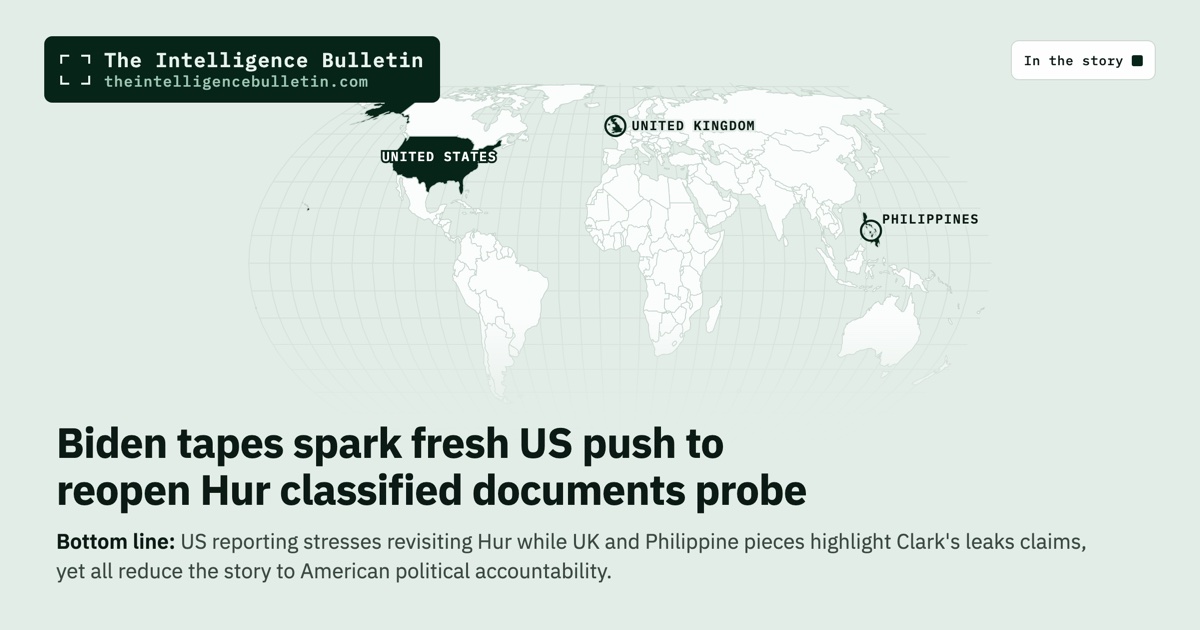
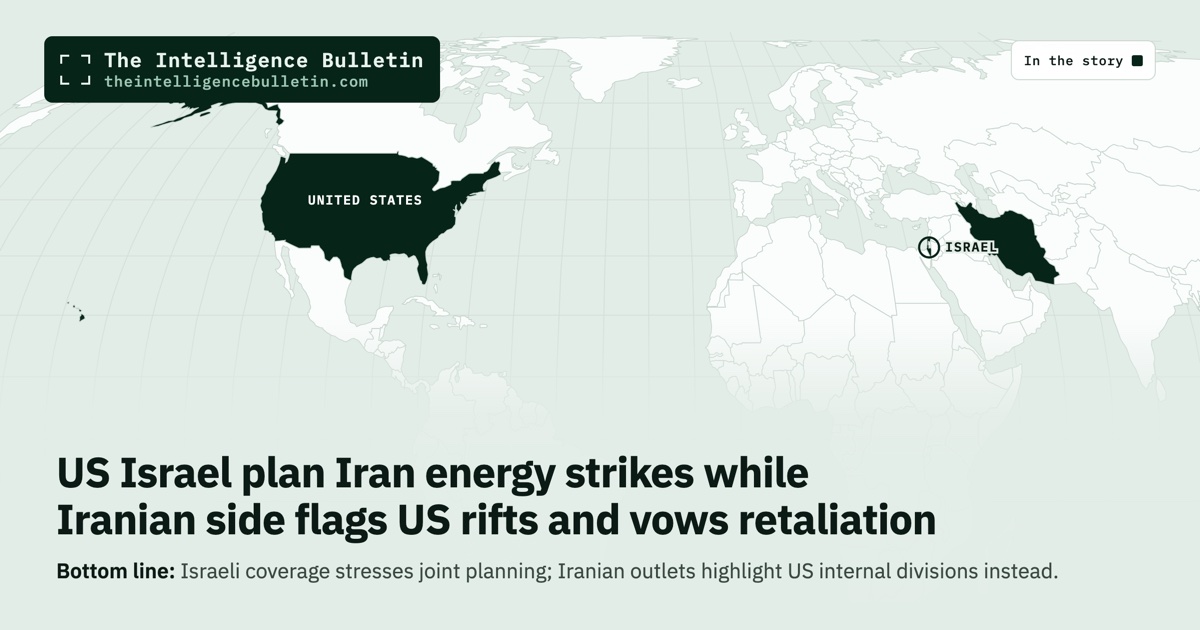
Map of the countries in the story: US Israel plan Iran energy strikes while Iranian side flags US rifts and vows retaliation
Reports from CBS and WSJ indicate US and Israeli officials are preparing strikes on Iranian power plants and refineries possibly this weekend, though Trump has not given final approval. Iranian officials told Tasnim they have prepared retaliation targeting US and Israeli energy assets. Gooya coverage focuses on Trump frustration over US policy disagreements rather than imminent action.

One Story. Many Angles.

🇮🇱
Israel
Jerusalem Post
Israel, US weighing harsh strikes on Iranian energy infrastructure
Read →
🇮🇷
Iran
Gooya
PERSIAN
Trump is fed up with the differences of his senior government officials over Iran’s strategy
“ترامپ از اختلاف مقام های ارشد دولتش بر سر راهبرد ایران کلافه شده”
Read →
🇹🇷
Turkey
Anadolu Agency
US, Israel preparing major strikes on Iran’s energy infrastructure: Reports
Read →
🇸🇦
Saudi Arabia
Arab News
US, Israel planning to bombard energy-related targets in Iran, CBS reports
Read →
🇴🇲
Oman
Times of Oman
Kind of madness: Iran vows to target US, Israeli energy assets if attacked as Trump weighs fresh strikes
Read →
In Brief

Israeli coverage stresses joint planning; Iranian outlets highlight US internal divisions instead.

US and Israeli preparations for strikes on Iranian energy infrastructure reveal a sharper divide in regional coverage than the shared wire facts suggest. Jerusalem Post presents coordinated Israeli-US weighing of harsh options as a defensive step. Gooya instead spotlights Trump’s reported anger at internal administration splits and lack of clear strategy. Anadolu and Arab News stick to the CBS reporting of possible weekend action while noting Iranian threats. Times of Oman foregrounds the Iranian official’s dismissal of the plans as ‘madness’ and detailed retaliation warnings. The pattern shows outlets in direct proximity to the conflict emphasize readiness or internal friction, while others amplify the risk of blowback, exposing how energy stakes and proximity shape which part of the story each side chooses to foreground.

Perspective Analysis

US and Israeli officials have prepared detailed plans for strikes against Iranian power plants, refineries and electricity supply to Tehran, with possible action this weekend, according to multiple Western reports citing US sources. President Donald Trump has reviewed the options at Camp David but has not issued final authorization, leaving room for last-minute diplomatic progress to halt the campaign before markets open Monday. The targets center on energy infrastructure in what would mark one of the most intense phases yet in the ongoing US-Israeli operations against Iran. Israeli officials have been briefed and are coordinating with Washington, though one Israeli source told CBS News that no decision on full-scale operations had been conveyed and no formal request to join had been made.

Trump addressed a Cabinet meeting at Camp David and stated that the United States would hit Iran very hard until Tehran reached the point where it could not take it anymore. White House spokeswoman Karoline Leavitt said the US would win and that Iran would not obtain a nuclear weapon on Trump’s watch. Pentagon spokesman Sean Parnell described the military as locked and loaded but declined to name specific targets ahead of a presidential decision. A separate Wall Street Journal account, also citing US officials, confirmed that the new attacks were authorized at the Camp David retreat and noted that Trump might pause operations and return to talks if Iran shows immediate diplomatic movement.

Iranian authorities responded through Tasnim News Agency that reports of the planned strikes amounted to recklessness. A senior security official said Tehran had prepared a comprehensive retaliation plan covering critical infrastructure in Israel and US energy assets across the region. The official asserted that Iran possesses both the capability and the will to carry out such strikes, pointing to performance during the prior 40-day phase of fighting as evidence. Iranian statements framed any attack on their energy sites as provocation that would trigger direct responses against American and Israeli energy facilities.

On the US side, reporting from NBC News relayed through Persian outlets described Trump as frustrated during a recent meeting. He reportedly expressed anger over the grinding nature of the conflict, the limited military options available, and the absence of a clear endgame or agreement with Iran. One participant described the president as exasperated that extracting concessions from Tehran had proven far more difficult than expected and that no coherent strategy existed for reaching a conclusion. The account noted tactical successes on the ground but warned of an emerging strategic failure without defined objectives, such as blocking nuclear progress, reopening the Strait of Hormuz, or dismantling missile and drone programs. White House and Pentagon spokespeople pushed back, with Leavitt stating Trump retained full confidence in his team and Parnell asserting that the defense secretary and senior commanders remained united on the Iran mission.

These reports sit inside a broader pattern of US-Israeli military pressure on Iran that has already produced repeated cycles of strikes and counter-strikes. Energy infrastructure has emerged as the immediate focus because strikes there carry direct consequences for global oil supply and because Iran has repeatedly threatened to close the Strait of Hormuz in response. The timing discussion around concluding operations before Monday trading reflects explicit concern over market disruption. Iranian warnings explicitly link any new energy strikes to retaliation against equivalent targets on the US and Israeli sides, raising the prospect of wider disruption to shipping lanes and regional production.

Coverage of these developments shows clear differences in emphasis rather than outright contradictions on the core facts. Jerusalem Post reporting presents the preparations as a joint Israeli-US calculation of harsh options against Iranian targets, underscoring coordination and readiness. Gooya, drawing on the NBC account, instead centers on the reported friction inside the Trump administration and the president’s dissatisfaction with the lack of a defined strategy. Anadolu Agency and Arab News both relay the CBS and WSJ details on possible weekend strikes, Iranian threats, and economic timing concerns, while Times of Oman leads with the Iranian official’s description of the plans as a kind of madness and the detailed list of retaliation targets.

The shared wire elements from CBS and WSJ appear consistently across the non-Iranian sources, establishing the basic timeline and targets as the most widely corroborated account. Where the accounts diverge is in what receives priority: coordinated planning versus internal US doubts, or Iranian retaliation capacity versus the risk of escalation. Iranian-sourced material does not dispute the existence of US planning but redirects attention to American policy disarray. Gulf outlets add explicit references to energy market fallout and Iranian vows without endorsing the defensive rationale advanced in Israeli coverage.

The account that aligns most closely with the verified reporting is the one that treats the strike preparations as real but conditional on Trump’s final decision and Iranian diplomatic movement. Multiple independent US sources confirm the planning stage while stopping short of execution. Iranian statements on retaliation are likewise direct and attributed to named officials rather than anonymous claims. The divergence on internal US divisions appears in reporting that cites administration participants, and spokespeople have not denied the underlying policy debates even as they reject characterizations of disunity at the top.

What to Watch

What happens next hinges on whether Trump authorizes the weekend window or pauses for negotiations. Any execution would test Iran’s stated readiness to strike back at energy assets, with immediate effects on oil prices and shipping through the Strait of Hormuz. The absence of final approval at this stage suggests the window for de-escalation remains open, but the detailed target lists and retaliation plans already in place indicate that further rounds of strikes and counter-strikes are the baseline expectation rather than an unlikely escalation.
Share this story

Cyprus hands Iran-linked spy suspect to UK after year-long detention

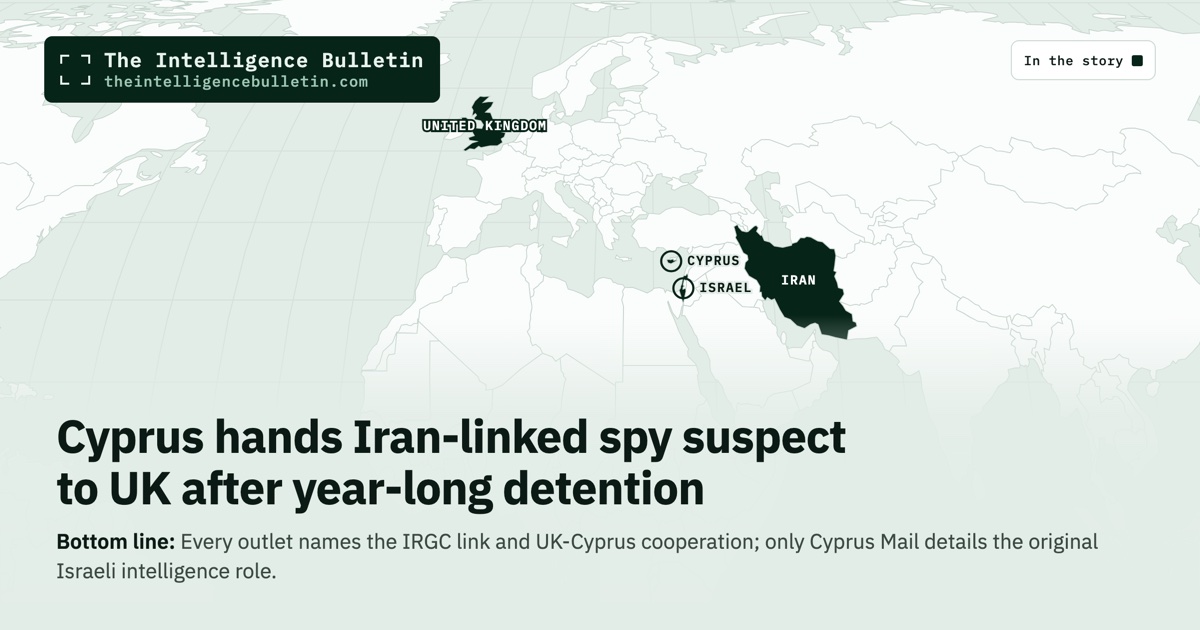
Map of the countries in the story: Cyprus hands Iran-linked spy suspect to UK after year-long detention
Rashad Sultanov, 44, a dual British-Azerbaijani national, was arrested July 17 in Cyprus by local authorities on suspicion of hostile surveillance at RAF Akrotiri between May and June 2025. He allegedly shared information with Iran’s IRGC. Metropolitan Police announced the case July 31 under the National Security Act; extradition to Britain is underway with Cyprus cooperation.

One Story. Many Angles.

🇨🇾
Cyprus
Cyprus Mail
UK announces arrest of espionage suspect arrested in Cyprus last year
Read →
🇬🇧
United Kingdom
Mirror
British man arrested in Cyprus accused of ‘hostile surveillance’ at RAF Akrotiri
Read →
🇹🇷
Turkey
Hurriyet Daily News
UK man arrested in Greek Cyprus on suspicion of spying on military base
Read →
🇮🇱
Israel
Jerusalem Post
Man arrested under suspicion of spying on British Akrotiri airbase for Iran
Read →
🇦🇿
Azerbaijan
Azernews
British-Azerbaijani man arrested in Cyprus over alleged espionage for Iran’s IRGC
Read →
In Brief

Every outlet names the IRGC link and UK-Cyprus cooperation; only Cyprus Mail details the original Israeli intelligence role.

All five outlets report the same core facts from the UK police statement: the suspect’s identity, dates, base, IRGC link and extradition. Cyprus Mail alone foregrounds the timeline of the 2025 Cypriot arrest, Israeli intelligence tip-off and local court challenges, underscoring that Cyprus exercised sovereignty before handing the case to Britain. The Mirror and Azernews treat it as a straightforward UK-led counter-terrorism operation under the National Security Act, while Jerusalem Post and Hurriyet foreground the Iranian threat and base vulnerability. The pattern reveals not a split but convergence on operational partnership: Cypriot authorities acted on foreign intelligence, detained the man for a year, then facilitated extradition. This quietly strengthens the UK-Cyprus security relationship at a time when Akrotiri has already been targeted by Iranian drones.

Perspective Analysis

A British-Azerbaijani dual national held for more than a year in Cyprus now faces extradition to Britain on charges of conducting hostile surveillance at RAF Akrotiri and passing information to Iran’s Islamic Revolutionary Guard Corps.

Rashad Sultanov, 44, from Islington in north London, was first detained by Cypriot authorities in June 2025 after incidents at the base between May 11 and June 22 that year. Cypriot police acted on intelligence from a third country outside the European Union, later identified in reporting as Israel. Israeli Foreign Minister Gideon Sa’ar posted at the time that Cypriot and Israeli security services had thwarted a planned IRGC attack on Israeli citizens in Cyprus. Sultanov’s lawyer challenged the arrest in the Limassol district court and appealed to the Supreme Court, arguing that reliance on unverifiable foreign information violated EU standards and that the warrants rested on a fundamental error. The Cypriot courts upheld the detention, ruling that the foreign tip had been corroborated by physical monitoring of the suspect over a specific period and did not amount to vague allegations.

On July 17 this year Cypriot authorities re-arrested Sultanov to begin extradition proceedings. London’s Metropolitan Police announced the case on July 31, stating that Sultanov had carried out hostile surveillance at the prohibited Akrotiri base and shared the resulting information with the IRGC. Prosecutors authorised charges under sections 3 and 4 of the National Security Act, which carry a maximum 14-year sentence. Counter Terrorism Policing London commander Helen Flanagan said the case demonstrated that Britain could apply the Act overseas when its military bases faced hostile state activity, adding that extensive partnership work had taken place between British and Cypriot law enforcement agencies. The Crown Prosecution Service, National Crime Agency and Cypriot authorities continue to coordinate as the extradition moves forward.

Akrotiri remains one of two sovereign British bases retained on the island after Cyprus gained independence in 1960. The facility has supported UK operations in Iraq, Syria and Yemen and was struck by an Iranian-made drone in March, causing minor damage early in the wider U.S.-Israeli confrontation with Iran. Britain recently banned the IRGC as a threat to national security, citing its role in proxy attacks across Europe that have increasingly targeted Jewish communities and regime opponents.

The reporting across the five outlets rests on the same police statement and agrees on the central sequence: the surveillance period, the IRGC connection, the July 17 arrest, and the ongoing extradition. No account disputes the existence of UK-Cypriot operational cooperation or the legal basis for the charges. Where the accounts differ is in the additional detail each includes. One report alone supplies the full 2025 Cypriot arrest timeline, the Israeli intelligence origin, the lawyer’s Supreme Court arguments, and the court’s confirmation that physical monitoring had verified the foreign tip. The remaining reports focus instead on the Metropolitan Police announcement, the suspect’s London address and occupation as a taxi driver, and the broader context of Iranian threats to Western facilities.

That convergence on the partnership itself carries weight. Cypriot authorities executed the initial detention, defended it through their own courts against challenges over foreign-sourced evidence, held the man for a year, and then enabled his transfer to British jurisdiction once the bulk of the intelligence concerned the Akrotiri base. The result is not friction between London and Nicosia but a practical demonstration of how the two governments handle extraterritorial security cases involving third-country intelligence. The eastern Mediterranean setting makes the cooperation more consequential: Akrotiri sits at the centre of UK power projection in the region, and Iran has already shown willingness to strike the facility directly.

The National Security Act’s first overseas application in this case also sets a precedent. British officials can now cite a working model for prosecuting hostile state activity against UK bases abroad through joint action with the host nation. For Cyprus the episode underscores that its own security services can act on external intelligence while retaining legal control until extradition is arranged. None of the coverage suggests the arrangement weakens either side’s sovereignty; instead it shows both exercising it in tandem.

What to Watch

The most complete account therefore comes from the reporting that alone supplies the Cypriot legal timeline and the Israeli intelligence trigger. That fuller record confirms the operational partnership described in the police statement rather than contradicting it. The episode is likely to encourage further quiet coordination between the two governments on base security, particularly as tensions with Iran persist and the IRGC continues to view British facilities as potential targets. Readers who see only the UK police announcement will understand the immediate charges; those who also see the Cypriot court record will understand how the case reached that point through layered intelligence and local judicial process.


Share this story

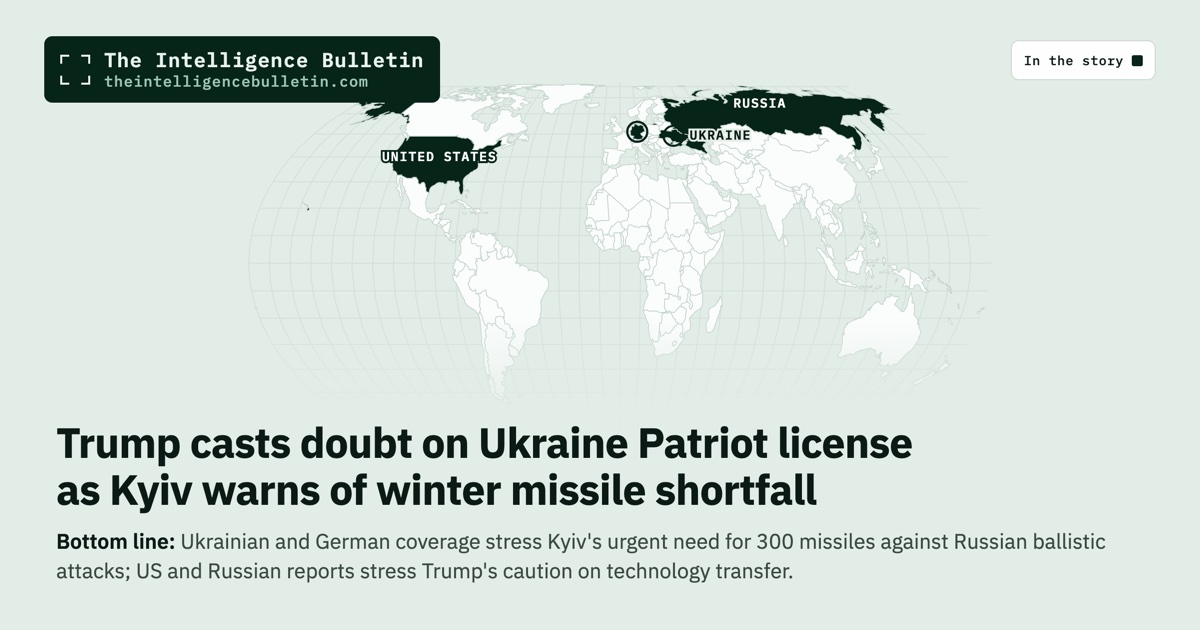
Trump casts doubt on Ukraine Patriot license as Kyiv warns of winter missile shortfall

Map of the countries in the story: Trump casts doubt on Ukraine Patriot license as Kyiv warns of winter missile shortfall
During a July 28 White House meeting, Ukrainian President Volodymyr Zelenskyy requested 300 Patriot missiles and a production license to counter Russian ballistic strikes on energy infrastructure this winter. President Donald Trump declined the immediate missile shipment due to depleted US stocks from the Iran conflict and expressed uncertainty about granting a manufacturing license, citing security risks with advanced technology. Ukrainian and European reports stress the urgency for Kyiv’s air defenses, while US and Russian coverage highlight restraint and caution in arms policy.

One Story. Many Angles.

🇺🇦
Ukraine
Unian
UKRAINIAN
Donald Trump refused to give missiles for Patriot that Volodymyr Zelenskyy requested
“Дональд Трамп відмовився дати ракети до Patriot, про які просив Володимир Зеленський”
Read →
🇺🇸
United States
WSAU
Trump says US has not agreed to Ukraine building Patriot missiles
Read →
🇬🇧
United Kingdom
The Independent
Ukraine-Russia war latest: Trump says he’s ‘not sure’ about allowing Kyiv to build Patriot missiles
Read →
🇷🇺
Russia
Pravda
Trump Sets the Record Straight on Patriot Missile License for Ukraine
Read →
🇩🇪
Germany
Deutsche Welle
UKRAINIAN
Zelenskyy asks Trump to provide an emergency batch of Patriot missiles
“Зеленський просить Трампа дати екстрену партію ракет Patriot”
Read →
In Brief

Ukrainian and German coverage stress Kyiv’s urgent need for 300 missiles against Russian ballistic attacks; US and Russian reports stress Trump’s caution on technology transfer.

Ukrainian outlets like Unian lead with the direct refusal of 300 missiles Zelenskyy sought for winter survival, quoting officials on the lack of a clear path through Russian ballistic barrages without them. Deutsche Welle echoes this from a European security angle, detailing depleted Patriot stocks and the humanitarian risk to Ukrainian power grids if Russia escalates strikes. The Independent situates Trump’s hesitation within fresh reports of Russian North Korean missiles killing civilians and Ukrainian drone hits on Russian logistics. In contrast, the US Reuters report via WSAU centers Trump’s Camp David remarks on the need to be ‘very careful’ about sharing lethal technology that could be turned against Washington one day. Russian Pravda frames the same comments as Trump firmly correcting any Ukrainian overstatement of agreement, presenting it as prudent restraint that advances negotiations. The split reveals how proximity to the battlefield amplifies the immediate capability gap, while distance allows emphasis on long-term proliferation risks and diplomatic signaling.

Perspective Analysis

President Donald Trump told reporters on July 31 that the United States has not agreed to let Ukraine manufacture Patriot missiles and that Washington must remain very careful about handing over the technology. The statement came three days after a White House meeting in which Ukrainian President Volodymyr Zelenskyy asked for 300 ready-to-use Patriot interceptors to defend against Russian ballistic missile strikes on energy infrastructure through the coming winter.

Zelenskyy made the request during closed-door talks on July 28. Ukrainian officials told reporters that Russian forces had already fired between 30 and 40 ballistic missiles in each major attack on Ukrainian cities and power plants. Stocks of the only interceptors capable of knocking those missiles down had fallen sharply after the United States diverted large numbers to the Middle East earlier in the year. One analysis cited in Ukrainian reporting put remaining U.S. Patriot interceptor inventory at roughly 759 rounds. Without fresh supplies, Ukrainian commanders warned they lacked a clear way to protect critical infrastructure through the colder months.

Trump had raised the possibility of a production license during an earlier meeting in Turkey. Ukrainian officials left that conversation believing Washington would allow domestic manufacture of the PAC-3 interceptors. By the end of July, however, Trump publicly walked the idea back. Speaking at Camp David, he said any decision to share the technology would be “a big step” and that the United States had not yet consented. He noted that countries given advanced weapons in the past could someday use them against the donor.

Ukrainian reporting presented the shift as a direct refusal of the 300 missiles Zelenskyy had sought. It quoted an unnamed Ukrainian official stating that without the ability to strike Russian launch sites inside Russia, Kyiv had no reliable plan to survive another winter of attacks. German-language coverage from Deutsche Welle framed the same request as an urgent European security matter, noting that even a license would take one to five years to yield usable numbers and that Russia’s monthly barrage of ballistic missiles already exceeded Ukraine’s remaining defensive capacity.

American reporting stayed closer to Trump’s own words. The account quoted his Camp David remarks on the need to be “very judicious” and the risk that shared technology could “someday turn on you.” It recorded that talks with Lockheed Martin and Ukrainian officials continued but carried no commitment. British coverage placed the same remarks inside the day’s broader battlefield developments, including a reported Russian missile strike that killed six members of one family and Ukrainian drone hits on Russian warehouses.

Russian coverage described Trump’s comments as a needed correction. It reported that the United States had never authorized production and stressed the long-standing U.S. reluctance to license such advanced systems to any partner. The account presented the caution as evidence that Washington was avoiding steps that could prolong the conflict.

The accounts agree on the core sequence: Zelenskyy asked for 300 missiles and discussed a license; Trump declined the immediate shipment and later expressed doubt about licensing production. They diverge on emphasis. Ukrainian and German reporting foreground the concrete shortage facing Kyiv and the timeline pressure of winter strikes on power grids. The U.S. account centers the security risks of technology transfer. Russian coverage treats the same caution as a positive signal that advanced weapons will not flow freely.

Trump’s July 31 remarks carry the greatest weight because they are direct, on-the-record statements from the decision-maker. Ukrainian and German reporting accurately records the capability gap Kyiv faces, but it cannot alter the fact that U.S. stocks are already drawn down and that any new production line would take years. Russian amplification correctly notes the restraint but frames it as diplomatic progress rather than a simple inventory constraint.

What to Watch

The practical result is that Ukraine will enter the winter with the same limited interceptor supply it has now. Kyiv will continue pressing for either immediate deliveries or faster co-production arrangements, while Washington weighs the proliferation precedent against battlefield needs. The next public signal will likely come from Pentagon or Lockheed Martin meetings already scheduled with Ukrainian representatives.


Share this story

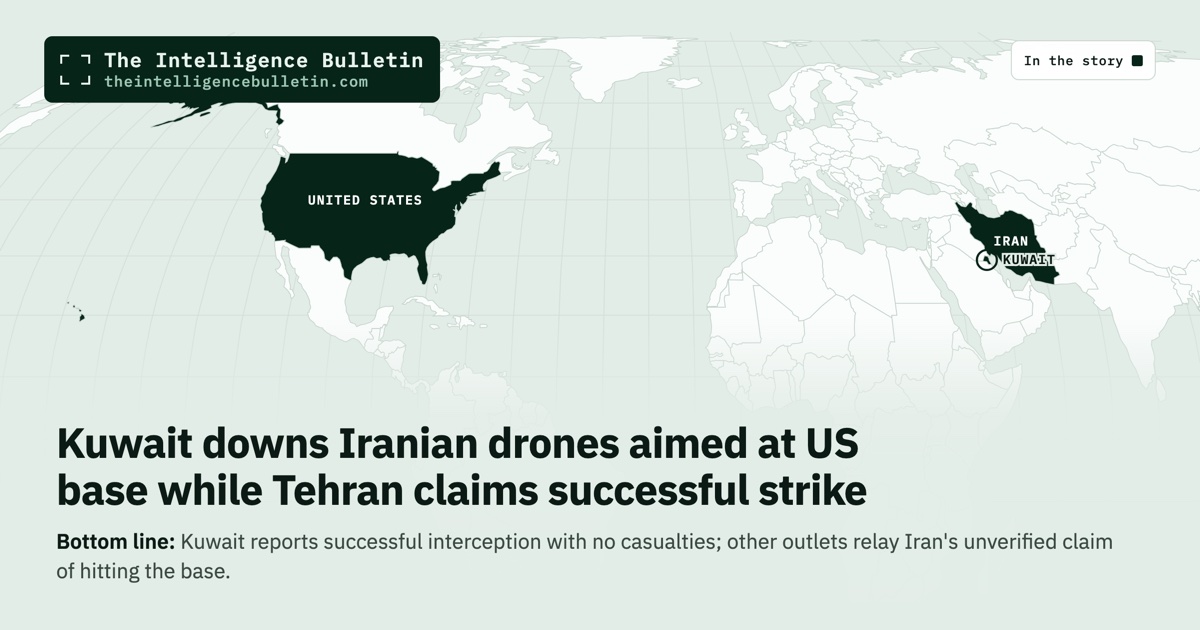
Kuwait downs Iranian drones aimed at US base while Tehran claims successful strike

Map of the countries in the story: Kuwait downs Iranian drones aimed at US base while Tehran claims successful strike
Iran’s army stated it launched explosive drones at Ahmed Al Jaber Air Base in Kuwait, targeting hangars, communications and warehouses in response to recent US strikes on Iran including a residential site on Qeshm Island. Kuwait’s defense ministry said its forces detected and destroyed the drones entering its airspace early on July 31, causing only material damage from shrapnel and no deaths. No US or Kuwaiti confirmation of damage at the base has been issued.

One Story. Many Angles.

🇰🇼
Kuwait
Arab Times
Kuwait Armed Forces Destroy Hostile Drones in Early-Morning Iranian Attack
Read →
🇹🇷
Turkey
Anadolu Agency
Iran’s army claims drone attack on US facilities at Kuwait air base
Read →
🇸🇦
Saudi Arabia
Arab News
Iran military says targeted US base in Kuwait with drones
Read →
🇶🇦
Qatar
Al Jazeera
IRGC strikes US targets in Kuwait a day after US hits Iran: Latest events
Read →
🇮🇳
India
The Siasat Daily
Iran claims drone strike on US military base in Kuwait
Read →
In Brief

Kuwait reports successful interception with no casualties; other outlets relay Iran’s unverified claim of hitting the base.

Kuwait’s Arab Times leads with its armed forces’ successful destruction of the incoming drones, framing the event as a domestic security victory against Iranian aggression and noting only shrapnel damage with zero casualties. Anadolu Agency and Arab News report Iran’s detailed claim of striking specific US facilities at the base without local reaction or verification, while placing the action in the context of tit-for-tat exchanges after US attacks on Qeshm. Al Jazeera embeds the incident in a widening cycle of US-Iran strikes, quoting experts on Tehran’s strategy of horizontal escalation across the Gulf and beyond. The Siasat Daily records the Iranian claim concisely alongside unrelated Hormuz shipping incidents, treating verification as secondary from its Indian vantage. The selected coverage converges on Iran’s stated retaliation motive but diverges on whether the drones reached their targets, revealing how proximity to the base shapes emphasis on interception versus the originating claim.

Perspective Analysis

Iran’s military said it sent explosive drones against American facilities at Kuwait’s Ahmed Al Jaber Air Base on July 31, naming fighter aircraft hangars, satellite communication systems, and equipment warehouses as targets. Kuwait’s defense ministry said its forces detected the drones entering Kuwaiti airspace at dawn the same day and destroyed them before they could strike. The ministry described the incoming objects as hostile and attributed them to Iranian aggression aimed at vital and military sites. Brigadier General Saud Abdulaziz Al-Otaibi stated that falling shrapnel caused some material damage but no human casualties resulted. No immediate statement came from the United States or Kuwaiti authorities confirming any impact on the base itself.

The Iranian army presented the operation as a direct response to recent American strikes on Iranian territory. Those strikes included an attack on a residential building on Qeshm Island in the Strait of Hormuz that local reports said killed three people, a taxi driver, his wife, and their two-year-old child. Iranian statements linked the Kuwait action to that incident and to earlier U.S. operations against Islamic Revolutionary Guard Corps targets. The base at Ahmed Al Jaber serves as a hub for U.S. aerial surveillance and logistical support in the region, according to the Iranian account. The same statement noted that the facility supports U.S. operations across the Gulf.

Kuwait’s official account made no reference to any successful Iranian hits or to the base’s role in U.S. operations. It stressed instead that the armed forces maintained full readiness, coordinated with other authorities, and took all measures needed to protect national sovereignty and the safety of citizens and residents. Earlier incidents had already shown the risks of spillover. On the previous day, Kuwait reported that an Iranian attack damaged a building belonging to a Chinese company in the north of the country and killed one worker there.

The broader conflict between the United States and Iran has already produced exchanges across multiple countries. U.S. Central Command carried out strikes on dozens of IRGC targets inside Iran overnight before the Qeshm incident. Iran had fired missiles toward a U.S. installation in Jordan days earlier, though those were intercepted. Separate reports placed Iranian-linked activity in Iraq and shipping routes in the Red Sea and Caspian Sea. The July 31 drone episode fits into that pattern of moves and counter-moves that resumed after roughly a week without major incidents.

Accounts differ on whether the drones reached their intended targets. Kuwait’s defense ministry reported that its forces eliminated the threat in Kuwaiti airspace and limited the effects to shrapnel. Iranian statements asserted that the drones struck the specified facilities at the air base. No independent confirmation of damage or the absence of damage has appeared from either the United States or Kuwait. Arab Times, the Kuwaiti outlet, published the ministry’s account in full and added that the armed forces remain prepared for further missions. Anadolu Agency and Arab News carried the Iranian army’s description of the targets and the stated motive of retaliation without including Kuwait’s interception report. Al Jazeera placed the episode inside a running sequence of U.S. and Iranian actions, noting expert observations that Iran seeks to expand the geographic reach of the fighting while the United States has focused on direct pressure inside Iran. The Siasat Daily recorded the Iranian claim alongside separate developments in the Strait of Hormuz and made no mention of any Kuwaiti defensive action.

The absence of U.S. or Kuwaiti comment on base damage leaves the Iranian assertion without external verification so far. Kuwait’s report of successful interception rests on its own military’s statement and carries the weight of the country whose territory was crossed. Iranian officials have an interest in presenting the strike as effective retaliation that raises the cost to Washington. Kuwait has an interest in demonstrating that its defenses can contain the threat without wider disruption. The two positions are not necessarily contradictory in every detail, yet they cannot both be fully accurate on the central question of whether the drones hit the listed facilities.

What to Watch

The episode raises the practical risk that each side will act on its own version of events. If Iranian planners believe they have already damaged a key U.S. support node, they may judge that further pressure is warranted or that deterrence has been restored. If U.S. and Kuwaiti forces conclude that the drones were stopped short, they may treat the incident as another failed attempt and respond accordingly. Either calculation can accelerate the next round. The pattern of the past months shows that pauses have been short and that actions in one location quickly generate claims and responses elsewhere. The lack of shared facts about what actually occurred at Ahmed Al Jaber Air Base removes one possible brake on that cycle.


Share this story

Biden tapes spark fresh US push to reopen Hur classified documents probe

Map of the countries in the story: Biden tapes spark fresh US push to reopen Hur classified documents probe
The Oversight Project released audio and transcripts of Joe Biden’s 2016-2017 interviews with ghostwriter Mark Zwonitzer. The recordings show Biden discussing sensitive and classified material. Jeff Clark claims they expose memory issues and willful retention that warrant revisiting Special Counsel Robert Hur’s 2024 decision against charges. Biden’s side calls the release politically motivated.

One Story. Many Angles.

🇺🇸
United States
KVAL News
Revisiting Robert Hur’s recommendation? Biden tapes prompt transparency questions
Read →
🇬🇧
United Kingdom
International Business Times
Did Biden Spill State Secrets For A Book Deal? Jeff Clark Claims Ghostwriter Tapes Reveal ‘Massive’ Classified Leaks
Read →
🇵🇭
Philippines
The Manila Times
Joe Biden interviews with memoir ghostwriter reveal him discussing sensitive information
Read →
In Brief

US reporting stresses revisiting Hur while UK and Philippine pieces highlight Clark’s leaks claims, yet all reduce the story to American political accountability.

All three outlets converge on the same core US domestic story: the tapes undermine Hur’s portrayal of Biden as a sympathetic figure with poor memory and reopen questions about intent in the classified documents case. The KVAL report centers transparency and Clark’s explicit call for the Justice Department to revisit Hur’s recommendation, pairing it with a two-tier justice comparison to Trump. The IBTimes piece foregrounds Clark’s allegation of massive classified disclosures tied to a book deal while noting Hur already reviewed the material. The Manila Times, carrying AP copy, quotes Biden on the recordings discussing classified notebooks and memory lapses, then records Biden’s spokesman accusing political weaponization of the DOJ. The shared emphasis on domestic accountability, rather than foreign-policy fallout or book-deal incentives alone, shows that the release has hardened into a partisan US accountability battle regardless of outlet origin.

Perspective Analysis

The release of audio and transcripts from Joe Biden’s 2016 and 2017 interviews with memoir ghostwriter Mark Zwonitzer has renewed demands that the Justice Department revisit Special Counsel Robert Hur’s 2024 decision not to recommend charges in the classified documents case.

The recordings, obtained after the Oversight Project of the Heritage Foundation won a two-year legal fight against the Biden Justice Department and Biden’s private lawyers, run roughly three hours with 117 pages of transcripts containing many redactions. They capture Biden, then vice president and later a former officeholder, discussing foreign policy decisions, family matters, and personal reflections while sometimes referring to notebooks that investigators later determined contained classified information. In one October 2016 session near the end of his vice presidency, Biden told Zwonitzer, “They didn’t even know I had this,” as he spoke about sensitive foreign policy matters. In a 2017 session after leaving the White House, he said, “I just found all the classified stuff downstairs,” and described writing a 40-page memorandum to the president arguing against additional troops in Afghanistan.

Hur’s February 2024 report had already examined these same interviews as part of the evidence. The special counsel concluded there was evidence Biden had knowingly retained some classified material after leaving office and that portions of the notebooks held highly sensitive national security and foreign policy information. Hur nevertheless declined to recommend prosecution, citing the difficulty of proving criminal intent beyond a reasonable doubt and the likelihood that a jury would view Biden as a sympathetic, well-meaning elderly man with a poor memory. Biden cooperated with the inquiry and told Hur he had not intentionally mishandled classified material.

Jeff Clark, vice president of litigation at the Oversight Project and a former Trump Justice Department official, described the newly public recordings as proof that the earlier assessment should be reexamined. Clark pointed to instances in which Biden could not remember details he should have known, including the identity of Representative Jim Clyburn, whom Clark said was key to Biden’s nomination. Clark argued that the relevant legal question was Biden’s intent at the time he took the documents, not his mental state years later, and that Hur’s focus on Biden’s presentation in 2024 had skewed the analysis. Clark also cited Hur’s congressional testimony that Biden had willfully taken classified documents, which Clark said established the requisite intent for a crime. He framed the contrast with the Mar-a-Lago documents case against Donald Trump as evidence of a two-tier justice system, noting that Trump held the power to declassify documents while Biden, as senator and vice president, did not.

Biden’s spokesman rejected the release as politically motivated. TJ Ducklo stated that the conversations were provided to the Justice Department on the condition they remain private and that making them public represented the latest example of the current administration weaponizing the department for political retribution. Biden had sued to block disclosure, arguing the recordings contained sensitive personal material, but dropped the suit after a divided panel of the U.S. Court of Appeals for the District of Columbia Circuit ruled there was substantial public interest in release.

The three outlets that covered the story in the 24-hour window all placed the tapes inside the same ongoing American political contest over accountability for classified documents. Coverage converged on the domestic stakes of memory, intent, and the durability of Hur’s no-charge recommendation rather than on foreign policy consequences or book-deal incentives as independent drivers. The shared focus produced a consistent picture: the recordings supply concrete examples of Biden discussing material later deemed classified and displaying memory gaps, while Clark’s public statements tie those examples directly to a call for renewed Justice Department scrutiny. Biden’s side counters that the timing and source of the release confirm partisan weaponization.

Differences appear in emphasis rather than in disputed facts. The KVAL News account, drawing on National News Desk reporting, foregrounds Clark’s explicit request for a total revisiting of Hur’s recommendation and pairs it with the two-tier justice comparison to the Trump case. The International Business Times report gives greater prominence to Clark’s assertion that the tapes show Biden disclosed massive amounts of classified information to Zwonitzer and references specific federal statutes, while still recording that Hur had already evaluated the same material. The Manila Times, publishing Associated Press copy, leads with direct quotes from the recordings about sensitive information and memory lapses, then records the Biden spokesman’s accusation of political motivation without extending into Clark’s calls for renewed prosecution review.

These variations do not produce conflicting accounts of what the tapes contain or what Hur previously concluded. All three reports confirm the existence of the Oversight Project release, the content of Clark’s public comments, the existence of Hur’s 2024 findings, and the Biden side’s response. None disputes that Hur examined the ghostwriter interviews or that the recordings include references to classified material and memory difficulties. The convergence indicates that the event has hardened into a partisan U.S. accountability dispute whose main lines are legible from any of the three perspectives.

The KVAL account aligns most closely with the primary evidence because it captures Clark’s on-the-record demand for revisiting the special counsel’s decision in the same terms Clark used when speaking to the National News Desk. That demand rests on the verified content of the tapes and on Hur’s own prior statements rather than on new claims of massive leaks for commercial gain. The other two reports accurately record Clark’s additional assertions and the Biden response but do not alter the central record that the tapes were already part of Hur’s evidence and that the legal fight centered on public access rather than on previously unknown foreign policy revelations.

What to Watch

The next development will likely be further congressional or Oversight Project releases of additional tape segments, followed by renewed partisan debate in Washington over whether the Justice Department under current leadership should reopen any aspect of the matter. The convergence across outlets shows that participants on both sides now treat the tapes as ammunition in the same domestic contest rather than as a story that escapes U.S. partisan lines.


Share this story

Kyrgyz-Uzbek Pact Creates New Security Council as Trade and Rail Projects Advance

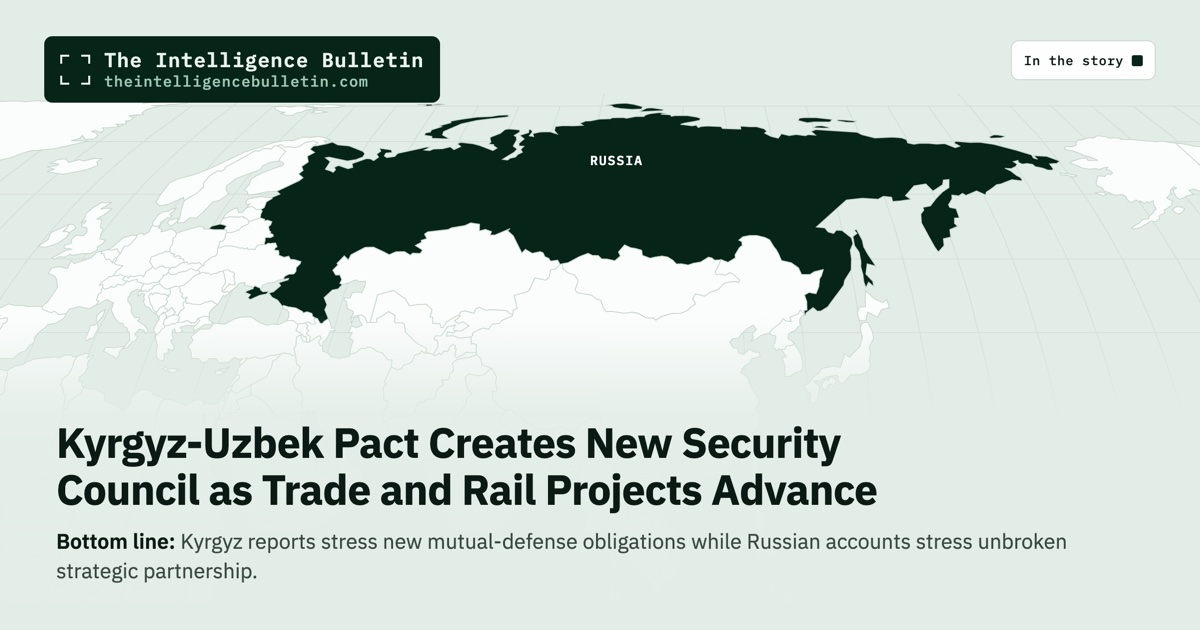
Map of the countries in the story: Kyrgyz-Uzbek Pact Creates New Security Council as Trade and Rail Projects Advance
On July 30, 2026, during Uzbek President Shavkat Mirziyoyev’s state visit to Cholpon-Ata, Presidents Sadyr Japarov and Mirziyoyev signed the Treaty on Allied Relations. The pact establishes a High Interstate Council to coordinate security, economic and border cooperation. Additional agreements covered defense, trade targets of $2 billion and infrastructure projects including the Kambarata-1 hydropower plant. Japarov also awarded Mirziyoyev Kyrgyzstan’s Manas Order.

One Story. Many Angles.

🇰🇬
Kyrgyzstan
AKIPress
RUSSIAN
July 30: Kyrgyzstan and Uzbekistan Establish Allied Relations
“День 30 Июля: Кыргызстан и Узбекистан установили союзнические отношения – Новости из Кыргызстана – АКИpress”
Read →
🇷🇺
Russia
Rossiyskaya Gazeta
RUSSIAN
Kyrgyzstan and Uzbekistan Sign Treaty on Allied Relations
“Кыргызстан и Узбекистан подписали Договор о союзнических отношениях”
Read →
🇻🇳
Vietnam
Baomoi
VIETNAMESE
Kyrgyzstan and Uzbekistan Become Allied Countries, Central Asian Cooperation Expected to Reach New Heights
“Kyrgyzstan và Uzbekistan trở thành quốc gia đồng minh, hợp tác Trung Á kỳ vọng bước lên nấc thang mới”
Read →
🇹🇷
Turkey
Etik Haber
TURKISH
Caparov Presents First-Degree ‘Manas’ Order to Mirziyoyev
“Caparov’dan Mirziyoyev’e birinci derece ‘Manas’ nişanı”
Read →
In Brief

Kyrgyz reports stress new mutual-defense obligations while Russian accounts stress unbroken strategic partnership.

Kyrgyz media presented the treaty as a historic security milestone that locks in mutual defense commitments and creates a top-level council to enforce them. Russian reporting echoed the signing and trade goals but framed it as steady progress within long-standing strategic partnership rather than a break from prior alignments. Vietnamese coverage spotlighted the infrastructure payoffs, including the China-Kyrgyzstan-Uzbekistan railway, as a leap for Central Asian connectivity. Turkish outlets focused on the Manas Order ceremony and personal rapport between the two leaders, treating the alliance as the capstone of ceremonial diplomacy. The four accounts converge on the core facts yet diverge sharply in what they foreground: bilateral defense guarantees, Moscow-friendly continuity, Chinese-linked projects, or elite symbolism. This pattern shows how even a concrete security pact registers differently depending on each capital’s wider interests.

Perspective Analysis

Kyrgyzstan and Uzbekistan signed a treaty on allied relations that creates a High Interstate Council chaired by their presidents to coordinate security, economic policy, border management and long-term projects.

The agreement was the centerpiece of Uzbek President Shavkat Mirziyoyev’s state visit to Cholpon-Ata on July 30, 2026. Kyrgyz President Sadyr Japarov and Mirziyoyev also signed more than ten additional documents covering social insurance, pension coordination, defense ministry cooperation and plans to raise bilateral trade from its current 1.3 billion dollars toward a 2 billion dollar target. The two leaders had already held one-on-one and delegation-level talks, and the visit included a Kyrgyz-Uzbek business forum, a meeting of the intergovernmental commission and cultural events.

The new High Interstate Council replaces or elevates the previous intergovernmental commission as the top coordination body. Its first session will be held under the direct chairmanship of the two presidents, who will set priorities and monitor implementation. Kyrgyz accounts describe the treaty itself as locking in mutual obligations on security and international support, with the council serving as the enforcement mechanism. Russian reporting quotes Japarov describing the pact as confirmation that the two countries will continue as close neighbors, allies and strategic partners on the basis of existing respect and partnership. Vietnamese coverage notes that the leaders reaffirmed their intention to finish outstanding border work, expand checkpoints and accelerate infrastructure such as the Kambarata-1 hydropower plant and the China-Kyrgyzstan-Uzbekistan railway, projects that would improve energy security and create new transit routes across Central Asia toward the Caucasus and Europe.

Mirziyoyev received Kyrgyzstan’s highest state decoration, the first-degree Manas Order, at a ceremony immediately after the signing. In his remarks he called the day historic, said the alliance represents the culmination of years of difficult work on border and other disputes, and described the award as carrying special personal meaning because it came from his Kyrgyz counterpart. He pledged continued support for Kyrgyz reforms.

The two countries had long faced practical frictions along their shared border and in water and transport issues. Recent years brought progress on demarcation and a shift toward joint infrastructure. The allied-relations treaty formalizes that turn at the highest political level and adds an institutional layer that did not exist before. A similar High Council has operated between Kyrgyzstan and Kazakhstan since 2007; the new body with Uzbekistan is modeled on that precedent.

Implementation will now depend on the council’s first decisions and on whether the listed projects move from planning to construction. The Kambarata-1 plant and the cross-border railway carry direct implications for electricity supply and for freight corridors that bypass traditional Russian routes. Trade growth to 2 billion dollars would require sustained customs and transport improvements already under discussion. Security cooperation clauses, though not spelled out in public detail, are cited by Kyrgyz officials as a core element of the mutual commitments.

Coverage of the same events diverged in emphasis. AKIPress, the main Kyrgyz service, stressed the security guarantees and the new council’s role in enforcing long-term coordination. Rossiyskaya Gazeta placed the same signing inside the language of ongoing strategic partnership and highlighted the economic documents and trade target without suggesting any realignment away from prior frameworks. Baomoi foregrounded the infrastructure projects and the potential for wider Central Asian connectivity, including the China-linked railway. Etik Haber centered the Manas Order presentation and the personal exchanges between the two presidents as the visit’s symbolic climax.

No outlet disputed the occurrence of the signing, the creation of the council, the additional agreements, the trade figure or the award. The differences lie in which element each outlet chose to lead with and to quote at length. Kyrgyz domestic reporting gave the clearest weight to defense and institutional innovation. Russian state-aligned coverage treated the outcome as consistent with existing patterns. Vietnamese reporting linked the treaty directly to concrete development projects. Turkish reporting treated the personal honor as the story’s emotional core.

The Kyrgyz emphasis on new security architecture aligns most closely with the treaty text that was actually signed and with the explicit creation of a presidential-level council that did not previously exist. Russian accounts correctly note continuity in rhetoric but understate the institutional novelty of the council and the explicit defense cooperation agreements. The infrastructure focus in Vietnamese coverage accurately reflects projects named in the reporting but treats them as the primary payoff rather than one element among several. The Turkish emphasis on ceremony captures a verifiable event but leaves the functional content of the alliance in the background.

What to Watch

The treaty gives both capitals a bilateral instrument that operates outside existing multilateral structures. Whether that instrument produces measurable shifts in defense planning or merely codifies current cooperation will be visible only after the council begins work and after construction decisions on the listed projects. For outside powers that have long treated Central Asia through the lens of their own corridors and alliances, the practical test will be whether the new council accelerates or redirects those projects.


Share this story