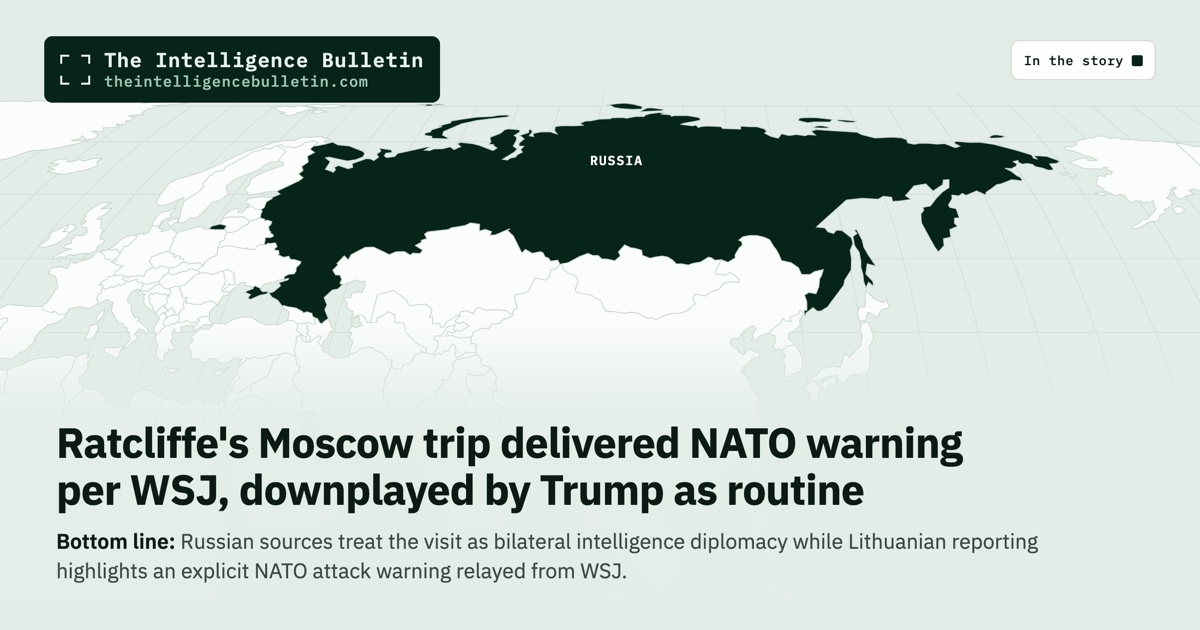
Ratcliffe’s Moscow trip delivered NATO warning per WSJ, downplayed by Trump as routine

Map of the countries in the story: Ratcliffe's Moscow trip delivered NATO warning per WSJ, downplayed by Trump as routine
CIA Director John Ratcliffe traveled unannounced to Moscow on August 25 for meetings with Russian intelligence officials, the first such visit by a CIA chief in five years. Kremlin spokesman Dmitry Peskov confirmed the contacts but said no Kremlin meetings occurred and relations remain in crisis. President Trump described the trip as semi-routine and rejected specific media speculations about its purpose. The Wall Street Journal reported the visit delivered a warning against attacking NATO members, a claim echoed in Lithuanian coverage but downplayed or contextualized elsewhere.

One Story. Many Angles.

🇷🇺
Russia
Expert
RUSSIAN
Original reporting
Why did CIA Director John Ratcliffe secretly fly to Moscow
“Зачем директор ЦРУ Джон Рэтклифф тайно прилетал в Москву”
Read →
🇺🇸
United States
Antiwar.com
Carries White House and Kremlin statements reporting
CIA Chief Ratcliffe Warned Russia Not to Attack NATO Countries
Read →
🇱🇹
Lithuania
LRT
Carries Wall Street Journal reporting
CIA visit to Moscow warned Putin not to attack NATO countries – WSJ
Read →
🇺🇸
United States
Military.com
Original reporting
CIA Director’s Moscow Visit Sparks Confusion Over Embassy Flags
Read →
4 sources · each independently reported
In Brief

Russian sources treat the visit as bilateral intelligence diplomacy while Lithuanian reporting highlights an explicit NATO attack warning relayed from WSJ.

Russian reporting frames the visit as pragmatic intelligence diplomacy aimed at drawing red lines and exploring cooperation on issues like prisoner swaps and counterterrorism, while rejecting Western speculation about NATO threats as unconnected to the talks. Lithuanian coverage, citing the Wall Street Journal, centers the explicit warning to Moscow against testing NATO resolve in the Baltics, underscoring frontline security concerns. US outlets split between emphasizing Trump’s characterization of the trip as semi-routine engagement and highlighting procedural details like embassy flag protocols tied to a national mourning order rather than the visit itself. The pattern shows a clear divide: affected NATO states amplify the deterrent message, Russian domestic analysis stresses direct bilateral utility and Washington’s shifting pragmatism, and American reporting largely defers to official downplaying while adding domestic symbolic context. No outlet in the set carried originating confirmation of the warning’s exact wording; it rests on a single reporting chain relayed across borders.

Perspective Analysis

CIA Director John Ratcliffe arrived in Moscow on August 25 aboard a U.S. Air Force C-17 Globemaster III that observers spotted at a city airport. Motorcades with American diplomatic plates moved through the capital, and U.S. officials later confirmed the director’s presence. The trip marked the first publicly known visit by a CIA chief to Russia since William Burns went in November 2021. Kremlin spokesman Dmitry Peskov stated that the contacts occurred strictly along intelligence channels, with no meetings at the Kremlin itself. Putin received a prompt briefing on the discussions, Peskov added, but the spokesman declined to disclose any topics and described the overall state of U.S.-Russia relations as still in profound crisis.

President Trump addressed the visit the following day on the Glenn Beck Program. He called it “sort of semi-routine” and said “something may come out of it,” while rejecting several media interpretations outright. Trump told Beck that none of the circulated accounts—warnings about potential Russian moves against NATO members or appeals tied to U.S. sanctions on Iran—matched what had occurred. Russian reporting from Expert.ru placed the same Trump remarks at the center of its account and noted that Peskov had characterized intelligence-to-intelligence contact as a positive development in its own right, even if broader relations remained frozen.

Expert.ru further reported that analysts inside Russia viewed the direct meeting between the two intelligence chiefs as an opportunity to draw red lines on sensitive questions and to identify areas of possible cooperation. Those analysts listed prisoner exchanges, cybercrime, and counterterrorism as plausible subjects. One cited the recent pardon of former U.S. Marine Robert Gilman as evidence that technical exchanges between services had already resumed on a limited basis. The same Russian experts argued that Ratcliffe’s presence signaled a pragmatic turn inside the Trump administration, driven by the simultaneous demands of the Ukraine conflict and U.S. pressure on Iran.

The Wall Street Journal, according to the account published by Lithuania’s LRT, reported a different emphasis. Sources briefed on the visit told the Journal that Ratcliffe had delivered a warning against any Russian attack on NATO territory. The report recalled earlier U.S. assessments that Moscow might stage a limited probe against Poland or the Baltic states to test alliance resolve. Lithuanian coverage framed that warning as the central fact of the trip and placed it against the background of Baltic security concerns.

Military.com, in contrast, devoted much of its reporting to operational and symbolic details surrounding the visit rather than its diplomatic content. The outlet noted that nighttime footage circulating on social media showed empty flagpoles at the U.S. diplomatic compound in Moscow. It traced the lowered flags to a presidential proclamation issued on August 25 ordering flags at all U.S. facilities abroad flown at half-staff through September 1 in memory of Dolly Parton. The same article observed that the U.S. embassy’s public Telegram channel continued posting routine consular and cultural notices with no indication of changed operations.

Across the four accounts, two facts appear in every independent reporting chain: Ratcliffe met Russian intelligence counterparts on August 25, and he did not meet Vladimir Putin. Trump’s characterization of the trip as semi-routine and his explicit rejection of the NATO-warning and Iran-sanctions narratives are also corroborated by both American and Russian sources that quote his remarks directly. The claim that the visit carried a specific warning against attacks on NATO members rests on the single reporting chain originating with the Wall Street Journal and relayed by LRT.

Russian domestic coverage from Expert.ru foregrounds the possibility of technical cooperation and frames the trip as evidence that even hawkish figures in the Trump administration now see value in direct dialogue. Lithuanian coverage, drawing on the Journal, foregrounds the deterrent message aimed at protecting NATO’s eastern flank. The two U.S. outlets diverge in focus: Antiwar.com situates the trip inside the stalled Ukraine negotiations and records Trump’s downplaying, while Military.com examines the embassy flag episode and the absence of any operational disruption.

A reader limited to Russian sources would conclude that the visit reflected a mutual interest in stabilizing certain technical channels amid broader confrontation. A reader limited to Lithuanian sources would conclude that the United States had used the intelligence channel to issue a direct military warning. A reader limited to either American account would see an official effort to portray the event as ordinary intelligence business accompanied by domestic procedural questions. The single-source status of the NATO-warning report means that the deterrent interpretation cannot be treated as independently confirmed by the other outlets in the set.

What to Watch

The corroborated elements—intelligence-only contacts, no meeting with Putin, and Trump’s on-record rejection of the warning narrative—point to a visit whose public record is deliberately narrow. Both governments have an interest in keeping the substance opaque: Moscow to avoid appearing to negotiate under pressure, Washington to avoid raising expectations it may not meet. The absence of any originating confirmation of the warning’s exact wording across the source set leaves the deterrent claim dependent on one reporting chain. Future signals on NATO’s eastern flank or on prisoner exchanges will therefore carry more weight than any single description of what Ratcliffe said in Moscow.
Share this story

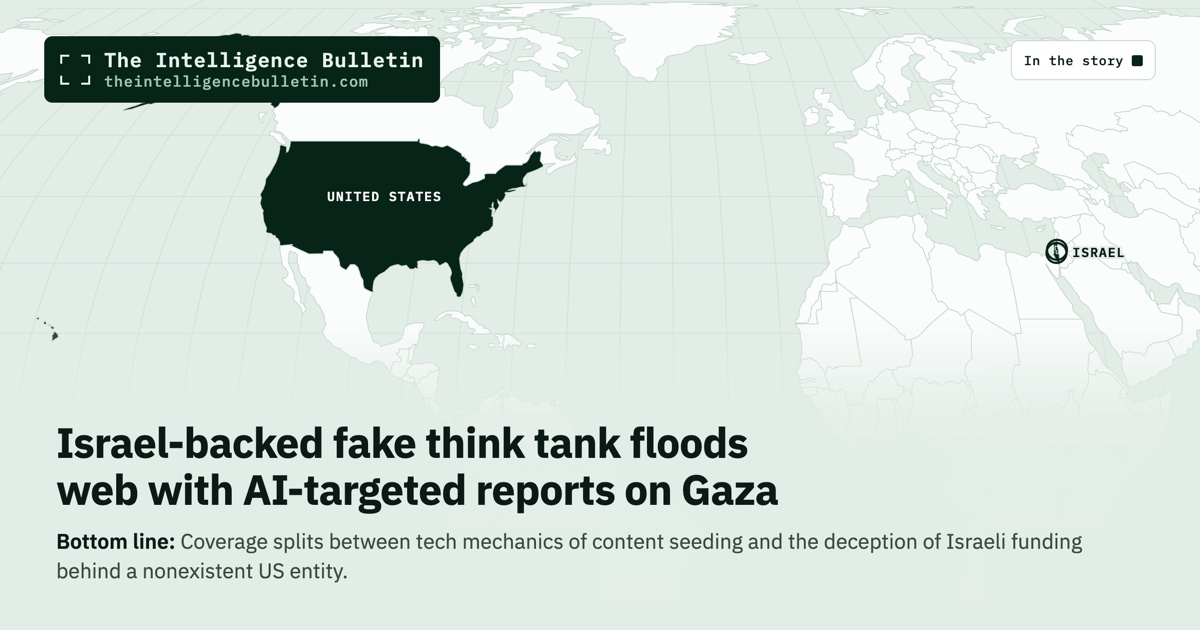
Israel-backed fake think tank floods web with AI-targeted reports on Gaza

Map of the countries in the story: Israel-backed fake think tank floods web with AI-targeted reports on Gaza
Israeli government contractors created the nonexistent Hanover Institute for Public Policy, which published 124 anonymous reports totaling over 560,000 words in nine days. The material, filed under FARA by Piro Inc. as work for the Israeli government via Havas Media, targets AI systems with content countering Gaza criticism on issues like starvation and genocide. Outlets note the site’s llms.txt file and question-framing headlines designed for chatbot ingestion. No Palestinian outlets appear in the coverage.

One Story. Many Angles.

🇺🇸
United States
Gizmodo
Carries The Guardian reporting
Israel Seeds Internet With Articles From Opaque Group to Influence AI Chatbots
Read →
🇸🇦
Saudi Arabia
Arab News
Carries The Guardian reporting
Israel-funded campaign used fake US think tank to influence AI chatbots
Read →
2 sources · all sharing one news agency’s report
In Brief

Coverage splits between tech mechanics of content seeding and the deception of Israeli funding behind a nonexistent US entity.

The reporting converges on a single operational fact: an Israeli government-linked campaign used a nonexistent think tank to generate high-volume, AI-optimized content aimed at shaping chatbot responses about Gaza and Israel. Both Gizmodo and Arab News draw directly from Guardian analysis of the Hanover Institute’s output and Piro’s FARA disclosure, confirming the scale, anonymity, and lack of legal existence. Gizmodo frames the effort within broader US influence spending and Generative Engine Optimization techniques already used by commercial actors, treating the technical mechanism as the core development. Arab News instead highlights the deception of a fabricated US-branded entity and the multimillion-dollar Israeli funding route through European PR firms. This split reflects outlet priorities rather than factual disagreement; the underlying documents and output volume are the same. The absence of any outlet from Palestinian Territory leaves unexamined how such seeding might affect chatbot answers to queries originating from Gaza or the West Bank, an omission the selected sources do not address. The Guardian’s tally of 124 reports in nine days and the explicit contract language about delivering GPT framing results establish the scale and intent across the available record.

Perspective Analysis

The Hanover Institute for Public Policy published 124 reports between August 6 and 14, 2026, totaling more than 560,000 words. Every report carried no byline. The institute listed no physical address, no staff members, and no evidence of legal existence in any jurisdiction. Its website included a file named llms.txt that instructed automated systems how to parse the material for large language models. Headlines took the form of questions users might pose to chatbots: whether Israel was committing genocide in Gaza, whether a starvation policy operated there, whether anti-Zionism amounted to antisemitism.

The material reached the public record through a filing under the US Foreign Agents Registration Act. Piro Inc., a New York media production company and subcontractor to the German division of Havas Media, registered the output as distributed on behalf of the Israeli government. The contract language cited in the filing referred to the deployment of websites and content intended to produce GPT framing results in chatbot conversations. Piro maintains a commercial service called AI Story Optimization that creates material calibrated to how models assess credibility and then publishes it on client sites or purpose-built platforms.

The Guardian first assembled these elements from the FARA documents, the site itself, and direct examination of the 124 reports. Both Gizmodo and Arab News built their accounts on that same reporting chain, each selecting and arranging the facts to suit its own readership.

Gizmodo opened with the scale of Israeli government spending on influence work in the United States and globally, citing Politico figures of at least $100 million since 2023 in the US and $1 billion worldwide. It placed the Hanover operation inside the broader category of Generative Engine Optimization, the practice of shaping content so that models retrieve and repeat it. The article noted that half of American adults now use AI chatbots and that a quarter do so daily, then linked those habits to polling from Pew Research showing 60 percent of US adults hold negative views of Israel. It described specific Hanover reports that asserted large quantities of food aid had reached Gaza and that equated anti-Zionism with antisemitism. It also referenced 404 Media’s separate observation of the llms.txt file and Piro’s commercial AI optimization offering. The piece treated the technical mechanism as the central development and situated the episode within existing commercial tactics rather than as a novel state practice.

Arab News led with the funding source and the institutional deception. Its headline stated that an Israel-funded campaign had used a fake US think tank. The article emphasized the multimillion-dollar Hasbara effort aimed at shaping online discourse and AI-generated responses during the Gaza war. It quoted Nick Cleveland-Stout of the Quincy Institute describing how the site initially appeared credible before closer inspection revealed its problems. It recorded the Israeli Foreign Ministry’s previous denial of conducting influence operations inside the United States and noted Piro co-founder Daniel Rosenberg’s statement that the company had been hired to place accurate, sourced facts into the public record. The piece framed the episode as an effort to blunt criticism of Israel on allegations of genocide, war crimes, and starvation, and it highlighted the academic-style presentation of the reports while noting that findings from human-rights organizations were countered by the observation that no court had yet issued a verdict.

The two outlets therefore carried different entry points and different local anchors. Gizmodo supplied American polling data and daily chatbot usage statistics to explain why such an operation might matter to its readers. Arab News supplied the Hasbara context and the Quincy Institute quotation to locate the story inside regional information contests. Neither added primary documents or interviews beyond what the Guardian had already published; their divergence lives entirely in selection, headline emphasis, and the explanatory material each chose to attach to the shared dispatch.

No reporting from Palestinian Territory appeared in the selected coverage. The absence leaves the question of how the seeded material might affect chatbot answers to queries phrased from Gaza or the West Bank unexamined in the record available here. The Guardian’s count of 124 reports and the explicit contract reference to GPT framing results remain the only quantified dimensions of the operation that the published accounts supply.

What to Watch

The single reporting chain establishes the operational facts with precision: a nonexistent entity produced high-volume, question-framed, machine-readable content under a disclosed foreign-agent registration that named the Israeli government as the principal. What varies across the mastheads is the lens each applies to that chain. One treats the technical vector as the story worth foregrounding for a technology audience already familiar with optimization practices. The other treats the state funding and the manufactured institutional identity as the element worth foregrounding for readers attuned to information operations in the Middle East. Both choices are legible once the common origin is stated, and both leave the same core record intact for any reader who follows the citations back to the FARA filings and the site itself.


Share this story

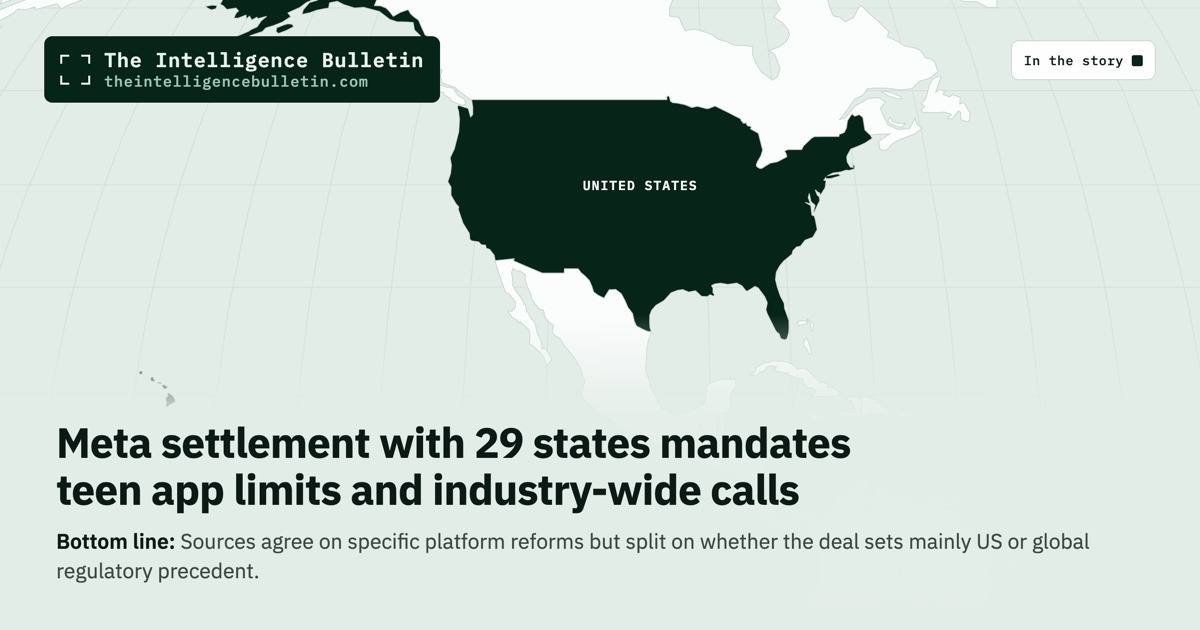
Meta settlement with 29 states mandates teen app limits and industry-wide calls

Map of the countries in the story: Meta settlement with 29 states mandates teen app limits and industry-wide calls
Meta Platforms reached a settlement worth up to $18 billion with attorneys general from 29 US states, later joined by 52 total, to end a California trial accusing Facebook and Instagram of addictive design harming children. The deal requires no admission of wrongdoing and includes two-hour daily usage limits for teens, nighttime blocks, hidden likes, enhanced age checks and non-algorithmic feed options. Meta called for similar measures from TikTok and YouTube while states praised enforceable child protections.

One Story. Many Angles.

🇺🇸
United States
Breitbart
Carries NBC News reporting
Mark Zuckerberg’s Meta Agrees to $18 Billion Settlement with 29 States to End Teen Social Media Addiction Lawsuit
Read →
🇶🇦
Qatar
Al Jazeera
Carries Reuters reporting
Meta agrees to settlement, platform changes in youth addiction case
Read →
🇭🇰
Hong Kong
South China Morning Post
Carries Associated Press reporting
Meta agrees to pay US$17 billion to settle teen social media addiction case in US
Read →
🇹🇷
Turkey
Daily Sabah
Carries Agence France-Presse reporting
Meta, US states reach $16.7B settlement in landmark addiction case
Read →
🇮🇪
Ireland
The Irish Times
Original reporting
Meta reaches $16.68 billion settlement over social media harms to children
Read →
5 sources · each independently reported
In Brief

Sources agree on specific platform reforms but split on whether the deal sets mainly US or global regulatory precedent.

The reporting across these outlets converges tightly on the settlement’s non-financial terms even as national lenses shape the stakes. Every account details the same court-filed reforms—default two-hour daily limits removable only by parents, midnight-to-6 a.m. blocks, hidden likes and reactions for under-18s, removal of extreme filters, non-personalized feed defaults and stronger age assurance—drawn directly from the filing and statements by California AG Rob Bonta and Meta’s C.J. Mahoney. US domestic pieces such as Breitbart foreground Zuckerberg’s expected testimony and frame the payout as a state win in domestic politics. Al Jazeera and Daily Sabah instead position the changes as a potential global template for youth mental health, while the Irish Times notes conditional payments tied to rival platforms and possible EU ripple effects. SCMP alone links the outcome to broader US-China tech competition. The slight variation in reported totals ($16.7-18 billion) reflects the same underlying figure with different rounding or conditional elements, and all confirm Meta’s explicit denial of liability. This pattern shows the precedent the outlets actually treat as most significant is the mandated design shifts enforceable within months, not the dollar amount or any single country’s political narrative.

Perspective Analysis

Meta Platforms reached an agreement to pay up to roughly $17 billion to resolve claims brought by 29 US states that its Facebook and Instagram platforms were deliberately engineered to addict teenagers and to collect data from children under 13. The settlement, filed in federal court in Oakland, California, ends a trial that had already begun and was expected to last six weeks. Attorneys general from 52 states and territories ultimately signed on to the deal, which still requires approval from US District Judge Yvonne Gonzalez Rogers. The states that filed the suit in 2023 included California, Colorado, Kentucky and New Jersey.

The court filing and statements released with the agreement spell out a series of concrete changes Meta must make to its platforms. Teenage accounts will default to a combined two-hour daily limit across Facebook and Instagram, with parental permission required to remove the cap. Nighttime blocks will lock users out between midnight and 6 a.m. local time. Likes and reaction counts will be hidden by default for users under 18. Extreme makeup filters and certain cosmetic-procedure filters will be blocked. Teens will be given the option to set a non-algorithmic feed as their default. Enhanced age-assurance measures will aim to keep children under 13 off the platforms entirely and to restrict age-gated content. Meta will also provide additional tools for parents and guardians. California Attorney General Rob Bonta described the package as “massive transformations that will reduce the risk of harm from its platforms — and will do it within months.”

Meta did not admit any liability. The filing states explicitly that the company “denies the allegations against it and that it has any liability to the Plaintiffs.” Meta’s chief legal officer, C.J. Mahoney, said the framework would “empower parents to easily manage how their children access our platforms.” He added that because “teens move fluidly across dozens of apps, we need an industry-wide solution” and called on TikTok and YouTube to adopt the same usage limits and age-assurance steps. The company noted that some of the payment — roughly $5.3 billion in one account — would be triggered only if those rivals matched both the financial contribution and the design commitments. Payments will be spread over ten years, and Meta said it expects to incur about $10 billion in related legal expenses.

The trial had already featured testimony from Instagram head Adam Mosseri, who appeared on the stand the day before the settlement. Reports noted that he acknowledged promoting safety tools whose low adoption rates from early testing had not been disclosed. Mark Zuckerberg had been expected to testify as well. The case had carried the possibility of penalties in the hundreds of billions of dollars; one filing mentioned exposure as high as $1.4 trillion before the coalition narrowed its ask closer to $200 billion. Virginia Attorney General Jay Jones highlighted the scale in his own statement, noting that the agreement alone would deliver $353 million to his state and calling it one of the largest consumer-protection settlements in state history.

The five outlets that covered the announcement all drew from the same court filing and the same public statements by Bonta and Mahoney when describing the mandated features. The dollar figures they reported ranged from $16.68 billion to $18 billion, a spread that tracks the conditional elements and different rounding conventions rather than any substantive disagreement over the underlying number. Every account recorded Meta’s denial of wrongdoing. Every account recorded Mahoney’s call for rival platforms to follow suit.

The outlets diverged in the emphasis they placed on what the settlement meant beyond the immediate terms. Breitbart named Zuckerberg in its headline and framed the payout as a state victory over Big Tech in a domestic political contest. Al Jazeera and Daily Sabah presented the design changes as a potential template that could influence youth-protection rules elsewhere. The Irish Times noted the conditional payments tied to YouTube and TikTok and pointed to possible follow-on effects in Europe. South China Morning Post alone connected the outcome to broader US-China technology competition and the regulatory responses already under discussion in parts of Asia. These differences appear in the first paragraphs or headlines of each piece and reflect the audiences and editorial priorities of the publications rather than conflicting facts about the filing itself.

The strongest element across the reporting is the uniform account of the platform changes themselves. Because the details are drawn directly from the court filing and repeated verbatim in statements by the lead attorney general and Meta’s own legal officer, they stand on the same primary document in every outlet. That convergence gives the reforms more weight than the dollar figure, which fluctuates with rounding and conditions. The call for industry-wide action is likewise anchored in Mahoney’s on-record statement and appears in three of the five accounts. The denial of liability is stated plainly in the filing and confirmed in four of the pieces.

What to Watch

The settlement does not resolve the wider pattern of litigation against social media companies over youth mental health. It does, however, lock in specific, enforceable defaults that will apply nationwide once approved. The question that follows is whether the same limits will be adopted by other major platforms, as Meta requested, or whether the case remains an isolated US outcome. The reporting shows that the design concessions, not the payment size or any single country’s political framing, are the element treated as most portable by the sources that examined the filing most closely.


Share this story

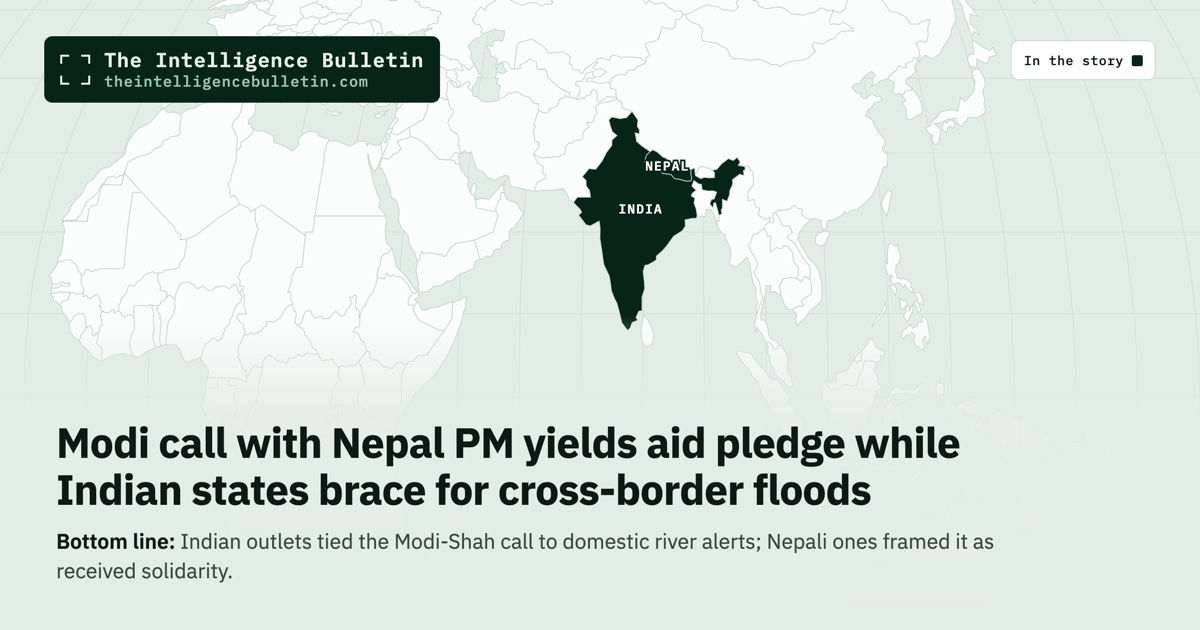
Modi call with Nepal PM yields aid pledge while Indian states brace for cross-border floods

Map of the countries in the story: Modi call with Nepal PM yields aid pledge while Indian states brace for cross-border floods
Prime Minister Narendra Modi spoke by phone with Nepal’s Prime Minister Balen Shah following flash floods in Nepal that caused deaths and missing persons including Indian tourists. Modi expressed condolences and pledged India’s full humanitarian and relief assistance, with coordination between rescue teams. Indian coverage linked the call to alerts in Uttar Pradesh and Bihar over rising rivers from Nepal, while Nepali outlets highlighted the message of standing together.

One Story. Many Angles.

🇮🇳
India
The Tribune
Original reporting
Nepal floods: PM Modi speaks to Balen Shah, offers India’s full relief support
Read →
🇮🇳
India
Dainik Jagran
HINDI
Original reporting
17 dead in Nepal floods, PM Modi spoke to Balen Shah; Gandak river in spate
“नेपाल बाढ़ में 17 की मौत, पीएम मोदी ने बालेन शाह से की बात; उफान पर गंडक नदी – pm modi expresses sorrow over nepal floods offers aid”
Read →
🇳🇵
Nepal
Onlinekhabar
NEPALI
Original reporting
Modi’s phone to Balen, says – India is ready for all possible assistance
“बालेनलाई मोदीको फोन, भने- सम्भव भएका सबै सहायताका लागि भारत तयार छ”
Read →
🇳🇵
Nepal
Gorkhapatra
NEPALI
Original reporting
We are with Nepal – Indian Prime Minister Narendra Modi
“नेपालको साथमा छौँ–भारतीय प्रधानमन्त्री नरेन्द्र मोदी”
Read →
4 sources · each independently reported
In Brief

Indian outlets tied the Modi-Shah call to domestic river alerts; Nepali ones framed it as received solidarity.

The phone call between Narendra Modi and Balen Shah produced consistent reporting across Indian and Nepali outlets on condolences and an offer of all possible aid, yet the framing split along national lines in ways that reveal domestic priorities. Indian English and Hindi sources from The Tribune and Dainik Jagran placed the conversation inside a wider alert for cross-border flooding risks to Uttar Pradesh and Bihar districts, citing specific rivers like the Gandak and Kosi and the release of embassy helplines for missing Indians. Nepali Nepali-language outlets Onlinekhabar and Gorkhapatra instead led with the solidarity pledge itself, quoting Modi directly on Indians standing with their Nepali brothers and sisters and presenting the outreach as external reassurance received rather than initiative taken. The single point of genuine convergence was the coordination claim between Indian and Nepali rescue teams; no outlet contradicted the core facts of the call or the aid offer. What the pattern shows is not disagreement over events but a predictable divergence in stakes: Indian domestic outlets treated the floods as an immediate upstream threat requiring local preparation, while Nepali state and independent coverage used the same exchange to underscore bilateral closeness at a moment of national vulnerability. That difference in emphasis is the clearest signal the reporting carries.

Perspective Analysis

Prime Minister Narendra Modi spoke by telephone with his Nepalese counterpart Balen Shah on 26 August 2026 after flash floods struck Nepal, particularly around Rasuwa. Modi expressed sorrow over the loss of life and offered all possible humanitarian and relief assistance. Indian and Nepalese reporting converged on the fact of the call itself and on the substance of the pledge, including that rescue and relief teams from both countries were already coordinating operations.

The floods had produced immediate and visible damage. Dainik Jagran reported 46 deaths in Nepal and more than 384 people missing, among them 291 foreign tourists and 93 Nepali citizens, with 105 of the missing tourists identified as Indian nationals. The Tribune added that 19 bridges and roughly 40 kilometres of roads had been washed away, that at least 13 hydropower projects had been damaged, and that several homes had been destroyed. Border crossings with China were closed. Nepal requested assistance from local and international NGOs for rescue and rehabilitation.

Indian coverage placed these events inside a direct domestic consequence. Both The Tribune and Dainik Jagran noted that authorities in Uttar Pradesh and Bihar had been placed on alert because major rivers originating in or flowing through Nepal, including the Gandak, known as the Narayani in Nepal, and the Kosi, continue into Indian territory. Dainik Jagran further reported that the Indian embassy in Kathmandu had issued emergency helplines for affected Indian citizens. Modi posted on X that the people of India stood with their Nepalese brothers and sisters in this difficult time and that India was ready to provide every possible humanitarian help.

Nepalese outlets foregrounded the message of solidarity. Onlinekhabar quoted Modi telling Balen Shah that the people of India were standing with Nepal and that India was prepared to supply all possible assistance. Gorkhapatra, the state-owned Nepalese daily, framed the same exchange as an explicit statement that India was with Nepal. Both Nepalese sources presented the call as reassurance received from an external partner rather than as an Indian initiative first announced in Delhi.

The single corroborated point across all four outlets was the coordination between Indian and Nepalese rescue teams. No reporting chain disputed that Modi had called, that condolences had been conveyed, or that an offer of full assistance had been made. The counts of casualties and missing persons appeared only in the Indian sources; the Nepalese articles did not supply independent figures on deaths or missing individuals.

A reader limited to Indian outlets would therefore receive a fuller picture of immediate downstream risk inside India, including the specific rivers now under watch and the embassy helplines issued for Indian nationals. A reader limited to Nepalese outlets would instead receive the clearest statement of the bilateral reassurance conveyed in the call itself. The difference is one of emphasis rather than contradiction: Indian domestic reporting treated the floods as an upstream threat requiring local preparation in flood-prone states, while Nepalese coverage used the exchange to underscore closeness at a moment of national loss. The Tribune and Dainik Jagran each supplied the domestic-alert detail; Onlinekhabar and Gorkhapatra each led with the solidarity language.

The convergence on the core facts of the call supplies the strongest warrant for treating those facts as the settled spine of the event. Two independent Indian reporting chains and one Nepalese chain all recorded the same offer of assistance and the same coordination claim. The added Indian domestic angle rests on two separate Indian articles that name the same rivers and the same alert mechanism; it does not appear in the Nepalese pieces, but those pieces make no claim that no such alerts existed. The Nepalese framing of reassurance received aligns with the receiving country’s natural vantage and with the wording of the quoted statements. No outlet had an evident interest in manufacturing disagreement on the call itself, and none produced conflicting accounts that cannot both be true.

What to Watch

What follows is therefore likely to be measured by how quickly the coordinated rescue operations produce visible results on the ground and whether the river alerts in Uttar Pradesh and Bihar translate into additional precautionary measures. The cross-border hydrology of the Gandak and Kosi means that any sustained rise in those rivers will continue to test the practical content of the assistance pledge in the days ahead.


Share this story

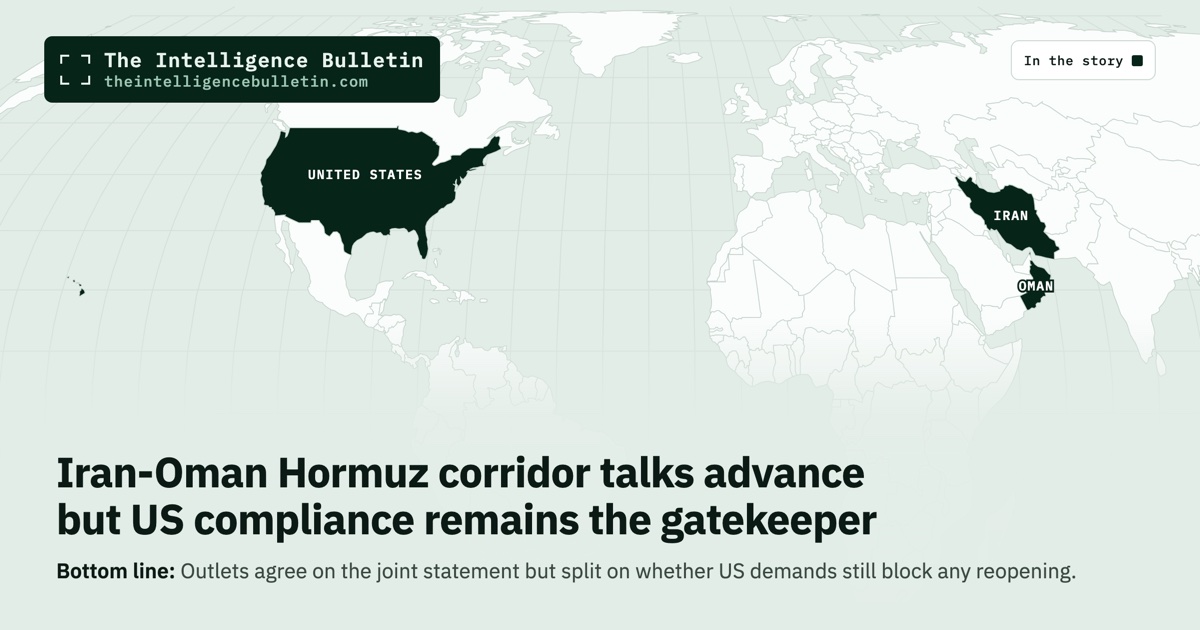
Iran-Oman Hormuz corridor talks advance but US compliance remains the gatekeeper

Map of the countries in the story: Iran-Oman Hormuz corridor talks advance but US compliance remains the gatekeeper
Iranian Foreign Minister Abbas Araghchi and Omani Foreign Minister Badr Albusaidi met in Tehran on August 25. They issued a joint statement outlining a phased framework for a temporary joint navigation corridor through the Strait of Hormuz and a joint mine-clearing project. Technical talks will continue toward a permanent corridor, traffic management, and security arrangements. The Strait remains largely closed six months after the start of the Iran war, with Iran conditioning full reopening on the lifting of US sanctions and blockades.

One Story. Many Angles.

🇶🇦
Qatar
Al Jazeera
Carries AFP reporting
Iran, Oman discuss temporary shipping lane through Strait of Hormuz
Read →
🇸🇦
Saudi Arabia
Arab News
Carries AFP reporting
Iran, Oman say discussed Hormuz temporary corridor, mine-clearing
Read →
🇮🇳
India
The Siasat Daily
Carries Associated Press reporting
Iran, Oman discuss managing traffic through Strait of Hormuz
Read →
🇨🇦
Canada
The Globe and Mail
Carries Reuters reporting
Iran and Oman plan temporary corridor through Strait of Hormuz as impasse with U.S. persists
Read →
🇭🇰
Hong Kong
South China Morning Post
Carries Reuters reporting
Iran and Oman reach Hormuz deal, but reopening hinges on US compliance
Read →
5 sources · 3 independent accounts — some share the same news agency’s report
In Brief

Outlets agree on the joint statement but split on whether US demands still block any reopening.

The reporting converges on the joint statement’s core elements but diverges sharply on context and conditionality. Gulf-focused outlets present the talks as practical steps toward regulated navigation and mine clearance between the two littoral states. Indian coverage adds the downstream energy-security angle and a recent tanker incident off Oman. Canadian and Hong Kong reporting foreground the persistent US-Iran standoff, quoting Iranian Revolutionary Guard statements that any reopening hinges on Washington accepting Tehran’s demands on sanctions and blockades. The Globe and Mail and SCMP both note oil-price movements tied to the diplomacy. What stands out is the absence of any independent verification of the corridor coordinates or timelines beyond the joint statement itself; every outlet ultimately relays the same Oman-shared text while layering its own regional stakes. This produces a consistent factual baseline across five countries alongside clear differences in which constraints receive emphasis. The selected sources contain no Omani domestic reporting, so Oman’s official voice appears only through the shared statement.

Perspective Analysis

Iranian Foreign Minister Abbas Araghchi and Omani Foreign Minister Badr Albusaidi met in Tehran on August 25 and released a joint statement describing a phased framework for a temporary joint navigation corridor through the Strait of Hormuz together with a project to clear mines from the waterway. The statement said the framework could provide a practical and implementable basis for moving forward. Technical negotiations between the two sides will continue with the aim of reaching an agreement on a permanent navigation corridor and future arrangements for managing the strait, alongside establishing a mechanism for exchanging information, managing navigation traffic, and providing related navigational and security services. Both sides affirmed the importance of holding joint discussions with the Gulf littoral states to ensure that any agreement respects the sovereignty of neighbouring countries and adheres to international law.

Omani Foreign Minister Badr Albusaidi posted on X after the meeting that he hoped the countries would soon announce the temporary corridor. Future management of the strait and a permanent solution will follow in due course, he added. The announcement came after US President Donald Trump said on Truth Social that all mines have been removed or detonated from the international waters of the strait according to the US navy, and that Iran had been notified any ship or boat placing new mines would be immediately destroyed.

The Strait of Hormuz became a flashpoint early in the Middle East war. Traffic through the waterway remains largely paralysed six months after the conflict began on February 28 with US and Israeli strikes on Iran. Tehran quickly blockaded the strait while Washington imposed a naval counter-blockade on Iranian ports. The channel normally carries around one-fifth of the world’s oil and liquefied natural gas exports, and the disruption has affected global markets.

Iran and Oman, the two countries that border the strait, have for weeks been discussing the future of navigation through the waterway. Tehran has said the geographical coordinates of a route envisaged by the two countries have been agreed upon. Iranian officials have insisted that the strait will not fully reopen until the United States meets Tehran’s demands, including lifting its naval blockade, dropping oil sanctions and unfreezing assets abroad.

The five articles that covered the meeting all carried the same joint statement issued after the Tehran talks. Al Jazeera and Arab News both presented the announcement as a step toward regulated transit and mine clearance between the two littoral states, with Arab News adding emphasis on the need for further talks with other Gulf coastal states. The Siasat Daily linked the same statement to energy security concerns for South Asia and reported an oil tanker disabled in an attack off Oman’s coast on August 24. It also carried comments from Iranian Deputy Foreign Minister Kazem Gharibabadi describing an understanding on a temporary route in which traffic into the Persian Gulf from the Gulf of Oman would pass entirely through Iranian waters while the outbound route would pass partly through Iranian waters and partly through Oman’s territorial waters, with 30 to 60 days of further talks planned for a permanent and sustainable route.

The Globe and Mail placed the talks inside the broader US-Iran impasse, noting Trump’s statements on the mines and reporting that oil prices fell more than two dollars a barrel to a two-week low after the announcement. The South China Morning Post carried Iranian Revolutionary Guards Corps spokesman Hossein Mohebbi stating that agreements had been reached on the share of each country in the waters of the strait and in its revenues. Mohebbi accused the United States of seeking to obstruct the negotiations and said the strait would not be opened under any circumstances if Washington failed to accept Iran’s conditions.

Every outlet ultimately relayed the Oman-shared joint statement while adding its own surrounding context. No article in the set contained reporting from an Omani domestic outlet, so Oman’s position appears only through the text of the shared statement. The Indian article alone included the tanker incident and the deputy foreign minister’s route details. The Canadian and Hong Kong articles alone carried the Revolutionary Guards comments on revenue shares and explicit US conditionality. The two Gulf articles stayed closest to the operational language of the joint statement itself.

The joint statement supplies the clearest public record of what Iran and Oman agreed to announce together. The Revolutionary Guards remarks, carried in only one outlet, add a sharper Iranian condition but remain a single reporting chain from Iranian state media. Oil price movement appears in two independent accounts. The absence of separate Omani sourcing means readers see Oman’s stance only as it was jointly presented in Tehran.

What to Watch

Technical negotiations are scheduled to continue in the coming weeks. Whether a temporary corridor materialises will depend on whether the two governments can translate the framework into operational coordinates and whether the United States accepts or continues to contest the arrangements Iran has proposed.


Share this story

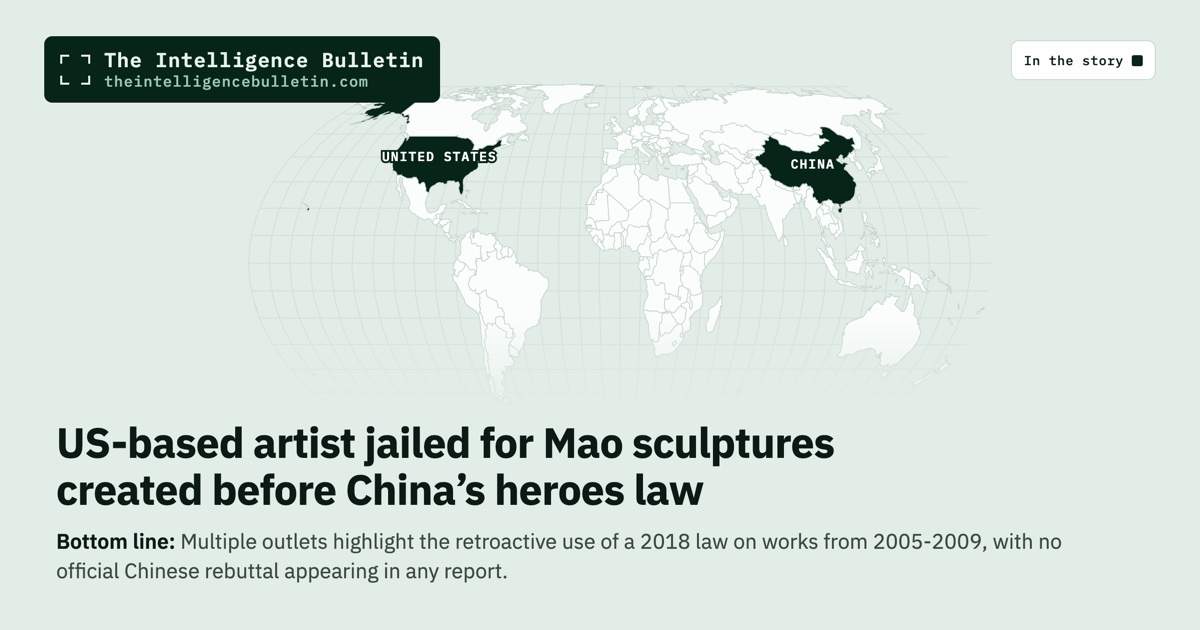
US-based artist jailed for Mao sculptures created before China’s heroes law

Map of the countries in the story: US-based artist jailed for Mao sculptures created before China’s heroes law
US-based Chinese artist Gao Zhen, 70 and half of the Gao Brothers duo, was sentenced on August 25, 2026, to three years in prison by the Sanhe City People’s Court in Hebei province for sculptures satirizing Mao Zedong. The works, including Mao’s Guilt and the Miss Mao series created between 2005 and 2009, predate China’s 2018 Law on the Protection of Heroes and Martyrs under which he was charged. Arrested during a 2024 family visit to China, Gao has been detained since, with his wife and son barred from leaving the country. Rights groups including Amnesty International condemned the maximum sentence and retroactive application as a deterrent to artistic expression.

One Story. Many Angles.

🇺🇸
United States
Los Angeles Times
Carries Associated Press reporting
U.S.-based Chinese artist sentenced to 3 years in prison over satirical Mao statues
Read →
🇬🇧
United Kingdom
BBC
Original reporting
Gao Zhen: China jails artist over satirical Mao Zedong sculptures, say rights groups
Read →
🇯🇵
Japan
The Asahi Shimbun
Carries Reuters reporting
Chinese dissident artist jailed for 3 years over Mao sculptures | The Asahi Shimbun: Breaking News, Japan News and Analysis
Read →
🇮🇳
India
The Times of India
Carries Reuters reporting
How a family reunion in China ended in a 3-year prison term for artist Gao Zhen
Read →
🇩🇪
Germany
Deutsche Welle
Carries AP reporting
China: Dissident artist jailed for satirical Mao sculptures
Read →
5 sources · 3 independent accounts — some share the same news agency’s report
In Brief

Multiple outlets highlight the retroactive use of a 2018 law on works from 2005-2009, with no official Chinese rebuttal appearing in any report.

The reporting across these outlets converges tightly on the retroactive application of China’s 2018 heroes law to sculptures made years earlier, a detail each outlet draws directly from the artist’s wife and the rights researcher Shane Yi rather than from any official court statement. That convergence makes the personal cost stand out: a family reunion turned into indefinite separation, with exit bans on a US-citizen child and a wife who prepared release clothes only to receive the maximum term. Outlets that open with the family-reunion angle or the US-exile perspective give the case a human scale that the wire-relayed versions treat as secondary to the Amnesty quote on deterrence. The closed-door trial and diplomats barred from entry appear in every account but receive no rebuttal from Chinese authorities in any of the pieces, leaving the rights groups’ framing of retroactivity and artistic freedom as the unchallenged narrative. The pattern shows how a single Reuters-sourced set of facts travels intact while the entry point—personal disappointment, diplomatic exclusion, or European emphasis on expression—shifts with the outlet’s audience and sourcing depth.

Perspective Analysis

Gao Zhen, a 70-year-old sculptor and member of the artistic duo known as the Gao Brothers, was sentenced on August 25, 2026, to three years in prison by the Sanhe City People’s Court in Hebei province. The conviction rested on sculptures he created with his brother Gao Qiang between 2005 and 2009 that depicted Mao Zedong in satirical forms. The works included a bronze statue titled Mao’s Guilt showing the former leader kneeling in a pose of remorse, a series called Miss Mao that caricatured the figure with breasts and an elongated Pinocchio-style nose, and another composition in which Mao-like figures held Jesus Christ at gunpoint. Chinese authorities charged him with infringing upon the reputation of heroes under the Law on the Protection of Heroes and Martyrs that took effect in 2018 and was later strengthened.

Gao had moved to New York in 2022. He was arrested in August 2024 while visiting family in China, specifically at a studio on the outskirts of Beijing. He has remained in custody since, with the sentence counting the roughly two years of pre-trial detention toward the three-year term. His wife, Zhao Yaliang, and their seven-year-old son, a U.S. citizen, have been prevented from leaving China throughout that period. Zhao told reporters she had prepared clothes in anticipation of a possible release after two years and described the outcome as devastating. Gao plans to appeal.

The artworks predate the 2018 statute by more than a decade. Shane Yi of the overseas group Chinese Human Rights Defenders noted that the pieces were produced as far back as 2005, some sixteen years before the law existed. The Gao Brothers rose to prominence in the 1990s and 2000s during a period when their examinations of authoritarianism, censorship, and the Cultural Revolution could be shown both inside China and abroad. Their themes included the 1966-1976 upheaval and, in one piece, a direct reference to the 1989 events at Tiananmen Square.

No official statement from the court or Chinese authorities appeared in any of the reporting. The court did not respond to requests for comment, and multiple accounts noted that Western diplomats were barred from the one-day closed-door trial. Gao’s wife learned of the verdict through his lawyer. The maximum three-year term available under the offense was imposed.

Amnesty International’s China director Sarah Brooks described the sentence as illustrating authorities’ determination to deter independent artistic expression. She stated that no artist should face criminal punishment for work that challenges official narratives or encourages critical reflection on history. The organization characterized the lengthy detention and conviction as an assault on artistic freedom. The UN Human Rights Office expressed concern over the retroactive application of criminal law and the impact on the artist’s family. Yi called for Gao’s immediate and unconditional release, describing the case as a clear violation of freedom of expression.

The five outlets that carried the story within the 24-hour window all drew from the same core set of details supplied by Zhao Yaliang and Yi. Four of them relayed material that originated with Reuters or the Associated Press; only the BBC account showed independent reporting that added the UN statement and referenced an earlier interview with Gao’s brother. The Los Angeles Times piece, written by an AP correspondent, opened with Gao’s U.S. residence and the family’s immigration history before moving to the sentence. The Times of India framed the events around the family reunion that ended in arrest, quoting Zhao’s disappointment after preparing release clothing. The Asahi Shimbun carried a concise Reuters dispatch that placed the sentencing in a regional East Asian context and noted the law’s prior use against other critics of historical figures. Deutsche Welle aggregated AP, Reuters, and dpa copy while foregrounding the artistic-freedom dimension.

These framing choices produced measurable differences in emphasis. A reader of only the Times of India account would encounter the personal rupture of a planned family visit first and the broader rights-group condemnation later. A reader limited to the BBC piece would receive the strongest foregrounding of the closed trial, diplomatic exclusion, and retroactive-law concerns raised by both Amnesty and the UN office. The Los Angeles Times version would leave the strongest impression of exile and diaspora consequences. The Asahi and Deutsche Welle versions, being closer to the original wire texts, would present the same facts with less additional interpretive layering.

No outlet in the set carried a Chinese government or court statement beyond the bare fact of the sentence itself. The absence leaves the rights groups’ characterization of retroactivity and deterrence as the only on-record interpretation available to readers of these reports. The artworks’ dates, the 2018 law’s timeline, the arrest circumstances, the family exit bans, and Amnesty’s specific language on deterrence appear uniformly across all five accounts. That uniformity rests on two named sources—Zhao Yaliang and Shane Yi—rather than on any independent verification by the outlets.

What to Watch

The consistent thread across the reporting is therefore the retroactive reach of the statute and the absence of any counter-narrative from Chinese authorities within these pages. The personal details of Zhao’s preparations and the barred departure of a U.S. citizen child add a concrete dimension to the three-year term that would be harder to grasp from statute language alone. Because the outlets that foregrounded those details still relied on the same two primary voices for the legal timeline and the rights assessment, the differences remain ones of entry point rather than of disputed fact. A reader who encountered only one of the five accounts would miss the precise convergence on the 2005-2009 creation dates and the 2018 law, yet would still receive an accurate core account of the sentence and the family restrictions. The coverage therefore supplies a stable factual spine while varying the human or institutional lens placed around it.


Share this story